



DNA Ligases Market Size, Companies, Share, Patient Volume, Treatment Adoption Rates, Pricing Analysis, Regulatory Landscape, Competitive Positioning, and Demand Forecast
DNA Ligases Market (By Type: T4 DNA Ligase, T7 DNA Ligase, Others; By Application: Genomics & Genetic Engineering, Drug Discovery & Research, Others; By End-User: Pharmaceutical & Biotechnology Companies, Academic & Research Institute, Others) - Global Industry Analysis, Size, Trends, Leading Companies, Regional Outlook, and Forecast 2026 to 2035
Source: https://www.precedenceresearch.com/dna-ligases-market
 Get a Sample
 Table Of Content


What is the DNA Ligases Market Size?
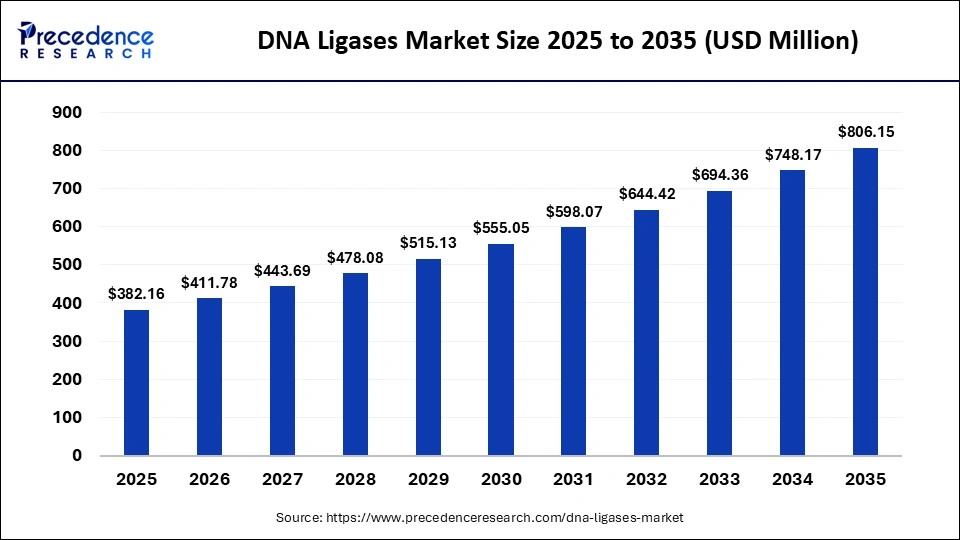
The global DNA ligases market size accounted for USD 382.16 million in 2025 and is predicted to increase from USD 411.78 million in 2026 to approximately USD 806.15 million by 2035, expanding at a CAGR of 7.75% from 2026 to 2035. The market is witnessing substantial growth driven by the increasing demand for these enzymes in the rapidly expanding fields of molecular diagnostics, genetic engineering, and personalized medicine. This expansion is further attributed to continuous technological advancements, such as the adoption of next-generation sequencing and CRISPR-Cas9 gene editing technologies, which require efficient and precise DNA ligation for successful workflows.
Market Highlights
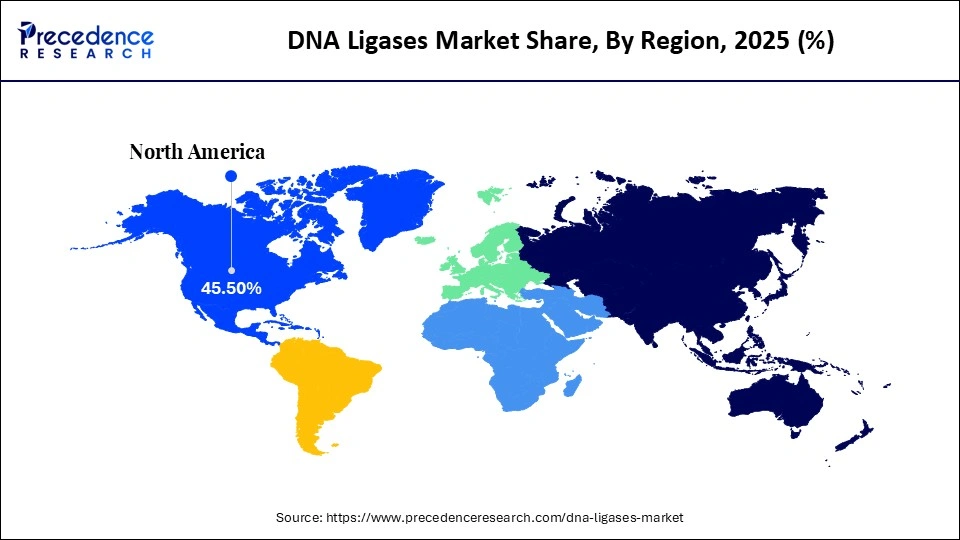
- North America led the global market and held the largest total market share of 45.5% in 2025.
- The Asia Pacific is expected to grow at the fastest CAGR of 8.5% from 2026 to 2035.
- By type, the T4 DNA ligase segment contributed the largest market share of 62.4% in 2025.
- By type, the T7 DNA ligase segment is growing at a solid CAGR of 7.7% from 2026 to 2035.
- By application, the genomics & genetic engineering segment led with a 67.8% share in the 2025.
- By application, the drug discovery & research segment is poised to grow at a 7.5% of CAGR from 2026 to 2035
- By end-user, the pharmaceutical & biotechnology companies segment captured the biggest market share of 42.4% in 2025.
- By end-user, the academic & research institutes segment is expected to witness the fastest CAGR of 7.6% from 2026 to 2035.
DNA Ligases Market Overview
The DNA ligases market encompasses the global industry involved in the development, production, and commercialization of DNA ligase enzymes used in molecular biology, biotechnology, and clinical research. DNA ligases are essential enzymes in all living organisms, where they maintain genomic integrity by enabling DNA replication, recombination, and repair processes. Their biological importance directly translates into widespread laboratory use across research and applied life sciences.
In laboratory workflows, DNA ligases catalyze the formation of phosphodiester bonds between the 3′-hydroxyl group of one DNA strand and the 5′-phosphate group of another, allowing researchers to seal single-strand nicks or ligate separate DNA fragments. This reaction is fundamental to molecular cloning, vector construction, next generation sequencing library preparation, gene synthesis, and DNA repair studies. As a result, DNA ligases are considered core reagents in routine molecular biology protocols.
The market includes a range of ligase types, such as T4 DNA ligase, thermostable DNA ligases, and specialized high-efficiency variants, along with associated products including ligation kits, optimized buffers, and reaction enhancers. These products are widely used in academic research institutions, biotechnology and pharmaceutical companies, clinical diagnostics laboratories, and drug discovery programs. Growing demand for genomic research, molecular diagnostics, and advanced therapeutic development continues to support steady expansion of the global DNA ligases market.
How did AI impact the DNA Ligases Market?
Artificial intelligence is increasingly reshaping the DNA ligases market by accelerating enzyme design, automating laboratory workflows, and improving the efficiency of genomics and diagnostics pipelines. AI-driven models are being used to analyze large enzyme sequence and structure datasets, enabling faster optimization of DNA ligases for higher efficiency, improved fidelity, and better compatibility with advanced molecular biology applications such as cloning and sequencing.
In next-generation sequencing and molecular diagnostics, AI tools enhance ligase-dependent workflows by optimizing library preparation, reducing error rates, and improving signal interpretation. Machine learning algorithms rapidly process complex sequencing datasets, allowing researchers and clinicians to extract actionable insights more quickly and accurately, which shortens turnaround times in both research and diagnostic settings.
AI is also contributing to personalized medicine and drug discovery by improving genomics data analysis and enzyme engineering for gene editing applications. By modeling DNA repair mechanisms and ligase activity, AI supports oncology research, helps identify novel drug targets, and accelerates screening of molecules that interact with DNA or ligase enzymes. Together, these capabilities are expanding the functional role of DNA ligases across research, diagnostics, and therapeutic development while improving speed, precision, and scalability.
DNA Ligases Market Outlook
- Industry Growth Overview: The market is poised for significant growth from 2026 to 2035. This expansion is primarily driven by breakthroughs in genetic technologies, increasing biotech R&D, and the expanding applications in diagnostics and therapeutics, similar to how contact lenses evolved with new materials and smart tech.
- Adoption and Integration of DNA Ligases in Advanced Genetic Technologies: This trend involves particularly CRISPR-Cas9 and next-generation sequencing workflows. This is primarily driven by the demand for precision medicine, diagnostics, and synthetic biology applications. This trend also reflects a broader shift towards more advanced, precise, and high-throughput molecular biology techniques.
- Global Expansion: The global market is experiencing strong expansion, with North America dominating the market, and Asia Pacific is experiencing the fastest growth in the market. Also, Europe, Latin America, and the Middle East & Africa play a distinctive role in growth, mainly driven by burgeoning research in genomics, synthetic biology, gene editing, and molecular diagnostics.
- Major Investors: Many key players like Thermo Fisher Scientific, Merck KGaA, New England Biolabs (NEB), Promega, and Agilent Technologies. Also, many venture capital firms are funding startups developing novel DNA assembly platforms and synthetic biology tools, which further contribute to market expansion.
- Startup Ecosystem: Various innovative startups focus on cell-free synthesis and automated DNA assembly, like Ginkgo Bioworks and Twist Bioscience, and engineering enzymes for complex genomic applications, contributing to market expansion.
Market Scope
| Report Coverage | Details |
| Market Size in 2025 | USD 382.16 Million |
| Market Size in 2026 | USD 411.78 Million |
| Market Size by 2035 | USD 806.15 Million |
| Market Growth Rate from 2026 to 2035 | CAGR of 7.75% |
| Dominating Region | North America |
| Fastest Growing Region | Asia Pacific |
| Base Year | 2025 |
| Forecast Period | 2026 to 2035 |
| Segments Covered | Type, Application, End-User, and Region |
| Regions Covered | North America, Europe, Asia-Pacific, Latin America, and Middle East & Africa |
Segment Insights
Type Insights
What made the T4 DNA Ligase Segment Dominate the DNA Ligases Market in 2025?
T4 DNA Ligase: The segment dominated with 62.4% market share in 2025. This is mainly due to its high efficiency and versatility for essential molecular biology tasks. Its most common form, 1 U/μL T4 DNA ligase, is cost-effective and widely used in research labs, fueling demand across academia and pharma for developing therapies and advancing genetic studies. Increased investment in personalized medicine, diagnostics, and gene-based therapies further fuels the need for T4 DNA ligase. It effectively joins DNA fragments, whether they have sticky or blunt ends, making it a cornerstone for various genetic manipulations.
T7 DNA Ligase: The segment is expected to have the fastest growth with a CAGR of 7.7%. This is mainly due to its high efficiency and speed, which are ideal for rapidly expanding applications in cloning, synthetic biology, and next-generation sequencing library prep. This growth is driven by increasing biotech R&D, personalized medicine, and strategic moves by key players like NEB, fueling its essential role in modern genomic research and biopharma innovation. T7 ligase offers faster ligation kinetics than traditional T4 ligase, making it superior for quick, high-yield cloning and library construction, especially with cohesive ends.
Application Insights
How did the Genomics & Genetic Engineering Segment Dominate the DNA Ligases Market in 2025?
Genomics & Genetic Engineering: The segment dominated with 67.8% in 2025. This is mainly because DNA ligases are essential tools for creating recombinant DNA, gene editing, and synthetic biology, enabling precise DNA repair, ligation, and manipulation for advanced research. Ligases are critical for joining DNA fragments, especially with tools like CRISPR-Cas9, for inserting, deleting, or modifying genes, driving demand in genetic research. The burgeoning field of creating new biological parts and systems relies heavily on ligases for building complex DNA constructs for sequencing, a major application in diagnostics and genomics research.
Drug Discovery & Research: The segment is anticipated to have the fastest growth with a CAGR of 7.5%. This is because it heavily relies on these enzymes for personalized medicine, gene therapy, and CRISPR-based treatments, requiring precise DNA joining for creating recombinant DNA, gene editing, and synthetic biology tools. Increased funding for genomics and biopharma R&D further supports this growth. Additionally, advancements in gene editing tech drive demand for ligases in developing targeted therapies for tailoring treatments to individual genetic profiles, boosting demand for targeted therapies.
End-User Insights
How Pharmaceutical & Biotechnology Companies Segment Lead the DNA Ligases Market in 2025?
Pharmaceutical & Biotechnology Companies: The segment led with 42.4% market share in 2025. This is mainly because these firms are major drivers for gene therapy, drug discovery, synthetic biology, and NGS. Additionally, there is a higher demand for ligases for essential tasks like cloning, DNA repair, and creating new therapeutic agents. Their extensive R&D in genetic engineering and focus on high-value applications like precision medicine directly fuel consistent demand for high-purity ligases as a leading end-user. Pharma and biotech companies invest heavily in ligases for high-value research, driving market growth.
Academic & Research Institutes: The segment is expected to have the fastest growth with a CAGR of 7.6%. This is because these institutions are hubs for fundamental molecular biology, needing ligases for PCR, cloning, gene editing, and genomics research. This growth is further driven by consistent government funding, training new scientists, and driving innovation in personalized medicine, thus consuming large quantities of reagents for routine, high-volume experiments and foundational discoveries. Significant investment from NIH boosts research in genomics and genetic disorders by increasing demand for ligases.
Regional Insights
How Big is the North America DNA Ligases Market Size?
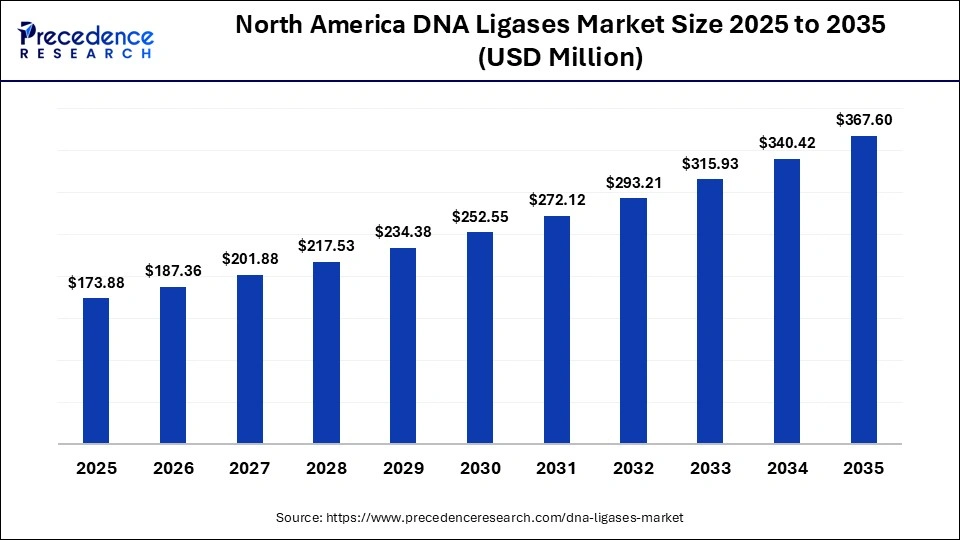
The North America DNA ligases market size is estimated at USD 173.88 million in 2025 and is projected to reach approximately USD 376.60 million by 2035, with a 7.77% CAGR from 2026 to 2035.
How did North America Dominate the DNA Ligases Market in 2025?
North America dominated the DNA ligases market with a 45.5% share in 2025, supported by a highly developed biotechnology and pharmaceutical ecosystem, sustained R&D investment, and early adoption of advanced molecular technologies such as CRISPR-based gene editing and next-generation sequencing. The region benefits from strong demand for DNA ligases across cloning, sequencing library preparation, diagnostics development, and therapeutic research workflows.
The presence of leading global enzyme and life sciences companies, including Thermo Fisher Scientific Inc., New England Biolabs, and Agilent Technologies Inc., plays a central role in driving innovation and ensuring a broad, high-quality product portfolio. These companies invest heavily in enzyme optimization, kit development, and compatibility with high-throughput and automated laboratory platforms, reinforcing regional leadership.
Both the United States and Canada host dense networks of academic research institutions, national laboratories, and clinical research centers that conduct extensive work in molecular biology, genomics, and genetic engineering. Continuous funding for basic research, translational science, and precision medicine initiatives sustains consistent demand for DNA ligases.
What is the Size of the U.S. DNA Ligases Market?
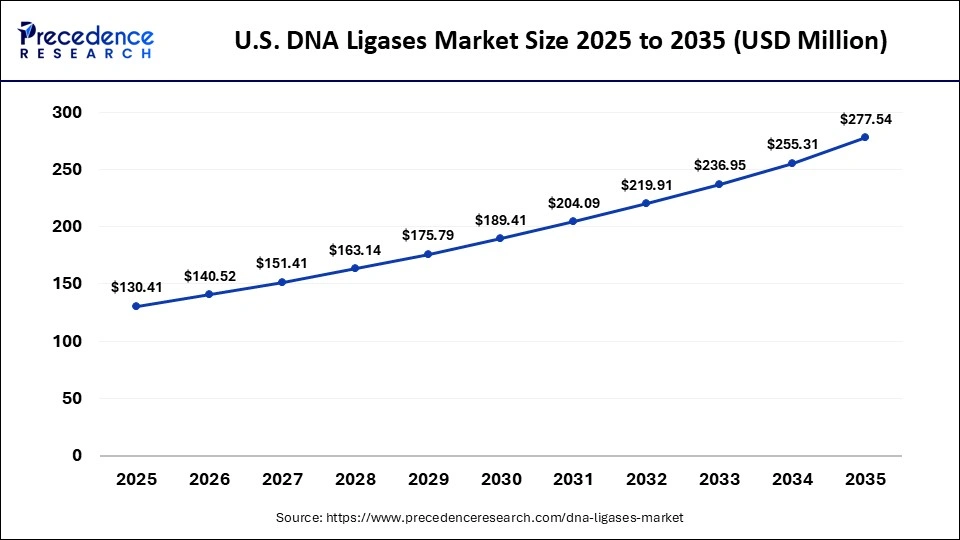
The U.S. DNA ligases market size is calculated at USD 130.41 million in 2025 and is expected to reach nearly USD 277.54 million in 2035, accelerating at a strong CAGR of 7.85% between 2026 and 2035.
The U.S. DNA Ligases Market Trends
The U.S. is the dominant force in the market, as it has a robust biotechnology and pharmaceutical sector with significant investments in genomics and molecular biology research, supported by substantial funding from agencies like the National Institutes of Health. Major global companies such as Thermo Fisher Scientific Inc., New England Biolabs, and Promega Corporation are based in the U.S. and drive product development and market expansion, relying heavily on DNA ligases for precise genetic modifications and library preparation.
How will the Asia Pacific region be the Fastest-Growing in the DNA Ligases Market in 2025?
The Asia Pacific region is projected to experience the fastest growth in the DNA ligases market, with a CAGR of 8.5%, driven by rapid expansion of biotechnology and pharmaceutical sectors and strong government backing for life sciences development. Public funding programs and private capital are increasingly directed toward genomics, molecular diagnostics, vaccine development, and biopharmaceutical manufacturing, all of which rely heavily on DNA ligases for cloning, sequencing, and assay development.
Countries such as China, India, and Japan are investing significantly in healthcare infrastructure, national genomics initiatives, and academic research capacity. These investments are expanding laboratory networks and increasing routine use of ligases in genetic engineering, next-generation sequencing library preparation, and molecular diagnostics.
China's large-scale genomics programs and growing domestic enzyme manufacturing capacity, India's expansion of contract research and biopharmaceutical development, and Japan's strong focus on precision medicine and advanced molecular research are collectively accelerating regional demand. As a result, Asia Pacific is becoming an attractive destination for global life sciences companies seeking to expand manufacturing, distribution, and R&D operations, reinforcing the region's role as a high-growth market for DNA ligases.
India DNA Ligases Market Trends
India is a key player in this rapidly growing market. The country is enhancing its R&D capabilities through government initiatives like the Genome India Project and has cost-effective production capabilities, positioning it as a hub for enzyme research and manufacturing. There is a rising demand for DNA ligases in biopharmaceutical development, diagnostics for infectious and genetic diseases, and agricultural biotechnology.
How will Europe Surge in the DNA Ligases Market in 2025?
Europe plays a significant role in the DNA ligases market, supported by a mature research infrastructure, strong academic institutions, and sustained government funding for life sciences innovation. The region has long-standing strengths in molecular biology, translational research, and biopharmaceutical development, which drive steady demand for DNA ligases across cloning, sequencing, diagnostics, and therapeutic research workflows.
Countries such as Germany, the United Kingdom, and France host major biotechnology clusters and pharmaceutical manufacturing hubs. These ecosystems support high volumes of genomic research, biologics development, and personalized medicine programs that rely on ligation-based techniques for assay development, vector construction, and sequencing library preparation.
Regulatory rigor further reinforces market stability. The implementation of the In Vitro Diagnostic Regulation under the European Union has raised quality, performance, and traceability requirements for molecular diagnostics and research tools. This regulatory framework encourages the use of high-purity, well-characterized DNA ligases in regulated laboratory environments.
Although growth rates are more measured compared to Asia Pacific, Europe's consistent research output, specialization in precision medicine and biopharmaceutical R&D, and strong regulatory alignment continue to support sustained demand for DNA ligases across both academic and commercial segments.
Germany DNA Ligases Market Trends
Germany is increasingly important in the European market, benefiting from solid research infrastructure, renowned academic institutions, and significant government investments in genomics and R&D. It hosts major companies like Merck KGaA, which further bolsters its market position. The market also emphasizes high-quality, regulatory-compliant products for clinical and translational research.
How did Latin America contribute to the DNA Ligases Market in 2025?
Latin America is making increasingly notable contributions to the global DNA ligases market, supported by a growing focus on genomics, population genetics, and personalized medicine research. The region's genetically diverse populations provide valuable datasets for disease association studies, pharmacogenomics, and biomarker discovery, which increases routine use of DNA ligases in cloning, sequencing, and assay validation workflows.
Countries such as Brazil, Mexico, and Argentina are expanding their biotechnology sectors through targeted investment in biopharmaceutical manufacturing, public research institutes, and university-led genomics programs. These efforts are increasing demand for ligation enzymes used in next-generation sequencing library preparation, recombinant DNA construction, and molecular diagnostics development.
Government initiatives aimed at strengthening life sciences capabilities and streamlining regulatory approval processes are further encouraging innovation and foreign investment. Simplified clinical research pathways, incentives for local biomanufacturing, and support for public–private research collaborations are improving access to advanced molecular biology reagents, including DNA ligases.
Brazil DNA Ligases Market Trends
Brazil stands out in Latin America for its focus on both pharmaceutical research and agricultural biotechnology. The country's market is expected to experience steady growth, with an emphasis on affordability while expanding the use of DNA-modifying enzymes across various applications, including the development of genetically modified crops. It is strategically positioned for market expansion in Latin America, driven by overall industrialization and infrastructure development.
Emergence of the Middle East & Africa in the DNA Ligases Market in 2025?
The Middle East and Africa region is emerging as a meaningful contributor to the global DNA ligases market, driven by targeted government investment in genomics, a rising focus on inherited and population-specific genetic disorders, and the steady build-out of biotechnology and healthcare infrastructure. Demand for DNA ligases is increasing as molecular biology techniques become central to genetic screening, disease research, and precision medicine initiatives.
Countries within the Gulf Cooperation Council are playing a particularly important role. Governments have launched large-scale, publicly funded genome sequencing programs aimed at creating national genetic reference databases tailored to local populations. These programs require extensive use of ligation-based workflows for sequencing library preparation, variant validation, and assay development, directly supporting sustained demand for DNA ligases.
The region is also experiencing growth in academic research institutes, national reference laboratories, and hospital-based genomics centers that support newborn screening, rare disease diagnosis, and oncology research. As personalized medicine gains traction, DNA ligases are increasingly used in molecular diagnostics, biomarker discovery, and clinical research pipelines.
While overall market penetration remains lower than in North America or Europe, continued government-backed genomics initiatives, expanding biotechnology ecosystems, and increasing awareness of genetic healthcare are steadily strengthening adoption. These factors position the Middle East and Africa as a developing but strategically important region in the global DNA ligases market.
Saudi Arabia DNA Ligases Market Trends
Saudi Arabia is an emerging market within the Middle East & Africa region, with a growing emphasis on life sciences and healthcare. The high prevalence of genetic diseases in the region, combined with government initiatives aimed at addressing these health concerns, is expected to drive demand for genetic testing and related diagnostic tools that utilize DNA ligases, further boosting the demand for enzymes like DNA ligases in genomics and diagnostics.
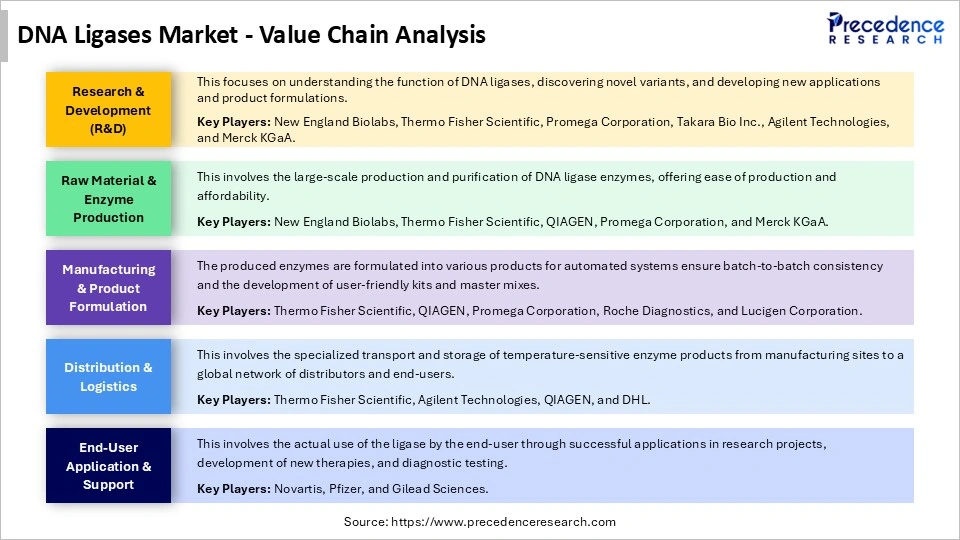
DNA Ligases Market Value Chain
Top Companies for the DNA Ligases Market and Their Offerings
- Charles River Laboratories International, Inc.
- Eurofins Scientific SE
- Certara, L.P.
- IQVIA Holdings, Inc.
- LabCorp / Covance
- Evotec AG
- Pacific BioLab
- GVK Biosciences Private Limited
- Shanghai Medicilon Inc.
- Parexel International Corporation
- Thermo Fisher Scientific Inc.
- SGS SA
- Frontage Laboratories
- Allucent
- ICON plc
Recent Developments
- In October 2025, Cocoon Bioscience launched T4 DNA Ligase, a high-performance recombinant enzyme that offers over 60% cost reduction compared to similar products. Developed using the CrisBio platform, which transforms insect chrysalises into bioreactors, this enzyme enhances research affordability, allowing labs to conduct more experiments efficiently in pharmaceuticals and biotechnology, improving access for small biotech startups and researchers in developing regions.(Source: https://cocoonbio.com)
- In August 2024, Zymo Research introduced the Zymo-Seq SPLAT DNA Library Kit, featuring SPlinted Ligation Adapter Tagging (SPLAT) technology. This innovative kit provides exceptional precision and flexibility in DNA sequencing, preserving genetic information and enabling high-sensitivity analysis.(Source: https://zymoresearch.eu)
Segments Covered in the Report
By Type
- T4 DNA Ligase
- T7 DNA Ligase
- Others
By Application
- Genomics & Genetic Engineering
- Drug Discovery & Research
- Others
By End-User
- Pharmaceutical & Biotechnology Companies
- Academic & Research Institutes
- Others
By Region
- North America
- Latin America
- Europe
- Asia-pacific
- Middle and East Africa
For inquiries regarding discounts, bulk purchases, or customization requests, please contact us at sales@precedenceresearch.com
Frequently Asked Questions





Ask For Sample
No cookie-cutter, only authentic analysis – take the 1st step to become a Precedence Research client
 Get a Sample
.webp)



 sales@precedenceresearch.com
 Schedule a Meeting
