



Europe Skilled Nursing Facility Market Size, Share and Trends 2026 to 2035
Europe Skilled Nursing Facility Market (By Facility Type: Freestanding and Hospital; By Ownership Type: Non-Profit, Profit, and Government; By Services Type: Intensive Rehabilitation Therapy, Low and Medium Rehabilitation, Medically Complex, and Others) Industry Size, Share, Growth, Trends 2025-2035
Source:https://www.precedenceresearch.com/europe-skilled-nursing-facility-market
 Get a Sample
 Table Of Content


The Europe Skilled Nursing Facility Market size was evaluated at USD 111.82 billion in 2025 and is expected to grow around USD 239.18 billion by 2035, registering a CAGR of 7.90% from 2026 to 2035. The market in Europe is mainly driven by an aging population, high rates of chronic illness, strong support from public and private healthcare, and a shift towards professional care instead of traditional family care.
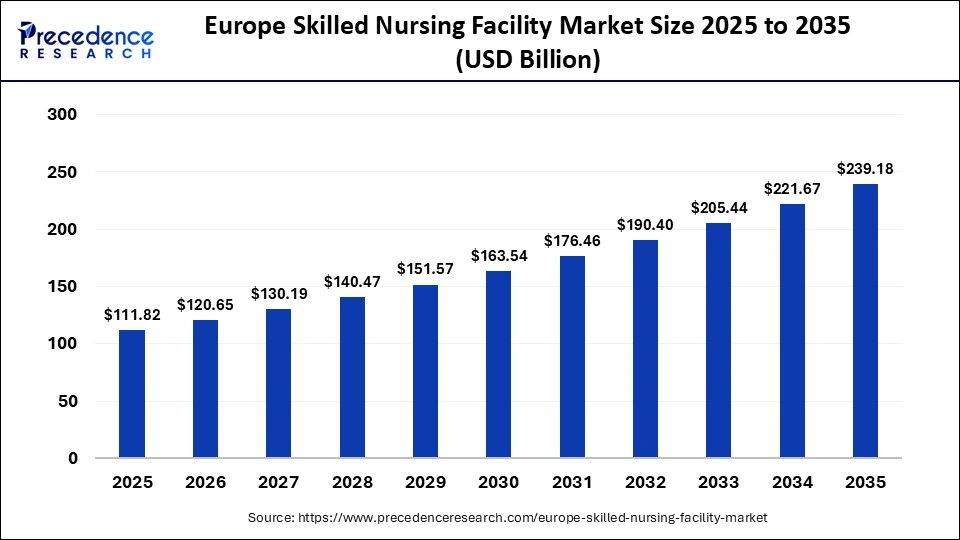
Europe Skilled Nursing Facility Market Statical Scope
| Reports Attributes | Statistics |
| Market Size in 2025 | USD 111.82 Billion |
| Market Size in 2026 | USD 120.65 Billion |
| Market Size by 2035 | USD 239.18 Billion |
| CAGR 2026 to 2035 | 7.90% |
| Base Year | 2025 |
| Forecast Period | 2026 to 2035 |
The market is essential as it supports an aging demographic, a rise in chronic health issues, and a decline in informal family care. The long-term care sector in Europe is a key part of public health stability in countries like Germany, France, and the UK. With one of the oldest populations in the world, Europe has many citizens requiring daily help and round-the-clock medical care.
The prevalence of dementia, Alzheimer's, and age-related disabilities increases the demand for specialized nursing care rather than just basic housing. Additionally, smaller family sizes and busier lifestyles mean that families are less able to provide informal elder care at home. These facilities help reduce hospital congestion by accommodating patients who are recovering from major surgeries or strokes and still need skilled medical attention.
Europe Skilled Nursing Facility Market, By Facility Type, 2025 (%)
| Segments | Shares (%) |
| Freestanding | 72.00% |
| Hospital | 28.00% |
- Freestanding - The freestanding segment, with a share of 72.00% in 2025, plays a dominant role in Europe's skilled nursing facility market by providing affordable, decentralized, and long-term residential care. As the older population grows and informal family support decreases, these standalone facilities help alleviate the strain on costly acute-care hospitals.
- Hospital - The hospital segment, with a share of 28.00% in 2025, is essential in the European skilled nursing facility (SNF) market as it acts as the main entry point for patient admissions. It facilitates post-acute rehabilitation, alleviates expensive acute-care delays, and ensures smooth continuity of care for the aging population.
Europe Skilled Nursing Facility Market, By Ownership Type, 2025 (%)
| Segments | Shares (%) |
| Non-Profit | 24.00% |
| Profit | 62.00% |
| Government | 14.00% |
- Non-Profit - The non-profit segment, with a share of 24.00% in 2025, is important in the European skilled nursing facility (SNF) market as it delivers stable, high-quality long-term care focused on social missions instead of profits. This helps maintain a balance in the heavily regulated elder-care systems in countries like Germany, France, and the Netherlands.
- Profit - The for-profit (commercial) segment, with a share of 62.00% in 2025, accounts for the largest revenue share in the European skilled nursing and long-term care market as it promotes capacity growth, brings in private investment to meet the needs of an aging population, and speeds up the implementation of modern, technology-driven efficiencies that public systems often struggle to finance.
Europe Skilled Nursing Facility Market, By Services Type, 2025 (%)
| Segments | Shares (%) |
| Intensive Rehabilitation Therapy | 28.00% |
| Low and Medium Rehabilitation | 31.00% |
| Medically Complex | 27.00% |
| Others | 14.00% |
- Intensive Rehabilitation Therapy - The Intensive Rehabilitation Therapy segment, with a share of 28.00% in 2025, is vital in the Europe skilled nursing facility market as it meets the increasing post-acute care needs of a rapidly aging demographic. It helps patients recovering from strokes, serious injuries, or major surgeries regain functionality faster, reducing long-term care reliance and minimizing costly hospital readmissions.
- Low and Medium Rehabilitation - The low and medium rehabilitation segment, with a share of 31.00% in 2025, in Europe's skilled nursing facilities (SNFs) is the leader for managing long-term chronic care and maintaining steady functionality for a large aging population. While intensive care focuses on acute post-surgical recovery, the low-to-medium tiers offer affordable, ongoing support that prevents physical decline and decreases the frequency of hospital visits.
- Medically Complex - The medically complex segment, with a share of 27.00% in 2025, plays a crucial role in the skilled nursing facility (SNF) market in Europe as it connects acute hospital care with long-term support. It addresses the growing need for specialized clinical interventions like ventilator management, advanced wound care, and post-surgical recovery for an aging population, helping to optimize hospital capacity and lower overall healthcare costs.
Competitive Landscape
The European market for skilled nursing and long-term care is driven by an aging population and consolidated private companies. Key players in this market include Clariane (previously Korian), Orpea Group, DomusVi, Bupa, and Attendo, which offer long-term medical nursing, assisted living, and specialized chronic care.
- Clariane (Korian) operates widely in France, Germany, Belgium, and Italy, providing long-term nursing care, specialized medical units, and assisted living through local brand networks.
- Orpea Group has a broad network of eldercare facilities, long-term care nursing homes, and post-acute rehabilitation services across various Western European countries.
- DomusVi specializes in residential care facilities, dementia units, day care centers, and respite care services in France, Spain, and Portugal.
- Bupa Care Homes offers personalized residential, nursing, and specialized dementia care services, mainly in the United Kingdom and some European markets.
- Attendo leads in the Nordic region (Sweden, Finland, Norway), providing care homes, assisted living for seniors, and specialized care in collaboration with local authorities.
Segments Covered in the Report
By Facility Type
- Freestanding
- Hospital
By Ownership Type
- Non-Profit
- Profit
- Government
By Services Type
- Intensive Rehabilitation Therapy
- Low and Medium Rehabilitation
- Medically Complex
- Others
For inquiries regarding discounts, bulk purchases, or customization requests, please contact us at sales@precedenceresearch.com
Frequently Asked Questions





Ask For Sample
No cookie-cutter, only authentic analysis – take the 1st step to become a Precedence Research client
.webp)



 sales@precedenceresearch.com
 Schedule a Meeting



