



Foot and Ankle Trauma Market, Global Market Size, Segmentation, Regional Analysis, Buyer Intelligence, Technology Development, Company and Competitive Intelligence.
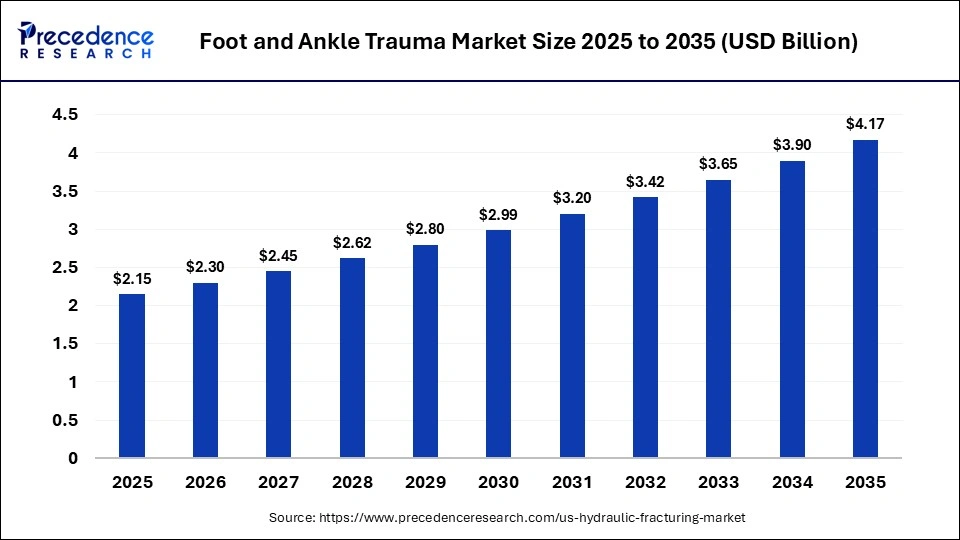
The market was valued at USD 2.15 billion in 2025 and is projected to grow at a CAGR of 6.85% during the forecast period from 2026 to 2035. The shift toward minimally invasive procedures decreases recovery times, lowers complication rates, and encourages more patients to seek surgical intervention. Our healthcare research analyst, Deepa Pandey, analysed this value. She researched material types, clinical applications, regional growth drivers, and competitive landscapes. Her research is useful for medical product producers, healthcare providers, biotechnology firms, and investors for competitive benchmarking and strategic decision-making.
Source: https://www.precedenceresearch.com/foot-and-ankle-trauma-market
 Get a Sample
 Table Of Content


Foot and Ankle Trauma Market Size, Share, Trends, and Growth Forecast 2035
Increased participation in high-impact sports, fitness activities, and recreational athletics across all age groups has contributed to a surge in lower-extremity sprains, tears, and fractures. Meanwhile, the introduction of lightweight implants, bioabsorbable fixation materials, 3D-printed custom devices, and digital or robotic surgical support improves patient outcomes and boosts adoption. Deepa Pandey has more than 5 years of experience focusing on the healthcare and medicine sector. Advancements in minimally invasive surgical methods, 3D-printed patient-matched implants, and bioabsorbable fixation devices improve healing results and shorten recovery times. The market is estimated at USD 2.15 billion in 2025, expanding at a CAGR of 6.85% during the forecast period from 2026 to 2035. The market is driven by an increase in high-impact sports activities, recreational fitness, and road traffic accidents worldwide, which raise the frequency of lower extremity fractures and ankle trauma.
Key Takeaways
- By product type, the internal fixation devices segment led the market with a 24.65% share in 2025.
- By anatomical site, the ankle segment captured a major revenue share of 42.85% in 2025.
- By injury type, the fractures segment captured the largest market share of 61.85% in 2025.
- By fixation type, the internal fixation segment led the market with a share of 72.85% in 2025.
- By material, the titanium & titanium alloys segment led the market with a share of 42.85% in 2025.
- By procedure, the open reduction & internal fixation (ORIF) segment led the market with a share of 48.65% in 2025.
- By end-user, the hospitals segment led the market with a share of 55.85% in 2025.
- The U.S. ankle-fracture incidence study shows that it is 7.56 per 10,000 person-years in ages 10–19.
- Global road traffic deaths are nearly 1.19 million annually, with a large source of serious trauma.
Introduction
The global foot and ankle trauma market includes implants, fixation systems, and surgical instruments, along with related products used to treat fractures, dislocations, ligament and tendon injuries, and a few traumatic conditions affecting the foot and ankle. Demand is supported by sports injuries, road and workplace accidents, falls, population aging, and increasing usage of surgical fixation techniques.
Recent product development illustrates this shift. DePuy Synthes started its TriLEAP Lower Extremity Anatomic Plating System in 2024 with low-profile, procedure-specific titanium plates for the forefoot and midfoot reconstruction and trauma. Acumed's ankle systems similarly include precontoured plates, locking screws, and minimally invasive approaches, while Arthrex provides fibular nails, low-profile plates, and flexible fixation systems.
Market Size and Forecast
How Large Could the Foot and Ankle Trauma Market Become By 2035?
Analyst View - Market Size and Forecast
The supplied forecast indicates that the market could expand from USD 2.15 billion to nearly USD 4.17 billion between 2025 and 2035, representing an increase of roughly USD 2.02 billion. The underlying demand base is supported by multiple trauma mechanisms rather than a single disease category. A U.S. epidemiological study found that falls accounted for 54.83% of ankle fractures, sports for 20.76%, and exercise for 16.84%. The demographic component is also important. Moreover, WHO projects the global population aged 60 years and older to rise from about 1 billion in 2020 to 2.1 billion by 2050.
Segmental Analysis
Product Type Analysis
Which Foot and Ankle Trauma Products are Generating the Greatest Demand?
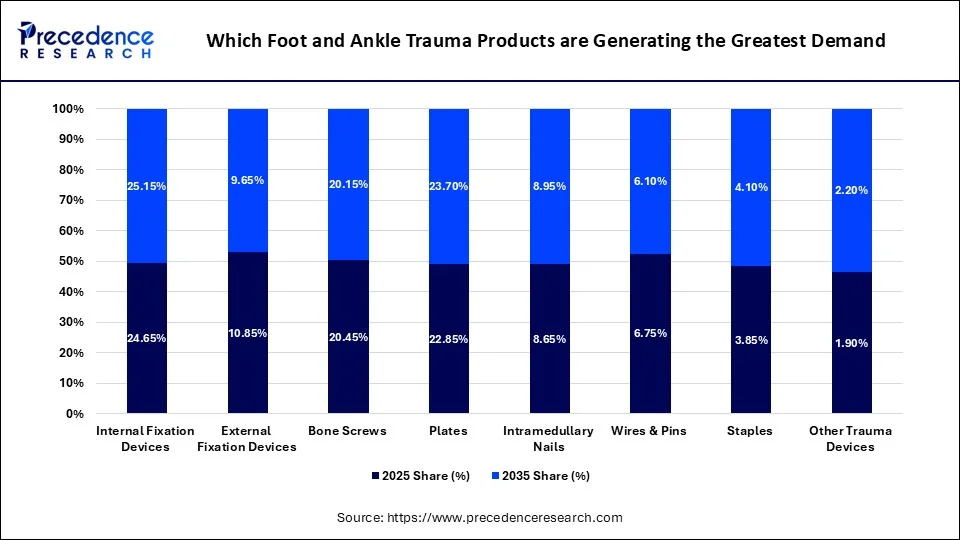
Internal fixation devices dominate the market share, with 24.65% in 2025 because of their broad application across ankle, hindfoot, midfoot, and forefoot trauma procedures. Urbanization and higher vehicle density drive up severe, complex trauma cases demanding immediate surgery, and antibacterial and bioactive surfaces reduce infection risks and actively stimulate bone growth.
Analyst View - Product Type
The supplied data states that internal fixation devices are the largest category at 24.65%, while Plates are the second-largest at 22.85%. Plates also have a higher modeled CAGR of 7.25%. The product mix is increasingly shifting toward anatomically specific systems rather than generic fixation. Acumed's systems include dedicated medial, lateral, anterior, and posterior tibia or fibula plates, with locking and nonlocking screw options. Other trauma devices have the highest supplied product CAGR at 8.25%, although it starts from a relatively small base.
Anatomical Site Analysis
Which Parts of the Foot and Ankle Generate the Greatest Trauma-Treatment Demand?
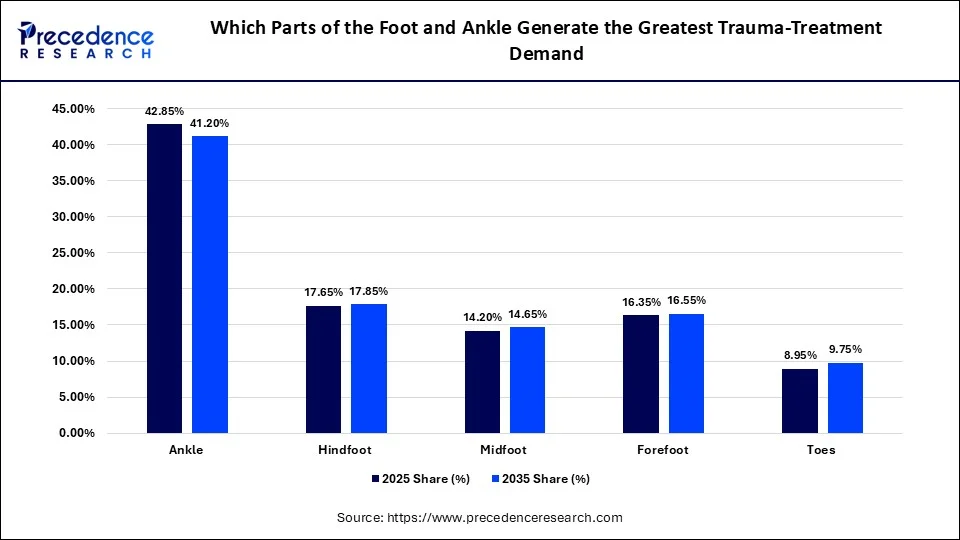
The ankle segment dominates with a market share of 42.85%, as rising participation in athletics and fitness routines across all age groups leads to a higher frequency of acute ankle fractures and syndesmotic injuries. Thus, enhanced diagnostic tools and early medical intervention raise detection rates for unstable ankle injuries, boosting the need for specialized internal fixation and syndesmosis repair systems.
The hindfoot segment is the fastest-growing, with a CAGR of 6.95%, as modern vehicle accidents and severe falls cause high-velocity impacts, contributing to complicated crush injuries and fractures in the hindfoot bones such as the calcaneus and talus. More orthopedic surgeons are completing dedicated subspecialty training aimed solely at complex foot and ankle reconstruction and trauma.
Analyst View - Anatomical Site
The ankle represents 42.85% of the modeled 2025 market, more than twice the share of the next-largest anatomical site. Independent epidemiological evidence supports the significance of ankle trauma. A population-based study recorded an average ankle-fracture incidence of 168.7 per 100,000 people per year, with falls accounting for 61% and sports for 22% of injuries. Another study of 1,756 adult ankle fractures reported an incidence of 179 per 100,000 person-years, with 34.6% of individuals aged 65 or older. The toes segment has the highest supplied CAGR at 7.80%, although it remains the smallest anatomical category.
Injury Type Analysis
Which Injuries Account for Most Foot and Ankle Trauma Procedures?
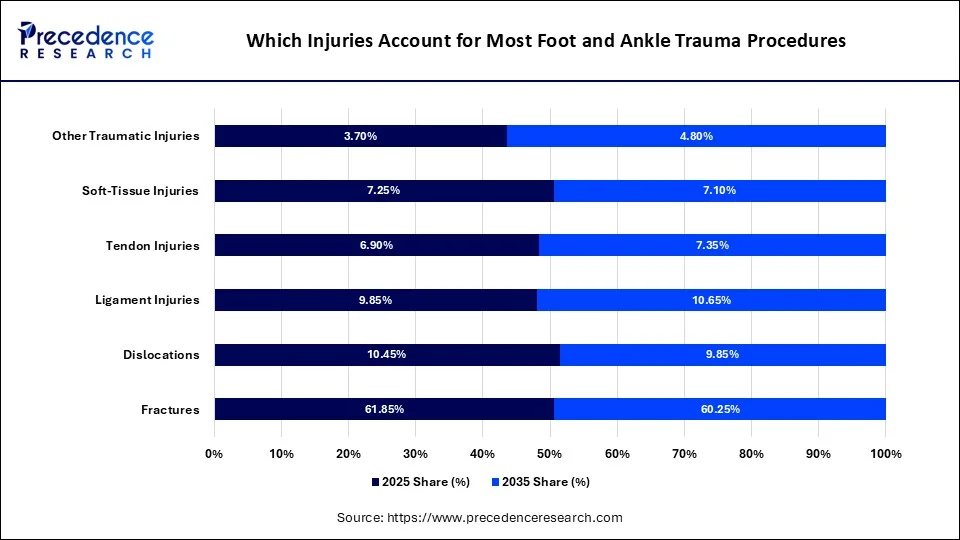
The fractures segment dominates with a market share of 61.85%, as high-impact athletic activities, along with recreational sports, have led to an increase in lower-extremity twists, sprains, and even severe bone fractures across all age groups. Unlike elective or cosmetic procedures, acute fractures need immediate, non-discretionary surgical treatment and specialized hardware utilization, thus creating a steady and reliable market baseline.
Analyst View - Injury Type
Fractures account for 61.85% of the modeled market and remain the principal driver of implant and fixation demand. Moreover, the market is broader than fracture fixation. Sports-related ankle injuries are substantial; a systematic review, covering 181 prospective epidemiological studies, found especially high ankle-sprain incidence in indoor or court sports and identified lateral ankle sprain as the most common subtype. The supplied data show Other traumatic injuries rising at 9.70%, the fastest-growing injury category. Ligament injuries at 7.75% and then tendon injuries at 7.55% also grow faster than the overall market.
Fixation Type Analysis
How is the Market Divided Between Internal and External Fixation?
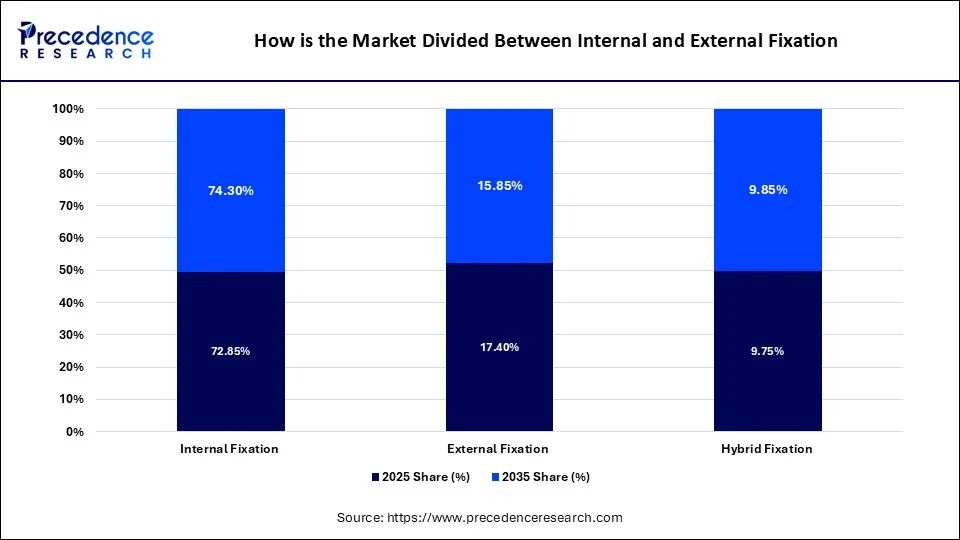
The internal fixation segment dominates the market share at 72.85% as the growing elderly population faces a higher risk of falls and osteoporotic or brittle bone fractures, requiring stable internal support. Patients and surgeons increasingly favor internal fixation because it enables earlier joint mobilization and shorter overall rehabilitation periods.
Analyst View - Fixation Type
The market is strongly concentrated around internal fixation, which accounts for 72.85% of 2025 need and increases to 74.30% by 2035. This is consistent with the wide range of internal fixation technologies now available, including screws, plates, nails, and flexible fixation. Arthrex, for example, provides a fibular nail designed for minimally invasive ankle-fracture treatment alongside plates and syndesmotic fixation systems. Moreover, external fixation remains important for severe, open, and even soft-tissue-compromised trauma, but its modeled share declines as internal fixation technologies expand into increasingly complex fracture patterns.
Material Analysis
Which Implant Materials are Gaining Importance?
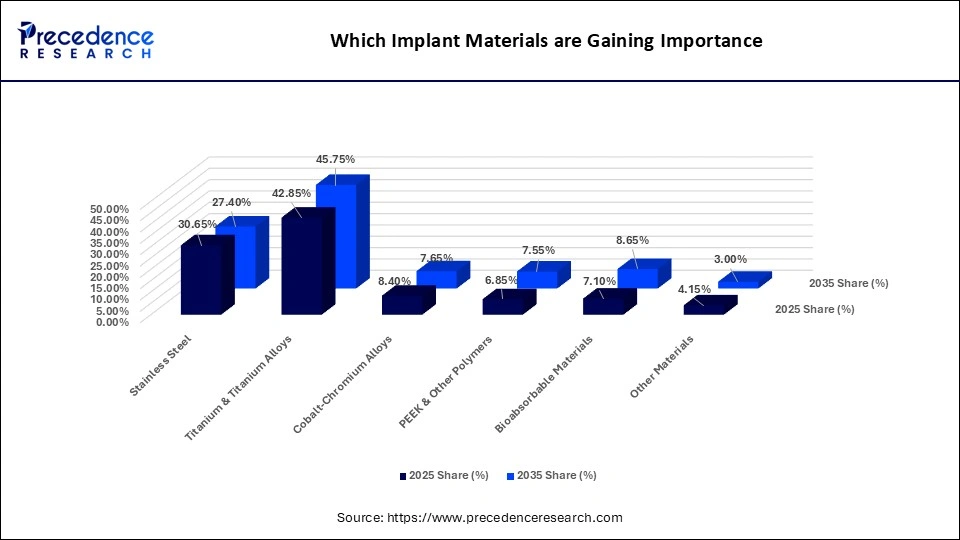
The titanium & titanium alloys segment dominated with a market share of 42.85% as they provide superior biocompatibility, excellent strength-to-weight ratios, along with seamless bone integration compared to traditional stainless steel. They offer high structural strength without adding unnecessary bulk to delicate extremity repairs. They yield lower artifact interference during post-operative CT or MRI scans than older stainless steel options.
Analyst View - Material
Titanium and titanium alloys are the largest material category, with a 42.85% share and 7.55% CAGR. The change toward titanium is also visible in commercial product development. DePuy Synthes' TriLEAP system utilizes procedure-specific titanium plates, while Arthrex offers titanium cannulated screws for foot and ankle fixation. Moreover, the fastest-growing material category is bioabsorbable materials at 9.10%, followed by PEEK and other polymers at 8.00%. FDA-cleared orthopedic devices demonstrate established usage of PEEK and titanium in fixation applications, including foot and ankle indications.
Procedure Analysis
Which Procedures are Driving Foot and Ankle Trauma Implant Consumption?
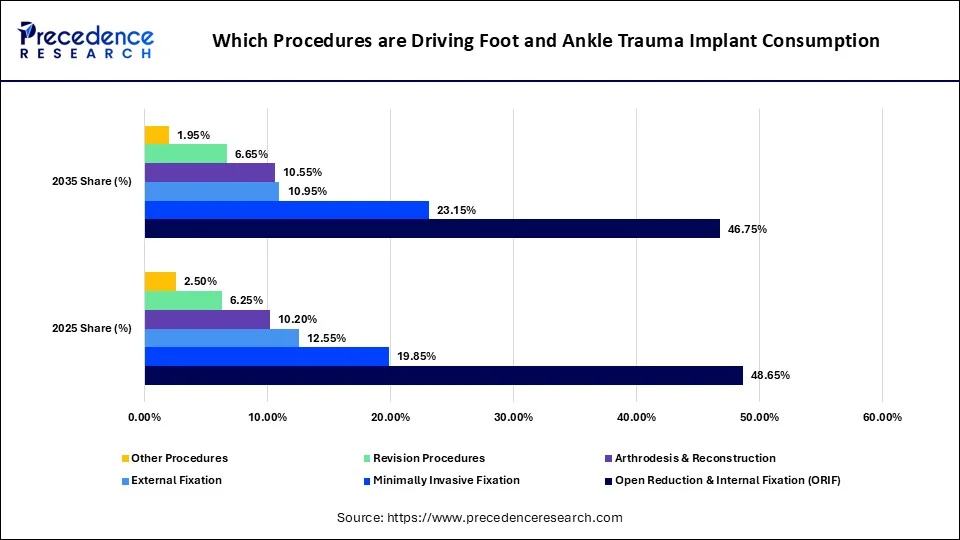
The open reduction & internal fixation (ORIF) segment dominates with a market share of 48.65%. An increase in high-impact sports, road traffic accidents, and everyday active lifestyles leads to more complex, unstable ankle and foot fractures that demand precise surgical repair. ORIF remains the gold standard for unstable joint fractures as it restores proper bone alignment and joint stability more reliably than non-surgical immobilization.
Analyst View - Procedure
ORIF remains the largest procedure category at 48.65%, but the major structural shift is toward minimally invasive fixation, which has the highest major-procedure CAGR at 8.60%. Moreover, product portfolios increasingly reflect this trend. Acumed specifically describes its anterior and fibula plates as programmed for minimally invasive approaches and reduced soft-tissue irritation. Arthrex similarly positions its FibuLock fibular nail as a minimally invasive ankle-fracture solution. This creates a need for smaller instruments, low-profile plates, intramedullary devices, image-guided workflows, along with procedure-specific instrumentation.
End-User Analysis
The hospitals segment dominated with a market share of 55.85% because they serve as the primary destination for emergency, complex, and surgical fracture management. Availability of advanced operating rooms, imaging tech, and dedicated trauma centers, and a high concentration of skilled orthopedic and podiatric surgeons managing complicated lower-extremity cases.
Analyst View - End-User
Hospitals remain the largest end-user group, accounting for 55.85% of the supplied 2025 market. However, ambulatory surgical center grow at 8.35%, materially above the overall market CAGR. This is consistent with a wider movement toward outpatient management for appropriately selected orthopedic procedures. Moreover, the supplied share shift from 17.65% to 20.15% represents a 2.50-percentage-point increase for ASCs by 2035.
Distribution Channel Analysis
How are Trauma Implants Supplied to Healthcare Providers?
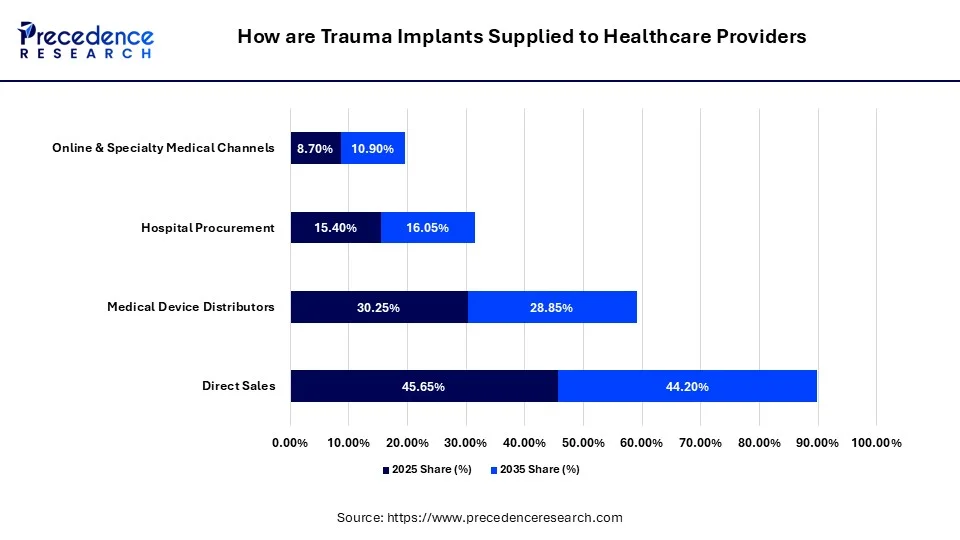
The direct sales dominated with a market share of 45.65% in 2025, as they offer immediate technical assistance and instrument readiness in the operating room, which is vital for acute trauma cases. Foot and ankle procedures usually require niche, anatomically specific fixation systems. Moreover, direct sales teams can deploy branded education and even hands-on training programs more effectively to drive device adoption.
Analyst View - Distribution Channel
Direct sales remain dominant because trauma implants involve more than product delivery. Suppliers frequently offer surgeon education, procedure-specific instrumentation, inventory management, and even technical support. The fastest-growing channel is online & specialty medical channels at 9.55% CAGR, although their share remains relatively small. Hospital procurement rises from 15.40% to 16.05%, indicating continued importance of institutional purchasing systems alongside surgeon-level product preference.
Regional Analysis
Which Regions are Driving Global Foot and Ankle Trauma Demand?
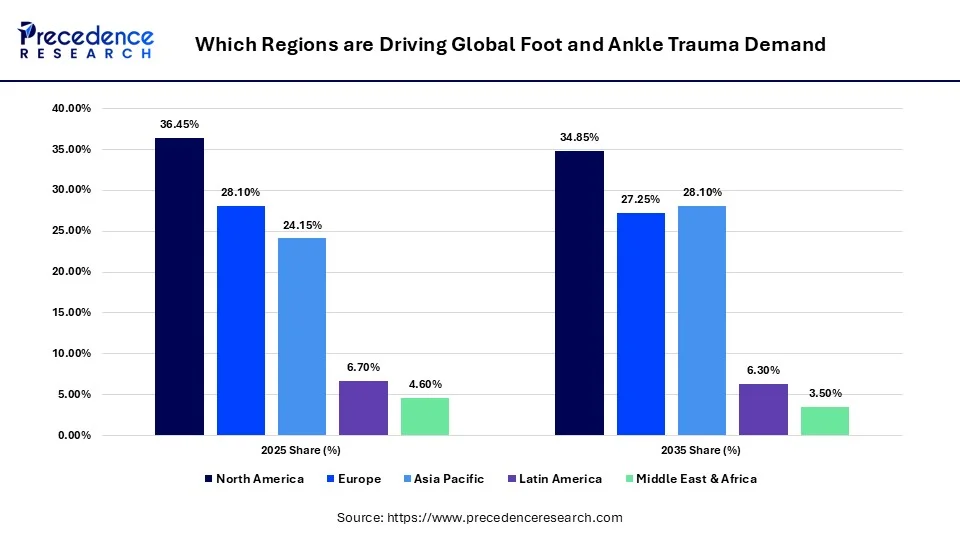
North America leads the global foot and ankle trauma market due to a high rate of orthopedic injuries, strong insurance coverage, and advanced healthcare infrastructure. Further, high rates of diabetes and obesity lead to complex lower-extremity complications that demand reconstructive surgery; broad insurance coverage, advanced reimbursement policies, and a shift toward efficient outpatient care in ambulatory surgery centers support high procedural volumes.
Analyst View - Regional Analysis
North America represents the largest regional market share of 36.45% in 2025, but Asia Pacific records the highest supplied CAGR at 8.45%. Consequently, Asia Pacific's share rises from 24.15% to 28.10% by 2035, a gain of 3.95 percentage points.
The opportunity is funded by expanding healthcare infrastructure, growing access to orthopedic surgery, along with rising adoption of modern fixation systems. Demographic aging is mainly relevant in Asia. WHO's India demographic data, for instance, show 156.7 million people aged 60+ in 2024, equivalent to 11% of the population, with the proportion anticipated to reach 21% by 2050.
Trauma Incidence and Demand Indicators
What Real-World Injury Trends Support the Trauma-Device Opportunity?
| Indicator | Published Figure | Market Relevance |
| U.S. ankle-fracture incidence study | 7.56 per 10,000 person-years in ages 10–19 | Significant adolescent trauma burden |
| U.S. ankle-fracture mechanism | 54.83% falls | Supports fracture-fixation demand |
| U.S. ankle-fracture mechanism | 20.76% sports | Supports sports-related trauma |
| Population-based ankle-fracture incidence | 168.7/100,000/year | Demonstrates recurring trauma burden |
| Swedish ankle-fracture study | 179/100,000 person-years | Supports substantial surgical/trauma workload |
| Swedish study - low-energy trauma | 68.20% | Links demand to falls and lower-energy injury |
| Adults ≥65, U.S., 2016–2023 | 241,449 estimated ankle fractures | Aging population relevance |
| Adults ≥65 incidence | 55.8/100,000 person-years | Quantifies geriatric ankle trauma |
| Global road traffic deaths | 1.19 million annually | Large source of serious trauma |
The U.S. ankle-fracture study recorded 241,449 estimated ankle fractures among adults aged 65 and older between 2016 and 2023, with incidence rising from 49.1 to 63.0 per 100,000 during the study period. Women accounted for 76.2% and low-energy trauma for 92.8% of these fractures. Moreover, WHO reported 1.19 million annual road-traffic deaths in its 2023 global road-safety report, with road traffic injuries remaining a major source of traumatic injury globally.
Analyst View - Trauma Incidence and Demand Indicators
The demand base is structurally diverse:
- Falls support geriatric fracture demand.
- Road traffic accidents generate high-energy and complex trauma.
- Sports support younger and active populations.
- Workplace injuries contribute to occupational trauma.
- Population aging increases the number of patients vulnerable to falls and fractures.
This diversity decreases reliance on any single trauma mechanism and supports recurring need for fixation products.
Company and Competitive Intelligence
What are Major Orthopedic Companies Doing in Trauma and Extremities?
| Company | 2025 Relevant Revenue/Disclosure | Foot & Ankle/Trauma Evidence |
| Stryker | Trauma & Extremities: $3.948B | Major trauma/extremities platform |
| Johnson & Johnson MedTech | Trauma: $3.146B | DePuy Synthes trauma portfolio |
| Smith+Nephew | Trauma & Extremities: $649M | EVOS, TRIGEN MAX Tibia and other trauma products |
| Zimmer Biomet | Foot & Ankle = 12% of S.E.T. sales | Gorilla Ankle Fracture Plating System |
| Arthrex | Not separately disclosed | FibuLock, ankle plating, TightRope |
| Acumed/OsteoMed | Not separately disclosed | Ankle and foot plating systems |
Important: These company figures are broader trauma or extremities or portfolio revenues and must not be interpreted as foot and ankle trauma market revenue.
Stryker
Stryker recorded $3.948 billion in 2025 trauma and extremities sales, up from $3.507 billion in 2024 and $3.147 billion in 2023. Trauma and extremities represented 42% of Stryker's 2025 Orthopaedics sales. Stryker describes its orthopedics portfolio as including ankle and trauma or extremity implants, specialized instrumentation, along with technologies designed to support orthopedic surgery.
Johnson & Johnson/DePuy Synthes
Johnson & Johnson recorded $3.146 billion in 2025 Trauma sales within its Orthopaedics franchise, compared with $3.049 billion in 2024. Worldwide Orthopaedics sales were $9.258 billion. DePuy Synthes' 2024 launch of the TriLEAP lower extremity anatomic plating system signals the industry's move toward low-profile, thus, anatomically contoured titanium plates for foot and ankle reconstruction and trauma.
Smith+Nephew
Smith+Nephew generated $649 million in 2025 trauma & extremities revenue, up from $608 million in 2024, thus representing 6.7% reported growth and 6.3% underlying growth. Growth was driven by its EVOS Plating System, limb-restoration portfolio, and the AETOS Shoulder System. The company estimates the wider global trauma & extremities market at $15.7 billion in 2025, growing nearly 7%. This is a much wider market than the foot and ankle trauma market defined here. In February 2026, Smith+Nephew also declared a distribution agreement with SI-BONE for the iFuse TORQ portfolio for percutaneous pelvic-fracture fixation, thus demonstrating continued expansion of differentiated trauma solutions.
Zimmer Biomet
Zimmer Biomet reports foot and ankle products within its S.E.T. category. In 2025, foot and ankle products represented 12% of S.E.T. net sales, while trauma products represented 20%. The firm's disclosed foot-and-ankle portfolio involves the Gorilla ankle fracture plating system.
Analyst View - Company and Competitive Intelligence
The competitive environment is characterized by large orthopedic firms with broad trauma portfolios competing alongside specialized foot-and-ankle firms.
The clearest product-development themes are:
- anatomically contoured plates
- low-profile fixation
- minimally invasive nails
- variable-angle locking
- flexible syndesmotic fixation
- titanium and advanced polymer materials;
- procedure-specific instrumentation
- systems designed around particular fracture patterns
Technology Development
What Technologies are Changing Foot and Ankle Trauma Fixation?
| Technology | Commercial/Clinical Direction | Market Effect |
| Anatomical Plates | Patient- and fracture-specific contours | Better anatomical fit |
| Locking Plates | Locking and variable-angle screw systems | More fixation options |
| Intramedullary Nails | Fibular and hindfoot nails | Less invasive fixation |
| Low-Profile Implants | Reduced implant prominence | Soft-tissue considerations |
| Flexible Fixation | TightRope-type systems | Alternative to rigid fixation |
| PEEK Components | Radiolucent polymer components | Imaging and material differentiation |
| Bioabsorbable Materials | Temporary fixation concepts | Potential reduction in permanent hardware |
| Patient-Specific Design | Anatomy-oriented systems | Greater customization |
| Modular Instrumentation | Procedure-specific trays | Workflow and OR efficiency |
Acumed's systems involve variable-angle locking technology for different fracture patterns and patient anatomy. Its ankle system also provides multiple plate families and specialized instrumentation for medial, lateral, and posterior malleolar fractures. Arthrex's portfolio similarly involves FibuLock fibular nails, ankle fracture management systems, syndesmotic TightRope systems, and even minimally invasive solutions.
Analyst View - Technology Development
The market's technology transition is mainly about procedure optimization rather than simply introducing new materials. Producers are attempting to reduce surgical complexity via modular instrumentation while simultaneously providing implants that better match anatomy and fracture morphology. This creates opportunities for suppliers that can combine implant design, instrumentation, surgical technique, and surgeon education into integrated procedure platforms.
Buyer Intelligence
What Do Hospitals and Surgeons Evaluate When Purchasing Trauma Fixation Systems?
| Buyer Criterion | Importance | Procurement Consideration |
| Implant Stability | Very High | Ability to maintain reduction and fixation |
| Anatomical Fit | Very High | Compatibility with fracture anatomy |
| Screw/Plate Options | Very High | Range of fixation configurations |
| Material | High | Titanium, stainless steel, polymer, and bioabsorbable options |
| Soft-Tissue Profile | High | Implant prominence and irritation |
| Surgical Instrumentation | Very High | Ease and speed of procedure |
| Minimally Invasive Compatibility | High | Access and incision requirements |
| Surgeon Familiarity | Very High | Existing technique and training |
| Inventory Availability | Very High | Immediate trauma-case requirements |
| Hospital Contract | High | Pricing and procurement agreements |
| Clinical Evidence | Very High | Safety and performance support |
| Reimbursement Economics | High | Total procedure economics |
| Training/Technical Support | High | Intraoperative assistance and education |
| Product Breadth | High | Ability to handle multiple fracture patterns |
Hospitals and surgeons evaluate clinical performance, financial value, regulatory compliance, and supplier support when purchasing trauma fixation systems. Devices that aid minimally invasive techniques or feature anatomical profiling help decrease operating time and patient trauma. Facilities demand strict adherence to international safety standards, such as FDA approvals, CE marks, and ISO 13485 quality management certifications.
Analyst View - Buyer Intelligence
Foot and ankle trauma differs from many elective orthopedic categories as availability and clinical support can be critical during urgent cases. Hospitals and trauma centers therefore estimate more than implant unit price. Supplier reliability, instrumentation, tray availability, surgeon familiarity, and the ability to offer multiple implant configurations can influence purchasing. The rising importance of ASCs creates a somewhat different procurement model, with greater attention to procedure standardization, tray efficiency, operating-room time, along with inventory utilization.
Growth Drivers
What is driving the foot and ankle trauma market?
Aging population
The global 60+ population is projected to reach nearly 2.1 billion by 2050, rising the population exposed to fall-related injuries.
Fall-related fractures
Falls are a major ankle-fracture mechanism. One U.S. study found that 54.83% of ankle fractures were due to falls.
Sports participation
Ankle injuries are mainly common in court and team sports, supporting demand for ligament, tendon, and fracture treatment.
Road and workplace trauma
Road traffic injuries thus remain a substantial source of high-energy trauma, with WHO reporting 1.19 million annual road deaths.
Minimally invasive fixation
The supplied data show minimally invasive fixation growing at 8.60%, and materially above the overall market.
Anatomical implant design
Procedure-specific plates are expanding from generic fixation toward fracture-pattern and anatomy-specific systems.
ASC expansion
The supplied ASC segment grows at 8.35%, creating need for efficient, standardized procedural systems.
Advanced materials
Bioabsorbable materials and PEEK or polymer solutions have higher modeled growth rates than stainless steel.
Market Challenges
What Could Constrain Market Growth?
| Challenge | Potential Impact |
| High implant cost | Can limit adoption in cost-sensitive healthcare systems |
| Reimbursement pressure | Influences hospital and surgeon economics |
| Volume-based procurement | Can increase pricing pressure |
| Surgeon preference | Creates switching barriers between systems |
| Inventory requirements | Trauma requires broad SKU availability. |
| Clinical evidence requirements | New materials need validation. |
| Complication/revision risk | Can affect product adoption |
| Training requirements | New fixation systems require surgeon education. |
| Regulatory requirements | Adds development and approval costs |
| Unequal surgical access | Limits adoption in developing markets |
China's volume-based procurement environment is already affecting orthopedic firms. Smith+Nephew reported China-related headwinds in 2025 and even separately highlighted continued growth in trauma & extremities from its EVOS plating and other products.
Analyst View
The principal commercial challenge is increasingly pricing, along with procurement pressure rather than lack of clinical demand. Large producers must demonstrate differentiation through clinical utility, surgeon preference, workflow efficiency, and portfolio breadth while managing pressure from institutional purchasing systems.
Expert Insights
The foot and ankle trauma market is a worldwide industry basically meant for making, selling, and distributing implants and tools used to treat broken bones, severe sprains, and joint dislocations in the lower leg, foot, and ankle. Moreover, ongoing shifts toward minimally invasive surgeries, bioabsorbable implants, and customized 3D-printed devices enhance patient recovery times and clinical outcomes.
I believe that it is anticipated to assist the world, as untreated or poorly healed ankle trauma contributes to chronic pain and long-term disability, placing a heavy financial burden on healthcare systems and patients. It is projected that surgeries increasingly favor minimally invasive surgical (MIS) techniques and advanced bioresorbable or titanium implants that decrease recovery times and hardware removal needs.
Our Experts
The primary market research process was carried out by Deepa Pandey, Senior Research Associate, who also designed the methodology and conducted market segmentation, regional trend analysis, competitive analysis, recycling technologies, and forecasts, laying the foundation for the analytical part of the report.
Aman Singh, Head of Research, has gathered and checked regulatory policies, information on recycling capacity, company financial information, production information, commodity price information, and numerous other quantitative information sources, which are obtained independently, thereby increasing the quality of evidence supporting calculations of the market values.
Aditi Shivarkar, VP Research, has validated and refined the research material, verified facts, corrected inconsistencies, and completed the research document, making it accurate and to the point.
Foot and Ankle Trauma Market Segmentation
By Product Type
- Internal Fixation Devices
- External Fixation Devices
- Bone Screws
- Plates
- Intramedullary Nails
- Wires & Pins
- Staples
- Other Trauma Devices
By Anatomical Site
- Ankle
- Hindfoot
- Midfoot
- Forefoot
- Toes
By Injury Type
- Fractures
- Dislocations
- Ligament Injuries
- Tendon Injuries
- Soft-Tissue Injuries
- Other Traumatic Injuries
By Fixation Type
- Internal Fixation
- External Fixation
- Hybrid Fixation
By Material
- Stainless Steel
- Titanium & Titanium Alloys
- Cobalt-Chromium Alloys
- PEEK & Other Polymers
- Bioabsorbable Materials
- Other Materials
By Procedure
- Open Reduction & Internal Fixation (ORIF)
- Minimally Invasive Fixation
- External Fixation
- Arthrodesis & Reconstruction
- Revision Procedures
- Other Procedures
By End User
- Hospitals
- Ambulatory Surgical Centers
- Specialty Orthopedic Clinics
- Trauma Centers
- Academic & Research Hospitals
- Other Healthcare Facilities
By Distribution Channel
- Direct Sales
- Medical Device Distributors
- Hospital Procurement
- Online & Specialty Medical Channels
By Region
- North America
- Europe
- Asia Pacific
- Latin America
- Middle East & Africa
For inquiries regarding discounts, bulk purchases, or customization requests, please contact us at sales@precedenceresearch.com
Frequently Asked Questions





Ask For Sample
No cookie-cutter, only authentic analysis – take the 1st step to become a Precedence Research client
 Get a Sample
.webp)



 sales@precedenceresearch.com
 Schedule a Meeting
