



General Anesthesia Drugs Market: AI-Driven Insights, Trends, Growth Drivers, and Future Outlook
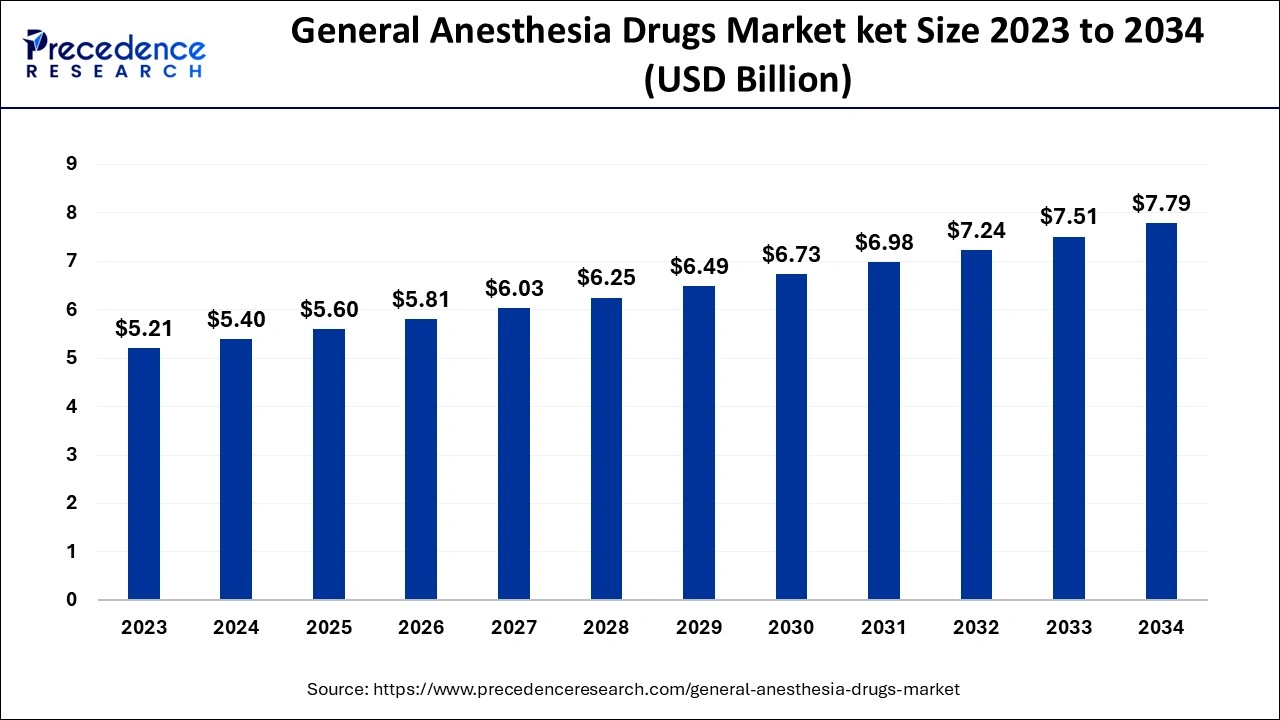
The global general anesthesia drugs market is experiencing steady growth due to the rising volume of surgical procedures, increasing prevalence of chronic diseases such as cancer, cardiovascular disorders, and diabetes, and continuous advancements in anesthesia technologies. Valued at USD 5.60 billion in 2025, the market is projected to reach USD 8.06 billion by 2035, expanding at a CAGR of 3.71% from 2026 to 2035. Growing adoption of minimally invasive surgeries, AI-powered anesthesia monitoring systems, personalized anesthesia approaches, and expanding healthcare infrastructure in emerging economies are expected to support long-term market expansion. North America currently leads the market, while Asia Pacific is anticipated to register the fastest growth during the forecast period.
Source: https://www.precedenceresearch.com/general-anesthesia-drugs-market
 Get a Sample
 Table Of Content


What Is Driving the Growth of the General Anesthesia Drugs Market?
The global general anesthesia drugs market size was calculated at USD 5.60 billion in 2025 and is predicted to reach around USD 8.06 billion by 2035, expanding at a CAGR of 3.71% from 2026 to 2035. The general anesthesia drugs market is driven by the rising prevalence of chronic diseases, such as diabetes, cardiovascular diseases, and cancer.
General Anesthesia Drugs Market Key Takeaways
- In terms of revenue, the general anesthesia drugs market is valued at $5.60 billion in 2025.
- It is projected to reach $8.06 billion by 2035.
- The market is expected to grow at a CAGR of 3.71% from 2026 to 2035.
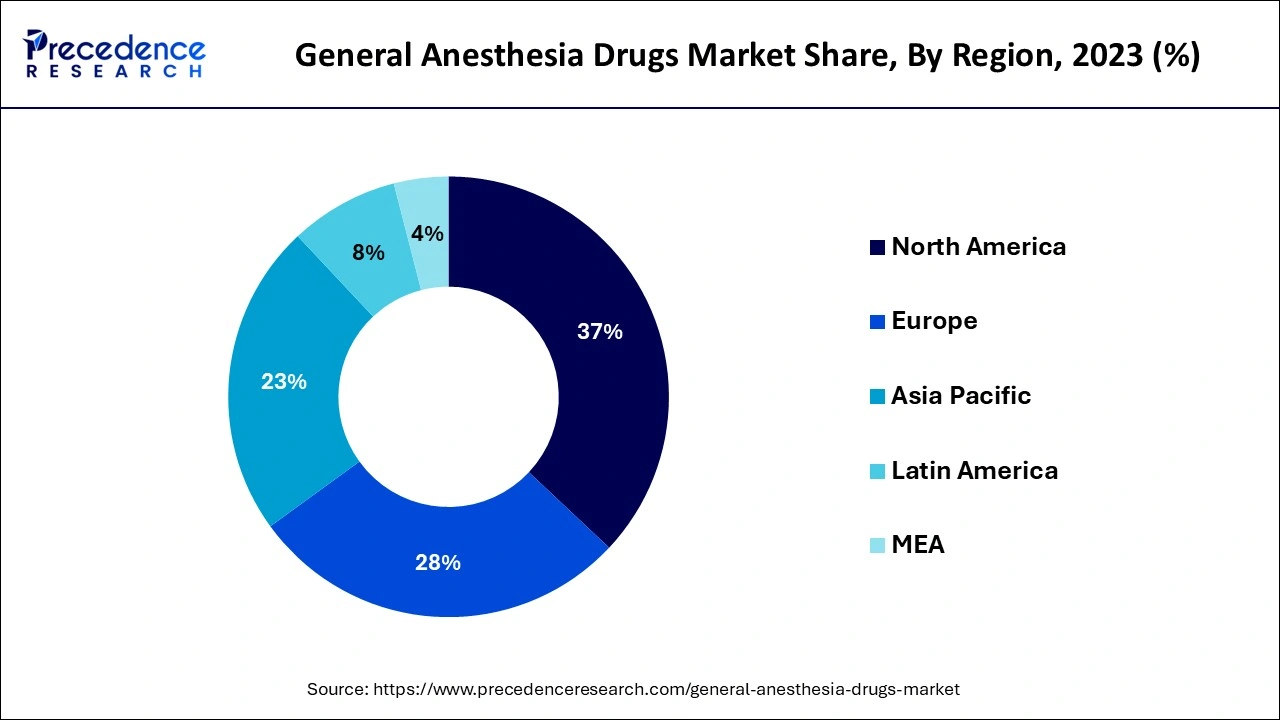
- North America dominated the general anesthesia drugs market and contributed more than 37% of the market share in 2025.
- Asia Pacific is observed to host the fastest-growing market during the forecast period.
- By drug, the propofol segment accounted for the largest market share of 26% in 2025.
- By route of administration, the intravenous (IV) segment generated the biggest market share of 65% in 2025.
- By application, the knee & hip replacement segment dominated the market in 2025.
- By application, the cancer segment is observed to be the fastest-growing in the market during the forecast period.
- By end-use, the hospital segment has held the major market share of 65% in 2025.
- By end-use, the ambulatory surgical center's segment is observed to be at the fastest rate in the market during the forecast period.
Market Overview
Drugs used for general anesthesia are essential for performing procedures. They guarantee that patients are operated on without discomfort, consciousness, or motion, which is necessary for simple and intricate procedures. This keeps patients comfortable while surgeons concentrate on complex procedures. General anesthesia administered effectively and safely lowers hospital stays, surgical complications, and overall medical expenses. Anesthesia medications are vital to upholding high standards of care in surgical settings since patient safety is still a significant concern.
The general anesthesia market is undergoing a strategic transformation as precision, safety, and patient-specific care take center stage. With the increasing burden of surgical interventions globally, especially for chronic diseases, trauma, and organ transplants, the demand for advanced anesthetic techniques is surging. A major trend is the shift towards target-controlled infusion (TCI) and balanced anesthesia techniques that allow anesthesiologists to precisely control the depth and duration of unconsciousness. The market is also seeing a strong push toward inhalation agents with improved safety profiles and ultra-short acting drugs that reduce post-operative recovery time. Furthermore, integration of AI and monitoring systems is revolutionizing real-time anesthesia management, offering better patient outcomes and minimizing risk.
The general anesthesia drugs market is gaining traction due to a high demand for these drugs in the medical sector. Recent studies state that anesthesia, when inhaled during surgery, depresses the central nervous system by relaxing the muscles in a certain manner, which allows the patient to endure the pain. Advances in anesthesia technology are enhancing the safety and potency of these drugs, further driving market expansion. Overall, the increasing reliance on surgical interventions and the need for effective pain management are contributing factors towards a positive pathway.
How is AI Helping the Growth of the General Anesthesia Drugs Market?
AI-powered algorithms in the general anesthesia drugs market can forecast potential interactions between novel chemical compounds and biological systems, which helps in developing safer and more potent anesthetic medications. This reduces the time and expense of developing new drugs using conventional trial-and-error techniques. Drug development procedures become quicker and more economical when AI estimates drug success rates, finds the best patient demographics for trials, and enhances trial designs. Artificial intelligence (AI) systems may analyze data from various monitoring devices, such as heart rate, oxygen levels, and brain activity, and give anesthesiologists real-time insights to help them make better surgical decisions.
Market Trends
- Increased Focus on Personalized Anesthesia: There's a growing trend toward personalized anesthesia solutions tailored to individual patient needs based on factors such as genetics, health conditions, and surgical type. This approach aims to optimize safety and efficacy, minimizing adverse effects.
- Integration of Smart Technologies: The market is witnessing a surge in smart devices and software that enhance monitoring and control during anesthesia administration. These technologies provide real-time data analytics and automated recommendations, improving patient outcomes and clinician decision-making.
- Expansion of Outpatient Surgery Procedures: The rise in outpatient and minimally invasive surgical procedures is driving the demand for shorter-acting anesthesia drugs. As more surgeries are performed in outpatient settings, the need for effective yet rapid recovery options is becoming increasingly important.
- Sustainability in Anesthesia Practice: There is an emerging emphasis on sustainability within the healthcare sector, including the anesthesia space. Efforts to reduce the environmental impact of anesthesia gases and promote the use of eco-friendly practices are gaining traction.
General Anesthesia Drugs Market Growth Factors
- One major factor driving the need for general anesthetic medications is the increasing frequency of various surgical procedures, such as elective, emergency, and minimally invasive surgeries. The need for these medications is growing along with the number of surgical procedures.
- As disposable income rises, more people have access to healthcare services, including surgery. The general anesthesia drugs market is growing due to this easier access.
- Developments in surgical technologies and techniques, such as robotic surgery and minimally invasive treatments, are increasing the range of surgical interventions. The expansion of surgical choices is anticipated to drive the demand for general anesthetic medications.
Market Scope
| Report Coverage | Details |
| Market Size by 2035 | USD 8.06 Billion |
| Market Size in 2025 | USD 5.60 Billion |
| Market Size in 2026 | USD 5.81 Billion |
| Market Growth Rate from 2026 to 2035 | CAGR of 3.71% |
| Largest Market | North America |
| Base Year | 2025 |
| Forecast Period | 2026 to 2035 |
| Segments Covered | Drug, Route of Administration, Application, End-use, and Regions |
| Regions Covered | North America, Europe, Asia-Pacific, Latin America and Middle East, & Africa |
Market Dynamics
Drivers
Increase in surgical procedures
Chronic diseases are more common as the world's population ages, which raises the need for surgical procedures. General anesthesia is usually required for procedures involving orthopedic problems, cardiovascular disorders, and cancer therapies, all of which are common in elderly people. More people are seeking surgical procedures due to greater patient awareness of their surgical alternatives. Advances in patient education, marketing, and communication have supported this trend.
Increasing awareness of pain management
Healthcare systems are moving toward patient-centered treatment, focusing on how vital it is to manage pain during and after surgery. Effective anesthetic solutions are in greater demand as patients become more knowledgeable about their treatment options. Governments and health organizations are funding more research to enhance pain management techniques, which will create more potent general anesthetic medications.
Restraint
High cost of anesthesia drugs
Surgical treatments require anesthesia, and the high cost of general anesthesia drugs market products can drive up the total surgery cost. This could ultimately impact patient access to essential treatment by causing hospitals and surgical centers to raise service costs or reduce the number of procedures they conduct. Not all anesthetic agents have generic substitutes, even though generic versions of anesthetic medications can save money. Because there are no generic alternatives, manufacturers of name-brand medications can continue to charge higher prices.
Opportunity
Advancements in anesthesia technology
The efficiency of inhalational anesthetics has increased due to developments in inhalation delivery systems, such as low-flow methods. Creating sophisticated vaporization technologies that use less anesthetic volume may decrease drug expenses and waste. New anesthetic products that show improved safety and efficacy are gaining favor with regulatory agencies. Faster market entrance for novel medications may promote competition and market expansion for general anesthetic medications.
Segment Insights
Drug Insights
Why Propofol Dominated the General Anesthesia Drugs Market?
The propofol segment dominated the market in 2025, driven by the backing of its rapid drug effect, short recovery time, and favorable safety profile. It's often employed for general anaesthesia during surgeries of all kinds, ranging from routine to complex. In addition, propofol's pharmacokinetics are well predictable, leading to perfect level control when this is desired by the anaesthesiologist. Like other drugs, it is so commonly used and well accepted clinically that it has become the drug of choice in hospitals and surgical centres as an intravenous anesthetic. The propofol segment is still the most dominant, with the growth in surgical volumes and improving period care continuing to reinforce it.
The dexmedetomidine segment is expected to expand at the highest CAGR in the coming years, due to its sedative, analgesic, and anxiolytic activity accompanied by five times lower respiratory depression when compared to Lenivor. More and more, it is being used for conscious sedation in highly intensive care settings, perioperatively, and in minimally invasive surgical interventions. The trend towards better recovery after surgery (ERAS) is driving rapid change in a way that is gaining increasing traction among providers. The ongoing research supporting its efficacy in enhancing postoperative outcomes is further adding to the growth prospects of the market. The dexmedetomidine market is expected to demonstrate solid growth due to increased investments in advanced anaesthesia management systems.
Route of Administration Insights
How the Intravenous Segment Dominated the General Anesthesia Drugs Market?
The intravenous segment led the market in 2025, as it has a high speed of drug delivery, accurate dosing, and fast onset of action. In the various surgical specialties, intravenous anaesthesia is preferred in many instances for both induction and maintenance. Fully equipped infusion systems and reliable clinical protocols have boosted its use in healthcare settings. It is also easier to control the depth of the anesthetic and recover the patient after receiving it intravenously. Market dominance in the surgical procedure segment continues to drive the market, with the number of surgical procedures increasing the world over.
The inhaled segment is expected to expand at a rapid CAGR in the coming years, as the constantly evolving technology of volatile anesthetic agents and anaesthesia delivery systems plays a significant role in the growth prospects. Inhalation anaesthesia provides an effective way of maintaining anaesthesia and has the advantage of being able to adjust doses during surgery. Due to their easy administration, inhaled agents are being used more in pediatric surgeries and other specialized surgical settings. Modern anesthesia workstations and operating room technology are driving market growth through investment. Continued growth will likely occur given the increasing demand for alternative, safer, and more efficient anesthesia techniques.
Application Insights
Why Did the Knee and Hip Replacements Segment Dominate the General Anesthesia Drugs Market?
The knee and hip replacements segment held the largest market share in 2025, driven by high incidences of osteoarthritis, joint ailments, and a growing demand for orthopaedic surgeries. However, general anaesthesia is still being performed for surgeries that last longer, like more complex joint replacements. Continually rising numbers of elderly, coupled with advancements in orthopaedic surgery techniques, drive continued growth in the volume of procedures performed throughout the world. Motives behind the expansion of healthcare systems for the growing burden of musculoskeletal diseases. The driving forces behind the growing expansion of healthcare systems in the case of musculoskeletal diseases. Such factors contribute to accentuating the knee and hip replacement market.
The cancer segment is expected to witness the fastest growth in the coming years, due to the soaring number of cancer surgeries being performed in the world. The prevalence of the disease is increasing, and advances in early diagnosis of cancers lead to increased surgical interventions, which necessitate the use of general anaesthesia. There is an additional rise in the need for modern anaesthetic drugs as minimally invasive cancer surgeries and surgical procedures assisted by robots are gaining popularity. Better perioperative management for cancer patients to promote surgical outcomes is being highlighted. The oncology segment is expected to see healthy growth from contributions of increasing investments in infrastructure.
By End-User Insight
How Hospitals is Leading the Market?
The hospital segment dominated the general anesthesia drugs market by holding the largest share, since they conduct the maximum number of complex and emergency surgeries. They have highly equipped operating rooms, intensive care units, and well-trained anaesthetists for handling high-risk patients. Vol. 2 patients continue to increase in the hospital, and the number of surgeries continues to grow, which is fuelling the uptake of general anaesthesia drugs. The hospital can also utilize a wide range of anaesthetic agents and sophisticated monitoring devices. The increasing number of chronic disease surgeries solidifies the segment's market position.
The ambulatory surgical centers segment is expected to expand at a robust CAGR in the coming years, driven by surgical facilities, waiting times are reduced and the functioning of these facilities is improved in terms of efficiency. In recent times, new non-gaseous anesthetic medications and techniques in minimally invasive surgery have increased the scope of surgery available in ambulatory surgery centers. The advantage of quick turnaround in the recovery and lower in-hospital expenses makes them more popular these days among patients. The increasing investment in healthcare is anticipated to boost market growth, along with the reimbursement policy for the product.
Regional Insights
U.S. General Anesthesia Drugs Market Size and Growth 2026 to 2035
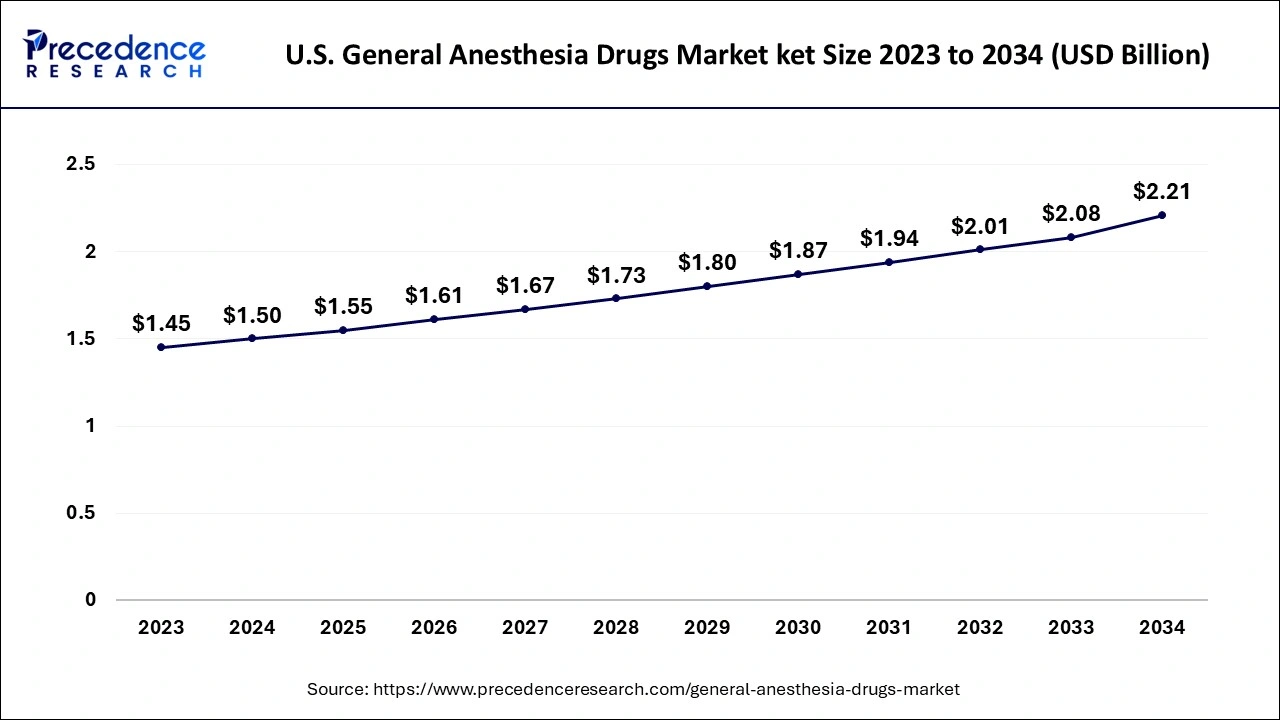
The U.S. general anesthesia drugs market size was exhibited at USD 1.55 billion in 2025 and is projected to surpass around USD 2.30 billion by 2035, growing at a CAGR of 4.03% from 2026 to 2035.
Which Factors Drive the General Anesthesia Drugs Market in North America?
North America dominated the market in 2025 due to advanced healthcare facilities, higher surgical procedure rates, and the presence of a wider market for adopting advanced anesthetic drugs. The U.S. market has the biggest regional market share, in addition to a robust network of hospitals, ambulatory surgical centres, and specialized surgical facilities. The use of general anaesthesia continues to have a positive impact on the demand for these drugs due to steadily increasing orthopaedic, cardiovascular, and oncological surgical procedures and population aging. Pharma R&D investments and highly skilled anaesthesia professionals also push the market. A rosy reimbursement program and constant advancement in perioperative services play an important part in regional development.
- In January 2024, researchers in the Department of Anesthesia and Perioperative Medicine at the Medical University of South Carolina (MUSC) discovered that an FDA-approved drug may help to reduce pain after surgery.
Canada Market Trends
The steady rise in healthcare spending in Canada is encouraging the expansion of the market in the country, as is the increasing use of advanced anaesthesia methods. Healthcare modernization and capacity development of surgical equipment are supported by government investments, and the use of modern aesthetic drugs is increasing. In addition, the nation's need for an aesthetic surgical procedure is increasing, which is resulting in increased use of aesthetic drugs.
How is Asia-Pacific Growing in the General Anesthesia Drugs Market?
Asia-Pacific is considered the fastest-growing market in the forecast period. The increasing demand within the healthcare industry is noteworthy. A recent study conducted by the Neurorehabilitation of India organization indicates that the administration of anesthesia activates the nervous system by promoting the release of gamma-aminobutyric acid (GABA). This biochemical process subsequently elevates dopamine levels associated with feelings of happiness, thereby enabling patients to better manage pain during surgical procedures. Customers in the area are growing increasingly aware of the value of skincare, hygiene, and personal grooming. Women are incorporating face razors into their grooming regimens due to increasing knowledge of the advantages of skincare, mainly because they provide a less harsh and more efficient hair removal option than conventional techniques.
Country-Level Analysis
The Chinese market is driven by rapid urbanization, expanding healthcare access, and a surge in minimally invasive surgeries, which are key contributors. Increased government investments in public health and surgical care also contribute to market growth. Additionally, rising medical tourism in India and Thailand has amplified demand for safe and affordable anesthesia procedures.
Competitive Landscape
The general anesthesia drugs market is characterized by a diverse array of players, including established pharmaceutical companies, emerging biotech firms, and specialty drug manufacturers. These competitive dynamics influence pricing, innovation, and market share. Major players such as AbbVie, Fresenius Kabi, and Baxter International dominate the market with a range of well-established general anesthetics, including Propofol, Sevoflurane, and Isoflurane. Their extensive distribution networks, strong brand recognition, and significant financial resources enable them to invest heavily in research and development.
Several biotech companies are entering the market with innovative approaches to anesthesia, focusing on developing new formulations or delivery methods to enhance safety and efficacy. These companies often aim to differentiate themselves through cutting-edge technology and personalized medicine solutions. Smaller companies or niche firms often focus on specific anesthetic agents or new delivery systems, providing tailored solutions for specialty medical practices.
General Anesthesia Drugs Market Companies
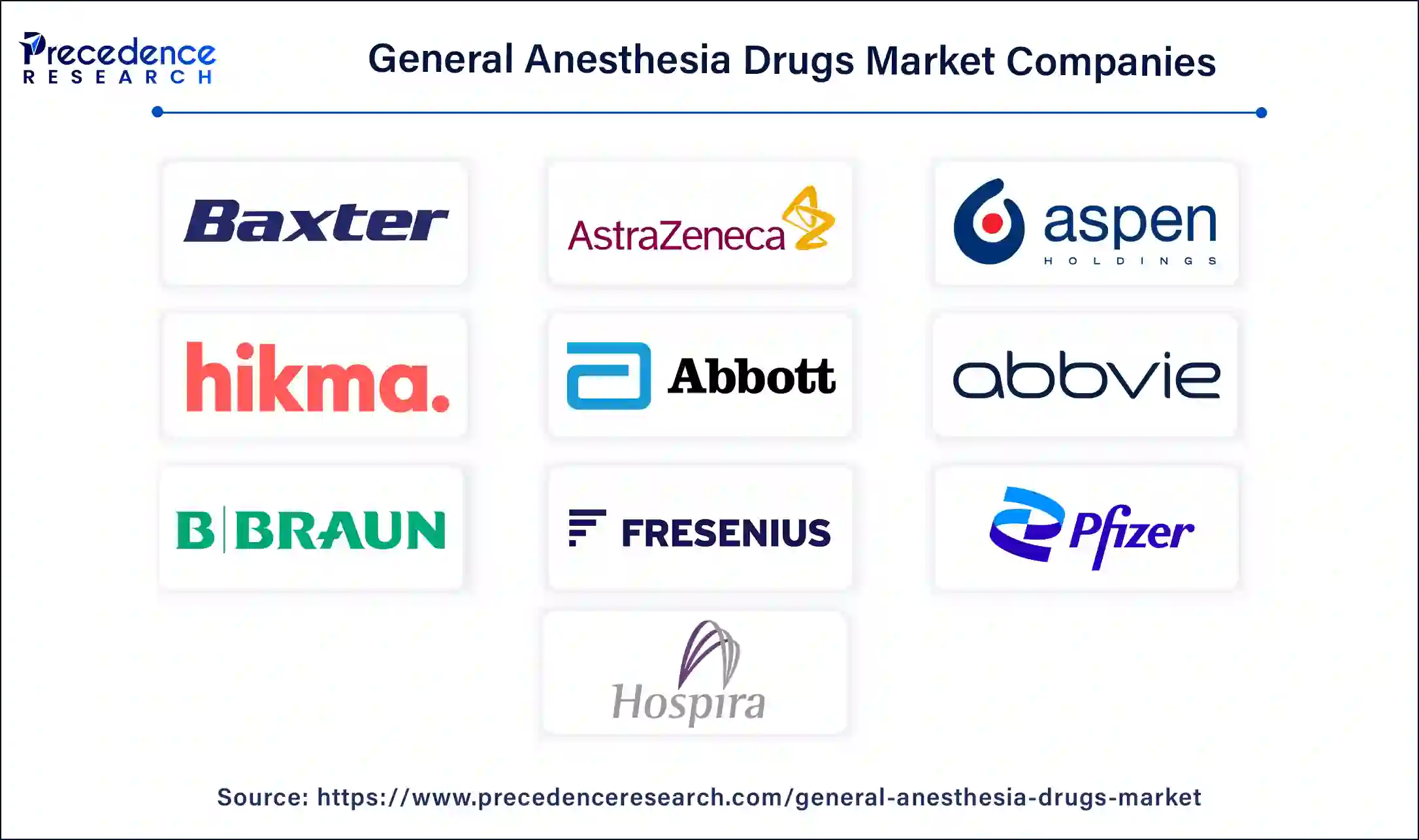
- Baxter International Inc.
- AstraZeneca
- Aspen Pharmacare Holdings Limited
- Hikama Pharmaceuticals plc
- Abbott Laboratories
- AbbVie Inc.
- B. Braun Melsungen AG
- Fresenius SE & Co. KgaA
- Pfizer
- Hospira Inc.
Recent Developments
- In January 2025, PharmaCorp announced the development of a new general anesthetic agent with a rapid onset and short duration of action, aiming to improve patient throughput in surgical centers. The company is currently conducting Phase III clinical trials to assess the drug's efficacy and safety profile.
- In February 2025, MediTech Solutions introduced an advanced anesthesia delivery system equipped with real-time monitoring and automated dosage adjustments. This technology is designed to enhance precision in anesthetic administration and reduce the risk of human error.
- On 25 March 2025, the Global Health Organization (GHO) released updated guidelines on the safe use of general anesthetics, emphasizing the importance of continuous education for anesthesiologists and the implementation of safety checklists in operating rooms. These guidelines aim to standardize practices and improve patient outcomes globally.
- In May 2025, multiple regional players and hospitals introduced next-gen anesthetic drug delivery systems equipped with integrated AI support for real-time monitoring. Furthermore, new ventures in India and China aim to localize the manufacturing of anesthetic agents, making them more affordable and accessible in rural healthcare setups.
- In November 2023, Lupin Limited declared the release of Rocuronium Bromide injection in two variations: 50 mg/5 mL (10 mg/mL) and 100 mg/10 mL (10 mg/mL) multiple-dose vials.
- In May 2022, BDR Pharma and Varenyam Healthcare declared the launch of Sugmadex – an innovation, bringing to India the first drug in over 10 years with novel γ-cyclodextrin neuromuscular block (NMB) reversal properties.
Segments Covered in the Report
By Drug
- Sevoflurane
- Propofol
- Dexmedetomidine
- Remifentanil
- Desflurane
- Midazolam
- Others - (Sufentanil, Fentanyl, Ketamine, Isoflurane, Thiopental, Etc.)
By Route of Administration
- Intravenous
- Inhaled
By Application
- Heart Surgeries
- Cancer
- General Surgery
- Knee and Hip Replacements
- Others
By End-use
- Hospitals
- Ambulatory Surgical Centers
- Others
By Region
- North America
- Asia Pacific
- Europe
- Latin America
- Middle East and Africa
For inquiries regarding discounts, bulk purchases, or customization requests, please contact us at sales@precedenceresearch.com
Frequently Asked Questions





Ask For Sample
No cookie-cutter, only authentic analysis – take the 1st step to become a Precedence Research client
 Get a Sample




 sales@precedenceresearch.com
 Schedule a Meeting
