



Hysteroscopy Procedures Market Revenue, Leading Companies, Company Technology / Innovation, Diagnostic Testing Volume, Adoption Rates, Pricing Metrics, Supply Chain Performance, Competitive Positioning, and Industry Trends
Hysteroscopy Procedures Market (By CPT Codes: 58555, 58558, 58562, 58340, 58563, 58565, 58353, 58561, 74740, Others; By End Use: Hospitals, Clinics, Ambulatory Surgery Centers) - Global Industry Analysis, Size, Trends, Leading Companies, Regional Outlook, and Forecast 2026 to 2035
Source: https://www.precedenceresearch.com/hysteroscopy-procedures-market
 Get a Sample
 Table Of Content


Hysteroscopy Procedures Market Size and Forecast 2026 to 2035
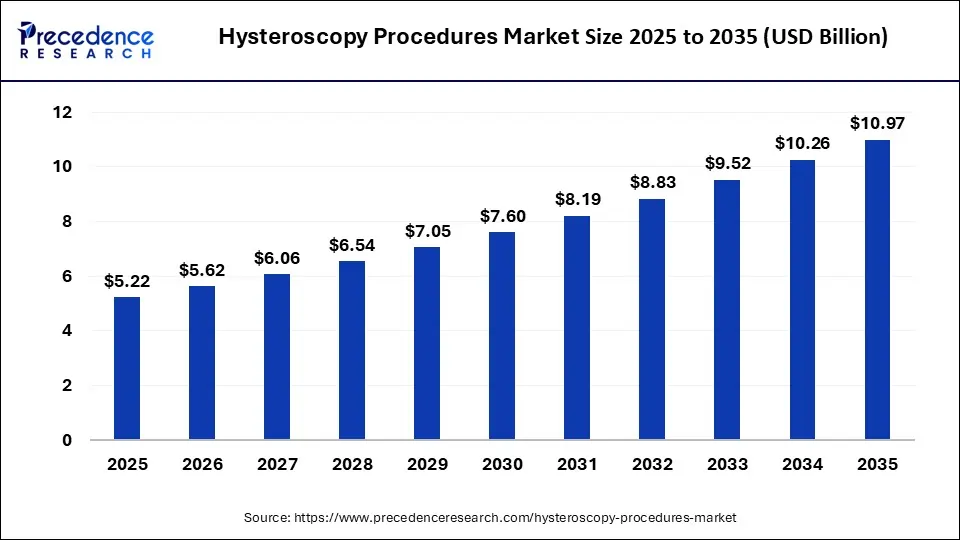
The global hysteroscopy procedures market size accounted for USD 5.22 billion in 2025 and is predicted to increase from USD 5.62 billion in 2026 to approximately USD 10.97 billion by 2035, expanding at a CAGR of 7.71% from 2026 to 2035. The hysteroscopy procedures market is driven by increasing gynecological disorders, advancements in hysteroscopy equipment, and government healthcare investments.
Hysteroscopy Procedures Market Key Takeaways
- North America led the hysteroscopy procedures market with the largest market share of 39% in 2025.
- Asia Pacific is anticipated to grow at a solid CAGR of 8.5% during the forecasted years.
- By CPT codes, the 58558 CPT code segment held the biggest market share of 36% in 2025.
- By CPT codes, the 58562 CPT code segment is anticipated to show considerable growth over the forecast period.
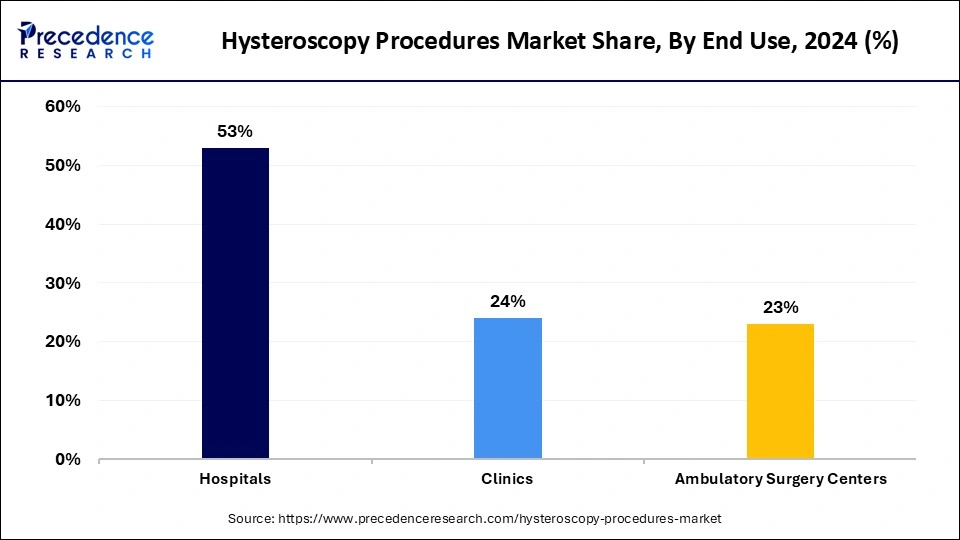
- By end-use, the hospitals segment contributed the maximum market share of 53% in 2025.
- By end-use, the ambulatory surgery centers segment is projected to show considerable growth in the forecast period.
Artificial Intelligence (AI) Integration in the Hysteroscopy Procedures Market
The application of artificial intelligence systems in hysteroscopy procedures enhances diagnosis and treatment methods for gynecological conditions in the hysteroscopy procedures market. The advanced AI techniques enable accurate detection of medical conditions, including uterine cancer, thus allowing doctors to make early diagnoses for better patient results. AI models incorporate hysteroscopic data collection and personal medical information through hormone tests and pregnancy records, which helps produce exact results about fertility outcomes.
The adoption of hysteroscopy in clinical settings increases because AI enhances the safety, accuracy, and efficiency of complex processes, including image interpretation and risk assessment. AI will play an expanding role in developing minimally invasive gynecological care with evolving technology that improves the accuracy of medical diagnosis and treatment methods.
Market Overview
Hysteroscopy is a minimally invasive procedure used to observe the inside of the uterus, mainly to diagnose and treat several gynecological conditions, including uterine polyps, fibroids, adhesions, and abnormal bleeding. The intervention has diagnostic and therapeutic value since it aids doctors in making medical diagnoses while simultaneously providing treatment by eliminating growths and fixing anatomical problems. The minimally invasive approach of hysteroscopy delivers benefits against traditional surgery because it leads to shorter hospital stays accompanied by decreased infection risk and fewer postoperative problems.
The hysteroscopy procedures market is experiencing growth because the number of gynecological disorders such as fibroids, polyps, and abnormal bleeding of the uterus is increasing, thereby creating demand for diagnostic and treatment options. The market growth of hysteroscopy expands due to growing patient and healthcare professional interest in minimally invasive procedures because these approaches lead to increased recovery time and reduced complications than surgical treatment.
Hysteroscopy Procedures Market Growth Factor
- Growing incidence of gynecological disorders: The rising prevalence of gynecological disorders, including uterine fibroids, polyps, and abnormal bleeding. A woman suffering from medical conditions creates a growing market demand for hysteroscopic procedures since this medical technology provides efficient therapeutic options.
- Technological advancements: Hysteroscopic technological advances such as high-definition imaging equipment, advanced hysteroscopes, and efficient tissue extraction tools enhance both the precision and security of hysteroscopic procedures while boosting their clinical impact on patients.
- Demand for minimally invasive procedures: The health care industry favors minimally invasive surgical procedures since patients recover more quickly, at the same time have higher levels of safety, and experience decreased postoperative pain.
- Government initiatives and healthcare investments: The market continues to grow because government-funded initiatives offer essential medical system resources within developing healthcare areas, especially in emerging regions. More investments in contemporary medical technologies lead to increased accessibility for hysteroscopy procedures, thus promoting hysteroscopy procedures market expansion.
Market Scope
| Report Coverage | Details |
| Market Size by 2035 | USD 10.97 Billion |
| Market Size in 2026 | USD 5.62 Billion |
| Market Size in 2025 | USD 5.22 Billion |
| Market Growth Rate from 2026 to 2035 | CAGR of 7.71% |
| Dominated Region | North America |
| Fastest Growing Market | Asia Pacific |
| Base Year | 2025 |
| Forecast Period | 2026 to 2035 |
| Segments Covered | CPT Codes, End use, and Regions |
| Regions Covered | North America, Europe, Asia-Pacific, Latin America and Middle East & Africa |
Market Dynamics
Drivers
Growing incidence of gynecological disorders
The gynecological conditions act as a principal force that drives market expansion within hysteroscopy procedures. Fibroids, polyps, endometriosis, and abnormal uterine bleeding are becoming more prevalent worldwide among female patients. The various gynecological disorders produce pelvic pain and heavy menstrual bleeding with optional infertility, which decreases women's daily functioning. The rising numbers of gynecological conditions stem from changes in lifestyle patterns, late pregnancy choices, and obesity-related factors.
The minimally invasive hysteroscopy gives patients a less invasive surgical option to confirm diagnoses and deliver precise medical treatments. The benefits from hysteroscopy, such as reduced recovery duration, minor pain, and reduced complications, have resulted in growing popularity as a treatment option among women.
Growing preference for minimally invasive procedures
Patients and healthcare providers now prefer medical procedures that require minimal incisions, reduced complications, and shorter timelines for recovery. The diagnostic procedure called hysteroscopy requires specialists to use a thin illuminating tube through the cervix to inspect the uterine space, thus making it less intensive than standard surgical approaches. This approach reduced the risk of pathogen infections and shortened treatment duration in hospitals and rehabilitation periods. The adoption of hysteroscopy has increased because clinical research shows effectiveness and security.
Restraint
Reimbursement challenges
Reimbursement challenges act as a major obstacle that hinders the expansion of the hysteroscopy procedures market growth. The payment policies for hysteroscopy procedures in various regions fail to match either the insufficiency of existing coverage or the expenditure required to conduct the procedure. The inconsistent reimbursement guidelines that span different regional areas create additional barriers to hysteroscopy adoption by healthcare providers. The development of favorable reimbursement systems that follow standardized guidelines with policymaker collaboration on minimally invasive procedure access represents essential measures to address this restraint.
Opportunity
Increasing healthcare investment
The increasing investments in healthcare infrastructure have resulted in multiple centers that use advanced equipment and qualified specialists to deliver better hysteroscopy service availability. Rising healthcare expenditure supports medical technology development, which enables research of better hysteroscopic equipment that is sophisticated and efficient. Advanced innovations have improved the security, precision, and effectiveness of hysteroscopy medical treatments, thus attracting healthcare providers and patients. The rising healthcare spending creates conditions that will drive significant market growth in hysteroscopy procedures by improving access and equipment quality while generating better patient results.
CPT Codes Insights
The 58558 CPT code segment contributed the largest share of the hysteroscopy procedures market in 2025. The American Medical Association (AMA) has created CPT code 58558 to document diagnostic and therapeutic surgery through hysteroscopy that includes biopsy. The single code sustains multiple hysteroscopy usages to diagnose and treat various vaginal conditions, such as polyps and fibroids, as well as instances of abnormal bleeding.
Healthcare providers rely on CPT code 58558 as their main code to obtain reimbursement from insurance firms and government healthcare programs. The increase in gynecological condition occurrences produces growing hysteroscopy procedure volumes, which subsequently elevates CPT code 58558 usage. Healthcare providers obtain proper financial remuneration through precise billing and coding implementation of CPT code 58558, thus preserving hysteroscopy service sustainability.
The 58562 CPT code segment is expected to grow considerably in market. The medical procedure exists to treat fibroid-related symptoms such as abnormal uterine bleeding and pelvic pain through its minimally invasive approach beyond traditional surgical solutions. Medical professionals use CPT code 58562 to treat the increasing cases of uterine fibroids.
Medical professionals expect higher use of this code because patients become more interested in receiving minimally invasive treatments. The market is adopting CPT code 58562 because patients find the procedure benefits attractive for their reduced complications and shorter recovery times with improved patient comfort. The market segment expects to gain more patients interested in fibroid treatment because of the growing demand from patients.
End-Use Insights
The hospitals segment accounted for the largest share of the hysteroscopy procedures market. As primary healthcare centers, hospitals deliver various medical services that include correct diagnostic procedures and therapeutic gynecological interventions. The procedure of hysteroscopy has become essential in detecting and treating pelvic pain while it also addresses uterine fibroids, polyps, and cervical cancer conditions. Research shows growing gynecological disorders lead to increased hospital-level demands for hysteroscopic procedure availability.
Hospitals consider hysteroscopy beneficial because this technique operates efficiently for detection and treatment purposes in gynecological care. The widespread popularity of hysteroscopy in hospitals depends on its ability to deliver minimally invasive treatments.
The ambulatory surgery centers segment is anticipated to witness significant growth in the market over the studied period. Patients choose them for their efficient and cost-effective approaches to medical treatment. The popularity of hysteroscopy procedures continues to rise in outpatient centers because these facilities provide high-quality care at reduced prices compared to traditional hospitals.
Minimally invasive gynecological treatments performed by patients at ASCs are anticipated to increase the market demand for hysteroscopy instruments. Better hysteroscopic technology with high-definition cameras, small scopes, and optimized procedure efficiency drives adoption because these innovations make the procedures safer and more efficient.
Regional Insights
U.S. Hysteroscopy Procedures Market Size and Growth 2026 to 2035
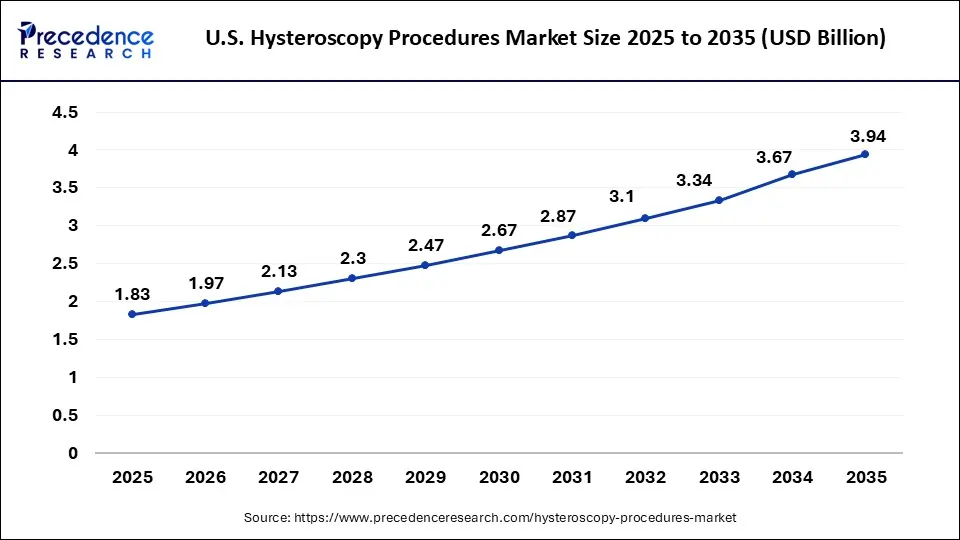
The U.S. hysteroscopy procedures market size was exhibited at USD 1.97 billion in 2026 and is projected to be worth around USD 3.94 billion by 2035, growing at a CAGR of 7.97% from 2026 to 2035.
North America held the dominating share of the hysteroscopy procedures market in 2025. The strong healthcare system enables extensive medical technology implementation and minimally invasive surgeries, including hysteroscopy. A growing number of women require gynecological testing and treatment because many individuals face conditions like uterine fibroids, polyps, and abnormal bleeding. Multiple healthcare facilities can efficiently adopt hysteroscopy techniques because of increased accessibility, which speeds up its adoption rate.
Advanced hysteroscopy technologies spread widely throughout the U.S. healthcare system because they combine technological advancement with expensive healthcare financing. Leading market players operating in the U.S. strengthen the market while dedicating their efforts to developing efficient, user-friendly instruments, including high-definition imaging systems and improved hysteroscopes.
U.S.
The U.S. is the leading regional power for high penetration of procedures and rapid acceptance rates in the use of office-based hysteroscopy. Patient comfort, shorter hospital stays and cost-effective outpatient care have all led to rapid levels of acceptance. The growing number of skilled gynecological surgeons, as well as ongoing improvements in hysteroscopy instruments, continue to drive demand. Greater emphasis is being placed on women's reproductive health fertility treatments and earlier diagnostic screening, which will drive continued procedural volume growth throughout urban and secondary medical facilities.
- In March 2025, President Biden launched initiatives that would drive innovation and research for women's health. During his speech, President Biden urged Congress to establish groundbreaking women's health research initiatives by allocating USD 12 billion from fresh capital. The funding will be dedicated to establishing a Fund for Women's Health Research at the National Institutes of Health (NIH).
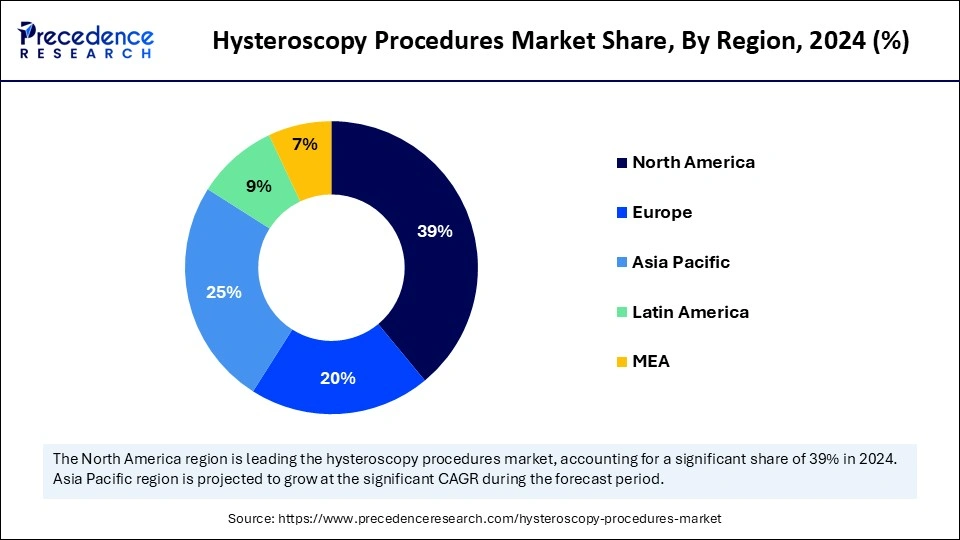
Asia Pacific is expected to witness the fastest rate of growth in the hysteroscopy procedures market during the predicted timeframe. The surge in healthcare infrastructure modernization initiatives from governments drives regional growth primarily because it enhances access to advanced medical technologies. The substantial population in this region creates a rising need for gynecological treatments. The improved healthcare investments by countries such as China, India, and Japan will drive market expansion because they provide patients with enhanced access to advanced diagnostic tools and treatment technologies.
The healthcare requirements for gynecological procedures in India are increasing due to higher rates of uterine fibroids, polyps, and abnormal bleeding among its large population. The Indian government dedicates substantial resources to developing healthcare facilities that advance the accessibility of complex medical devices, including hysteroscopy.
China
In Asia, China is at the forefront of growth within the region, thanks in part to growing expansions of gynecology departments as well as increasing demand for services related to fertility diagnostics. Ongoing modernization of hospitals, increased use of minimally invasive surgical approaches, and awareness about issues surrounding uterine health all support greater use of hysteroscopy. In addition, a large volume of patients as well as availability of clinical expertise will continue to allow for scalability of this type of procedure. Additionally, due to high volumes and increased utilization of private hospitals and specialty women's health centers, hysteroscopy is being utilized increasingly to provide more accurate diagnoses and improved efficiency in performing these procedures.
In February 2025, the Bennett, Coleman, and Co. report indicated that India diagnoses about 340,000 women with cervical cancer each year, which will boost the market demand for associated products.
Europe is expected to witness sustainable growth in the hysteroscopy procedures market during the predicted timeframe. An increased focus on gynecological health diagnosis by patients in the UK drives demand for hysteroscopy instruments. Health outreach programs and educational programs motivate women to obtain screening appointments and diagnostic evaluations, thus boosting the adoption of hysteroscopy for prompt gynecological condition identification and therapy.
Germany
Germany continues to be a leader in Europe. With their highly advanced healthcare systems and commitment to providing the highest quality of care to patients through precision gynecology, the use of operative hysteroscopy as a treatment for those with uterine fibroids or endometrial diseases remains strong. Additionally, ongoing training for specialists, the presence of an efficient referral system, and early implementation of innovative technologies into clinical practice continue to enhance the quality of clinical outcomes. Continued focus on patient safety and comfort, along with the ability to provide procedures in an outpatient setting will continue to support the use of hysteroscopy surgeries in the German market.
- In February 2025, Deutsche Welle reported that one in six German women encounter fertility challenges, so the Statutory Health Insurance (SHI) system enhances healthcare infrastructure while driving more demand for hysteroscopy procedures.
Why Is Middle East & Africa Growing Steadily in Hysteroscopy Procedures Market?
The Middle East & Africa region is experiencing significant growth. There are two major developments that are driving this growth, improved women's health care infrastructure and increased focus on accurately diagnosing gynecological disorders early. As tertiary hospitals expand and as specialty clinics are set up, people are able to access hysteroscopy procedures more easily. Also, more people are travelling to the region for medical tourism, especially in parts of the Middle East, which helps to drive demand for hysteroscopy. The continued use of minimally invasive techniques is helping increase standards of care through improved diagnosis and clinical outcomes in urban areas of health care delivery.
Saudi Arabia
The country with the most growth in the region is Saudi Arabia. The reason Saudi Arabia is leading this growth is due to the amount of money that the government has invested into new health care infrastructure and into women's health services. Government initiatives to create new hospitals and to train more qualified gynecologists have created an environment to allow for increased hysteroscopy use. Additionally, the increasing amount of interest in fertility management and the high demand for early diagnostic procedures creates the support needed to continue raising the demand for procedures, especially in fully equipped public and private hospitals.
Why Is Latin America Emerging in Hysteroscopy Procedures Market?
Latin America is seeing an increase in the use of hysteroscopy procedures as they are being utilized more frequently in urban health care systems. The increase in awareness for less invasive ways to diagnose gynecological health; investment in hospital modernization; and the shift from traditional methods to hysteroscopy by many public and private providers are all driving factors behind the increase in use of hysteroscopy procedures. The increase in use of gynecological services by women; the increase in access to specialty gynecology services mostly large cities that are expanding their surgical capabilities is also contributing to the increase in the number of hysteroscopy procedures being performed.
Brazil
Brazil leads the market due to growth of their private health care systems and the increased number of specialty gynecology services that are available to women. Many larger urban hospitals are adopting the use of hysteroscopy, in part to improve efficiency in diagnosing and reduce the number of surgical procedures performed. Some of the main contributing factors behind the adoption of hysteroscopy procedures include many women experiencing a higher demand for fertility treatment, as well as a greater awareness of the potential for uterine problems. Brazil will continue to play the role of an anchor for this region because of its continued investment in both education/training and equipment.
Hysteroscopy Procedures Market Companies
- Medtronic
- Stryker Corp.
- Hologic, Inc.
- KARL STORZ SE and Co. KG
- Medical Devices Business Services, Inc. (Ethicon, Inc.)
- Olympus Corp.
- Delmont Imaging
- B. Braun Melsungen AG
- Richard Wolf GmbH
- CooperCompanies
- Maxer Endoscopy GmbH
- Boston Scientific Corp.
- MedGyn Products, Inc.
- Lina Medical APS
- Luminelle
Recent Developments
- In April 2025, Nambour General Hospital unveiled its Outpatient Hysteroscopy Service, which provides hysteroscopies under local anesthetic in 1-2 hours duration, leading to reduced hospital stays from 6-14 hours previously and improved patient quality.
- In July 2024, GenWorks presented its mechanical hysteroscopic tissue removal system. This system employs a simple mechanical technique to remove intrauterine tissues.
- In May 2024, Olympus Corporation obtained FDA clearance for their EVIS X1 endoscopy system that they released with two matching gastrointestinal endoscopes as part of their innovative medical technology portfolio.
Segments Covered in the Report
By CPT Codes
- 58555
- 58558
- 58562
- 58340
- 58563
- 58565
- 58353
- 58561,74740
- Others
By End Use
- Hospitals
- Clinics
- Ambulatory Surgery Centers
By Geography
- North America
- Europe
- Asia Pacific
- Latin America
- Middle East and Africa
For inquiries regarding discounts, bulk purchases, or customization requests, please contact us at sales@precedenceresearch.com
Frequently Asked Questions





Ask For Sample
No cookie-cutter, only authentic analysis – take the 1st step to become a Precedence Research client
 Get a Sample
.webp)



 sales@precedenceresearch.com
 Schedule a Meeting
