



Image-Guided Therapy Systems: Key Companies, Clinical Applications, Technology Trends, and Demand Forecast
Image-guided Therapy Systems Market (By Product: Ultrasound Systems, Computed Tomography (CT) Scanners, Positron Emission Tomography (PET), Endoscopes, Magnetic Resonance Imaging (MRI), X-ray Fluoroscopy, Single Photon Emission Computed Tomography (SPECT); By Application: Cardiac Surgery, Neurosurgery, Orthopedic Surgery, Urology, Oncology Surgery, Gastroenterology, Others; By End-use: Hospitals, Specialty Clinics, Ambulatory Surgical Centers, Research & Academic Institutions, Others) - Global Industry Analysis, Size, Trends, Leading Companies, Regional Outlook, and Forecast 2026 to 2035
Source: https://www.precedenceresearch.com/image-guided-therapy-systems-market
 Get a Sample
 Table Of Content


What is the Image-guided Therapy Systems Market Size?
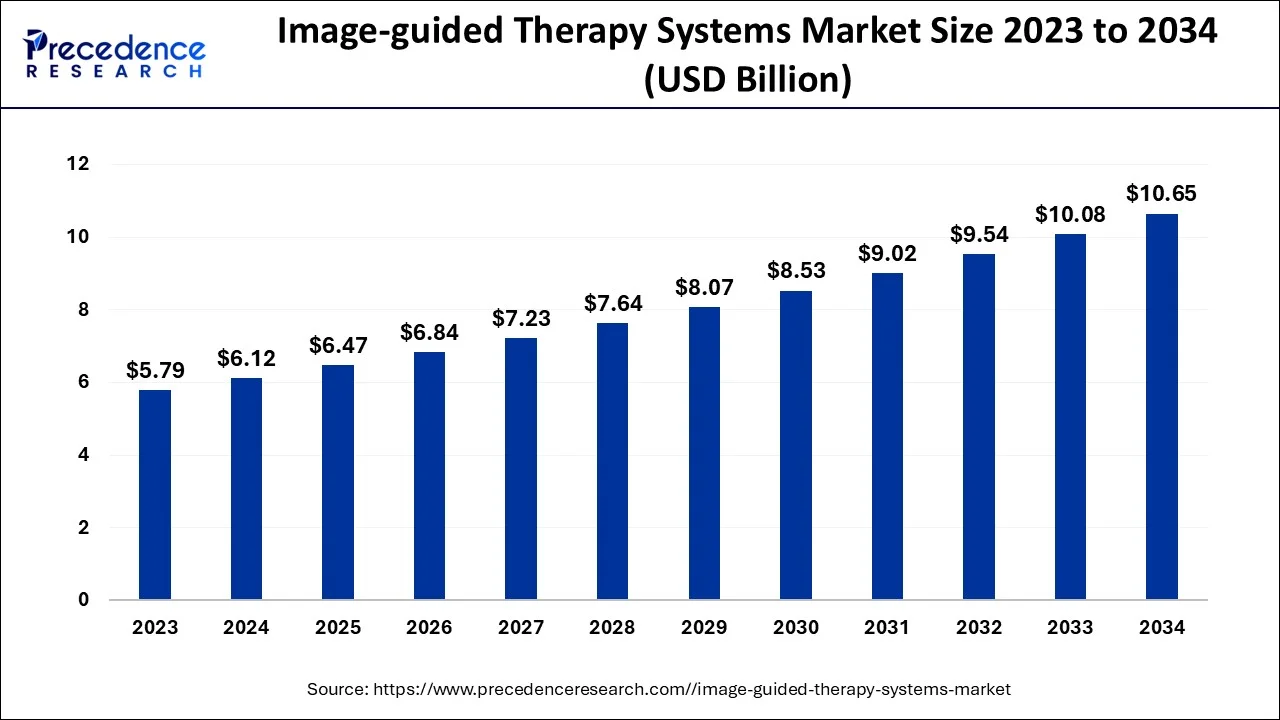
The global image-guided therapy systems market size is accounted at USD 6.84 billion in 2026 to approximately USD 11.22 billion by 2035, representing a CAGR of 5.66% from 2026 to 2035. The image-guided therapy systems market is driven by the rising demand for minimally invasive procedures.
Market Highlights
- By Region, North America accounted for the largest revenue share of the image-guided therapy systems market in 2026.
- By Region, Asia Pacific is expected to grow at the fastest CAGR in the market during the forecast period.
- By product, the endoscopes segment held a dominant position in the market in 2026.
- By product, the magnetic resonance imaging segment is expected to grow at the fastest CAGR in the market between 2026 and 2035.
- By application, the cardiac surgery segment accounted for a considerable revenue in the market in 2026.
- By application, the neurosurgery segment is expected to grow at the highest CAGR in the market during the study period.
- By end-use, the hospitals segment led the global market in 2026.
- By end-use, the ambulatory surgical centers segment is expected to expand rapidly in the market with a CAGR in the coming years.
Transforming the Image-guided Therapy Systems Market Through AI-Enabled Precision Innovations
The image-guided therapy systems market is a collective of sophisticated medical imaging technologies that help physicians guide and plan minimally invasive diagnostic and therapeutic procedures. These systems combine imaging modalities including fluoroscopy, computed tomography (CT), magnetic resonance imaging (MRI), ultrasound, and hybrid imaging to facilitate greater accuracy in the procedures and enhanced patient outcomes. Growth of the market is driven by growing demand for minimally invasive surgeries, the growing incidence of chronic diseases, and the continuous improvement of medical imaging technologies. Higher investment in healthcare infrastructure and hybrid operating rooms is helping to expand the market for next-generation image-guided therapy systems globally.
Key AI Integration in the Image-guided Therapy Systems Market
Artificial intelligence plays an important part in improving the performance of Therapy Systems that use images for guidance. Complex tasks like image segmentation, lesion identification, and real-time guidance for complex procedures are automated by using AI. Deep learning algorithms enhance image reconstruction and diagnosis. AI-powered workflow optimisation makes processes more efficient, and resources are optimized.
Image-guided Therapy Systems Market Growth Factors
Innovation plays had an urgent impact in further developing therapy productivity and lessening death rates. The approach of computational methods coupled headways in imaging strategies have helped in therapy of complicated illnesses, particularly disease. A portion of the normal Image Guided Therapy Systems accessible in the market today are Ultrasound, CT sweep, and MRI. They are utilized in figuring out confounded conditions inside the body, and are utilized in treating them as well. Occurrence of malignant growth is expanding at a quick speed year after another, in this way heightening interest for therapy measures. While image guided systems are utilized in distinguishing complex sicknesses, they are widely utilized in their therapy. These perspectives establish starting point for development in the worldwide image-guided therapy systems market.
The Image-guided therapy or Image guided interventions help specialists by exploring the devices inside the group of patients and gives a three-layered Image of the designated region, making the medical procedure more secure and less obtrusive. The steady progression of data empowers specialists to anticipate a medical procedure, make minute acclimations to treat across different helpful regions, including cardiovascular, vascular, endovascular, torment, injury, urology, muscular health, spine, and nervous system science. Image guided therapy devices additionally can be possibly utilized in the therapy of hypertension through renal denervation. This multitude of restorative regions depend on strong imaging modalities, including processed tomography (CT), attractive reverberation imaging (MRI), fixed interventional X-beam, and portable C-arms. Every methodology enjoys benefits and constraints and contrasts as indicated by its method of activity, level of intricacy, and price tag. As the fields of negligibly obtrusive mediations, interventional imaging, and Image guided a medical procedure (IGS) keep on developing, the progressions in combination of Image guided therapy framework market with restorative modalities progressively is supposed to prompt significant development over the estimate period.
During therapy of disease, oncologist and radiologists need to see the contaminated region. This is where Image Guided Therapy Systems become possibly the most important factor. With early recognition and bigger number of patients looking for therapy, the utilization of Image Guided Therapy Systems is supposed to fill before long. Further, development in innovation is impelling interest in the Image Guided Therapy Systems market. In the prior models of these hardware, therapy had repercussions like killing sound cells, and harm to adjoining tissues. To guarantee accuracy in the therapy cycle, players in the Image Guided Therapy Systems market are chipping away at creating higher proficiency items.
The ascent in the geriatric populace and moving inclination for negligibly obtrusive medical procedures, alongside mechanical headways in imaging systems, are the key variables driving the market. The expanded weight of constant sicknesses, combined with an ascent in the quantity of drives for disease radiotherapy, is likewise emphatically influencing the market development. The market players are centered around creating distant arrangements, for example, cloud-put together preparation with respect to virtual machines, in the midst of the COVID emergency to give far off direction and backing to the patients.
As per the United Nations-World Population Prospects, 2019, around 16% of the worldwide populace or one of every six individuals will be matured over 65 by 2050, up from 9% in 2019. As indicated by the WHO, the worldwide reason for death is moving from contaminations to ongoing circumstances, including elevated cholesterol, hypertension, malignant growth, and mental heart infections. Accordingly, the interest for Image Guided Therapy Systems for treating these circumstances is supposed to ascend before long.
The developing inclination for negligibly obtrusive therapies is additionally driving the market development. As per the public overview study led by Johns Hopkins Medicine in 2015, the utilization of negligibly obtrusive medical procedures for specific normal strategies can decrease postoperative entanglements and can likewise control medical services costs. Consequently, the interest for negligibly obtrusive image guided therapys is projected to rise, in this way driving the market.
As per the Institute of Cancer Research, in excess of 120,000 individuals in the U.K. are treated with radiotherapy yearly. Image guided therapy systems have essentially improved, bringing about additional exact and more secure mediations. An illustration of such progressions is the launched of another therapy suite, Nexaris, by Siemens Healthineers. In November 2017, the organization sent off this framework to coordinate multimodal imaging in interventional radiology and medical procedure.
Different drives attempted to advance disease radiotherapy and expanding ventures by privately owned businesses to foster high level Image Guided Therapy Systems are additionally adding to advertise development. Malignant growth Research U.K., Medical Research Council, and National Institute for Health Research are a couple of the association's dynamic in disease radiotherapy research. For example, research is being guided at the Department of Radiation Oncology, Stanford Medicine, for creating progressed malignant growth imaging, symptomatic, and insignificantly intrusive therapy stages.
Market Outlook
- Industry Growth Overview: The image-guided therapy (IGT) systems market is experiencing significant growth, driven by the rising incidence of chronic diseases and demand for minimally invasive procedures.
- Major investors: Major investors and key players in the market established medical devices giants like Siemens Healthineers, GE Healthcare, Medtronic, Philips, and Stryker.
- Global Expansion: Government programs and initiatives, such as the collaboration between ARPA-H and the FDA in the U.S., are providing funding and support for research, development, and adoption of medical imaging technologies.
- Startup Ecosystem: The market is dominated by large, established multinational corporations, but the startup ecosystem features innovative private companies that emphasize specific niches such as portability, Artificial Intelligence integration, and augmented reality (AR).
Strategic Growth Opportunities
- High-Growth Commercial Opportunities: Growing demand for minimally invasive surgical techniques, hybrid operating rooms, and precision-guided interventions is creating business opportunities. Growth in the investment and research activities of advanced diagnostic imaging and interventional radiology is also promoting the market.
- Emerging Technology Opportunities: AI capabilities enabled by image analysis, robotic surgery, Augmented Reality navigation, and 3D visualization are transforming image-guided therapy systems. Procedures are being optimized using cloud platforms and predictive analytics for efficiency and accuracy.
- Geographic Expansion Opportunities: Healthcare infrastructure and the newest imaging equipment drive significant investment in Asia Pacific, Latin America, and the Middle East region. There are new growth prospects with the expansion of hospital networks and the introduction of further health programmes by the government.
- White Space Analysis: New and unexplored opportunities such as portable image-guided platforms, outpatient imaging devices, AI-enabled intervention platforms, and guidance for procedures from a distance are available. With a focus on low cost, integrated, next-generation imaging solutions, organizations might not be out of the running.
Future Outlook and Strategic Recommendations
- Long-Term Industry Outlook: The future of the image-guided therapy systems market is expected to become larger and steadily improve as the ongoing advancements in medical imaging, AI, and robot-assisted medical systems are expected to further enhance the offerings. Growth is expected to be fueled by demand for precision medicine and procedures that are minimally invasive procedures in the future.
- Emerging Business Models: AI-as-a-Service imaging platforms are becoming popular, as are subscription-based software products, cloud-based diagnostics, and technology collaborations. The upside of such models is that they can help increase scalability, clinical productivity, and revenue opportunities.
- Strategic Recommendations for Stakeholders: Stakeholders should be pursuing R&D projects, collaborative R&D projects, and AI-powered imaging technologies to make themselves more competitive in the market.
Market Dynamics
Driver
Rising Demand for Minimally Invasive Procedures
Minimally invasive procedures are the leading factor for the growth of the image-guided therapy systems market. These procedures are popular with patients and healthcare providers due to their quick recovery and low surgical risks. Image-guided systems offer a high level of precision for cardiovascular-based interventions, oncology-based interventions, orthopedic-based interventions, and neurological-based interventions.
Restraint
High Cost of Advanced Imaging Systems
Advanced image-guided therapy systems are expensive, with this being a major factor inhibiting the growth of the market. There is a considerable amount of capital investment that is required for installation, maintenance, and software upgrades. Budget constraints may be a challenge for smaller hospitals and healthcare facilities. Low reimbursements in some healthcare markets could be slowing the uptake of technologies.
Opportunity
Expansion of AI-Integrated Interventional Imaging Solutions
AI-powered Interventional Imaging offers tremendous growth potential to the image-guided therapy systems market. AI enhances the understanding of images, surgical planning, and procedure decisions. The boom of robotic-assisted surgery is generating a demand for intelligent imaging platforms. The expanding economy of the developing world continues to build up healthcare facilities and integrate cutting-edge imaging solutions.
Segment Insights
Products Insights
The endoscopes fragment represented the biggest portion of 33.2% in 2026. Expanded reception of robot-helped endoscopic medical procedures and the significant expense of the systems are the critical elements behind its biggest income share. The high volume of endoscope-guided medical procedures for different intercessions has additionally added to its extension. The developing occurrences of malignant growth and gastrointestinal infections have expanded the interest for interventional endoscopic systems, in this manner driving the section.
This fragment is additionally projected to grow at the quickest CAGR during the figure time frame inferable from mechanical progressions in endoscopy and resulting item dispatches. In November 2017, Apollo Endo-surgery got FDA endorsement for its endoscopic stitching framework, Overstitch Sx, for delicate tissue estimation and endoscopic arrangement of stitches.
Magnetic Resonance Imaging (MRI) arose as the second-biggest item fragment in 2022. X-ray guided therapy framework holds promising learning experiences. Mechanical headways and the wide application scope of these therapies in therapy arranging, restriction and conveyance, and therapy reaction appraisal are the key variables answerable for the portion development. These systems have significant applications in regions, like radiation oncology, nervous system science, and injury care. In this way, the rising weight of such sicknesses is supposed to support item request further.
The ultrasound systems segment is projected to grow at a notable pace due to its real-time imaging, portability, and lower cost. Three broad categories of systems are widely used, including image-guided interventions, cardiovascular procedures, and obstetrics. Innovation is driving improvements across the 3D and 4D ultrasound sector for greater diagnostic accuracy and guidance.
The computed tomography scanners segment is expected to witness steady growth during the forecast period due to its ability to provide high-resolution images and detailed visualization of the body. In cancer, neurosurgery, and cardiovascular interventions, a CT-guided procedure is becoming a common and growing use. Improved workflow and accuracy with AI assisting image reconstruction.
End Use Insights
The medical clinic fragment represented the biggest income portion of 42.1% in 2026. The expanded number of different medical procedures and high reception of Image Guided Therapy Systems in clinics are the essential elements driving the fragment. Clinics are embracing these systems inferable from the rising requirement for cost-actually improving clinical work processes. Image guided therapy systems furnishes specialists and professionals with admittance to patient information base records and in like manner foster precise nitty gritty careful arrangement or the ideal way to the designated region. Likewise, ultrasound recording during a medical procedure makes the image guided therapy more secure and assists the specialist with working on the designated region staying away from any basic injury to the close by parts of the area.
Different clinics are zeroing in on introducing image guided framework to offer extensive variety of interventional systems to patients. For example, in November, 2017, UnityPoint Health, an organization of emergency clinics, centers and home consideration administrations in Iowa, Illinois, U.S. furthermore, Wisconsin introduced Infinix-I-4-D CT (figured tomography) framework, an item by Toshiba Medical which offers quick, protected and precise interventional radiology (IR) and oncology systems, like growth therapy, embolization, blood vessel mediations, dialysis and stent position. These rising interest among the clinics expected to fuel the development of the image guided therapy framework market. Additionally, Image Guided Therapy Systems have essentially improved, bringing about more exact and more secure mediation.
The ambulatory surgery centers (ASCs) fragment is expected to grow at a 6.3% CAGR over the conjecture period. This development is credited to the benefits presented by these medical care settings like decreased holding up time and tremendous expense investment funds. High inclination for negligibly obtrusive medical procedures and decreased clinic stays in the ASCs are additionally driving the section. The developing pattern of same-day medical procedure in created economies because of massive expense reserve funds and ideal consideration conveyance additionally adds to the portion development.
Specialty clinics and research and academic institutions are opposite end-use sections. Expanding joint efforts among research foundations and makers, alongside ideal drives for disease therapy, are driving the examination and scholarly establishments fragment.
The research & academic institutions segment is projected to witness stable growth during the forecast period because of the rising investments in the medical imaging area of research and clinical innovation. Researchers are assessing innovations in image-guided therapy technology at universities and research centres. Increased partnerships are fueling the innovation process with products.
Application Insights
The cardiovascular medical procedure portion represented the biggest portion of 33% in 2026. Cardiovascular illnesses (CVDs) are the main source of death internationally. The ascent in the geriatric populace, combined with the rising weight of such illnesses, is the central point adding to the portion development. Different examination drives attempted for the advancement of constant heart intercessions are likewise emphatically affecting the fragment development.
The neurosurgery portion is probably going to extend at the quickest CAGR of 6.6% over the gauge period. The developing occurrences of mishaps and injury cases and the high commonness of neurological problems are the central point driving this section. Expanding joint efforts among key organizations for growing new Image Guided Therapy Systems are likewise filling the fragment growth. The urology section represented the second-biggest income share in 2023. Image guided therapy systems for urological applications are essentially utilized for finding, therapy arranging, and therapy appraisal. Expanding research for the advancement of inventive systems utilizing 3D and 4D imaging, robot-helped image guided therapys, and sub-atomic imaging is supposed to drive the section.
The orthopedic surgery segment is projected to grow at a notable pace owing to its increasing adoption of image-guided systems for joint replacement, fracture repair, and spinal surgeries. Real-time imaging enhances accuracy and implant placement during surgery. The market is growing, aided by the growing preference for minimally invasive orthopedic procedures.
The urology segment is expected to witness steady growth during the forecast period as it is increasingly being deployed in kidney stone removal procedures, prostate treatments, and tumor ablation. The use of image-guided technologies enhances the accuracy of procedures and decreases surgical complications. The growing rate of urological disorders is creating demand for sophisticated treatment methods.
Regional Insights
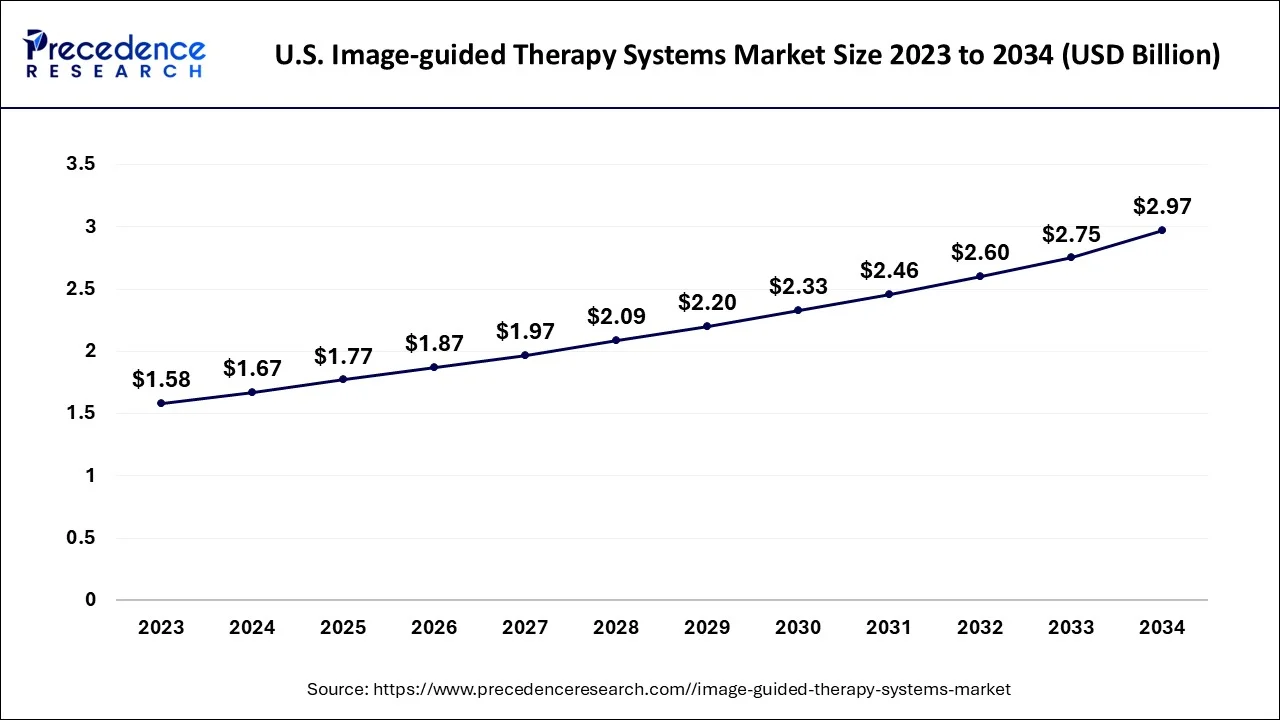
U.S. Image-guided Therapy Systems Market Size and Growth 2026 to 2035
In North America, the U.S. dominated the market owing to the growing need for minimally invasive (MI) procedures and a surge in chronic diseases such as heart issues and cancer. Also, favourable government initiatives and reimbursement policies have increased medical expenditure, boosting technology adoption.
North America caught the biggest portion of 39% in 2026 and is supposed to keep up with its lead over the gauge period. Further developed medical care framework, mechanical progressions, and fast reception of cutting-edge radiation therapies are the variables energizing the development of this market. The developing geriatric populace base, combined with the rising instances of constant infections, is additionally adding to the local market development. The U.S. arisen as the biggest market in North America in 2020 and represented 87% offer.
The U.S. image-guided therapy systems market size accounted for USD 1.87 billion in 2026 and is predicted to be worth around USD 3.19 billion by 2035, at a CAGR of 6.07% between 2026 and 2035.
Asia Pacific is projected to display the quickest CAGR over the conjecture period. The developing geriatric populace, expanding instances of target infections, and further developing medical care foundation are the elements liable for its quick development. A rising number of examinations focuses in nations, like India and China, are decidedly influencing the territorial market development.
Key Trends in the Image-guided Therapy Systems Market in Latin America
Latin America is expected to witness significant growth in the market as a result of rising investments in the healthcare infrastructure and medical imaging technologies. As minimally invasive treatments become more popular, hospitals are considering investing in higher-end image-guided therapy systems. Governments are boosting the supply of specialized health care services, which is driving the growth of the market.
Brazil Market Trends
Brazil's image-guided therapy systems market is anticipated to grow significantly, driven by modernization of hospitals and rising demand for advanced medical imaging equipment. The increased spending on health care is encouraging investment in treatment technologies that supply minimally invasive services. Access to advanced diagnostic and therapeutic options is being increased by public and private healthcare providers.
Growth of the Middle East and Africa in the Image-guided Therapy Systems Market
The Middle East and Africa region is expected to witness significant growth in the market with rising investments in healthcare and penetration of advanced medical technologies. Healthcare infrastructure is being upgraded, and there is support for digital transformation initiatives being implemented by the governments. The increasing need for procedures that are minimally invasive is increasing the uptake of image-guided therapy systems.
Saudi Arabia Market Trends
Saudi Arabia market is anticipated to grow significantly. Complex interventions are performed in hybrid rooms featuring advanced imaging systems at hospitals. The increase in cardiovascular diseases and cancer cases is helping to drive growth in image-driven therapies. The use of AI for diagnostic imaging and robotic procedures is increasing among top medical facilities. Strategic partnerships with internationally based medical device manufacturers are enhancing access to technology.
Image-guided Therapy Systems Market-Value Chain Analysis
- Research & Development (R&D)
This initial stage involves R&D for new imaging and navigation technologies, including AI and robotics integration.
Major Players: Siemens Healthineers AG, GE HealthCare. - Manufacturing and Assembly
This is where individual components are assembled into complete IGT systems, such as MRI, CT scanners, and endoscopes, often in hybrid operating room (OR) configurations.
Major Players: Stryker Corporation, Brainlab AG - Distribution and Sales
Products are distributed globally through direct sales forces or regional distributors, with strategies in emerging markets focusing on leasing, service, and surgeon training to manage high capital costs.
Major Players: Medtronic, GE Healthcare - End-Users
These are the final consumers of the IGT systems, utilizing the technology in various surgical and interventional procedures.
Major Players: Olympus Corporation, Stryker
Competitive Landscape
Controllers in the image-guided therapy systems market include medical imaging companies and healthcare technology firms working on cutting-edge diagnostic and interventional imaging techniques, services, and solutions. The global market is dominated by some of the major players like Koninklijke Philips N.V., Siemens Healthineers, Analogic Corporation, GE Healthcare, and Varian Medical Systems, Inc.
Moreover, collaborations between hospitals, research institutions, and healthcare providers are driving the international expansion of the market players. Further developments in hybrid ORs, enhanced visualization capabilities, and precision-guided new therapies allow for better clinical results and more streamlined operations. There are several problems to address, including equipment costs, regulation, compatibility issues, and ever-changing technology.
Top Companies in the Image-guided Therapy Systems Market & Their Offerings:
- Medtronic: Medtronic provides a wide range of products, including neurostimulation and robotic guidance systems for various applications.
- Brainlab AG: Brainlab AG focuses on navigation systems for orthopedic and cranial surgeries, integrating third-party imaging for complete procedural ecosystems.
Other Image-guided Therapy Systems Market Companies
- Koninklijke Philips N.V.
- Siemens Healthineers
- Analogic Corporation
- GE Healthcare
- Varian Medical Systems, Inc.
- Olympus Corporation
- Stryker
- Others
Recent Developments
- In February 2026, Siemens Healthineers' new, AI-driven image-guided therapy features received new clearance from U.S. regulatory authorities and have been launched on the company's angiography system. The enhancement enables more effective workflow productivity and consistent procedures in minimally invasive procedures. (Source: https://www.siemens-healthineers.com)
- In September 2025, GE HealthCare announced the new advanced interventional imaging solution, which provides AI-assisted visualization and navigation. The system will be used to support clinical decision-making and to create treatment plans that are best for patients. (Source: https://www.gehealthcare.com)
Segments Covered in the Report
By Product
- Ultrasound Systems
- Computed Tomography (CT) Scanners
- Positron Emission Tomography (PET)
- Endoscopes
- Magnetic Resonance Imaging (MRI)
- X-ray Fluoroscopy
- Single Photon Emission Computed Tomography (SPECT)
By Application
- Cardiac Surgery
- Neurosurgery
- Orthopedic Surgery
- Urology
- Oncology Surgery
- Gastroenterology
- Others
By End-use
- Hospitals
- Specialty Clinics
- Ambulatory Surgical Centers
- Research & Academic Institutions
- Others
By Region
- North America
- Europe
- Asia-Pacific
- Latin America
- Middle East and Africa
For inquiries regarding discounts, bulk purchases, or customization requests, please contact us at sales@precedenceresearch.com
Frequently Asked Questions





Ask For Sample
No cookie-cutter, only authentic analysis – take the 1st step to become a Precedence Research client
 Get a Sample
.webp)



 sales@precedenceresearch.com
 Schedule a Meeting
