



India Syndromic Multiplex Diagnostics Market, Global Market Size, Segmentation, Regional Analysis, Buyer Intelligence, Technology Development, Company and Competitive Intelligence.
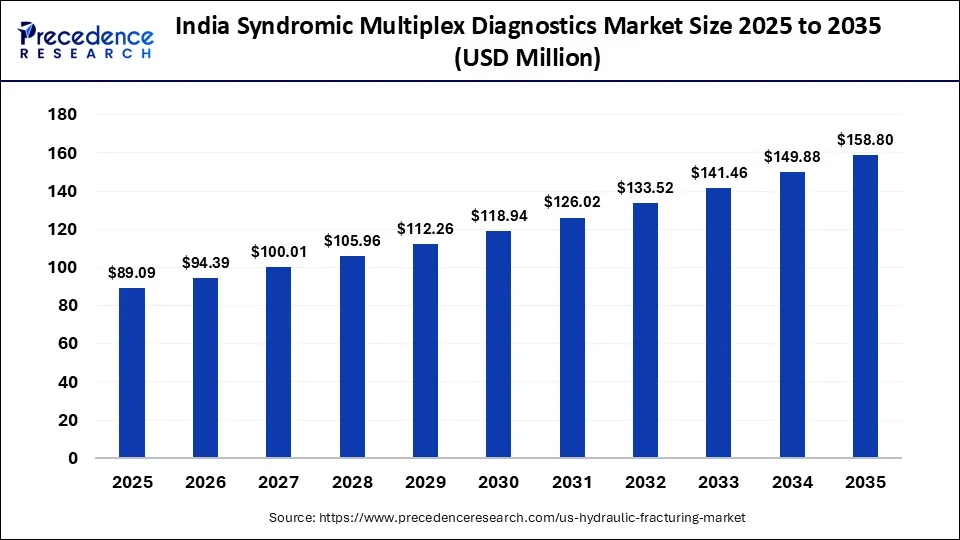
The India syndromic multiplex diagnostics market was valued at USD 89.09 million in 2025, expanding at a CAGR of 5.95% during the forecast period from 2026 to 2035. The driving factor for the market is the rising global prevalence and burden of infectious diseases, like respiratory infections, gastrointestinal illnesses, and sexually transmitted infections (STIs). Our healthcare research analyst, Deepa Pandey, analysed this value. She researched material types, clinical applications, regional growth drivers, and competitive landscapes. Her research is useful for medical product producers, healthcare providers, biotechnology firms, and even investors for competitive benchmarking and strategic decision-making.
Source: https://www.precedenceresearch.com/india-syndromic-multiplex-diagnostics-market
 Get a Sample
 Table Of Content


India Syndromic Multiplex Diagnostics Market Demand, Size and Growth Rate Forecast
The surging respiratory and gastrointestinal infection cases have increased the need for rapid multi-pathogen testing from a single sample and reduced diagnostic turnaround times in critical care. Deepa Pandey has more than 5 years of experience focusing on the healthcare and medicine sector. The market is estimated at USD 89.09 million in 2025, expanding at a CAGR of 5.95% during the forecast period from 2026 to 2035. The market is driven by expanding private and public healthcare diagnostic investments, adoption of cartridge-based point-of-care testing platforms, and major global assay launches entering the Indian market.
Key Takeaways
- By syndrome, the respiratory infections segment led the market with a 36.85% share in 2025.
- By technology, the multiplex PCR segment captured a major revenue share of 67.45% in 2025.
- By panel type, the respiratory panels segment captured the largest market share of 35.40% in 2025.
- By end-user, the hospitals segment led the market with a share of 43.85% in 2025.
- By application, the infectious disease diagnosis segment led the market with a share of 45.65% in 2025.
- CDSCO, India's regulatory authority, has declared a compendium of standard IVD evaluation protocols and minimum standards for high-risk infectious-disease IVDs and an IVD kit validation portal.
- Roche offers molecular diagnostic systems and an infectious-disease testing ecosystem for molecular laboratory infrastructure.
- Indian researchers successfully evaluated BioFire Film Array Pneumonia Panel on 251 respiratory specimens from October 2022 to February 2025.
- The BioFire GI Panel showed 73.3% effectiveness in a 2026 study evaluating 30 pediatric stool samples of children suffering from diarrhoea.
- Turnaround time, pathogen menu, high sensitivity/specificity, high affordability, and reagent availability are essential buyer considerations of syndromic multiplex diagnostics.
Introduction
The India syndromic multiplex diagnostics market covers molecular diagnostic platforms that simultaneously detect multiple pathogens or biomarkers linked with a defined clinical syndrome from a single patient specimen. Principal applications involve respiratory infections, bloodstream infections and sepsis, sexually transmitted infections, gastrointestinal infections, and central nervous system infections.
The market is developing alongside India's broader molecular diagnostics infrastructure, hospital laboratory modernization, antimicrobial-resistance surveillance, and decentralized testing initiatives. India's regulatory framework classifies IVDs according to risk and regulates their manufacture, import, sale, and even distribution under the Medical Devices Rules, 2017. CDSCO also maintains performance-evaluation requirements and laboratories for IVDs.
A particularly important development is the government's rising focus on multiplex molecular assays for priority infectious syndromes. In 2025, ICMR issued a call for proposals specifically seeking development of real-time multiplex molecular diagnostic assays for priority pathogens causing critical infectious syndromes in India.
Syndrome Analysis
Which Infectious Syndromes Generate the Largest Demand?
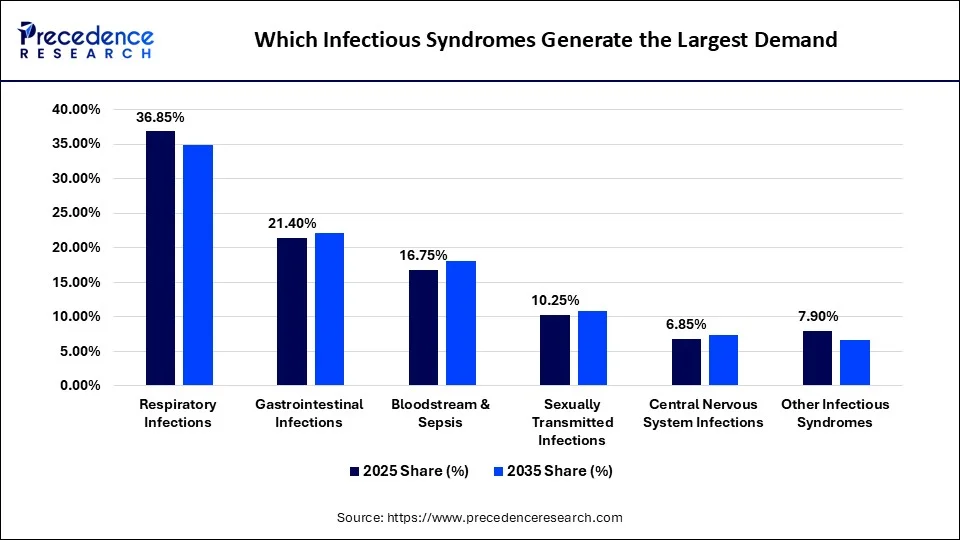
The respiratory infections segment dominates the market with a market share of 36.85% in 2025 due to a high baseline disease burden, overlapping symptoms of co-circulating pathogens, and post-pandemic laboratory upgrades and high prevalence of multi-pathogen co-infections in vulnerable demographics.
Analyst View - Syndrome
Respiratory infections remain the largest syndrome category, at 36.85% in 2025. However, the supplied CAGR indicates that bloodstream & sepsis are growing faster at 6.79%, while CNS infections grow at 6.72%. The change toward sepsis and bloodstream testing is strategically important because diagnostic speed can affect antimicrobial selection and even escalation or de-escalation decisions.
India's ICMR has specifically sought development of multiplex molecular assays for pathogens causing critical infectious syndromes, thus demonstrating that syndromic testing is becoming relevant to national diagnostic-development priorities. The government also functions the National Programme on AMR Containment, which aims to establish laboratory-based AMR surveillance, thus monitoring antimicrobial usage and promoting antimicrobial stewardship.
Technology Analysis
Which Technologies Dominate India's Syndromic Multiplex Diagnostics Market?
| Technology | 2025 Share (%) | 2035 Share (%) | CAGR | Growth Factor |
| Multiplex PCR | 67.45% | 61.85% | 5.05% | Established molecular workflow |
| Real-Time PCR | 15.25% | 14.10% | 5.13% | High installed laboratory base |
| Isothermal Amplification | 7.10% | 9.15% | 8.72% | Lower infrastructure requirements |
| Microarray-Based Multiplexing | 5.20% | 5.65% | 6.80% | Broad simultaneous detection |
| Other Molecular Technologies | 5.00% | 9.25% | 12.85% | Emerging diagnostic platforms |
| Total | 100.00% | 100.00% | — | — |
The multiplex PCR segment dominates with a market share of 67.45% as it simultaneously detects multiple pathogens from a single sample in 30 to 60 minutes, thus replacing slow conventional tests. Indian Council of Medical Research (ICMR) actively funds multiplex molecular tools to curb rising AMR rates in the country.
Analyst View - Technology
Multiplex PCR dominates the market at 67.45%, but its share is projected to fall to 61.85% by 2035. The fastest-growing category is other molecular technologies at 12.85% CAGR, followed by isothermal amplification at 8.72%. The underlying market transition is not necessarily away from PCR; rather, it indicates rising technology diversification. Sample-to-answer systems, isothermal approaches, integrated cartridges, and other molecular platforms can address laboratories where instrument infrastructure, technical staffing, or turnaround-time requirements differ from centralized PCR laboratories.
CDSCO and ICMR have also been working on standardized evaluation protocols for IVDs, including protocols for influenza along with SARS-CoV-2 molecular assays in both singleplex and multiplex formats.
Panel Type Analysis
Which Syndromic Diagnostic Panels Represent the Largest Opportunities?
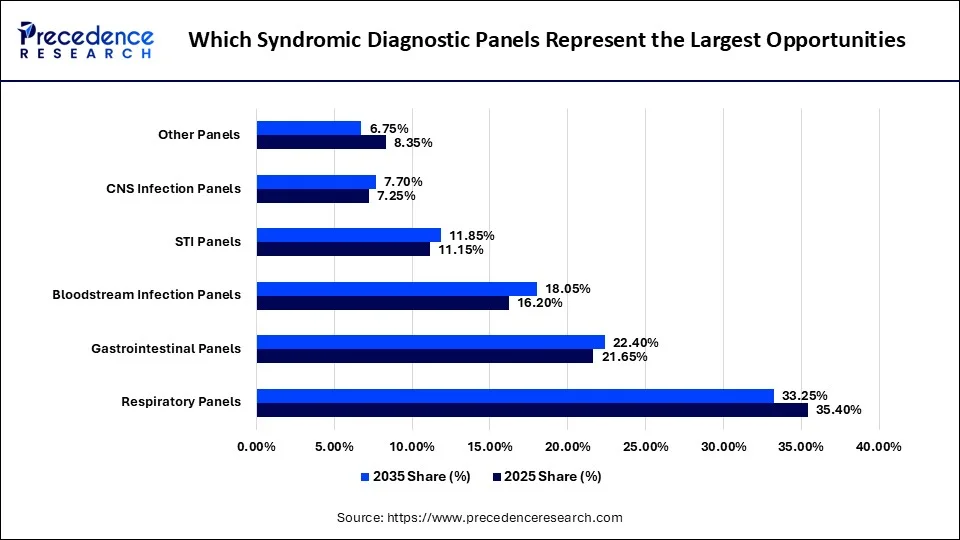
The respiratory panels dominate the market with a share of 35.40% due to rising seasonal respiratory infections, post-pandemic molecular testing adoption, and the demand for rapid differential diagnosis and simultaneous testing, eliminating sequential single-target delays and providing results in hours instead of days.
Analyst View - Panel Type
Respiratory panels represent the largest panel category, while Bloodstream Infection Panels have the highest supplied CAGR at 7.09%. The commercial rationale is mainly strong for panels that combine multiple bacterial targets with antimicrobial-resistance markers. BioFire's syndromic platform, for instance, includes respiratory, bloodstream, gastrointestinal, meningitis or encephalitis, and even pneumonia panels, demonstrating the breadth of the syndromic-testing model.
QIAGEN also expanded its QIAstat-Dx syndromic offering in India in January 2024 with the Gastrointestinal Panel 2 and Meningitis or Encephalitis Panel, alongside its respiratory SARS-CoV-2 panel. The GI panel detects 22 clinically relevant bacterial, viral, and parasitic pathogens in approximately one hour.
Sample Type Analysis
Which Clinical Specimens Drive Multiplex Diagnostic Testing?
| Sample Type | 2025 Share (%) | 2035 Share (%) | CAGR | Growth Factor |
| Nasopharyngeal & Respiratory Samples | 31.85% | 29.90% | 5.27% | Respiratory disease testing |
| Stool | 20.65% | 21.35% | 6.31% | Gastrointestinal diagnostics |
| Blood | 18.90% | 20.15% | 6.64% | Sepsis and bloodstream testing |
| Genital & Urogenital Samples | 11.40% | 11.85% | 6.37% | STI diagnostics |
| Cerebrospinal Fluid | 6.85% | 7.15% | 6.42% | CNS infection testing |
| Other Clinical Samples | 10.35% | 9.60% | 5.15% | Specialized testing |
| Total | 100.00% | 100.00% | — | — |
The nasopharyngeal & respiratory samples segment dominates with a market share of 31.85% because respiratory infections such as seasonal flu, pneumonia, RSV, and even COVID-19 circulate heavily in India. Many of these illnesses cause the same symptoms, thus making it hard for doctors to know the exact cause without a combined test.
Analyst View - Sample Type
Respiratory specimens remain the largest sample type, but blood has the highest share gain, increasing from 18.90% to 20.15%. This corresponds with the rising significance of rapid bloodstream infection and sepsis diagnostics. Moreover, a recent Indian tertiary-care study evaluating the BioFire FilmArray Pneumonia Panel across 251 respiratory specimens found at least one pathogen in 81.7% of samples, compared with 44.2% through culture, while 55.8% of cases showed polymicrobial infections. Further, these findings are study-specific and should not be generalized to all Indian patients, but they illustrate the diagnostic information density that multiplex molecular testing can provide.
Pathogen Type Analysis
Which Pathogen Groups Account for Multiplex Diagnostic Demand?
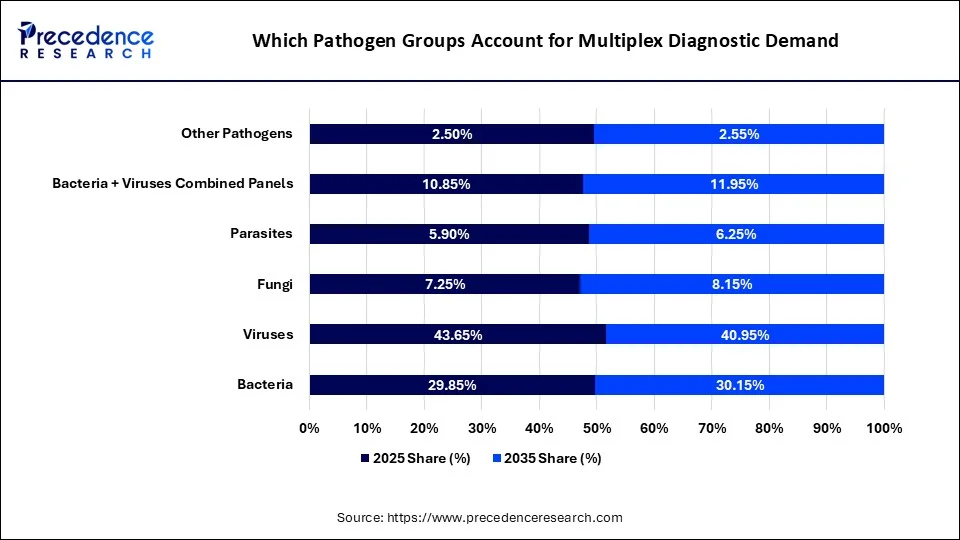
The viruses segment dominates the market with a share of 43.65% as they cause overlapping symptoms that need fast, simultaneous testing from a single sample. Multiplex panels quickly identify viral causes, stopping doctors from misprescribing antibiotics, and then real-time PCR panels deliver results in under an hour, compared to days for traditional cultures.
Analyst View - Pathogen Type
Viruses are the largest pathogen group at 43.65%, mainly reflecting respiratory syndromes and the large number of viral targets incorporated into multiplex panels. However, Fungi grow at 7.22%, while bacteria-plus-virus, thus, combined panels grow at 6.96%. The latter is mainly important because many syndromic presentations cannot be reliably differentiated clinically between bacterial and viral etiologies. BioFire's GI Panel illustrates the breadth of this approach by simultaneously targeting bacterial, viral, and even parasitic causes of gastroenteritis.
End-User Analysis
Which Healthcare Organizations Purchase Syndromic Multiplex diagnostic systems?
| End User | 2025 Share (%) | 2035 Share (%) | CAGR | Growth Factor |
| Hospitals | 43.85% | 42.15% | 5.54% | High-acuity infectious disease testing |
| Diagnostic Laboratories | 27.65% | 29.05% | 6.50% | Centralized molecular testing |
| Specialty Clinics | 10.80% | 11.25% | 6.38% | Expansion of specialized diagnostics |
| Academic & Research Institutions | 7.45% | 7.10% | 5.44% | Clinical research and surveillance |
| Public Health Laboratories | 6.25% | 6.85% | 6.95% | Disease surveillance |
| Other Healthcare Facilities | 4.00% | 3.60% | 4.90% | Smaller testing environments |
| Total | 100.00% | 100.00% | — | — |
The hospitals segment dominates the market with a share of 43.85% as it increasingly adopts syndromic multiplex diagnostics to test for multiple pathogens from a single patient sample, driven by the demand for faster treatment decisions and better infection control.
Analyst View - End User
Hospitals represent the largest end user at 43.85%, reflecting the clinical urgency linked with respiratory disease, sepsis, CNS infections, and even critically ill patients. Diagnostic laboratories increase their share from 27.65% to 29.05%, funded by centralized testing economics and the ability to consolidate multiple assays into standardized workflows.
Public-health laboratories have a smaller base, but the supplied 6.95% CAGR is significant because multiplex molecular testing can complement surveillance and outbreak-response activities. India's IDSP is specifically designed around decentralized, laboratory-based surveillance and early outbreak detection, creating an institutional environment where increasingly sophisticated diagnostic information can support disease surveillance.
Application Analysis
Where are Syndromic Multiplex Diagnostics Being Applied?
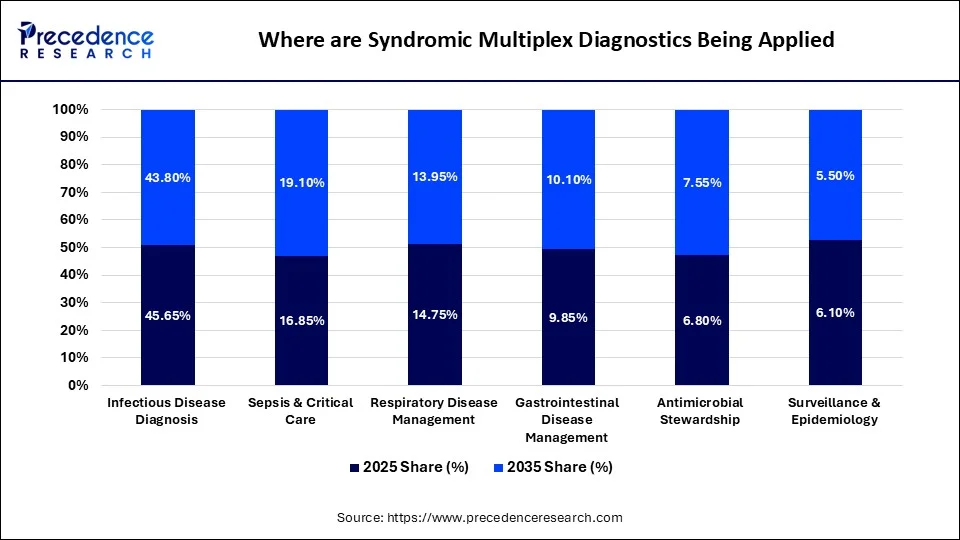
The infectious disease diagnosis segment dominates with a market share of 45.65% due to the urgent demand to simultaneously detect multiple pathogens presenting with identical symptoms, such as fever or respiratory distress, from a single patient sample. Fever and cough mimic multiple agents, thus making single-pathogen testing slow and inefficient. Upgraded private and public clinical laboratories accelerate molecular diagnostics adoption.
Analyst View - Application
Infectious disease diagnosis is the largest application, but sepsis & critical care grows at 7.35%, the fastest rate among the major applications. The market's development is therefore closely tied to the transition from simply identifying whether an infection exists to offering rapid pathogen-level information that can impact treatment decisions. AMR containment is mainly relevant. India's NCDC coordinates a national AMR surveillance programme designed to generate laboratory-driven resistance data and promote rational antimicrobial use and stewardship.
Testing Setting Analysis
Is Syndromic Multiplex Testing Moving Closer to the Patient?
| Testing Setting | 2025 Share (%) | 2035 Share (%) | CAGR | Growth Factor |
| Central Laboratory | 51.85% | 47.90% | 5.10% | Established laboratory infrastructure |
| Hospital Laboratory | 25.65% | 26.10% | 6.13% | Increasing in-hospital molecular testing |
| Near-Patient/Point-of-Care | 12.40% | 16.15% | 8.66% | Faster decentralized diagnosis |
| Reference Laboratory | 7.25% | 6.85% | 5.34% | Specialized testing |
| Other Settings | 2.85% | 3.00% | 6.48% | Emerging testing models |
| Total | 100.00% | 100.00% | — | — |
The market is driven by a shift away from traditional centralized hospital laboratories and is heavily propelled by the integration of point-of-care testing (POCT) and decentralized diagnostics.
Analyst View - Testing Setting
The most important structural change is the rise of Near-Patient or Point-of-Care testing, which has a supplied CAGR of 8.66%, compared with 5.10% for central laboratories. Its share increases from 12.40% to 16.15%. This does not mean central laboratories lose their importance. Rather, the market is becoming more distributed, with centralized high-volume testing operating alongside rapid sample-to-answer systems closer to emergency departments, ICUs and other high-acuity settings.
QIAGEN's QIAstat-Dx platform illustrates this model, thus combining multiplex real-time PCR with integrated analytical modules; its higher-capacity QIAstat-Dx Rise configuration is programmed for up to 160 tests per day with eight analytical modules.
India Diagnostic Infrastructure and Demand Indicators
What Developments Support Syndromic Diagnostics Adoption in India?
| Indicator/Development | Current Evidence | Market Implication |
| ICMR multiplex-development initiative | EOI for real-time multiplex assays targeting priority pathogens causing critical infectious syndromes | Supports indigenous assay development |
| CDSCO IVD framework | IVD manufacture/import/sale/distribution regulated under MDR-2017 | Creates formal product-approval pathway |
| Standard IVD evaluation | ICMR-CDSCO developing standardized evaluation protocols | Supports performance validation |
| AMR surveillance | NCDC operates National AMR Surveillance Network | Supports pathogen and resistance testing |
| IDSP | Decentralized laboratory-based disease surveillance | Expands institutional demand for diagnostic information |
| Syndromic platforms | QIAGEN and BioFire platforms offer multi-pathogen panels | Demonstrates commercial availability |
| Indian clinical adoption | Indian tertiary-care studies evaluating multiplex PCR | Builds local clinical evidence base |
India's regulatory infrastructure is mainly relevant because CDSCO states that IVDs are regulated under the Drugs and Cosmetics Act and Medical Devices Rules, 2017, with classification ranging from Class A through Class D based on risk. In September 2025, CDSCO also declared a compendium of standard IVD evaluation protocols and minimum standards for high-risk infectious-disease IVDs, alongside an IVD kit validation portal.
Analyst View - Indicator/Development
The market's development is being supported by three mutually reinforcing infrastructure layers:
- Clinical demand: hospitals demand faster differential diagnosis.
- Laboratory capability: PCR and sample-to-answer platforms are becoming more established.
- Regulatory and public-health infrastructure: CDSCO, ICMR, NCDC and IDSP are driving the formalization of molecular diagnostic evaluation, surveillance and testing.
This creates an environment where syndromic testing can move from a specialized tertiary-care technology toward broader hospital and laboratory adoption.
Company and Platform Intelligence
Which Companies and Platforms Are Active in India's Syndromic Multiplex Diagnostics Ecosystem?
| Company/Platform | Relevant Offering | Market Relevance |
| QIAGEN - QIAstat-Dx | GI, respiratory and meningitis/encephalitis syndromic panels in India | Multiplex sample-to-answer testing |
| bioMérieux - BioFire FilmArray | Respiratory, GI, blood culture, meningitis/encephalitis, pneumonia and other panels | Broad syndromic panel portfolio |
| Roche | Molecular diagnostic systems and infectious-disease testing ecosystem | Molecular laboratory infrastructure |
| Abbott | Molecular diagnostic platforms and infectious-disease assays | Hospital and laboratory diagnostics |
| Cepheid | GeneXpert molecular testing ecosystem | Decentralized molecular diagnostics |
| Molbio Diagnostics | Truenat molecular diagnostic platform | Indian decentralized molecular testing |
| Indian academic/public laboratories | Multiplex PCR research and evaluation | Local validation and assay development |
QIAGEN
QIAGEN declared the Indian launch of its QIAstat-Dx Gastrointestinal Panel 2 and Meningitis or Encephalitis Panel in January 2024. The firm stated that the panels had received CDSCO regulatory approval. Its respiratory panel detects 23 viral and bacterial pathogens, while the GI panel identifies 22 clinically relevant bacterial, viral, and even parasitic pathogens in approximately one hour.
QIAGEN also documented use of QIAstat-Dx at BJ Government Medical College in Pune, describing clinical cases involving rapid molecular testing for meningitis, encephalitis and respiratory infection. This offers an India-specific example of syndromic testing being incorporated into tertiary-care clinical workflows.
bioMérieux/BioFire
BioFire's FilmArray system is based on syndromic multiplex PCR and provides panels covering respiratory infections, gastrointestinal infections, bloodstream infections, meningitis or encephalitis, pneumonia and joint infections. The firm states that its broader portfolio covers more than 100 targets and offers results in approximately one hour. An Indian laboratory network currently provides BioFire respiratory syndromic testing with a same-day reporting schedule, demonstrating the availability of the technology within India's private diagnostic ecosystem.
Analyst View
The competitive environment is developing around platform, consumables, and clinical menu, rather than individual diagnostic tests.
The most commercially essential capabilities are likely to include:
- Number and relevance of pathogen targets
- Turnaround time
- Cartridge or reagent economics
- AMR marker coverage
- Sample preparation automation
- Instrument throughput
- CDSCO approval status
- Ability to operate across central and decentralized laboratories
- Clinical evidence generated in India
- Integration with laboratory information systems
Clinical Evidence from India
What Does Indian Clinical Research Indicate About Multiplex Testing?
A recent Indian tertiary-care study evaluated the BioFire FilmArray Pneumonia Panel utilizing 251 respiratory specimens collected over 29 months from October 2022 to February 2025.
| Measure | Study Result |
| Respiratory specimens | 251 |
| Pathogen detected by multiplex PCR | 81.70% |
| Pathogen detected by conventional culture | 44.20% |
| Polymicrobial infections | 55.80% |
| Multiplex PCR sensitivity | 94.60% |
| Acinetobacter baumannii among reported bacterial detections | 29.50% |
| Klebsiella pneumoniae | 24.70% |
| Pseudomonas aeruginosa | 19.90% |
| Human rhinovirus/enterovirus | 15.10% |
| Influenza A | 13.10% |
Analyst View
The study illustrates the potential diagnostic-data advantage of syndromic molecular testing in complex respiratory infections. Further, the detection rate was substantially higher than conventional culture in that particular study population, and more than half of the specimens with detected pathogens had polymicrobial infections. However, these findings should be treated as clinical-study evidence rather than a national market statistic. Test performance and clinical utility can vary by syndrome, specimen type, patient population, and panel.
Gastrointestinal Testing Opportunity
Why is Gastrointestinal Multiplex Testing Important in India?
A 2026 study from South India has evaluated the BioFire GI Panel in 30 pediatric stool samples from children aged five years or younger with acute diarrhea.
| Measure | Result |
| Stool samples tested | 3000.00% |
| Samples with ≥1 pathogen detected | 73.30% |
| Setting | South India |
| Patient group | Children ≤5 years |
| Major bacterial detection | Enteropathogenic E. coli |
| EPEC detection | 33.30% |
| ETEC detection | 20.00% |
Analyst View
The study offers a small, localized indication of the diagnostic breadth that syndromic GI panels can offer when multiple pathogens can produce overlapping diarrheal symptoms. The commercial opportunity is mainly relevant to tertiary hospitals, infectious-disease laboratories, pediatric hospitals, and reference laboratories where rapid differentiation can reduce the demand for multiple sequential tests. The broader GI opportunity is also consistent with the supplied 6.32% CAGR, above the overall market CAGR of 5.95%.
Buyer Intelligence
What Factors Influence Procurement of Syndromic Multiplex Diagnostics?
| Buyer Criterion | Importance | Procurement Consideration |
| Turnaround Time | Very High | Ability to provide actionable results rapidly |
| Pathogen Menu | Very High | Number and clinical relevance of targets |
| Sensitivity/Specificity | Very High | Analytical and clinical performance |
| AMR Marker Detection | High | Relevance to antimicrobial stewardship |
| Cost per Test | Very High | Sustainable routine testing economics |
| Instrument Cost | High | Capital requirements and utilization |
| Throughput | High | Tests/day and peak-demand capability |
| Sample-to-Answer Workflow | High | Reduction in manual laboratory steps |
| CDSCO Approval | Very High | Regulatory compliance |
| Clinical Evidence | High | Local evidence and validation |
| LIS Connectivity | Medium–High | Integration into hospital workflows |
| Service & Maintenance | High | Instrument uptime and technical support |
| Reagent Availability | Very High | Continuity of testing |
| Training Requirements | Medium | Ease of operation for laboratory staff |
This market is basically influenced by an intersection of clinical utility, financial structures, operational workflows, and regulatory frameworks. Because these multi-target panels represent a major change from traditional single-pathogen cultures, healthcare organizations determine specific factors before implementing them.
Analyst View
Indian buyers are most likely to evaluate syndromic platforms via a total-cost-of-diagnosis framework, rather than simply comparing cartridge prices. A higher-priced multiplex test can potentially justify its economics when it decreases sequential testing, improves turnaround time, offers broader pathogen coverage, or supports earlier treatment decisions. Conversely, high consumable expenses can restrict routine adoption where reimbursement or laboratory budgets are limited. This makes test-menu relevance, utilization rate, throughput, and clinical workflow integration as essential as analytical performance.
Key Growth Drivers
What is Driving India's Syndromic Multiplex Diagnostics Market?
Increasing need for rapid infectious-disease diagnosis
Multiplex systems can determine multiple potential pathogens from a single specimen.
Antimicrobial-resistance concerns
India's national AMR programme impacts laboratory surveillance and antimicrobial stewardship.
Complex respiratory infections
Respiratory symptoms frequently overlap among viral and bacterial pathogens, thus, supporting broad panels.
Sepsis and critical-care requirements
Rapid pathogen identification has particular value in high-acuity patients.
Expansion of molecular laboratory infrastructure
PCR platforms are increasingly available in tertiary hospitals as well as diagnostic laboratories.
Decentralization of testing
The supplied 8.66% CAGR for near-patient or POC testing indicates increasing need for faster decentralized workflows.
Public-health surveillance
India's IDSP offers a nationwide laboratory-based surveillance infrastructure for epidemic-prone diseases.
Indigenous assay development
ICMR's 2025 EOI for multiplex molecular assays demonstrates policy and even research interest in developing solutions for priority infectious syndromes.
Market Challenges
| Challenge | Impact on Market |
| High Cost per Test | Limits routine use in price-sensitive settings |
| Instrument Capital Cost | Slows adoption in smaller laboratories |
| Reimbursement Constraints | Affects clinical utilization |
| Limited Clinical Interpretation | More detected targets can complicate interpretation. |
| Colonization vs Infection | Molecular detection does not always indicate active disease. |
| Antibiotic Stewardship Integration | Results require appropriate clinical interpretation. |
| Regulatory Requirements | Performance evaluation and licensing add development requirements. |
| Reagent Supply | Imported platforms can face supply-chain considerations. |
| Uneven Laboratory Infrastructure | Adoption concentrated in larger urban/tertiary centers. |
| Competition from Conventional PCR | Lower-cost singleplex tests remain relevant. |
Analyst View
The major commercial constraint is most likely to be cost-effectiveness rather than technological capability. Syndromic diagnostics offer more information per test, but the economic value depends on whether that additional information changes patient management, decreases downstream testing, or enhances clinical outcomes. Consequently, adoption will likely remain strongest in ICUs, tertiary hospitals, emergency departments, infectious-disease units, and reference laboratories before expanding more broadly.
Strategic Market Outlook
India's syndromic multiplex diagnostics market is shifting from a technology-led proposition toward a clinical workflow and decision-support proposition. The market forecast indicates growth from USD 89.09 million in 2025 to USD 158.80 million by 2035. Further, respiratory panels will remain the largest demand center, but the fastest structural opportunities are increasingly connected with sepsis, near-patient testing, bloodstream infections, advanced molecular technologies, and antimicrobial stewardship.
Three developments are mainly important.
First, regulatory infrastructure is becoming more sophisticated. CDSCO thus regulates IVDs via the Medical Devices Rules, 2017, while ICMR and CDSCO are developing standardized performance-evaluation protocols.
Second, clinical adoption is expanding beyond respiratory testing. QIAGEN's Indian launch of GI and meningitis or encephalitis panels and BioFire's broad syndromic portfolio demonstrate rising availability of multi-syndrome testing.
Third, decentralization is likely to reshape the competitive landscape. The supplied testing-setting forecast gives near-patient or point-of-care testing an 8.66% CAGR and a 3.75-percentage-point share gain through 2035.
The resulting competitive environment will increasingly depend on pathogen coverage, turnaround time, cost per test, AMR-marker capability, instrument utilization, CDSCO approval, local clinical evidence, and then reagent supply reliability rather than multiplexing capability alone.
Expert Insights
The India syndromic multiplex diagnostics market lies in its ability to test for multiple pathogens from a single patient sample at the same time, thus ensuring rapid, accurate treatment for overlapping symptoms. Moreover, it promotes targeted narrow-spectrum drug use, which helps prevent unnecessary broad-spectrum antibiotic prescriptions and curbs antimicrobial resistance. I believe that multiplex PCR platforms are expected to dominate the market share, while next-generation sequencing (NGS)-based assays are expanding quickly by 2031 to detect novel or unexpected pathogens. It is projected that the deployment of CLIA-waived automated systems in urgent care settings and even retail pharmacies will increase local testing access.
Our Experts
- The primary market research process was carried out by Deepa Pandey, Senior Research Associate, who also designed the methodology and conducted market segmentation, regional trend analysis, competitive analysis, recycling technologies, and forecasts, laying the foundation for the analytical part of the report.
- Aman Singh, Head of Research, has gathered and checked regulatory policies, information on recycling capacity, company financial information, production information, commodity price information, and numerous other quantitative information sources, which are obtained independently, thereby increasing the quality of evidence supporting calculations of the market values.
- Aditi Shivarkar, VP Research, has validated and refined the research material, verified facts, corrected inconsistencies, and completed the research document, making it accurate and to the point.
India Syndromic Multiplex Diagnostics Market Segmentation
By Syndrome
- Respiratory Infections
- Gastrointestinal Infections
- Bloodstream & Sepsis
- Sexually Transmitted Infections
- Central Nervous System Infections
- Other Infectious Syndromes
By Technology
- Multiplex PCR
- Real-Time PCR
- Isothermal Amplification
- Microarray-Based Multiplexing
- Other Molecular Technologies
By Panel Type
- Respiratory Panels
- Gastrointestinal Panels
- Bloodstream Infection Panels
- STI Panels
- CNS Infection Panels
- Other Panels
By Sample Type
- Nasopharyngeal & Respiratory Samples
- Stool
- Blood
- Genital & Urogenital Samples
- Cerebrospinal Fluid
- Other Clinical Samples
By Pathogen Type
- Bacteria
- Viruses
- Fungi
- Parasites
- Bacteria + Viruses Combined Panels
- Other Pathogens
By End User
- Hospitals
- Diagnostic Laboratories
- Specialty Clinics
- Academic & Research Institutions
- Public Health Laboratories
- Other Healthcare Facilities
By Application
- Infectious Disease Diagnosis
- Sepsis & Critical Care
- Respiratory Disease Management
- Gastrointestinal Disease Management
- Antimicrobial Stewardship
- Surveillance & Epidemiology
By Testing Setting
- Central Laboratory
- Hospital Laboratory
- Near-Patient/Point-of-Care
- Reference Laboratory
- Other Settings
For inquiries regarding discounts, bulk purchases, or customization requests, please contact us at sales@precedenceresearch.com
Frequently Asked Questions





Ask For Sample
No cookie-cutter, only authentic analysis – take the 1st step to become a Precedence Research client
 Get a Sample
.webp)



 sales@precedenceresearch.com
 Schedule a Meeting
