






 Request Consultation
Life sciences focus on understanding how life functions and adapts, spanning genetics, biotechnology, microbiology, and data-driven medicine to support disease treatment, food security, and scientific innovation.
Life sciences aren't limited to only taste tubes, white coats, and microscopes nowadays. The study includes the smallest bacteria to the most different and complex human systems. Also, the life sciences that we consider the understanding of how life grows, works, heals, and adapts in different environments.
Life science refers to humanity’s way to explore nature's blueprints and help professionals to cure diseases, farmers to grow healthy yields, corporate backers to design smarter food and safe vaccines, says analysts from Precedence Research.
Most people only think of biology when they see or hear the word life science. But it is much more than the word. The life sciences include mainstream areas such as genetics, biotechnology, microbiology, animal and plant science, and several other fields that are connected to chemistry, data, and medicines in recent years.
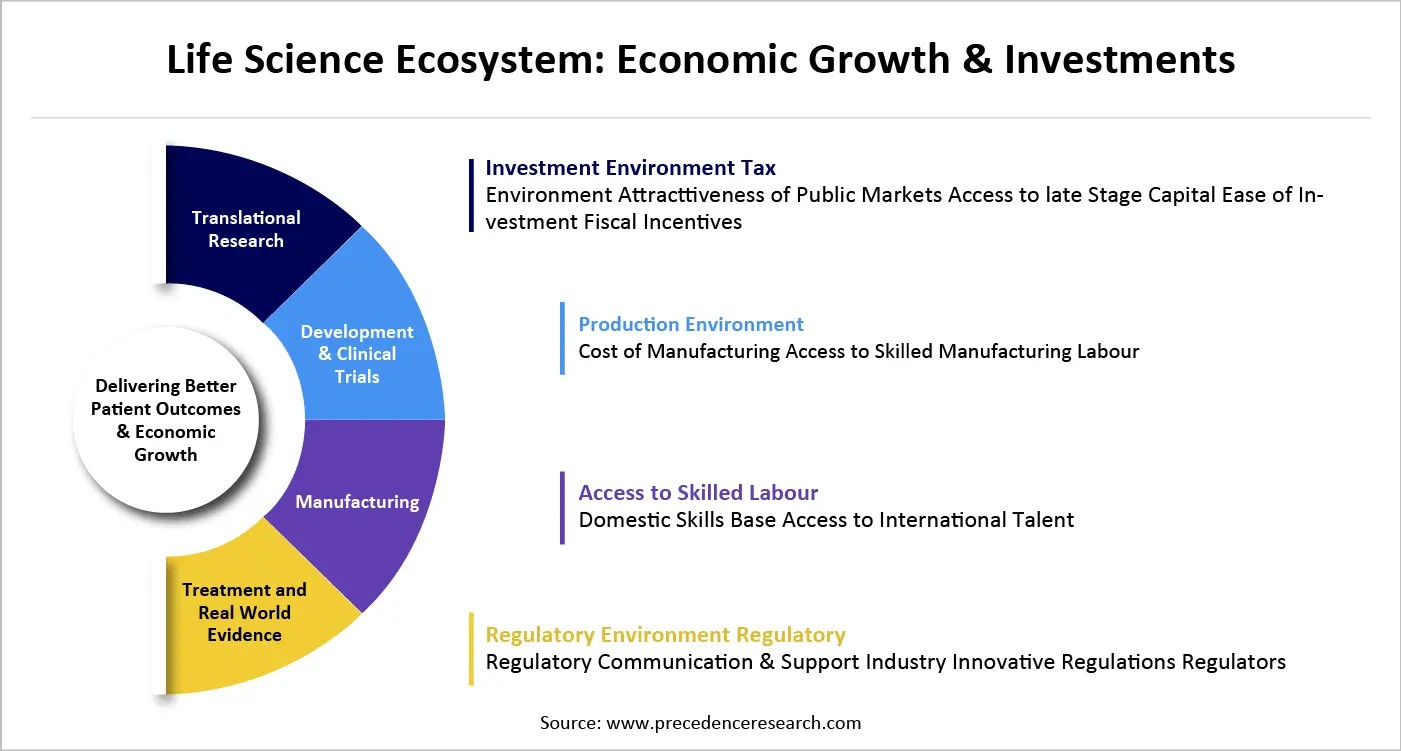
Can AI and Data Science Unlock the Next Revolution in Life Sciences?
Technology shifts are playing a major role in shaping the life science future, where the branch is actively intersecting with artificial intelligence, data science, and sustainability in recent years. Moreover, by connecting hospitals, startups, farms, and laborers in a one shared environment of the study, the life sciences may present new business models for forward-thinking manufacturers in the coming years.
The plant-based proteins to personalize medicines, the life sciences have created their own share while quietly redesigning how the world economy grows and societies live at the same time. The gaps between technology and biology are actively disappearing while creating lucrative opportunities in the sector. Biology is slowly becoming programmable, as per the latest survey. Furthermore, the discoveries are scaled faster, shared, and tested more quickly. Also, the collaboration between data and biology has been marked as the true accelerator of the current era.
What is the Life Sciences Market Size?
The global life science market size is valued at USD 100.88 billion in 2025. It is predicted to increase from USD 112.93 billion in 2026 to approximately USD 278.40 billion by 2034, expanding at a CAGR of 11.94% from 2025 to 2034.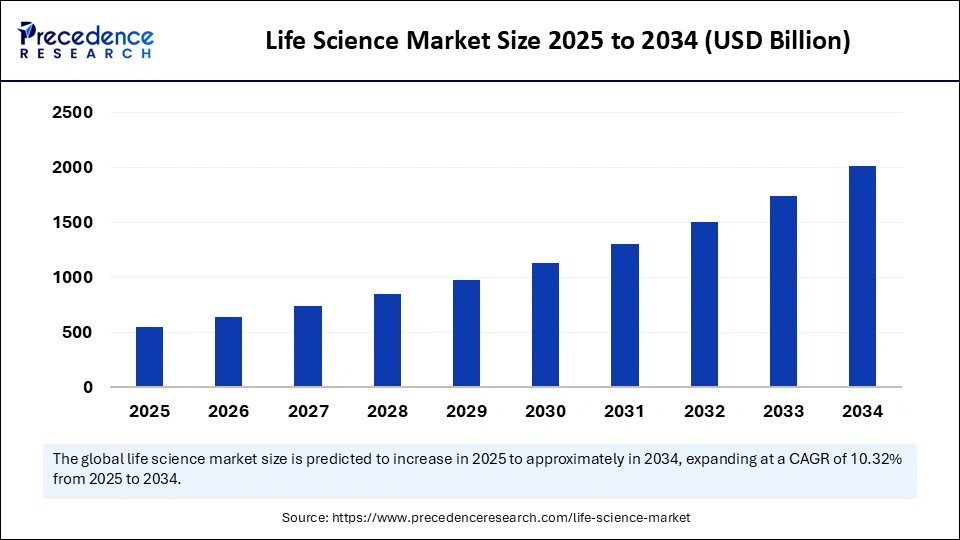
Bridging The Gap: How Leading Life Science Companies Stay Ahead
A performance gap is widening, leading companies to continue to grow faster and earn higher returns, while others are falling behind. Third, many firms are facing a loss of exclusivity on major products by 2027, which could reduce their revenues. To prepare for these challenges, companies are re-evaluating their core strengths and updating their business strategies.
They are using advanced analytics and data-driven tools to better manage shorter product life cycles and find new growth opportunities. In addition, organizations are building stronger teams and improving their financial and operational capabilities to adapt quickly to market changes. Overall, 2025 is shaping up to be a year of renewed progress and transformation for the life sciences sector. With a focus on innovation, efficiency, and readiness, companies are positioning themselves to achieve sustainable growth in an increasingly competitive environment.
Beyond The Lab: Driving Health, Climate, and Food Security
The previous pandemic marked the wake-up call for the world. It shows everyone that science and its innovation are essential, not optional. Furthermore, ahead of the vaccines, the life sciences are closely working with climate resilience, food security, and digital health systems across the globe.Simply, life sciences have become a stronger pillar of global well-being. Also, from a business perspective, life sciences isn’t just a research activity, it's a very demanding and strategic investment zone in the current period. The consumers see life science as the more personalized healthcare, sustainable products, and the ethical supply chain, as per the survey by Precedence Research Team.
Inside the Biology Economy: Turning Molecules, Data, and Ideas into Growth
From history, the global interest in life science is at its peak. Several global governments are pushing industry growth by releasing attractive funding, while venture capital is playing a major role in the building of biology, genomics, biotech, and health tech startups worldwide. This growth is not considered only about money; it's about the best performer of the future business model.
The global traditional research institutes are now establishing strategic collaborations with digital startups. Moreover, several others are closely working with pharmaceutical giants, where these partnerships are giving rise to what many bio experts call the biology economy. In the development of these prime economies, the data, molecules, and ecosystems have played an emerging role where every discovery has been turned into a therapy, sustainable solution, and product in the past few years.
Cross-Industry Impact
Sector Influence
- Construction: Increased usage of bio-based materials to minimize carbon footprints
- Fashion: Shift towards the lab-grown fibers to reduce dependence on resource-heavy textiles
- Energy: Algae and microbes are under research for the production of cleaner fuel options
- Agriculture: Bioengineering has gained major industry share in recent years due to better crop yield results.
This cross-industry impact has been analyzed by the precedence research team between 2024 to 2025. The life sciences have been actively addressing both the environmental and economic challenges simultaneously while helping he industries and healing the planet.
Beyond Profit: The Rise of Ethical and Sustainable Industry Practices
Eco-friendliness or sustainability has become the core business model in recent years. Moreover, prominent companies have realized that sustainable processes are not only ethical but also profitable nowadays. Furthermore, the major branch of the life sciences called biotechnology has been seen in helping the major industries by creating renewable options while minimizing the dependence on petroleum-based products.
The industry is witnessing the sustainability revolution, where enzymes are replacing harsh chemicals and bioplastics are being used instead of non-recyclable packaging in the current period. In addition, several wastewater treatment plants are being treated with biological filters, and plant owners are avoiding energy-intensive methods nowadays. This greater revolution of the industry is not only limited to key players but is also creating consumer awareness and corporate responsibility in recent years. In the future, the world will not remember only the companies that create, but by how they create it.
United For Innovation: The Global Culture of Scientific Cooperation
We all know that no single organization can solve greater problems alone. Also, we have seen that most successful science projects are done by creating and establishing partnerships and collaboration between the governments, startups, universities, and global corporations in recent years.
The collaboration can be able to reduce the cost and share risks while boosting the overall learning capabilities of companies. As an example, the open data platforms in genomics have minimized drug discovery timelines by years. So, the governments are also seen in supporting cross-border innovation centers, which have turned the regional prominence into global breakthroughs in the past few years.
Purpose Over Product: Innovation That Puts People First
Behind every lab breakthrough, there is a human purpose that improves life continuously. Moreover, this human touch has been considered the emotional driver that has provided the special kind of energy and touch to the discovery.
The life science sector operates where science meets empathy and human trust. Whether it is the development of accessible vaccines or cancer therapies, every discovery has an incredible human story behind it, as always. Also, consumers and investors are connected more deeply with life science brands with this initiative. Moreover, the industry’s major brands do not stand for what they sell but for purpose, progress, and human health.
The New Generation of Scientists: Innovators at the Intersection of Tech and Biology
The future landscape may be interdisciplinary, which includes coding, biology, and data analytics with sustainability. The leading players are beginning to have the most in-demand roles, which have shifted towards bioinformatics specialists from lab researchers. The other roles will be AI scientists, biotech engineers, and ethical researchers.The major regions, such as the United States, Europe, and Asia, have seen under a heavy introduction of computational biology and biotech entrepreneurship in the past few years.
The Wellness Revolution: Powered by Everyday Science
Life science has become a part of our lifestyle. The individuals are actively adopting the wearable devices that track their sleep to stress levels. Moreover, the genetic testing kits have gained major industry attention in recent years as people understand their ancestry and health risks nowadays.
The impact of life science has changed consumers' thinks about the wellness industry. Furthermore, the skincare industry is actively using microbiome science while heavily promoting and developing more personalized products in recent years. The surge of the prevention better than cure has become the most prominent trend of the 21st century, as per the industry overview.
The Science is the New Startup Culture: Building the Next Innovation Wave
The past decade, such as the 1990s, has been associated with the internet, and 2010 has had the greatest digital transformation, and 2020 will be the life sciences. Moreover, the prominent investors are looking at life science as the next valley movement, where the startups are forming at the intersection of computing, genetics, and design. The creation of life science products is likely to rewrite the rules of how innovation happens, where collaboration, speed, and purpose drive the current era.
Blueprint of Regulations: How Nations' Scientific Innovation
|
Country / Region |
Regulatory Body |
Key Regulations / Frameworks |
Focus Areas |
Notable Notes |
|
United States |
U.S. Food and Drug Administration (FDA) |
- Federal Food, Drug, and Cosmetic Act (FD&C Act)- 21 CFR Parts 210 & 211 (GMP for Drugs)- 21 CFR Part 820 (Quality System Regulation for Medical Devices)- Drug Supply Chain Security Act (DSCSA)- ClinicalTrials.gov & 21 CFR Part 312 (IND regulations) |
- Product safety, efficacy & labeling- Good Manufacturing Practice (GMP) compliance- Clinical trial oversight- Post-market surveillance |
The FDA oversees all drugs, biologics, vaccines, and medical devices. The DSCSA mandates supply chain traceability. The FDA Modernization Act 2.0 (2022) supports alternatives to animal testing. |
|
European Union |
European Medicines Agency (EMA)European Commission (EC) |
- EU Clinical Trials Regulation (EU CTR 536/2014)- EU GMP Directives (EudraLex Vol. 4)- Medical Device Regulation (EU MDR 2017/745)- In Vitro Diagnostic Regulation (EU IVDR 2017/746) |
- Centralized marketing authorization- Pharmacovigilance & post-market monitoring- Device classification & CE marking- Clinical data transparency |
EMA’s centralized procedure simplifies drug approval across the EU. The MDR and IVDR significantly strengthen device and diagnostic oversight. The EU is also implementing AI Act guidance for digital health technologies. |
|
China |
National Medical Products Administration (NMPA) |
- Drug Administration Law (DAL, 2019)- Measures for the Administration of Drug Registration (2020)- Good Manufacturing Practice (GMP, 2021)- Medical Device Regulation (Order 739) |
- Drug and device approval- Quality & safety inspections- Local clinical trial requirements- Import registration |
China’s NMPA aligns increasingly with ICH and ISO standards. The Marketing Authorization Holder (MAH) system enables domestic and foreign entities to hold product approvals. |
|
India |
Central Drugs Standard Control Organization (CDSCO)Department of Pharmaceuticals (DoP) |
- Drugs and Cosmetics Act & Rules, 1940/1945- New Drugs and Clinical Trials Rules, 2019- Medical Device Rules, 2017- Pharmacy Act, 1948 |
- Clinical trial regulation- New drug and device approval- GMP and GLP standards- Price control via NPPA |
CDSCO enforces Schedule M GMP for drug manufacturing. India is integrating pharmacovigilance and traceability systems for biologics and vaccines. |
|
Australia |
Therapeutic Goods Administration (TGA) |
- Therapeutic Goods Act, 1989- Therapeutic Goods (Medical Devices) Regulations 2002- Australian Code for Responsible Conduct of Research |
- Product registration (ARTG listing)- GMP compliance- Ethical trials and advertising |
TGA ensures compliance for imported and locally manufactured drugs and devices. Recognizes EU CE Mark and U.S. FDA data for certain products. |
|
Canada |
Health Canada |
- Food and Drugs Act & Regulations- Medical Devices Regulations (SOR/98-282)- Clinical Trial Application (CTA) Guidelines |
- Drug and device approval- Clinical trial oversight- Safety and labeling compliance |
Health Canada’s SAP (Special Access Program) allows compassionate use of unapproved drugs. Increasing emphasis on real-world evidence (RWE) in regulatory decision-making. |
|
Middle East (GCC) |
Saudi FDA (SFDA)UAE Ministry of Health & Prevention (MOHAP)Gulf Health Council (GHC) |
- GCC Drug Registration Guidelines (Unified)- National Medical Device Regulation Frameworks |
- Centralized registration & mutual recognition- GMP certification for imports- Device conformity standards |
GCC countries are harmonizing drug and device registration systems under the GHC Unified Registration Program, modeled after EMA practices. |
|
Japan |
Pharmaceuticals and Medical Devices Agency (PMDA) |
Pharmaceutical and Medical Device Act (PMD Act, 2014)- Good Clinical Practice (GCP) Ordinance- Good Manufacturing Practice (GMP) |
- New drug & device approval- Clinical trial compliance- Post-market safety monitoring |
PMDA emphasizes accelerated approval pathways for regenerative medicines and orphan drugs. Japan aligns with ICH guidelines for global data harmonization. |
Global Science Powerhouses: Who’s Leading the Future of Discovery
- Thermo Fisher Scientific Inc. (USA): A global leader in life sciences solutions, Thermo Fisher provides analytical instruments, reagents, consumables, and laboratory equipment for genomics, proteomics, and cell biology research. Its Applied Biosystems, Invitrogen, and Gibco brands support R&D, bioproduction, and clinical diagnostics.
- Danaher Corporation (USA): Operates through subsidiaries such as Cytiva, Beckman Coulter Life Sciences, and Leica Microsystems, offering bioprocessing systems, analytical instruments, and automation tools for research, diagnostics, and biologics manufacturing.
- Merck KGaA (Germany): Through its MilliporeSigma division, Merck provides high-performance chemicals, reagents, chromatography products, and cell culture media for life sciences and pharmaceutical research, emphasizing innovation and sustainability.
- Agilent Technologies Inc. (USA): Supplies instruments and consumables for genomics, proteomics, and drug discovery. Agilent’s expertise spans chromatography, mass spectrometry, and molecular biology tools used in analytical and life science research.
- Bio-Rad Laboratories, Inc. (USA): Offers a wide range of life science research products, including PCR instruments, electrophoresis systems, and antibodies. Bio-Rad is recognized for its contributions to molecular biology, protein analysis, and genomics workflows.
- PerkinElmer Inc. (USA): Provides instruments, imaging systems, and reagents for life science research, diagnostics, and drug development. Its portfolio supports genomics, cell analysis, and environmental health applications.
- Illumina, Inc. (USA): A leader in next-generation sequencing (NGS) technologies, Illumina provides sequencing systems, consumables, and data analysis solutions that advance genomic research and personalized medicine.
- QIAGEN N.V. (Netherlands): Specializes in sample preparation and molecular diagnostics products for DNA, RNA, and protein analysis. QIAGEN’s solutions are used in clinical testing, research, and applied life sciences.
- Waters Corporation (USA): Develops advanced analytical instruments, chromatography systems, and mass spectrometry technologies for biomolecular characterization and life science research.
- Sartorius AG (Germany): Offers bioprocessing and laboratory products for life sciences, including filtration systems, bioreactors, and cell culture equipment supporting biopharmaceutical development and manufacturing.
- BD (Becton, Dickinson and Company) (USA): Provides life science research tools and instruments, including flow cytometry systems, cell analyzers, and laboratory consumables for clinical and biomedical research.
- Lonza Group AG (Switzerland): Supplies cell culture media, bioprocessing tools, and contract development and manufacturing (CDMO) services for biologics, cell, and gene therapy production.
The Future Belongs to Those Who Decode Life with Purpose
Life sciences are in their golden age, where major investors and businesses are likely to create greater change in the upcoming years. Life science is not only about discoveries; this is the reimaging the relationship between business, science, and society. The future has confirmed that those who combine ethical foresight with scientific insights have greater opportunities to capture a huge industry share during the forecast period. The DNA, data, the deep understanding of life itself.
About the Authors

Aditi Shivarkar
Aditi, Vice President at Precedence Research, brings over 15 years of expertise at the intersection of technology, innovation, and strategic market intelligence. A visionary leader, she excels in transforming complex data into actionable insights that empower businesses to thrive in dynamic markets. Her leadership combines analytical precision with forward-thinking strategy, driving measurable growth, competitive advantage, and lasting impact across industries.



Aman Singh
Aman Singh with over 13 years of progressive expertise at the intersection of technology, innovation, and strategic market intelligence, Aman Singh stands as a leading authority in global research and consulting. Renowned for his ability to decode complex technological transformations, he provides forward-looking insights that drive strategic decision-making. At Precedence Research, Aman leads a global team of analysts, fostering a culture of research excellence, analytical precision, and visionary thinking.

Piyush Pawar
Piyush Pawar brings over a decade of experience as Senior Manager, Sales & Business Growth, acting as the essential liaison between clients and our research authors. He translates sophisticated insights into practical strategies, ensuring client objectives are met with precision. Piyush’s expertise in market dynamics, relationship management, and strategic execution enables organizations to leverage intelligence effectively, achieving operational excellence, innovation, and sustained growth.