



Intelligent Power Module Market Trends, Manufacturing Yield, Fab Capacity, Export & Import Dynamics, Sales Performance, Supply Chain Analysis, and Growth Forecast
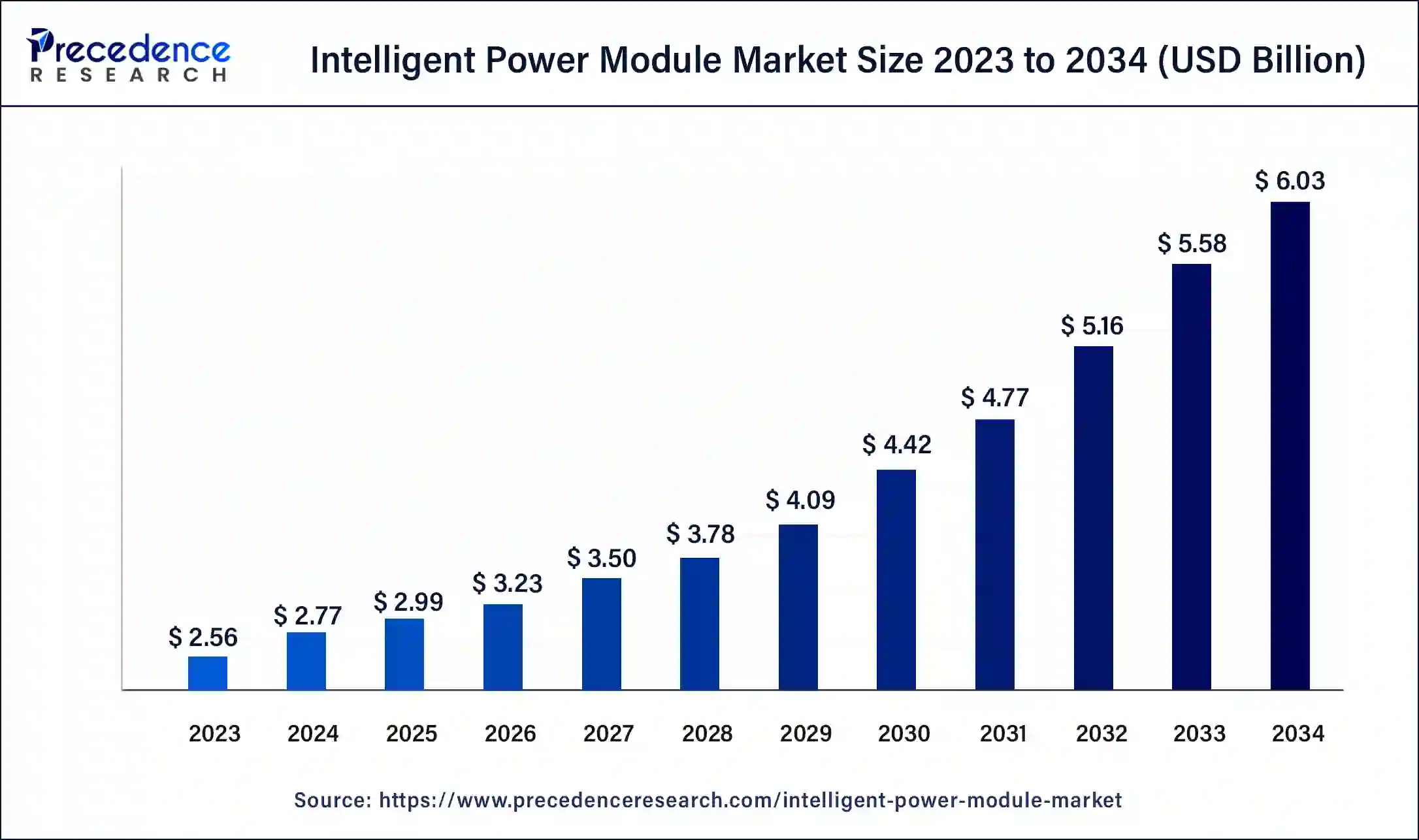
The global intelligent power module market was valued at USD 2.99 billion in 2025 and is forecast to reach approximately USD 6.25 billion by 2035, advancing at a CAGR of 7.65% over the forecast period. The intelligent power module market growth is driven by the rising adoption of electric and hybrid vehicles, increasing demand for consumer electronics, and growing renewable energy generation. Government initiatives promoting clean energy and lower emissions, along with expanding data centers, industrial automation, and demand for energy-efficient power management, are further supporting market growth
Source: https://www.precedenceresearch.com/intelligent-power-module-market
 Get a Sample
 Table Of Content


Intelligent Power Module Market Size and Forecast 2026 to 2035
The global intelligent power module market size was estimated at USD 2.99 billion in 2025 and is predicted to increase from USD 3.23 billion in 2026 to approximately USD 6.25 billion by 2035, expanding at a CAGR of 7.65% from 2026 to 2035. The intelligent power module market is growing significantly because of the growing usage of electric vehicles and electronics.
Intelligent Power Module Market Key Takeaways
- By Region, Asia Pacific held a majority revenue share of the intelligent power module market in 2025.
- By Region, North America is expected to grow at the fastest CAGR in the market during the forecast period.
- By voltage, the 601 V – 1200 V segment dominated the global market in 2025.
- By voltage, the up to 600v segment is expected to gain the highest market share with a CAGR between 2026 and 2035.
- By vertical, the automotive segment held the largest revenue market in 2025.
- By vertical, the consumer electronics segment is expected to show the fastest growth with a CAGR over the forecast period.
Market Overview
The global intelligent power module market is expanding quickly due to the rising demand for consumer electronics. The growing acceptance of electric vehicle and hybrid vehicles is another factor driving the growth of this industry. An electrical device that has a high-voltage drive circuit to provide high power performance from either an IGBT power device or a MOSFET power device is referred to as an intelligent power module. Extreme temperatures, under-voltage fluctuations, and short circuits in systems are also all prevented by using it. Inverters, heating, ventilation, air conditioning, solar power generation, and several other sectors where it looks appropriate can all use intelligent power modules. They are suited for application in smart grids, consumer electronics, and other systems due to their great power efficiency and low power consumption. An intelligent power module is a practical tool in the electronics sector thanks to all these features.
Impact of AI on the Intelligent Power Modules
The incorporation of artificial intelligence (AI) for improved functionality is another noteworthy development in the intelligent power module market. Prominent businesses are integrating AI algorithms into IPMs to provide more intelligent control and management of electricity. This trend is meeting the increasing need for intelligent systems that can adjust to changing operating circumstances.
Leading the way in implementing AI-powered IPMs are nations like Japan, which are renowned for their precision electronics, mirroring the worldwide trend toward increasingly complex and adaptable electronic solutions. By incorporating machine learning and artificial intelligence (AI) into the Intelligent Power Module Market, companies like Infineon Technologies and Wolfspeed are driving innovations and improving overall performance and predictive maintenance.
- In April 2025, Volkswagen Group in China presents a new AI-powered ADAS system for the next generation of intelligent electric vehicles. The group will present a Volkswagen-brand model with this technology in China before the end of this year. Starting next year, it will also be integrated into models based on the China-specific Compact Main Platform (CMP).
Technological Advancement
Technological advancements in the intelligent power module market feature advanced semiconductor technology and AI integration. SiC and GaN are used in traction due to their versatile characteristics and features. It strengthens thermal performance. IGBT technology, a 7th-generation IGBT-based IPM from onsemi, improves the performance of applications such as industrial and automotive. Smarter energy management, an AI algorithm in IPM, provides predictive maintenance and real-time monitoring.
Technology in applications supports various markets, such as home appliances and HVAC. Texas Instruments, a 650 three-phase GaN IPM, is designed for motor drive applications in HVAC and home appliances. Industrial automation uses IGBT technology, and electric vehicles use SiC technology. Advancements are the epicenter of development, innovation, and techniques. The technologies fasten switching speed and reduce power losses. The switching speed helps manage several applications effectively. Enhancement to the intelligent power module market leverages the demand for upgradation and adoption of new projects and operations in the business sector.
Intelligent Power Module Market Growth Factors
- Rising consumer demand: The demand for consumer electronics items is rising along with the population growth in various emerging economies. As a result of this progress, the demand for intelligent power modules has also increased. Throughout the anticipated period, this serves as a market-driving force.
- Switching to hybrid electric vehicles: The population's apparent preference for hybrid electric vehicles is driving this industry as well because it opens up more opportunities for the use of intelligent power modules. The demand for energy sources on the market is also influenced by the expanding trend of renewable energy sources.
- Environment protection & government programs: The adoption of clean energy vehicles, such as plug-in hybrid electric vehicles, electric vehicles (EVs), and alternative fuel vehicles where IPMs are extensively used in oil pumps, AC compressors, onboard charging units, etc., is being pushed by numerous government programs around the world aimed at lowering carbon dioxide emissions and protecting the environment.
- Growing EV & electronic industry: The expansion of the EV industry is therefore anticipated to assist the expansion of the market under investigation. The electronics sector is displaying a number of emerging trends that offer opportunities for intelligent power modules to be used further. Since intelligent power modules enable a higher power supply for electric and electronic components, numerous data center businesses are incorporating them in modular data centers.
Strategic Growth Opportunities
- High-Growth Commercial Opportunities: EVs, Renewables, Data Centres and Industrial Automation are expected to be the industry-hugging trends that will generate a market for intelligent power modules. High-voltage modules with high energy efficiency have considerable commercial potential.
- Emerging Technology Opportunities: New technologies like SiC and GaN, leading-edge 'AI' power management, and advanced thermal technologies are becoming growth markets. These technologies can improve efficiency, power density, and system reliability.
- Geographic Expansion Opportunities: Rising opportunities are recorded in Asia-Pacific and Europe as the adoption of EVs, investments in renewable energy, and modernization of industries in the region are expected to result in such prospects. Businesses can grow by establishing domestic production lines and collaborations.
- White Space Analysis: Many opportunities are relatively under-served in the form of customized modules for EVs, renewable energy, and High Performance Computing. The small and integrated solutions can assist businesses in grabbing intended demand.
Future Outlook and Strategic Recommendations
- Long-Term Industry Outlook: The Long-Term Industry Outlook is for the intelligent power module market to steadily grow, as driven by electrification, renewable energy, automation, and digital infrastructure. There will be a growing preference for more compact, efficient, and high-voltage products.
- Emerging Business Models: Application development of modules and co-development with OEMs offer higher value revenue opportunities. Monitoring and optimization services can provide future revenue opportunities with integrated power-management solutions.
Market Scope
| Report Coverage | Details |
| Market Size in 2025 | USD 2.99 Billion |
| Market Size in 2026 | USD 3.23 Billion |
| Market Size by 2035 | USD 6.25 Billion |
| Growth Rate from 2026 to 2035 | CAGR of 7.65% |
| Fastest Growing Market | Asia Pacific |
| Largest Market | North America |
| Base Year | 2025 |
| Forecast Period | 2026 to 2035 |
| Segments Covered | By Voltage, and By Vertical |
| Regions Covered | North America, Europe, Asia-Pacific, Latin America and Middle East & Africa |
Market Dynamics
Drivers
The global intelligent power modules market will be driven by an increase in renewable energy generation.
In the coming years, there will likely be an increase in demand for renewable energy sources like wind and solar due to rising greenhouse gas (GHG) emissions, mainly CO2 due to the excessive usage of fossil fuels for energy production. In addition, the increased demand for electricity in developing nations is refocusing attention on the production of renewable energy. The use of solar inverters, micro-inverters, and wind turbine inverters, where intelligent power modules are crucial components, may expand as a result of this rising demand. Therefore, it is projected that growth in the production of renewable energy around the world will propel the market for intelligent power modules over the forecast period.
Stringent CO2 emission rules implemented by governments throughout the world and rising environmental consciousness among the populace are both responsible for the electric car industry's notable rise. High-density power modules are being integrated into power management circuits and motor drives in electric vehicles as a result of technological advancements that have improved the reliability and efficiency of the vehicles while reducing system size and cost. Thus, it is anticipated that the worldwide intelligent power module market will have plenty of opportunities in the near future as electric vehicle (EV) and hybrid electric vehicle (HEV) adoption picks up pace.
Restraints
The slow acceptance of new technologies and the challenging design of clever power modules
The rapid expansion of the IPM market requires the adoption of new trends and technology in IPMs. Although new technology and its advantages appeal to engineers, designing a control structure is difficult. As a result, the IPM market adopts new technologies at a relatively moderate rate, which would impede the technology's development. The companies in the intelligent power module market also put a lot of effort into combining many functions onto a single chip, which leads to complicated designs. Complex device design and integration need specialized skill sets, reliable methodologies, and expensive toolkits, which raises the entire cost of the devices. The transfer to more expensive, high-tech devices is predicted to be hampered by their high cost, which is predicted to impede the growth of the intelligent power module market throughout the forecast period.
Opportunities
Participants Introduce Upgraded Intelligent Power Modules for a Variety of Applications
It is anticipated that market participants in the intelligent power module space will launch new products that comply with the needs of the modern industrial sector. Improved versions of intelligent power modules are being released by major industry participants, and they are expected to be used in a variety of applications. Stakeholders are concentrating on the design features of their intelligent power modules in addition to the introduction of new power semiconductor technologies.
For industrial motor drives, Infineon Technologies introduced a new intelligent power module in October 2018. The CIPOS Maxi, according to Infineon, is the best low-power drive for air conditioning, pumps, motors, fans, ventilation, and power factor correction. The company also introduced a new 3-phase intelligent power module, which is intended to maximize the efficiency of washing machines, industrial drives, compressors, fans, and other devices, as part of their effort to diversify their current product offerings.
- In February 2025, Delta, a global leader in power management and a provider of IoT-based smart green solutions, announced its participation in ELECRAMA 2025 under the theme of Smart Manufacturing by launching its new D-Bot series Collaborative Robots (Cobots) in the Indian market.
Segemantal Insights
Voltage Insights
The above 1200 V segment is projected to grow at a notable pace with the increasing demand for high-voltage power conversion. These modules can be used for high-power transportation applications, industrial drives, and renewable energy. Further improved technology for energy conversion processes and energy integration in the grid is also required for the development of energy sectors in general.
The market is divided into four categories based on voltage rating: 601 V - 1200 V, Up to 600 V, Above 1200 V, and Others. According to the applicable cable standard or specification, the voltage rating of a cable refers to the maximum voltage that can be continuously applied to a finished cable structure. It is the highest voltage that a cable can operate at while still remaining stable. Intelligent power modules can be used with cables that have a rating of 601 V to 1200 V. They can be used on cables of 600 V or more, as well as 1200 V cables.
The market segment for vehicles up to 600 V held the most market share in 2024. IPMs with voltage ratings up to 600 V has a number of advantages, including a quicker time to market, higher dependability, and less expensive and smaller systems. IGBTs and high-voltage MOSFETs that are reliable and efficient are used in IPMs with voltage ratings up to 600 V that are designed specifically for variable frequency drives. IPMs like this is frequently seen in consumer devices. AC motor drives offer a small design and good performance. Industrial applications include driving fans, pumps, and compressors that use IPMs with 600 V IGBTs. All these attributes are anticipated to increase demand for the aforementioned segment of intelligent power modules.
Vertical Insights
The information and communication technology segment is projected to grow at a notable pace due to the increased demand for data centers, telecommunications machines, and peak-performance supercomputers. In communication systems, networking, and servers, we use efficient power modules known as intelligent power modules for power management. As networks move to 5G, demand for high-quality, reliable, and efficient power-conversion components has grown.
The industrial segment is expected to witness steady growth during the forecast period, due to the increasing uptake of energy-efficient motor-control systems and automation. Intelligent Power Modules are widely used in industrial drives, robotics, pump-compressors, and manufacturing machinery. As higher energy-efficiency standards are demanded by industries, they are increasingly turning to smart solutions that enable effective power management.
The market is divided into categories for automotive, information and communication technology, industrial, consumer electronics, and other sectors based on vertical. An application for intelligent power modules is encouraged by the growing popularity of electric and hybrid vehicles in the automotive industry. They can be used to boost an IGBT chip's performance by integrating them into the car's electric circuit. A high power supply for diverse electric and electronic components is made possible by the intelligent power module, which is being used and integrated into the data center business. Air conditioners are one example of a consumer product where intelligent power modules have been used to provide physical containment for diverse power components.
The intelligent power module market is expected to expand more quickly in the consumer electronics category during the anticipated period. The demand for power electronics devices in power management applications is anticipated to increase as consumer electronics device usage rises. Examples of these devices include smartphones, tablets, and smart wearables. Additionally expected to accelerate the expansion of the consumer electronics sector is the growing use of power electronics in home appliances. Fixed-speed drives are being replaced with inverter-based motor controllers by manufacturers of consumer devices. Instead of just turning the motor on and off as fixed-speed drives do, inverter-based control can change the motor's speed and torque. Consumers gain from the interiorization trend as well as the efficiency advantages of this sort of control because digital inverter products last longer, are quieter, use less energy, and ultimately save the consumer money. It is anticipated that these trends would increase demand for IPMs in the consumer electronics sector.
Regional Insights
Asia Pacific Intelligent Power Module Market Size and Growth 2026 to 2035
The Asia Pacific intelligent power module market size was estimated at USD 1.17 billion in 2025 and is predicted to be worth around USD 2.44 billion by 2035, at a CAGR of 7.63% from 2026 to 2035.
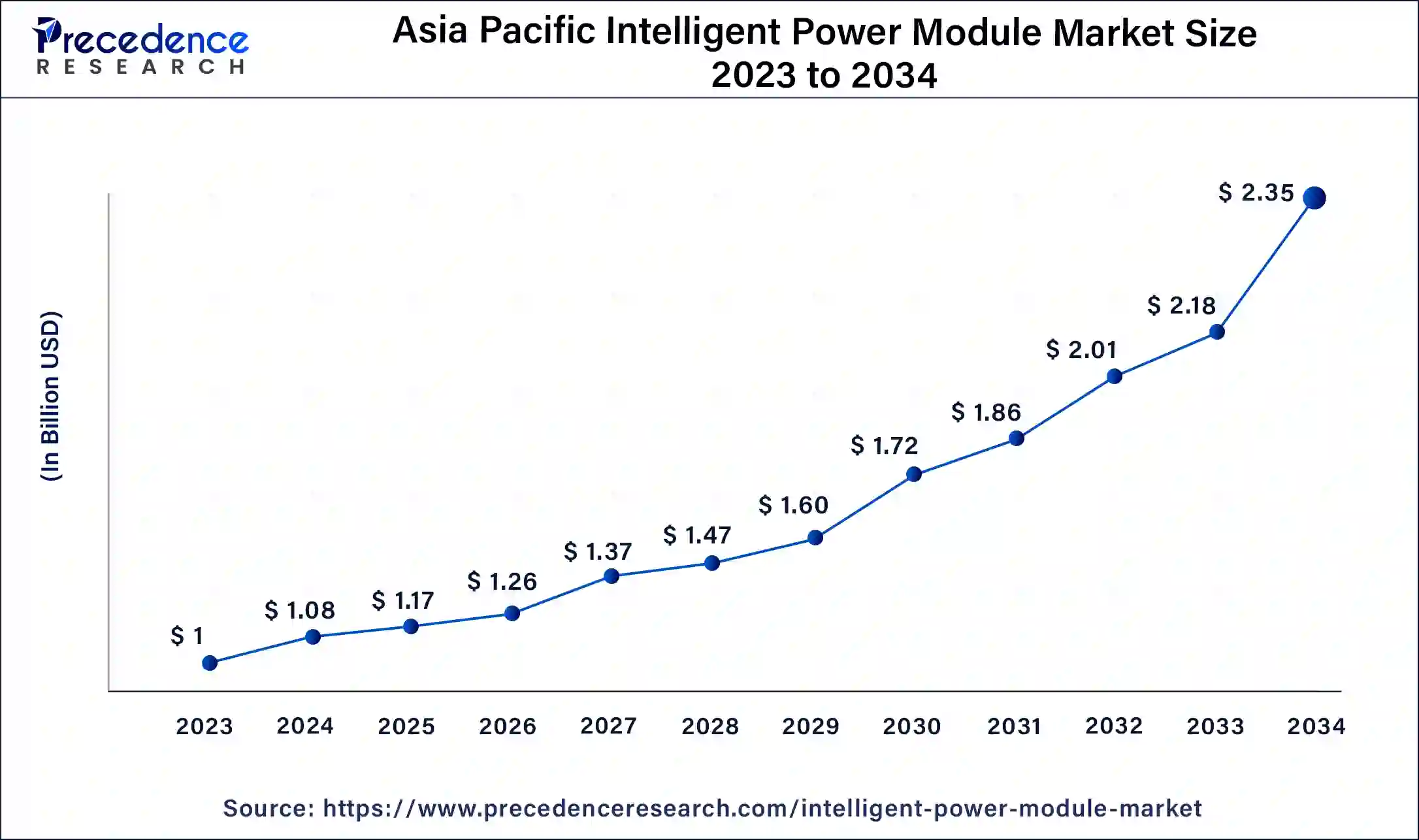
Throughout the forecast period, the intelligent power module market is anticipated to be most heavily influenced by the Asia Pacific, and region is anticipated to continue to rank among the most significant areas in the global market. The consumer electronics and automotive industries are expanding quickly in China, which is projected to raise demand for intelligent power modules there. This expansion is being fueled by rapid infrastructural development and industrialization. In addition, more industrial activity has been seen as a result of governments putting more emphasis on producing power from renewable sources.
India's economy is predicted to expand at a rate of 15.6% CAGR from 2026 to 2035 since the country's market is booming with innovative new technology and practices. The immediate, mid-term, and long-term phases of business development are strategically channeled by semiconductor businesses. The businesses are concentrating on solar energy, utility solar, consumer durables, and traction for the short run. In the medium term, they will concentrate their best efforts on developing electric car traction designs and electric vehicle chargers. Along with the expansion of the aforementioned segment, they are further advancing space for optical devices (OPTO), high frequency (HF), and high voltage direct current (HVDC).
China's semiconductor industry is anticipated to grow at a rate of 13.04% CAGR from 2026 to 2035, making it one of the largest in the world due to the existence of key companies and widespread output. Chinese auto suppliers and original equipment manufacturers (OEMs) are compelled to begin producing intelligent power modules as the market for automotive IGBTs shrinks. Due to the high demand for SiC MOSFET modules in Tesla's EVs, silicon carbide (SiC), a revolutionary material for EV power modules, is also being used by China-based EV companies.
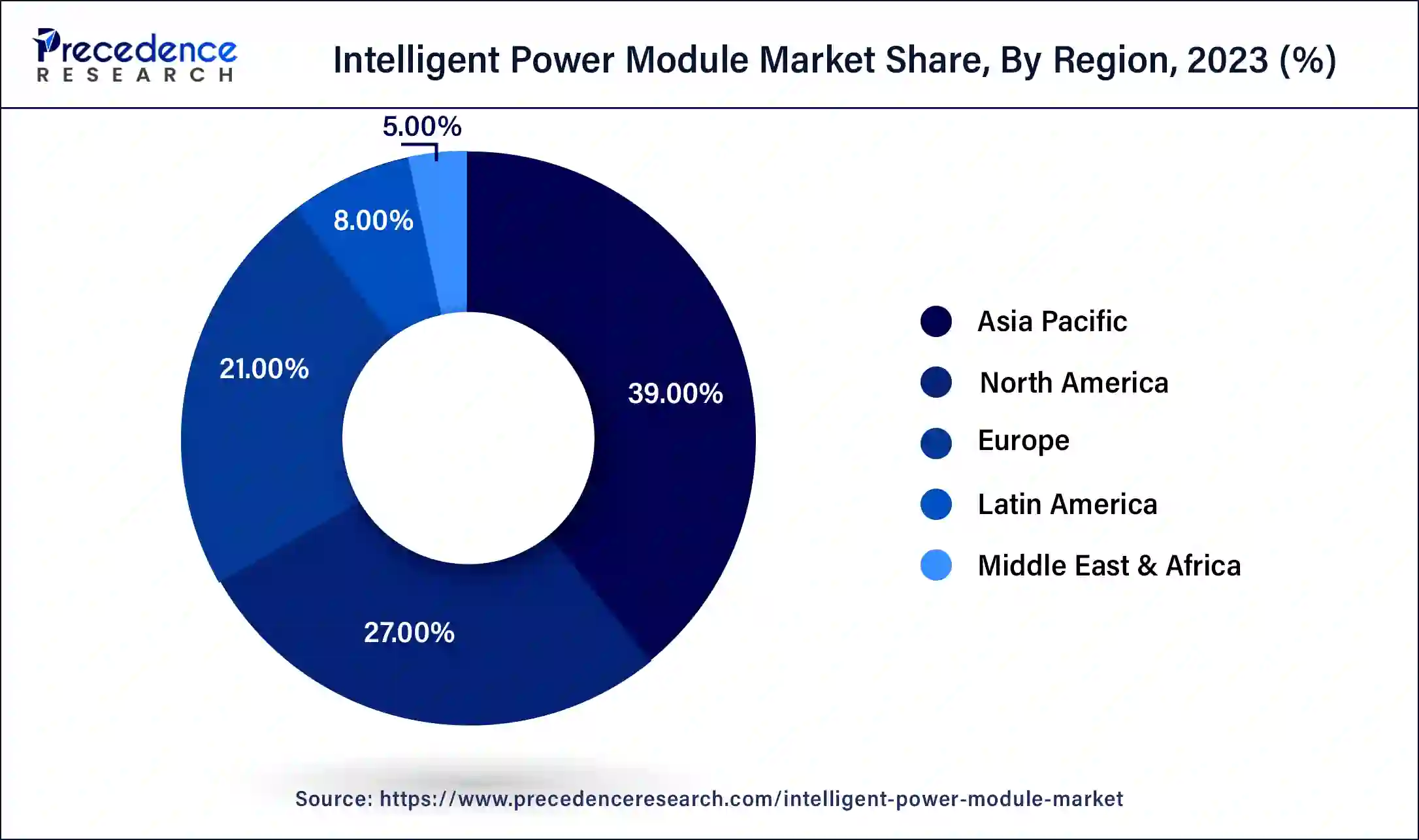
North America is estimated to grow at a significant CAGR in the intelligent power module market during the forecast period. Significant demand is driven by the existence of major industrial and automotive electronics manufacturers in the United States and Canada. Intelligent power modules are becoming more and more common in the region's modern automobile industry, which focuses on electric and hybrid automobiles. Prior to the worldwide rollout, several innovative, intelligent power module designs were created and tested in North American labs with a focus on innovation. The usage of intelligent power modules, which allow for power savings, is also encouraged by strict energy efficiency standards for equipment and appliances. Research on emerging technologies that use intelligent power modules is encouraged by funding and tax incentives. Intelligent power module innovation is centered in North America. Additionally, the area exports intelligent power modules to markets in Europe and Asia.
North America is dominating the intelligent power module market. North America is a leading region for industrial electronics and the automotive sector. The highest manufacturing rate of these sectors boosts development and technology, indirectly benefiting this market. The innovation hub and new IPM designs interest businesses in contributing to the market globally. The demand for electric vehicles and renewable energy solutions is increasing day by day.
Advancements in the Intelligent Power Module Market in Europe
Europe is expected to witness significant market growth throughout the forecast period with rising investments in electric mobility, renewable energy, and industrial automation. There is a push towards low-carbon energy systems in the region, which will lead to growth in demand for efficient power-conversion technologies. Intelligent power modules are gaining traction opportunities in EV traction inverters and charging infrastructure with their growing adoption. The integration of renewable energy sources is driving up demand for smart grids and power-management technologies.
Germany Market Trends
Germany market is anticipated to grow significantly due to the robust automotive and industrial manufacturing base. Advanced power modules are required for automotive applications to support increased production of electric vehicles. The country's investment in renewable energy, modernization of the power grid and networks is also opening up new opportunities for intelligent power-management technologies.
Key Trends in the Intelligent Power Module Market in Latin America
Latin America is expected to witness significant growth in the market owing to swell investments in renewable energy and industrial infrastructure. The development of solar power or wind power is creating demand for efficient technologies for power conversion and management of the power grid. In addition, motor drives and automated systems are becoming more popular due to the growing industrialisation. The development of intelligent power modules is becoming more relevant as a result of the development of electric mobility projects.
Brazil Market Trends
Brazil intelligent power module market is anticipated to grow significantly due to the rising investments in Renewable energy sources and industrial modernization. As a country with good solar energy and wind energy resources, the country is experiencing a demand for the development of advanced power conversion solutions. However, the expansion of electric mobility is also enabling opportunities for intelligent power modules in automotive applications.
Growth of the Middle East and Africa in the Intelligent Power Module Market
The Middle East and Africa region is expected to witness significant growth in the market with the rising investments in renewable energy, infrastructure, and industrial development. Efficient technologies for converting and managing electricity are being demanded for large-scale solar systems. Investments in smart grid technology and electricity infrastructure are further empowering opportunities for the market. Automation in industry places a higher demand on power management and intelligent motor control solutions.
Saudi Arabia Market Trends
Saudi Arabia market is anticipated to grow significantly, attributed to investments in renewable energy, smart infrastructure, and industrial diversification. The adoption of activities in the country through Vision 2030 is facilitating process modernization, along with the energy, transportation, and manufacturing sectors. There is a need for advanced power-electronics solutions because of the increased penetration of large-scale solar and other renewable power projects.
Supply Chain Analysis-Intelligent Power Module Market
- Assembly and Packaging: The back-end processes consist of die coupling to the substrates, interconnection, and protective packaging, providing electrical, mechanical, thermal, and reliable operation of the module.
- Testing and Quality Control: Electrical, thermal, mechanical, and reliability testing are subject through manufacturing to determine whether any defects exist, whether performance is satisfied, and even to verify that intelligent power modules are actually able to comply with the stringent requirements of the industry.
- Distribution to OEMs and Integrators: Completed modules are sold directly, via authorized distributors, logistics partners to OEMs, SI parties, auto makers, Industrial users, and tech companies.
- Lifecycle Support and Recycling: Customers invest in lifecycle services to optimize product reliability, rising operating life, and the ability to recover valuable materials as part of their technical support, maintenance, failure analysis, refurbishment, and responsible recycling services.
Competitive Landscape
The intelligent power module market is highly competitive; some key players include Sino Microelectronics, Hangzhou Silan Microelectronics, STMicroelectronics, Sanken Electric, and ROHM Semiconductor. Companies are looking at new power semiconductor technologies to consolidate their market share, improve efficiencies, shrink their size, and optimize their thermal parameters.
These include cars, the power industry and power generation, renewable energy, consumer electronics and ICT applications, and product releases, investments in capacities, partnerships, and the presence in the country. In the era of Electric Vehicles, industrial automation, renewable energy, and high-performance computing, manufacturers are turning to high-voltage, high-performance, highly integrated, and intelligent power modules.
Intelligent Power Module Market Companies
- Sino Microelectronics
- Hangzhou Silan Microelectronics
- STMicroelectronics
- Sanken Electric
- Rohm Semiconductor
- Semikron
- Fuji Electric
- Infineon Technologies
- On Semiconductor
- Mitsubishi Electric
Latest Announcements by Industry Leaders
- In September 2024, Delta Electronics India President Mr. Benjamin Lin emphasized the company's emphasis on increasing its investments in India, saying, "Our new India HQs building and Bengaluru R&D center not only enhance Delta's capabilities in India but also strengthen our global footprint." Our company's "Local for Local" talent strategy, which strives to promote local innovation to also serve clients internationally, is in line with this milestone, which highlights our engagement in India's expanding technology environment.
Collaboration Landscape
- In 2026, Infineon and LS ELECTRIC announced plans for high-efficiency DC power solutions for AI data center applications. The collaboration is centered on enhancing power efficiency in the rapidly expanding AI infrastructure. (Source: https://www.infineon.com)
- In March 2026, Infineon collaborated with Zenergize to create India-powered power-electronics solutions for Solar, EV charging, and clean-energy applications. Infineon will offer SiC and other semiconductor technologies based on wide-bandgap (WBG) and application-engineering assistance. (Source: https://compoundsemiconductor.net)
- In January 2026, Minebea Power Semiconductor Device entered into a technical partnership with Sanken Electric regarding the development of new intelligent power modules and the back-end production of the modules. The partnership focuses on consumer and industrial products and will help to further develop stable supply and international competitiveness. (Source: https://www.minebeamitsumi.com)
Recent Developments
- In April 2025, Alpha and Omega Semiconductor introduced its Mega IPM-7 series intelligent power modules engineered to improve application performance and deliver increased power density.
- In March 2025, Onsemi introduced the first generation of its 1200V silicon carbide (SiC) metal oxide semiconductor field effect transistor (MOSFET) based SPM 31 intelligent power modules (IPMs).
- In April 2025, Fibocom unleashed the intelligent power of AIoT in Korea at WIS 2025. The digital transformation in the company will benefit the growth of China's intelligent power module market.
- In March 2025, Onsemi introduced the first generation of its 1200V SiC MOSFET-based SPM 31 intelligent power modules (IPMs). These EliteSiC SPM 31 IPMs are said to deliver the highest energy efficiency and power density in the smallest form factor compared to using Field Stop 7 IGBT technology, resulting in lower total system cost than any other leading solution on the market.
- In July 2024, MediaTek and JioThings launched the 'Made in India' Smart Digital Cluster and Smart Module for the 2-wheeler market, combining advanced chipsets and innovative IoT solutions. This collaboration aims to enhance digital experiences, speed market entry for OEMs, and cater to the growing EV segment. Highlighting India's role in global tech innovation, the collaboration is set to transform mobility.
- In August 2024, Infineon Technologies AG added the CIPOSTM Maxi Intelligent Power Module (IPM) series for low-power motor drives to its 7th generation TRENCHSTOPTM IGBT7 product family.
- In June 2024, the first 650V three-phase GaN Integrated Power Module (IPM) for 250W motor driving applications was released by Texas Instruments (TI). The difficulties engineers have while developing large household appliances and HVAC systems are covered in this IPM, DRV7308. It lowers the solution size and system costs, enhances acoustic performance, and attains over 99% inverter efficiency.
- In February 2024, the 1200V SPM31 Intelligent Power Modules (IPMs) from Onsemi, which use the newest generation Field Stop 7 (FS7) Insulated Gate Bipolar Transistor (IGBT) technology, are now available.
- In August 2023, Fuji Electric Co., Ltd. launched the 3rd-Generation Small IPMs, with the aim of reducing power consumption in mounted equipment, such as home appliances and machine tools. The new series features improved trade-off characteristics between power loss and electromagnetic noise, utilizing the latest 7th-generation IGBT/FWD chips.
- In March 2023, Infineon Technologies AG launched the iMOTION™ IMI110 series, a highly integrated intelligent power module (IPM) designed for low-power devices. The series integrates the iMOTION Motion Control Engine (MCE) with a three-phase gate driver and 600 V/2 A or 600 V/4 A IGBTs in a compact DSO-22 pack
Segments Covered in the Report
By Voltage
- 601 V – 1200 V
- Up to 600V
- Above 1200 V
- Others
By Vertical
- Automotive
- Information and Communication Technology
- Industrial
- Consumer Electronics
- Others
By Geography
- North America
- Europe
- Asia-Pacific
- Latin America
- The Middle East and Africa
For inquiries regarding discounts, bulk purchases, or customization requests, please contact us at sales@precedenceresearch.com
Frequently Asked Questions





Ask For Sample
No cookie-cutter, only authentic analysis – take the 1st step to become a Precedence Research client
 Get a Sample




 sales@precedenceresearch.com
 Schedule a Meeting
