



Hybrid Vehicle Market Size, Key Companies, Company Market Share, Vehicle Production Volume, Sales Performance, Export & Import Analysis, Technology Adoption, Competitive Positioning, and Demand Trends
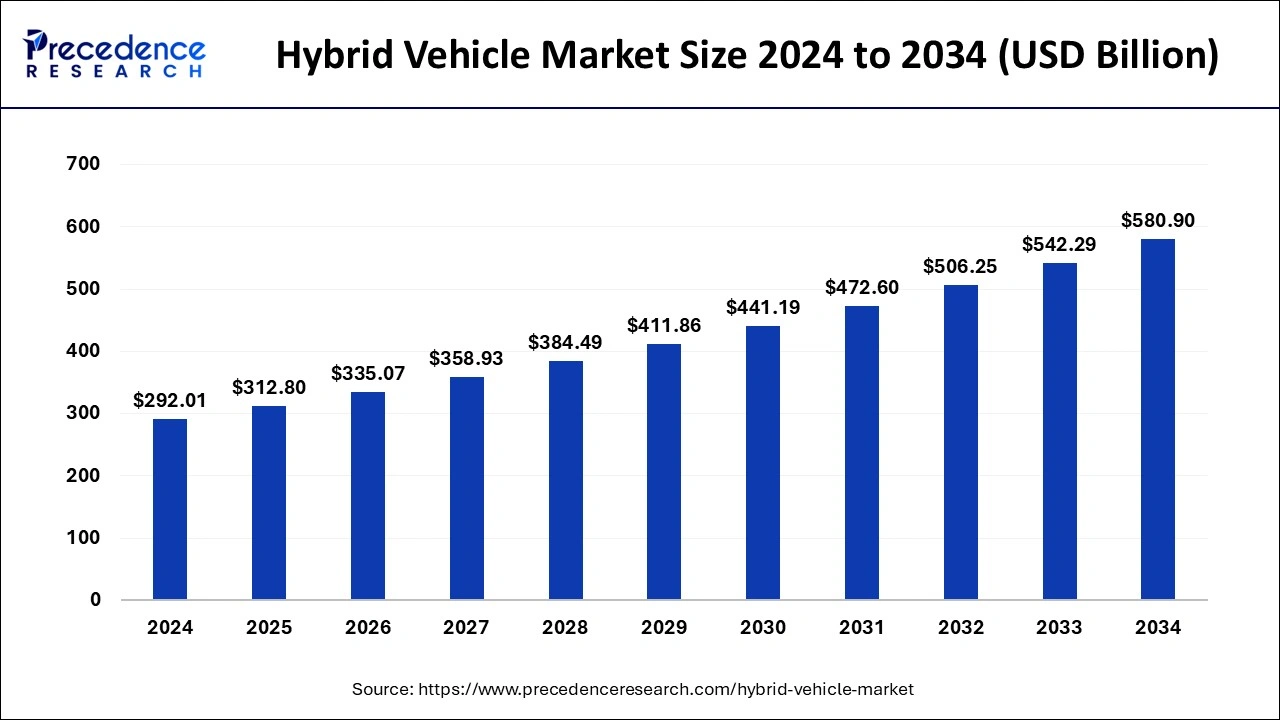
According to automotive sector expert, Laxmi Narayan notes that the hybrid vehicle market stands at USD 335.07 billion in 2026 and is expected to reach USD 617.80 billion by 2035, growing at a CAGR of 7.04%. Leading hybrid vehicle market companies such as Toyota Motor Company, Honda Motor Company, BYD Company Ltd. are driving market development across segments including By Hybridization, Drivetrain, Vehicle, Propulsion, Component Type.
Source: https://www.precedenceresearch.com/hybrid-vehicle-market
 Get a Sample
 Table Of Content


What is the Hybrid Vehicle Market Size?
The global hybrid vehicle market size was estimated at USD 312.80 billion in 2025 and is predicted to increase from USD 335.07 billion in 2026 to approximately USD 617.80 billion by 2035, growing at a CAGR of 7.04% from 2026 to 2035. A growing focus on sustainability is driving the growth of the hybrid vehicle market.
Hybrid Vehicle Market Key Takeaways
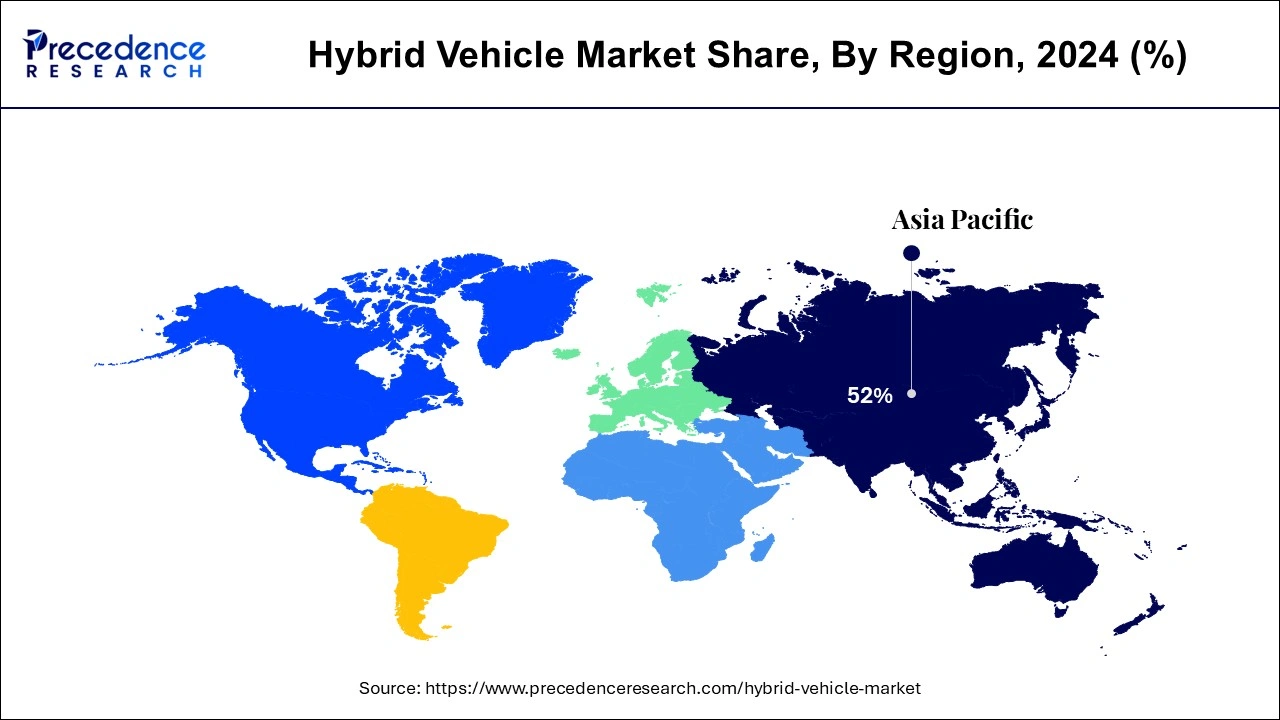
- North America dominated the global hybrid vehicle market with the largest market share of 52% in 2025.
- Asia Pacific is expected to expand at a solid CAGR during the forecast period.
- By hybridization, the fully hybrid segment contributed the highest market share of 50% in 2025.
Market Size and Forecast
- Market Size in 2025: USD 312.80 Billion
- Market Size in 2026: USD 335.07 Billion
- Forecasted Market Size by 2035: USD 617.80 Billion
- CAGR (2026-2035): 7.04%
- Largest Market in 2025: North America
- Fastest Growing Market: Asia Pacific
What is a hybrid vehicle?
The hybrid vehicle market comprises automobiles that combine an ICE with one or more electric motors, which work in tandem to improve the performance or efficiency of driving and reduce carbon emissions. These vehicles are engineered to intuitively transition between burning conventional fuel and using electric power or both at once throughout the driving range. Hybrid technology helps optimize energy consumption while lowering operating costs and environmental impact.
Increasing worries about environmental sustainability, varying fuel costs, and stricter emission regulations have spurred the widespread adoption of hybrid technologies in automotive markets worldwide. Furthermore, improvements in battery technology, regenerative braking systems, and powertrain efficiency continue to bolster the appeal of hybrid vehicles as a viable option, bridging traditional gasoline-powered cars with fully electric transportation solutions.
How is AI Impacting the Hybrid Vehicle Market?
Artificial intelligence(AI), particularly machine learning, is playing an increasingly important role in the hybrid vehicles market by improving vehicle efficiency, performance, and energy management. Machine learning algorithms analyze historical and real-time data to predict driving conditions, traffic patterns, road characteristics, and environmental factors, enabling hybrid vehicles to optimize the interaction between the internal combustion engine and electric motor. This enhances fuel economy, battery utilization, and overall vehicle performance.
AI-powered systems also improve range estimation (RE) by generating more accurate predictions of energy consumption based on driver behavior, route conditions, weather, and traffic data. In addition, AI is supporting the expansion of charging infrastructure by identifying optimal locations for electric vehicle charging stations through the analysis of transportation patterns, charging behavior, population density, and geographic characteristics. These advancements are helping manufacturers and infrastructure providers improve user convenience, reduce range anxiety, and accelerate the adoption of hybrid and electrified vehicles worldwide.
Market Outlook
- Industry Growth Overview: The hybrid vehicle industry will continue to grow because more and more companies have created fuel-efficient products that can bridge the gap between traditional gas-powered vehicles and full electric vehicles. Consumers see hybrids as a logical transition to electrification.
- Sustainability Trends: Automotive companies have begun to use recyclable materials, lightweight products and energy-efficiency processes in their production and design of vehicles. Hybrid vehicles will continue to align themselves with global sustainability goals and carbon neutral mobility initiatives.
- Global Expansion: Due to a lack of infrastructure for electric vehicle adoption in emerging countries, those markets will be major focuses for hybrid vehicle development. Hybrid vehicles will allow a wider range of consumers worldwide to adopt hybrid vehicles.
- Startup Ecosystem: Startups are innovating in battery management systems, hybrid drive systems and energy optimisation systems. They work with the original equipment manufacturers (OEMs) to improve the efficiency of the vehicle's production processes and reduce production costs.
Strategic Growth Opportunities
High Growth Commercial Opportunities
These opportunities mainly involve urban delivery fleets used for light commercial delivery vans and last-mile transport that are shifting to hybrids to gain low-emission zone access without range anxiety. Standardized hybrid platforms cut manufacturing tooling costs, accelerating component supplier margins and modular powertrains. Affordable strong hybrids like mass-market full hybrids (HEVs) address charging reliance by appealing directly to cost-sensitive buyers.
Emerging Technology Opportunitie
These opportunities mainly prioritize predictive AI energy management, where cloud-connected and AI-driven control algorithms optimize the power split between fuel and battery based on traffic and terrain foresight. Advanced regenerative braking with next-generation kinetic energy recapture systems recovers more urban braking energy. Cost-effective battery chemistries are integrating safe, long-cycle lithium-iron-phosphate packs by lowering initial vehicle price points. Current EMS systems include both rule-based and optimization-based approaches, highlighting the integration of advanced algorithms.
Geographic Expansion Opportunities
These opportunities prioritize the electrically powered cars and trucks market, which promises an excellent opportunity for environmentally friendly transportation. However, many emerging regions have inadequate infrastructure, substantial expenses, and insufficient policies impeding widespread acceptance, despite strong policy mandates and mature manufacturing ecosystems. Also, increasing fuel costs collide with developing grid infrastructures with adopting hybrid fleets supporting regional carbon reduction goals.
White Space Analysis
White space analysis should cover the mid-range commercial trucks that offer medium-duty logistics and remain underserved outside basic start-stop systems, leaving room for dedicated heavy hybrid architectures. Predictive software retrofits and further upgrades for older hybrid fleets lack comprehensive real-time traffic route adaptation, and standardized battery replacement and circular-economy remanufacturing frameworks for aging hybrid power units remain wide open.
Hybrid Vehicle Market Growth Factors
- Popularity among consumers: In the automobile industry, hybrid cars have quickly gained popularity as a solution for buyers looking to strike a compromise between performance and fuel economy.
- Rising fuel prices: Economic concerns, especially the volatility of gasoline costs, are contributing to the growing popularity of hybrid vehicles. Rising gas prices are causing consumers to search for methods to reduce their expenses, and hybrid vehicles provide substantial long-term savings due to their increased fuel economy.
- Government incentives: Since many governments are providing incentives for the purchase of environmentally friendly automobiles, hybrids are growing in popularity.
Trends Encouraging Growth in the Hybrid Vehicle Market
- Increasing Global Demand: Due to escalating fuel prices and consumer interest in environmentally friendly vehicles, demand for hybrids is increasing at an accelerated pace - thus, hybrids are becoming a priority for the large automotive manufacturers in some sub-segments of the automotive market (e.g., sedan, SUV, etc.)
- Technological Development: Technological advancements in the battery management systems, the regenerative braking systems, the development of lightweight materials, and the use of intelligent control systems have all contributed to the enhancement of a vehicle's hybrid performance and to a reduced total cost of ownership.
- Administration Regulation: The recent increase in regulatory pressure for cleaner air, as well as the variations in the electric vehicle (EV) incentive or restriction policies in different states, has been an influencing factor in the increased hybrid vehicle deployment in areas where full-scale EV infrastructure has yet to be developed.
- Expansion of Emerging Markets: An increasing trend between the various Asian and African countries is a growing interest in the importation and sale of hybrids in those markets, as consumers are looking for lower-cost alternatives to traditional gasoline engine vehicles.
Market Report Coverage and Key Metrics
| Report Coverage | Details |
| Market Size in 2025 | USD 312.80 Billion |
| Market Size in 2026 | USD 335.07 Billion |
| Market Size by 2035 | USD 617.80 Billion |
| Growth Rate from 2026 to 2035 | CAGR of 7.04% |
| Fastest Growing Market | Asia Pacific |
| Base Year | 2025 |
| Forecast Period | 2026 to 2035 |
| Segments Covered | Hybrid, Vehicle, Type of Propulsion Insights, Type of Drivetrain Insights, Type of Drivetrain Insights, and Region |
| Regions Covered | North America, Europe, Asia-Pacific, Latin America, and Middle East & Africa |
Market Dynamics
Drivers
Environmental sustainability
The need for more environmentally friendly modes of transportation has increased as worries about climate change and environmental sustainability grow on a worldwide scale. For drivers who wish to lessen their carbon footprint without compromising the comfort and familiarity of gasoline-powered automobiles, hybrid vehicles which combine the finest features of internal combustion engines with electric power offer an alluring alternative.
Restraint
Initial and maintenance cost
Hybrid cars are costlier than their internal combustion engine (ICE) counterparts because of their increased complexity. In addition to raising the total cost of purchase, more technology in a hybrid vehicle may have an impact on maintenance expenses. In particular, if the components of the hybrid system are damaged, the upkeep might out to be very expensive.
Opportunity
Better vehicle ranges and charging capabilities
Longer electric-only ranges are expected to be a feature of plug-in hybrid car development. Future plug-in hybrids are expected to have longer electric-only driving ranges due to developments in battery technology, enabling drivers to use electric power for longer periods of time before switching to an internal combustion engine. In addition, plug-in hybrids will soon have improved fast-charging capabilities. Users will find these cars more convenient with faster charging times, which will also provide drivers more control over how they manage their hybrid power sources and fit in with the rising trend of expanded charging infrastructure.
Market Segmentation Analysis
Hybridization Insights
Why Did the Fully Hybrid Segment Dominated the Market in 2025?
The fully hybrid segment dominated the hybrid vehicle market with a major revenue share in 2025, primarily due to its ability to operate using the internal combustion engine, the electric motor, or a combination of both. This flexibility delivers superior fuel efficiency, reduced emissions, and enhanced driving convenience without requiring external charging infrastructure. Strong consumer preference for practical and fuel-efficient mobility solutions, combined with stringent emission regulations and extensive product offerings from leading automakers, further strengthened the segment's market leadership.
The mild hybrid segment is expected to grow at the fastest CAGR in the market between 2026 and 2035. This is mainly due to its cost-effective electrification technology and ease of integration into existing vehicle platforms. Mild hybrid systems utilize smaller batteries and electric motors to support engine performance, improve fuel economy, and reduce emissions at a lower manufacturing cost. Rising demand for affordable low-emission vehicles and tightening fuel-efficiency standards, particularly in emerging automotive markets, are expected to accelerate adoption.
Drivetrain Insights
The Series Drivetrain Segment Held the Largest Market Share in 2025
The series drivetrain segment accounted for the largest share of the hybrid vehicle market in 2025, as it offers efficient energy management, especially in urban driving conditions characterized by frequent stopping and starting. In this configuration, the internal combustion engine primarily functions as a generator while the electric motor powers the wheels, resulting in improved fuel efficiency and lower emissions. Advancements in battery technology and power electronics have further enhanced the attractiveness of series hybrid systems among both manufacturers and consumers.
The parallel drivetrain segment is expected to grow at the fastest CAGR in the market over the coming years, owing to its ability to combine the power of both the engine and electric motor to drive the vehicle simultaneously. This configuration provides a balanced combination of fuel economy, performance, and driving dynamics while enabling easier integration into a wide range of vehicle models. Increasing consumer demand for vehicles that deliver both efficiency and strong acceleration is expected to support rapid segment growth.
Vehicle Insights
The Passenger Car Segment Dominated the Market in 2025
The passenger car segment dominated the hybrid vehicle market while holding a major revenue share in 2025. This is mainly due to rising consumer awareness regarding fuel efficiency, environmental sustainability, and long-term cost savings. Urbanization, increasing disposable incomes, and government incentives promoting cleaner transportation have encouraged widespread adoption of hybrid passenger cars. Furthermore, automakers have expanded their hybrid vehicle portfolios across multiple price categories, making hybrid passenger cars accessible to a broader consumer base.
The commercial vehicles segment is expected to expand at the fastest CAGR over the forecast period, as fleet operators are increasingly exploring hybrid technologies to reduce fuel expenses, comply with stricter emission standards, and meet corporate sustainability goals. Hybrid commercial vehicles offer significant efficiency benefits in delivery, logistics, and urban transportation applications where frequent braking and acceleration occur. Government incentives and corporate commitments to reducing carbon emissions are further supporting demand for hybrid commercial fleets.
Propulsion Insights
What Made HEV the Leading Segment in the Market?
The HEV segment led the hybrid vehicles market in 2025 due to its ability to deliver improved fuel efficiency and lower emissions without depending on external charging infrastructure. HEVs appeal to consumers seeking a practical transition from conventional vehicles while maintaining ease of use and reliability. Continuous advancements in battery systems, regenerative braking technologies, and powertrain efficiency have reinforced the segment's dominant position in the market.
The PHEV segment is expected to grow at the fastest CAGR in the market over the coming years due to its capability to combine hybrid functionality with extended electric-only driving through external charging. Increasing investments in charging infrastructure, supportive government incentives, and growing consumer demand for low-emission transportation are accelerating PHEV adoption worldwide. As consumers seek a balance between electric mobility and conventional driving convenience, PHEVs are emerging as an attractive pathway toward full vehicle electrification.
Component Type Insights
How did the Battery Segment Dominate the Hybrid Vehicle Market?
The battery segment dominated the hybrid vehicle market in 2025. This dominance mainly stems from the traction battery pack, which serves as the core energy storage unit necessary to power electric motors, capture regenerative braking, and optimize internal combustion engine efficiency. In an electric drive vehicle, the low-voltage auxiliary battery offers electricity to start the car before the traction battery is engaged by powering vehicle accessories. Furthermore, advanced chemistries like lithium-ion and nickel-metal hydride provide the thermal stability required for hybrid duty cycles.
The electric motor segment is anticipated to have the fastest growth during the forecast period, due to its effective propulsion assistance, regenerative braking, and energy optimization. Hybrid technology uses powertrain components that are largely similar to those in conventional vehicles, giving manufacturers a smoother transition to electric-vehicle technology and reducing the risk of failure during the transition. Advanced lightweight motor designs also increase torque and overall power density while national and international policies force car makers to optimize fuel efficiency.
Market Regional Analysis: North America, Europe, Asia-Pacific
Asia Pacific Hybrid Vehicle Market Size and Growth 2026 to 2035
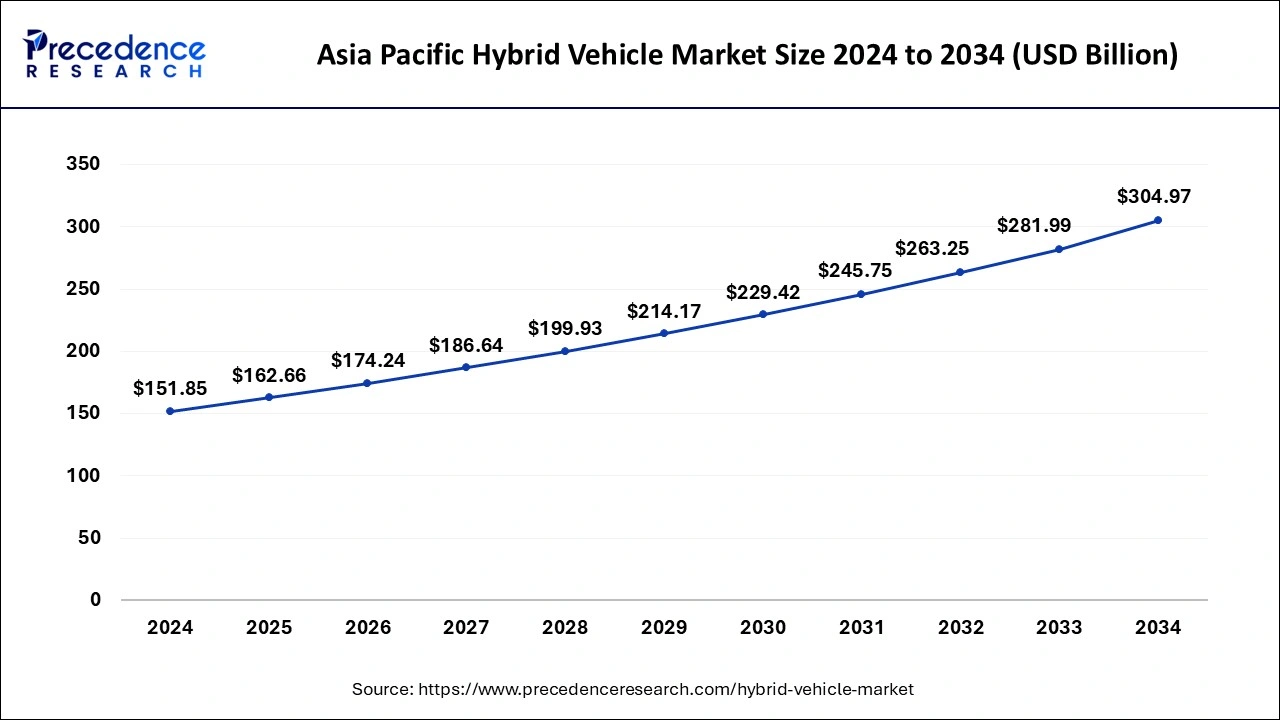
The Asia Pacific hybrid vehicle market size was estimated at USD 312.80 billion in 2025 and is anticipated to surpass around USD 325.12 billion by 2035, rising at a CAGR of 7.17% from 2026 to 2035.
What Made Asia Pacific the Dominant Region in the Hybrid Vehicle Market?
Asia Pacific dominated the global hybrid vehicle market with the largest share in 2025 due to its strong automotive manufacturing base, supportive government policies, and growing consumer preference for fuel-efficient and low-emission vehicles. Countries such as China, Japan, South Korea, and India have witnessed significant adoption of hybrid vehicles as concerns regarding fuel consumption, air pollution, and carbon emissions continue to rise. The presence of major automakers, advanced supply chains, and continuous investments in vehicle electrification technologies has further strengthened the region's market leadership.
China Market Trends
China has emerged as a leading market for hybrid vehicles due to its large automotive industry, strong government support for cleaner transportation, and rapid advancements in electrified powertrains. Domestic and international manufacturers continue to expand their hybrid vehicle portfolios to meet growing consumer demand for fuel-efficient mobility solutions. Companies such as BYD, Toyota Motor Corporation, Honda Motor Co., Ltd., Nissan Motor Co., Ltd., and Hyundai Motor Company continue to play an important role in the market's expansion. The increasing popularity of hybrid vehicles reflects China's ongoing transition toward sustainable transportation.
Why is North America Experiencing the Fastest Growth in the Hybrid Vehicle Market?
North America is expected to grow at the fastest CAGR during the forecast period due to growing consumer demand for fuel-efficient vehicles, stricter emission standards, and increasing adoption of low-emission transportation solutions. Automakers are expanding hybrid offerings across multiple vehicle categories, including passenger cars, SUVs, and pickup trucks, to address changing consumer preferences. Government incentives, sustainability initiatives, and corporate commitments toward reducing carbon emissions are further supporting market growth.
U.S. Market Trends
The U.S. hybrid vehicle market remains one of the world's largest, driven by strong demand for fuel-efficient transportation and increasing environmental awareness. Major automakers are focusing on hybrid SUVs and light trucks, which align with consumer preferences in the country. Supportive regulatory policies, ongoing technological advancements, and investments in vehicle electrification continue to strengthen the U.S. market.
How is Europe Growing in the Hybrid Vehicle Market?
Europe is expected to grow at a significant rate due to stringent carbon emission regulations, rising fuel prices, and increasing adoption of sustainable transportation solutions. Hybrid vehicles are gaining popularity as consumers seek environmentally friendly alternatives that do not depend entirely on charging infrastructure. Government incentives, fleet emission reduction targets, and growing demand for hybrid SUVs and premium hybrid models are contributing to market expansion across the region.
Germany Market Trends
Germany is witnessing rising demand for hybrid vehicles as consumers seek a balance between fuel efficiency, driving performance, and environmental sustainability. Leading German automakers continue to invest in advanced hybrid powertrain technologies, smart energy management systems, and battery innovations. Corporate fleet electrification programs and European Union emissions regulations are further accelerating hybrid vehicle adoption across the country.
What are the Key Trends in the Hybrid Vehicle Market in Latin America?
The Latin American market is expanding as consumers and governments seek practical solutions to reduce fuel consumption and vehicle emissions. Rising fuel prices, growing environmental awareness, and increasing availability of hybrid passenger cars and SUVs are driving adoption across the region. Additionally, supportive policies such as tax incentives and import duty reductions for low-emission vehicles are improving affordability and market penetration.
Brazil Market Trends
Brazil is emerging as a prominent market for hybrid vehicle due to its long-standing use of renewable fuels such as ethanol and increasing demand for fuel-efficient transportation. Automakers are expanding hybrid vehicle offerings to meet changing consumer preferences, while government initiatives supporting cleaner mobility are contributing to market growth. Rising fuel costs are also encouraging consumers to consider hybrid alternatives.
What Drives the Hybrid Vehicle Market in the Middle East & Africa?
The Middle East & Africa (MEA) hybrid vehicles market is growing due to economic diversification initiatives, sustainability programs, and increasing awareness of low-emission transportation technologies. Governments in several Gulf countries are incorporating cleaner mobility solutions into long-term development strategies, while consumers increasingly prefer hybrid SUVs that combine fuel efficiency with vehicle performance. Urbanization and rising fuel costs across parts of Africa are also supporting demand for hybrid vehicles.
South Africa Market Trends
South Africa represents one of the leading hybrid vehicle markets in Africa, supported by the introduction of hybrid models from global automotive manufacturers. Consumer demand for hybrid SUVs and premium passenger vehicles is increasing as awareness of fuel-efficient transportation grows. Improving environmental regulations and a stronger focus on sustainable mobility are expected to support continued market expansion in the country.
Regulatory Guidelines
- U.S.: To reduce the risk of pedestrian crashes, especially for the blind and visually impaired, and to satisfy the mandate in the Pedestrian Safety Enhancement Act (PSEA), a new Federal Motor Vehicle Safety Standard (FMVSS) establishes minimum sound requirements for hybrid and electric vehicles. These standards ensure that blind, visually impaired, and other pedestrians can detect and recognize nearby hybrid and electric vehicles.
- India: The Ministry of Road Transport and Highways governs hybrid frameworks through the Central Motor Vehicles Rules (CMVR), which necessitate prototype testing under Rule 126 and adherence to automotive industry standards for onboard electrical safety.
Import and Export Data of the Hybrid Vehicle Market
- Worldwide, hybrids were shipped more frequently than they were imported, almost 93k in total, with the top three countries exporting hybrids (China - 39k, Japan - 27k, Turkey - 7.5k fibers) representing over 80 percent of the global export volume.
- The majority of hybrids have been imported by emerging economies such as Uzbekistan, Bangladesh, and Russia. As of September 2023, the total import volume accounted for an estimated 69 percent of the global hybrid volume, indicating strong demand for hybrids in the emerging economies
- The hybrid buying network has grown in size dramatically this year. A total of 29070 active buyers of hybrids have been identified in 156 different nations, and hybrids are currently being sourced from more than 10,000 suppliers globally. Some of the key importers include the SP OOO BYD Uzbekistan Factory and the Suzuki Motor Vehicles Marketing Company, which are indicators of substantial hybrid activity throughout the world.
(Source: https://www.volza.com )
What are the Government Initiatives in the Hybrid Vehicle Market?
- United States: The government helped promote the adoption of hybrid vehicles through Clean Vehicle Tax Credits, fuel efficiency requirements, and state-based incentives. Measures to develop low-emission vehicles and investment in clean transport infrastructure played an important role in promoting hybrid cars.
- China: The Chinese government encouraged the use of hybrid cars as per the NEV policy by providing subsidies, tax holidays, and incentives for manufacturers. Government backing and investments in the manufacturing industry helped accelerate hybrid and plug-in hybrid adoption rates.
- Japan: The Japanese government provided CEV subsidies, fuel efficiency measures, and tax cuts. Active engagement with automakers and constant investment in R&D have helped position Japan among the leaders of hybrid vehicle technology.
- India: Hybrid vehicle adoption has been encouraged in India through initiatives such as the FAME Scheme and GST benefits. Initiatives related to the reduction in emissions and enhancement in fuel efficiency helped in the gradual adoption of hybrid vehicles.
Value Chain Analysis – Hybrid Vehicle Market
- Raw Material: The raw materials for the hybrid vehicle market involve battery components such as lithium, nickel, cobalt, manganese, and graphite; electronics and motor materials like rare earth elements (such as neodymium, praseodymium, and dysprosium), silicon, and copper.
Key Players: Toyota and Honda - Chemical Synthesis and Processing: Chemical synthesis and processing in the hybrid vehicle (HV) market significantly focus on evolving advanced materials for batteries, fuel cells, lightweight composites, and specialty coatings.
Key Players: Ford and Hyundai - Compound Formulation and Blending: In the hybrid vehicle industry, compound formulation and blending are significant in the advancement of particular lubricants, coolants, and battery mechanisms.
Key Players: Kia and BMW
Top Vendors in the Hybrid Vehicle Market & Their Offerings
|
Company |
Headquarters |
Key Strengths |
Latest Info (2025) |
|
Japan |
Strong brand reputation for quality and reliability |
In September 2025, Toyota had sold 15M+ hybrids and now offers 15+ models in 2025, with hybrids making up 40% of sales as it prepares 30 EVs by 2030. |
|
|
Japan |
Strong Brand Reputation and Equity |
Variants of the two-motor hybrid system are also available in the Honda Accord and CR-V and represent more than 50% of Accord and CR-V sales. |
|
|
BYD Company Ltd |
China |
Advanced battery technology |
In October 2025, BYD introduced another global breakthrough in powertrain technology: the first Super Hybrid vehicle with biofuel compatibility. |
|
Lexus |
Japan |
Strong reputation |
Lexus India introduced the highly anticipated new Lexus LM 350h, a masterpiece meticulously crafted to redefine the ultra-luxury mobility segment. |
|
Ford Motor Company |
Dearborn, Michigan |
Strong financial position and cash flow |
Ford Motor Company is significantly expanding its hybrid vehicle lineup and strategy. |
Other major key players
- Kia Motors Company
- Nissan Motor Company
- Volkswagen AG
- AB Volvo
Latest Announcements by Industry Leaders
- In December 2024, we have a bold plan in place to accommodate Indian customers' changing tastes. Our goal is to electrify powertrains, such as hybrids and BEVs, even as we remain in the mainstream ICE (internal combustion engine) market in the upcoming years, stated Takuya Tsumura, president and CEO of Honda Cars India.
Recent Developments in the Hybrid Vehicle Market (2025–2026)
- In May 2026, Honda announced a new global strategy more focused on hybrid technology. The company announced plans for 15 next-generation hybrid models globally by FY2030, with a focus on North America. Honda also introduced the Honda Hybrid Sedan Prototype and Acura Hybrid SUV Prototype, both leveraging a new hybrid platform with a primary goal of improved fuel efficiency and system cost reduction.
(Source: https://auto.economictimes.indiatimes.com) - In April 2026, Hyundai announced that it was the most-awarded automaker in the 2026 U.S. News Best Hybrid and Electric Cars rankings, with models including the Tucson Hybrid receiving top honors. The company continues expanding its hybrid portfolio as part of its broader electrification strategy.
(Source: https://www.hyundainews.com) - In June 2026, Jaguar Land Rover announced plans to increase production of hybrid vehicles and introduce additional hybrid variants across its SUV lineup. The company stated that hybrid powertrains will play a significant role in its growth strategy, particularly in the U.S. market.
(Source: https://www.theguardian.com) - In April 2026, Kia announced its plan to launch new hybrid and electric vehicles in India, including the Kia Sorento hybrid SUV, along with the Kia Carnival MPV and the Kia Syros electric SUV. (Source: https://www.ndtv.com )
- In February 2026, MG Motor India announced the expansion of its portfolio with the launch of six new vehicles by 2026, including its first plug-in hybrid SUV. The new launch aims to strengthen the company's position in the NEV segment, including BEVs, PHEVs, and Strong Hybrid Vehicles. (Source: https://www.indianewsnetwork.com )
- In January 2025, Chinese automaker BYD is planning to introduce its first plug-in hybrid vehicle in Japan within the year. This move is part of BYD's strategy to enhance its product offerings and dealer network in Japan. Plug-in hybrids, which combine a battery with a traditional fuel engine, are designed to run on either power source. (Source: https://www.techinasia.com)
Segments Covered in the Report
By Hybridization
- Fully hybrid
- Micro hybrid
- Mild hybrid
By Drivetrain
- Parallel drivetrain
- Series drivetrain
By Vehicle
- Passenger car
- Commercial vehicles
By Propulsion
- HEV
- PHEV
- NGV
By Component Type
- Battery
- Electric Motor
- Transmission
By Region
- North America
- Latin America
- Europe
- Asia-pacific
- Middle and East Africa
For inquiries regarding discounts, bulk purchases, or customization requests, please contact us at sales@precedenceresearch.com
Frequently Asked Questions
Tags





Ask For Sample
No cookie-cutter, only authentic analysis – take the 1st step to become a Precedence Research client
 Get a Sample




 sales@precedenceresearch.com
 Schedule a Meeting
