



Lab-Grown Diamonds Market Trends, Leading Companies, Company Revenue / Sales Performance, Plant Utilization, Production Volume, Pricing Dynamics, Supply Chain Performance, Competitive Landscape, and Industry Growth
Lab-Grown Diamonds Market (By Manufacturing Method: HPHT, CVD; By Nature: Colorless, Colored; By Size: Below 2 Carat, 2-4 Carat, Above 4 Carat; By Application: Fashion, Industrial) - Global Industry Analysis, Size, Trends, Leading Companies, Regional Outlook, and Forecast 2026 to 2035
Source: https://www.precedenceresearch.com/lab-grown-diamonds-market
 Get a Sample
 Table Of Content


What is the Lab-Grown Diamonds Market Size?
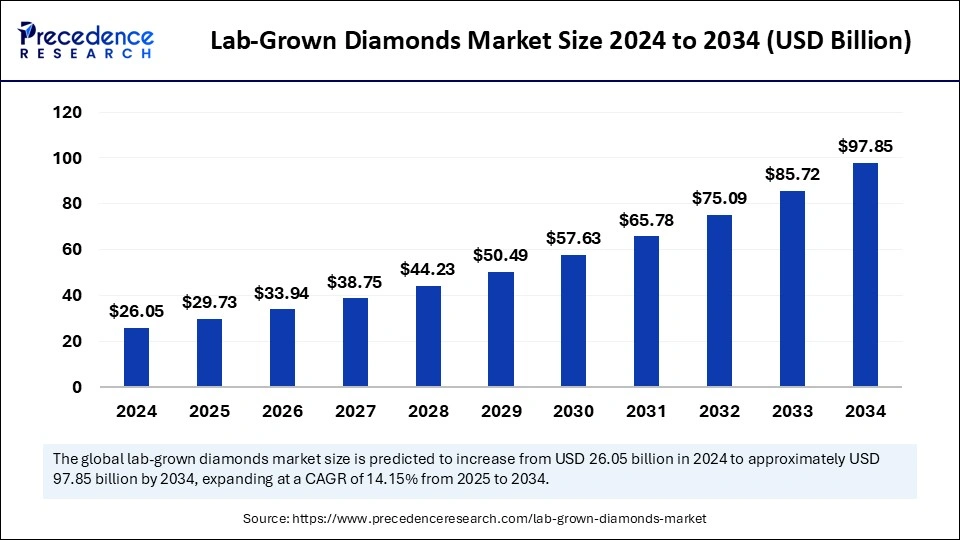
The global lab-grown diamonds market size is accounted at USD 29.73 billion in 2025 and predicted to increase from USD 33.94 billion in 2026 to approximately USD 108.98 billion by 2035, expanding at a CAGR of 13.87% from 2026 to 2035. The market is driven by the rising preference for sustainable, affordable options, and consumers, particularly millennials and Gen Z, are increasingly choosing eco-friendly alternatives to natural diamonds.
Lab-Grown Diamonds Market Key Takeaways
- Asia Pacific dominated the global market with the largest market share of 34% in 2025.
- North America will witness the fastest growth during the forecasted years.
- By manufacturing method, the CVD segment contributed the largest share in 2025.
- By manufacturing method, the HPHT segment is expected to show considerable growth over the forecast period.
- By nature, the colorless segment contributed the highest market share in 2025.
- By nature, the colored segment is anticipated to witness significant growth in the studied period.
- By size, the below 2-carat segment generated the major market share in 2025.
- By size, the above 4-carat segment is expected to show considerable growth over the forecast period.
- By application, the fashion segment has held the largest market share in 2025.
- By application, the industry segment is anticipated to witness significant growth over the studied period.
What is the Lab-Grown Diamond?
Lab-grown diamonds, also known as artificial diamonds, are produced in a lab. They achieve high quality in just a few months, whereas natural diamonds take many years to form. The increasing use of these diamonds in jewelry, research, cutting tools, and machinery parts drives significant growth. Additionally, lab-grown diamonds are more affordable than natural ones since they eliminate the need for mining, and their greater availability boosts their acceptance worldwide.
The lab-grown diamonds market consists of diamond production and manufacturing in laboratory settings. The market supports customer areas, which include jewelry, fashion, and industrial operations. The industry develops at a fast pace due to rising sustainable products, ethical standards, lower costs, and better diamond synthesis technologies. Lab-grown diamonds will experience sustained market growth because the number of environmentally conscious and socially responsible customers is increasing. With their affordability, ethical appeal, and potential for innovative design, lab-grown diamonds are poised to reshape the future of fashion.
Artificial Intelligence (AI) Integration in the Lab-Grown Diamonds Market
Developing sophisticated Artificial Intelligence algorithms to assess and enhance the production process of lab-grown diamonds increases the precision, uniformity, and efficiency of quality evaluation, especially in detecting subtle traits and grading in the lab-grown diamonds market, while reducing human error. AI technology works to enhance both manufacturing techniques and diamond value analysis for cultured diamonds, thus making them clearer and more honest to the end market. The AI-based diamond quality assessments within the lab-produced diamond market enable improved rapid assessment of diamond characteristics, including cut, clarity, color, and weight.
Lab-Grown Diamonds Market Growth Factor
- Affordability and cost-effectiveness: The cost advantage of lab-made diamonds over their natural, making them a desirable solution. Due to their affordable nature, customers can obtain more valuable stones within their budget framework, which expands market potential.
- Rising sustainability awareness: People are selecting diamonds from sustainable and ethically sourced origins. Lab-grown diamonds produce no demand for mining operations; thus, they prevent destructive environmental impacts like deforestation and carbon emissions. Sustainability has become popular among millennials and Gen Z, which has created rising market demand.
- Rising demand in industrial applications: Lab-grown diamonds serve dual purposes since they function as ornamental jewelry and enable electronics applications because of their exceptional thermal properties and durability.
- Expanding retail and e-commerce presence: Lab-grown diamonds are available for purchase through prominent online shopping platforms that major jewelry retailers operate. The ability to reach customers through physical outlets and online channels helps grow sales numbers while improving market reach for lab-grown diamonds.
- Growing awareness about the negative environmental impact of conventional methods used to produce diamonds, which involve mining, is creating a shift towards the adoption of lab-grown diamonds.
- An increasing trend of corporate social responsibility (CSR) initiatives, along with awareness campaigns by celebrities and social media influencers, is propelling the market's growth further.
- The production process and origin of a lab-grown diamond can be verified readily with the certificate, showcasing its transparent policy, further expanding the market reach by increasing the popularity of lab-grown diamonds.
Market Outlook
- Industry Growth Overview: There is an increasing demand for ethical diamonds. Buyers look forward to cheaper substitutes. Laboratory-grown diamonds find their way into the jewelry and industrial sectors of the world.
- Sustainability Trends: Environmentally friendly consumers are in demand. Sourcing that is free of conflicts becomes significant. Reduced environmental action increases attraction through the contemporary luxury markets in the world.
- Major investors: Titan Company, Trent, Senco Gold, Goldiam International, De Beers Group, and Swarovski have been heavily involved in the production and retailing of lab-grown diamonds.
Market Scope
| Report Coverage | Details |
| Market Size by 2035 | USD 108.98 Billion |
| Market Size in 2025 | USD 29.73 Billion |
| Market Size in 2026 | USD 33.94 Billion |
| Market Growth Rate from 2026 to 2035 | CAGR of 13.87% |
| Dominating Region | Asia Pacific |
| Fastest Growing Region | North America |
| Base Year | 2025 |
| Forecast Period | 2026 to 2035 |
| Segments Covered | Manufacturing Method, Nature, Size, Application, and Regions. |
| Regions Covered | North America, Europe, Asia-Pacific, Latin America, and Middle East & Africa |
Market Dynamics
Drivers
Rising industrial applications
The market expands because various industries utilize laboratory-diamond products for cutting tools, machinery elements, semiconductor devices, and abrasives because of their special features. The essential characteristics of hardness and strength enable the product to serve as an adopted material for polishing, drilling, cutting, and grinding operations across multiple industries, including automotive. The thermal conductivity capability of man-made diamonds facilitates their addition to electronic devices such as diode lamps and computers because of their effectiveness as heat spreaders. The worldwide growth of the lab-grown diamonds market increases as more industries expand, including electronics, automotive, and semiconductors.
Rising demand globally
The worldwide demand for the lab-grown diamonds market has been steadily rising, thus boosting sales numbers. The range of jewelry products includes rings, earrings, bracelets, and necklaces, and these diamonds are used to meet the requirements of customers. Middle-income shoppers should consider this affordable product to enhance their jewelry selections, as its cost is less than that of natural and mined diamond jewelry alternatives. Furthermore, the rising need for reasonably priced and high-quality jewelry, particularly among women, will aid in the global market expansion in the coming years.
- In February 2025, Priyanka Gill, a serial entrepreneur and venture partner at Kalaari Capital, along with co-founding the Good Glamm Group, introduced COLUXE, a brand specializing in lab-grown diamonds (LGD). The company opposes the redefinition of luxury, sustainability, and accessibility in the jewelry industry.
Restraint
Alternative products and quality concerns
The lab-grown diamonds market encounters significant challenges from competing products, such as natural diamonds and easily sourced gemstones like emeralds, sapphires, garnets, amethysts, and peridots. Consumer interest in these alternatives is increasing, as they offer many attractive features, including remarkable beauty and superior quality with lasting durability. Sales of lab-grown diamonds have declined due to consumer concerns about their color and durability. These perceived quality issues lead potential buyers to view lab-grown diamonds as inferior to alternatives, making them hesitant to buy. Additionally, the market's growth is hindered by a lack of awareness surrounding artificial diamonds.
Opportunity
Sustainability trends
The worldwide sustainability movement forces more people to choose the lab-grown diamonds market. Lab-grown diamonds bypass the need for mining operations because their production does not damage forests and neither produces air contamination nor creates greenhouse gases. The increasing awareness of sustainability practices among millennial and Gen Z generations drives the market demand toward sustainably sourced ethical diamonds. The combination of environmental concerns and ethical problems related to conflict diamonds with ethical issues spurs consumers to choose laboratory-grown diamonds instead of traditional ones.
Segment Insights
Manufacturing Method Insights
The CVD segment contributed the largest share of the lab-grown diamonds market in 2025. CVD has become the manufacturers' preferred option for producing lab-grown diamonds since it consumes less energy while performing operations at a faster pace than HPHT technology. The CVD method represents a modern production technique for creating lab diamonds that results in high-quality products with minimal flaws. This manufacturing technique grants the producer's enhanced ability to supervise the growth process execution. The chemical vapor deposition segment leads and grows fastest in the global lab-grown diamond market due to its low production expenses and rising market interest for manmade diamonds, small equipment designs, and enhanced CVD techniques for precise diamond chemical composition management.
- In July 2024, India-based Limelight Diamonds launched its new store under the CVD lab-grown diamond category in Navi Mumbai. The organization planned to grow into new territory across the nation through new store openings.
The HPHT segment is expected to show considerable growth over the forecast period. The diamond production system under HPHT better matches natural/mined diamond manufacturing techniques with enhanced quality features for clarity grading and color quality. Laboratory-made HPHT diamonds provide consumers with better affordability than natural diamond prices. HPHT technology serves as a process to modify diamond colors. The industrial sector takes advantage of High-Pressure, high-temperature (HPHT) diamonds since these stones serve essential applications that require maximum hardness and durability.
Nature Insights
The colorless segment dominated the global lab-grown diamonds market in 2025. The demand for colorless diamonds from lab production continues to rise because they contain high quality and receive better grading assessments. Various uses of these diamonds across cutting tools, electronics, and jewelry production drive their increasing market demand. The market shows an increasing preference for diamonds that deliver aesthetic characteristics identical to natural stones with the ethical qualities of man-made diamonds. There exists widespread demand for colorless lab-made diamonds to design wedding and engagement rings. Jewellery manufacturers employ this diamond type to produce nose pins, bracelets, necklaces, and pendants. Among diamond varieties, colorless forms represent the most premium category when they are created in a laboratory.
The colored segment is anticipated to witness significant growth in the studied period. The preference for lab-grown colored diamonds in jewelry applications grows due to their attractive appearance. The relatively lower prices of colored lab diamonds will boost product sales throughout the upcoming years. These are preferred diamonds for fashion and manufacturing needs because they offer production controls to achieve multiple colors. The colorless and colored diamond properties make them useful in industries for identification coding and technical applications, which depend on their specific color characteristics.
- In October 2023, Fred Jewelry debuted its collection of blue gem diamonds including an 8.88-carat loose stone and four half-carat stones from their “Force 10 Duality” high jewelry collection. During the summer of 2023, Fred Jewelry released its “Happy Blue Shades” jewelry line, which showcased the Riviera blue through diamonds like aquamarine, blue topaz, sapphire, lapis lazuli, turquoise, and amazonite to represent ocean sea blues.
Size Insights
The below 2-carat segment contributed the largest lab-grown diamonds market share in 2025. This growth was driven by a rising consumer preference for eco-friendly alternatives to natural diamonds. Furthermore, the growing trend of below 2-carat diamonds in engagement rings, earrings, and everyday jewelry has elevated demand. With affordability, ethical sourcing, and sustainability becoming essential purchasing considerations, lab-grown diamonds have gained considerable popularity, particularly among millennials and Gen Z. This trend is projected to persist, reinforcing the segment's dominance in the market.
The above 4-carat segment is expected to show considerable growth over the forecast period. Using advanced technology in a lab setting produces the man-made diamonds known as Lab-grown diamonds. They share identical characteristics where both optical properties, chemical structure, and physical makeup compare exactly to natural diamonds. Consumer disposable income growth across nations with an expanding market for premium jewelry products helps this segment expand because of rising demand.
Application Insights
The fashion segment led the global lab-grown diamonds market in 2025. The fashion industry embraces laboratory-made diamonds, which are genuine diamonds produced through laboratory cultivation. The rising demand for sustainable fashion will lead to the incorporation of lab-grown diamonds into different fashion accessories, which will drive widespread adoption and expand market growth. The jewelry industry uses small lab diamonds to create jewelry items, and the fashion world embeds them in high-end watches, handbags, eyeglasses, and sunglasses frames. Many luxury brands and retailers offer lab-grown diamond collections, which contributes to rising market demand, particularly for distinctive high-quality jewelry products. Lab-grown diamonds will experience growing market potential since consumers keep choosing sustainable fashion items.
- In October 2024, Surat, the Diamond City globally renowned for its diamond manufacturing and trading industry, witnessed a prestigious event with the exclusive launch of 55 Canccrie's lab-grown diamond jewelry collection.
The industry segment is anticipated to witness significant growth over the studied period. The outstanding performance characteristics make lab-grown diamonds suitable for industrial applications such as electronics, optics, and cutting tools. The market for semiconductor production and medical device applications uses lab-grown diamonds more frequently. Manufacturers and suppliers can access an expanding market opportunity because technological innovation maintains its momentum in industrial applications of lab-grown diamonds.
Regional Insights
What is the Asia Pacific Lab-Grown Diamonds Market Size?
The Asia Pacific lab-grown diamonds market size was evaluated at USD 11.54 billion in 2026 and is projected to be worth around USD 37.71 billion by 2035, growing at a CAGR of 14.07% from 2026 to 2035.
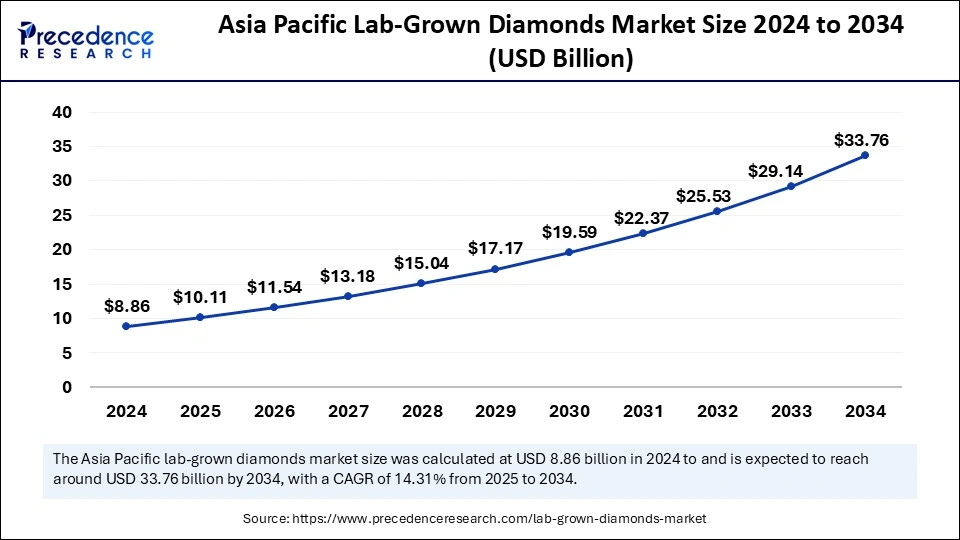
Asia Pacific accounted for the largest share of the lab-grown diamonds market in 2025. India holds great potential to become a major international hub for producing manufactured diamonds, and China currently leads in producing and exporting these stones. The high manufacturing output of quality laboratory-grown diamonds in different carat sizes and forms occurs throughout China and India. Public programs aimed at developing new products help drive market expansion, while the rapid growth of middle-class populations creates rising demand for affordable luxury items, including man-made diamonds. Consumers prefer lab-grown diamonds because these stones reflect ethical values and sustainability, with the growing social and environmental awareness.
- In February 2023, Finance Minister Nirmala Sitharaman from the Indian government announced a promotional research and development scheme for laboratory-grown diamonds throughout the country.
China Lab-Grown Diamonds Market Trends
The strength of production dominates China. The emphasis is on high-tech productions. The quality of diamond production increases gradually. Domestic companies utilize digital platforms. Integration of e-commerce helps in the growth of markets. Producers consolidate the supply in the world through effective and scalable production systems.
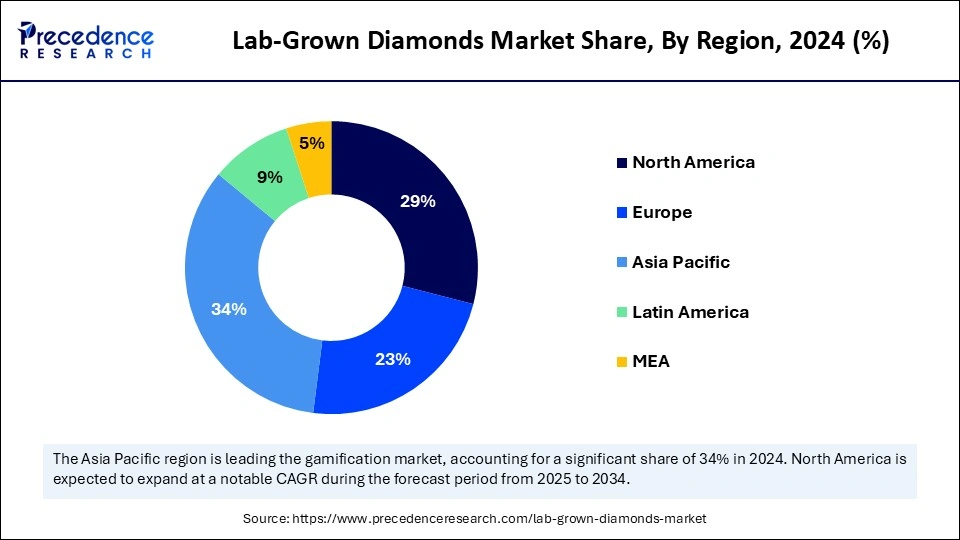
North America will witness the fastest growth in the lab-grown diamonds market during the forecasted years. The commercial sectors of automotive and electronics show rapid development in North America, while consumer demand for eco-friendly jewelry and greater awareness about laboratory-made diamonds push forward demand. The rising disposable income of U.S. and Canadian consumers allows for better purchasing ability, which drives the acceptance of lab-grown diamonds as investments.
The market receives support through expanding online sales channels and existing retail networks, enabling consumers to access lab-grown diamonds easily. The market attractiveness in North America rises from positive marketing initiatives and partnerships established between luxury brands. Market expansion in the region will receive additional momentum through advancements in diamond production methods and increasing retail collaboration.
- In May 2024, Lightbox Jewelry Ltd launched discounted prices of up to 40% to raise product sales through its U.S.-based laboratory-grown diamond jewelry business. The product line of the company spans from 2-carat lab-grown diamonds to lab-grown pink diamonds and 3-carat lab-grown diamonds.
U.S. Lab-Grown Diamonds Market Trends
The U.S. is the leader because there is great consumer acceptance. The number of people who want ethical and affordable diamonds is increasing. The use of lab-grown collections by retailers is extensive. Consumers who are younger are choosing sustainable. Higher adoption requires a pricing advantage. Lab-grown diamonds are being marketed as alternatives to mainstream luxury by jewelry brands.
What are the Advancements in the Lab-Grown Diamonds Market in Europe?
The lab-grown diamond market in Europe accounted for a significant share in 2024, owing to the consumer's inclination towards ethical and sustainable choices for jewelry. In the past decades, lab-grown diamonds have witnessed immense popularity due to their structure, which is similar to natural diamonds at a lower cost. In the region, the European Union has approved a grant of USD 84 million. The aim behind investing such a whopping amount is to support a diamond foundry's establishment facility in Spain.
Germany Market Trends
The region's growth and development can be attributed to the presence of major jewelry manufacturers and retailers and a strong consumer base. It is further being driven by evolving consumer preferences and increasing awareness regarding ethical sourcing. As individuals become more conscious of the environmental and social implications of traditional diamond mining, the demand for lab-grown alternatives is set to rise even more.
What are the Key Trends in the Lab-Grown Diamonds Market in Latin America?
Latin America shows a notable growth during the forecast period. It is driven by a strong shift toward sustainable, ethical, along with "conflict-free" options to mined diamonds, particularly among Millennials and Gen Z. Meanwhile, consumers are increasingly conscious of the environmental degradation along with social issues linked to traditional mining. LGDs provide a transparent, ethical, along with conflict-free alternative, working with sustainable luxury trends.
Brazil Market Trends
The increasing number of working women has enhanced the region's purchasing power, thus leading to a rise in laboratory-grown diamond jewelry sales. Furthermore, the affordability of the product compared to natural diamonds positively influences the global lab-grown diamond market forecast.
How is the Middle East and Africa Region Growing in the Lab-Grown Diamonds Market?
MEA shows a rapid growth during the forecast period. As modern consumers, mainly Millennials and Gen Z, prioritize sustainability, transparency, and even social responsibility over conventional, mined luxury. Modern buyers are highly understanding of the environmental and even social impacts of traditional diamond mining. Lab-grown diamonds provide a "guilt-free" alternative, demanding no destructive mining, significantly decreasing carbon footprints, along with consuming less water and energy.
Saudi Arabia Market Trends
The country is witnessing advancements in technology, enhancing the quality and variety of lab-grown diamonds, making them more appealing to a diverse range of consumers. The country is also witnessing a surge in innovation, with manufacturers exploring new techniques to improve production efficiency and reduce costs.
Lab-Grown Diamonds Market Companies
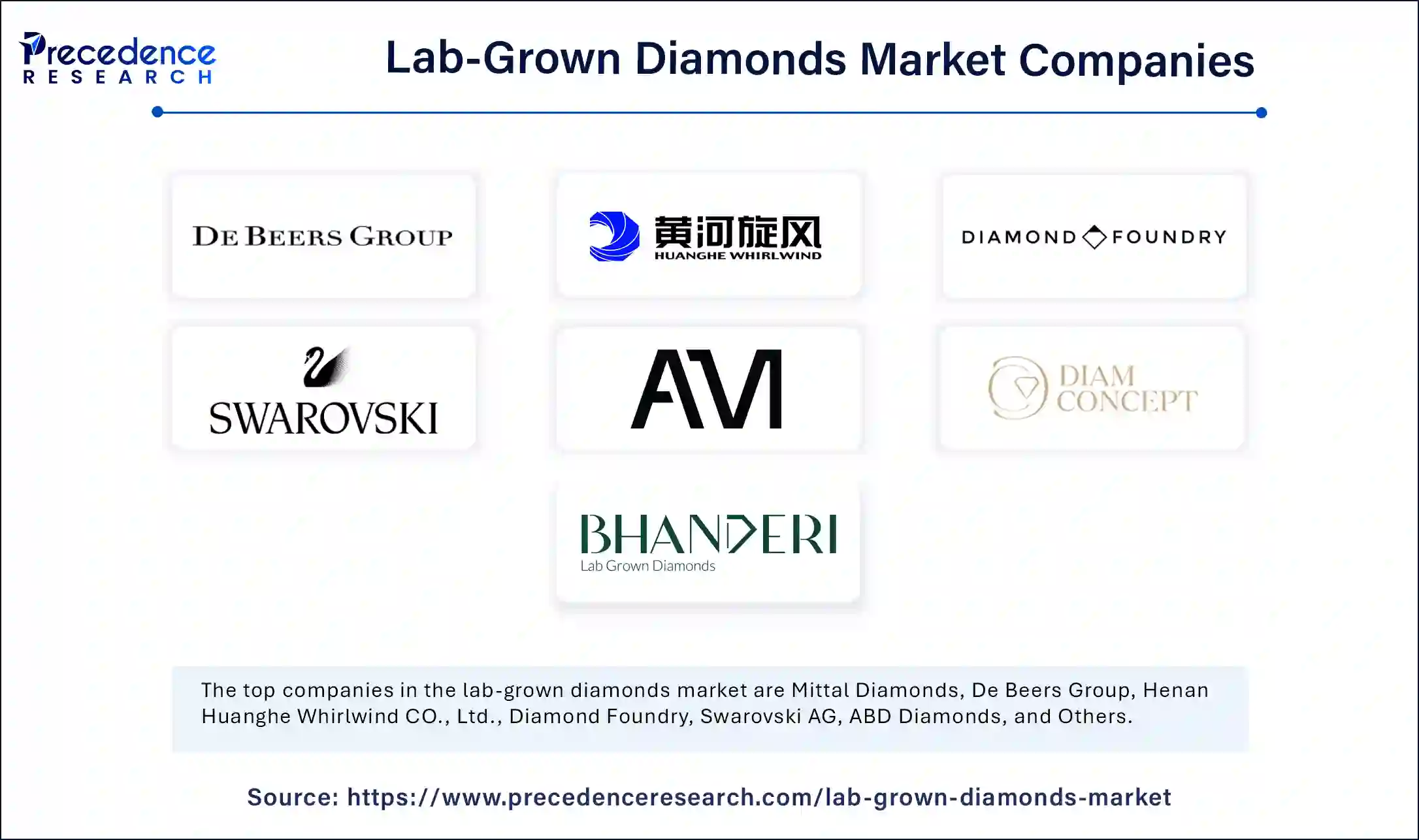
- Mittal Diamonds: Mittal Diamonds is a New Delhi-driven manufacturer, wholesaler, and retailer providing cost-effective lab-grown and even lab-created diamonds, including CVD and HPHT, tailored to specific user requirements. They specialize in customized, non-blood diamonds, thus, notably featuring 1-carat, White Enhanced, and custom-sized stones for jewelry and a few applications.
- De Beers Group: De Beers Group historically provided lab-grown diamonds for jewelry via its brand Lightbox Jewelry, featuring affordable, as well as branded fashion pieces.
- Henan Huanghe Whirlwind CO., Ltd.: Henan Huanghe Whirlwind CO., Ltd. provides a broad range of colored and colorless diamonds, thus, catering to jewelry, semiconductor, and high-tech sectors, positioning itself as a vast production base in China.
Other Major Key Players
- Diamond Foundry
- Swarovski AG
- ABD Diamonds
- WD Advanced Materials
- LLC
- New Diamond Technology LLC
- Diam Concept
- Bhandari Lab Grown Diamonds
Recent Developments
- In February 2025, De Beers adjusted its strategy in India as lab-grown diamonds gained traction, offering a cost-effective alternative to natural diamonds. The company focused on ensuring authenticity to address consumer concerns. (Source: https://visionias.in)
- In March 2026, Verlas launched its ‘La Fleur' collection in India on March 18, 2026, featuring floral designs made with lab-grown diamonds and recycled gold. Founded in 2019, the brand emphasizes fine jewellery with EF color and VS–VVS clarity, handcrafted by artisans. (Source: https://www.indianjeweller.in)
- In March 2026, Sussanne Khan is likely to be appointed as Design Director on the Board of Ekatra Retail Ventures, a lab-grown designer jewellery company co-founded by an all-women team. She premiered the flagship collection, Shristi Ratna, featuring a diamond with 108 facets, symbolizing a cosmic journey, on Gudi Padwa day. (Source: https://www.thehindubusinessline.com)
- In April 2025, a Polki jewelry brand, IVANA Jewels, which is a Surat-based and lab-grown diamond brand, reportedly raised INR 2 crores in seed funding with Avinya Ventures. This collaboration aims to launch new product lines to strengthen their roots across the global platform by increasing marketing activities. The company set a goal to achieve the maximum possible profit by offering products on both online and offline platforms.
- In April 2025, Shri Jagdamba Pearls entered the market with the launch of Aurah, where they focus on offering lab-grown diamonds, revolutionizing the global jewelry market.
- In April 2025, a modern lab-grown diamond jewelry brand was launched by Mr. Rupesh Jain, the founder of the Candere brand in India. This newly launched venture is widely available on an online platform.
Segments Covered in the Report
By Manufacturing Method
- HPHT
- CVD
By Nature
- Colorless
- Colored
By Size
- Below 2 Carat
- 2-4 Carat
- Above 4 Carat
By Application
- Fashion
- Industrial
By Geography
- North America
- Europe
- Asia Pacific
- Latin America
- Middle East and Africa
For inquiries regarding discounts, bulk purchases, or customization requests, please contact us at sales@precedenceresearch.com
Frequently Asked Questions
Tags





Ask For Sample
No cookie-cutter, only authentic analysis – take the 1st step to become a Precedence Research client
 Get a Sample




 sales@precedenceresearch.com
 Schedule a Meeting
