



Metabolic Testing Equipment Market Size, Companies, Share, Patient Volume, Treatment Adoption Rates, Pricing Analysis, Regulatory Landscape, Competitive Positioning, and Demand Forecast
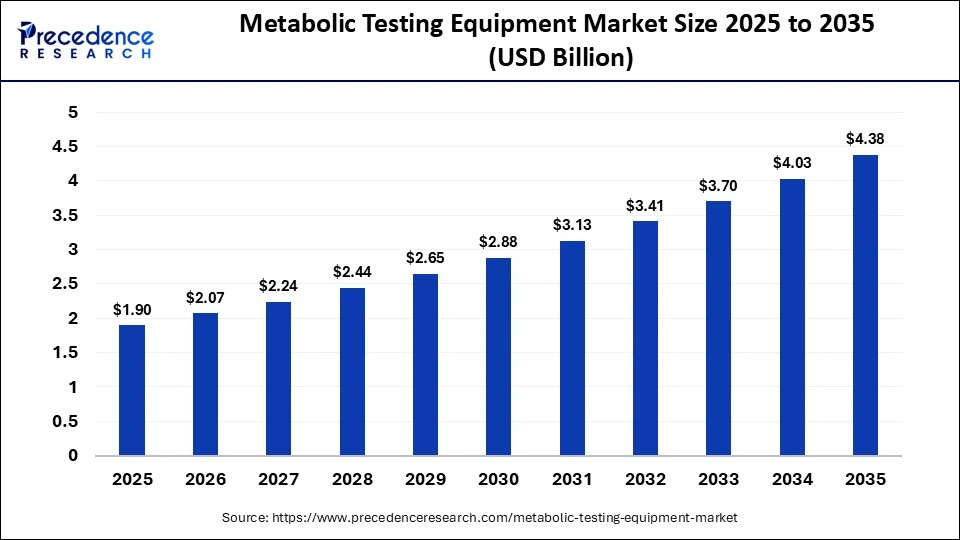
Deepa Pandey, a Healthcare Industry Expert, highlights that the metabolic testing equipment market has reached USD 2.07 billion in 2026 and is on track to reach USD 4.38 billion by 2035, advancing at a CAGR of 8.70%. Key metabolic testing equipment market companies shaping the market include Cardiometabolic Health Solutions, Inc., Vyaire Medical Inc., Cosmed S.r.l., Schiller AG, while major growth segments span By Product Type, By Technology, By End-Use, By Application.
Source: https://www.precedenceresearch.com/metabolic-testing-equipment-market
 Get a Sample
 Table Of Content


What is the Metabolic Testing Equipment Market Size in 2026?
The global metabolic testing equipment market size surpassed USD 1.90 billion in 2025 and is predicted to increase from USD 2.07 billion in 2026 to approximately USD 4.38 billion by 2035, expanding at a CAGR of 8.70% from 2026 to 2035. The market growth is attributed to the rising prevalence of metabolic disorders and advancements in diagnostic technologies.
Key Takeaways
- North America dominated the market with a 40% share in 2025.
- Asia Pacific is expected to grow at the highest CAGR of 12% between 2026 and 2035.
- By product type, the metabolic analyzers segment held the highest market share of 45% in 2025.
- By product type, the body composition analyzers segment is expected to grow at a CAGR of 10.5% in between 2026 and 2035.
- By technology, the indirect calorimetry segment held a major market share of 40% in 2025.
- By technology, the respiratory gas exchange measurement segment held a 25% market share in 2025 and is expected to grow at a significant CAGR of 8% between 2026 and 2035.
- By end-use, the hospitals segment contributed the highest market share of 50% in 2025.
- By end-use, the fitness & academic institutions segment is estimated to grow at the highest CAGR of 10% over the projected period.
Market Overview
The rising prevalence of obesity and diabetes is a major factor accelerating the growth of the metabolic testing equipment market. The market comprises equipment such as indirect calorimeters and metabolic carts used to measure oxygen consumption. They assess the efficiency of nutrient conversion in the body, which helps in clinical diagnostics and individual treatment planning.
The International Diabetes Federation reported that 589 million adults were living with diabetes in the world in 2024. This growing number of patients is driving the need for proper metabolic assessment tools in hospitals and specialized diagnostic centers. Furthermore, the rising prevalence of obesity and diabetes acts as a key driver sustaining long-term demand for metabolic testing equipment worldwide.
Impact of Artificial Intelligence on the Metabolic Testing Equipment Market
Artificial Intelligence is significantly transforming the market by enhancing accuracy, efficiency, and clinical decision-making capabilities. AI-based algorithms process the complex parameters of metabolism, such as Oxygen consumption, carbon dioxide output, and energy expenditure in real time. AI is used to recognize metabolic patterns and generate more accurate, data-driven treatment decisions by healthcare professionals. Additionally, AI is used in critical care to aid in individualized nutrition, where the energy needs are continuously adjusted in response to patient-specific metabolism.
Major Market Trends
- Shift Toward Automated and User-Independent Testing Systems: Automated metabolism testing devices are reducing human error within the clinical process. These devices are enhancing scalability and accuracy in testing, making them the preferred choice among clinics.
- Expansion of Critical Care Nutrition Protocols: Growing emphasis on precise energy expenditure measurement in ICUs is driving adoption of indirect calorimetry systems globally.
- Rising Demand for Sports Science and Performance Analytics: Increasing professional and amateur sports participation is boosting the use of metabolic testing for performance optimization.
Market Scope
| Report Coverage | Details |
| Market Size in 2025 | USD 1.90 Billion |
| Market Size in 2026 | USD 2.07 Billion |
| Market Size by 2035 | USD 4.38 Billion |
| Market Growth Rate from 2026 to 2035 | CAGR of 8.70% |
| Dominating Region | North America |
| Fastest Growing Region | Asia Pacific |
| Base Year | 2025 |
| Forecast Period | 2026 to 2035 |
| Segments Covered | Product Type, Technology, End-Use, Application, and Region |
| Regions Covered | North America, Europe, Asia-Pacific, Latin America, and Middle East & Africa |
Market Dynamics
Driver
Increasing Prevalence of Metabolic Disorders
The rising prevalence of metabolic diseases is expected to drive demand for advanced metabolic assessment programs at both clinical and preventive levels. Healthcare systems worldwide are experiencing an increasing burden of conditions such as obesity, diabetes, and metabolic syndrome. According to the International Diabetes Federation, hundreds of millions of adults were living with diabetes in 2024, and this number continues to grow. This expanding patient population is placing long-term pressure on healthcare systems, thereby increasing the need for accurate diagnostic tools and supporting market growth in the coming years.
Restraint
High Cost of Metabolic Testing Equipment
High costs associated with the maintenance and operation of these devices are likely to limit their adoption in small and mid-sized healthcare facilities. Advanced metabolic testing systems require significant initial investment, including specialized sensors, calibration modules, and integrated software platforms. Additionally, complex regulatory and compliance requirements may delay product approvals and slow down the market entry of new technologies.
Opportunity
Advancements in Sensor Technology and Data Analytics
Ongoing advancements in sensor technology and data analytics create immense opportunities in the metabolic testing equipment market. Improvements in gas analysis sensors and breath-by-breath measurement technologies are enhancing diagnostic accuracy and precision. Additionally, the growing demand for critical care monitoring is expected to increase the adoption of indirect calorimetry systems in intensive care units worldwide.
Segment Analysis
Product Type Insights
The Metabolic Analyzers Segment Held a 45% Market Share in 2025
The metabolic analyzers segment dominated the metabolic testing equipment market with the largest share of 45% in 2025. This is mainly due to their widespread use in the measurement of oxygen consumption and carbon dioxide production in real time. The growing focus on obesity management and energy consumption monitoring is enhancing the use of metabolic analyzers in clinical diagnostics, fitness assessment, and metabolic disorder evaluation.
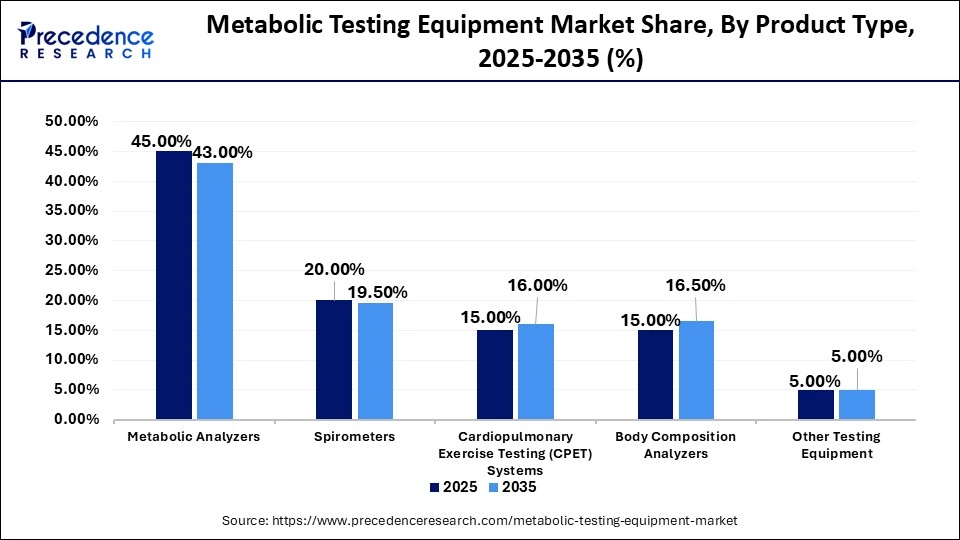
The spirometers segment held a 20% share of the market in 2025 and is expected to grow at a CAGR of 6.5% between 2026 and 2035. This is mainly due to their essential role in respiratory and metabolic assessment. Increasing rates of respiratory and cardiovascular diseases are propelling the demand for spirometry-based systems, contributing to segmental growth.
The cardiopulmonary exercise testing (CPET) systems segment held a 15% share of the market in 2025 and is expected to grow at a 9.5% CAGR during the forecast period, driven by their growing adoption in advanced diagnostics. CPET systems are becoming popular in preoperative screening and chronic disease risk management. These systems are also being employed in sports performance centers to provide a comprehensive physiological study of a sports person.
The body composition analyzers segment held a market share of 15% in 2025 and is estimated to grow at the fastest CAGR of 10.5% over the projection period. This is mainly due to the growing consumer awareness of body metrics. These analyzers are commonly used in fitness centers and wellness clinics to augment personalized health programs.
Metabolic Testing Equipment Market Share, By Product Type, 2025-2035 (%)
|
Product Type |
2025 Market Share |
2035 Market Share |
CAGR 2025 to 2035 |
Market Drivers |
|
Metabolic Analyzers |
45.00% |
43.00% |
8.0% |
Metabolic analyzers, especially those using indirect calorimetry, dominate due to their wide application in weight management, exercise physiology, and disease management. |
|
Spirometers |
20.00% |
19.50% |
6.5% |
Spirometers are increasingly used for metabolic assessments in conjunction with pulmonary health, especially in managing cardiovascular conditions. |
|
Cardiopulmonary Exercise Testing (CPET) Systems |
15.00% |
16.00% |
9.5% |
CPET systems are gaining traction in healthcare and sports performance due to their ability to assess cardiovascular and metabolic functions together. |
|
Body Composition Analyzers |
15.00% |
16.50% |
10.5% |
Body composition analyzers, especially those using BIA technology, are growing rapidly due to increased awareness about the impact of body composition on health. |
|
Other Testing Equipment |
5.00% |
5.00% |
6.0% |
Other equipment, including indirect calorimeters, continues to be important for specific clinical or research applications. |
Technology Insights
The Indirect Calorimetry Segment Dominated the Market in 2025
The indirect calorimetry segment dominated the metabolic testing equipment market with a major share of 40% in 2025. This is mainly due to the rising demand for personalized healthcare and energy metabolism evaluation solutions. Indirect calorimetry is the most widely used method for measuring energy expenditure. It plays a crucial role in metabolic testing for weight management and disease management.
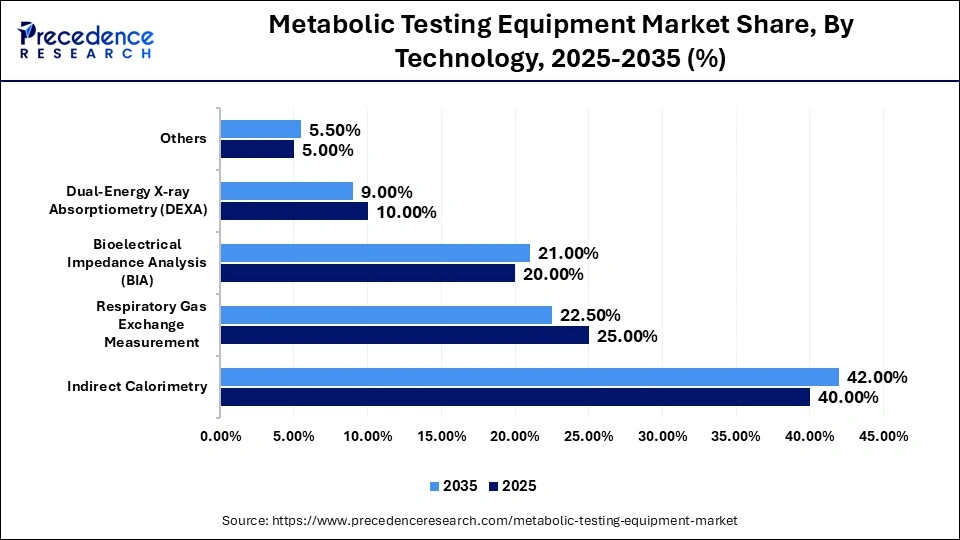
The respiratory gas exchange measurement segment held a 25% share of the market in 2025 and is expected to grow at the fastest CAGR of 8% between 2026 and 2035, driven by its critical role in both clinical and athletic performance settings. It is a technology that corresponds to VOâ‚‚ and COâ‚‚ during exercise and rest and provides physiological insights in detail. This technology is becoming popular in sports performance centers and clinical labs to perform endurance and cardiopulmonary analysis.
The bioelectrical impedance analysis (BIA) segment held a 25% share in 2025 and is expected to grow at a 7.2% CAGR during the projection period. This is because this non-invasive technology is heavily used to measure body composition, both fat mass and muscle mass, as well as hydration levels. Wellness clinics and fitness centers are now inclined to use the BIA technology to promote personal health programs.
The dual-energy X-ray absorptiometry (DEXA) segment held a 10% market share in 2025 and is estimated to grow at a strong CAGR of 5.5% over the projected period, driven by its specialized application in body analysis and bone density assessment. DEXA is mainly used by healthcare professionals in the diagnosis of osteoporosis and advanced metabolic research.
Metabolic Testing Equipment Market Share, By Technology, 2025-2035 (%)
|
Technology |
2025 Market Share |
2035 Market Share |
CAGR 2025 to 2035 |
Market Drivers |
|
Indirect Calorimetry |
40.00% |
42.00% |
9.0% |
Indirect calorimetry is the most widely used method for measuring energy expenditure, playing a crucial role in metabolic testing for weight management and disease management. |
|
Respiratory Gas Exchange Measurement |
25.00% |
22.50% |
8.0% |
Respiratory gas exchange measurement technologies, such as VO2 and CO2 monitoring, are crucial in assessing metabolic efficiency, particularly in athletes and patients with chronic diseases. |
|
Bioelectrical Impedance Analysis (BIA) |
20.00% |
21.00% |
7.5% |
BIA technology is widely adopted for body composition analysis in clinical and fitness settings due to its non-invasive nature and ease of use. |
|
Dual-Energy X-ray Absorptiometry (DEXA) |
10.00% |
9.00% |
5.5% |
DEXA is often used for body composition analysis, particularly bone density and fat mass, though its adoption is limited compared to BIA. |
|
Others |
5.00% |
5.50% |
7.0% |
Other technologies include metabolic carts and portable devices, which are growing with advancements in mobile health and personalized fitness. |
End-Use Insights
Metabolic Testing Equipment Market Share, By End-Use, 2025-2035 (%)
|
End-Use |
2025 Market Share |
2035 Market Share |
CAGR 2025 to 2035 |
Market Drivers |
|
Hospitals |
50.00% |
48.00% |
7.5% |
Hospitals remain the dominant end-user due to their need for comprehensive diagnostic and monitoring equipment for metabolic disorders, obesity, and related comorbidities. |
|
Clinics & Diagnostic Centers |
20.00% |
21.00% |
8.0% |
Clinics and diagnostic centers are increasingly adopting metabolic testing equipment for preventive care and early detection of metabolic diseases. |
|
Fitness Centers & Sports Organizations |
15.00% |
16.00% |
10.0% |
Fitness centers and sports organizations are growing rapidly in adopting metabolic testing for performance optimization, weight management, and health assessments. |
|
Research & Academic Institutions |
10.00% |
10.50% |
9.5% |
Research institutions continue to use advanced metabolic testing equipment for clinical studies, drug development, and health research applications. |
|
Home Care Settings |
5.00% |
5.50% |
7.0% |
Home care settings are slowly adopting portable metabolic testing solutions, especially for chronic disease management and weight monitoring. |
Hospitals Dominated the Market With a 50% Share in 2025
The hospitals segment dominated the metabolic testing equipment market with a share of 50% in 2025 due to the high volume of diagnostic procedures performed in hospital settings and the growing prevalence of metabolic disorders such as diabetes, obesity, and cardiovascular diseases. Hospitals often rely on comprehensive diagnostic and monitoring equipment for metabolic disorders, obesity, and related comorbidities. Additionally, increasing admissions in ICUs and the rising need for critical care monitoring further strengthened hospital demand, making them the primary end-users of metabolic testing systems.
The clinics & diagnostic centers segment held a 20% share of the market in 2025 and is expected to grow at a significant CAGR of 8% between 2026 and 2035, owing to the increasing demand for personalized diagnostic services. These centers are increasingly adopting metabolic testing equipment for preventive care and early detection of metabolic diseases
The International Diabetes Federation reported in 2025 that over 1 in 10 adults live with diabetes, increasing screening demand in these outpatient settings. Moreover, the incorporation of metabolic testing into routine health check-ups in clinics and diagnostic centers is expected to boost segmental growth in the coming years.
The fitness centers & sports organizations segment held a 15% share of the market in 2025 and is expected to grow at the highest CAGR of 10% during the forecast period, owing to the increased interest in performance optimization. These organizations are increasingly incorporating metabolic analysis to understand energy use and enhance training performance.
The research & academic institutions segment held a 25% market share in 2025 and is estimated to grow at a strong CAGR of 7% over the projected period, owing to their focus on scientific exploration and innovation. These institutes use metabolic testing equipment in clinical trials, physiological studies, and drug development research. Research partnerships are propelling the development of new technologies in metabolism diagnosis and treatment.
The home care settings segment held a 35% share of the market in 2025 and is expected to grow at a CAGR of 8.2% between 2026 and 2035. This is mainly due to the growing focus on early disease detection and prevention. Home care settings are slowly adopting portable metabolic testing solutions, especially for chronic disease management and weight monitoring. Miniature devices are making it possible to measure basic metabolism outside of health care institutions.
Regional Insights
North America Metabolic Testing Equipment Market Size and Growth 2026 to 2035
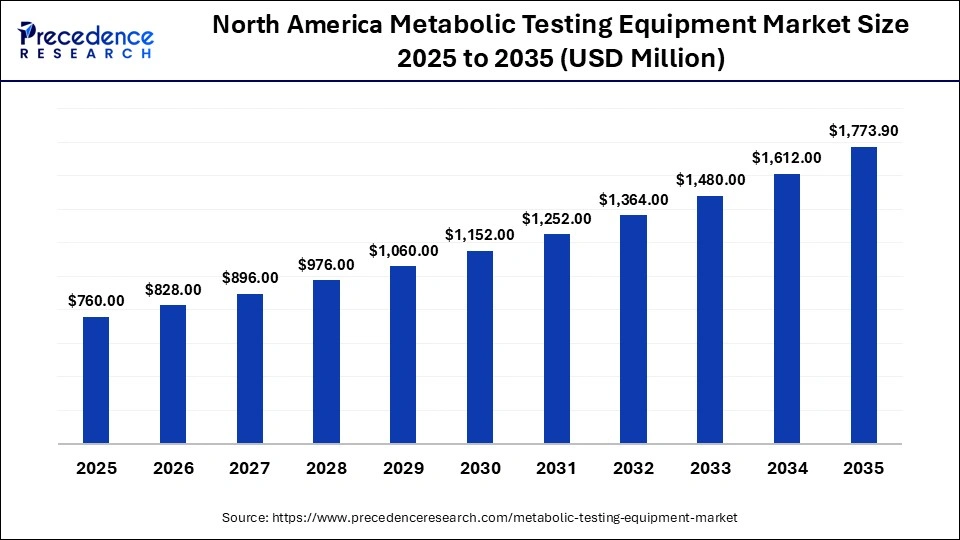
The North America metabolic testing equipment market size was exhibited at USD 760 million in 2025 and is projected to be worth around USD 1,773.90 million by 2035, growing at a CAGR of 8.85% from 2026 to 2035.
Why Did North America Dominate the Metabolic Testing Equipment Market in 2025?
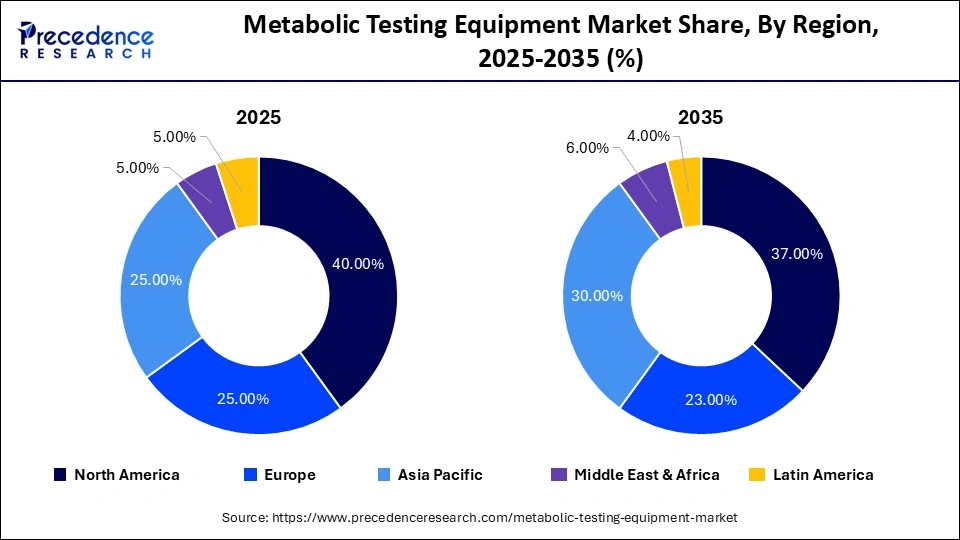
North America led the metabolic testing equipment market, capturing the largest share of 40% in 2025. This is mainly due to its advanced healthcare infrastructure and early adoption of diagnostic innovations. Metabolic testing is increasingly being integrated into chronic disease management and precision medicine programs across hospitals and research institutions. According to the Centers for Disease Control and Prevention (CDC), more than 38% of adults in the U.S. were affected by obesity in 2025, significantly increasing the demand for metabolic evaluation devices. This sustained burden of metabolic disorders reinforces North America's leadership in the adoption and development of advanced diagnostic technologies.
U.S. Metabolic Testing Equipment Market Size and Growth 2026 to 2035
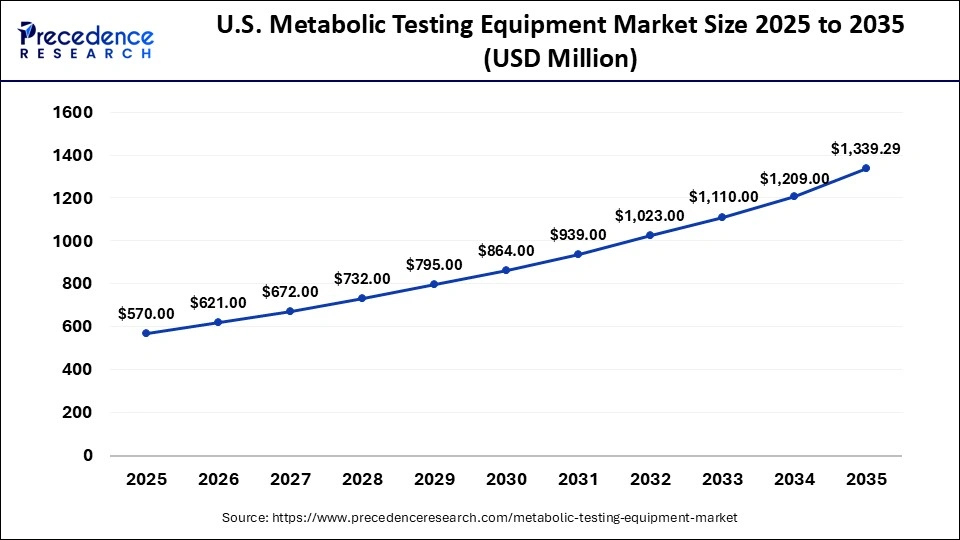
The U.S. metabolic testing equipment market size was evaluated at USD 570 million in 2025 and is projected to be worth around USD 1,339.29 million by 2035, growing at a CAGR of 8.92% from 2026 to 2035.
U.S. Metabolic Testing Equipment Market Analysis
The U.S. leads the North American market due to its highly developed clinical infrastructure and high prevalence of metabolic disorders. The country is a key adopter of metabolic testing technologies across hospitals, research centers, and sports performance facilities. Additionally, the ongoing expansion of preventive healthcare policies is increasing the demand for metabolic monitoring solutions, further strengthening market growth in the country.
Europe: The Second-Largest Market
Europe held the second-largest market share of 30% in 2025 and is estimated to grow at a strong CAGR of 7.5% over the projected period. This is mainly due to its well-established public healthcare systems and an increasing focus on metabolic health management across the region. In 2025, the European Commission reported rising investments in digital healthcare infrastructure and diagnostic technologies across member states. Additionally, the growing aging population and increasing prevalence of chronic diseases are driving demand for metabolic testing solutions to support effective disease management.
Germany Metabolic Testing Equipment Market Analysis
Germany is a major contributor to the market within Europe, supported by its strong healthcare infrastructure and advanced diagnostic capabilities. The country has an extensive network of metabolic testing facilities across university hospitals and research institutions. The adoption of digital health technologies is increasing in the country, supported by government-backed reimbursement systems and national digital health initiatives. This is further accelerating the integration of metabolic testing equipment into clinical practice and research applications.
How is the Opportunistic Rise of Asia Pacific in the Metabolic Testing Equipment Market?
Asia Pacific held a 20% share of the market in 2025 and is expected to grow at the fastest CAGR of 12% between 2026 and 2035. This growth is driven by the rapid expansion of healthcare infrastructure and increasing awareness of metabolic health across the region. The rising prevalence of obesity and diabetes in countries such as China and India is also driving the market in the region. According to the International Diabetes Federation (IDF), diabetes cases in the Southeast Asia (SEA) region are projected to increase by 73%, reaching approximately 185 million by 2050. In addition, governments across the region are investing in healthcare modernization and expanding access to diagnostic services, further supporting market growth.
China Metabolic Testing Equipment Market Analysis
In China, the market is driven by the rapid expansion of healthcare services and a rising burden of chronic diseases. The increasing prevalence of obesity, particularly in urban populations, is significantly boosting demand for diagnostic solutions such as metabolic testing equipment. According to the World Obesity Federation (2025), rising obesity trends in China are increasing the need for advanced metabolic assessment tools to support early diagnosis and disease management.
Metabolic Testing Equipment Market Share, By Region, 2025-2035 (%)
|
Region |
2025 Market Share |
2035 Market Share |
CAGR 2025 to 2035 |
Market Drivers |
|
North America |
40.00% |
38.00% |
8.0% |
North America leads the market due to advanced healthcare infrastructure, high adoption of medical technologies, and increasing awareness of metabolic disorders. |
|
Europe |
30.00% |
28.00% |
7.5% |
Europe shows steady growth with increased focus on metabolic diseases, aging populations, and government initiatives for obesity and diabetes prevention. |
|
Asia Pacific |
20.00% |
25.00% |
12.0% |
Asia Pacific is the fastest-growing region due to rising healthcare investments, increasing obesity rates, and greater adoption of advanced diagnostic tools. |
|
Middle East & Africa |
5.00% |
5.50% |
8.5% |
Growth in MEA is supported by rising healthcare investments and increasing awareness of metabolic health issues in key countries like the UAE and Saudi Arabia. |
|
Latin America |
5.00% |
4.50% |
6.0% |
Latin America shows moderate growth, driven by growing healthcare access and the increasing prevalence of metabolic diseases in countries like Brazil and Argentina. |
Supply Chain Analysis of Metabolic Testing Equipment
Raw Material & Sensor Component Sourcing: Medical-grade sensors, gas analyzers, and electronic components are sourced to ensure precision and reliability in metabolic testing systems.
- Key Players: Honeywell International, TE Connectivity, Amphenol Corporation, Analog Devices.
Component Manufacturing & Equipment Assembly: Core components are developed and integrated into metabolic carts, indirect calorimeters, and CPET systems with high clinical accuracy.
- Key Players: COSMED, Vyaire Medical, MGC Diagnostics, CORTEX Biophysik.
Software Integration & Data Analytics: Advanced software platforms enable real-time monitoring, data analysis, and cloud-based reporting for metabolic assessments.
- Key Players: GE HealthCare, Philips Healthcare, Masimo Corporation, ResMed.
Distribution & End-Use Deployment: Finished systems are distributed to hospitals, diagnostic centers, and sports labs for clinical, research, and performance applications.
- Key Players: Medtronic, Cardinal Health, Stryker Corporation, Apollo Hospitals.
Metabolic Testing Equipment Market Companies
- Cardiometabolic Health Solutions, Inc.
- Vyaire Medical Inc.
- Cosmed S.r.l.
- Schiller AG
- GE Healthcare
- MGC Diagnostics Corporation
- Medical Graphics Corporation (MGC Diagnostics)
- Prometheus Group
- KORR Medical Technologies
- ParvoMedics
- Cerebral Health Technologies
- Sable Systems International
- BOD POD (COSMED)
- HITACHI Medical Corporation
- Beurer GmbH
Recent Developments
- In February 2026, Zandra Healthcare launched a Metabolic Health Center in India to address obesity, diabetes, and related complications. The center introduces an integrated diagnostic model for metabolic disorders, moving beyond isolated blood sugar testing. (Source: https://www.expresshealthcare.in)
- In September 2024, PHC Corporation's Biomedical Division launched LiCellMo, a live cell metabolic analyzer that enables researchers to monitor metabolic changes in cell cultures for applications in cell and gene therapy research. The system uses proprietary In-Line monitoring technology to continuously measure cellular metabolites without interrupting experiments, providing real-time insights into cell activity. (Source: https://www.phchd.com)
Segments Covered in the Report
By Product Type
- Metabolic Analyzers
- Spirometers
- Cardiopulmonary Exercise Testing (CPET) Systems
- Body Composition Analyzers
- Other Testing Equipment (e.g., Indirect Calorimeters)
By Technology
- Indirect Calorimetry
- Respiratory Gas Exchange Measurement
- Bioelectrical Impedance Analysis (BIA)
- Dual-Energy X-ray Absorptiometry (DEXA)
- Others
By End-Use
- Hospitals
- Clinics & Diagnostic Centers
- Fitness Centers & Sports Organizations
- Research & Academic Institutions
- Home Care Settings
By Application
- Cardiometabolic Health Monitoring
- Obesity & Weight Loss Management
- Exercise Physiology & Performance
- Nutritional Assessment
- Clinical Diagnostics
By Region
- North America
- Latin America
- Europe
- Asia-pacific
- Middle and East Africa
For inquiries regarding discounts, bulk purchases, or customization requests, please contact us at sales@precedenceresearch.com
Frequently Asked Questions





Ask For Sample
No cookie-cutter, only authentic analysis – take the 1st step to become a Precedence Research client
 Get a Sample
.webp)



 sales@precedenceresearch.com
 Schedule a Meeting
