



Metaverse for Mental Health Market Size, Key Companies, Company Market Share, Patient Volume, Treatment Adoption Rates, Pricing Analysis, Regulatory Landscape, Competitive Positioning, and Demand Forecast
Metaverse for Mental Health Market (By Component: Hardware, Software, Service; By Application: Therapy and Counseling, Mental Health Education, Mindfulness and Meditation, Others; By Technology: Virtual Reality (VR), Augmented Reality (AR), Mixed Reality (MR); By End User: Individuals, Mental Health Professionals, Healthcare Institutions, Others) - Global Industry Analysis, Size, Trends, Leading Companies, Regional Outlook, and Forecast 2026 to 2035
Source: https://www.precedenceresearch.com/metaverse-for-mental-health-market
 Get a Sample
 Table Of Content


What is the Metaverse for Mental Health Market Size?
The global metaverse for mental health market size is accounted at USD 2.42 billion in 2025 and predicted to increase from USD 3.06 billion in 2026 to approximately USD 24.24 billion by 2035, representing a CAGR of 25.91% from 2026 to 2035.
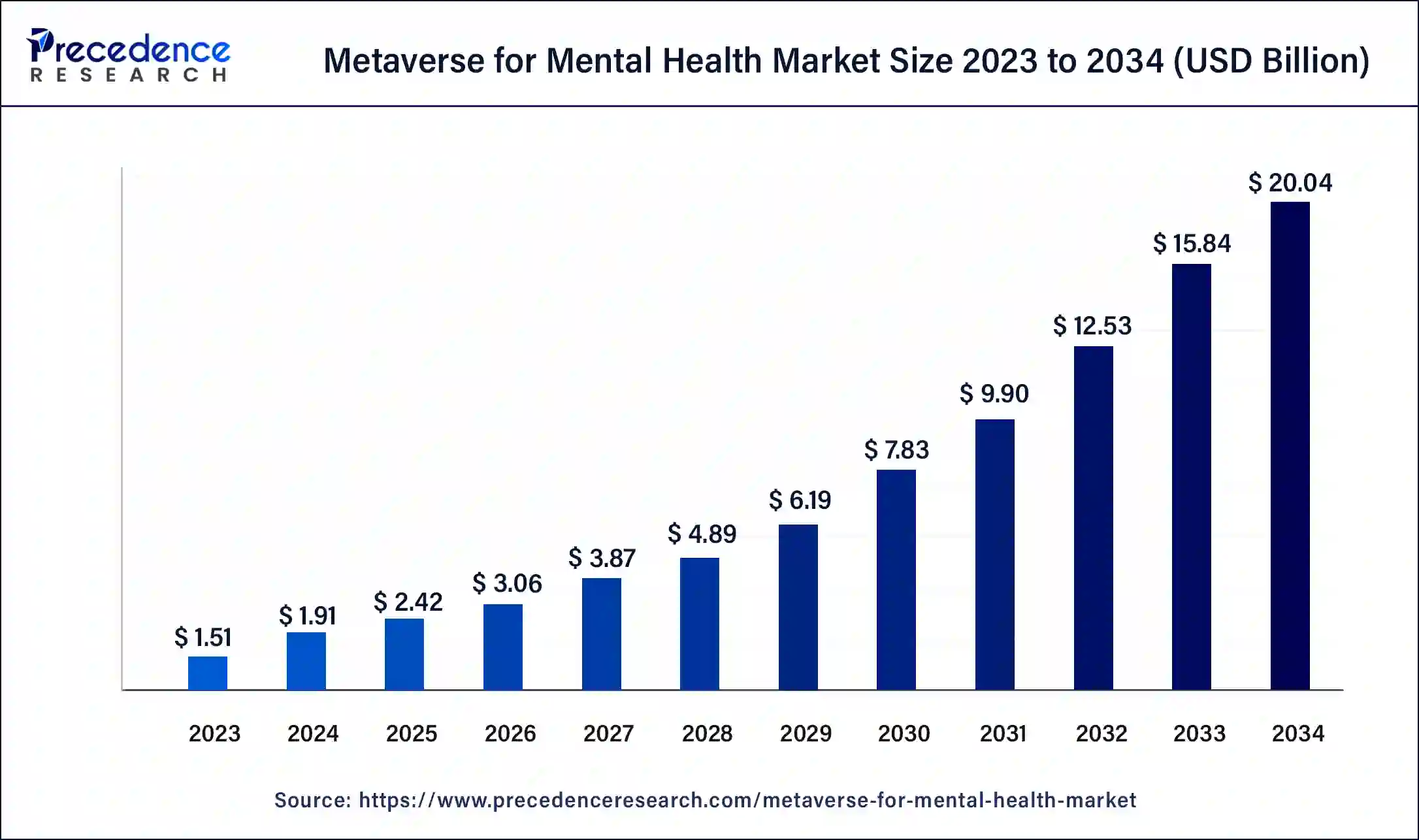
Metaverse for Mental Health Market Key Takeaways
- North America contributed more than 38% of the revenue share in 2025.
- Europe region is estimated to expand the fastest CAGR between 2026 and 2035.
- By component, the hardware segment has held the largest market share of 65% in 2025.
- By component, the software segment is anticipated to grow at a remarkable CAGR of 28.4% between 2026 and 2035.
- By application, the therapy and counseling segment generated over 68% of revenue share in 2025.
- By application, the mental health education segment is expected to expand at the fastest CAGR over the projected period.
- By technology, the Virtual Reality (VR) segment held the largest market share of 52% in 2025.
- By technology, the Augmented Reality (AR) segment is anticipated to grow at a remarkable CAGR over the projected period.
- By end-user, the healthcare institutions segment had the largest market share of 49% in 2025.
- By end-user, the mental health professionals segment is expected to expand at the fastest CAGR over the projected period.
What is Metaverse for Mental Health?
The metaverse for mental health market encompasses immersive virtual and augmented reality environments and experiences to address mental health concerns and promote well-being. It offers a range of applications, including virtual therapy sessions, stress reduction and relaxation environments, exposure therapy, mental health education platforms, and more.
Leveraging cutting-edge technology, this market aims to provide individuals with accessible, effective, and engaging mental health solutions. The metaverse for mental health facilitates therapeutic interventions, self-help tools, education, and peer support, contributing to the broader goals of mental health awareness, treatment, and DE stigmatization.
Metaverse for Mental Health Market Growth Factors
- Rising awareness of mental health issues has spurred demand for accessible and effective solutions.
- Virtual therapy sessions, stress-reduction environments, and exposure therapy have gained popularity.
- Continuous innovation in immersive technologies enhances user experiences and therapeutic outcomes.
- The pandemic has accelerated the adoption of digital mental health solutions.
- Greater openness and advocacy for mental health have created opportunities for metaverse solutions.
- Virtual therapy and counseling services are becoming more integrated into the metaverse.
- Applications for relaxation, meditation, and stress reduction are in high demand.
- Mental Health Education: Platforms offering information and education about mental health are growing.
- The integration of metaverse solutions with telehealth platforms enhances accessibility and the reach of mental health services.
- Employers increasingly adopt metaverse mental health initiatives as part of comprehensive wellness programs to support employees' mental well-being.
Market Outlook
- Industry Growth Overview:
The metaverse for mental health market is experiencing significant growth, driven by advancements in tech, growing mental health requirements, and demand for novel solutions, though major challenges such as data privacy, regulation, and showing long-term effectiveness remain significant areas for research and development. - Global Expansion:
The metaverse for mental health market is experiencing significant global expansion, driven by providing immersive, virtual platforms for therapy, targeted digital therapeutics (DTx), mindfulness and yoga spaces, and avatar-driven consultations. North America dominates the market due to its advanced technological infrastructure and significant medical care expenditure. - Major investors:
Major investors are the organizations developing metaverse solutions for mental health, including large tech companies, specialized venture capital (VC) firms, and angel investor networks.
Market Scope
| Report Coverage | Details |
| Growth Rate from 2026 to 2035 | CAGR of 25.91% |
| Market Size in 2025 | USD 2.42 Billion |
| Market Size in 2026 | USD 3.06 Billion |
| Market Size by 2035 | USD 24.24 Billion |
| Largest Market | North America |
| Base Year | 2025 |
| Forecast Period | 2026 to 2035 |
| Segments Covered | By Component, By Application, By Technology, and By End User |
| Regions Covered | North America, Europe, Asia-Pacific, Latin America, and the Middle East & Africa |
Market Dynamics
Driver
Mental health accessibility and virtual therapy sessions
The metaverse for mental health market excels in dismantling obstacles to mental health care. It offers readily accessible virtual environments that cater to individuals who may be reluctant or unable to access conventional mental health support due to concerns surrounding stigma, geographical limitations, or the scarcity of available services. In essence, it democratizes access to mental health care, empowering individuals to connect with mental health professionals and resources at their comfort, free from judgment or pressure.
The metaverse offers a revolutionary platform for virtual therapy and counseling sessions. It enables individuals to access professional mental health care from the comfort of their homes, eliminating geographical and logistical obstacles. Virtual therapy sessions are not only convenient but also provide privacy, making them an attractive option for those who value discretion and comfort while addressing their mental health concerns. These innovations in mental health accessibility and virtual therapy sessions are driving the demand for the metaverse for the mental health market, making it a game-changer in the provision of mental health services.
Restraint
Limited emotional nuance and privacy concerns
While the metaverse for mental health market holds significant promise, several restraints affect its market demand. One major challenge is the limited emotional nuance within virtual environments. While virtual therapy sessions offer convenience, they may lack the depth of emotional connection that face-to-face interactions provide. Subtle emotional cues and non-verbal communication can be challenging to replicate in a digital realm, potentially limiting the effectiveness of therapeutic interventions and reducing the patient's sense of being understood.
Moreover, sharing deeply personal and sensitive mental health information within the metaverse raises legitimate worries about data security and confidentiality. However, there are privacy concerns surrounding these platforms. Users may worry about the security of their personal and sensitive mental health information in the metaverse.
Sharing such data in a digital environment raises legitimate questions about data security and confidentiality. Striking the right balance between delivering effective care and ensuring the protection of patients' sensitive data is a paramount challenge for the industry, and these concerns have an impact on the overall market demand.
Opportunity
Personalized interventions and expanded accessibility
The metaverse for mental health market is experiencing a surge in demand primarily due to its ability to provide personalized interventions and expanded accessibility. The metaverse leverages advanced technologies to offer tailored mental health support, ensuring individuals receive treatment and guidance that aligns with their unique needs. Personalization involves the customization of therapy, content, and interventions based on an individual's mental health profile, preferences, and progress. This tailored approach significantly enhances the effectiveness of mental health care, increasing engagement and positive outcomes.
Furthermore, the metaverse extends mental health services to a broader audience by breaking down geographical barriers and reducing the stigma associated with seeking help. Users can access mental health resources from the comfort of their own homes, providing greater accessibility to those in remote areas or those who may be hesitant to attend traditional in-person sessions. The metaverse also supports real-time interventions, enabling users to receive immediate assistance during moments of crisis. These combined factors have led to a growing demand for metaverse-based mental health solutions, ultimately revolutionizing the mental health care landscape.
Component Insights
According to the component, the hardware segment has held 65% revenue share in 2025. The hardware component encompasses the physical devices required to access the metaverse, such as VR headsets, AR glasses, and biometric sensors. These devices are evolving to become more affordable, comfortable, and user-friendly, allowing individuals to enter virtual environments for mental health support seamlessly. Trends indicate an increasing focus on creating devices with enhanced sensor capabilities for more accurate monitoring of users' mental states.
The software segment is anticipated to expand at a significant CAGR of 28.4% during the projected period. The software aspect includes the platforms, applications, and content that enable mental health interventions within the metaverse. These solutions are designed to deliver a wide range of therapeutic experiences, from guided mindfulness sessions to cognitive-behavioral therapy. Recent trends show the development of AI-driven software capable of personalizing mental health interventions and chatbot companions that provide support and encouragement in the metaverse.
Application Insights
Based on the application, the therapy and counseling segment is anticipated to hold the largest market share of 68% in 2025. In the metaverse for mental health market, therapy and counseling applications are designed to provide users with access to mental health professionals and therapists within a virtual environment. These applications enable users to engage in therapy sessions, seek emotional support, and address their mental health concerns. A significant trend in this segment involves the integration of AI-driven virtual therapists that can provide round-the-clock support, bridging gaps in traditional mental health services and offering convenient, on-demand help.
On the other hand, the mental health education segment is projected to grow at the fastest rate over the projected period. The metaverse for mental health market also features applications focused on mental health education. These applications aim to educate users about various aspects of mental health, such as self-awareness, stress management, and coping strategies. They offer interactive learning experiences that empower individuals to enhance their mental well-being. A notable trend is the gamification of mental health education, making it engaging and fun while effectively disseminating important information. These educational applications serve as preventive tools, helping individuals better understand and manage their mental health.
Technology Insights
Based on the application, the therapy and counseling segment held the largest market share of 52% in 2025. Virtual Reality (VR) is a technology that immerses users in entirely virtual environments, isolating them from the physical world. In the context of mental health, VR is often used to create controlled and immersive therapeutic environments. For example, it's effective for exposure therapy, where individuals can confront and process traumatic experiences or phobias in a controlled and safe VR setting. VR can also be used for relaxation exercises, offering users an escape from reality, aiding in meditation, and serving as a tool for immersive cognitive-behavioral therapy.
On the other hand, the mental health education segment is projected to grow at the fastest rate over the projected period. Augmented Reality (AR) is a technology that enhances the real world by overlaying digital information or objects onto the user's view of the physical environment. In the metaverse for mental health market AR provides individuals with context-aware cues and support in their daily lives. For instance, AR apps may offer real-time prompts or guidance for managing stress, practicing mindfulness, or enhancing emotional regulation during everyday activities. These subtle digital overlays can be invaluable in helping users navigate the complexities of their mental health in real-world scenarios.
End-user Insights
In 2025, the healthcare institutions segment had the highest market share of 49% on the basis of the end user. In the market, healthcare institutions and mental health professionals play pivotal roles. Healthcare institutions, including hospitals and clinics, are increasingly incorporating metaverse solutions to provide comprehensive mental health services to patients. This trend involves creating virtual clinics within the metaverse, where patients can access therapy, counseling, and support remotely, leading to more accessible and efficient mental health care.
The mental health professionals segment is anticipated to expand at the fastest rate over the projected period. Mental health professionals are actively integrating metaverse technology into their practices, allowing them to offer therapy and counseling services in virtual settings. They utilize this platform to reach a wider client base, provide personalized interventions, and adapt to the evolving landscape of mental health care. Overall, this collaboration between healthcare institutions and mental health professionals is driving the growth of the metaverse for mental health market, making mental health support more accessible, innovative, and efficient.
Regional Insights
U.S. Metaverse for Mental Health Market Size and Growth 2026 to 2035
The U.S. metaverse for mental health market size is exhibited at USD 691.16 million in 2025 and is projected to be worth around USD 6,970.21 million by 2035, poised to grow at a CAGR of 26.00% from 2026 to 2035.
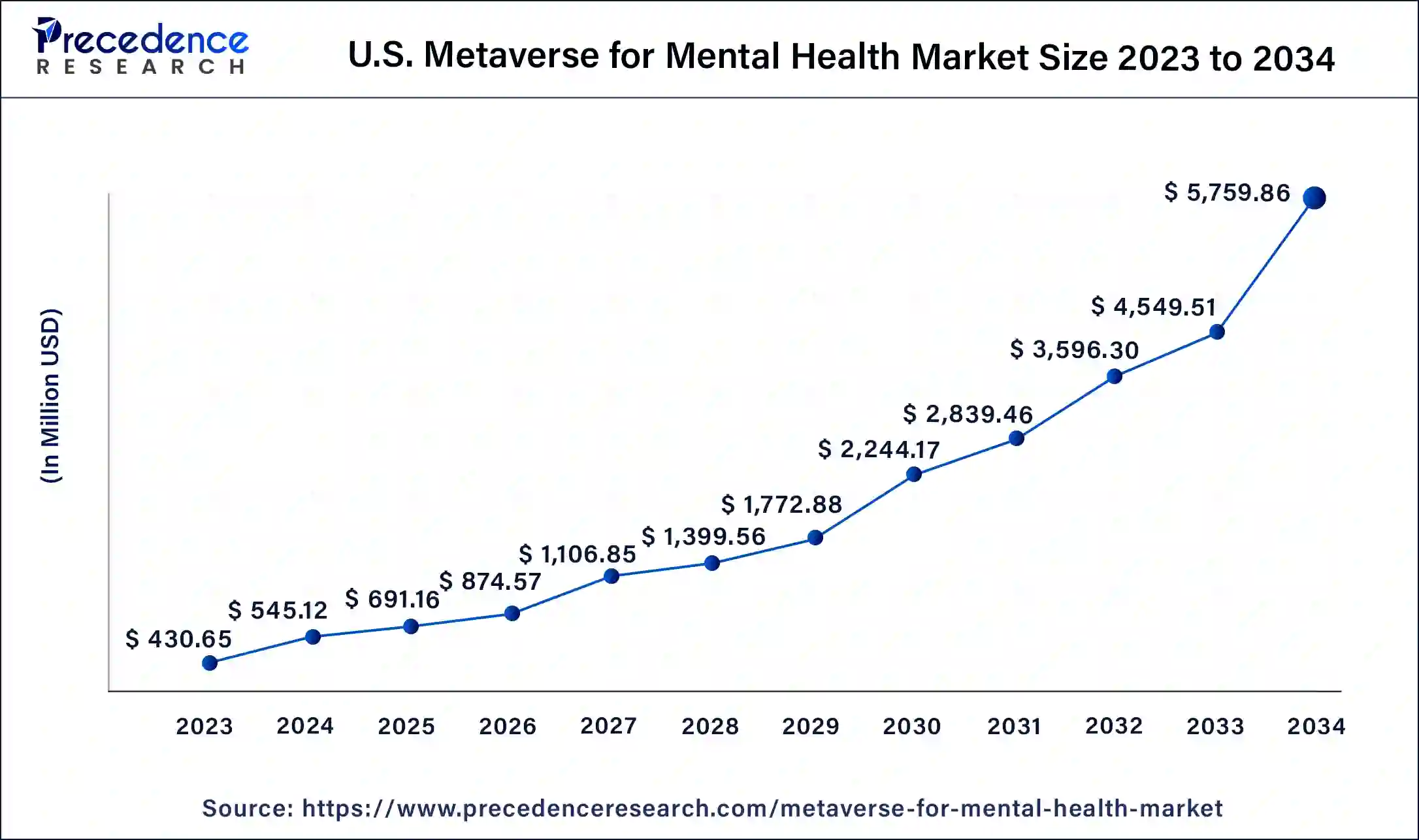
North America: Adopting cutting-edge mental health technologies
North America has held the largest revenue share 38% in 2025. In North America, the metaverse for mental health market is experiencing a significant upsurge, driven by the region's proactive approach to adopting cutting-edge mental health technologies. High smartphone and internet penetration rates and a growing mental health awareness contribute to the robust adoption of metaverse platforms. Moreover, North America boasts a wealth of tech companies and research institutions at the forefront of developing advanced mental health solutions within the metaverse.
U.S. Metaverse for Mental Health Market Trends
Metaverse, as an evolving technology in the U.S. it has substantial potential to affect psychiatric diagnosis, research, treatment, and education by offering immersive experiences that enable people to discover and cooperate with digital environments. Mental and behavioral health disorders are increasing in the U.S., as one in six U.S. adults suffers from a mental illness, which drives the growth of the market.
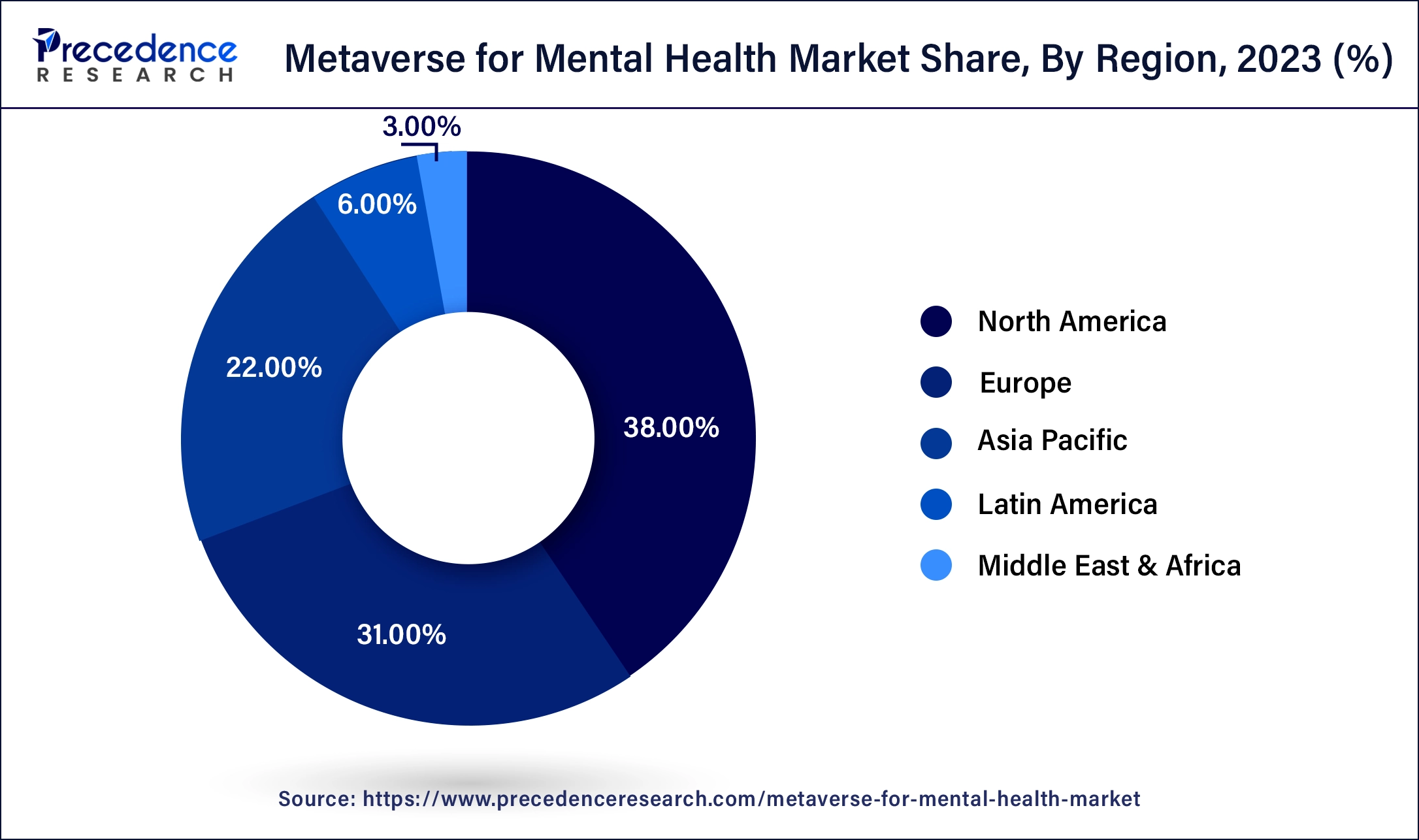
Asia Pacific: Quick to integrate metaverse-based mental health services
Asia Pacific is estimated to observe the fastest expansion. In the region, a similar trend is emerging as the region emphasizes mental health care and destigmatization. Countries like India, China and Japan have been quick to integrate metaverse-based mental health services into their healthcare systems, aiming to bridge the accessibility gap and provide innovative mental health support. Moreover, diverse healthcare landscape and commitment to digital health solutions position it as a growing hub for metaverse innovations in the mental health sector.
India Metaverse for Mental Health Market Trends
In India, growing regulatory initiatives such as Tele MANAS, a 24/7 toll-free helpline offering tele-counseling in 20 languages. These digital foundations have made the transition to more immersive metaverse environments simple. India is set to have over 900 million internet users by 2025, with a majority from rural areas, which also contributes to the market growth.
Europe: Advancement in next-generation vehicle design.
Europe is significantly growing in the market as a significant percentage of Europeans report experiencing emotional or psychosocial challenges, leading to a high demand for accessible, technology-enabled interventions that can bypass the stigma, expenses, and long waiting times related to traditional care.
The UK Metaverse for Mental Health Market Trends
Germany was the first country to integrate regulation and reimbursement for e-health applications, with the Digital Health Care Act and the Digital Health Applications Ordinance, which drives the advanced health applications like the metaverse for mental health. Growing funding of European governments through various programs, such as the EU4Health program, contributes to the long-term health risk by building stronger, more resilient, and accessible health systems.
Value Chain Analysis - Metaverse for Mental Health Market
- R&D:
Research and Development (R&D) services for mental health in the metaverse are focused on developing and validating immersive, technology-driven therapeutic services.
Key Players: Big Health and Limbix - Clinical Trials:
Clinical trials for metaverse in mental health are emerging, focusing on conditions such as social anxiety, autism, PTSD, depression, and eating disorders, using immersive VR and AR for exposure therapy, community skills training, and support groups.
Key Players: NVIDIA and Philips - Patient Services:
Metaverse-based interventions can improve treatment access and engagement, empower users, deliver efficacious and cost-effective care, and reduce stigma.
Key Players: Emirates Health Services (EHS)
Top Companies in the Metaverse for Mental Health Market & Their Offerings
|
Company |
Headquarters |
Key Strengths |
Latest Info (2025) |
|
Facebook, Inc. |
California |
Massive global user base |
In December 2025, Meta, Facebook's parent company, is reportedly planning significant resource cuts for its metaverse division, potentially by 30% in 2026, including layoffs. |
|
MindMaze |
Switzerland |
Proprietary data and AI advantage |
In December 2025, MindMaze Therapeutics Holding SA, a commercial-stage company delivering evidence-based, precision digital treatments for neurological diseases, outlined the evolution of its global reimbursement strategy to enable scalable patient access and sustainable commercial growth for next-generation neurotherapeutics. |
|
Relax VR |
California |
High Immersion and Sense of Presence |
Developer of hardware systems intended to help people relax and meditate in peace. |
|
Psious |
Spain |
Comprehensive content library |
The platform offers a wide range of more than 140 virtual reality environments used by clinicians to treat various conditions, including phobias, social anxiety, stress, and for practicing mindfulness and relaxation techniques. |
|
XRHealth |
USA |
Personalization and customization |
XRHealth is focused on bringing patient care into the virtual world. The company operates therapeutic care virtual rooms through the use of proprietary FDA. |
Metaverse for Mental Health Market Companies
- Facebook, Inc. (Meta Platforms, Inc.)
- MindMaze
- Relax VR
- Psious
- XRHealth
- Limbix
- Virtue
- PsycApps
- VRChat
- vSpatial
- Ovation VR
- Oxford VR
- Tribeca Care
- Luminous Cities
- Floreo, Inc
Recent Developments
- In 2022, GE Healthcare (US) partnered with MediviewXR (US) to co-create the OmnifyXR medical imaging system. This collaboration is dedicated to advancing medical imaging technology, potentially transforming how healthcare professionals interact with and utilize medical data for diagnosis and treatment.
- In 2023, NVIDIA Corporation (US) and Microsoft (US) joined forces to bridge Microsoft 365 apps with NVIDIA Omniverse. This collaboration aims to enable digital transformation, facilitate industrial metaverse integration, and empower the training of advanced generative AI models, among other applications.
Segments Covered in the Report
By Component
- Hardware
- Software
- Service
By Application
- Therapy and Counseling
- Mental Health Education
- Mindfulness and Meditation
- Others
By Technology
- Virtual Reality (VR)
- Augmented Reality (AR)
- Mixed Reality (MR)
By End User
- Individuals
- Mental Health Professionals
- Healthcare Institutions
- Others
By Geography
- North America
- Europe
- Asia-Pacific
- Latin America
- Middle East and Africa
For inquiries regarding discounts, bulk purchases, or customization requests, please contact us at sales@precedenceresearch.com
Frequently Asked Questions





Ask For Sample
No cookie-cutter, only authentic analysis – take the 1st step to become a Precedence Research client
 Get a Sample
.webp)



 sales@precedenceresearch.com
 Schedule a Meeting
