



Nasal Mucosa Drug Supply Device Market Size, Companies, Share, Patient Volume, Treatment Adoption Rates, Pricing Analysis, Regulatory Landscape, Competitive Positioning, and Demand Forecast
Nasal Mucosa Drug Supply Device Market (By Device Type: Metered-Dose Spray Systems, Breath-Actuated Systems, Multi-Dose Dispensers, Nebulizers & Atomizers, Powder-Based Delivery Systems, Others; By Drug Type: Respiratory Drugs, Pain Management Drugs, Vaccines, Neurological Drugs, Hormone Therapies, Emergency Drugs; By Application: Allergic Rhinitis , Sinusitis & Nasal Congestion, Migraine, Others; By End-User: Hospitals & Clinics, Home Care, Retail Pharmacies Others) - Global Industry Analysis, Size, Trends, Leading Companies, Regional Outlook, and Forecast 2026 to 2035
Source: https://www.precedenceresearch.com/nasal-mucosa-drug-supply-device-market
 Get a Sample
 Table Of Content


What is the Nasal Mucosa Drug Supply Device Market Size in 2026?
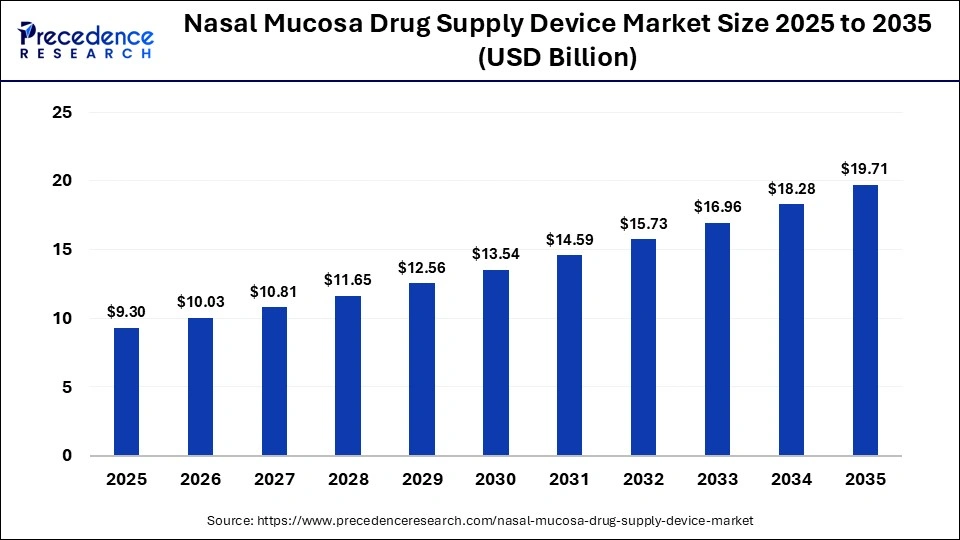
The global nasal mucosa drug supply device market size was calculated at USD 9.30 billion in 2025 and is predicted to increase from USD 10.03 billion in 2026 to approximately USD 19.71 billion by 2035, expanding at a CAGR of 7.80% from 2026 to 2035. The nasal mucosa drug supply device market is observing rapid growth due to higher demand for non-invasive, needle-free, and effective treatment options for respiratory issues. Hence, the market's main focus pointers consist of vaccines, pain management, and central nervous system management.
Key Takeaways
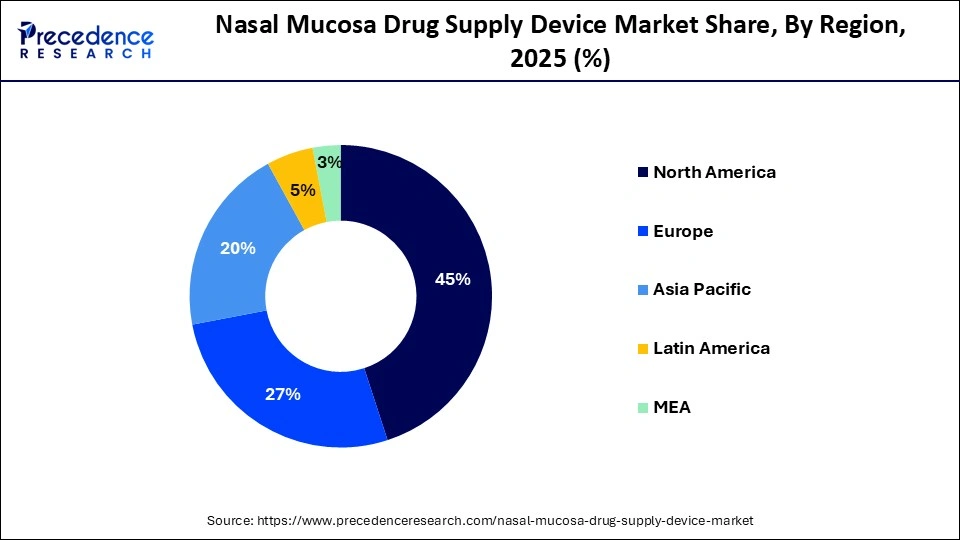
- North America led the global nasal mucosa drug supply device market with approximately 45% market share in 2025.
- Asia Pacific, with 8.2% CAGR, is observed to be the fastest-growing region in the foreseen period.
- By device type, the metered-dose spray systems segment has a major revenue share of approximately 45% of the market in 2025.
- By device type, the powder-based delivery systems segment is expected to grow at the fastest CAGR of approximately 6.5% in the foreseen period.
- By drug type, the respiratory drugs segment held a dominant position in the market with a share of approximately 30% in 2025.
- By drug type, the vaccines segment is expected to grow with the highest CAGR of 6.7% in the forecast period.
- By application, the allergic rhinitis segment accounted for a considerable revenue share of approximately 40% in 2025.
- By application, the migraine segment is expected to expand rapidly in the market with a CAGR of 6.9% in the forecast period.
- By end-user, the hospitals and clinics segment dominated the global nasal mucosa drug supply device market with a market share of approximately 50% in 2025.
- By end-user, the retail pharmacies segment is expected to witness the fastest growth in the market with a CAGR of 7.0% in the forecast period.
What is the Nasal Mucosa Drug Supply Device Market?
The market refers to the global industry for devices designed to deliver therapeutic drugs directly to the nasal mucosa for localized or systemic treatment. This includes systems such as metered-dose sprays, nebulizers, powder delivery systems, and more that enhance drug absorption, improve patient compliance, and provide non-invasive administration. Demand is driven by rising respiratory disorders, chronic disease prevalence, and preference for needle-free delivery options across healthcare settings worldwide.
Role of Technology in the Growth of Nasal Mucosa Drug Supply Device Market
- Use of Smart Devices: The segment involves the use of sensors to keep track of the ideal dosage quantity, along with sending the right information to the application as well.
- Powder Delivery Systems: The segment involves the use of advanced, single-use, and multi-dose powder devices that do not require any preservatives. It helps to improve stability for peptides and vaccines as well.
- Nanotechnology: Use of nanoparticles aids better absorption, extends retention time in the mucosa, and reduces mucociliary clearance.
Nasal Mucosa Drug Supply Device Market Trends
- Technological Advancements: Technological innovations in the form of precise dosing, multi-dose devices, and dry powder nasal dispensers are fueling the industry's growth.
- Nose-to-Brain Delivery: Higher adoption of using the olfactory region to bypass the blood-brain barrier to treat different types of neurological diseases also aids the market's growth.
- Growing Self-Administration: The segment focuses on higher demand for nasal pumps and sprays for effective results and lower the need for clinical administration.
Market Scope
| Report Coverage | Details |
| Market Size in 2025 | USD 9.30 Billion |
| Market Size in 2026 | USD 8.44 Billion |
| Market Size by 2035 | USD 19.71 Billion |
| Market Growth Rate from 2026 to 2035 | CAGR of 7.80% |
| Dominating Region | North America |
| Fastest Growing Region | Asia Pacific |
| Base Year | 2025 |
| Forecast Period | 2026 to 2035 |
| Segments Covered | Device Type, Drug Type, Application, End-User, and region |
| Regions Covered | North America, Europe, Asia-Pacific, Latin America, and Middle East & Africa |
Segmental Insights
Device Type Insights
Which Component of the Device Type Segment led the Global Market in 2025?
The metered-dose spray systems segment led the global nasal mucosa drug supply device market by approximately 45% share in 2025. The precise dose delivery for effective results and to get relief from nasal issues helps to fuel the segment's growth. Such nasal pumps and specialized drug delivery systems are helpful for high-accuracy dosing, improved therapeutic efficiency, and enhanced hygiene. Hence, they are highly preferred as a treatment option by patients and healthcare facility providers. Such spray systems are also preferred over traditional cold/allergy treatments for systemic delivery for CNS diseases and vaccines.
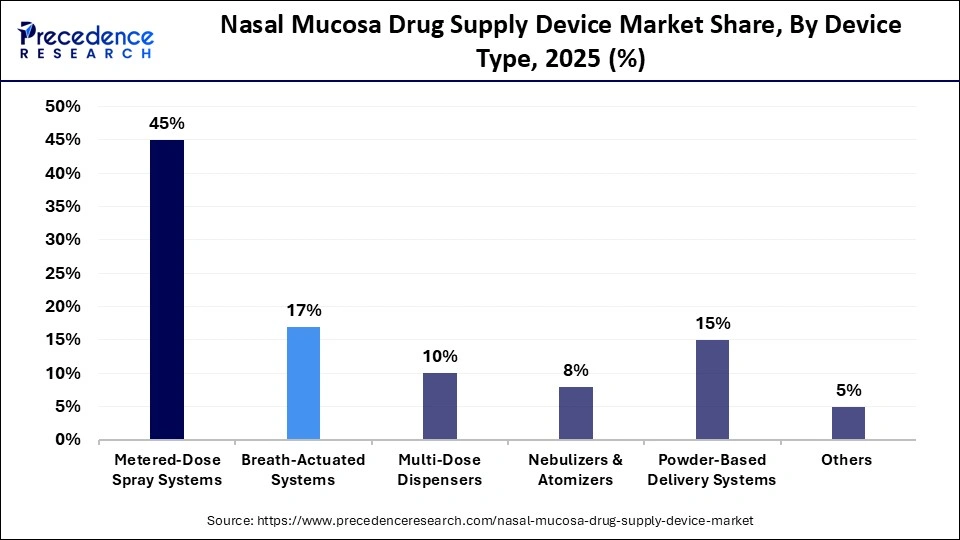
The powder-based delivery systems segment, with 6.5% CAGR, is observed to be the fastest-growing segment in the foreseen period. The powder-based delivery of drugs has multiple benefits over liquid-based nasal formulations, such as formulation stability, enhanced residence time on the nasal mucosa, and higher drug loading capabilities. Such systems are often delivered by specialized unidose or multidose powder devices. The segment also observes growth as powder formulations are safe from microbial growth, which helps to enhance the shelf life of powder-based drugs. They are also stable at room temperatures and do not need refrigeration. Such delivery systems also have higher bioavailability for poorly soluble drugs.
Drugs Type Insights
Why did the Respiratory Drugs Segment lead the Global Nasal Mucosa Drug Supply Device Market in 2025?
The respiratory drugs segment, with approximately 30% share, led the global market in 2025. The segment's growth is majorly fueled by higher demand for nasal mucosa treatment options, non-invasive treatments for allergies, quick-acting drugs, congestion, and chronic respiratory conditions. The segment's main focus is on nasal sprays and powder devices, focusing on high bioavailability and patient compliance. The drugs segment majorly focuses on Rhinitis and chronic sinusitis treatment, along with treatment of various other nasal issues such as upper respiratory infection-related congestion. The segment also involves the use of technologically advanced systems, such as dry-powder technologies and pressurized delivery systems, for improved and targeted delivery to the nasal cavity for faster absorption.
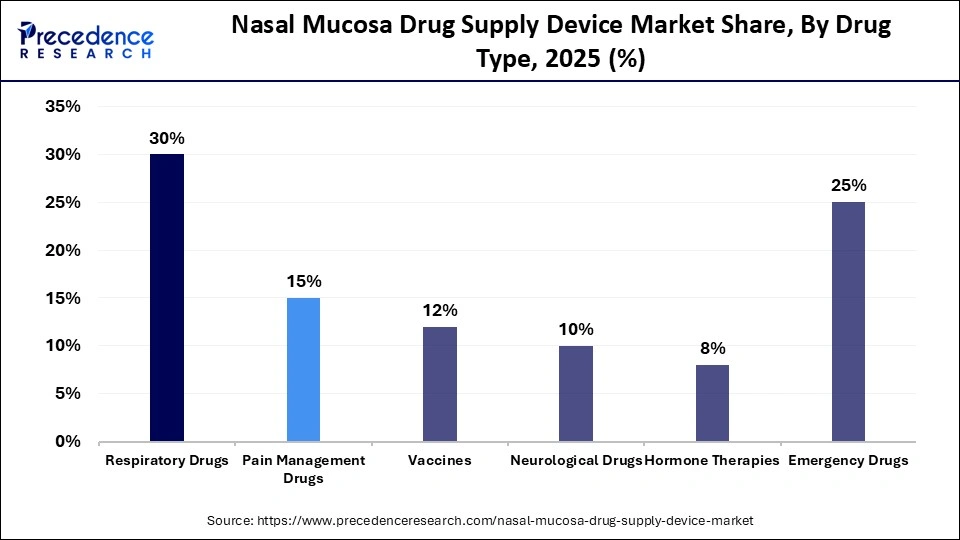
The vaccines segment, with 6.7% CAGR, is expected to expand rapidly in the nasal mucosa drug supply device market in the expected years. Higher demand for nasal vaccines with a specific interest in live attenuated vaccines for influenza and other respiratory disorders. The segment's growth is also driven by growing demand for needle-free alternatives, nasal sprays, and powders to treat different types of respiratory issues. Development of vaccines such as mRNA and viral vector platforms, helpful for device design, also helps to propel the segment's growth. Use of intranasal vaccines to stimulate mucosal and systemic immunity for respiratory pathogens also helps to fuel the segment's growth. The vaccines segment is also elevated with the help of general factors such as increasing prevalence of respiratory disorders, growing demand for home care settings, and higher investment in R&D of nose-to-brain drug delivery systems.
Application Insights
Which Component of the Application Segment led the Global Market in 2025?
The allergic rhinitis segment, with approximately 40% share, led the nasal mucosa drug supply device market in 2025. The segment's growth is mainly driven by the growing demand for rapidly targeted delivery of antihistamines and corticosteroids with the help of nasal sprays. General factors such as growing respiratory issues, air pollution, and growing demands for OTC nasal congestion and allergy treatment options also have a major contribution to the segment's growth. The segment involves major usage of nasal pumps and sprays for treating rhinitis. Such methods are essential for self-administration and are also non-invasive without any side effects. The segment's growth is also driven by high demand for advanced and multi-dose devices for precise dosing of allergy medications.
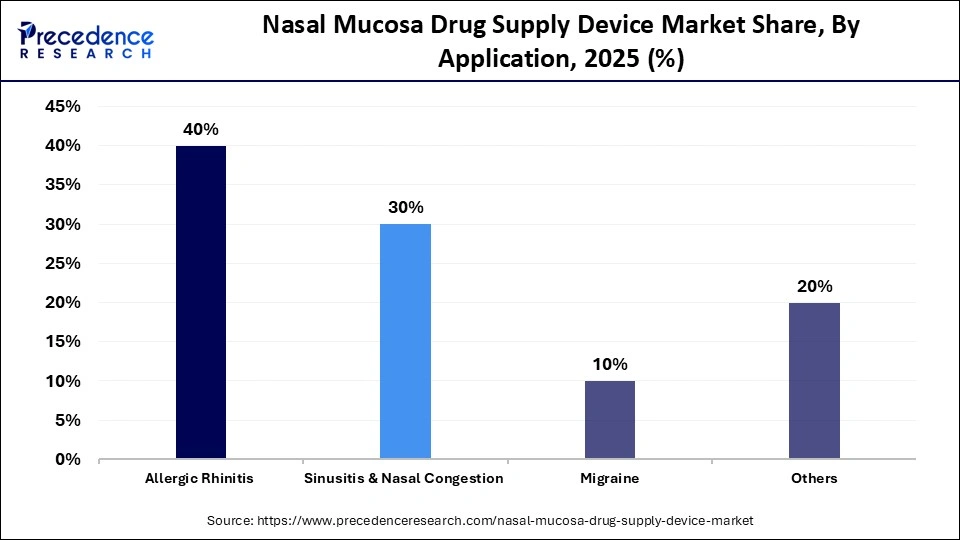
The migraine segment with 6.9% CAGR is observed to be the fastest-growing segment in the foreseeable period. Higher demand for non-invasive, effective, quicker, and patient-friendly solutions helps to fuel the market's growth in the foreseeable period. The segment's growth is also driven by higher demand for patients for alternatives to oral medications for issues like nausea and vomiting, for rapid absorption and effective results. Nasal pumps and sprays are ideal to treat acute migraine as they provide immediate relief and are also patient-friendly for use. Higher adoption of technologically advanced formulations in the form of innovative nasal powders also drives the segment's growth significantly in the foreseen period.
End User Insights
Which Component of the End-User led the Global Market in 2025?
The hospitals and clinics segment, with approximately 50% share, led the global nasal mucosa drug supply device market in 2025. The segment's growth is mainly driven by higher demand for trained staff to administer complex dosing and emergency nasal therapies such as seizures. Growing respiratory issues, such as asthma and COPD, lead to higher demand for emergency visits for immediate relief. Intranasal biologics and analgesics also help to expedite patient discharge, which is helpful for the segment's growth. Availability of advanced vaccines and experienced staff with accurate dosing knowledge also propel the segment's growth.
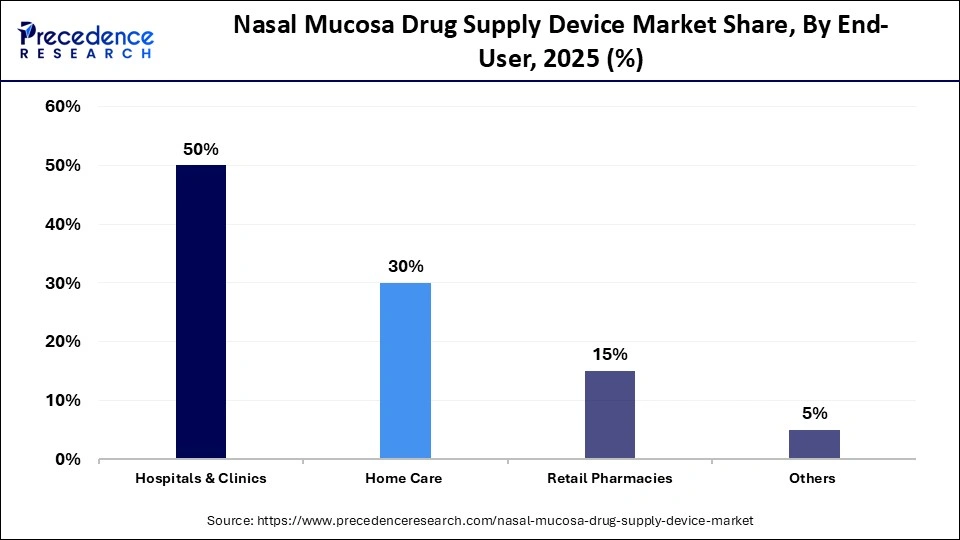
The retail pharmacies segment is expected to show the fastest growth with 7.0% CAGR in the forecast period. Easy availability of different types of drugs and availability of a broad product category propel the growth of the segment in the foreseen period. Retail pharmacies are also the primary channel for OTC products such as nasal sprays and drops. Such products are essential to treat nasal congestion, allergies, and rhinitis. Retail pharmacies are also helpful for getting medications promptly for acute nasal disorders and other similar serious issues. Higher demand for non-invasive and self-administered devices to treat chronic respiratory problems and allergies also fuels the growth of the nasal mucosa drug supply device market.
Regional Insights
North America Nasal Mucosa Drug Supply Device Market Size and Growth 2026 to 2035
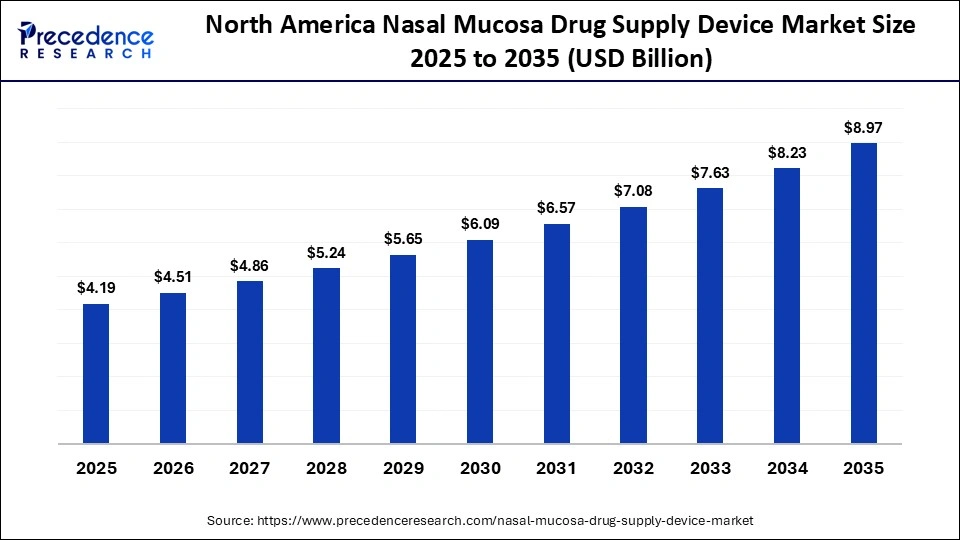
The North America nasal mucosa drug supply device market size is estimated at USD 4.19 billion in 2025 and is projected to reach approximately USD 8.97 billion by 2035, with a 7.91% CAGR from 2026 to 2035.
Why did North America lead the Global Market in 2025?
North America, with approximately 45% market share, led the global nasal mucosa drug supply device market in 2025. The market is observed to grow in the region due to higher demand for patient-friendly, needle-free, and effective alternatives to traditional and time-consuming nasal congestion treatment options. Such options are highly preferable for CNS disorders and emergency care. Innovations in spray and powder nasal product technology also help in the effective treatment of chronic respiratory issues. Nasal pumps and nasal powders are highly used in the region for chronic respiratory issues as they are ideal for accurate dosing. User-friendly, technologically advanced devices also fuel the market's growth.
U.S. Nasal Mucosa Drug Supply Device Market Size and Growth 2026 to 2035
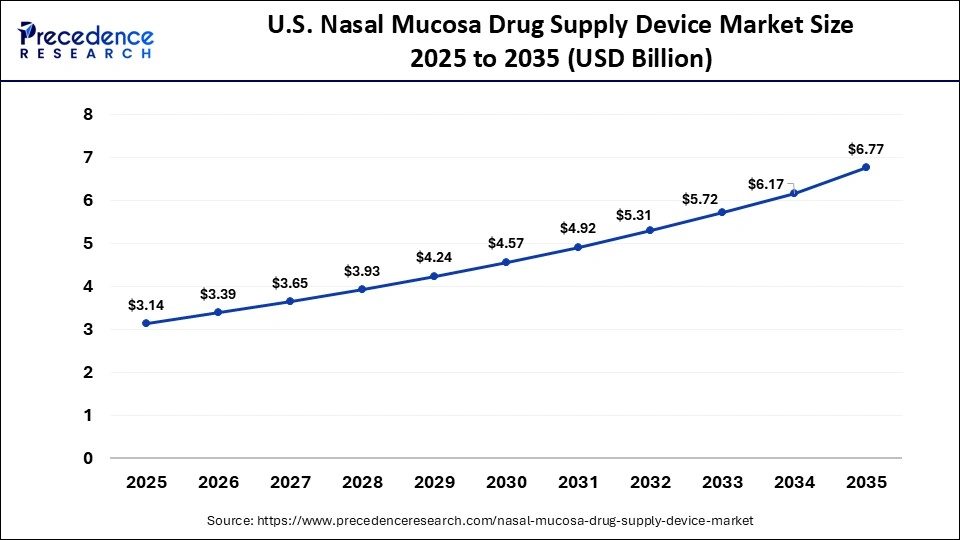
The U.S. nasal mucosa drug supply device market size is calculated at USD 3.14 billion in 2025 and is expected to reach nearly USD 6.77 billion in 2035, accelerating at a strong CAGR of 7.99% between 2026 and 2035.
The U.S. Nasal Mucosa Drug Supply Device Market Trends
Use of technologically advanced devices such as sprays, pumps, and powders for treating CNS disorders and various types of respiratory issues helps the U.S. to contribute to the growth of the market. The main focus of the market involves the treatment of congestion, allergies, pain management, and chronic respiratory problems.
Why is the Asia Pacific observed to be the fastest-growing region in the Foreseen Period?
Asia Pacific is expected to expand rapidly with a CAGR of 8.2% in the forecast period. The market in the region is expected to grow rapidly due to higher demand for non-invasive, effective, and needle-free solutions for respiratory problems caused by air pollution, a growing aging population, and other similar problems. Rapid urbanization and growing healthcare infrastructure also contribute to the growth of the market in the region. The rising prevalence of allergic rhinitis, asthma, and COPD, leading to higher demand for advanced and non-invasive treatment options, also propels the market's growth in the foreseen period. Advanced R&D is helpful for the innovation of effective nasal sprays and pumps, which are also a major market driver.
China Nasal Mucosa Drug Supply Device Market Trends
Growing demand for nasal sprays and pumps, along with powders for effective results, is one of the major factors driving the growth of the market in China. Higher demand for non-invasive and user-friendly options will also make a major contribution to the industry's growth in the foreseeable period. The market is majorly focused on nanotechnology-enabled carriers, mucoadhesive systems, and specialized devices for node-to-brain delivery. The market is also observing growth due to the prevalence of chronic respiratory diseases and the growing geriatric population.
Nasal Mucosa Drug Supply Device Market Value Chain Analysis
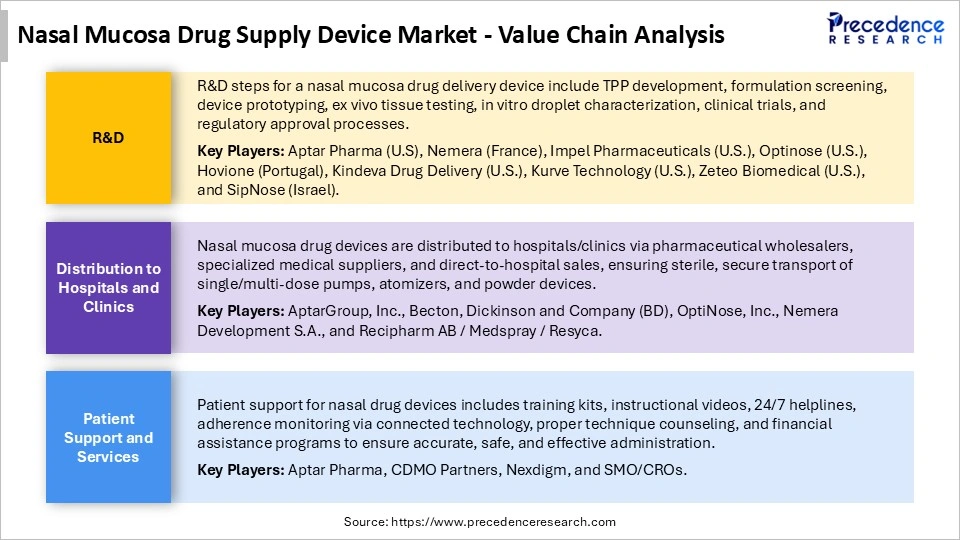
Mucosa Drug Supply Device Market Companies
- AptarGroup, Inc.
- Becton Dickinson and Company (BD)
- GlaxoSmithKline plc (GSK)
- Pfizer Inc.
- Johnson & Johnson
- Nemera Development S.A.
- 3M Health Care
- OptiNose Inc.
- Teleflex Incorporated
- Hovione Technology Ltd.
- Catalent, Inc.
- Roche Holding AG
- Dr. Reddy's Laboratories
- Cipla Limited
- AstraZeneca plc.
Recent Developments
- In October 2024, Aptar Pharma announced that it had acquired all device technology assets from the proprietary portfolio of SipNose Nasal Delivery Systems, a company focused on intranasal delivery platforms for local, systemic, and central nervous system indications.(Source- https://aptar.com)
- In November 2025, Altamira Therapeutics Ltd. announced that its associate company Altamira Medica ("Medica") obtained certification of its Bentrio nasal spray under the European Union's Medical Device Regulation (MDR). The new launch was a drug-free, preservative-free nasal spray for protection against airborne allergens. (Source- https://www.accessnewswire.com)
Segments Covered in the Report
By Device Type
- Metered-Dose Spray Systems
- Breath-Actuated Systems
- Multi-Dose Dispensers
- Nebulizers & Atomizers
- Powder-Based Delivery Systems
- Others
By Drug Type
- Respiratory Drugs
- Pain Management Drugs
- Vaccines
- Neurological Drugs
- Hormone Therapies
- Emergency Drugs
By Application
- Allergic Rhinitis
- Sinusitis & Nasal Congestion
- Migraine
- Others
By End-User
- Hospitals & Clinics
- Home Care
- Retail Pharmacies
- Others
By Region
- North America
- Latin America
- Europe
- Asia-pacific
- Middle and East Africa
For inquiries regarding discounts, bulk purchases, or customization requests, please contact us at sales@precedenceresearch.com
Frequently Asked Questions





Ask For Sample
No cookie-cutter, only authentic analysis – take the 1st step to become a Precedence Research client
 Get a Sample




 sales@precedenceresearch.com
 Schedule a Meeting
