



Anitoa Announces Advancement in Biosurveillance to Secure Cloud Connectivity for Portable qPCR Instruments
Published: 10 Sep 2026
Author: Deepa Pandey



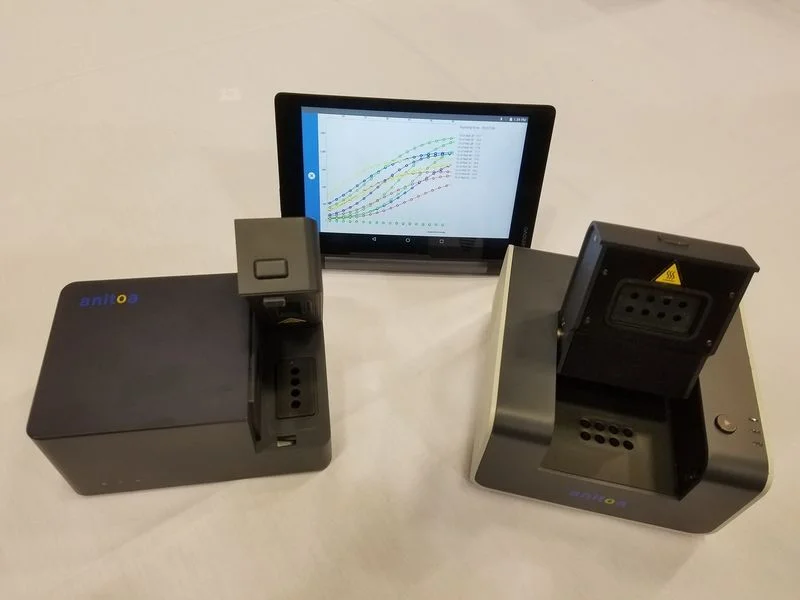
On September 8, 2026, Anitoa has now provided secure cloud connectivity for its portable qPCR devices, creating new opportunities in the areas of biosurveillance, remote diagnostics, and the integration of artificial intelligence. In modern healthcare infrastructure, portable qPCR systems are useful in cases where rapid molecular testing is required outside of traditional laboratory settings, such as in public health surveillance and in decentralised testing. The demand for connected diagnostics, where secure connectivity could help researchers and clinicians to handle their results, co-ordinate testing activities, and compile larger datasets for use in analytical applications.
Anitoa's approach aligns with a broader industry trend to combine portable laboratory technologies, secure data infrastructure, and intelligent analytics to build more responsive molecular testing networks. This advancement links field-based molecular testing with cloud infrastructure so that test data can go beyond the individual instruments and used for centralised analysis and monitoring. Additionally, incorporating AI could improve pattern detection, support interpretation, and potentially speed responses to new biological threats.
Impact on the Biosafety and Biosecurity Industry
The global biosafety and biosecurity market size accounted for USD 16.50 billion in 2025 and is predicted to increase from USD 18.12 billion in 2026 to approximately USD 42.02 billion by 2035, expanding at a CAGR of 9.80% from 2026 to 2035.
According to Precedence Research, the rising use of centralised data to monitor situations at a number of different locations and help to coordinate responses more effectively within a biosafety and biosecurity framework. The cloud-connected qPCR technology developed by Anitoa could improve biosurveillance by connecting portable molecular testing with central data analysis. Integration with AI might offer further capabilities for detecting trends and unusual patterns in large datasets.
It would be possible for field teams to send in their results from areas, replacing traditional laboratory facilities and enabling public health organisations to get quicker insight into biological threats. Additionally, the success of such systems will rely on reliable connectivity, cybersecurity measures, the quality of the data, and smooth coordination between field staff and health authorities.
Impact on the Molecular Diagnostics Industry
The global molecular diagnostics market size is calculated at USD 45.11 billion in 2025 and is predicted to increase from USD 46.61 billion in 2026 to approximately USD 66.34 billion by 2035, expanding at a CAGR of 3.93% from 2026 to 2035.
According to Precedence Research, secure integration with the cloud might lead to a more connected diagnostic process, allowing for centralised data management, remote supervision, and greater analytical capabilities in diagnosis. Portable qPCR devices could gain from having advanced connectivity and AI features built directly into them, and AI could improve the interpretation of results and operational efficiency as larger datasets become available.
In the case of traditional molecular testing, a great arrangement of useful information is usually kept within the individual instruments and laboratories themselves. This would be advantageous in decentralised testing situations where quick results are crucial. The diagnostic companies will have to continue to uphold strict standards in terms of analytical accuracy, data security, system reliability, and regulatory compliance.
Impact on the Digital Health Industry
The global digital health market size is calculated at USD 420.08 billion in 2025 and is predicted to increase from USD 483.07 billion in 2026 to approximately USD 1,171.24 billion by 2035, expanding at a CAGR of 10.8% from 2026 to 2035.
According to Precedence Research, connected diagnostic devices are able to produce large quantities of real-world molecular data. Anitoa has made this announcement, which shows how healthcare technology, cloud computing, and artificial intelligence are coming together. This data could prove useful for advanced analytics and for use in machine-learning applications. A secure cloud infrastructure offers a basis for handling these datasets and might enable AI tools to detect patterns that are hard to spot by hand.
This opens up the possibility for technology companies to create new kinds of healthcare analytics, monitoring, and decision-support solutions. For the deployment of these solutions responsibly, it will be necessary to have strong cybersecurity measures, proper data governance, interoperability, and careful validation to make sure that the insights generated by AI are reliable and clinically meaningful.
Expert Opinion
From an expert point of view, Anitoa is moving towards secure cloud connectivity since the future of molecular diagnostics will probably depend not just on faster testing but also on how well the results of the tests can be linked, analysed, and acted upon. Portable qPCR devices can bring molecular testing nearer to where it is needed, and cloud connectivity could turn each testing event into part of a wider surveillance network. AI should reinforce rather than replace established laboratory procedures and practices.
With the inclusion of AI, there is even more potential for pattern recognition and large-scale analysis, especially when data from a number of different locations can be combined. The connectivity brings with it obligations concerning cybersecurity, privacy, data integrity, and system reliability. If Anitoa can show that its connected platform provides secure, reliable, and actionable information in real-world situations, the technology could make a meaningful contribution to the development of decentralised diagnostics and to modern biosurveillance.