



ASUS Introduces the Vivobook 14 and Vivobook 15 AI Laptops in India, Priced from ₹75,990
Published: 15 Jul 2026
Author: Gautam Mahajan



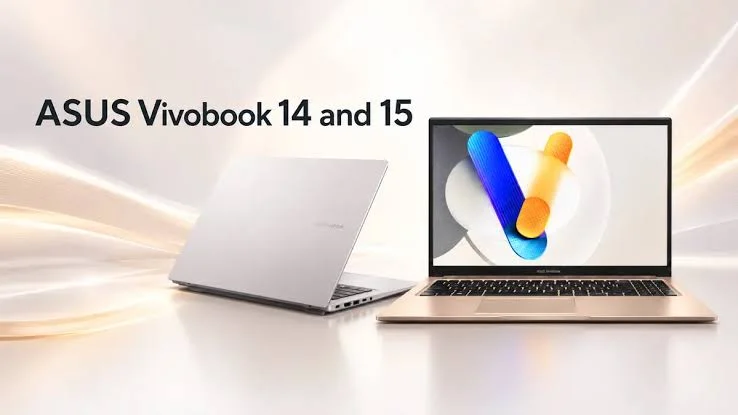
On 10 July 2026, ASUS boosted its presence in the booming AI PC market with the launch of the new Vivobook 14 and Vivobook 15 AI laptops in India. The laptop features an Intel Core i3 processor suitable for students, professionals, and everyday users.
The announcement highlights a global move towards AI-enabled personal computers that perform tasks locally, reducing reliance on the cloud in India. AI-powered laptops featuring Intel Core 7 Series 3 processors and dedicated neural processing units (NPUs), bringing up to 17 TOPS. These laptops enable faster AI functions, including real-time translation, image enhancement, smart editing, voice recognition, noise reduction, and Microsoft Copilot features. The Vivobook 14 and 15 AI series offers up to 16 GB of DDR5 memory, Full HD displays, a speedy PCIe SSD, and maintains long battery life, Wi-Fi 6, and durability, making it important for work and travel. This laptop is designed for students, professionals, creators, and business users. Focused on on-device AI, it ensures secure, low-latency features, reduces reliance on the internet, and enhances data privacy by processing locally.
ASUS understands AI PCs as the future of personal computing, integrating smart software to stabilize time and boost productivity. Industry analysts note this as part of increasing competition in the AI PC market, which is expanding as consumers upgrade. Other establishments are also unveiling AI hardware and workstations, representing that AI is a function as mainstream in consumer and professional markets. The Vivobook AI series reflects a broader industry transition toward intelligent, AI-assisted devices that accelerate AI use in education, business, content creation infrastructure, and remote work, making advanced AI features more accessible and cost-effective.
Impact on the Personal Consumer Electronics Sectors
The global personal consumer electronics market size is calculated at USD 51.03 billion in 2025 and is predicted to increase from USD 53.74 billion in 2026 to approximately USD 85.69 billion by 2035, expanding at a CAGR of 5.32% from 2026 to 2035.
According to Precedence Research, consumers may upgrade their existing systems to access these AI features, boosting demand for AI laptops. ASUS Vivobook 14 and 15 AI laptops mark a vital move in personal computing, integrating AI as a standard feature by replacing traditional laptops that relied on cloud services. Their release will likely increase competition among manufacturers to develop more efficient, affordable, and smarter electronics.
These devices use on-device processing with Neural Processing Units (NPUs), enabling faster functions such as real-time translation, image enhancement, and smarter editing, with better privacy for personal consumer electronics. As AI becomes a regular part of daily computing, the industry advances toward intelligent devices that assist users effectively while reducing reliance on cloud services. ASUS’s innovations drive hardware improvements, such as better processors, longer battery life, faster storage, and integrated software.
Impact on the Education Technology Sectors
The global educational technology market size was calculated at USD 185.36 billion in 2025 and is predicted to increase from USD 210.08 billion in 2025 to approximately USD 648.41 billion by 2035, expanding at a CAGR of 13.34% from 2025 to 2035.
According to Precedence Research, AI-powered laptops will significantly influence education infrastructure by transforming interactions with digital tools among students, teachers, and remote learners. Running AI locally makes these tools accessible in regions with limited internet, expanding access to advanced technology to enhance digital learning and efficiency. ASUS’s Vivobook series features AI tools like voice recognition, translation, content support, and smart editing, helping users learn, communicate, and work more efficiently.
Precedence Research report shows trend toward personalized computing, with devices that adapt to user needs and provide immediate support, will accelerate the adoption of AI in education, workplaces, remote settings, and training programs. Students benefit from faster research, language learning, note-taking, and creative projects through intelligent computing. Students and teachers gain from automated workflows, improved collaboration, and productivity-boosting features that reduce repetitive tasks.
Expert Opinion
Industry and research experts view ASUS Vivobook AI laptops as a sign of a major shift in personal computing and educational technology, where AI is represented as standard in consumer electronics and professional devices. Technology specialists suggest AI PCs will drive the next wave of upgrades as users and businesses seek smarter devices that automate tasks and enhance productivity. Experts believe on-device AI with Neural Processing Units (NPUs) will improve the consumer experience by enabling higher privacy, faster responses, and reduced reliance on the cloud.
Experts also note that market competition will foster innovation among hardware, chipmakers, and software developers. This launch's long-term success and higher adoption depend on software optimization, practical AI applications, data security, and user acceptance. Adding AI to affordable laptops could broaden adoption among students, professionals, and creators. Overall, AI-powered computers are seen as crucial for more intelligent, personalized, and efficient digital experiences.