



CDSCO to Launch First Phase of End-to-End Digital Drug Regulatory Platform Within 18 Months DCGI
Published: 10 Aug 2026
Author: Towards Healthcare



According to Dr. Raghuvanshi, the combined platform connects the medicinal regulatory value chain from research and clinical advancement to production, approvals, distribution, and post-market surveillance, bringing central and state regulators, producers, and other stakeholders onto a common digital ecosystem.
The Central Drugs Standard Control Organisation (CDSCO) will roll out the first phase of an end-to-end digital drug regulatory platform within the next 18 months, Drugs Controller General of India (DCGI) Dr. Rajeev Singh Raghuvanshi announced at the Global Drug Regulatory Conclave (GDRC) 2026 held recently in New Delhi.
According to Dr. Raghuvanshi, the integrated platform integrates the pharmaceutical regulatory value chain from research and clinical advancement to manufacturing, approvals, delivery, and post-market surveillance, bringing central and state regulators, manufacturers, and various stakeholders onto a common digital ecosystem.
He said the platform is part of CDSCO’s roadmap for regulatory transformation, which is centred on digitalisation, innovation, quality assurance, and worldwide regulatory convergence. The general digital platform is designed to create a seamless regulatory ecosystem that enhances coordination, transparency, and effectiveness in the pharmaceutical sector.
Dr. Raghuvanshi said that more than 99% of CDSCO’s regulatory technology has already been digitised, resulting in increasing transparency and faster approval timelines. Building on this, the organisation has started piloting the application of artificial intelligence (AI) in the different regulatory processes to establish a faster, more agile, and data-based regulatory technology.
He announced that Good Manufacturing Practice (GMP) and Certificate of Pharmaceutical Product (COPP) certificates soon carry QR code-based digital authentication. The portion is expected to allow overseas regulators to verify certificate authenticity instantly while reducing verification timelines.
Highlighting additional regulatory reforms, Dr. Raghuvanshi said CDSCO has implemented an entirely digitised export No Objection Certificate (NOC) technology and introduced worldwide aligned regulatory reliance mechanisms and quicker approval pathways to facilitate rapid patient access to innovative therapies.
He further said that nearly 25% to 30% of clinical trials are presently being considered for waiver for suitable innovative products under the emerging regulatory framework. He added that the MedTech Mitra initiative has supported more than 800 startups in navigating government pathways, while similar facilitation mechanisms are being planned for biologics and other well-developed technologies.
In a virtual address at GDRC 2026, Union Minister for Health and Family Welfare Jagat Prakash Nadda said India is building a future-ready drug regulatory framework which supports medical care innovation while maintaining standards of patient safety, quality, and effectiveness. He said the regulatory framework must emerge alongside advances in biologics, biosimilars, gene therapies, precision medicine, AI-driven drug development, and digital therapeutics.
The GDRC 2026, organised by CDSCO in association with the Pharmaceuticals Export Promotion Council of India, brought together worldwide drug regulatory authorities, policymakers, researchers, industry leaders, and international organizations to discuss regulatory cooperation, digital transformation, regulatory science, innovation, and resilient worldwide healthcare supply chains.
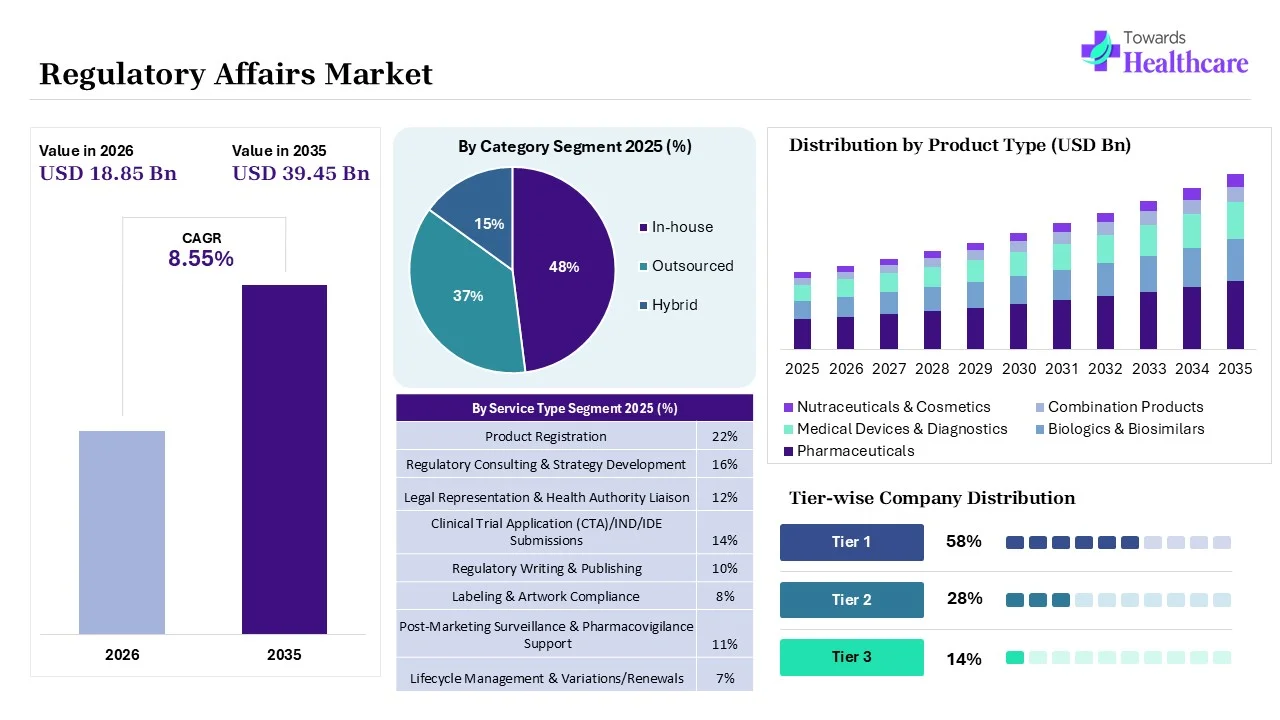
According to Towards Healthcare, the regulatory affairs market is projected to experience significant growth, with estimates suggesting the market size will increase from USD 18.85 billion in 2026 to approximately USD 39.45 billion by 2035. Estimated to grow at a CAGR of 8.55% starting from 2026 to 2035. Regulatory affairs professionals play a significant role in ensuring medical care products are both safe and efficient, while guiding organizations through the complex landscape of regulations imposed by worldwide regulatory authorities. Confirms healthcare products meet legal safety and quality standards. It accelerates market entry, cuts down legal challenges, and protects public health by acting as a bridge between organizations and global health agencies such as the U.S. Food and Drug Administration. Regulatory affairs play an important role in confirming the safety, efficacy, and quality of biopharmaceutical products and medical tools. The significance of regulatory affairs in healthcare research cannot be overstated. These professionals are responsible for confirming that clinical trials adhere to severe regulatory guidelines, which are in place to protect the rights and welfare of research participants.
About CDSCO
The Central Drugs Standard Control Organisation (CDSCO) is India's national regulatory body for cosmetics, biopharmaceuticals and medical devices. It performs a similar function to the Food and Drug Administration (FDA) of the United States or the European Medicines Agency of the European Union. The Indian government has announced its plan to bring all healthcare tools, involving implants and contraceptives, under the review of the Central Drugs and Standard Control Organization (CDSCO). In the CDSCO, the Drug Controller General of India (DCGI) regulates pharmaceuticals and healthcare devices and is positioned in the Ministry of Health and Family Welfare.
A recent report by Towards Healthcare highlights that the Regulatory Affairs Market is growing as regulatory affairs (RA) play a significant role in pharmaceutical organizations, ensuring products meet quality, safety, and efficacy. As the industry grows further, the need for qualified professionals to bridge gaps between organizations and regulators increases. Its professionals play a significant role in the whole lifecycle of a pharmaceutical product, from advancement to post-marketing actions. Regulatory affairs professionals are well-versed in the strategies of different international regulatory bodies. Regulatory affairs in health is a significant field that ensures the safety, effectiveness, and quality of medical care products, such as pharmaceuticals and medical tools, by compliance with government regulations and values.