



China Establishes an International AI Governance Framework as Xi Jinping focuses on Challenging US Tech Dominance from Beijing
Published: 21 Jul 2026
Author: Gautam Mahajan



On July 19, 2026, China set up a global AI governance organization to challenge U.S. tech leadership to reshape the field of artificial intelligence solution. This framework focus on shape international standards, policies, digital authority, global cooperation, and technology dominance.
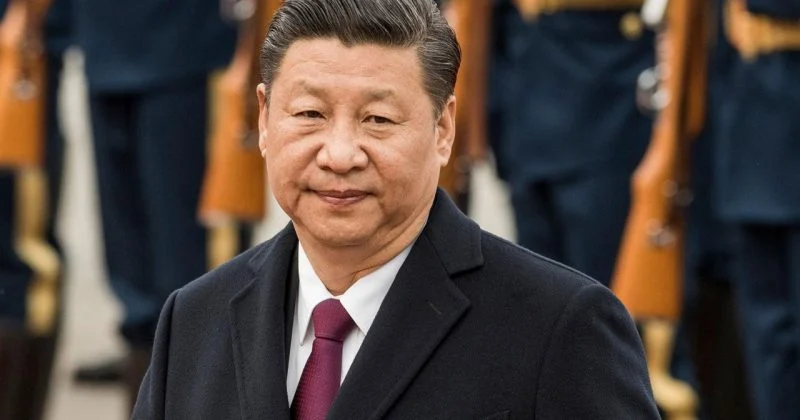
China has established a global AI governance organization under the control of President Xi Jinping, with the target of creating an inclusive, rules-based international framework for AI that promotes safety, innovation, and ethical standards. The organization seeks to set standards, encourage cross-border research, and sponsor responsible AI use, especially for developing countries, to benefit from AI growth without dependence on large technology. It responds to the intense US-China tech rivalry, as both nations investing increasingly in AI infrastructure.
This move expands China's influence in cybersecurity, digital infrastructure, and emerging technologies, with international standards crucial for addressing issues such as privacy and misinformation. Responses are diversified; nations may welcome multilateral AI cooperation, while others view it as geopolitical rivalry. The outcome will influence global AI regulations, ethics, and future developments affecting governments, industries, and innovation worldwide.
Impact on Artificial Intelligence (AI) Industry
The global artificial intelligence (AI) market size was USD 757.58 billion in 2025, calculated at USD 900.00 billion in 2026, and is expected to reach around USD 4,216.29 billion by 2035, expanding at a CAGR of 18.73% from 2026 to 2035.
According to Precedence Research, China's strategy for a global AI governance framework could transform the AI and digital sectors, leading to new compliance requirements and potentially shifting standards as more countries adopt it. Startups might find new collaboration opportunities, especially in research and development and infrastructure advancement. This may fuel substantial investments in AI safety, transparency, cybersecurity, and responsible AI, prompting companies to increase expenses on governance tools and audits.
Companies that adapt quickly to regulatory changes could gain a competitive advantage, creating new opportunities for integrating artificial intelligence into domestic industries. The various regional standards could complicate operations for multinational firms, requiring province-specific compliance strategies and local data centers. China's effort might also stimulate global investment in AI investigation and infrastructure.
Impact on Semiconductor & Electronics Industry
The global semiconductor market size was estimated at USD 627.76 billion in 2025 and is predicted to increase from USD 676.06 billion in 2026 to approximately USD 1,277.45 billion by 2035, expanding at a CAGR of 7.36% from 2026 to 2035.
According to Precedence Research, the semiconductor industry may face long-term impacts and see demand for specialized semiconductors accelerate due to China's AI policies. The China-U.S. competitiveness might lead to export controls and restrictions, fragmenting the global supply chain. AI depends on advanced chips, processors, memory, networking gear, and data infrastructure. Companies with resilient supply chains will better adapt to market shifts.
China's efforts to foster global AI cooperation could enhance investments in AI infrastructure and support local semiconductor companies, reducing reliance on foreign technology. Innovation, supply chain resilience, international cooperation, and adaptive regulation will be key to future industry competitiveness. Additionally, AI adoption will sustain long-term growth in semiconductor manufacturing, packaging, and design software.
Impact on Generative AI in Financial Services Industry
The global generative AI in financial services market size is calculated at USD 1.95 billion in 2025 and is predicted to increase from USD 2.51 billion in 2026 to approximately USD 17.88 billion by 2035, expanding at a CAGR of 24.81% from 2026 to 2035.
According to Precedence Research, China's plan to establish a global AI governance body could impact financial markets, investments, and digital services. Investors watch generative AI policy shifts, as clear regulations guide digital investments. Venture capital could grow in AI governance, cybersecurity, and risk management. Good governance reduces reservations in AI, data privacy, and compliance, boosting investments. Financial firms rely on AI for fraud detection, credit checks, trading, risk management, customer support, and compliance.
International standards may push banks, insurers, and asset managers to enhance oversight, validate models, and strengthen cybersecurity. Investment trends may shift with updates to AI regulation. Companies with strong compliance, transparency, and international presence might attract more investors. Financial firms must navigate diverse regulations while staying efficient. The demand for AI infrastructure, especially generative AI, cloud, manufacturing, renewable energy, and connectivity, is creating new project finance opportunities. Overall, the financial sector will play a key role in supporting AI progress and adapting to global standards.
Expert Opinion
According to experts, China's move to establish a global AI governance body aims to shape international rules for transformative technology, emphasizing AI's role in digital policy, economic competitiveness, and global teamwork. International efforts could promote dialogue on AI safety, transparency, and data management. As AI integrates into key sectors, governance will affect its development, deployment, and monitoring worldwide.
The growing importance of global AI governance in shaping future technology and economic landscapes. Businesses should invest early in responsible AI and stay up to date on standards and data rules to remain competitive. Investors should see this as part of a broader shift in which AI governance will impact investments, infrastructure, and innovation over the next decade. China's success depends on global participation, the implementation of standards, and cooperation among diverse systems.