



Crude Oil Prices Anticipated to Stay Increased Amid Strait of Hormuz Disruptions
Published: 01 Sep 2026
Author: Vidyesh Swar



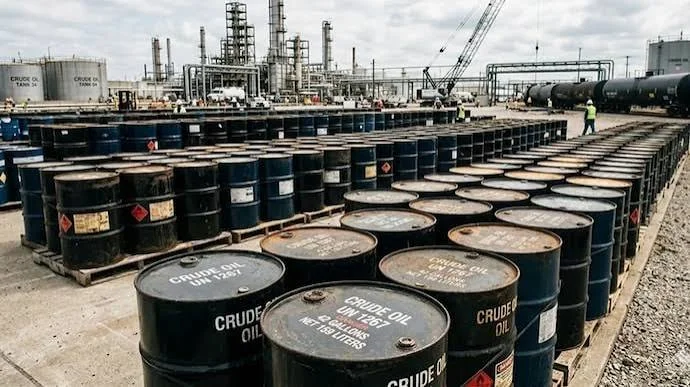
In August 2026, Crude oil prices are anticipated to remain elevated in the near term due to disruptions in the Strait of Hormuz, which have resulted in a significant reduction in global inventories. This assertion is supported by a report from the United States Energy Information Administration (EIA) and analysts at Rabobank International. The EIA projects that Brent crude will average approximately $85 per barrel in the third quarter of 2026, reflecting an increase of $11 from its prior estimate. Global oil inventories experienced a decline of an average of 4.2 million barrels per day during the second quarter of 2026, with an additional drawdown of 3.8 million barrels per day expected in the third quarter. The agency forecasts that prices will moderate as traffic through the Strait of Hormuz gradually recovers and previously halted production resumes.
For the fourth quarter of 2026, Brent is projected to average $78 per barrel, with a further decrease to $69 per barrel anticipated in 2027 as inventories are rebuilt. Since the onset of the conflict in West Asia earlier in 2026, Brent prices surged from approximately $70 per barrel to a peak exceeding $120, before subsiding to pre-conflict levels as tensions between the United States and Iran began to ease. Nonetheless, a stalemate concerning the Strait of Hormuz has led to a resurgence in prices, currently standing at $86 per barrel. Rabobank adopts a more optimistic outlook, raising its Brent forecast to $90 per barrel for both the third and fourth quarters of 2026, an increase from earlier estimates of $88 and $86, respectively. The forecast for 2027 has been adjusted to $86 per barrel, while the estimate for 2028 stands at $79 per barrel.
Analysts Joe DeLaura and Florence Schmit noted that August has ushered in a new equilibrium characterized by economic sanctions and low-intensity conflict between the United States and Iran, yet they observe minimal progress toward resolving broader geopolitical tensions. They do not foresee a short-term agreement to reopen the Strait of Hormuz for commercial shipping, given the limited common ground between the United States and Iran.
Rabobank predicts that Brent prices will remain volatile, with a lower support zone of $70 to $75 per barrel and an upper range of $95 to $100. Renewed disruptions to oil flows through the Strait of Hormuz or the Bab el-Mandab strait could elevate prices beyond $100 per barrel. The immediate trajectory of prices will likely depend on developments surrounding key shipping routes and the pace of restoring disrupted oil production and flows.
Impact on the Specialty Chemicals Market
The global specialty chemicals market size is valued at USD 940.72 billion in 2025 and is predicted to increase from USD 978.79 billion in 2026 to approximately USD 1,377.32 billion by 2035, expanding at a CAGR of 3.54% from 2026 to 2035.
According to precedence research, fluctuations in crude oil prices exert a direct and often immediate impact on the cost structures and profitability of chemical companies, as many chemicals are derived from petroleum-based feedstocks. Crude oil serves as more than merely a fuel source; through refining, it is converted into naphtha, ethane, propane, and other petrochemical building blocks, which are essential for the production of polymers, plastics, fertilizers, synthetic fibers, solvents, and various specialty chemicals. When crude oil prices rise, the costs of feedstocks increase, thereby compressing margins for chemical manufacturers. In contrast, declining crude prices can enhance profitability, provided that pricing, demand, and currency factors remain favorable.
Impact on the Petrochemical Market
The global petrochemical market size was calculated at USD 700.10 billion in 2025 and is predicted to increase from USD 743.50 billion in 2026 to approximately USD 1,257.50 billion by 2035, expanding at a CAGR of 6.03% from 2026 to 2035.
According to precedence research, rising oil prices result in a cascading effect on the production costs of chemicals and petrochemicals, contributing to increased inflation. Such inflation leads to elevated prices for consumer products, which consequently reduces consumer spending and slows demand. Geopolitical tensions in the region have caused significant disruptions in petrochemical markets, with 75% to 80% of chemical exports from the Middle East being affected.