



DePuy Synthes to launch new training facility for orthopedic surgeons in Bengaluru
Published: 14 Aug 2026
Author: Deepa Pandey



In August 2026, DePuy Synthes, a global leader in orthopedic technologies and solutions, announced a strategic partnership with Ramaiah Advanced Learning Center (RALC) in Bengaluru to help create a dedicated, first-of-its-kind year-round anatomical bioskills training facility at RALC.
This initiative also aims to improve access to structured, hands-on surgical education for orthopedic surgeons across India, helping them develop and perfect their skills in a controlled environment before clinical application. The new facility is also projected to boost DePuy Synthes’s annual training capacity in India nearly fivefold, from about 30 to over 150 training days, and increase the number of orthopedic surgeons trained each year from 300-plus to over 1,000.
Anatomical bioskills training is essential for helping surgeons strengthen their anatomical understanding and also polish up and refine their techniques in a controlled environment. As India seeks to expand access to high-quality hands-on surgical training, DePuy Synthes and RALC will be establishing a dedicated, year-round facility with five anatomical workstations. Building on their longstanding collaboration, the facility will enable structured training across orthopedic specialties, including trauma, hip and knee reconstruction, robotic-assisted surgery, sports medicine and arthroscopy.
This collaboration also forms part of DePuy Synthes’ broader commitment to strengthening orthopedic education and clinical capability across India and improving the quality of care provided to patients nationwide.
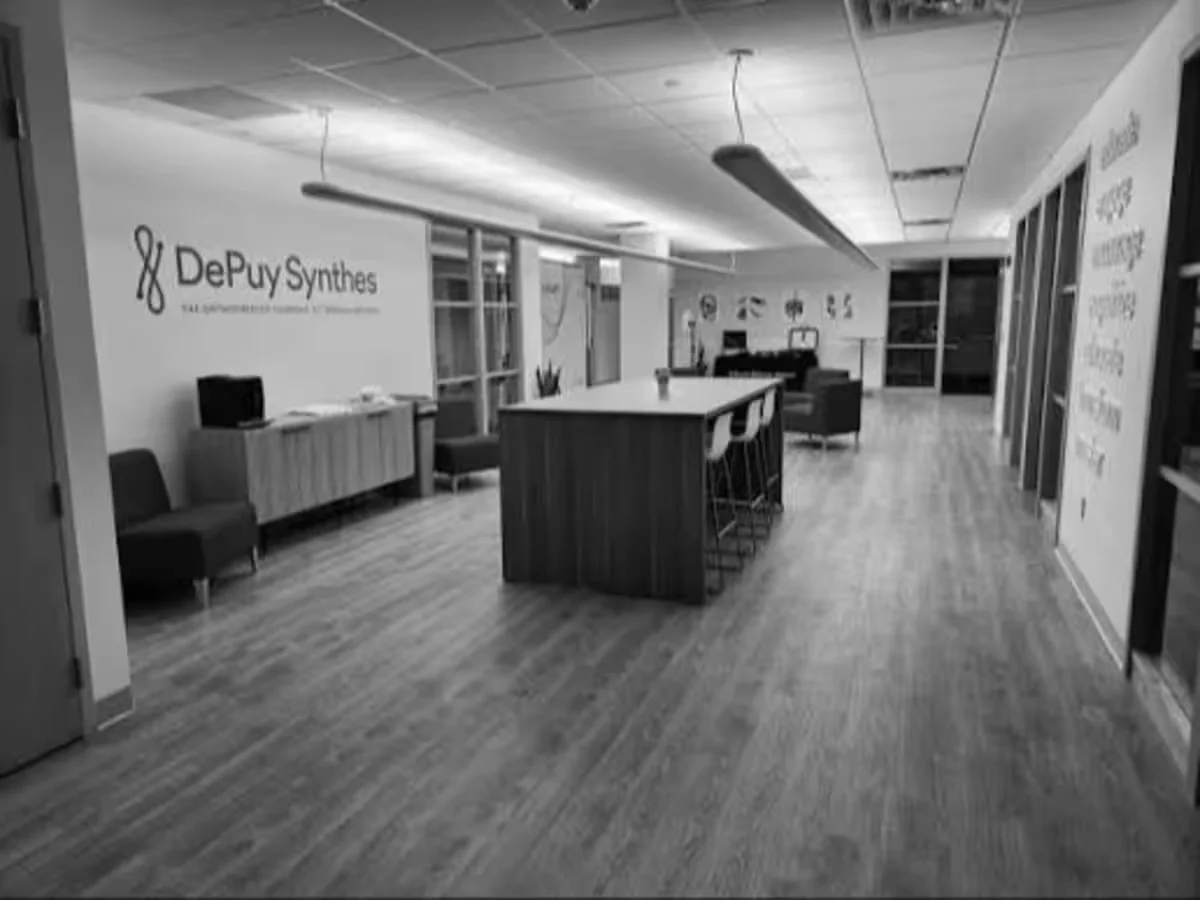
Impact on the Healthcare Market
The proposed center will serve as a global engine for innovation, engineering and enterprise services, bringing together technology, data and business capabilities to support clinical innovation and operational excellence for patients, surgeons and healthcare partners worldwide. The planned workforce will also help to support the center’s technology, engineering, data, AI and enterprise capabilities as it develops its role within DePuy Synthes' global operations.
DePuy Synthes is also currently working towards establishing the GCC, with the initial phase focused on operational activities and recruitment. As the center develops, it is expected to bring together technology, data, and business capabilities supporting the company's global priorities across innovation, engineering, and enterprise services.
Impact on the Healthcare Facilities Management Market
The global healthcare facilities management market size is calculated at USD 368.8 billion in 2025 and is predicted to increase from USD 417.6 billion in 2026 to approximately USD 889.6 billion by 2035, expanding at a CAGR of 9.2% from 2026 to 2035.
According to Precedence Research, energy-fueled building systems and supportive eco-friendly solutions are accelerating in the healthcare sector due to growing utility and energy prices. The specialized, effective facility service deals are elevating the value of the market. Whereas the emerging advancements in healthcare are ultimately paving the way for job opportunities. Patient monitoring systems have been evolving since traditional methods are now being replaced by advanced ones due to tech access. The expansion of outsourcing by clinics and hospitals of non-clinical activities also marks a valuable effort. The unification of AI and IoT is a combatting tech facility empowering the market in many ways. The rising cases of health deterioration are expanding the need for medical facilities in hospitals and clinics.
AI is also seen to be emerging as a formidable force in the healthcare facilities management market. It supports hospitals and clinics in becoming more operationally expeditious around maintaining cleaning, security, energy consumption, and maintenance management. AI systems can analyze the data in real-time and provide suggestions on what to clean, when to clean, when to repair, or when energy can be saved. This allows for reducing wasted energy, saving costs, as well as improving patient safety.
Impact on the Orthopedic Devices Market
The global orthopedic devices market size is calculated at USD 65.79 billion in 2025 and is predicted to increase from USD 68.64 billion in 2026 to approximately USD 100.33 billion by 2035, expanding at a CAGR of 4.31% from 2026 to 2035.
According to Precedence Research, the market is generally driven by the increasing cases of accidents coupled with rising incidences of obese patients globally. Orthopedic devices are medical equipment designed to support, align, and correct musculoskeletal problems such as injuries, degenerative diseases, congenital conditions, and others. High occurrence of orthopedic conditions like degenerative bone disease, plus a growing elderly population and the number of road calamities, are estimated to fuel the growth of the global orthopedic devices market. Furthermore, the early onset of musculoskeletal conditions caused by sedentary lifestyle and obesity is projected to lift the growth of the market. Budding awareness concerning the availability of pioneering products is prompting hospitals to continuously advance their services and devices.
Artificial intelligence (AI) is also helping in transforming the market by analyzing and optimizing, from early diagnostics and 3D preoperative planning to intraoperative robotic assistance and smart implant sensors. AI analyzes complex imaging to precisely identify fractures by creating 3D anatomical models for patient-specific surgical simulations. AI-enhanced wearable sensors also enable highly individualized rehabilitation regimens in postoperative settings as well as in smart implants. Additionally, it provides intraoperative assistance for real-time mechanical precision and optimal implant placements.
Expert Opinion
“This collaboration marks an important step in our commitment to advancing surgical education and strengthening clinical capabilities in India. Access to hands-on training will help build confidence, refine technical skills, and stay abreast of evolving surgical techniques and technologies,” said Vishnu Kalra, International President, DePuy Synthes.