



Europes largest carbon capture facility officially inaugurated at Yara Sluiskil in the Netherlands
Published: 09 Sep 2026
Author: Vidyesh Swar



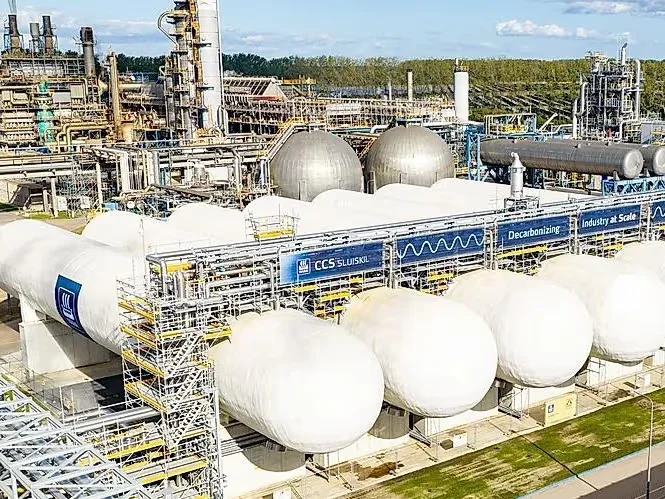
In September 2026, Europe’s largest industrial carbon capture facility was officially opened at Yara’s site in Sluiskil, Netherlands. This milestone marks a significant step in decarbonizing industries and establishing the first integrated cross-border carbon capture and storage (CCS) value chain for capturing, transporting, and permanently sequestering COâ‚‚. The facility demonstrates how large-scale carbon capture helps energy-intensive sectors reduce emissions while maintaining production and boosting Europe’s industrial competitiveness.
Yara Sluiskil, among Europe’s top ammonia and fertilizer plants, can now capture and liquefy up to 800,000 tonnes of COâ‚‚ annually from ammonia production. The liquefied COâ‚‚ will then be shipped to Norway, where the Northern Lights system will securely store it beneath the seabed. This capturing process not only helps Yara avoid carbon costs but, with proper policies, is expected to capture around 12 million tonnes of COâ‚‚ over 15 years, contributing significantly to Europe’s climate goals and industrial transformation.
A notable aspect of the project is its cross-border COâ‚‚ value chain, linking Dutch industrial capture with offshore storage in Norway. This setup showcases how shared infrastructure can facilitate permanent COâ‚‚ storage access across Europe. Furthermore, international cooperation and integrated value chains can speed up the growth of Europe’s new carbon management infrastructure.
Impact on the Chemical Market
A key feature of the project is its cross-border COâ‚‚ value chain. Instead of storing captured carbon at the production site, the project connects industrial COâ‚‚ capture in the Netherlands with permanent offshore storage in Norway. This approach further highlights how shared infrastructure can help enable industrial companies across Europe to access permanent COâ‚‚ storage. Moreover, cooperation across national borders and industrial value chains can accelerate the development of Europe’s emerging carbon management infrastructure.
The project also represents an important milestone for Northern Lights, the COâ‚‚ transport and storage partnership responsible for permanently storing the captured emissions offshore in Norway. The project also provides an important building block for the development of Europe’s wider carbon management market, showing how industry and governments can collaborate to establish the infrastructure required for industrial decarbonization.
Impact on the Carbon Capture and Storage Market
The global carbon capture and storage market size was accounted for USD 8.92 billion in 2025, and is expected to reach around USD 54.73 billion by 2035, expanding at a CAGR of 19.89% from 2026 to 2035.
According to Precedence Research, the increasing pace of industrialization and increased investment in manufacturing facilities are the main factors driving the worldwide market for carbon capture and storage. Additionally, during the projection period, the demand for carbon capture and storage will be supported by a number of government initiatives to reduce greenhouse gas emissions in several industries. Additionally, when the equipment is operating, better oilfield recovery plans emit carbon dioxide. Additionally, rising energy needs and massive investment in the upstream and downstream sectors would enhance the market outlook for carbon capture and storage.
Furthermore, management and societal worries about increasing CO2 emissions and rising energy needs are ultimately what are driving the market for carbon capture and storage.
The market is further being driven by a high demand for energy, including gasoline, electricity, and natural gas, and by the growing world population for heating, cooking, and transportation. The increasing energy consumption is caused by a high environmental cost in the form of carbon dioxide emissions. Industries work toward a sustainable energy future by investing in renewable energy, embracing carbon capture technologies, and exploring natural solutions.
Impact on the Carbon Dioxide Utilization Market
The global carbon dioxide utilization market size is estimated at USD 5.90 billion in 2025 and is anticipated to reach around USD 20.32 billion by 2035, expanding at a CAGR of 13.42% from 2026 to 2035.
According to Precedence Research, the market faces a range of technical, regulatory, and economic challenges that must be addressed for the technologies to benefit the environment. The carbon dioxide utilization pathways are more expensive than the fossil fuel-based counterparts. The carbon dioxide utilization pathways need high energy, and it is able to deliver lower yields. Many major market players across the globe are developing technologies to improve the energy efficiency of the carbon dioxide conversion process, which will help in reducing the cost.
The rapidly growing startup ecosystem was created by innovators developing electrofuels, algae-based CO2 conversion technologies, and catalytic mineralization. Because of both the growing importance of Environmental, Social, and Governance (ESG) factors as well as the anticipated long-term revenue potential of carbon capture technology, a large number of investors have entered the carbon capture space rapidly through venture capital and private equity investment in companies that are developing CO2-derived fuels, plastics, and concrete. Additionally, many large institutional investors have greatly increased their investments in both cleantech and carbon utilization companies.
Expert Opinion
“This is an important day for Yara and for European industry. The carbon capture facility in Sluiskil proves that large-scale industrial decarbonization is possible today. As global competition intensifies, Europe must find ways to cut emissions while keeping industry, jobs and critical value chains in Europe. That is exactly what this project is about,” says Svein Tore Holsether, President and CEO of Yara International.