



GET H2 Nukleus Delivers First Hydrogen from Lingen to Marl
Published: 11 Aug 2026
Author: Vidyesh Swar



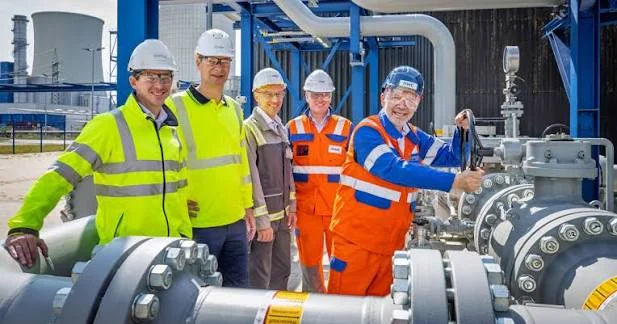
In August 2026, the GET H2 Nukleus hydrogen project became the first hydrogen that was produced through electrolysis in Lingen, Lower Saxony. The delivery demonstrates that hydrogen production, transport infrastructure, and industrial consumption can all operate together as an integrated system.
As part of the ongoing commissioning of two 100-megawatt (MW) electrolysis plants operated by RWE in Lingen, the facilities produced initial quantities of renewable hydrogen that are in line with European Union requirements. The hydrogen travels through a pipeline network spanning approximately 120 kilometers. Transmission system operators Nowega and OGE, along with SYNEQT, an Evonik subsidiary, are operating on key parts of the infrastructure. The network also transports the hydrogen to Evonik’s Marl Chemical Park, where industries can use it directly in production processes.
RWE Generation SE CEO Nikolaus Valerius also highlighted the successful connection between renewable hydrogen production, transport infrastructure, and industrial demand. RWE plans to commission 200 MW of electrolysis capacity in Lingen by the end of 2026. Subsequently, the company expects the entire facility to reach 300 MW capacity from 2027. The hydrogen produced at RWE’s electrolysis facilities complies with EU requirements for Renewable Fuels of Non-Biological Origin (RFNBO). Customers will also receive sustainability certification, allowing them to include renewable hydrogen in their decarbonization accounting.
Impact on the Chemical Market
The first renewable hydrogen delivery from Lingen to Marl highlights the growing integration of electrolysis, hydrogen pipelines, storage, and industrial demand. With additional electrolyzers, pipelines, and storage facilities progressing, GET H2 Nukleus is helping establish the infrastructure needed to scale renewable hydrogen use across Germany.
As for the chemical industry in particular, the project could provide an important pathway towards industrial decarbonization, while simultaneously supporting the development of a broader hydrogen economy.
Impact on the Hydrogen Generation Market
The global hydrogen generation market size is calculated at USD 163.5 billion in 2025 and is predicted to increase from USD 172.5 billion in 2026 to approximately USD 285.3 billion by 2035, poised to grow at a noteworthy compound annual growth rate (CAGR) of 5.73% from 2026 to 2035.
According to Precedence Research, the market is growing due to the rising global warming issues, combined with deteriorating climatic and environmental conditions from pollution, which have necessitated the development and adoption of clean and green energy. Rising government initiatives to reduce carbon footprint are encouraging the production and consumption of hydrogen, thereby boosting the hydrogen generation market across the globe. Manufacturing companies are adopting strategic collaboration and agreements to manufacture hydrogen energy, using zero-emission technology to reduce carbon footprint. These strategies are expected to offer new growth opportunities in the future and boost the growth of the global market.
Investment in hydrogen production is rapidly growing, supported by private equity funds and sovereign climate-focused vehicles. Large-scale manufacturing and storage of electrolysis are being financed by BlackRock, Brookfield Renewable, and Carlyle. Oil and gas giants and they are adding hydrogen to their portfolios as a replacement for fossil fuels, further using carbon credits and government incentives.
Impact on the Hydrogen Infrastructure Market
The global hydrogen infrastructure market size is accounted at USD 6.52 billion in 2025 and predicted to increase from USD 7.17 billion in 2026 to approximately USD 16.69 billion by 2035, representing a CAGR of 9.86% from 2026 to 2035.
According to Precedence Research, the market is driven by the global commitment to net-zero emissions targets, along with supportive government policies. The market for hydrogen infrastructure has expanded as a result of the growing attention being paid to lowering greenhouse gas emissions and switching to a low-carbon economy. The expansion of renewable energy sources like solar and wind has made room for the construction of hydrogen infrastructure. Governments all across the world are putting supportive laws into place and offering rewards to encourage the construction of hydrogen infrastructure.
Environmental concerns have also been a major driver of the enormous increase in the demand for hydrogen infrastructure in recent years. The need to lessen greenhouse gas emissions and fight climate change is one of the major environmental issues that has gained attention recently. Due to the fact that using hydrogen as a fuel produces no hazardous pollutants, including carbon dioxide, it is regarded as a clean and sustainable energy source. This has further led authorities and businesses to investigate hydrogen as a potential replacement for fossil fuels in a variety of fields, including transportation, energy production, and industrial processes.
Expert Opinion
According to Frank Heunemann, Managing Director of Nowega, early engagement with customers and joint project development helped establish the foundations for the new hydrogen system. The partners are now moving from project development into practical operation, where the individual components can work together under real-world conditions. The companies had already gained experience through the GET H2 TransHyDE research project. They can now build on that knowledge by operating the complete hydrogen system under actual industrial conditions.