



KT Launches Sovereign AI Server with South Korean AI Chip and In-House LLM
Published: 20 Aug 2026
Author: Gautam mahajan



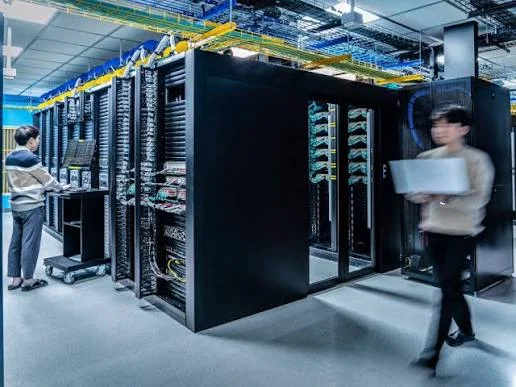
KT has introduced the "KT NPU LLM Station," a corporate AI appliance that integrates an operational API platform, an internal large language model (LLM), and an artificial intelligence semiconductor developed in South Korea into a single server. By combining KT's Mi K 2.5 Pro LLM with Rebellions' ATOM-MAX neural processing unit (NPU), the solution allows businesses to handle data management and AI processing completely on-site.
The startup is focusing on sectors where the need for network segregation and data protection may make it challenging for foreign cloud-based generative AI to be used. These include financial services, manufacturing, pharmaceuticals, public sector, and defense. The platform is intended to enable a more controlled approach to enterprise AI deployment by retaining both data and AI computation within client facilities.
Impact on the AI Industry
KT’s launch reflects the increasing movement toward sovereign and private AI infrastructure. Instead of relying completely on overseas cloud providers and internationally sourced computing hardware, enterprises can deploy a locally developed combination of AI hardware, software, and models within their own facilities.
Interest in specialized AI inference processors may rise as a result of the advancement. According to KT, certified testing of the ATOM-MAX NPU, which was created especially for AI inference workloads, revealed improvements in processing speed and power efficiency when compared to similar GPUs. This demonstrates the increasing efforts made by semiconductor makers to create supplements and alternatives to the conventional GPU-based AI infrastructure.
Integrating hardware and software into a single appliance is another crucial component. Businesses don't always need to create an operational platform, choose a suitable model, and construct an AI server independently. KT is trying to simplify the process of transferring AI projects from testing to manufacturing by integrating these components.
The built-in RAG capability could further support enterprise adoption. Businesses can connect their internal documents with the AI system and use them for organization-specific question answering and information retrieval. This could make private AI infrastructure more useful for companies that need generative AI while maintaining strict control over corporate data.
Impact on Enterprise AI Market
Particularly in sectors where data migration to public cloud platforms is difficult, the KT NPU LLM Station may help meet the increasing need for on-premises enterprise AI solutions. Data sovereignty and security requirements may have an impact on technology purchasing decisions in the financial services, government, defense, pharmaceutical, and manufacturing sectors.
KT is trying to lower the technical effort needed for deployment by offering hardware, an LLM, and an AI platform as a single integrated package. This strategy might help businesses that wish to implement AI but might lack the resources or specialized knowledge needed to build a whole private AI environment on their own.
KT also plans to expand the platform with additional AI agents. Planned applications include automated meeting-minute creation, coding support, and business-process automation, including an agent tentatively called K-Claw. The company also intends to work with specialized AI-agent developers to create solutions tailored to individual customer requirements.
Over time, KT expects the technology to move beyond conventional enterprise AI applications. The company plans to explore its use as an edge data center for physical AI, emphasizing low-power and low-latency computing. This could open applications in industrial environments where AI needs to operate closer to machines, equipment, and other physical systems
Impact on AI Semiconductor and Infrastructure Market
The launch provides another commercial application for South Korea’s developing AI semiconductor ecosystem. By incorporating Rebellions’ ATOM-MAX NPU into an enterprise-ready AI server, KT is demonstrating how domestic AI chips can be combined with locally developed software and models to create a complete AI infrastructure
More investment in specialized AI accelerators may result from this, especially for inference workloads where deployment flexibility, processing speed, and energy efficiency are crucial. The need for effective inference infrastructure may rise as AI shifts from building big models to continually executing AI applications in organizations.
Businesses engaged in AI servers, semiconductor technologies, enterprise software, edge computing, data-center infrastructure, and AI application development may also benefit from the advancement. As companies search for alternatives to traditional cloud-based AI deployments, a larger ecosystem centered around locally controlled AI infrastructure may develop.
KT’s approach also demonstrates how telecom companies are expanding beyond connectivity into AI infrastructure and enterprise AI transformation. The combination of domestic semiconductor technology, an in-house LLM, and an integrated deployment platform positions the company to participate across several layers of the AI value chain.
About KT
KT Corporation is a South Korean telecommunications and technology company that has been expanding its activities into artificial intelligence and enterprise digital transformation. With the KT NPU LLM Station, the company is combining its AI capabilities with domestically developed semiconductor technology to provide organizations with an integrated private AI infrastructure option.
The company’s latest offering combines Rebellions’ ATOM-MAX NPU, KT’s Mi K 2.5 Pro LLM, and an operational API platform within a single server. The system is designed to keep AI computation and data processing within the customer’s premises, supporting organizations that prioritize security and data sovereignty.
KT plans to build on the platform by introducing additional AI agents, customized enterprise implementations, and edge-computing applications. The broader strategy indicates the company’s ambition to make AI infrastructure more accessible for industrial and enterprise environments while supporting the development of South Korea’s domestic AI technology ecosystem.