



LONGER Launches Global Pre-orders for ePrint, Improving Desktop UV Printing with Authentic 3D Texture Technology
Published: 11 Aug 2026
Author: Gautam mahajan



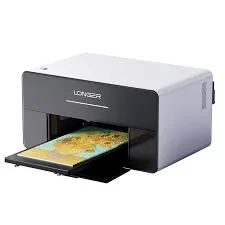
August 7, 2026, LONGER has now opened pre-orders for its ePrint desktop UV printer, which provides advanced 3D texture printing to improve digital manufacturing. The printer was announced as part of a digital transformation and features high-resolution UV printing, decoration, tactile effects, bright colors, white ink, varnish, and a range of finishes. With its dual printhead and 12-channel ink system, the printer is intended to increase productivity and allow for detailed printing. It is designed to be a flexible platform and can work with over 300 materials, including acrylic, wood, glass, metal, leather, ceramic, plastic, canvas, film, and textile infrastructure.
The ePrint reflects the industry trend towards faster, more versatile digital tools accessible to creators and businesses worldwide.LONGER states that the ePrint achieves printing speeds that are considerably faster than comparable single-head UV printers, with a maximum resolution of 1440 DPI. It supports a variety of workflows, making it suitable for use in custom products, branding, packaging, prototyping, and digital fabrication. For businesses involved in custom products, the ePrint offers tactile personalization, raised graphics, textured artwork, and high-end finishes in a desktop setup. AI functions help with design, pattern recognition, and workflow automation. Companies in the packaging and brand sectors can use dimensional effects to distinguish their products, and makers can combine UV textures with 3D printing.
Impact on the 3D Printing Sector
The global 3D printing market size was estimated at USD 29.29 billion in 2025 and is predicted to increase from USD 34.85 billion in 2026 to approximately USD 152.72 billion by 2035, expanding at a CAGR of 17.96% from 2026 to 2035.
According to Precedence Research, desktop UV printing enables entrepreneurs to personalize items includes phone cases, signage, gifts, and displays. LONGER ePrint is in the custom printing and personalized products segment, since these businesses emphasize differentiation, short-run sizes, and quick turnaround times. Raised textures can be used to achieve embossed branding, dimensional artwork, and textured accents, enabling small businesses to create sophisticated products without outsourcing. Faster printing speeds lead to superior efficiency; the ability to work with a variety of materials enables a broader product range and reduces the need for extensive infrastructure.
This technology benefits online retailers, gift makers, event merchandise providers, promotional companies, and designers. Success in this area relies on reliability, ink consumption, maintenance, compatibility with different substrates, durability, and cost. Should it be possible to produce high-quality, fast, and affordable textured effects, tactile personalization could become accessible to a wider range of people. Broadly speaking, this development marks a transition in personalization, allowing small manufacturers to compete with bigger companies by offering customized and textured products in small quantities.
Impact on the Advanced Packaging Sector
The global advanced packaging market size is valued at USD 39.60 billion in 2025 and is predicted to increase from USD 42.96 billion in 2026 to approximately USD 88.63 billion by 2035, expanding at a CAGR of 8.39% from 2026 to 2035.
According to Precedence Research, with desktop UV printing, small brands and packaging sector can quickly produce prototypes and samples themselves, thereby speeding up product testing. LONGER ePrint improves packaging, branding, and decoration through 3D-texture technology, enabling raised lettering, logos, and patterns on promotional items and prototypes. The technology is suitable for a variety of materials and can be applied in numerous areas such as consumer packaging, luxury goods, and electronics.
The greatest effect will be seen in secondary packaging and branded items, which provide value. When using it, users should take into account factors such as durability, adhesion, curing, and regulations, particularly those related to food contact. If the technology proves to be reliable, it could make it easier to incorporate traditional textures into digital design and, as a result, reduce the need for expensive industrial processes.
Expert Opinion
As per an expert's point of view, the longer pre-order of LONGER's global ePrint pre-order represents a significant advancement in desktop UV printing by bringing professional quality across creators, entrepreneurs, and small businesses. If it proves reliable, it could alter how small manufacturers select their equipment by promoting all-in-one systems. The product's main advantage lies in its ability to combine dual-printhead productivity, texture generation, multiple ink channels, by ensuring material compatibility, and multifunctionality within a compact system.
Problems still remain regarding cost, ink consumption, maintenance, durability, curing, substrate preparation, speed, and success rates. It is important to educate users about layer management, artwork, texture, material, and curing tasks that can be assisted by AI. I am cautiously optimistic, since the ePrint brings together functions that would normally require separate workflows. The system operates reliably, and tactile UV printing could become popular, signifying a move from simple visuals to integrated color, texture, and personalization.