



MASC Introduces Pilot Project for Satellite Technology-based Forage Insurance
Published: 10 Aug 2026
Author: Gautam Mahajan



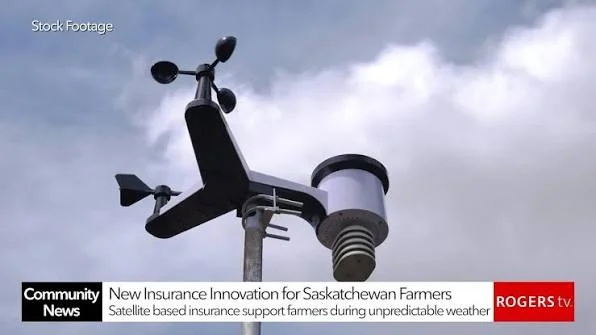
In August 2026, the federal and provincial governments in Canada will introduce a pilot project that will involve the use of satellite technology for the forage insurance program. This program would be governed by the Manitoba Agricultural Services Corporation (MASC). This technology will speed up the processing of claims and insurance payouts for forage producers.
According to David Van Deynze, Chief Product Officer at MASC, the corporation wants to decrease the duration for which a farmer has to wait who has applied for an insurance claim due to bad produce. They will use satellite-based monitoring to check the levels of moisture in the soil to check if it was a good produce season or a bad one. This pilot project will involve the participation of around 50 farmers in the Southeast in this growing season.
Van Deynze said that this project has a small number of farmers as participants and that the corporation will share the soil moisture data with them and ask for their opinion. This will help them know the accuracy of the satellite measurements and also to build trust with farmers about the legitimacy of this method to check if an insurance claim is eligible for payout or not.
Agriinsurance is a program meant to assist farmers in managing production and losses. The contributors to this program are the federal government, the provincial government, and producers. Government of Canada and the Government of Manitoba support this project under the Sustainable Canadian Agricultural Partnership. The forage insurance program falls under the Agriinsurance portfolio by MASC, which offers reliable protection for protection from drought, too much moisture in the soil, and other natural calamities.
Impact on the Information Communication Technology
According to Precedence Research, the launch of the pilot project is expected to positively impact the information communication technology market. This is due to the fact that it involves the usage of sensors, satellites, electronic systems, and computing servers to allow satellites to monitor soil moisture levels. Such a program will result in the adoption of digital technologies in the farming sector, which has been largely underserved in terms of modern systems.
Global warming, frequent forest fires, and erratic rain patterns have disrupted farming operations in many countries, resulting in an increase in the number of insurance claims. Satellite technology is expected to be widely adopted as it speeds up the approval process to allow farmers to get their insurance payouts in a lesser amount of time than conventional approval methods.
Impact on the Satellite Market
The global satellite market size was estimated at USD 362.28 billion in 2025 and is predicted to increase from USD 391.99 billion in 2026 to approximately USD 780.24 billion by 2035, expanding at a CAGR of 7.97% from 2026 to 2035.
According to Precedence Research, the introduction of the pilot program by MASC is expected to benefit the satellite market. This is owing to the fact that there is a significant demand among farmers across the globe for faster insurance processing. If this pilot program yields positive results, then this technology is expected to be adopted across the world.
This will increase the demand for satellites and related equipment to facilitate soil moisture monitoring. The adoption of this technology will also help governments to move closer to their future sustainability goals, as it will result in a drastic reduction in the usage of paper as the paper-based document approval process gets digitized.
Impact on the Internet of Things (IoT) in Agriculture Market
The global internet of things (IoT) in agriculture market size is calculated at USD 17.78 billion in 2025 and is predicted to increase from USD 19.47 billion in 2026 to approximately USD 41.29 billion by 2035, expanding at a CAGR of 8.79% from 2026 to 2035.
According to Precedence Research, the launch of the pilot project is expected to positively impact the internet of things (IoT) in agriculture market. IoT is used to establish a connection between digital systems and electronic systems. It is a vital component for this project to allow sensors to send data to the digital systems on Earth, which then relay the information to satellites. This will lead to increased demand for IoT systems as the adoption of the satellite-based monitoring grows if the pilot program gets positive results.
About Manitoba Agricultural Services Corporation
Manitoba Agricultural Services Corporation (MASC) promotes and contributes towards sustainability, development, and diversification of agriculture and rural economy of Manitoba, Canada. The corporation assists farmers in Manitoba by offering innovative insurance, specialized loans, and agricultural services.
MASC has 12 service centers in the province of Manitoba, which are supported by part-time adjusters, as well as full-time employees including insurance experts, loan experts, governance staff, scientists, programmers, and analysts. This corporation has become a reliable partner to the agriculture industry of Manitoba.