



NVIDIA Introduces Cosmos 3 to Accelerate the Next Generation of Physical AI
Published: 17 Jul 2026
Author: Gautam mahajan



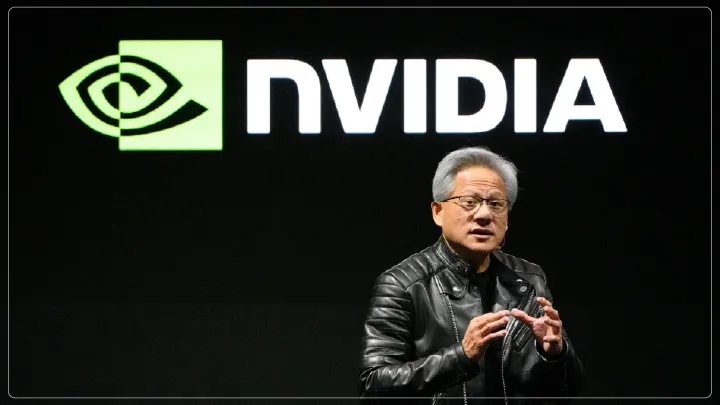
In June 2026, NVIDIA introduced Cosmos 3, a new open foundation approach intended to speed up the creation of tangible applications of artificial intelligence. The approach is designed to assist developers in building intelligent systems that can more successfully comprehend reason and engage with the physical world. Cosmos 3 is specifically designed for applications like robotics, autonomous cars, industrial automation, and smart devices in contrast to traditional AI models that mostly concentrate on producing text or images. NVIDIA hopes to streamline AI development, shorten deployment times, and promote more widespread innovation in physical AI technologies across industries by making the model publicly available.
By processing numerous forms of information at once, such as visual data, language, motion, and contextual context, Cosmo 3 enables AI systems to comprehend real-world surroundings. This multimodal capacity enables intelligent robots to identify objects, decipher changing environments, forecast future events, and decide on the best course of action before executing it. The capacity to integrate perception, reasoning, and decision-making into a single AI model is anticipated to greatly enhance the performance of physical AI systems as enterprises invest more in autonomous technology.
Reducing the difficulties in robot and autonomous machine training is one of Cosmos 3's main objectives. Traditionally, creating physical AI applications has required a great deal of real-world testing, which is frequently expensive, time-consuming, and challenging to scale. To overcome this difficulty. Cosmos 3 enables developers to train and assess AI models in incredibly lifelike virtual environments before implementing them in actual situations. This simulation-first strategy lowers operating costs, increases system accuracy, reduces development risks, and speeds up product commercialization.
The platform was created to assist numerous sectors that depend on intelligent automation. Cosmo’s 3 can be used by manufacturers to increase robotic production systems, logistics firms to maximize warehouse automation, healthcare providers to create intelligent medical robots, and automakers to improve autonomous driving technology. The concept is appropriate for companies looking to incorporate AI into intricate physical operations since it can enable advanced research applications, industrial inspections, agricultural automation, and smart city infrastructure.
Cosmos 3’s capacity for sophisticated reasoning and action planning is another significant feature. AI systems based on the concept can analyze many scenarios, assess potential outcomes, and figure out the best course of action before execution rather than only reacting to instant inputs. This capability makes it possible for autonomous systems and robots to operate in unexpected circumstances where accuracy and safety are crucial while making more dependable decisions.
Additionally, NVIDIA created Cosmos 3 as an open foundation model to promote cooperation between businesses, researchers, and developers. Instead of creating a physical AI foundation model from scratch, organizations can tailor, improve, and optimize the model to their own business needs. It is anticipated that this open development strategy will spur innovation and increase access to cutting-edge AI capabilities for businesses creating next-generation autonomous systems.
By facilitating large-scale simulation and the creation of synthetic data, the approach also advanced AI development. AI systems can experience thousands of operational circumstances before being deployed thanks to developers' ability to design incredibly realistic virtual scenarios. This increases the resilience and dependability of AI models created for physical contexts while lowering reliance on manually gathered real-world facts.
NVIDIA's long-term goal of creating an integrated ecosystem for physical AI is reflected in the release of Cosmos 3. When combined with the company's AI infrastructure, robotics technologies, simulation software, and accelerated computing platforms, Cosmos 3 gives developers a complete basis for building intelligent machines that can effectively and safely interact with the real world. Open foundation models like Cosmos 3 are anticipated to play a significant role in speeding innovation and spreading the use of physical AI across global industries as demand for robots, driverless vehicles, and industrial AI continues to rise.
Impact on the Information and Communication Technology (ICT) Market
According to Precedence Research, the market for information and communication technology is changing quickly as more businesses incorporate artificial intelligence into cloud infrastructure, edge computing, intelligent automation, and connected equipment. The introduction of Cosmos 3 by NVIDIA demonstrates the increasing need for AI foundation models that can support real-time observation, reasoning, and decision-making in physical AI applications. Cosmos 3 is anticipated to boost the adoption of cutting-edge AI technologies and drive innovation throughout the ICT ecosystem by empowering developers to create intelligent robots that can comprehend and interact with real-world surroundings.
The need for scalable AI platforms that can support multimodal intelligence is anticipated to develop dramatically as businesses continue to invest in robotic autonomous systems, industrial automation, and smart infrastructure. By offering an open foundation approach that lowers development complexity and expedites deployment times. Cosmos 3 streamlines the creation of these applications. The long-term expansion of the global ICT industry is expected to be supported by these developments which are expected to stimulate increased investments in AI enabled digital infrastructure intelligent communication systems and next generation computing platforms.
Impact on the Physical Artificial Intelligence (AI) Market
The global artificial intelligence robots market size was estimated at USD 20.51 billion in 2025 and is predicted to increase from USD 24.71 billion in 2026 to approximately USD 144.38 billion by 2035, expanding at a CAGR of 21.55% from 2026 to 2035.
According to Precedence Research, the artificial intelligence robot market is witnessing significant growth as more sectors use sophisticated robotic devices that can carry out complicated jobs more precisely and independently. It is anticipated that NVIDIA Cosmos 3 will support this trend by giving developers access to an open foundation model that will let robots better comprehend their environment, assess environmental conditions, and make well-informed judgments prior to doing tasks. In manufacturing, shipping, healthcare, warehousing, and industry automation, the models' capacity to facilitate multimodal reasoning and simulation-based training is expected to shorten development times while enhancing the efficiency and dependability of AI-powered robots. It is anticipated that these developments would hasten global commercialization and uptake of intelligent robotic systems.
Impact on the Autonomous Vehicle Market
The global autonomous vehicle market size is estimated at USD 273.75 billion in 2025 and is predicted to increase from USD 364.08 billion in 2026 to approximately USD 5,439.46 billion by 2035, expanding at a CAGR of 34.84% from 2026 to 2035.
According to Precedence Research, the autonomous vehicle market keeps expanding as automakers make investments in cutting-edge artificial intelligence systems to enhance perception, navigation, and vehicle decision-making. These developments are supported by NVIDIA’s Cosmos 3, which improves scene perception and action prediction capabilities while allowing developers to train autonomous driving systems in realistic virtual environments. By enabling AI models to assess various driving scenarios before increasing operational dependability, efficiency, and safety. Open foundation models like Cosmos 3 are expected to spur innovation and sustain growth in the global autonomous vehicle industry as businesses continue to build next-generation autonomous mobility solutions.
About NVIDIA
Leading technology business NVIDIA Corporation focuses on high-performance computing systems, graphics processing units, networking, accelerated computing, and artificial intelligence. Cloud computing, enterprise AI, automotive, healthcare, manufacturing, scientific research, and industrial automation all make extensive use of the company's products. NVIDIA keeps making investments in simulation technologies, open foundation models, and next-generation AI infrastructure to hasten the creation of intelligent systems that can function in real-world settings. The company wants to make physical AI development easier while empowering developers and businesses to create safer, smarter, and more competent autonomous devices with technologies like Cosmos 3.