



Redcliffe Labs strengthens integrated diagnostics strategy with acquisition of Megavision Diagnostics
Published: 14 Aug 2026
Author: Deepa Pandey



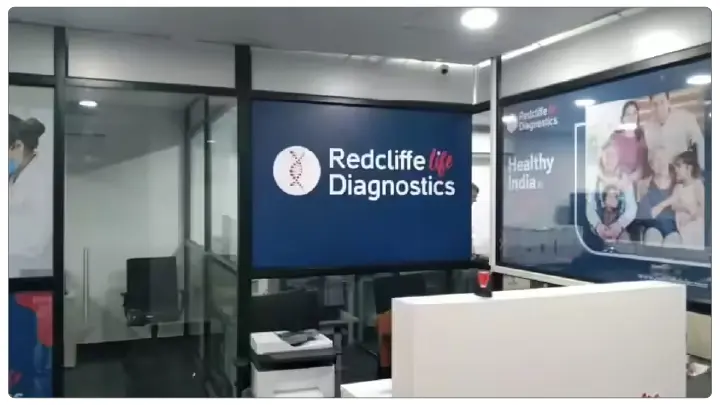
In August 2026, Redcliffe Labs, one of India’s fastest-growing omnichannel diagnostic service providers, announced the acquisition of Pune-based Megavision Diagnostics Center. The acquisition marks another strategic milestone in Redcliffe’s journey towards building an integrated diagnostics platform and strengthening its integrated diagnostics capabilities by bringing advanced imaging and pathology together under one trusted ecosystem.
Megavision Diagnostics adds two MRI-equipped centers in Pune’s Pimpri-Chinchwad, complementing Redcliffe’s established pathology network and enabling patients to access a more comprehensive range of diagnostic services. Having served the region for over two decades, Megavision has earned the trust of patients and clinicians alike through its commitment to clinical excellence and quality imaging services. This acquisition also brings together Megavision’s strong local legacy with Redcliffe’s technology-led diagnostics network, creating a stronger foundation for expanding integrated diagnostic services across Western India. Redcliffe is set to retain Megavision’s entire workforce, ensuring continuity of patient care while further enhancing access to seamless, end-to-end diagnostic solutions.
Founded over two decades ago, Megavision Diagnostics has grown under the leadership of Dr. Kedar Prabhakar Bhate, earning the trust of clinicians and patients alike for its diagnostic imaging expertise. Following the acquisition, Dr. Bhate will continue to lead Megavision Redcliffe Labs, working closely with the Redcliffe Clinical Board to strengthen radiology services and drive the expansion of integrated diagnostics across Pune and the surrounding region.
Impact on the Healthcare Market
The acquisition of Megavision Diagnostics has laid down the foundation for a connected diagnostics ecosystem that helps to bring advanced imaging and pathology together, while also marking the beginning of the company’s long-term strategy to strengthen its presence through strategic partnerships and acquisitions across Western India.
The move also builds on Redcliffe’s strategy of strengthening its diagnostics capabilities through selective partnerships and acquisitions across key markets. Over the past year, the company has expanded its regional presence through the acquisitions of Prime Sonography and Diagnostic Center (Kota) and Sarvodaya Diagnostics (Ajmer), now operating under Redcliffe Medicentre Imaging & Labs. These additions further help in highlighting the company’s long-term strategy of partnering with trusted regional healthcare providers while building a connected diagnostics ecosystem across India.
Impact on the Rapid Diagnostics Market
The global rapid diagnostics market size was estimated at USD 51.12 billion in 2025 and is predicted to increase from USD 61.75 billion in 2026 to approximately USD 322.71 billion by 2035, expanding at a CAGR of 20.23% from 2026 to 2035.
According to Precedence Research, the market for rapid diagnostics is set to pick up speed before long, attributable to the rising need and awareness concerning the fast clinical assessment of constant sicknesses, developing interest for point of care (POC) diagnostics, a high convergence of convenient fast testing gadgets on the market, ascend in the number of irresistible infection cases, and extending geriatric population base.
Cooperative endeavors of the public authority bodies with local specialists also accomplish general control of treatment and management of infectious illnesses, and are supposed to enhance the reception of fast tests.
Impact on the Artificial Intelligence in Diagnostics Market
The global artificial intelligence in diagnostics market size was estimated at USD 1.94 billion in 2025 and is anticipated to reach around USD 11.82 billion by 2035, expanding at a CAGR of 19.81% from 2026 to 2035.
According to Precedence Research, the rising adoption of AI in the diagnostics market is owing to the high precision and improved outcomes provided by the AI tools for patients. The rising awareness and adoption of Artificial Intelligence -based technologies by various governments for advancing diagnostic procedures, precision medicine, and improving patient life outcomes. The development of advanced information systems with the help of cloud computing and AI-integrated tools for storing large datasets, EHRs, and demographic trends is helping to upgrade AI systems to provide accurate results in disease diagnosis as well as disease prognosis. The increased use of digital biomarkers (DBMs) by individuals, patients, and healthcare providers, which are integrated with AI platforms, is helping to improve diagnosis, monitoring, and progression of diseases along with point-of-care testing.
The application of AI tools in diagnostics is assisting in analyzing medical images for examining disease progression, predicting patient outcomes, processing and storing patient data, which includes electronic health records (EHRs), identifying patterns and anomalies in patient data, and symptom checkers for providing potential diagnoses. The advances in digital biomarkers technology, which uses real-time monitoring systems for early disease diagnosis and prediction, have also enhanced AI in the diagnostics market growth.
Expert Opinion
Aditya Kandoi, Founder & CEO, Redcliffe Labs, said,
“Pune has always been one of India’s fastest-growing healthcare markets, with an increasingly aware population seeking quality diagnostics. As we strengthen our presence in the city, integrating Megavision’s radiology expertise with Redcliffe’s pathology network allows us to deliver a more seamless diagnostic experience. We believe the future of diagnostics lies in connected care, where pathology and radiology work together to enable earlier detection, better clinical decisions, and a more proactive approach to preventive healthcare.”