



Sherwin-Williams Introduces Heat-Flex AEB Coating to Inhibit Corrosion Beneath Insulation
Published: 23 Jul 2026
Author: Vidyesh Swar



On 13 July 2026, Sherwin-Williams introduces Heat-Flex AEB Coating to address corrosion beneath insulation and bolster the shield of industrial assets. This launch improves energy efficiency, reduces maintenance costs, enhances workplace safety, extends equipment longevity, and promotes sustainable practices across indispensable process industries.
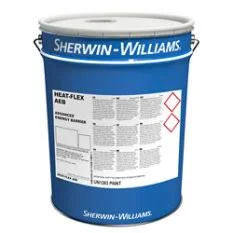
Sherwin-Williams' Heat-Flex® AEB is a thermal insulation coating that helps prevent corrosion under insulation (CUI), a mutual industrial problem. CUI occurs when moisture becomes trapped and causes corrosion, often unnoticed until damage occurs. This spray-applied solution combines insulation and corrosion protection by integrating insulation and coating, simplifying maintenance and improving long-term reliability.
Heat-Flex AEB provides a more sustainable, effective way to protect assets from corrosion while maintaining thermal performance by balancing durability, extending equipment life, and lowering operational costs. Heat-Flex AEB removes the moisture-retaining layer, providing reliable thermal insulation for equipment such as tanks and pipelines by ensuring maintenance costs, minimizing downtime, and environmental impact. Additionally, Sherwin-Williams continues to advance protective coatings that enhance industrial safety, consistency, and energy efficiency.
Impact on the Oil & Gas Industry
The global oil and gas infrastructure market size was accounted for USD 799.52 billion in 2025 and is anticipated to reach around USD 1,442.83 billion by 2035, growing at a CAGR of 6.08% from 2026 to 2035.
According to Precedence Research, easier installation and lower maintenance costs boost productivity and cut logistics costs at offshore and remote sites. Heat-Flex AEB benefits the oil and gas infrastructure by preventing corrosion under insulation. This launch replaces traditional insulation with Heat-Flex AEB's coating, which reduces moisture buildup and corrosion and extends asset life. It safeguards infrastructure includes refineries, LNG terminals, offshore platforms, storage units, and pipelines.
As digital management and predictive maintenance grow, modern coatings like Heat-Flex AEB will enhance reliability, safety, and durability. Moisture under standard insulation can cause hidden corrosion, risking leaks, safety, and prices. It can be applied to hot equipment, lowering maintenance costs, minimizing shutdowns, improving thermal performance, and reducing energy use.
Impact on the Petrochemical Industry
The global petrochemical market size was calculated at USD 700.10 billion in 2025 and is predicted to increase from USD 743.50 billion in 2026 to approximately USD 1,257.50 billion by 2035, expanding at a CAGR of 6.03% from 2026 to 2035.
According to Precedence Research, the requirement for longer equipment lifespan reduces replacement costs and boosts efficiency. Heat-Flex AEB benefits the petrochemical sector by enhancing process reliability and equipment integrity, both critical for safe operations. These factories rely on complex systems, such as reactors, heat exchangers, tanks, pipes, and vessels, and require maintenance to maintain thermal insulation and corrosion protection. Environmentally, it reduces waste, material use for insulation, and transportation emissions, supporting sustainability and lowering lifecycle costs.
Heat-Flex AEB combines thermal insulation and corrosion resistance in a single coating, preventing moisture buildup and hidden corrosion, thereby reducing equipment failure, contamination, and shutdowns. Applying it without stopping operations delivers maintenance flexibility, reduced downtime, improved resource utilization, and higher plant availability. Additionally, Heat-Flex AEB helps lower hidden corrosion risks, improve worker safety, and ensure compliance by promoting operational excellence and sustainability in the global petrochemical industry.
Impact on the Port Infrastructure Industry
The global port infrastructure market size is accounted for USD 174.97 billion in 2025 and is predicted to increase from USD 184.07 billion in 2026 to approximately USD 289.32 billion by 2035, growing at a CAGR of 5.16% from 2026 to 2035.
According to Precedence Research, port infrastructure is subject to harsh conditions, with moisture, salt, and temperature fluctuations accelerating corrosion. Ships, ports, offshore facilities, and marine industries use insulated equipment to control temperatures, but traditional insulation traps moisture, which can cause corrosion. Heat-Flex AEB replaces conventional insulation with a spray-applied thermal coating that protects equipment and maintains efficiency. Removing moisture-trapping insulation reduces corrosion, improves reliability, and extends service life.
Heat-Flex AEB offers a modern, cost-effective solution to protect assets, reduce lifecycle costs, and promote operational resilience by supporting sustainability. It also enhances worker safety by reducing the handling of bulky insulation and complex systems, lowering risks, and increasing efficiency. The coating simplifies maintenance, reduces material requirements, and enables flexible application to operational equipment, minimizing downtime
Expert Opinion
According to expert opinion, the launch of Heat-Flex AEB advances industrial protective coatings by directly addressing corrosion under insulation. By shifting away from traditional systems, this coating combines thermal insulation and corrosion protection, simplifying maintenance and advancing reliability. Expert view supporting trends such as predictive maintenance, sustainability, digital asset management, and lifecycle cost reduction, Heat-Flex AEB lowers insulation material use, extends equipment lifespan, reduces waste, and expands thermal efficiency.
Adoption depends on proven long-term performance, regulatory approval, and cost-effectiveness, with asset owners needing validation before replacing existing systems. It could revolutionize maintenance across industries, offering operational advantages such as lower production losses, fewer shutdowns, and greater flexibility. Additionally, Heat-Flex AEB could transform asset protection, speeding the industry's move towards multifunctional coatings and ensuring stable standards for sustainable maintenance across the energy, marine, chemical, and heavy industries.