



Slingshot Bio Launches a Next-Generation Cell Mimic for Amine-Reactive Viability Known as ViaComp® Ultra Amine in Multiparameter Flow Cytometry
Published: 19 Aug 2026
Author: Deepa Pandey



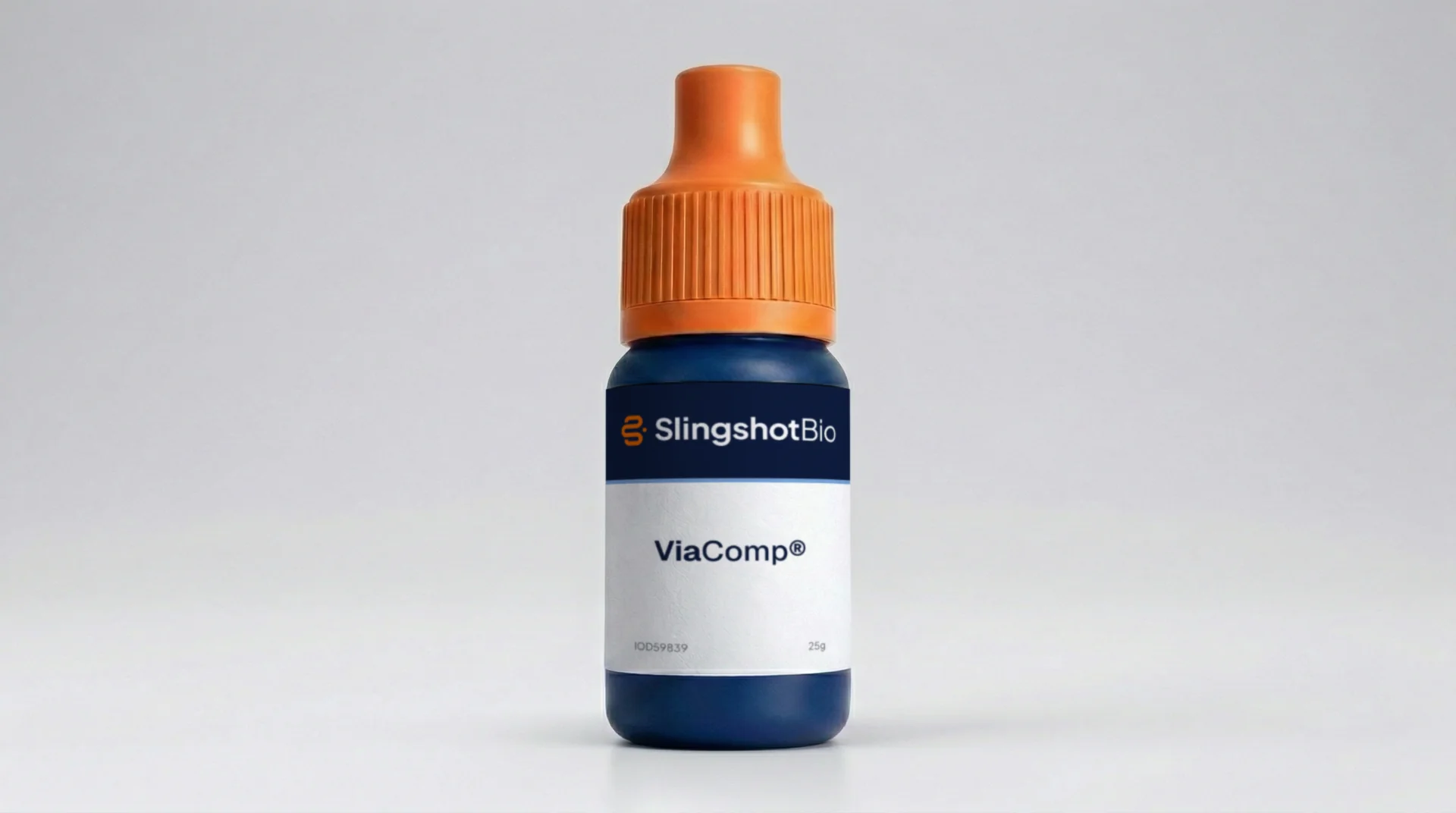
On August 17, 2026, Slingshot Bio introduced ViaComp® Ultra Amine, a next-generation cell mimic developed to tackle the main issues encountered in multiparameter flow cytometry. ViaComp Ultra Amine is intended to replicate the staining features of cells and, at the same time, present a consistent reference material that can help to produce highly reliable experimental results. This new product is designed to be used with amine-reactive viability dyes and for antibody compensation, giving researchers a standard asset to augment their compensation procedures. Possible applications include cell biology, immunology, drug discovery, and R&D practices, fields in which high-quality multiparameter data are fundamental for allowing experimental dependability and making scientific decisions.
The product illustrates the expanding industry demand for standardized research tools as flow cytometry advances. Its use could be especially useful in complex panels in which precise compensation is necessary for distinguishing between fluorescent signals and for interpreting cellular populations. This initiative provides a specially designed cell mimic for amine-reactive applications, where the launch should encourage laboratories to improve the consistency of laboratories' workflows and to lower the variability linked to conventional compensation controls.
Impact on the Life Sciences Industry
The global life science market size is valued at USD 100.88 billion in 2025. It is predicted to increase from USD 112.93 billion in 2026 to approximately USD 305.98 billion by 2035, expanding at a CAGR of 11.73% from 2026 to 2035.
According to Precedence Research, The launch could benefit biotechnology and life-sciences laboratories that increasingly depend on high-dimensional flow cytometry for examining complex biological systems. Multiparameter experiments require accurate compensation to separate overlapping fluorescence signals, making reliable controls essential for data quality. ViaComp Ultra Amine could provide researchers with a standardized reference material specifically designed for amine-reactive viability dyes and antibody compensation.
As laboratories expand the number of markers used in flow panels, specialized compensation tools may become increasingly important to preserve dependable data and support faster research workflows in life science infrastructure. This could be notably valuable for research organizations conducting immunology, cell biology, and translational studies. Greater consistency in compensation workflows may improve reproducibility between experiments, operators, and laboratories.
Impact on the Drug Discovery Industry
The global drug discovery market size was valued at USD 71.89 billion in 2025 and is predicted to increase from USD 78.51 billion in 2026 to approximately USD 171.36 billion by 2035, expanding at a CAGR of 9.07% from 2026 to 2035.
According to Precedence Research, major innovators and contract research organizations could make use of better flow cytometry controls at the stages of drug discovery and development. It is therefore essential to have reliable compensation when dealing with complex multiparameter datasets. Flow cytometry is commonly employed for characterizing immune cell responses, for evaluating mechanisms of action and for assessing the changes that occur in cells after treatment. Healthcare developers are now looking more and more into immune-modulating therapies, biologics and cell-based methods.
Reliable multiparameter flow cytometry tools may assume an increasingly important role in producing solid analytical data. This would be particularly crucial in the case of screening and translational research, where reproducible cellular measurements support decision-making. Additionally, dedicated cell mimics designed for practical use and antibody compensation help to standardize experimental procedures and reduce inconsistencies during novel drug formulation.
Impact on the Clinical Trials Industry
The global clinical trials market size is estimated at USD 87.42 billion in 2025 and is predicted to increase from USD 91.66 billion in 2026 to approximately USD 158.92 billion by 2035, expanding at a CAGR of 6.15% from 2026 to 2035.
According to Precedence Research, the rising advancement in immunophenotyping, hematology, oncology research, and the development of biomarkers accelerates the requirement for clinical trials. The product might also have an effect on clinical research and testing laboratories that use multiparameter flow cytometry for cell characterization and to investigate disease-related biomarkers. The advanced flow panels involve the need for precisely controlled fluorescence measurements, especially several antibodies and viability markers are used.
The research application moves towards standardized controls, which could lead to greater reproducibility between laboratories and studies. As flow cytometry platforms become more advanced and panels become more complex, reliable control materials will probably become ever more valuable for both scientific research and clinical development workflows. Additionally, standardized cell-mimic controls could help laboratories implement more consistent compensation procedures and improve their confidence in the data sets they generate.
Expert Opinion
From an expert perspective, the launch of ViaComp Ultra Amine by Slingshot Bio responds to a growing need in today's flow cytometry: preserving consistent and reliable compensation as experiments become more complicated. When viability dyes and a large number of antibody fluorophores are used together, multiparameter panels can present considerable analytical difficulties, which is why proper controls are essential for correctly interpreting the fluorescence. A specially designed cell mimic could assist laboratories in standardising their compensation procedures and decrease the variability linked to traditional controls. The possible benefits of the product apply throughout the biotechnology, healthcare research and clinical research fields, where reproducible flow-cytometry data can affect the conclusions of experiments and development decisions.
ViaComp Ultra Amine could become a useful element of standardized flow-cytometry practices and help advance the industry's wider effort to achieve more reproducible high-dimensional cellular analysis. The product's long-term impact will depend on how well it functions on different instruments, with various fluorophore combinations and in different laboratory workflows. Additionally, the leading researchers discovered that it improves consistency without introducing a significant amount of extra complexity.