



Scientists Unveil Smart Metal Implant Designed to Support Healing and Dissolve Over Time
Published: 01 Jun 2026
Author: Rohan Patil



Researchers from Tallinn University of Technology have developed a novel hybrid orthopedic implant that combines a strong titanium alloy framework with biodegradable zinc to support bone healing and stimulate natural bone regeneration. Unlike conventional permanent metal implants, the zinc component gradually dissolves in the body, creating space for new bone growth while reducing complications linked to stiffness mismatch and long-term bone weakening.
The study, led by Prashanth Konda Gokuldoss and Mayank Kumar Yadav, introduces an advanced manufacturing method that integrates 3D printing with pressure-assisted sintering to produce next-generation metallic implants.
According to Precedence Research, the Materials for Bone Implants Market was valued at USD 7.20 billion in 2025 and is projected to grow from USD 8.10 billion in 2026 to approximately USD 22.96 billion by 2035, expanding at a CAGR of 12.50% from 2026 to 2035, driven by increasing adoption of hybrid metal implants.
Additive Manufacturing of Honeycomb Ti–Zn Lattice Implants
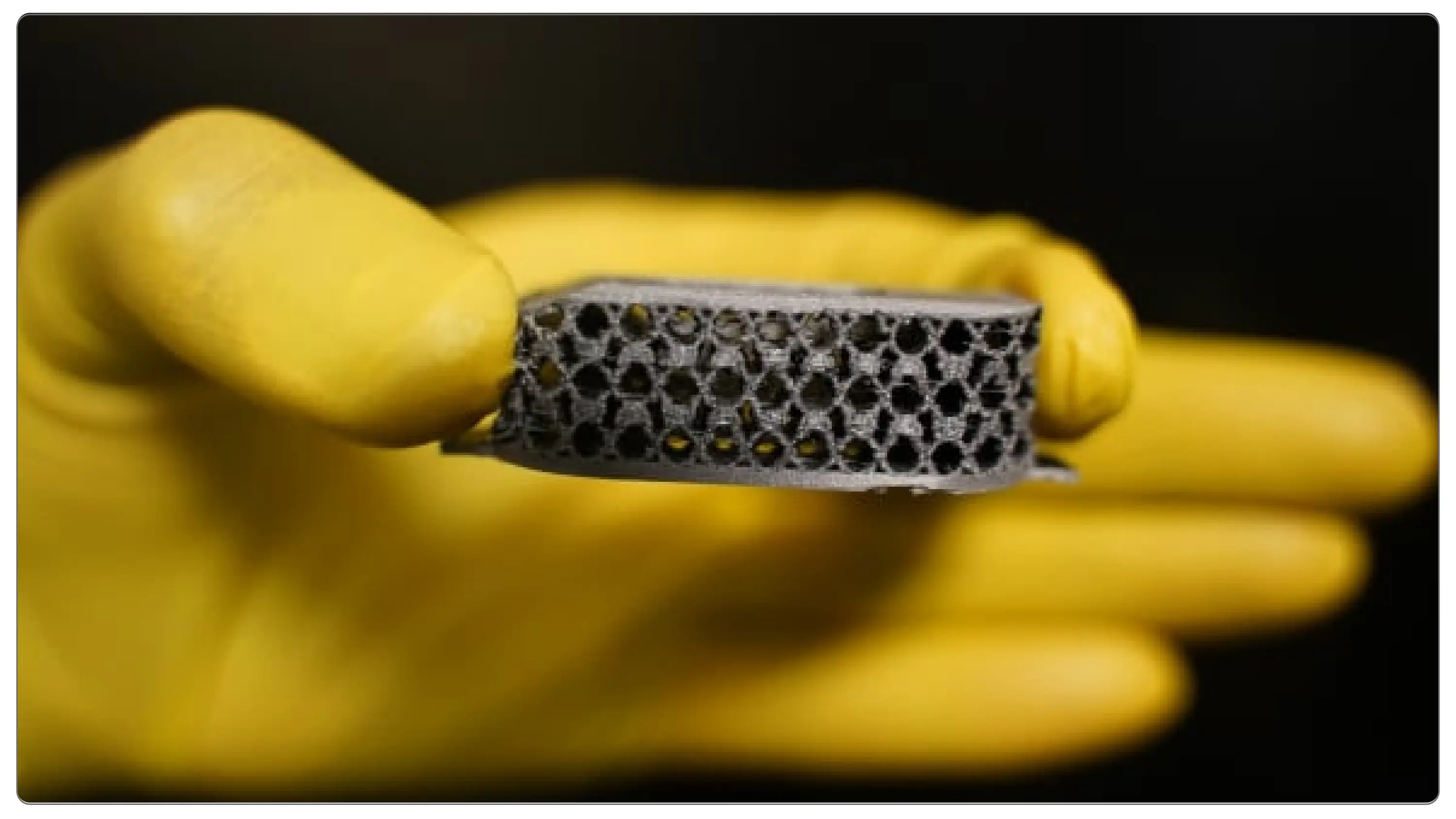
Researchers developed a new manufacturing approach that combines 3D printing with pressure-assisted sintering to produce a metallic implant. The implant features a 3D-printed titanium alloy lattice inspired by a honeycomb structure, giving high strength with less material. Its porous design lets body fluids and bone cells move through the structure. The lattice is then filled with zinc, which gradually degrades under physiological conditions, creating space for new bone growth.
Load-Bearing Stability with Zinc-Mediated Porosity and Bone Ingrowth
In this implant design, zinc gradually dissolves to create space for new bones to grow, while the titanium framework stays stable and continues to bear load. This balance lets the implant provide strength during healing and support bone regeneration. The composite showed better mechanical strength than pure zinc and a controlled degradation rate. It reached a compressive strength of around 292 MPa, higher than natural bone, and a degradation rate of about 0.157 mm per year, with lab tests confirming good biocompatibility.
A recent report by Precedence Research highlights that the Materials for Bone Implants Market is benefiting from the rising number of bone implants surgery.