



Tata Power Targets January 2028 Commissioning of Odisha Wafer-Ingot Facility
Published: 30 Jul 2026
Author: Vidyesh Swar



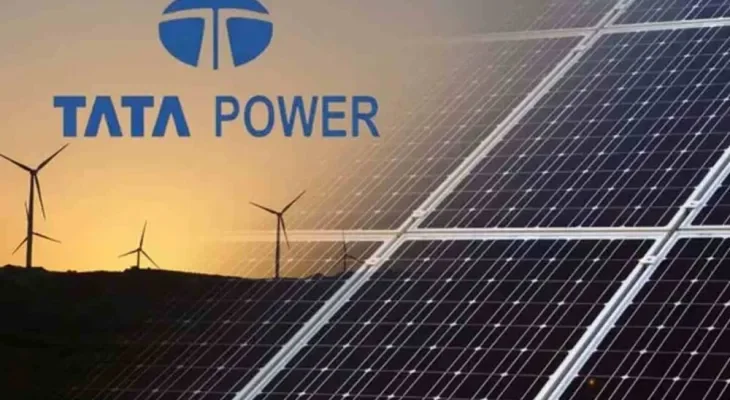
In July 2026, Tata Power announced that it aims to commission its 10 GW solar wafer and ingot manufacturing facility in Odisha by January 2028. The project represents a major investment in India’s solar manufacturing ecosystem, and it is expected to strengthen the country’s self-reliance in photovoltaic (PV) component production. The company has already acquired the project land and initiated preliminary development activities, paving the way for construction later on this year.
Tata Power chose Odisha after carefully assessing the incentives and policy support offered by several states for large-scale manufacturing investments. According to the company, Odisha has been selected as the preferred location because of its competitive incentive package, including lower power costs and other financial benefits that improve project viability.
The solar manufacturing facility will be developed in two phases, each with a capacity of over 5 GW. Upon completion, the plant will achieve a total production capacity of 10 GW, thus making it one of India’s largest integrated wafer and ingot manufacturing facilities. The project is expected to support the country’s expanding solar power sector by strengthening domestic production of critical photovoltaic components.
The upcoming wafer and ingot facility will also be playing a crucial role in expanding India’s domestic solar manufacturing capacity and reducing dependence on imported photovoltaic components. As the country accelerates its renewable energy transition, investments in upstream solar manufacturing are becoming increasingly important for building an integrated, resilient, and globally competitive clean energy supply chain.
Impact on the Chemicals Industry
Solar power technology transforms sunlight into electricity with photovoltaic (PV) panels made from semiconductor materials like silicon. These panels absorb sunlight and produce direct current (DC), which an inverter then converts into alternating current (AC) to power machinery and lighting within plants. Solar arrays vary from small rooftop setups to extensive ground-mounted systems covering large areas. Improvements in panel efficiency and system design help manufacturing facilities generate more energy with fewer panels and reduced maintenance.
Implementing solar power in manufacturing offers significant benefits, though it also presents challenges. Recognizing these obstacles enables manufacturers to make informed choices and maximize their solar investments. Solar installations reduce dependency on fossil fuels by supplying clean energy. This leads to lower emissions, less pollution, decreased greenhouse gas effects, and a smaller carbon footprint. Plants replacing coal or natural gas with solar energy achieve substantial environmental benefits without compromising energy reliability. Solar energy also promotes better waste management by reducing hazardous byproducts and decreasing fuel extraction. Since solar panels produce no direct waste during operation, pairing them with efficient systems and recycling programs further minimizes environmental impact throughout the production process.
Impact on the Solar Energy Systems Market
The global solar energy systems market size accounted at USD 296.77 billion in 2025 and is expected to reach around USD 1192.55 billion by 2035, expanding at a CAGR of 14.92% from 2026 to 2035.
According to Precedence Research, the market for solar energy systems is expected to continue to grow in the upcoming period. Multiple governments are actively participating in programs and initiatives to boost the installation of solar energy systems in the industrial sector. Along with this, substantial support by governments in the form of subsidies and tax concessions acts as a growth factor for the market.
Regulatory support, including subsidies, tax credits, and renewable energy targets, is a sign of confidence from the government and allows encouragement of investment in solar infrastructure. These incentives and policies are key to disrupting fossil fuels and moving toward clean energy. Technological advances in battery and energy storage systems further allow solar systems to provide power when it is not sunny, increasing reliability and grid stability, meaning solar can be a more viable option as a primary energy source.
Impact on the Solar Photovoltaic (PV) Market
The global solar photovoltaic (PV) market size was estimated at USD 196.94 billion in 2025 and is projected to increase from USD 216.04 billion in 2026 to approximately USD 484.85 billion by 2035, growing at a CAGR of 9.43% from 2026 to 2035.
According to Precedence Research, the market is experiencing significant growth driven by the growing demand for clean and renewable energy worldwide, the declining cost of solar modules, and government initiatives that support the production of sustainable power. Market expansion is being accelerated in both developed and emerging economies by growing investments in distributed rooftop installations, utility-scale solar projects, and energy transition programs.
The solar photovoltaic (PV) market is continuously growing as governments are expanding renewable energy targets, increasing electricity demand, and high electricity prices encourage wider adoption of solar photovoltaic (PV) across residential, commercial, and utility-scale installations. Manufacturers are improving panel efficiency and reducing production emissions to meet sustainability goals. The integration of battery storage with solar systems is creating cleaner and more reliable renewable energy infrastructure. Startup companies are developing AI-based energy management platforms and smart inverters to improve affordability and efficiency.
Expert Opinion
Praveer Sinha, Chief Executive Officer, Tata Power, said that the company has made significant progress in preparing the project site. According to Sinha, environmental clearances, water arrangements, and other statutory approvals are currently underway. Construction is expected to commence in October 2026, with commercial operations targeted to begin by January 2028.