



Trump Urges Tech Giants to Invest in Power Plants Amid AI Energy Boom
Published: 25 Feb 2026
Author: Precedence Research



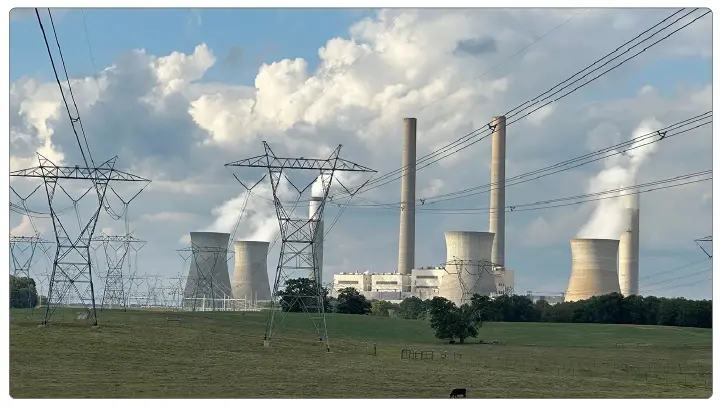
The Donald Trump administration is pressing major technology companies to directly fund new power plants as the electricity demand from AI data centers strains the U.S. grid. The focus is on PJM Interconnection, which serves over 65 million people across 13 states and Washington, D.C., where the growing energy needs of AI infrastructure have contributed significantly to rising capacity costs and higher consumer bills.
Why Tech Firms are Being Asked to Shoulder Costs
Electricity prices within PJM’s territory have surged, with watchdog estimates attributing nearly $23 billion in additional capacity costs to the rising demand from data centers. Policymakers argue that companies driving this growth should finance the infrastructure required to support it, rather than passing the burden onto households and small businesses. Under new federal guidance, several leading tech firms have already pledged about $15 billion toward new power capacity. Emergency power auctions and caps on existing plant charges are also being promoted to secure stable generation.
Implications for Big Tech Budgets and Operations
For technology companies expanding AI operations, electricity is evolving from a predictable operating cost into a major capital investment. Firms may now be required to directly fund new generation projects, ranging from nuclear and gas to renewable energy facilities, alongside data center construction. This shift could:
- Increase upfront infrastructure spending and slow expansion timelines due to regulatory approvals.
- Push companies to cluster data centers near regions with faster grid upgrades.
- Encourage more private energy partnerships between tech firms and utilities.
- Although some companies already invest in renewable energy, the policy formalizes the expectation that corporate growth must support grid expansion.
Reshaping AI Infrastructure Strategy
The move may influence where and how AI hubs are built. Regions with constrained grids, like PJM, could become less attractive unless power investments are secured in advance. This may spur interest in on-site generation, small modular reactors, and lobbying for faster grid approvals. Over time, electricity access could become as critical as land or fiber connectivity in determining data center locations.
Broader Business Risks and Opportunities
While higher energy investment raises costs, it also provides firms with greater control over long-term supply and pricing. Companies able to fund a new generation may gain stability, while smaller players could face higher entry barriers. Utilities and energy developers may benefit from guaranteed corporate-backed projects, accelerating the construction of power plants that have been delayed for years.
This approach signals a potential structural shift in U.S. infrastructure financing, effectively placing the cost of powering the AI economy on the companies driving its growth, rather than everyday consumers.