



Ukraine Expands Long-Range Strikes Against Russian Aerospace and Military Infrastructure
Published: 18 Aug 2026
Author: Laxmi Narayan



On 15 August 2026, Ukraine forces reported attacks on the Savasleyka military airstrip in the Nizhny Novgorod region and the Progress Rocket and Space Center in the Samara region of Russia. According to Ukraine President Volodymyr Zelenskyy, long-range weapons made locally were used in the strikes, while Savasleyka is connected to Russian military aviation and has been related to MiG-31 aircraft that can carry Kinzhal missiles; the Progress facility operates under Russia's Roscosmos space environment and is affiliated with rocket and aerospace development. Because of their proximity to Russia's military might, Ukraine officials characterized the sites as strategically significant.
The operation demonstrates Ukraine's increasing focus on long-range strike capabilities that are created domestically. The Samara complex was attached to Flamingo cruise missiles, according to Ukrainian authorities; however, there was still little independent confirmation of the extent of the damage. Russian officials observed localized damage and confirmed a large-scale attack in the area.
The most recent operation takes place while Ukraine continues to improve its capacity to target military industrial facilities that are remote from the front lines. Production facilities, air bases, transport networks, energy infrastructure, and aerospace assets are increasingly being viewed as strategically significant targets reflecting a broader change in the nature of the fight.
Impact on the Aerospace and Defense Industry
The attacks may have an impact on the defense and aerospace sectors by making infrastructure resilience and protection more crucial. Aerospace manufacturing facilities frequently rely on sophisticated machinery for highly skilled workers in intricate supply networks and centralized production locations. Therefore, disruptions to these facilities may have consequences that go beyond immediate physical harm. The Progress Rocket and Space Center was reportedly targeted, which points out the strategic importance of aerospace production in a contemporary military environment. Facilities connected to electronics, propulsion rockets, and other cutting-edge technology can support defense-related and civilian capabilities.
Governments and military firms may think more about how to safeguard vital manufacturing assets as long-range weapons become more potent. With increased investment in dispersed production backup facilities, redundant supply chains and fortified manufacture may also lead to a rise in the need for systems that can identify threats before they get to industrial targets. For the protection of aerospace and defense facilities, radar networks, early warning platforms, electronic warfare systems, counter-drone technology, and layered air defense solutions may become more crucial.
Increased production decentralization is another possible outcome. Defense businesses could investigate geographically spread production strategies as an alternative to largely relying on a few numbers of large industrial locations. These strategies can assist in sustaining output throughout protracted conflicts and lessen the efforts of a successful attack on a particular site.
Impact on the Unmanned Combat Aerial Vehicle Market
The global unmanned combat aerial vehicle market size was calculated at USD 15.78 billion in 2025 and is predicted to increase from USD 17.66 billion in 2026 to approximately USD 47.78 billion by 2035, expanding at a CAGR of 11.72% from 2026 to 2035.
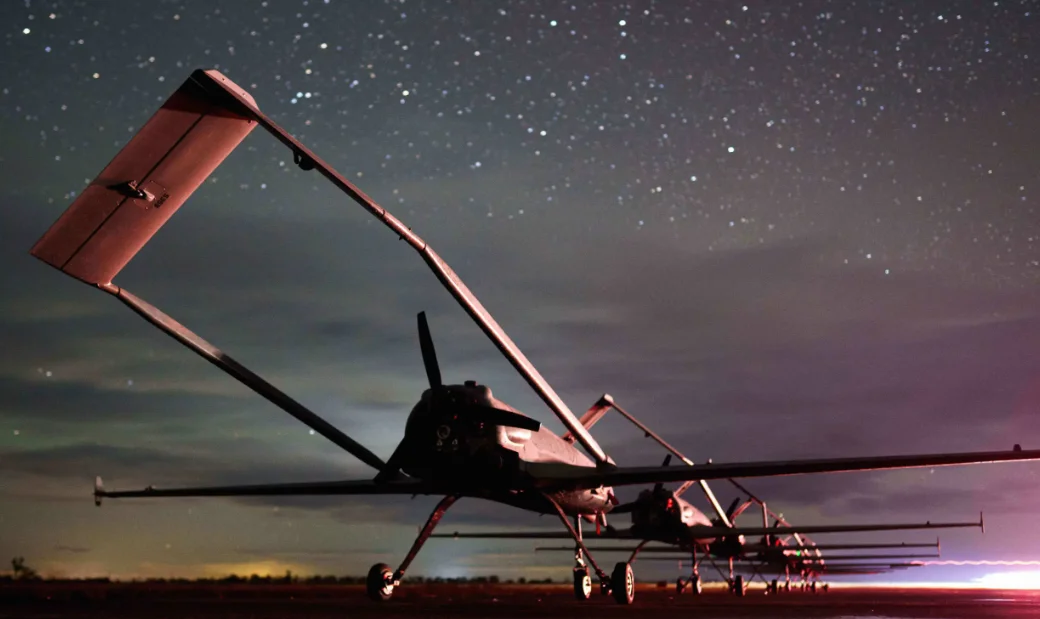
According to Precedence Research, unmanned and remotely operated aerial systems are becoming more important in modern warfare because long-range attacks are becoming more common. To reach targets located deep within Russian territory, Ukraine has become more dependent on locally manufactured drones and other long-range equipment. Defense companies are being encouraged to concentrate on longer operational ranges, autonomous navigation, better targeting, reduced production costs, and increased resistance to electronic interference due to the increasing employment of such systems.
Unmanned systems can be employed for both strategic attacks against distant infrastructure and combat surveillance, as the crises in Ukraine are revealing. Governments may decide to invest more in long-range unmanned aerial vehicles for autonomous flight systems, sophisticated communication technologies, high-performance sensors, and precision navigation systems as a result. Additionally, defense producers might concentrate on creating platforms that can be produced rapidly and at relatively reduced costs. The need for counter-UAV technologies that can identify, track, and neutralize approaching platforms is also expected to expand due to the growing employment of unmanned systems. The combination of offensive unmanned systems and counter-drone solutions may become a more significant component of military procurement as nations upgrade their defense capabilities.
Impact on AI in the Aerospace and Defense Market
The global AI in aerospace and defense market size accounted for USD 25.43 billion in 2024 and is expected to exceed USD 65.43 billion by 2034, growing at a CAGR of 9.91% from 2025 to 2034.
The need for artificial intelligence in aerospace and defense applications is also rising as long-range strikes become more sophisticated. Large volumes of data are produced by radar satellites, airplanes, drones, sensors, and communication networks in contemporary military operations. AI can speed up the processing of this data, help military organizations detect possible dangers, assist with surveillance, and enhance operational decision-making.
Due to both sides' growing reliance on autonomous platforms' intelligence collection, electronic warfare, and quick processing of battlefield data, the conflict in Ukraine may spur interest in AI-enabled military systems. Potential target identification, threat detection, predictive maintenance, route optimization for unmanned systems, and coordination between various military platforms could all be aided by AI. AI-enabled technologies have the potential to increase military operations speed and accuracy as long-range weaponry develops. Defense companies may be encouraged to invest in autonomous aircraft intelligent surveillance platforms with automated command systems and AI-assisted security solutions because of the increasing integration of AI with aeronautical systems.
About Progress Rocket and Space Center
The Russian aerospace firm Progress Rocket and Space Center is a part of the Roscosmos networks. The Samara-based corporation is intimately linked to Russia's Soyuz rocket family and produces spacecraft and launch vehicles. The manufacturing of aircraft electronics and other space-related technology is also supported by its facilities.
The company's launch vehicles are used to carry military and commercial spacecraft such as communications and reconnaissance satellites into orbit, making it strategically significant in Russia's space and aerospace industry. Progress was one of the objectives of the long-range attack on August 15, according to Ukrainian officials who described it as a significant Russian aerospace company.