



Optogenetics Market Size, Companies, Share, Patient Volume, Treatment Adoption Rates, Pricing Analysis, Regulatory Landscape, Competitive Positioning, and Demand Forecast
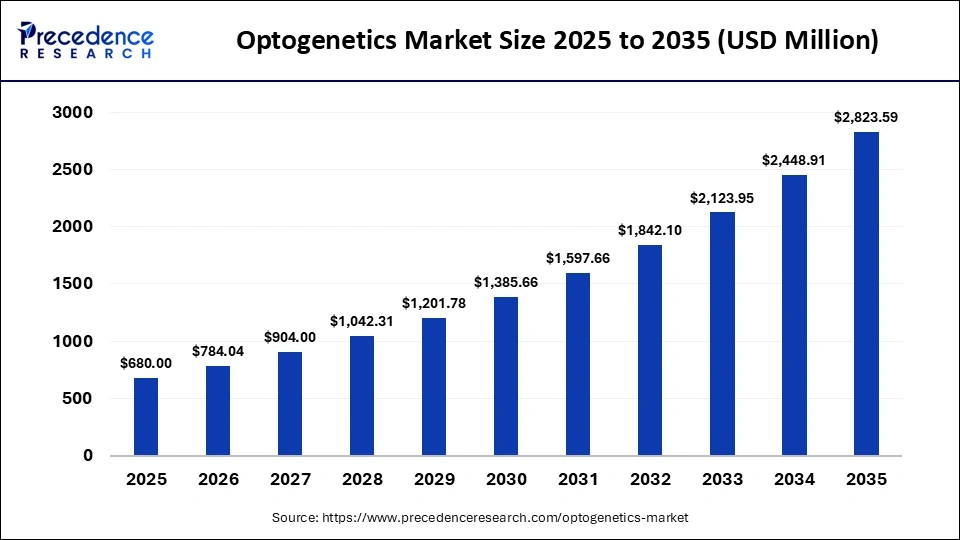
Deepa Pandey, a Healthcare Industry Expert, highlights that the optogenetics market has reached USD 784.04 million in 2026 and is on track to reach USD 2,823.59 million by 2035, advancing at a CAGR of 15.30%. Key optogenetics market companies shaping the market include Thorlabs, Inc., Coherent Corp., Scientifica Ltd., Bruker Corporation, PerkinElmer, Inc., while major growth segments span By Product Type, By Application, By Technique, By End User.
Source: https://www.precedenceresearch.com/optogenetics-market
 Get a Sample
 Table Of Content


What is the Optogenetics Market Size in 2026?
The global optogenetics market size accounted for USD 680.00 million in 2025 and is predicted to increase from USD 784.04 million in 2026 to approximately USD 2,823.59 million by 2035, expanding at a CAGR of 15.30% from 2026 to 2035. The market is driven by growing neuroscience research and demand for novel neurological therapies.
Key Takeaways
- North America led the global optogenetics market with a 40% share in 2025.
- Asia Pacific is projected to grow at the fastest rate in the market during the forecast period.
- By product type, the light equipment segment held the largest market share of 48% in 2025.
- By product type, the sensors segment is anticipated to experience the fastest growth over the forecast period.
- By application, the neuroscience segment maintained a leading position in the market with a 52% share in 2025.
- By application, the ophthalmology segment is expected to grow at the fastest rate during the forecast period.
- By technique, the in-vivo optogenetics segment dominated the global market with a 62% share in 2025.
- By technique, the in-vitro optogenetics segment is expected to grow at the fastest rate in the coming years.
- By end user, the academic & research institutes segment held a major market share of 64% in 2025.
- By end user, the pharmaceutical & biotechnology companies segment is expected to grow at the fastest rate during the forecast period.
Market Overview
Optogenetics is an advanced technique that combines genetic engineering and optics to selectively manipulate genetically altered neurons and other cells. The method is widely used in neuroscience to understand complex biological processes such as learning, memory, behavior, metabolism, and sensory perception. The optogenetics market is expanding rapidly due to the growing need for sophisticated tools for studying and treating various CNS disorders. This method is of particular interest to research centers and major pharmaceutical companies. Higher funding for research into optogenetics, as well as an increasing number of biotechnology startups, are driving the market growth. Higher demand for non-invasive targeted therapies and treatments is also fueling growth.
How is AI Influencing the Optogenetics Market?
The optogenetics market is gaining momentum through the integration of artificial intelligence to improve the analysis and interpretation of neural data. Artificial intelligence is applied to analyze neural activity from multi-electrode arrays and optimize light stimulation parameters for optogenetic experiments. This enhances accuracy and reproducibility by automating experimental adjustments. Additionally, AI enables the identification of disrupted neurological mechanisms underlying diseases and supports the prediction of potential targets for therapeutic intervention.
Optogenetics Market Trends
- There is a growing adoption of optogenetics for treating neurological disorders such as Parkinson's disease and epilepsy, along with increasing research focused on improving clinical outcomes with minimally invasive approaches.
- Advancements in wireless and miniaturized light-delivery systems are enhancing experimental precision and flexibility, enabling real-time targeting of neurons and muscles.
- Rising investments from biotechnology and pharmaceutical companies are accelerating innovations in gene editing and optical tools, strengthening product pipelines and fostering partnerships to develop next-generation therapies for complex neurological and psychiatric disorders.
Market Scope
| Report Coverage | Details |
| Market Size in 2025 | USD 680.00 Million |
| Market Size in 2026 | USD 784.04 Million |
| Market Size by 2035 | USD 2,823.59 Million |
| Market Growth Rate from 2026 to 2035 | CAGR of 15.30% |
| Dominating Region | North America |
| Fastest Growing Region | Asia-Pacific |
| Base Year | 2025 |
| Forecast Period | 2026 to 2035 |
| Segments Covered | Product Type, Application, Technique, End User, and Region |
| Regions Covered | North America, Europe, Asia-Pacific, Latin America, and Middle East & Africa |
Market Dynamics
Drivers
Growing Interest in Gene Therapy
Gene therapy is a groundbreaking method for treating and curing various genetic and neurological diseases. The distinctive feature of optogenetics that enables it to combine gene therapy and optogenetics is widening the scope of addressing the root causes of a disease. In neuroscience, optogenetics is being leveraged to develop highly personalized and non-invasive gene therapies. The rising investments and research endeavors by various entities, including biotechnology and pharmaceutical companies, are driving advancements in optogenetics.
Restraint
Less Efficiency of LEDs
The major restraint in the optogenetics market is the less efficient nature of LEDs compared to other sources of light, such as lasers. LEDs are relatively cheap and readily available, but they do not have the capacity to produce very bright light, which is the requirement for the stimulation of neurons and other cells responding to light, using the optogenetics method. The low efficiency of LEDs may result in inaccurate and imprecise experiments, especially when it comes to neural circuit mapping and behavioral studies.
Opportunity
Government Initiatives
Government support for neuroscience research creates immense opportunities in the optogenetic market. The increasing number of neurological disorders, such as Parkinson's disease, epilepsy, depression, and retina-related diseases, has led governments to increase their spending on neuroscience-related research and treatments. Government support is propelling the rapid development of next-generation technologies, devices, and techniques required for optogenetics. Government initiatives have also promoted collaboration between universities, research institutions, and biotechnology companies.
Segment Insights
Product Type Insights
Optogenetics Market Share, By Product Type, 2025-2035 (%)
| Product Type | 2025 | 2035 |
| Light Equipment | 48.00% | 42.00% |
| Actuators | 30.00% | 28.00% |
| Sensors | 22.00% | 30.00% |
Why Did the Light Equipment Segment Lead the Optogenetics Market?
The light equipment segment led the market with a major share of 48% in 2025, owing to the fact that light equipment plays a crucial role in the optogenetics stimulation process. The segment's dominance is also driven by the growing use of light equipment in neuroscience research, advances in laser and LED technology, and the high demand for precise and accurate light delivery systems. The increased use of lasers and LEDs to provide precise and accurate light to the cells during the optogenetic process also propelled the segment.
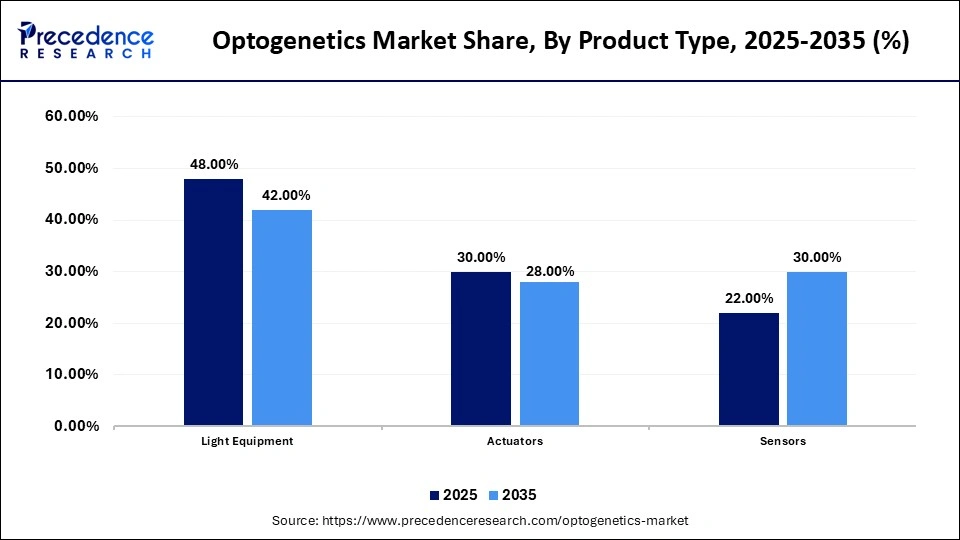
The actuators segment held a 30% share of the market in 2025. This is because actuators are core biological components, which are required to control the cells sensitive to light. Improvements in the specificity, efficiency, and reliability of actuators have expanded their use in genetic engineering research. Moreover, increasing genetic engineering research and expanding applications in neuroscience sustain the demand for actuators.
The sensors segment held a 22% share of the market in 2025 and is expected to grow at the fastest rate throughout the forecast period. This is mainly due to the increasing need to monitor and measure neural signals with high accuracy and precision. The increasing need to monitor neural activity in real-time, advancements in biosensors and brain mapping technology, and the integration of sensors with imaging systems are also driving the segment. Calcium sensors and voltage sensors are crucial.
Application Insights
The Neuroscience Segment Held a 52% Share of the Market in 2025
The neuroscience segment held a dominant position in the optogenetics market while holding the largest share of 52% in 2025. This is mainly due to the widespread application of optogenetics in brain-related research, neural circuit mapping, and the study of various neurological diseases. Neural circuit mapping and behavioral analysis are two main areas where optogenetics is applicable, and there is continued funding in this area, as well as an increase in research centers. Strong academic funding in neuroscience also bolstered the segment.
Optogenetics Market Share, By Application, 2025-2035 (%)
| Application | 2025 | 2035 |
| Neuroscience | 52.00% | 45.00% |
| Cardiology | 18.00% | 17.00% |
| Ophthalmology | 15.00% | 22.00% |
| Others | 15.00% | 16.00% |
The cardiology segment held a 18% share of the market in 2025 and is expected to grow at a significant rate in the upcoming period. This is mainly due to growing research in cardiac electrophysiology and heart rhythm disorders, which supports steady demand. Optogenetics has enabled scientists to directly manipulate specific heart cells to study arrhythmia. Scientists are working toward developing optogenetics to study and treat arrhythmias. A rise in research and development for studying cardiac arrhythmia is expected to drive this segment.
The ophthalmology segment held a 15% share of the market in 2025 and is expected to grow at the fastest rate during the projection period, driven by an upsurge in vision restoration therapy, research into retinal disease, and medical progress. Through optogenetics, scientists can modulate the activity of retinal cells with high spatio-temporal resolution, opening a path for therapy of degenerative retinal diseases such as retinitis pigmentosa and age-related macular degeneration. Innovation and higher funding in eye-surgical equipment are further supporting the segmental growth.
Technique Insights
The In-Vivo Segment Held a 62% Share of the Market in 2025
The in-vivo segment dominated the optogenetics market with the largest share of 62% in 2025. This is because of its widespread use in experiments or research on living organisms. The increased application of in vivo in neural mapping and rising animal model research studies are other key drivers for the growth of this segment. A consistent improvement in technology and methodologies used in neuroscience and life sciences research studies is also fueling the in-vivo segment.
The in-vitro segment held a 38% share of the market in 2025 due to the backing from the scientific community and the growing number of cell research projects, as well as the affordability of lab-based research methods. Scientists are able to examine the behavior of photosensitive cells, and methods yield consistent, reliable, and scalable results while the cells are outside of any living organism. This research technique produces consistent and reliable research results.
End User Insights
Why Did the Academic & Research Institutes Segment Lead the Optogenetics Market?
The academic & research institutes segment dominated the global market with a share of 64% in 2025, supported by expanding funding and collaborations in neuroscience research. This growth reflects the widespread adoption of optogenetics by universities and research institutions to study nervous system disorders using advanced optical instrumentation. Additionally, the increasing popularity of neuroscience as a field of study and the expansion of comprehensive academic programs are further driving segment growth.
The pharmaceutical & biotechnology companies segment held a 24% share of the market in 2025, driven by increasing investments in drug discovery and therapy development for neurological disorders. Growing adoption of optogenetics technologies by these companies reflects their focus on advancing clinical research programs and developing innovative tools, therapies, and treatments for neurology indications.
The contract research organizations segment held a 12% share of the market in 2025, driven by increasing outsourcing of neurology-focused research by pharmaceutical and biotechnology companies. Growing familiarity with CRO-led studies and the expanding use of optogenetics in outsourced research are expected to create significant growth opportunities in the market.
Regional Insights
North America Optogenetics Market Size and Growth 2026 to 2035
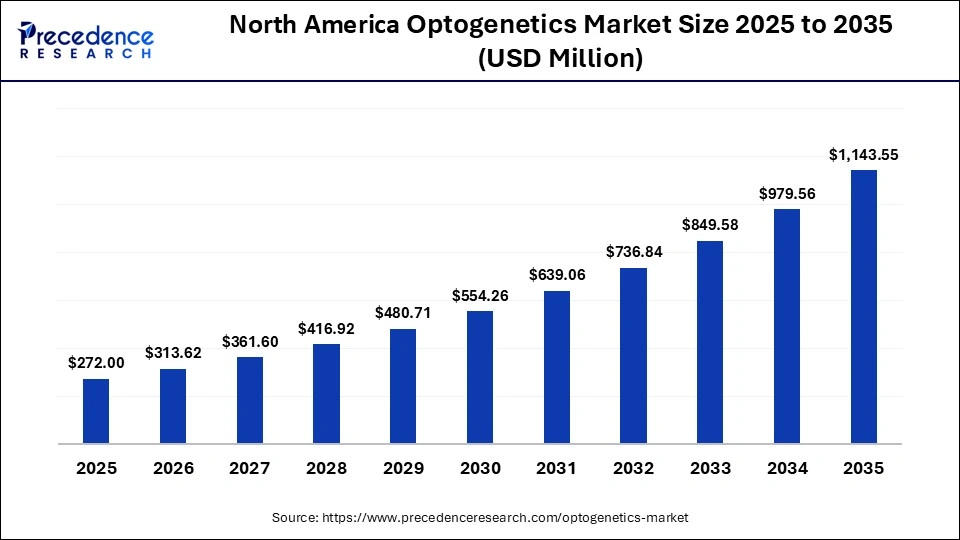
The North America optogenetics market size is estimated at USD 272.00 million in 2025 and is projected to reach approximately USD 1,143.55 million by 2035, with a 15.44% CAGR from 2026 to 2035.
Why Did North America Lead the Global Optogenetics Market?
North America dominated the global optogenetics market with a share of 40% in 2025 due to huge research funding and the presence of a large number of academic and research institutions. The region also benefits from leading biotechnology companies investing in optogenetics technologies and developing advanced products and devices. High adoption of cutting-edge technologies, a skilled workforce, and extensive academic collaborations further support market growth. Additionally, strategic partnerships between universities and industry players are accelerating technology transfer and commercialization of optogenetics solutions.
U.S. Optogenetics Market Size and Growth 2026 to 2035
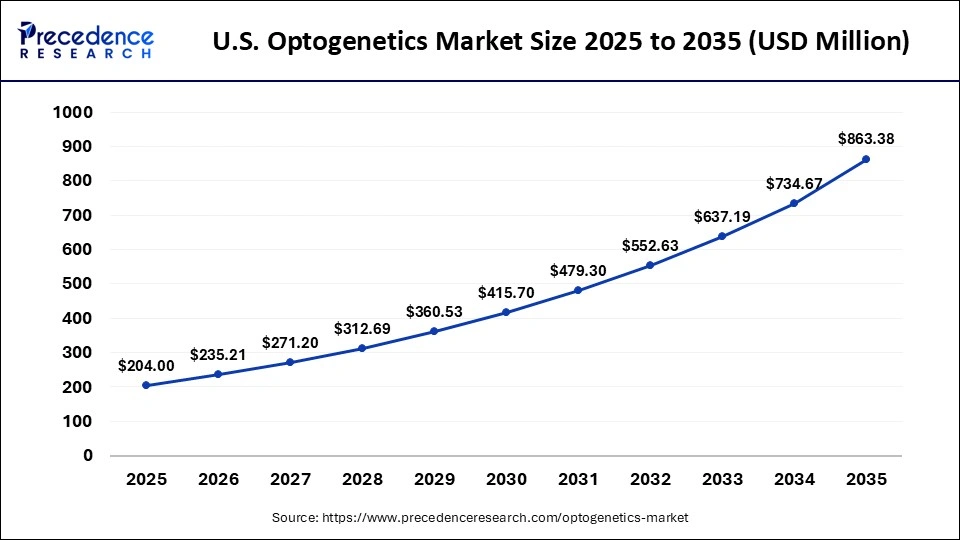
The U.S. optogenetics market size is calculated at USD 204.00 million in 2025 and is expected to reach nearly USD 863.38 million in 2035, accelerating at a strong CAGR of 15.52% between 2026 and 2035.
U.S. Market Analysis
The U.S. is the major contributor to the North American optogenetics market, driven by a high level of R&D activity and early adoption of optogenetics technologies. Research funding is primarily supported by government grants and private investments, particularly for large-scale projects in neuroscience. These advancements are expected to translate into innovative tools and therapeutics in the coming years, targeting a range of conditions such as Parkinson's disease, epilepsy, and depression.
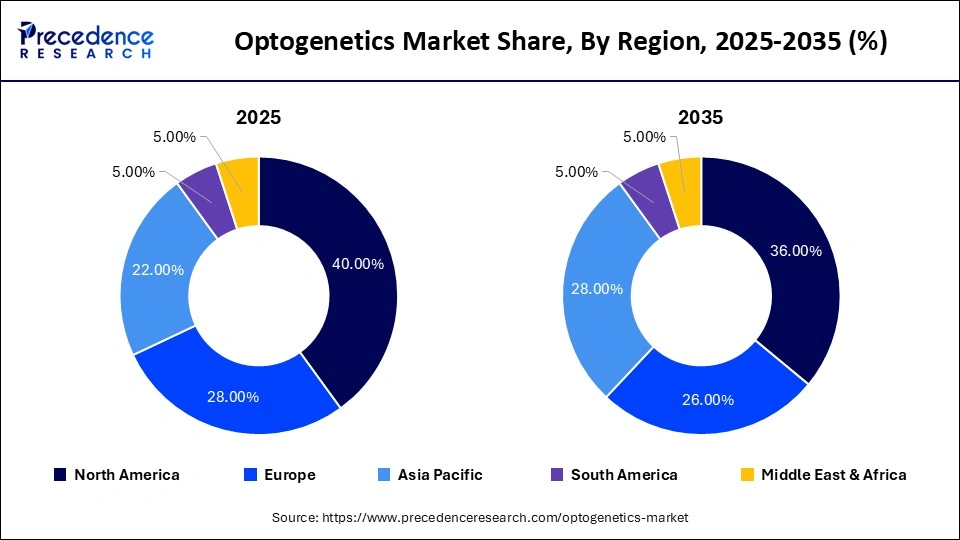
Why is Asia Pacific Undergoing the Fastest Growth in the Optogenetics Market?
Asia Pacific is expected to grow at the fastest rate in the market, driven by increasing investments in biotechnology research, expanding R&D centers, and a growing number of academic and research institutions engaged in neuroscience and life sciences research with strong government support. The emergence of new biotechnology companies and research centers is improving access to optogenetics technologies, including devices, lasers/LEDs, sensors, and actuators. Additionally, the expansion of training programs aimed at developing a skilled workforce in molecular biology, neuroscience, and genetic engineering is further supporting regional market growth.
China Market Analysis
China is witnessing robust growth in the optogenetics market, driven by large-scale neuroscience initiatives, adoption of advanced biological and engineering technologies, and translational efforts toward clinical treatments. Government-funded programs have supported the establishment of new biotechnology and neuroscience research centers. Additionally, R&D collaborations between Chinese companies, institutions, and international academic partners are accelerating the adoption of optogenetics technologies.
Europe: The Second-Largest Market
Europe held a significant market share of 28% in 2025, driven by a strong presence of universities, research centers, and biotechnology companies active in neuroscience and translational medicine. There is a significant rise in the prevalence of neurodegenerative diseases, driving the demand for precision medicine. Investments in high-tech equipment, including advanced optical systems, sensors, and ultra-fast micro-actuators, are enabling more precise and efficient optogenetics experiments.
Germany Market Analysis
The market in Germany is driven by strategic R&D initiatives in neuroscience and a favorable environment for biomedical research. Numerous universities and research institutes are actively engaged in studies on neurodegenerative diseases, gene therapy, and related applications using optogenetics. The adoption of advanced lasers, LEDs, sensors, and actuators enables highly precise experiments, creating significant potential for the commercialization of optogenetics technologies.
Optogenetics Market Companies
- Thorlabs, Inc.
- Coherent Corp.
- Scientifica Ltd.
- Bruker Corporation
- PerkinElmer, Inc.
- Danaher Corporation
- Noldus Information Technology
- Plexon Inc.
- NeuroNexus Technologies
- Tucker-Davis Technologies
- Laserglow Technologies
- Shanghai Laser & Optics Century Co., Ltd.
- Prizmatix Ltd.
- Doric Lenses Inc.
- Cairn Research Ltd
Recent Developments
- In January 2026, Nanoscope Therapeutics, Inc. granted a patent by the U.S. Patent and Trademark Office for its proprietary multi-characteristic opsin (MCO) technology platform that enables the development of next-generation optogenetics therapeutic for the treatment and restoration of vision to individuals who suffer from blindness resulting from various retinal diseases.(Source: https://glance.eyesoneyecare.com)
- In June 2025, GenSight Biologics expanded its commercial-scale vector production capacity at the company's manufacturing site at Catalent in Frenchen, Germany, to support up to two planned product launches in Europe. The capacity will enable the company to address an increasing need for optogenetics therapy.(Source: https://www.gensight-biologics.com)
- In April 2025, Bruker introduced the 2-gram nVista 2P miniature microscope for deep brain imaging of freely moving animals. The new miniature microscope technology is especially important for the development of optogenetics, as it enables deep tissue high-resolution imaging of neurons.(Source: https://ir.bruker.com)
Segments Covered in the Report
By Product Type
- Light Equipment
- Lasers
- LEDs
- Actuators
- Channelrhodopsins
- Halorhodopsins
- Archaerhodopsins
- Sensors
- Calcium Sensors
- Voltage Sensors
By Application
- Neuroscience
- Neural Circuit Mapping
- Behavioral Studies
- Cardiology
- Cardiac Rhythm Studies
- Ophthalmology
- Vision Restoration Research
- Others
- Psychiatry
- Metabolic Disorders
By Technique
- In-Vivo Optogenetics
- In-Vitro Optogenetics
By End User
- Academic & Research Institutes
- Universities
- Research Labs
- Pharmaceutical & Biotechnology Companies
- Contract Research Organizations (CROs)
By Region
- North America
- Latin America
- Europe
- Asia-pacific
- Middle and East Africa
For inquiries regarding discounts, bulk purchases, or customization requests, please contact us at sales@precedenceresearch.com
Frequently Asked Questions
Tags





Ask For Sample
No cookie-cutter, only authentic analysis – take the 1st step to become a Precedence Research client
 Get a Sample
.webp)



 sales@precedenceresearch.com
 Schedule a Meeting
