



Parquet Market Size, Key Companies, Company Market Share, Production Capacity, Raw Material Pricing, Export & Import Analysis, Manufacturing Cost, Competitive Positioning, and Demand Forecast
Vidyesh Swar, a Chemical and Materials Industry Expert, estimates the parquet market at USD 62.91 billion in 2026, with the market projected to reach USD 110.23 billion by 2035 at a CAGR of 6.43%. Major parquet market companies such as Accord Floors, Action Tesa, Armstrong World India are competing across key material and application segments, including type, wood species, region.
Source: https://www.precedenceresearch.com/parquet-market
 Get a Sample
 Table Of Content


What is the Parquet Market Size?
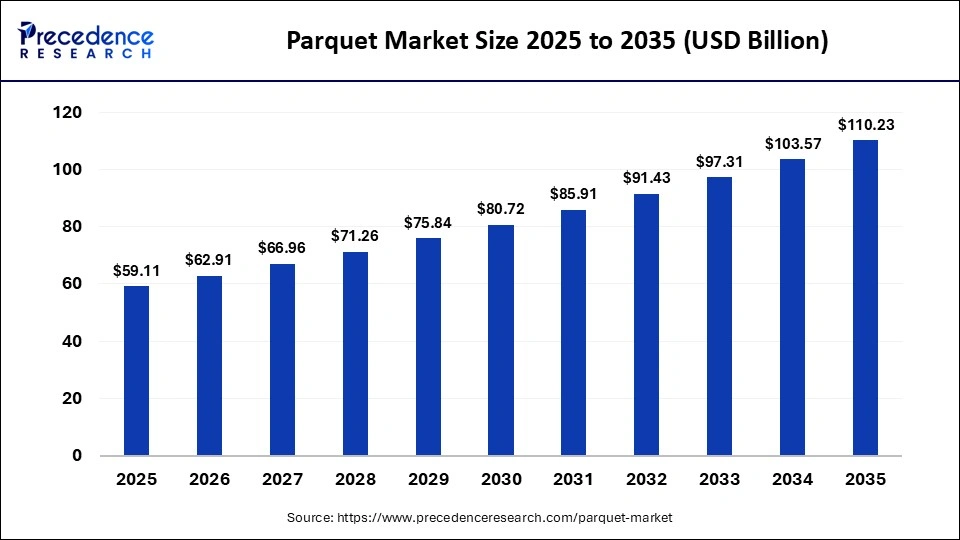
The global parquet market size accounted for USD 59.11 billion in 2025 and is predicted to increase from USD 62.91 billion in 2026 to approximately USD 110.23 billion by 2035, expanding at a CAGR of 6.43% from 2026 to 2035. This market is growing due to rising demand for aesthetically appealing, durable, and sustainable flooring solutions in residential and commercial construction projects.
Market Highlights
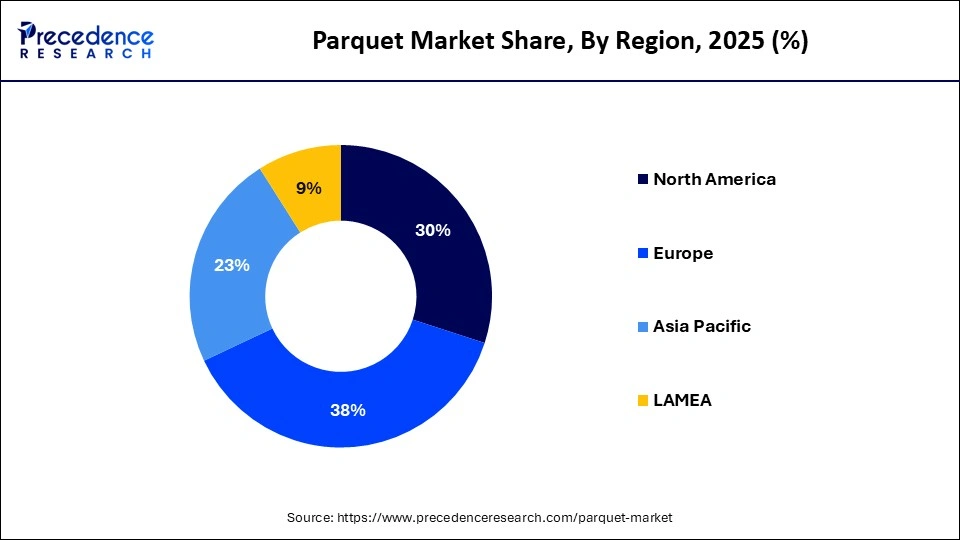
- Europe dominated the global market, having the biggest market share of 38% in 2025.
- The Asia Pacific is expected to rise at a notable CAGR between 2026 and 2035.
- By type, the engineered segment held the largest market share of 52% in 2025.
- By type, the solid segment is poised to grow at a notable CAGR between 2026 and 2035.
- By wood species, the oak segment contributed the biggest market share in 2025.
- By wood species, the premium species segment will grow at a strong CAGR between 2026 and 2035.
Parquet Market Overview
The parquet market is expanding due to sustained growth in construction and renovation activity across residential and commercial buildings, particularly in urban housing, hospitality upgrades, and premium office interiors. In residential markets, demand is supported by rising refurbishment activity in apartments and single-family homes, where parquet flooring is often selected during kitchen and living-area upgrades because of its durability and long replacement cycle. In commercial settings, parquet flooring is widely installed in hotels, boutique retail spaces, and corporate offices where visual differentiation and material longevity are critical. For example, hospitality renovation projects aligned with LEED Interior Design and Construction standards frequently specify engineered parquet flooring due to its compatibility with indoor air quality requirements and long-term performance.
Growing consumer preference for high-end wooden flooring continues to strengthen demand, especially for parquet patterns such as herringbone and chevron that are commonly used in luxury residential developments and hotel lobbies. Advances in engineered parquet construction have significantly improved performance and installation flexibility. Multi-layer parquet systems with cross-laminated hardwood veneers and plywood or HDF cores reduce expansion caused by humidity fluctuations and allow installation over underfloor heating systems, which are increasingly used in European residential buildings. These engineered designs are now widely specified in renovation projects governed by European building energy-efficiency standards, where underfloor heating is favored to reduce energy consumption.
Key Technological Shifts
| Technological Shifts | Description |
| Engineered Parquet | Advanced layering techniques improve durability, stability, and ease of installation compared to solid wood flooring. |
| Digital Printing & Surface Finishing | High-definition printing and UV-cured coatings allow realistic wood patterns, textures, and improved scratch/water resistance. |
| Click-Lock & Pre-Finished Systems | Innovations in installation methods reduce labor time and enable DIY-friendly flooring solutions. |
| Moisture & Temperature Resistant Materials | Enhanced materials and treatments prevent warping, swelling, or shrinkage in varying climates. |
| Sustainable Wood Treatments | Eco-friendly adhesives, coatings, and FSC-certified wood support environmental standards and consumer demand for green products. |
Which future Demands Will Shape the Parquet Market?
| Future Demand Driver | Impact on Market |
| Rising Construction & Renovation | Growing residential and commercial construction projects are increasing demand for durable and premium parquet flooring. |
| Preference for Aesthetic & Custom Designs | Consumers increasingly favor patterned, engineered, and visually appealing parquets, boosting demand for innovative designs. |
| Sustainability & Eco-Friendly Materials | Rising awareness of environmentally responsible products drives demand for FSC-certified and low-VOC parquet. |
| Urbanization & Infrastructure Growth in Emerging Markets | Rapid urbanization in the Asia-Pacific and Latin America expands the potential customer base for parquet flooring. |
| Technological Advancements in Flooring | Innovations like click-lock systems, pre-finished parquets, and moisture-resistant materials make parquets easier to install and maintain, encouraging adoption. |
Parquet Market Outlook
- Industry Growth Overview: The parquet market is growing steadily due to rising construction activity and a sustained wave of renovation projects across residential and commercial buildings. Urban housing developments, hospitality refurbishments, and premium office fit-outs are key drivers of demand, as parquet flooring offers durability and aesthetic differentiation. In residential settings, parquet is increasingly specified in living rooms and bedrooms during remodeling projects, particularly in Europe and North America, where home renovation spending remains high.
- Sustainability Trends: Sustainability trends are playing a central role in driving demand for parquet flooring, as developers and consumers prioritize renewable materials and low-emission interior finishes. Parquet products sourced from Forest Stewardship Council and Programme for the Endorsement of Forest Certification certified timber are increasingly required in public buildings and commercial projects seeking green building compliance. In Europe, parquet flooring compliant with EN 14342 standards is commonly used in buildings targeting BREEAM and DGNB certification, where renewable material content and low volatile organic compound emissions contribute to sustainability scoring.
- Startup Ecosystem: The parquet market is also benefiting from a growing startup ecosystem focused on design innovation, digital manufacturing, and sustainable materials. In North America and Europe, new entrants are leveraging CNC machining, digital pattern customization, and direct-to-consumer distribution models to serve high-end residential and boutique commercial projects. In the Asia Pacific region, rapid urbanization and residential construction in countries such as China, India, and Vietnam are creating opportunities for local manufacturers and startups to scale engineered parquet production at competitive costs.
Market Scope
| Report Coverage | Details |
| Market Size in 2025 | USD 59.11 Billion |
| Market Size in 2026 | USD 62.91 Billion |
| Market Size by 2035 | USD 110.23 Billion |
| Market Growth Rate from 2026 to 2035 | CAGR of 6.43% |
| Dominating Region | Europe |
| Fastest Growing Region | Asia Pacific |
| Base Year | 2025 |
| Forecast Period | 2026 to 2035 |
| Segments Covered | Type, Wood Species, and Region |
| Regions Covered | North America, Europe, Asia-Pacific, Latin America, and Middle East & Africa |
Segmental Insights
Type Insights
What Made the Engineered Segment Dominate the Market in 2025?
Engineered: The segment dominates the parquet market in 2025 due to its excellent stability, moisture resistance, and compatibility with underfloor heating. Because of its longevity and simplicity of installation, it is frequently chosen for both residential and commercial projects. Because engineered parquet is adaptable to various room types and climates, consumers prefer it. It is also very appealing to contemporary interior design trends due to its variety of patterns, finishes, and sustainable options.
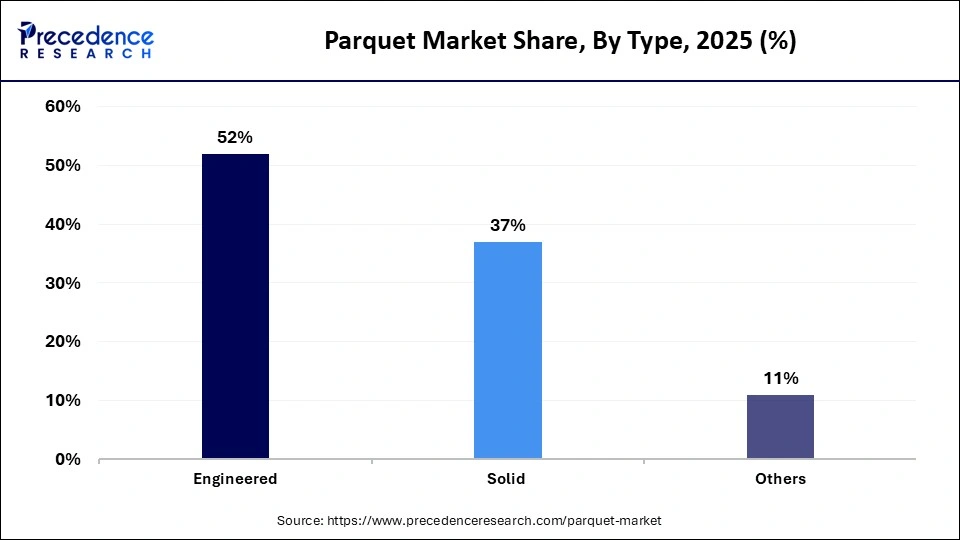
Solid: The segment is growing rapidly because of its natural look, durability, and appeal for premium or traditional projects. It attracts consumers seeking authentic wood flooring in luxury residential and commercial spaces. Rising interest in heritage-inspired and high-end interiors supports the segment's growth. Moreover, improved surface treatments have enhanced its resistance to wear and moisture, making solid parquet more adaptable to modern use.
Wood Species Insights
Why Did the Oak Segment Dominate the Parquet Market?
Oak: The segment dominates the parquet market due to its adaptability to different interior styles, durability, and timeless appeal. Because of its strength, natural grain, and aesthetic versatility, oak is a popular material for both traditional and modern flooring. Because it is widely available in a variety of finishes and colors, designers and homeowners can achieve the desired décor aesthetics. Additionally, its enduring quality and performance in busy locations support its market leadership.
Walnut & Premium Species: The segment is expanding quickly, driven by demand for exotic woods such as walnut, teak, and maple. These species are used in luxury projects where appearance, exclusivity, and quality are key factors. Growing awareness about the unique durability and aesthetic appeal of premium species also fuels demand. Architects and interior designers increasingly incorporate these woods into signature projects, boosting adoption.
Regional Insights
What is the Europe Parquet Market Size and Growth Rate?
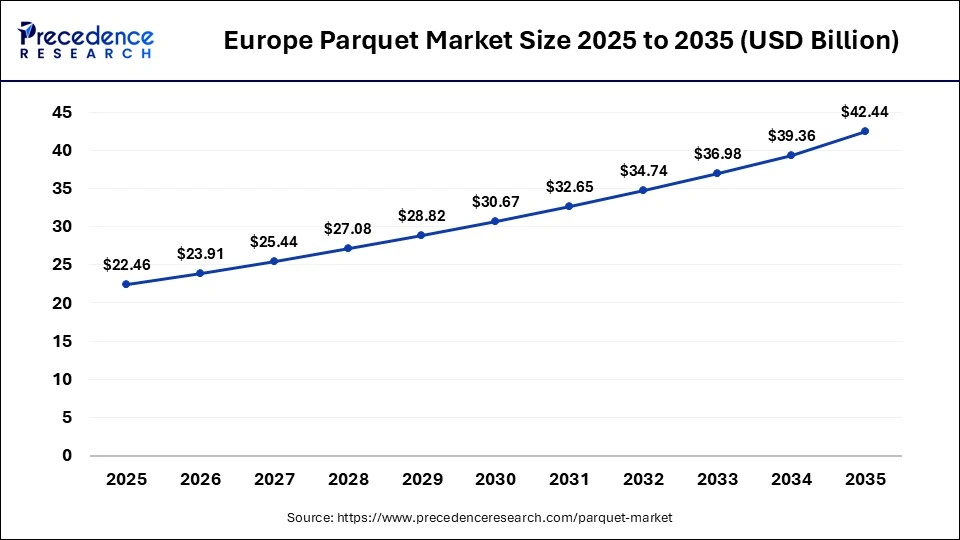
The Europe parquet market size has grown strongly in recent years. It will grow from USD 22.46 billion in 2025 to USD 42.44 billion in 2035, expanding at a compound annual growth rate (CAGR) of 6.57% between 2026 and 2035.
What Made Europe Dominate the Parquet Market?
The European parquet market is dominated by sustained demand for high-quality, durable, and environmentally responsible flooring solutions across both residential and commercial buildings. Consumers across Western and Northern Europe show a strong preference for engineered parquet and oak-based products due to their dimensional stability, long service life, and ability to complement both traditional and contemporary interior designs. Oak parquet, in particular, remains widely specified for housing renovations and hospitality projects because it offers a consistent grain structure, compatibility with underfloor heating systems, and high wear resistance in high-traffic environments.
Market growth is supported by robust construction and renovation activity, especially in countries such as Germany, France, the UK, and the Nordic region, where refurbishment of existing housing stock is a major driver of flooring demand. Increasing awareness of eco-friendly materials further strengthens adoption, as developers and homeowners seek products aligned with sustainability goals. Parquet flooring certified under the Forest Stewardship Council and Programme for the Endorsement of Forest Certification schemes is frequently specified in projects targeting BREEAM, DGNB, and other European green-building standards. In addition, compliance with EN 14342 requirements ensures product quality, safety, and low-emission performance, which is essential under strict European environmental and indoor air quality regulations.
What Factors Make Germany a Key Contributor to Europe's Parquet Market Dominance?
Germany plays a leading role in Europe's parquet market due to high consumer purchasing power, mature construction activities, and a strong focus on eco-friendly, long-lasting flooring solutions. Engineered and oak parquet are highly preferred for their durability, moisture resistance, and ease of installation. Trends such as organized kitchens, meal prep, and modern interior design also drive demand, while retailers and online platforms help ensure widespread product availability.
Why Is Asia Pacific the Fastest Growing Region in the Parquet Market?
Asia Pacific is growing rapidly in the parquet market, driven by rising awareness of premium flooring solutions, increasing disposable incomes, and accelerated urbanization across major economies. Expanding middle-class populations in countries such as China, India, Vietnam, and Indonesia are investing more in interior upgrades, particularly in newly built apartments and urban housing developments. Consumers in both residential and commercial projects increasingly prefer engineered wood and premium hardwood species because these products offer improved stability, longer lifespan, and greater suitability for modern indoor environments compared with traditional solid wood flooring.
Government-led housing and infrastructure programs are further supporting market growth. Initiatives such as India's Pradhan Mantri Awas Yojana, China's urban redevelopment and affordable housing programs, and large-scale residential construction in Southeast Asia are driving demand for durable and visually appealing flooring materials. Engineered parquet is often specified in high-density housing projects because it performs well under varying humidity conditions and supports faster installation timelines. In commercial construction, including hotels, offices, and retail spaces, parquet flooring is adopted to enhance interior aesthetics while meeting durability requirements.
What Is Driving the Rapid Growth of the Parquet Market in India?
India's parquet market is expanding rapidly due to rising urbanization, increasing middle-class income, and growing consumer preference for durable and aesthetically appealing flooring. Engineered and high-quality parquet are increasingly chosen for both residential and commercial construction. The rise of online retail, home renovation trends, and awareness of sustainable materials are further boosting market adoption.
Why Is North America a Growing Market for Paraquet?
North America continues to grow steadily in the parquet market, supported by rising consumer interest in sustainable wood products, contemporary construction activity, and a strong culture of home remodeling. Residential renovation projects in the United States and Canada, particularly kitchen, living-area, and whole-home upgrades, are driving demand for durable flooring solutions with long replacement cycles. Engineered parquet is frequently selected because it offers dimensional stability, ease of installation, and reliable performance across varying indoor temperature and humidity conditions. Its compatibility with radiant and underfloor heating systems, which are increasingly used in energy-efficient homes, further strengthens adoption.
Sustainability considerations also play a significant role in purchasing decisions. Developers and homeowners increasingly specify parquet flooring sourced from Forest Stewardship Council or Programme for the Endorsement of Forest Certification certified timber to align with green building objectives. In commercial construction, including offices, hospitality renovations, and mixed-use developments, parquet flooring is often used to meet interior durability requirements while contributing to sustainability credits under frameworks such as LEED.
Why Is the U.S. Witnessing Steady Growth in the Parquet Market?
The U.S. parquet market is growing consistently, driven by the modernization of homes, increased renovation activity, and rising awareness of sustainable and durable flooring solutions. Engineered and oak parquet remain highly popular due to their quality, longevity, and design versatility. Online sales channels and retail expansion are also increasing accessibility to premium products for a wide consumer base.
Why Is MEA One of the Leading Regions in the Market?
MEA is leading the market, driven by urbanization, the construction of upscale real estate, and growing interest in high-quality flooring options. Investments in upscale building projects are driving up demand for solid and engineered parquet in both the residential and commercial sectors. Customers in the area are expressing interest in high-end, long-lasting, and aesthetically pleasing flooring options.
UAE Parquet Market Trends
The Middle East and Africa region is emerging as a key growth market for parquet flooring, driven by rapid urbanization, large-scale upscale real estate development, and rising consumer interest in premium interior finishes. Major cities across the Gulf region, including Dubai, Abu Dhabi, Riyadh, and Doha, are witnessing sustained construction of luxury residential towers, branded residences, hospitality projects, and mixed-use developments where high-quality flooring is a core design requirement. These projects frequently specify solid and engineered parquet flooring to meet expectations for durability, visual sophistication, and long-term value in high-traffic environments.
Investments linked to national development agendas and urban master plans continue to elevate demand across both residential and commercial sectors. Flagship initiatives such as high-end tourism resorts, business districts, and smart city developments prioritize premium materials that align with international architectural standards. Engineered parquet is increasingly favored in these projects due to its stability under high temperature variation and its suitability for modern building systems, while solid parquet remains popular in luxury villas and boutique commercial spaces.
Parquet Market Companies
- Accord Floors
- Action Tesa
- Armstrong World India
- Armstrong Flooring, Inc. (AHF Products)
- Barlinek S.A.
- BOEN Bruk AS
- Bona AB
- EGGER
- Greenlam Industries (Mikasa Floors)
- Hamberger Industriewerke GmbH
- Haro Wooden Flooring
- Havwoods Ltd.
- Inovar Floors India
- Junckers Industrier A/S
- Kahrs Group
- Mohawk Industries, Inc.
- Parador GmbH
- Shaw Industries Group, Inc.
- Square Foot
- SWISS KRONO Group
- Tarkett S.A.
- Upofloor Oy
- Welspun Flooring Ltd.
- Weitzer Parkett Vertriebs GmbH
Recent Developments
- On December 12, 2025, Knauf India launched GifaFloor systems, which it describes as a solution for smarter, sustainable flooring. The initiative targets the rising demand for eco-friendly building materials in the Indian market, offering robust performance while adhering to sustainable construction practices.
Segments Covered in the Report
By Type
- Engineered
- Solid
- Others
By Wood Species
- Oak
- Mixed
- Walnut & Premium Species
- Others
By Region
- North America
- Europe
- Asia-Pacific
- Latin America
- Middle East and Africa
For inquiries regarding discounts, bulk purchases, or customization requests, please contact us at sales@precedenceresearch.com
Frequently Asked Questions
Tags





Ask For Sample
No cookie-cutter, only authentic analysis – take the 1st step to become a Precedence Research client
 Get a Sample




 sales@precedenceresearch.com
 Schedule a Meeting
