



Protective Coatings Market Size, Production Economics, Trade Analysis, Material Efficiency, Market Penetration, Pricing Strategy, and Sustainability Trends
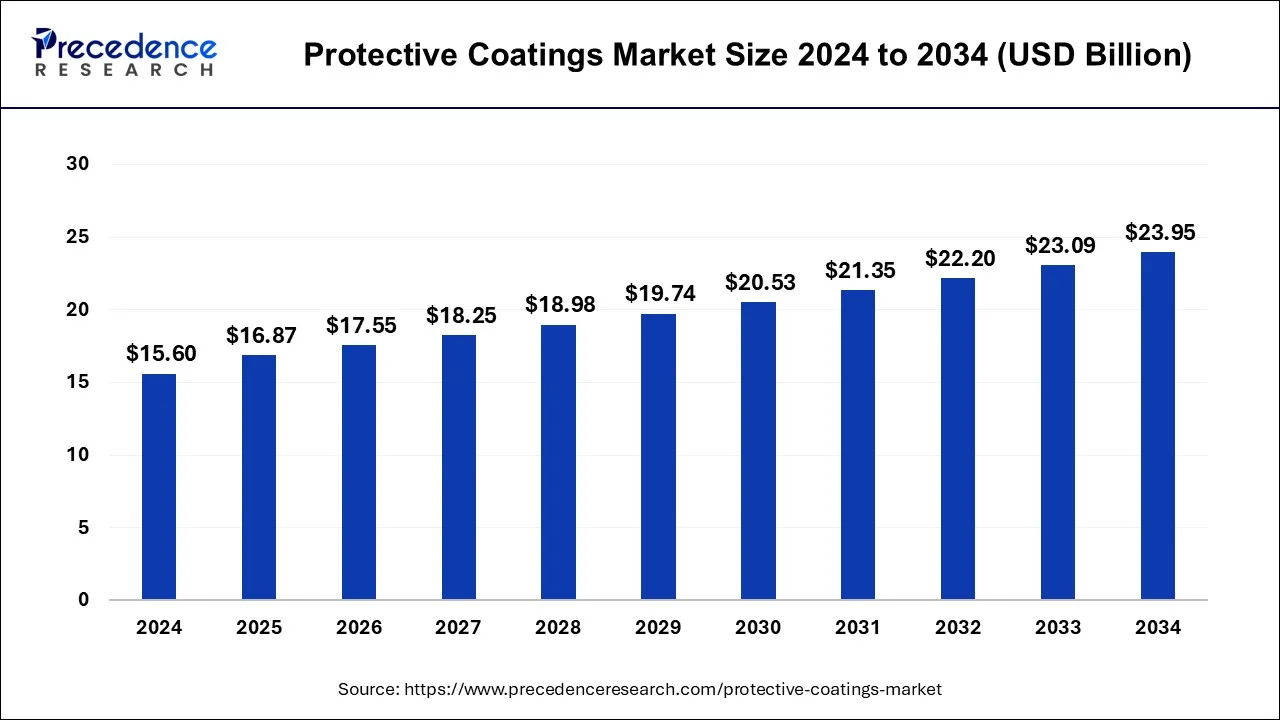
The global protective coatings market size stood at USD 17.55 billion in 2026 and is forecast to reach approximately USD 24.59 billion by 2035, growing at a CAGR of 3.84% between 2026 and 2035. The market growth is driven by rising infrastructure and industrial investments, increasing demand for corrosion-resistant and durable coatings, rapid urbanization, expansion of the construction and automotive industries, growing investment in energy and transportation infrastructure, and increasing adoption of sustainable, water-based, and low-VOC coating technologies.
Source: https://www.precedenceresearch.com/protective-coatings-market
 Get a Sample
 Table Of Content


What is the Protective Coatings Market Size?
The global protective coatings market size is valued at USD 16.87 billion in 2025 and is predicted to increase from USD 17.55 billion in 2026 to approximately USD 23.95 billion by 24.59 , expanding at a CAGR of 3.84% from 2026 to 2035. The protective coating market is driven by rising investment in infrastructure and increasing demand for protective coatings that improve corrosion resistance and durability.
Protective Coatings Market Key Takeaways
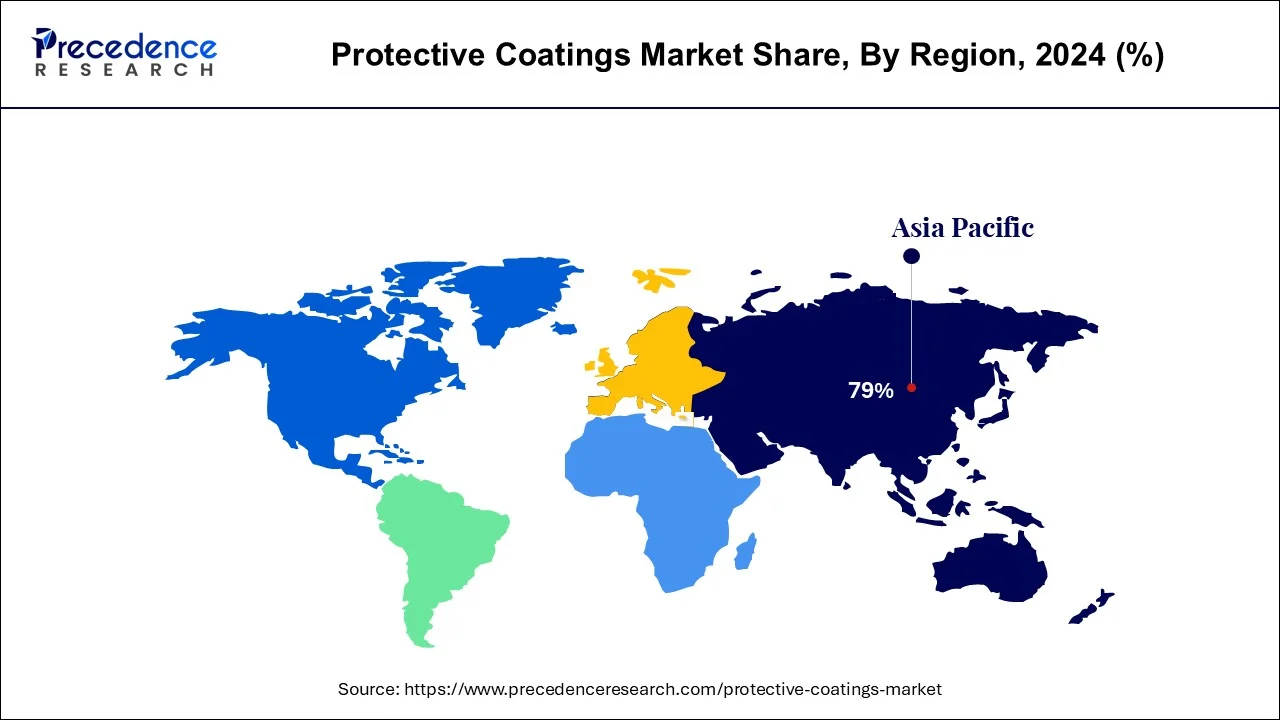
- Asia Pacific has dominated the protective coating market with a market share of 79% in .
- By Technology, the solvent borne coatings segment has generated a market share of 33.7% in 2025.
- The water borne technology segment is expanding at a CAGR of 7.6% over the forecast period 2026 to 2035.
- By Application, the construction segment has held the largest market share of 23% in 2025.
- The aerospace application segment is poised to grow at a CAGR of 7.9% during the forecast period 2026 to 2035.
- By Resin, the epoxy segment has held a market share of 39.3% in 2025 and it is poised to grow at a CAGR of 7.2% during the forecast period.
What is a Protective Coating?
The purpose of a protective coating is to prevent or inhibit corrosion by adding a layer of substance to the surface of another material. A shielding layer could be metallic or non-metallic. Protective coatings are applied using a variety of techniques and have various uses besides preventing corrosion. Polymers, epoxies, and polyurethanes are often used substances in non-metallic protective coatings. Zinc, aluminum, and chromium are among the substances utilized to create metallic protective coatings.
The development of the construction industry, particularly in rising economies like Japan, China, and, India is being heavily fueled by the country's strong economic growth and growing government initiatives to build the nation's infrastructure. Over the course of the projected period, rising infrastructure spending in these countries is anticipated to support market growth for protective coatings.
Market Outlook
- Industry Growth Overview:
The protective coatings market is growing, driven by increasing infrastructure development, rising urbanization, and a shift toward more maintainable, high-performance coatings. Increasing demand for environment-friendly water-borne and UV-curable coatings, dedicated coatings for the automotive and renewable energy fields. - Global Expansion:
The protective coatings market is increasing globally, driven by growing urbanization and a rise in infrastructure projects globally, specifically in emerging economies. A flourishing in the renewable energy subdivision creates demand for protective coatings for components such as EV batteries and wind turbines. Asia Pacific is dominated in the market due to rising spending in infrastructure, including smart cities, water systems, and transportation networks. - Major Investors:
The major players and investors in the protective coatings industry are primarily large, global coatings manufacturers and specialized private equity firms. It includes AnCatt, Greenkote PLC, the Sherwin-Williams Company, Jotun A/S, and Kansai Paint Co., Ltd.
Protective Coatings Market Growth Factors
Concrete is frequently used in civil engineering structures since it is a durable and robust material. Buildings must also fulfil the owner's and architect's expectations for their aesthetic appeal. By avoiding water infiltration, sealing, and adapting surface cracks, protective coating solutions can increase the concrete's longevity as well as its appearance and color palette. Depending on where they are and what they are used for, concrete structures are exposed to a wide range of environmental conditions. The two most frequent factors contributing to concrete deterioration and reinforcing corrosion are carbonation and chloride attack.
Concrete with a coating to protect it from physical and chemical harm from the outside environment concreting coating enhances its appearance, simplicity of upkeep, and light reflectance. If coatings are applied correctly to a concrete surface that has been properly prepared, they can increase a structure's lifespan. Protective surface coatings are typically applied to protect freshly installed or repaired concrete surfaces from future chemical attack and invasion by noxious liquids and gases. impregnated with a water-repelling agent, pore-blocking elastic, and crack-bridging properties. The possibilities for this concrete surface protection include chemical resistance, abrasion and wear resistance. Hence, rising demand for corrosion protection of concrete is expected to be the driving factor.
Protective Coatings Market Scope
| Report Coverage | Details |
| Market Size in 2025 | USD 16.87 Billion |
| Market Size in 2026 | USD 17.55 Billion |
| Market Size by 2035 | USD 24.59 Billion |
| Growth Rate from 2026 to 2035 | CAGR of 3.84% |
| Base Year | 2025 |
| Forecast Period | 2026 to 2035 |
| Segment Covered | By Formulating Technology, By Resin Type, By End Use, and By Application |
| Regions Covered | North America, Europe, Asia-Pacific, Latin America, and Middle East & Africa |
Market Dynamics
Driver
Rising Infrastructure and Industrial Investments
The growing investment in infrastructure, energy, transportation, and industrial facilities is a major driver of the protective coating market. The increasing development in infrastructure, contributions, bridges, pipelines, and ports. These require durable coatings to prevent corrosion, withstand harsh environments, and minimise maintenance expenses. The goal is to increase the lifespan of infrastructure and improve operational efficiency, which demand advanced protective coating solutions.
Restraint
Fluctuating Raw Material Prices
Volatility in raw materials prices remains a significant challenge for protective coating manufacturers. The raw materials required in protective coatings include resins, pigments, and specialty additives. The changes in crude oil prices and supply chain disruption due to geopolitical tensions and global trade uncertainties increase production costs and affect profit margins. Small manufacturers are particularly affected because they have limited pricing flexibility. These cost constraints delay purchasing decisions and make it difficult to maintain consistent profitability in the markets.
Opportunity
Expansion of Sustainable Coating Technologies
The growing demand for environmentally responsible coating solutions presents a strong opportunity for the protective coating market. Industries are increasingly adopting water based and low volatile organic compound protective coatings to meet the environmental regulatory standards. Continuous advancement in coating formulations is improving durability, corrosion resistance and performance of the protective coating. Companies are investing in sustainable product development to meet regulatory requirements, which further creates market growth opportunities.
Segmental Insights
Resin Type Insights
Why has the Epoxy Coatings Segment dominated the Protective Coating Market?
The epoxy segment held a dominant position in the protective coating market in 2025, due to the rising investment in infrastructure development and increasing demand for high-performance & long-lasting finishes. Epoxy coatings are widely used in the construction sector for their exceptional durability, strength, chemical resistance, low VOC content, and strong adhesion. They are also used in floor toppings, crack injection, grouts, and adhesives. Moreover, the growing demand for shipbuilding and repair, petrochemicals, and steel is expected to drive the demand for epoxy resin during the forecast period.
The polyurethane segment is expected to grow at the fastest CAGR during the studied period in the protective coating market due to polyurethane coatings having qualities including physical damage tolerance, barrier properties, and chemical inertness. By generating a thin, pleasing to the eye gloss covering and shielding metal surfaces from damage, these coatings can also be utilized to safeguard metal surfaces. These coatings are suitable for outdoor environments such as bridges, industrial facilities and offshore structures.
End Use Insights
On the basis of end use industry, the infrastructure & construction category accounted for the largest market share in both volume and value. Protective coatings are applied to structures to increase their durability and to shield them from UV rays, fire, and corrosion. To increase heat resistance and minimize the impact of corrosive gases, they are used in industrial projects. the expanding construction industry and the need for these coatings to protect equipment from deterioration and to enhance its performance in affected locations. Throughout the projection period, this component is most likely to drive the market.
The offshore structure has a significant growth during the forecast period. For marine structures, whether they are submerged or located far below the surface of the water, coatings are the best form of protection. The primary factor is the steel, which is extremely susceptible to marine corrosion, makes up the majority of maritime structure, including ships, mobile or fixed drilling platforms, production platforms, bridges, pilings, and piping. To keep steel from reverting to its initial form, iron oxide, it needs to be completely protected. One, and maybe the only, way to shield every surface of a steel structure from the elements is using surface coatings.
Technology Insights
Why the solvent-borne Segment Dominates the Protective Coating Market?
The water borne segment is expected to experience the fastest growth in the protective coating market during the forecast period.  Advanced coatings technology, including water-based coatings, is now on par with or even superior to their solvent-based equivalents. These products contain a lower level of volatile organic compounds, helping manufacturers comply with stricter environmental regulations. High grade water dispersed acrylic emulsions are extremely durable, dry quickly, and smell significantly less.
The solvent-borne segment held a dominant presence in the market in 2024, with 43.70%. The growth of the segment is attributed to the increasing demand for solvent-borne protective coating across various sectors such as industrial, oil and gas, marine, and automotive. Solvent-borne offers a durable and glossy finish, superior adhesion, and strong resistance to corrosion, weathering, and UV radiation. Moreover, increasing demand for high-quality finishes, durability, and fast drying times is likely to fuel the segment's expansion in the coming years.
Distribution Channel Insights
What made the Distributors/ Wholesalers Segment Lead the Protective Coating Market?
The online platforms segment is expected to witness the fastest growth in the protective coating market with a CAGR over the forecast period. The segment is growing due to its offering convenient product comparisons, technical specifications, and faster purchasing processes. The changing consumers' purchasing patterns encourage manufacturers to use their own e commerce platforms. This will improve customer engagement and technical guidance. The online platform offers wider product availability, competitive pricing and improved logistics networks, which further supports market growth.
The distributors/wholesalers segment registered its dominance with 36.10% over the global protective coatings market in 2024. Distributors and wholesalers are a significant critical distribution channel in the protective coatings market, which connects manufacturers with end-users. The distributors/wholesalers purchase products in bulk, which provides efficiencies in the supply chain for large industrial projects and smaller commercial applications. Distributors/wholesalers are adept at understanding local market demands and preferences, which also offers tailored product solutions to better serve their customers.
Function Insights
Why Did the Corrosion Resistance Segment Dominate the Protective Coating Market?
The fire Resistance / intumescent segment is expected to expand rapidly in the protective coating market, with a CAGR over the forecast period. The segment is growing due to increasing emphasis on industrial and building safety. When exposed to heat, these protective coatings expand and form an insulating layer that protects structural steel and other substrates from heat damage. These are widely used in commercial buildings, oil and gas facilities, and energy plants. The stringent fire safety guidelines further encourage the wider adoption of these coatings.
The corrosion resistance segment contributed the biggest market share of 36.80% in 2024. The growth of the segment is driven by rapid urbanization and industrialization. The rising investment in infrastructure projects and increasing industrial activity, particularly in emerging nations, fuels the need for corrosion protection. Moreover, the stringent environmental regulations, along with the rising focus on safety and asset protection, are expected to spur the demand for high-performance coatings.
Regional Insights
Asia Pacific Protective Coatings Market Size and Growth 2026 to 2035
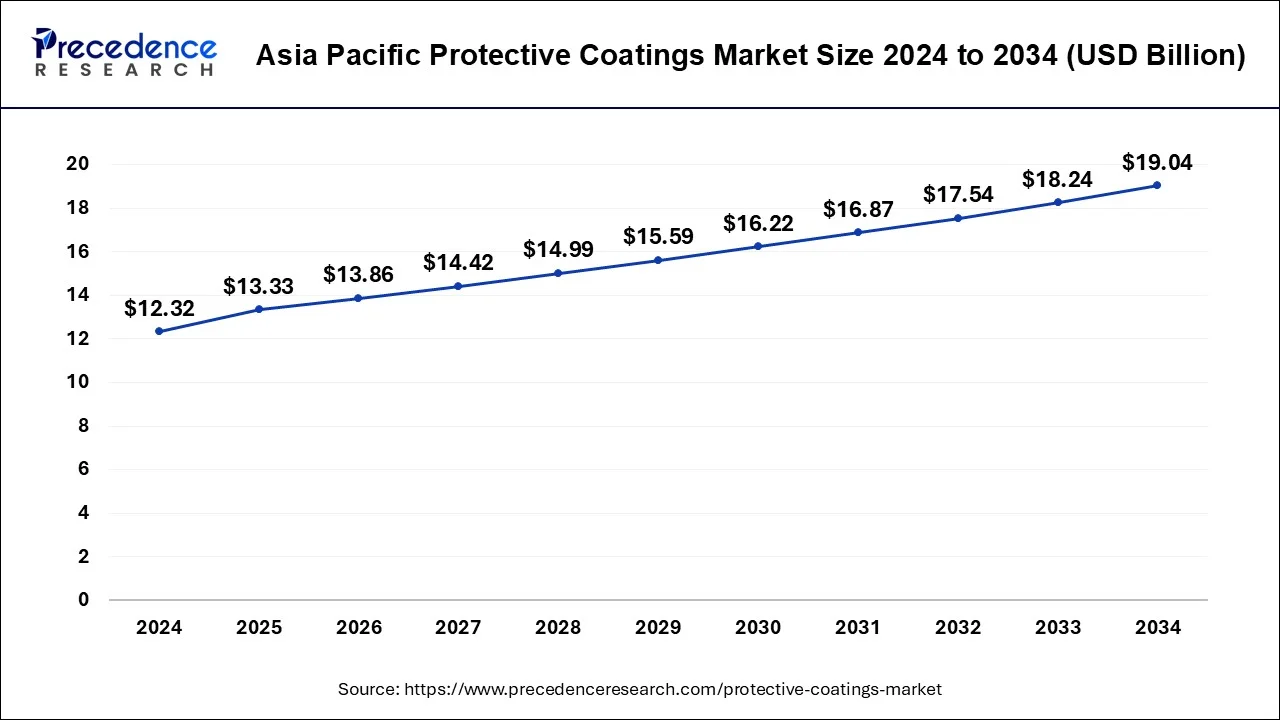
The Asia Pacific protective coatings market size is estimated at USD 13.86 billion in 2026 and is predicted to be worth around USD 19.52 billion by 2035, at a CAGR of 3.89% from 2026 to 2035.
Due to a growth in demand from finished industries such as infrastructural projects, power, automobiles, oil and gas, industrial, and maritime, Asia Pacific holds the largest market share in 2024. Due to rising government spending in infrastructural projects, it is projected that infrastructure and building will increase in developing Asia Pacific countries like China and India. Among other things, these projects involve building bridges, trains, airports, and more. There is a high need for protective coatings that are used to stop and slow down corrosion brought on by severe weather patterns. These coatings are necessary to increase the durability and require no upkeep nature of the buildings and constructions. It is projected that the region's market will be fueled by rapid increase in construction sector.
India: Rapid industrialization and infrastructure growth
In India, increasing industrialization, increasing infrastructure projects, and an increasing automotive sector all need durable and high-performance coatings. It is the largest automotive producer; India's growing automotive organization fuels a massive requirement for specialized protective and decorative coatings.
North America's automotive industry will grow quickly, ultimately driving the market. As consumer interest in electric vehicles rises, the automotive sector is anticipated to grow. Due to the US's strong economy and the excellent development of the real estate sector commercial, it is anticipated that the non-residential building industry would grow. Additionally, there has been an increase in state and federal spending on institutional and public buildings. It is projected that the market will be driven by the rising demand from the commercial building and automotive industries.
U.S.: Technological advancements
In the U.S., the strong presence of both domestic giants and international players, as well as the emergence of novel large-scale manufacturers, intensifies competition and drives market growth by innovation and expansion. The market is seeing innovation, with organizations developing advanced services such as solvent-free, anti-corrosive coatings and integrating automation in application processes.
Europe Growing innovation in green technology
Europe is significantly growing in the market as a integration of strict environmental guidelines, high demand from major industries, and a strong focus on novelty and R&D. Regulations such as those from the European Chemicals Agency (ECHA) and the EU Green Deal are driving the market toward sustainable, low-VOC, and bio-driven coatings. European companies are at the forefront of advancing novel coating technologies, which contribute to the growth of the market.
UK: Technological and regulatory advantages
The UK is a leader in advanced high-performance, tough coatings, including advanced epoxies and other formulations that encompass the life of industrial tools. Strict government regulations for industrial production and the environment create demand for efficient and maintainable protective coatings, driving companies to develop eco-friendly standards.
What are the Advancements in the Market in Latin America?
Latin America held a considerable share of the protective coating market in 2025, supported by investments in transportation, mining, energy and infrastructure projects. Brazil and Mexico are leading countries in the market. The region is also witnessing greater adoption of water based and low VOC coatings due to strict environmental regulations. Increasing industrial maintenance activities and refurbishment of ageing industrial equipment are creating consistent demand for protective coatings. Increasing infrastructure development is also contributing to the market growth.
Brazil Market Trends
Brazil accounts for the largest share of the Latin American protective coating market in 2025, due to extensive oil and gas, mining, marine, and industrial manufacturing sectors. Offshore projects and refinery upgrades demand high performance anti corrosive coatings. The country is investing in industrial development, infrastructure upgradation and is further supporting the market growth. Manufacturers are introducing environmentally compliant coating technologies to meet strict regulatory standards.
What are the Key Trends in the Market in the Middle East and Africa Region?
The Middle East & Africa held a notable share of the protective coating market in 2025, driven by large investment in oil and gas facilities and commercial construction projects. Protective coatings are used to combat corrosion under harsh climatic conditions, particularly in coastal and desert environments. The region is experiencing large scale migration to the Middle East due to facilities and a luxury lifestyle. This encourages the government to invest in infrastructure development and industrialization. This further supports the market growth across the Middle East & Africa region.
United Arab Emirates Market Trends
UAE represents the leading market within the Middle East and Africa protective coating market in 2025, supported by strong activity in oil and gas, marine, aviation, construction and industrial infrastructure. The main states, such as Dubai and Abu Dhabi, serve as important manufacturing, logistics and distribution hubs for coating suppliers across the Gulf region. The severe environmental conditions in the country also drive the demand for protective coatings. Continued investment in airports, ports, and infrastructure development is further contributing to market growth.
Competitive Landscape
The protective coating market is highly competitive, with global manufacturers competing through product performance, innovation and pricing. The leading companies in the market include Akzo Nobel N.V., The Sherwin-Williams Company, Wacker Chemie AG, Axalta Coating Systems, LLC, PPG Industries, Inc., Arkema and RPM International Inc. The companies are expanding their portfolios by introducing superior corrosion resistance and longer service life for industrial assets. Strategic partnerships, collaboration, acquisitions and investments in manufacturing facilities help companies strengthen their market presence.
To achieve long term growth in the protective coating market, companies should prioritise sustainable coating technologies, invest in research and development and expand regional production and supply chain.
Protective Coatings Market- Value Chain Analysis
Raw Material Sourcing:
Raw material sourcing for the protective coatings industry involves significant components such as resins like epoxy, polyurethane, and acrylic, pigments, solvents, and additives, which are sourced from chemical dealers and suppliers.
- Key Players: Jotun A/S, and Hempel A/S
Package Design and Prototyping:
Protective coatings are specialized materials applied to surfaces of materials such as metal or concrete to protect them from environmental conditions, like corrosion, wear, water damage, and chemical attacks.
- Key Players: The Sherwin-Williams Company and BASF SE
Recycling and Waste Management:
The protective coatings industry manages waste through various methods, including waste reduction, source reduction, and recycling and recovery of materials from waste streams such as paint sludge and overspray.
- Key Players: Akzo Nobel N.V. and PPG Industries, Inc.
Top Vendors in the Protective Coatings Market & Their Offerings
|
Company |
Headquarters |
Key Strengths |
Latest Info (2025) |
|
The Sherwin-Williams Company |
United States |
Extensive distribution network |
Sherwin-Williams protective coatings are intended to shield assets from corrosion, fire, and harsh environments across significant industries. |
|
PPG Industries, Inc. |
Pittsburgh, Pennsylvania |
Global supplier of paints |
PPG spotlights metal coating innovations, design, and durability at AIA Conference 2025. |
|
Jotun |
Norway |
Strong corporate culture |
In June 2025, Jotun launched novel powder coating technologies to safeguard batteries. |
|
Akzo Nobel N.V. |
Netherlands |
Strong emphasis on sustainability |
In November 2025, AkzoNobel India inked significant agreements with the parent company in a proposed acquisition. |
|
Kansal Paint Co., Ltd. |
Osaka, Japan |
Robust financial foundation |
Kansai Paint Co. Ltd. provides a broad range of coatings solutions for various markets, including automotive, decorative, industrial, and marine coatings. |
Other Key Players
- Sika AG
- The Chemours Company
- Dulux Protective Coatings
- Oasis Paints
- Wacker Chemie AG
- Henkel AG & Co. KGaA
- NIPSEA GROUP
- Berger Paints
- Sherwin-Williams
- Hempel
Recent Developments
The FIRETEX passive fire protection coatings portfolio from Sherwin Williams Protective and Marine has included a solution that allows for precise coating thickness parameters, which enhances applications and decreases capital for onshore assets.
Market Segmentation
By Resin Type (USD/Kilotons)
- Epoxy
- Polyurethane
- Acrylic
- Alkyd
- Zinc-rich
- Fluoropolymer
- Silicone
- Vinyl Ester
- Polyaspartic
- Others (e.g., polyester, phenolic)
By Technology
- Solvent-borne
- Water-borne
- Powder coating
- High solids
- UV-cured
- Thermal spray
- Others (e.g., fusion-bonded epoxy)
By Application Industry
- Oil & Gas
- Marine
- Infrastructure / Construction
- Power (Thermal, Hydro, Renewable)
- Transportation
- Automotive
- Rail
- Aerospace
- Water & Wastewater Treatment
- Mining & Metals
- Industrial Equipment & Machinery
- Chemical & Petrochemical
- Food & Beverage Processing
- Pharmaceutical
- Pulp & Paper
- Others
By Distribution Channel
- Direct Sales (Manufacturers to End-Users)
- Distributors / Wholesalers
- Retail (B2C & B2B retail outlets)
- Online Platforms
By Function
- Corrosion Resistance
- Fire Resistance / Intumescent
- Abrasion & Wear Resistance
- Chemical Resistance
- Waterproofing
- UV Resistance / Weatherproofing
- Thermal Resistance
- Aesthetic/Decorative Protection
- Anti-Fouling / Anti-Microbial
- Others (e.g., anti-static, insulating)
By Geography
- North America
- Europe
- Asia Pacific
- Latin America
- Middle East & Africa
For inquiries regarding discounts, bulk purchases, or customization requests, please contact us at sales@precedenceresearch.com
Frequently Asked Questions
Tags





Ask For Sample
No cookie-cutter, only authentic analysis – take the 1st step to become a Precedence Research client
 Get a Sample




 sales@precedenceresearch.com
 Schedule a Meeting
