



Semaglutide Market Trends, Sales Volume, Production Cost, Fulfillment Cycle Time, Export & Import Flows, Pricing Metrics, Recycling Rate, Adoption Rates, and Distribution Performance
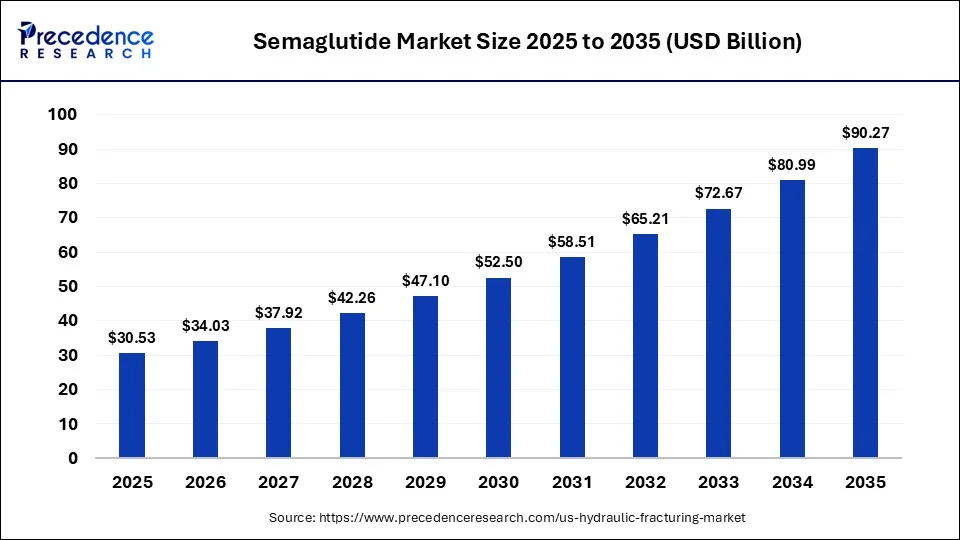
The semaglutide market reached USD 30.53 billion in 2025. This report deeply analyzes the use of semaglutide to manage diabetes, weight, and cardiovascular risk. This report has been curated by Deepa Pandey, Senior Research Analyst, focusing on dynamics in pharmaceutical production, product formulation, distribution through a variety of pathways, and regulatory updates in the global obesity management and cardiovascular health industries. Her analysis facilitates pharmaceutical producers, distributors, medical professionals, and stakeholders in performing competitive analysis and making well-informed decisions.
Source: https://www.precedenceresearch.com/semaglutide-market
 Get a Sample
 Table Of Content


Semaglutide Market Growth, Demand and Production Forecast
The semaglutide market is forecasted to expand from USD 34.03 billion in 2026 to USD 90.27 billion by 2035, growing at a CAGR of 11.45% from 2026 to 2035. Regulatory approval of innovative medications for metabolic conditions, effective formulations, and a rapidly improving distribution ecosystem are benefiting the market. Deepa Pandey, our Senior Research Analyst, has over 5 years of experience in the healthcare and medicine industry. According to her, the widening range of applications and advancements in the means of administration are boosting the semaglutide industry. The rising prevalence of diabetes, obesity, and cardiovascular conditions due to modern lifestyle and diet issues, and the swift development of healthcare infrastructure in middle-income countries are propelling the market growth.
Key Takeaways
- By product type, the injectable semaglutide segment dominated the market with a share of 76.85% in 2025.
- By indication, the type 2 diabetes segment led the market with a 53.75% share in 2025.
- By dosage form, the pre-filled injection pens segment captured the largest market share of 63.45% in 2025.
- By distribution channel, the retail pharmacies segment dominated the market with a 42.6% share in 2025.
- By end user, the hospitals segment held the largest revenue share of 24.85% in 2025.
- Novo Nordisk is one of the leading players, as it started early and has a mature portfolio of approved medications to manage obesity and diabetes, which can be administered via injection as well as the oral route. The company reported 82.347 DKK billion in obesity management solution sales in 2025, which represents a growth of 26% in this particular currency and 31% at constant exchange rates.
- The fragmentation in the market is increasing as new players are launching competitive products, such as Tirzepatide developed by Eli Lilly, which acts via GLP-1 as well as GIP approaches.
- Companies such as Pfizer and Eli Lilly have developed oral GLP-1 medications to rival semaglutide, which is administered via injection.
- Consumer preferences seem to be shifting towards combination formulations which provide a good balance between affordability, efficacy, tolerability, and accessibility.
- Novo Nordisk was the most prominent commercial company for semaglutide, as it recorded robust sales for Ozempic, Rybelsus, and Wegovy in 2025. The company reported the best figures for Ozempic sales, which were 127.09 DKK billion, more than the other 2 combined, which add up to 101.2 DKK billion.
Semaglutide Market Size and Forecast
The market is anticipated to grow to USD 90.3 billion in 2035, nearly tripling in size from 2025 to 2035. The most prominent factors driving this growth are its increasing use to control weight and the development and approval of oral medications, which are increasingly preferred by patients. Diabetes still holds the largest share in terms of the use of semaglutide to manage medical conditions.
Expert Analyst View - Market Size
The rise in the prevalence of diabetes is a significant driver of market growth; however, the increasing presence of semaglutide in the management of blood sugar, obesity, cardiovascular health, and various other metabolism-related conditions is a bigger factor. The approval of novel medications for the use of semaglutide for such conditions helps pharmaceutical firms target a much wider consumer base than traditional diabetes patients.
Segmentation Analysis
Which Semaglutide Product Type Holds the Largest Market Share?
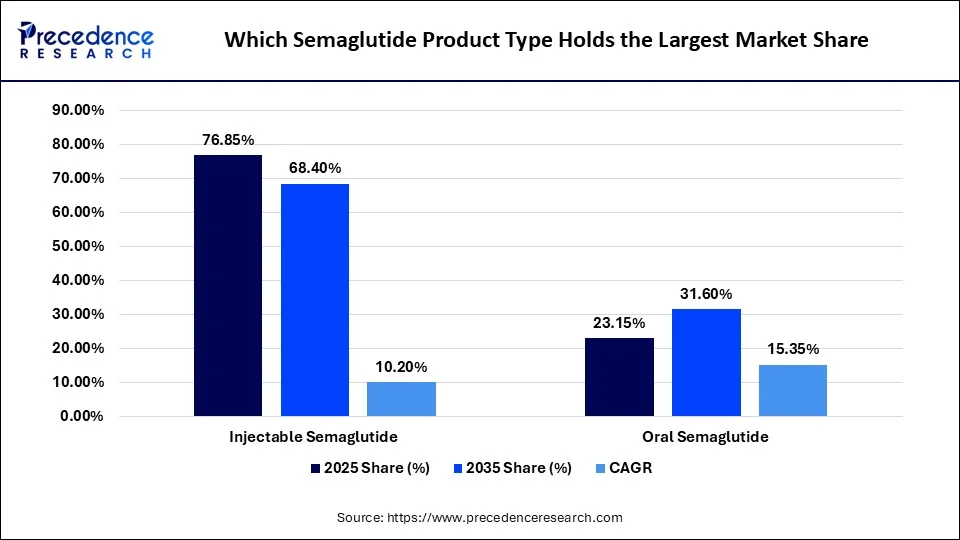
Injectable Semaglutide segment held the highest market share of 76.85% in 2025 and is expected to expand at a CAGR of 10.2% during the forecast period. It benefits from a well-established prescription environment because of its reputation for efficacy and reliability in managing type 2 diabetes using GLP-1 therapy. The oral semaglutide segment is expected to grow at the fastest CAGR of 15.35% from 2026 to 2035. This growth is driven by the entry of various competitive oral medications in the market, such as Wegovy. It eliminates various obstacles related to needle-based administration and caters to the preferences of a wider base of patients.
Real-World Semaglutide Development
| Oral Semaglutide Indicator | Latest Reported Figure |
| Oral Wegovy dose | 25 mg once daily |
| OASIS 4 mean weight loss | 16.60% |
| U.S. launch | January 5, 2026 |
| Q1 2026 prescriptions | ~1.3 million |
| Prescriptions since launch by April 2026 | >2 million |
| Weekly prescriptions by April 17, 2026 | >200,000 |
| Q1 2026 sales | DKK 2.256 billion |
Wegovy was launched in January 2026 and has secured more than 2 million prescriptions by April 2026. It reached around 1.3 million prescriptions in the first quarter of 2026 itself. It provides a 25 mg dose of semaglutide and is usually recommended by healthcare professionals to be taken once daily. These figures prove that there is a strong preference among patients to take the oral route of administration.
Expert Analyst View - Product Type
The trend is gradually shifting from injectable semaglutide to oral semaglutide, owing to high patient convenience and medication adherence. The oral segment is estimated to be the major disruptive segment, accounting for a CAGR of 15.35% during the forecast period, which is slightly above the injectable segment.
Which Was the Most Widespread Indication in the Semaglutide Market in 2025?
Type 2 diabetes was the largest indication in 2025, as it accounted for a 53.75% share and is expected to grow at a CAGR of 9.3% from 2026 to 2035. Its share is expected to decrease to 44.85% by 2035, as the obesity and weight management segment is expanding at the fastest CAGR of 13.65% during the forecast period, which is expected to hold the largest share of 49.10% by 2035.
Cardiovascular Expansion
The approval of Wegovy by the FDA to decrease the threat of fatal cardiovascular emergencies in adults with heart disease and obesity drives the growth of this segment. This medication expands the use of semaglutide beyond just obesity management to maintain cardiovascular health long-term in vulnerable patients. This enables pharmaceutical companies to market such medications for the management of chronic heart conditions, rather than as a short-term solution to contain obesity.
Global Obesity Burden Supporting Semaglutide Demand
| Indicator | Latest Reported Data |
| Adults overweight globally, 2022 | 2.5 billion |
| Adults living with obesity, 2022 | 890 million |
| Global adult overweight prevalence | 43% |
| Global adult obesity prevalence | 16% |
| People living with obesity globally | >1 billion |
| Obesity prevalence increase, adults 1990-2022 | More than 2x |
| Obesity prevalence increase, adolescents 1990-2022 | ~4x |
| Children under 5 overweight, 2024 | 35 million |
| Children/adolescents 5-19 overweight, 2022 | >390 million |
| Children/adolescents 5-19 with obesity, 2022 | 160 million |
According to WHO, over 1 billion people suffered from obesity in 2022, out of which 890 million are adults. The proportion of obese adults has almost doubled from 1990 to 2022, and quadrupled in the case of adolescents. The number of obese children under 5 in 2024 reached 35 million.
Expert Analyst View - Indication
Growing prevalence of obesity drives the demand for dedicated obesity treatment, but on-the-ground demand for semaglutide will depend on diagnostics, cost-effectiveness, the insurance ecosystem, prescription methodologies, and chronic treatment consistency.
Which Dosage Form Was Most Adopted in 2025?
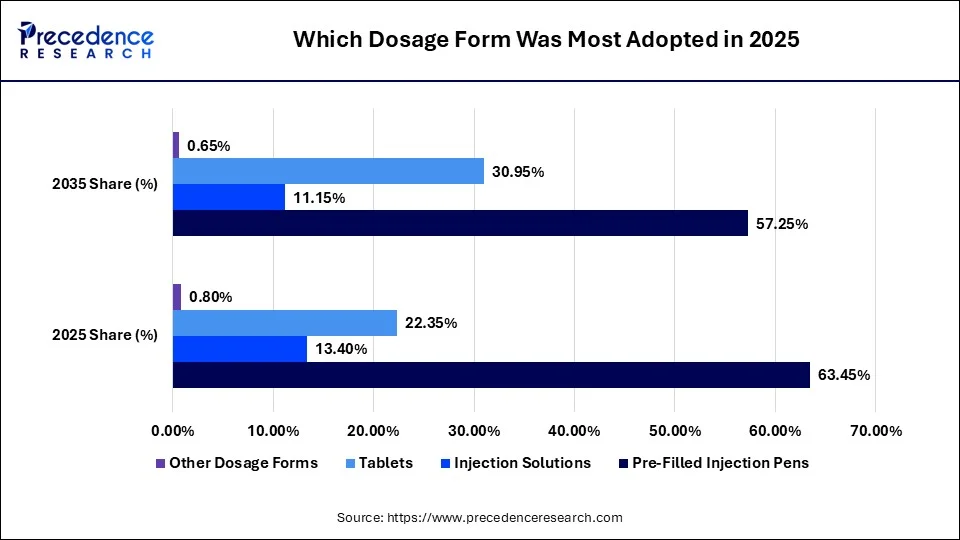
The pre-filled injection pens segment was the dominant segment with a 63.45% share in 2025 and is expected to expand at a CAGR of 10.35% during the forecast period. Its share is expected to decrease to 57.25%, as the tablets segment is expected to grow at the fastest CAGR, leaping from a 22.35% share in 2025 to a 30.95% share in 2035. Pre-filled injection pens have the most widespread usage due to the presence of a well-established portfolio, some of which include Ozempic and Wegovy. Tablets are being increasingly used as a means of oral administration for obesity, along with conventional diabetes management.
Product Portfolio Intelligence
| Product | Active Ingredient | Primary Role |
| Ozempic | Semaglutide | Type 2 diabetes |
| Rybelsus | Oral semaglutide | Type 2 diabetes |
| Wegovy injection | Semaglutide | Obesity/weight management |
| Wegovy pill | Oral semaglutide | Weight management |
| Wegovy injection | Semaglutide | Cardiovascular risk reduction in eligible patients |
Ozempic and Rybelsus are used for type 2 diabetes, with the latter taken orally. In the U.S., these 2 medications have been approved to control blood sugar levels in patients suffering from type 2 diabetes and for cardiovascular risk management in vulnerable individuals with the same disease. Wegovy is available as a pill as well as an injection, wherein the latter is used for obesity management and to reduce cardiovascular risk, and the pill offers an oral route to take semaglutide to manage weight.
Novo Nordisk Semaglutide Product Sales
Novo Nordisk remains the central commercial company in semaglutide. Its 2025 annual report provides unusually strong product-level evidence.
| Product | 2025 Sales (DKK Billion) | U.S. Sales (DKK Billion) | International Sales (DKK Billion) |
| Ozempic | 127.09 | 88.47 | 38.62 |
| Wegovy | 79.11 | 51.02 | 28.09 |
| Rybelsus | 22.09 | 8.83 | 13.26 |
| Total | 228.29 | 148.31 | 79.98 |
In 2025, Novo Nordisk witnessed Ozempic sales of DKK 127.09 billion, Wegovy sales of DKK 79.11 billion, and Rybelsus sales of $22.09 billion. The combined portfolio demonstrates the commercial scale of semaglutide across injectable diabetes, injectable obesity, and oral diabetes applications.
Important Commercial Insight
Novo Nordisk reported total sales of DKK 82.347 billion for its obesity care segment, growing 26% in reported currency and 31% at constant exchange rates. Global branded GLP-1 obesity volume increased 104%, while Novo Nordisk reported a 59.6% branded volume share.
Expert Analyst View - Dosage Form
Tablets are expected to gain substantial share from pre-filled injection pens. The commercial launch of oral Wegovy is proof that the transition is already underway.
Which Distribution Channel Segment was Dominant in 2025?
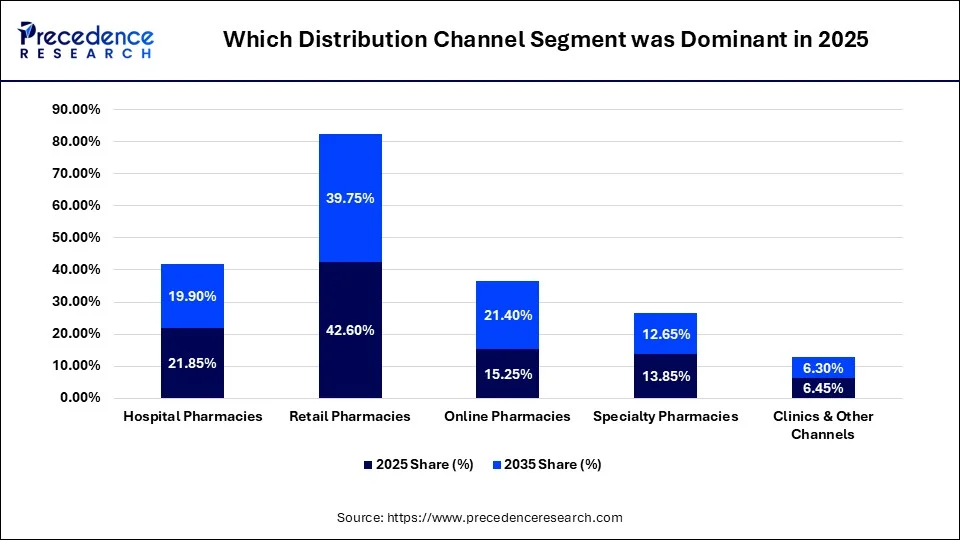
The retail pharmacies segment dominated the market with a 42.6% share in 2025, and is expected to expand at a CAGR of 10.7% from 2026 to 2035. This segment benefits from a mature ecosystem and compatibility with a wide range of patients. The online pharmacies segment is expected to gain the highest amount of market share, growing from 15.25% to 21.4%, as it is expected to grow at the highest CAGR of 15.25% during the forecast period.
Digital Channel Intelligence
This rise can be attributed to the rapid uptake of telehealth, digital prescriptions, and home delivery. Novo Nordisk also acknowledges this trend, as it has provided a self-pay feature in the oral Wegovy unveiled this year to drive prescription uptake. This segment influences patient acquisition as well as enhanced accessibility to treatments.
Expert Analyst View - Distribution Channel
The demand for online pharmacies is increasing as patients and healthcare professionals can directly purchase semaglutide medications from manufacturers, reducing exorbitant costs of medicines. Retail pharmacies and online pharmacies are widely preferred distribution channels.
Which Route of Administration Segment Dominated the Market?
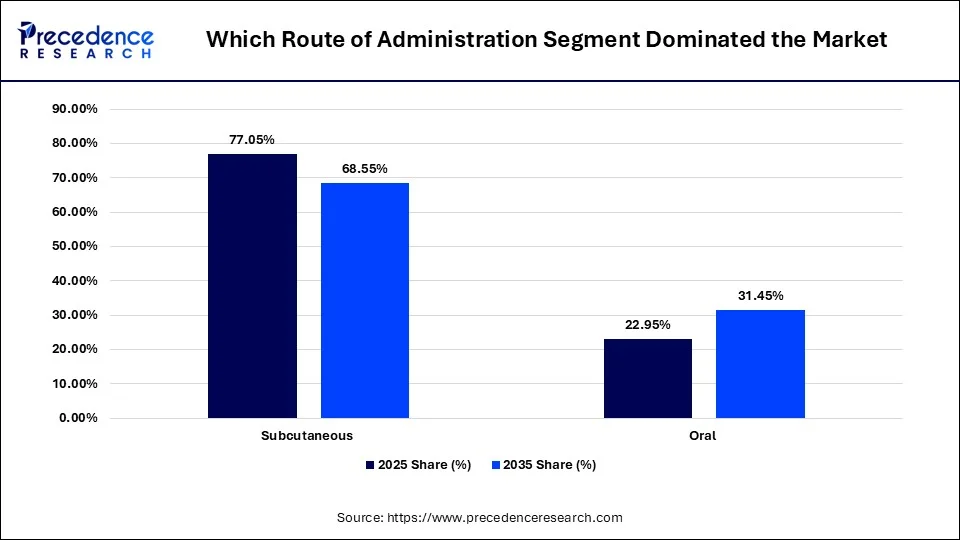
The subcutaneous segment held the largest market share of 77.05% in 2025, as the injectable route helps deliver the drug directly into the bloodstream. This results in a faster onset of action and fewer side effects. However, in the coming years, the oral segment is expected to expand rapidly with a CAGR of 15.4%, owing to high convenience for oral tablets and the need for self-administration.
Expert Analyst View - Route
The oral route is widely preferred as it addresses one of the biggest behavioral barriers associated with injectable therapies. The widespread availability of oral semaglutide for diabetes and obesity leads to expanded treatment adoption. Specific dosing requirements and adherence considerations are essential for tablet administration.
Which Patient Groups Accounted for the Most Commercial Activity in 2025?
The adults segment led the market with an 89.65% share in 2025 and is expected to grow at a significant CAGR of 11.1% from 2026 to 2035. The elderly patients segment is expected to grow at the fastest CAGR of 14.05% during the forecast period, because of the growing population of this age group and a rising prevalence of cardiometabolic conditions among them.
Diabetes Population Supporting Demand
| Region | Adults With Diabetes, 2024 |
| Western Pacific | 215M |
| South-East Asia | 107M |
| Middle East & North Africa | 85M |
| Europe | 66M |
| North America & Caribbean | 56M |
| South & Central America | 35M |
| Africa | 25M |
| Global | 589M |
The most recent IDF Diabetes Atlas reports that an estimated 589 million people in the age range of 20 to 79 suffered from diabetes in 2024, which translates to approximately 11.1% of the net global adult population. Diabetes is a major driver of semaglutide treatment adoption among adults in various regions such as South-East Asia, the Western Pacific, and the Middle East & North Africa.
Expert Analyst View - Patient Group
The adults segment will remain dominant over the studied period, but the geriatric population demonstrates faster growth, owing to the increasing prevalence of diabetes, obesity, and cardiovascular diseases.
Which End Users Led the Market in 2025?
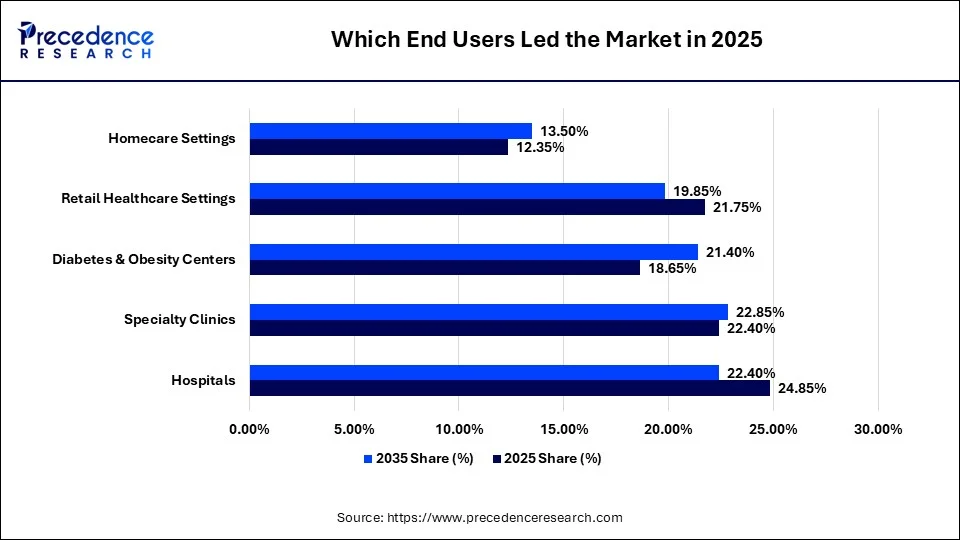
The hospitals segment accounted for the major revenue share as it held a 24.85% share in 2025 and is expected to expand at a CAGR of 10.3% during the forecast period. Its share is expected to decrease in the upcoming years, as fragmentation in the market increases and patients are seeking treatments from various other types of medical institutions. Diabetes and obesity centers are expected to increase their market share at the highest CAGR of 13.05% from 2026 to 2035.
Expert Analyst View- End Users
Specialty diabetes and obesity centers and home care are being increasingly preferred by patients to facilitate chronic outpatient treatment and self-administration of medications. This trend is expected to decrease patient reliance on hospital pharmacies and boost retail, specialized, and digital pharmacy segments.
Which Regions Accounted for the Most Commercial Activity in the Market?
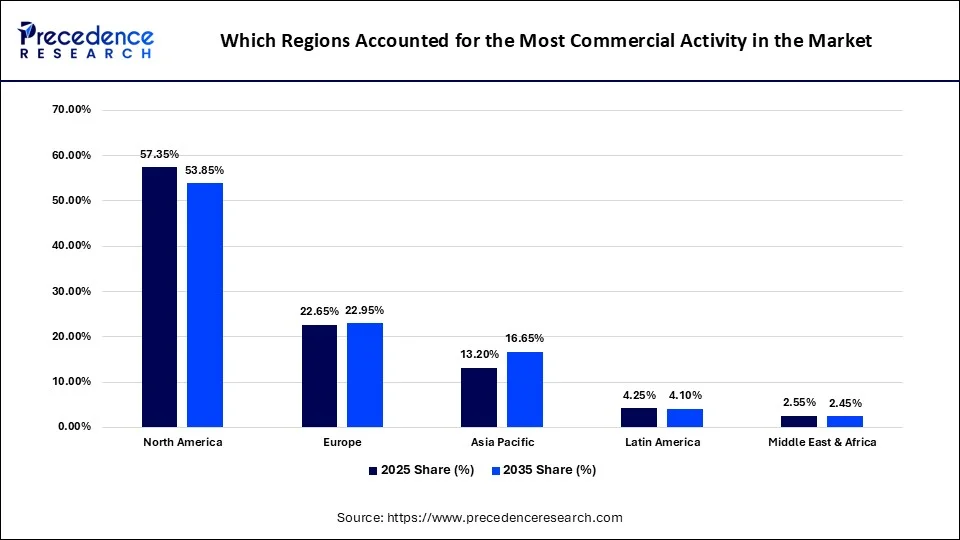
North America dominated the market with a 57.35% share in 2025 and is expected to grow at a CAGR of 10.75% from 2026 to 2035. The availability of advanced healthcare infrastructure and the growing demand for obesity care drive market growth in North America. Asia Pacific is expected to grow at the fastest CAGR of 14.05% during the forecast period, taking its global share from 13.2% in 2025 to 16.65% in 2035.
Novo Nordisk Regional Sales Analysis
Novo Nordisk Regional Obesity-Care Growth
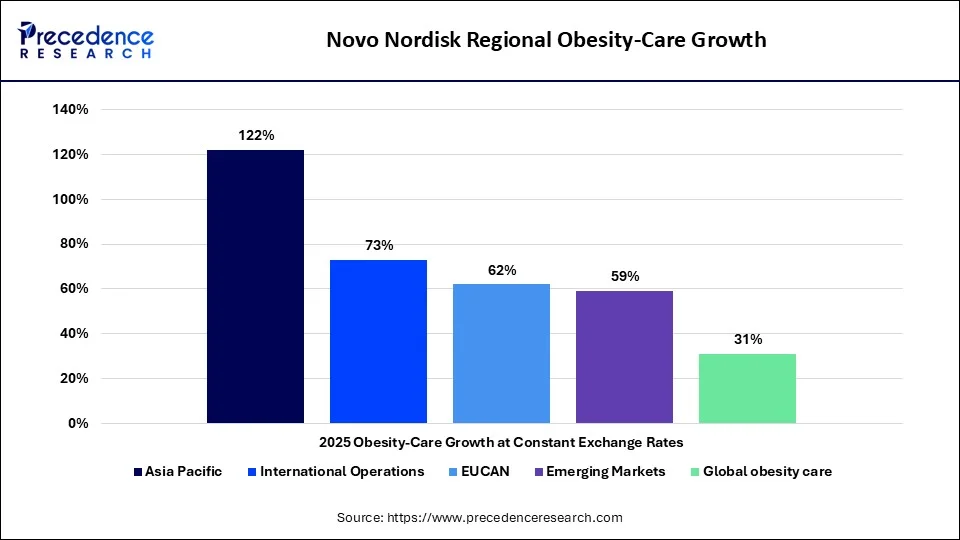
The company reported a 122% rise in obesity management solutions sales in Asia Pacific in 2025, which is more than any other region across the globe. Sales in Europe/Canada grew by 62%, and by 59% in emerging markets.
North American Obesity Demand
| U.S. Indicator | Latest Figure |
| Adult obesity prevalence, 2021-2023 | 40.30% |
| Severe obesity prevalence | 9.70% |
| Adults age 20-39 with obesity | 35.50% |
| Adults age 40-59 with obesity | 46% |
| Adults age 60+ with obesity | 39% |
| U.S. states/territories with ≥25% obesity prevalence in 2024 | All |
In the U.S., around 40.3% of adults qualified to be in the category of being obese in the period from August 2021 to August 2023, and 9.7% fell in the range of severe obesity. Latest data show that the rate of obesity peaks in the 40-50 age group at 46.4%, with the 20-39 and 60+ age groups at 35.5% and 38.9%, respectively.
Expert Analyst View- North America
The most standout insight is that each and every state in the country had an obesity rate over 25% in 2024. High rates of obesity drive the demand for semaglutide treatment and make it a lucrative region for pharmaceutical companies to generate significant revenue.
Regulatory Expansion and Indication Development
| Regulatory / Clinical Development | Significance |
| Ozempic approved for T2D. | Established diabetes base |
| Rybelsus oral semaglutide | Established tablet-based treatment |
| Wegovy injection for obesity | Major weight-management indication |
| Wegovy cardiovascular-risk indication | Expanded cardiometabolic positioning |
| Wegovy pill approved 2025 | First oral GLP-1 for U.S. weight management |
| Wegovy HD 7.2 mg approved 2026 | Higher-dose injectable obesity treatment |
| Oral semaglutide expansion | Major future formulation opportunity |
Ozempic has a mature ecosystem in diabetes treatment, and Rybelsus is a well-established oral treatment. Wegovy has a sizeable portfolio of approved treatments which includes:
- Wegovy Injection: Obesity management indication
- Wegovy Cardiovascular Risk Management: Boosts its presence in the cardiometabolic segment.
- Wegovy Pill (approved in 2025): The first oral GLP-1 therapy for obesity control in the U.S.
- Wegovy HD 7.2 mg (approved in 2026): Injectable treatment; provides a higher dose of semaglutide.
According to our Senior Researcher Aditi Shivarkar, future potential for pharmaceutical companies is related to lifecycle optimization of semaglutide, which includes doses, means of administration, and treatment demographics. The oral route and higher doses of injectable treatments can expand the patient base while boosting the lifecycle of the foundational molecule.
Expert Analyst View- Regulatory Environment
There was a significant expansion in the portfolio of various types of treatments in 2026. Novo Nordisk reported the approval of Wegovy HD 7.2 mg by the FDA and its launch in the U.S., and the STEPUP trial showed that it enabled a mean weight loss of 20.7%.
Manufacturing and Supply Intelligence
| Supply Indicator | Latest Data |
| Semaglutide injection shortage | Resolved February 2025 |
| Shortage period | Since 2022 |
| FDA conclusion | Supply meets current/projected demand. |
| Compounders under 503A enforcement discretion | Transition ended April 2025 |
| 503B enforcement discretion transition | Ended May 2025 |
The manufacture of semaglutide injections was not able to keep up with the demand from 2022 to 2025, as reported by the FDA. The FDA had relaxed certain rules mentioned in the 503A regulation, which states the rules that compounding pharmacies have to follow to produce semaglutide for individuals, to alleviate the shortage issue. When the issue was resolved to a significant degree by 2025, the normal rules were reinforced if a compounding pharmacy wanted to manufacture FDA-approved semaglutide formulations for individuals. The FDA had also relaxed certain rules for registered outsourcing facilities that manufacture semaglutide, and this relaxation also ended in 2025.
Expert Analyst View - Manufacturing
This shows that manufacturing capacity is an important factor for companies to gain an edge against their rivals. Pharmaceutical firms that aspire to hold a leading status will have to optimize API manufacturing, peptide production, formulation, sterile filling, injector capacity, capable infrastructure, and a robust global supply chain.
Major Competitive Companies
| Company | Key Therapy / Platform | Competitive Relevance |
| Novo Nordisk | Semaglutide | Ozempic, Wegovy, Rybelsus |
| Eli Lilly | Tirzepatide | Mounjaro, Zepbound |
| Eli Lilly | Orforglipron | Oral GLP-1 competitor |
| Boehringer Ingelheim / Zealand Pharma | Survodutide | Obesity/metabolic pipeline |
| Roche | CT-388 and metabolic pipeline | Next-generation obesity therapies |
| Amgen | MariTide | Long-acting obesity/metabolic pipeline |
| Pfizer | Oral GLP-1 development | Oral obesity competition |
| AstraZeneca | Metabolic pipeline | Diabetes/obesity opportunity |
Novo Nordisk has an excellent lineup that consists of Ozempic, Wegovy, and Rybelsus and has an edge from starting early and a mature ecosystem across various stages of the supply chain. Currently, it has the strongest semaglutide ecosystem and massive sales across the globe. One of our senior researchers, Aman Singh, suggests that the fragmentation in the market is increasing as rivals are competing through the development of combination formulations, oral therapies, and advanced metabolic treatments. Eli Lilly and Pfizer are prominent players in the oral medications segment, and Roche has developed advanced obesity therapies. Boehringer Ingelheim/Zealand Pharma and Amgen focus on the obesity and metabolic segments, with the latter emphasizing the development of long-lasting therapies.
Expert Analyst View - Companies
Some of the medical parameters that have a significant effect on patient preference include weight loss efficiency, blood sugar control, heart health management, administration frequency, and treatment persistence. Commercial factors include manufacturing capability, affordability, insurance ecosystem, treatment accessibility, and convenience.
Competitive Landscape
Since Novo Nordisk has a wide portfolio of Ozempic, Wegovy, and Rybelsus for the treatment of diabetes and obesity, it has a significant first-mover and installed-base advantage in the market. However, the competitive environment is becoming more difficult. Tirzapetide creates pressure through dual GIP/GLP-1 activity, while oral competitors could challenge semaglutide's historical injectable advantage. Companies focus on developing novel metabolic therapies with better efficacy, convenience, tolerability, price, and success compared to market products. This increases competition among manufacturers related to the entire treatment ecosystem rather than molecule-level differentiation alone.
Buyer Intelligence - Major Buyer Groups
| Buyer | Main Purchasing Need | Key Decision Factors |
| Hospitals | Diabetes/obesity treatment | Clinical evidence, formulary access |
| Specialty Clinics | Metabolic disease treatment | Efficacy, patient outcomes |
| Diabetes Centers | Glycemic management | HbA1c, cardiovascular outcomes |
| Obesity Centers | Chronic weight management | Weight loss, persistence |
| Retail Pharmacies | High-volume prescriptions | Supply availability |
| Specialty Pharmacies | Patient support | Reimbursement and adherence |
| Health Systems | Population health | Outcomes and total cost |
| Insurers/Payers | Cost-effective therapy | Clinical benefit vs reimbursement cost |
| Telehealth Providers | Accessible obesity treatment | Prescription workflow and fulfillment |
| Employers/Health Programs | Weight/metabolic management | Health outcomes and program economics |
Hospitals, specialty clinics, diabetes centers, health systems, insurers/payers, and telehealth providers are major buyers of semaglutide. Purchasing decisions are increasingly influenced by access and utilization. The increasing clinical evidence of semaglutide and the availability of favorable reimbursement policies support the purchase decision of semaglutide.
Buyer Intelligence - Procurement Criteria
| Buyer Criterion | Importance |
| Clinical efficacy | Very High |
| Cardiovascular outcomes | Very High |
| Weight-loss efficacy | Very High |
| Glycemic control | Very High |
| Safety/tolerability | Very High |
| Drug availability | Very High |
| Reimbursement | Very High |
| Price/net treatment cost | Very High |
| Dosing convenience | High |
| Patient adherence | High |
| Manufacturing reliability | High |
| Patient-support programs | High |
| Digital prescribing integration | Increasing |
| Oral formulation availability | Increasing |
Semaglutide is primarily procured based on clinical efficacy, cardiovascular outcomes, glycemic control, safety/tolerability, and drug availability. Patients' procurement criteria also depend on dosing convenience, patient adherence, and manufacturing reliability. The future of procurement criteria for semaglutide is driven by digital prescribing integration and oral formulation availability.
Expert Analyst View - Buyer Intelligence
Patients, prescribers, payers, pharmacies, and manufacturers are influenced by the commercial pathway. Semaglutide faces commercial barriers for chronic obesity management as it raises questions regarding the affordability and accessibility of the drug through preferred care channels. This makes reimbursement, persistence, supply reliability, and patient-support programs critical competitive variables.
Treatment Access and Market Expansion
WHO released the first worldwide guidelines on GLP-1 treatment for obesity in December 2025 and noted that around 1 billion people across the globe have obesity. The organization encouraged the adoption of GLP-1 therapy as part of its extensive obesity management in certain conditions.
Expert Analyst View- Treatment Access
One of our senior researchers, Aditi Shivarkar, interpreted that global acknowledgement can drive better clinical adoption, medical institution adoption, enhanced diagnosis, and higher demand in developing countries. Cost-effectiveness and production capability are important factors for widespread accessibility.
Emerging Commercial Opportunities
| Opportunity | Market Impact |
| Oral semaglutide | Expands non-injectable patient base |
| Higher-dose semaglutide | Supports patients requiring greater weight reduction |
| Cardiovascular indication | Expands eligible treatment population |
| Asia Pacific expansion | Large diabetes/obesity population |
| Digital obesity care | Increases treatment access |
| Homecare treatment | Supports self-management |
| Specialty obesity centers | Improves treatment initiation and monitoring |
| Combination metabolic therapies | Future lifecycle opportunity |
| Improved manufacturing capacity | Reduces supply constraints |
| Broader reimbursement | Major volume catalyst |
The oral route and higher doses of semaglutide are some of the most impactful parameters that will assist in widening the patient base and reaching people who need moderate to severe obesity management, respectively. Companies will focus on the Asia-Pacific region due to high demand and on adopting digital workflows to enhance accessibility.
Expert Analyst View- Future Opportunities
Homecare treatment presents an opportunity for companies to cater to the increasing patient preference for self-care management, which is complemented by the development of oral medications that do not need supervision, unlike injections.
Expert Insights
The most prominent factors that will affect competence are:
- Manufacturing scale
- Injectable capacity
- Oral formulation technology
- Dose optimization
- Cardiovascular evidence
- Obesity outcomes
- Patient adherence
- Reimbursement
- Global distribution
- Digital-care integration
Some of the most significant buyers include:
- Health systems
- Hospitals
- Endocrinologists
- Obesity specialists
- Primary-care physicians
- Diabetes centers
- Obesity clinics
Expert Insights
The semaglutide market is poised for sustained growth, driven by the increasing prevalence of obesity and type 2 diabetes and expanding patient awareness. I believe the introduction of more affordable generic formulations is expected to improve accessibility and accelerate market penetration, particularly in emerging economies of Asia and Africa. Future growth is likely supported by innovations in oral formulations and expanding therapeutic applications.
Our Experts
The primary market research process was carried out by Deepa Pandey, Senior Research Associate, who also designed the methodology and did market segmentation, regional trend analysis, combination formulations, competitive analysis, and forecasts, laying the foundation for the analytical part of the report.
Aman Singh, Head of Research, has gathered and checked regulatory policies, company financial information, information on semaglutide medications, production information, commodity price information, and various other quantitative information sources, which were obtained independently, thereby increasing the quality of evidence supporting the calculations of the market values.
Aditi Shivarkar, VP Research, has validated and refined the research material, verified facts, corrected inconsistencies, and completed the research document, making it accurate and to the point.
Semaglutide Market Segments Covered in This Report
By Product Type
- Injectable Semaglutide
- Oral Semaglutide
By Indication
- Type 2 Diabetes
- Obesity & Weight Management
- Cardiovascular Risk Reduction
- Other Indications
By Dosage Form
- Pre-Filled Injection Pens
- Injection Solutions
- Tablets
- Other Dosage Forms
By Distribution Channel
- Hospital Pharmacies
- Retail Pharmacies
- Online Pharmacies
- Specialty Pharmacies
- Clinics & Other Channels
By Route of Administration
- Subcutaneous
- Oral
By Patient Group
- Adults
- Elderly Patients
- Other Patient Groups
By End User
- Hospitals
- Specialty Clinics
- Diabetes & Obesity Centers
- Retail Healthcare Settings
- Homecare Settings
Regions
- North America
- Europe
- Asia Pacific
- Latin America
- Middle East & Africa
For inquiries regarding discounts, bulk purchases, or customization requests, please contact us at sales@precedenceresearch.com
Frequently Asked Questions
Tags





Ask For Sample
No cookie-cutter, only authentic analysis – take the 1st step to become a Precedence Research client
 Get a Sample
.webp)



 sales@precedenceresearch.com
 Schedule a Meeting
