



Two Wheeler Anti Lock Braking System Market Size, Share and Trends 2026 to 2035
Two Wheeler Anti Lock Braking System Market (By Technology: Single Channel, Dual Channel; By Propulsion: ICE, Electric; By Engine Displacement: Upto 150 cc, Above 150 to 500 cc, Above 500 cc; By Type: Motorcycle, Scooter) - Global Industry Analysis, Size, Trends, Leading Companies, Regional Outlook, and Forecast 2026 to 2035
Source: https://www.precedenceresearch.com/two-wheeler-anti-lock-braking-system-market
 Get a Sample
 Table Of Content


What is the Two Wheeler Anti Lock Braking System Market Size?
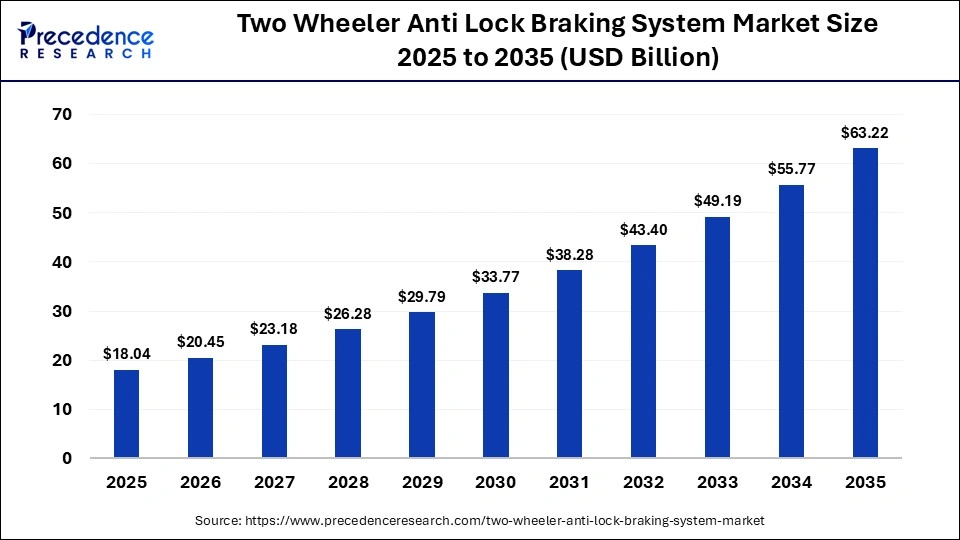
The global two wheeler anti lock braking system market size was calculated at USD 18.04 billion in 2025 and is predicted to increase from USD 20.45 billion in 2026 to approximately USD 63.22 billion by 2035, expanding at a CAGR of 13.36% from 2026 to 2035. The two wheeler anti lock braking system market is growing steadily, driven by stringent safety regulations, increasing consumer safety awareness, and growth in two-wheeler sales and urbanization among others.
Market Highlights
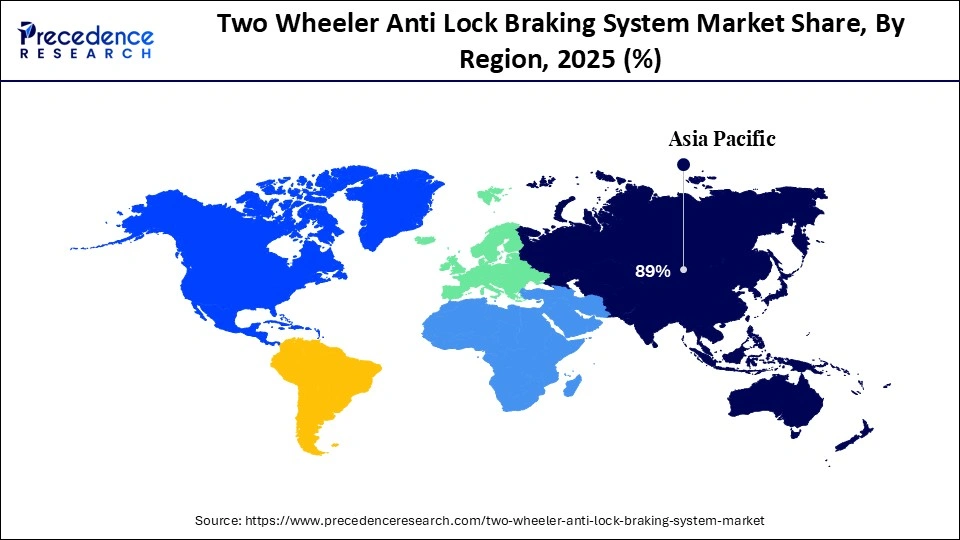
- Asia Pacific led the two wheeler anti lock braking system market with the largest market share of 89% in 2025.
- North America is estimated to expand at the highest in the market between 2026 and 2035.
- By technology, the dual channel segment contributed the biggest market share of 62% in 2025.
- By technology, the single channel segment is growing at a highest CAGR between 2026 and 2035.
- By propulsion, the ICE segment accounted for the biggest market share of 76% in 2025.
- By propulsion, the electric segment is expected to expand at a notable CAGR from 2026 to 2035.
- By engine displacement, the above 150 to 500 cc segment held dominant market share in 2025.
- By engine displacement, the above 500 cc segment is projected to grow at a solid CAGR of between 2026 and 2035.
- By type, the motorcycle segment contributed the highest market share of 73% in 2025.
- By type, the scooter segment is growing at a highest CAGR between 2026 and 2035.
What Factors Are Accelerating Growth in the Two-Wheeler Anti Lock Braking System Market?
A two wheeler anti lock braking system is a safety technology that prevents wheel lock-up during sudden braking, improving stability and rider control. Market growth is accelerated by stringent safety regulations, rising road-safety awareness, increasing two-wheeler sales, technological advancements, electrification trends, and growing demand for premium motorcycles and scooters with enhanced safety features.
How Can AI Integration Transform the Two Wheeler Anti Lock Braking System Market?
AI integration can significantly improve the two-wheeler anti-lock braking system industry by enabling smarter, adaptive braking performance. AI algorithms can analyze real-time data from sensors to predict road conditions, rider behavior, and emergency scenarios, allowing anti lock braking system to adjust braking pressure more precisely. This improves stability during cornering, wet surfaces, and sudden stops.
AI also supports predictive maintenance by detecting early system faults, reducing failures and downtime. Additionally, AI-driven learning models help manufacturers optimize anti lock braking system calibration for different riding styles, vehicle types, and electric two-wheelers, enhancing safety, efficiency, and overall riding confidence.
Primary Trends Influencing the Development of the Two Wheeler Anti Lock Braking System Market
- Advanced Sensor-based Anti Lock Braking Systems: Two-wheeler anti lock braking system technology is increasingly using advanced sensors to monitor wheel speed, braking force, and vehicle dynamics in real time. These systems enable more precise brake modulation under varying road and weather conditions, improving stability during sudden braking, cornering, and uneven surface riding, especially at higher speeds.
- Anti Lock Braking System Penetration in Entry-level and Commuter Motorcycles: Anti lock braking system is no longer limited to premium or high-capacity motorcycles. Manufacturers are actively introducing anti lock braking system in lower-engine-capacity bikes and scooters to meet regulatory requirements and growing safety expectations. This trend is making anti lock braking system a standard safety feature, improving protection for daily commuters and first-time riders.
- Rising Adoption of Dual-channel Anti Lock Braking System : Dual-channel anti lock braking system, which independently controls braking on both front and rear wheels, is gaining traction across mid-range two-wheelers. This trend enhances braking balance and reduces stopping distance in emergency situations, particularly on wet or slippery roads, offering riders better confidence and improved overall braking performance.
- Integration with Electric Two-wheelers: The growing electric two-wheeler segment is driving the development of anti lock braking Systems compatible with electric drivetrains. Anti lock braking system is being optimized to work alongside regenerative braking systems, ensuring smooth braking transitions, improved energy efficiency, and enhanced rider safety in lightweight electric scooters and motorcycles.
- Focus on Lightweight and Cost-efficient Anti Lock Braking System designs: Manufacturers are developing compact, lightweight, and cost-effective anti lock braking system units to reduce overall vehicle weight and production costs. This trend supports wider adoption across mass-market two-wheelers while maintaining braking efficiency, fuel efficiency, and performance, especially in price-sensitive emerging markets.
Market Scope
| Report Coverage | Details |
| Market Size in 2025 | USD 18.04 Billion |
| Market Size in 2026 | USD 20.45 Billion |
| Market Size by 2035 | USD 63.22 Billion |
| Market Growth Rate from 2026 to 2035 | CAGR of 13.36% |
| Dominating Region | Asia Pacific |
| Fastest Growing Region | North America |
| Base Year | 2025 |
| Forecast Period | 2026 to 2035 |
| Segments Covered | Technology, Propulsion, Engine Displacement, Type, and Region |
| Regions Covered | North America, Europe, Asia-Pacific, Latin America, and Middle East & Africa |
Segment Insights
Technology Insights
By technology, the dual channel segment held a dominant position in the market in 2025. The dual channel segment dominates the market due to its ability to independently control front and rear wheel braking, delivering superior stability and shorter stopping distances. Rising safety regulations, increasing adoption in mid- and premium-range two-wheelers, growing consumer preference for enhanced control, and improved performance on wet or uneven roads further support its widespread acceptance.
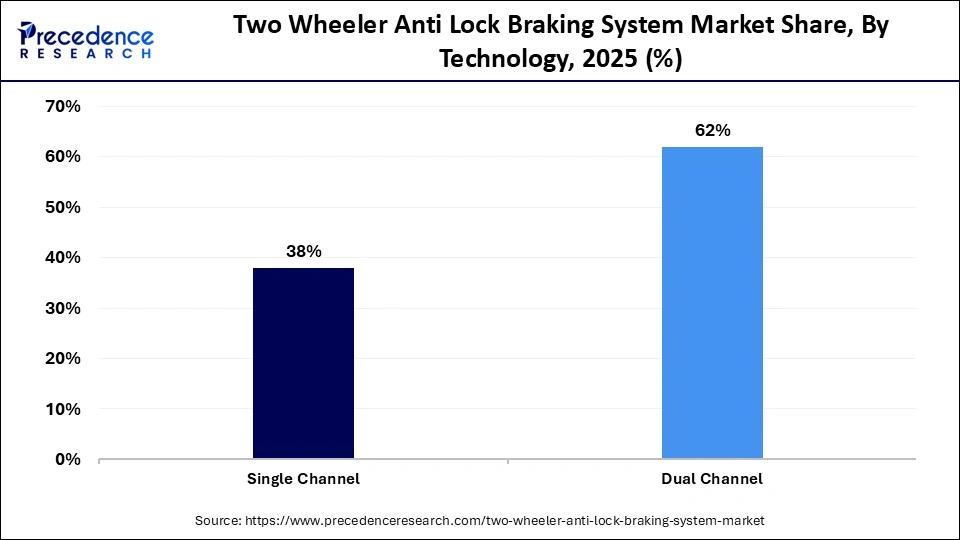
The single channel segment is expected to grow at the fastest CAGR in the market between 2026 and 2035. The single channel segment is the fastest-growing in the market due to its lower cost, simpler design, and easy integration in entry-level motorcycles and scooters. Expanding safety regulations, rising demand for affordable commuter two-wheelers, and growing safety awareness among cost-sensitive buyers further accelerate adoption.
Propulsion Insights
The ICE segment held a major revenue share in the market in 2025. The ICE segment dominates the two wheeler anti lock braking system market due to the large existing base of petrol-powered motorcycles and scooters, widespread availability, and higher sales volumes in developing regions. Established manufacturing ecosystems, affordability, and strong consumer preference for conventional two-wheelers continue to drive anti lock braking system integration in ICE models.
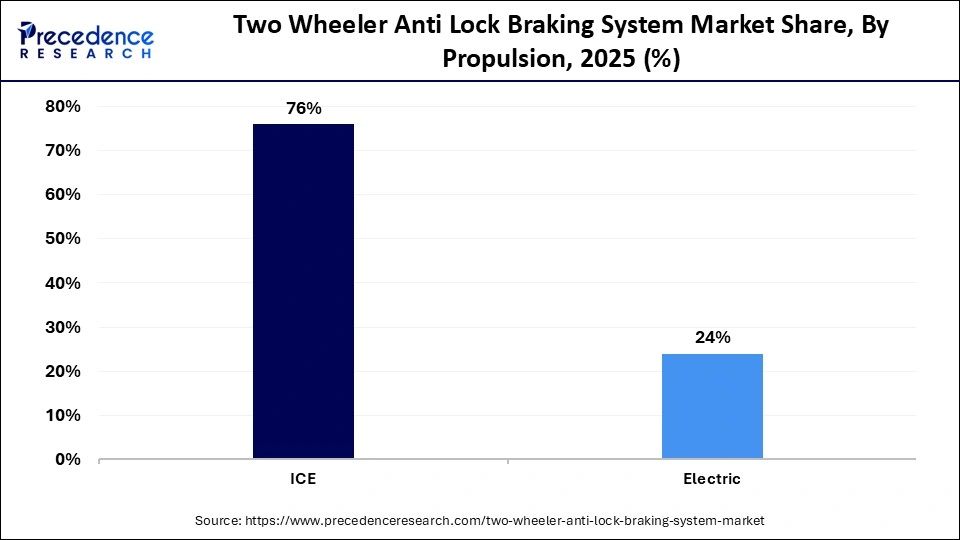
The electric segment is expected to grow with the highest CAGR in the two wheeler anti lock braking system market during the studied years. The electric segment is the fastest growing in the market due to rapid electric two-wheeler adoption, supportive government incentives, and rising urban mobility demand. Increasing focus on rider safety, integration of anti lock braking system with regenerative braking, and growing consumer preference for advanced, technology-driven electric scooters and motorcycles further accelerate growth.
Engine Displacement Insights
The above 150 to 500 cc segment contributed the biggest revenue share in the market in 2025. The above 150 to 500 cc segment dominates the two-wheeler anti-lock braking system market due to its strong presence in mid-range and premium motorcycles where safety features are widely expected. Higher vehicle speeds, increased highway usage, stricter safety regulations, and rising consumer preference for performance-oriented bikes drive widespread anti lock braking system adoption in this engine capacity range.
The above 500 cc segment is expected to witness the fastest growth in the two wheeler anti lock braking system market over the forecast period. The above 500 cc segment is the fastest growing in the two-wheeler anti lock braking system market due to rising demand for premium and high-performance motorcycles. Increasing long-distance and highway riding, higher operating speeds, stringent safety norms, and strong consumer willingness to invest in advanced safety technologies are accelerating anti lock braking system adoption in this segment.
Type Insights
The motorcycle segment dominated the global market in 2025. The motorcycle segment dominates the two-wheeler anti-lock braking system market due to its larger global sales, higher engine capacities, and greater usage for long-distance and high-speed travel. Rising safety regulations, increasing consumer awareness, and demand for enhanced control and stability further drive widespread anti lock braking system adoption in motorcycles compared to scooters.
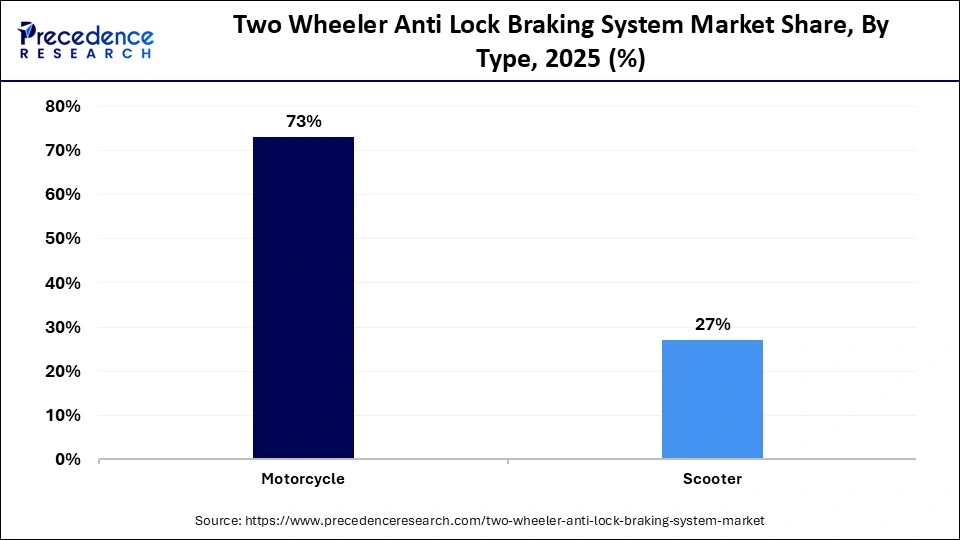
The scooter segment is expected to grow with the highest CAGR in the market during the studied years. The scooter segment is the fastest growing in the two-wheeler anti-lock braking system market due to increasing urban commuting demand, rising safety awareness among riders, and broader regulatory requirements. Lightweight design, affordability, and growing adoption of mid-range and premium scooters equipped with anti lock braking system further accelerate its market growth and popularity.
Regional Insights
What is the Asia Pacific Two Wheeler Anti Lock Braking System Market Size?
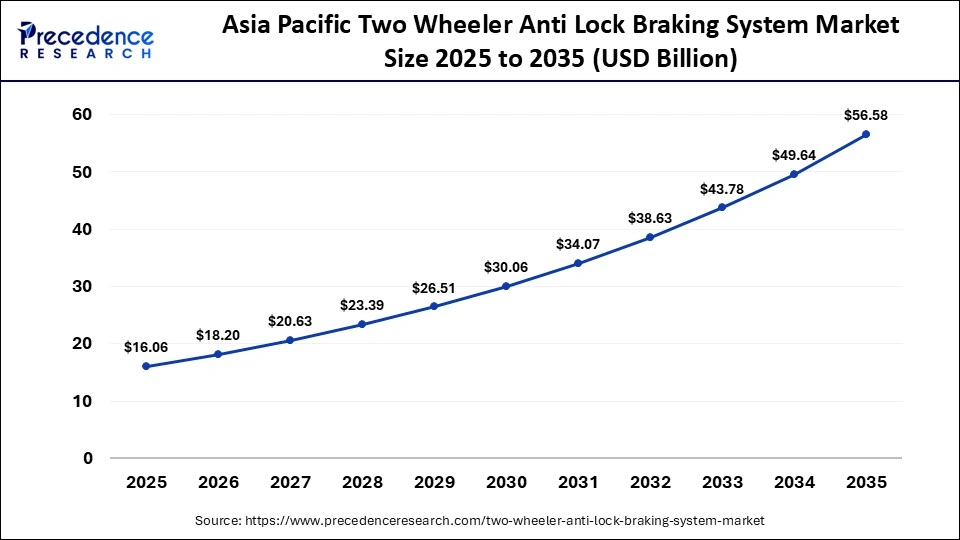
The Asia Pacific two wheeler anti lock braking system market size is expected to be worth USD 56.58 billion by 2035, increasing from USD 16.06 billion by 2025, growing at a CAGR of 13.42% from 2026 to 2035.
Why is Asia Pacific the Top Region for Two Wheeler Anti Lock Braking System Market?
Asia Pacific dominated the global market with in 2025, due to high population density, rapid urbanization, and widespread two-wheeler usage for daily commuting. Busy lifestyles, heavy traffic, and preference for affordable, efficient personal transport drive demand for enhanced safety. Strong government regulations, rising road safety awareness, and increasing adoption of mid- and premium-range motorcycles and scooters further support anti lock braking system integration, making the region a key market leader.
China Two Wheeler Anti Lock Braking System Market Trends
China leads the Asia Pacific two wheeler anti lock braking system market due to high two-wheeler adoption, rapid urbanization, and strong government safety regulations. Advanced manufacturing capabilities and upgraded technology, including smart sensors and electronic control systems, enhance anti lock braking system performance and reliability. Growing consumer safety awareness, preference for premium motorcycles, and integration with electric two-wheelers further accelerate market growth in the country.
Why is North America Experiencing the Fastest Growth of the Two Wheeler Anti Lock Braking System Market?
North America is expected to grow at the fastest CAGR in the market during the forecast period. North America is the fastest-growing region in the two-wheeler anti-lock braking system market due to increasing safety awareness, strict government regulations, and rising adoption of premium motorcycles and scooters. Growing interest in recreational and high-performance bikes, urban commuting trends, and technological advancements in Anti lock braking system, such as smart sensors and improved braking control, further drive rapid market expansion in the region.
U.S. Two Wheeler Anti Lock Braking System Market Trends
The U.S. dominates the North American two wheeler anti lock braking system market due to high motorcycle ownership, strong safety regulations, and widespread consumer preference for premium and high-performance bikes. Advanced infrastructure, growing awareness of road safety, and rapid adoption of technologically enhanced anti lock braking systems further reinforce the country's leading position in the regional market.
How Big is the Opportunity for the Growth of the Middle East & Africa in the Two Wheeler Anti Lock Braking System Market?
The Middle East and Africa present significant growth opportunities for the two-wheeler anti-lock braking system market due to increasing two-wheeler usage, rising safety awareness, and improving road infrastructure. In the UAE, supportive government regulations, promotion of advanced vehicle safety technologies, and growing adoption of premium motorcycles and scooters are driving anti lock braking system integration, fostering market development across the region.
Europe Two Wheeler Anti Lock Braking System Market
The Europe two wheeler anti lock braking system market is a technologically advanced and safety-driven market. The region witnesses strong adoption of ABS-equipped motorcycles and scooters due to strict European Union safety regulations, high consumer awareness regarding rider safety and growing demand for premium motorcycles. The shift toward electric motorcycles and scooters is creating new opportunities for compact, lightweight and energy-efficient ABS technologies.
Germany Two Wheeler Anti Lock Braking System Market
Germany is one of the largest contributors to the European market due to its strong automotive engineering ecosystem and high demand for touring and performance motorcycles. The country has a strong presence of advanced braking technology suppliers, playing a major role in ABS innovation. Consumers show high awareness of rider safety, supporting the widespread adoption of ABS.
Latin America Two Wheeler Anti Lock Braking System Market
The Latin America two wheeler anti lock braking system market is gradually expanding as governments, manufacturers, and consumers place greater emphasis on road safety and accident prevention, as traffic congestion and road accidents continue to rise, demand for safer braking technologies is increasing steadily across the region. Growing awareness about rider safety and evolving vehicle safety regulations are encouraging the adoption of ABS-equipped motorcycles.
Brazil Two Wheeler Anti Lock Braking System Market
Brazil remains the largest regional market for two wheeler ABS systems in Latin America due to its large motorcycle industry and strong local demand for commuter bikes and scooters. Rising urban mobility needs and increasing accident rates have encouraged manufacturers to integrate ABS technologies into motorcycles. Countries' growing adoption of electric two-wheelers is creating opportunities for compact and lightweight ABS solutions.
Competitive Landscape
The global two wheeler anti lock braking system market is highly competitive. The companies are continuously focusing on rider safety, advanced braking technologies and regulatory compliance. The major market players include Bosch, Continental AG, ZF Friedrichshafen, Nissin Kogyo and Honda, dominating the market through strong technological expertise, global distribution networks and continuous product innovation. These companies are competing by developing lightweight ABS systems, dual-channel braking technologies, electric two-wheeler compatibility and smart safety integration features. Additionally, the rising safety regulations and increasing consumer awareness regarding road safety continue to accelerate technological advancements across the global market.
Who are the Major Players in the Global Two Wheeler Anti Lock Braking System Market?
The major players in the two wheeler anti lock braking system market include Robert Bosch GmbH, Continental AG, Brembo S.p.A, BWI Group, Honda Motor Co., Ltd., ZF Friedrichshafen AG, Aisin Seiki Co., Ltd., Braking System Components, FTE Automotive, Delphi Technologies, SBS Friction, Sankei Giken, Braktec, TVS Motor Company, Yamaha Motor Co., Ltd., Suzuki Motor Corporation, Hitachi Astemo, Ltd., Mando Corporation, SMK Corporation, and Tamasan.
Recent Developments
- In January 2026, at CES 2026, Hero MotoCorp, motorcycle and scooter manufacturing company partnered with Valeo, automotive company to develop intelligent Advanced Rider Assistance Systems (ARAS) integrating anti lock braking system with advanced sensing technologies. The system enhances real-time braking response, stability during emergency maneuvers, and overall rider safety. This collaboration focuses on future-ready two-wheelers, including electric models, ensuring smarter, safer, and more adaptive braking performance.(Source: https://www.valeo.com)
- In August 2025, Endurance Technologies expanded its anti lock braking system production capacity by March 2026 to address growing market demand. The company aims to support both ICE and electric two-wheelers, ensuring timely supply of high-performance anti lock braking system components. This expansion aligns with stricter global safety regulations, increasing consumer safety expectations, and rising adoption of advanced braking systems across premium and mid-range motorcycles and scooters.
- In June 2025, TVS Motor Company introduced the 2025 Apache RTR 160 motorcycle in India, featuring upgraded dual‑channel anti lock braking system for improved braking stability and safety in emergency situations and on wet roads. This enhancement reflects rising safety expectations and regulatory focus on advanced braking technologies for mid‑range motorcycles.(Source: https://www.bikewale.com)
Segments Covered in the Report
By Technology
- Single Channel
- Dual Channel
By Propulsion
- ICE
- Electric
By Engine Displacement
- Upto 150 cc
- Above 150 to 500 cc
- Above 500 cc
By Type
- Motorcycle
- Scooter
By Region
- North America
- Europe
- Asia-Pacific
- Latin America
- Middle East & Africa
For inquiries regarding discounts, bulk purchases, or customization requests, please contact us at sales@precedenceresearch.com
Frequently Asked Questions





Ask For Sample
No cookie-cutter, only authentic analysis – take the 1st step to become a Precedence Research client
 Get a Sample




 sales@precedenceresearch.com
 Schedule a Meeting
