



U.S. Brachytherapy Market Size, Companies, Share, Patient Volume, Treatment Adoption Rates, Pricing Analysis, Regulatory Landscape, Competitive Positioning, and Demand Forecast
Rohan Patil, a Healthcare Industry Expert, highlights that the U.S. brachytherapy market has reached USD 370.79 million in 2026 and is on track to reach USD 699.86 million by 2035, advancing at a CAGR of 7.32%. Key U.S. brachytherapy market companies shaping the market include Becton Dickinson & Co, Eckert & Ziegler Bebig SA, Elekta AB ADR, while major growth segments span By Dosage, By Product, By Application.
Source: https://www.precedenceresearch.com/us-brachytherapy-market
 Get a Sample
 Table Of Content


US Brachytherapy Market Size 2026 to 2035
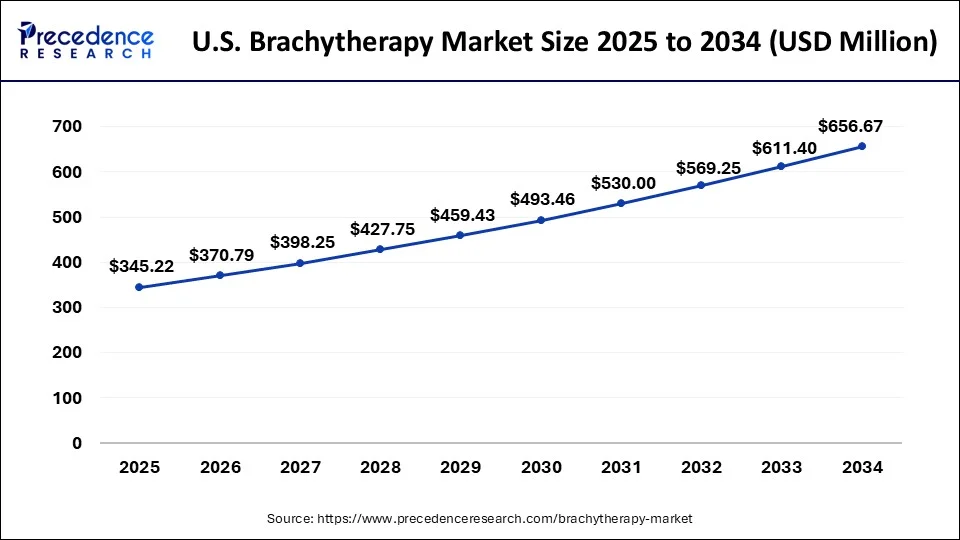
The US brachytherapy market size accounted for USD 345.22 million in 2025 and is predicted to increase from USD 370.79 billion in 2026 to approximately USD 699.86 million by 2035, expanding at a CAGR of 7.32% from 2026 to 2035. The market growth is attributed to rising cancer incidence, increasing adoption of precision radiation therapies, and continuous advancements in brachytherapy technologies.
Key Takeaways
- By dosage, the high-dose rate (HDR) brachytherapy segment held the largest market share in 2025.
- By dosage, the low-dose rate (LDR) brachytherapy segment is expected to expand with the highest CAGR during the forecast period.
- By product, the applicators and afterloaders segment held the largest market share in 2025.
- By product, the seeds segment is expected to grow with a significant CAGR between 2026 and 2035.
- By application, the prostate cancer segment held the highest market share in 2025.
- By application, the breast cancer segment is expected to grow with the highest CAGR during the forecast period.
Market Overview
The rising incidence of prostate, cervical, breast, and other localized cancers remains a key driver of the U.S. brachytherapy market. Brachytherapy is a form of internal radiation therapy in which radioactive materials are placed directly within or close to the tumor. It offers highly focused radiation doses and protects the surrounding healthy tissues from radiation.
The CDC U.S. Cancer Statistics program reports that 333,830 prostate cancer cases were ever diagnosed in the U.S. in 2026. Prostate cancer is the most common form of cancer in men and is often found at a localised stage. These types of patients may be ideal for more targeted treatments, including brachytherapy. Furthermore, the increasing diagnoses of localized cancers and rising demand for precision-based treatment approaches continue driving growth in the U.S. brachytherapy market.
Impact of Artificial Intelligence on the U.S. Brachytherapy Market
The artificial intelligence space is impacting the market by bolstering patient-specific cancer management and providing greater precision in delivering treatment. AI-powered tools are being integrated with brachytherapy planning systems to analyze imaging data. This ensures that radiation doses are appropriately distributed throughout the tumor. Furthermore, the AI algorithms also assist in real-time treatment plan adaptation by analyzing anatomical differences and suggesting modifications as needed.
Market Report Coverage and Key Metrics
| Report Coverage | Details |
| Market Size in 2025 | USD 345.22 Million |
| Market Size in 2026 | USD 370.79 Million |
| Market Size by 2035 | USD 699.86 Million |
| Growth Rate from 2026 to 2035 | CAGR of 7.32% |
| Base Year | 2025 |
| Forecast Period | 2026 to 2035 |
| Segments Covered | Dosage, Product, and Application |
Market Dynamics
Drivers
Rising Incidence of Localized Cancers
The rising incidence of prostate, cervical, breast, and other localized cancers is expected to accelerate demand for brachytherapy procedures across the U.S. The prostate gland is one of the most common sites of cancer in American men. Therefore, it is a major source of treatment for patients for focused radiation treatments.
- According to the NIH report from 2025, prostate cancer is the most common cancer among men in the U.S.
Brachytherapy, which delivers radiation directly to the tumor while sparing healthy tissues, is an appealing option for the management of localized disease. Favorable clinical outcomes and established treatment guidelines further strengthen physician confidence in brachytherapy utilization across multiple cancer indications.
Restraint
Limited Availability of Specialized Clinical Expertise
The limited availability of specialized brachytherapy expertise is expected to hinder the market growth. Smaller community hospitals and smaller oncology centers have difficulty sustaining oncologists who specialize in brachytherapy. Furthermore, the substantial infrastructure and equipment investment requirements, which are anticipated to influence purchasing decisions among healthcare providers, hamper the market growth.
Opportunity
Surging Demand for Minimally Invasive Cancer Treatments
Surging demand for minimally invasive cancer treatments is likely to create immense opportunities for the players competing in the market. Patients and healthcare providers increasingly favor treatment options that reduce procedural burden and preserve quality of life. Short treatment pathways enable better use of available resources and treatment efficiency within health care facilities. Furthermore, higher investment levels in radiation oncology innovation are expected to speed up the development of new and advanced brachytherapy platforms and treatments.
- As of April 2025, the United States has long been a leader in cancer research, spending more than any other country, with an annual budget exceeding USD 7.2 billion.
Segmental Insights
Dosage Insights
The High-dose Rate (HDR) Brachytherapy Segment Dominated the Market in 2025
The high-dose rate (HDR) brachytherapy segment dominated the market in 2025 due to the precision treatment methods, including outpatient options, which are preferred in top oncology centers. HDR systems provide high doses of radiation in a short treatment time, so physicians can achieve the full effect of therapy treatment in fewer sessions than traditional therapy.
Increased efficiencies in patient scheduling and use of the treatment area make HDR procedures more desirable for the hospital and cancer centres. Furthermore, the advanced imaging integration and computerized treatment planning further strengthen clinical confidence in HDR-based therapies.
The low-dose rate (LDR) brachytherapy segment is expected to grow at a significant CAGR from 2026 to 2035, due to its increasing rate of use in prostate cancer localized treatments. LDR therapy involves the placement of radioactive seeds, and so the treatment is delivered continuously for a long period, giving the treatment a high degree of targeting. This treatment modality is gaining popularity in these types of patients who require long-term tumor control and simplicity of treatment.
Product Insights
The Applicators and Afterloaders Segment Dominated the Market in 2025
The applicators and afterloaders segment dominated the market in 2025 due to the widespread utilization of HDR brachytherapy procedures across leading cancer treatment centers. They are vital in radiation delivery processes, allowing doctors to precisely place radioactive sources and manage radiation doses. Hospitals and specialty oncology centres are investing in the latest generation of afterloaders to design more precise and safe treatments.
The seeds segment is expected to grow at a significant CAGR between 2026 and 2035, driven by increasing adoption of permanent implant procedures for localized prostate cancer treatment. Radioactive seeds create continuous low-dose radiation directly at the tumor sites over long periods of time.
This helps to treat the tumor and reduce exposure of surrounding healthy tissues. IsoAid, Theragenics Corporation, Best Medical International, and Eckert & Ziegler are all breeding more sophisticated seed options for increased accuracy and consistency in seed placement.
Application Insights
The Prostate Cancer Segment Dominated the Market in 2025
The prostate cancer segment dominated the market in 2025, as the prevalence of brachytherapy in localized and intermediate-risk prostate cancer treatment was highest of all cancer types. Brachytherapy is often used by radiation oncologists and urologists in treatment regimens.
This is particularly effective at providing highly targeted radiation to the prostate and sparing exposure to other body organs. Furthermore, the ongoing clinical burden of these diseases is expected to fuel the brachytherapy market in the coming years.
- According to the American Cancer Society, approximately 35,250 prostate cancer deaths are expected in the United States during 2025.
The breast cancer segment is expected to grow at the fastest CAGR between 2026 and 2035, supported by increasing utilization of accelerated partial breast irradiation techniques following breast-conserving surgery. Brachytherapy allows physicians to deliver the radiation only around the tumor tissue and limit exposure to breast tissue outside of the tumor.
- According to the American Cancer Society, approximately 316,950 women are expected to die from breast cancer in the U.S. during 2025.
US Brachytherapy Market: Country-Level Analysis
Why Did California Dominate the U.S. Brachytherapy Market?
California is expected to grow at a notable CAGR in the foreseeable future due to its extensive network of comprehensive cancer centers, advanced radiation oncology facilities, and large cancer patient population. Many advanced brachytherapy technologies are being developed and continue to be applied by the state's prestigious institutions, including Stanford Cancer Institute, UCLA Jonsson Comprehensive Cancer Center, and City of Hope.
California has extensive healthcare facilities, resulting in ample specialized radiation oncology resources throughout the state, especially in the major metropolitan areas. California's ability to keep leading the way is further encouraged by the rise in therapies available for personalized cancer treatment.
U.S. Brachytherapy Market Value Chain Analysis
- Radioisotope and Raw Material Production
Medical radioisotopes and radiation source materials are produced under strict nuclear and quality standards.
Key Players: Eckert & Ziegler, NorthStar Medical Radioisotopes, International Isotopes, Best Medical International.
- Brachytherapy Device and Source Manufacturing
Manufacturers develop radioactive seeds, applicators, afterloaders, and electronic brachytherapy systems for clinical use.
Key Players: Elekta, IsoAid, Theragenics Corporation, GT Medical Technologies, Sensus Healthcare.
- Treatment Planning Software and Imaging Integration
Advanced software and imaging platforms support dose calculation, treatment planning, and procedure accuracy.
Key Players: RaySearch Laboratories, MIM Software, Siemens Healthineers, iCAD, Varian Medical Systems.
- Hospital and Cancer Center Deployment
Cancer centers and radiation oncology facilities utilize brachytherapy technologies for patient treatment and care delivery.
Key Players: MD Anderson Cancer Center, Memorial Sloan Kettering Cancer Center, Mayo Clinic, Cleveland Clinic.
Market Competitive Landscape: Leading Companies and Strategies
The U.S. brachytherapy market is moderately competitive, dominated by known technology-based competitors. Companies are competing based on treatment precision, on the capabilities of isotopes, on the ability of their software to integrate, and on their clinical support services. Elekta also has a solid position with advanced afterloading and oncology platforms. Regulatory strict radiation safety requirements lead to substantial barriers to new entrants in the market.
Competition continues to intensify as companies invest in next-generation treatment platforms, AI-enabled planning tools, and precision-guided radiation technologies. RaySearch Laboratories continued to expand on its AI-powered treatment planning and flow optimization capabilities. MD Anderson Cancer Center and Memorial Sloan Kettering Cancer Center kept testing new methods of precision-guided radiation. Moreover, the ongoing investment in digital radiation therapy solutions is expected to shape future competitive dynamics and reinforce the positions of established market leaders while creating opportunities for specialized innovators.
U.S. Brachytherapy Market Companies
- Becton Dickinson & Co
- Eckert & Ziegler Bebig SA
- Elekta AB ADR
- Icad Inc
- Roper Technologies Inc
- Siemens Healthineers AG ADR
- Ustar, IsoRay
Recent Development US Brachytherapy Market (2025-2026)
- In May 2026, GE HealthCare launched MIM ComboTherapy GYN HDR/EBRT, aimed at enhancing radiation therapy for gynecologic cancers like cervical and uterine cancers. This solution improves treatment planning by integrating external beam radiation therapy (EBRT) and high-dose-rate (HDR) brachytherapy, helping address the complexities of cumulative radiation doses. (Source: https://www.appliedradiationoncology.com)
Segments Covered in the Report
By Dosage
- High-dose Rate (HDR) Brachytherapy
- Low-dose Rate (LDR) Brachytherapy
By Product
- Seeds
- Applicators and Afterloaders
- Electronic Brachytherapy
By Application
- Prostate Cancer
- Gynecological Cancer
- Breast Cancer
- Others
For inquiries regarding discounts, bulk purchases, or customization requests, please contact us at sales@precedenceresearch.com
Frequently Asked Questions





Ask For Sample
No cookie-cutter, only authentic analysis – take the 1st step to become a Precedence Research client
 Get a Sample




 sales@precedenceresearch.com
 Schedule a Meeting
