



Veterinary Radiotherapy Market Size, Share and Trends 2026 to 2035
Veterinary Radiotherapy Market (By Technology: External Beam Radiation Therapy (EBRT), Stereotactic Radiosurgery (SRS/SRT), Brachytherapy & Others; By Animal Type: Canine (Dogs), Feline (Cats), Equine & Others; By Application: Tumor Treatment (Oncology), Pain Management & Others; By End-User: Veterinary Specialty Hospitals, Academic & Research Institutes, Others) - Global Industry Analysis, Size, Trends, Leading Companies, Regional Outlook, and Forecast 2026 to 2035
Source: https://www.precedenceresearch.com/veterinary-radiotherapy-market
 Get a Sample
 Table Of Content


What is the Veterinary Radiotherapy Market Size?
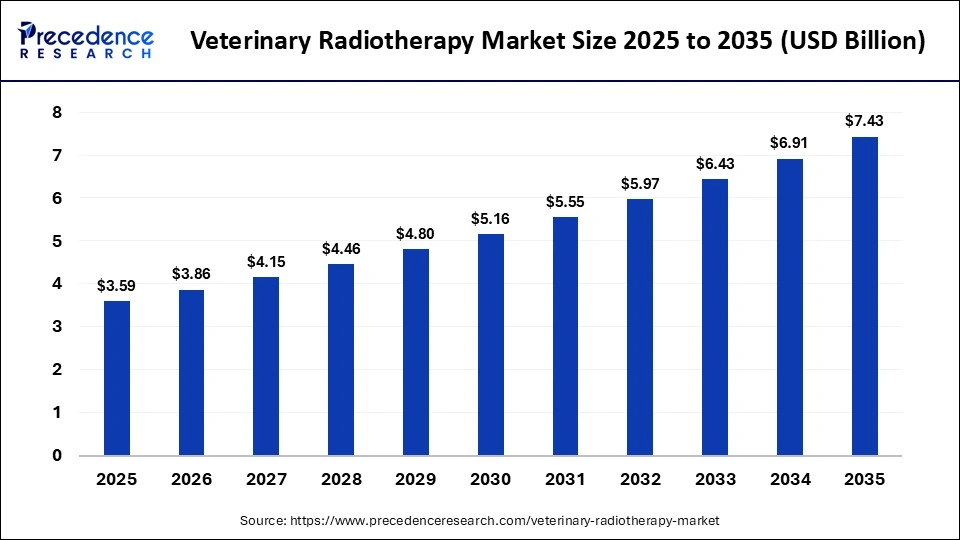
The global veterinary radiotherapy market size was calculated at USD 3.59 billion in 2025 and is predicted to increase from USD 3.86 billion in 2026 to approximately USD 7.43 billion by 2035, expanding at a CAGR of 7.56% from 2026 to 2035. The market is driven by the growing prevalence of cancer in dogs, along with technological advancements in the veterinary sector.
Market Highlights
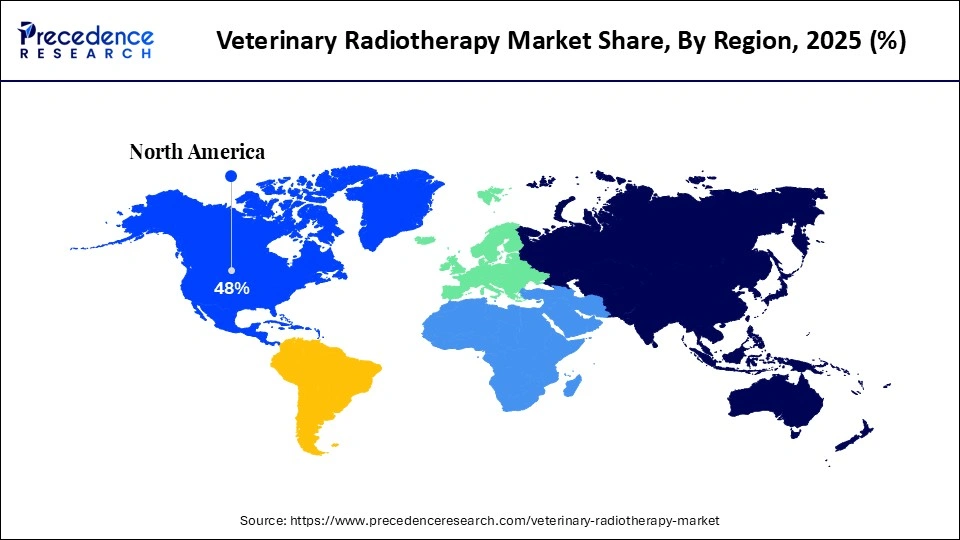
- North America led the market with a major revenue share of 48% in 2025.
- Asia Pacific is expected to grow at the fastest CAGR during the forecast period.
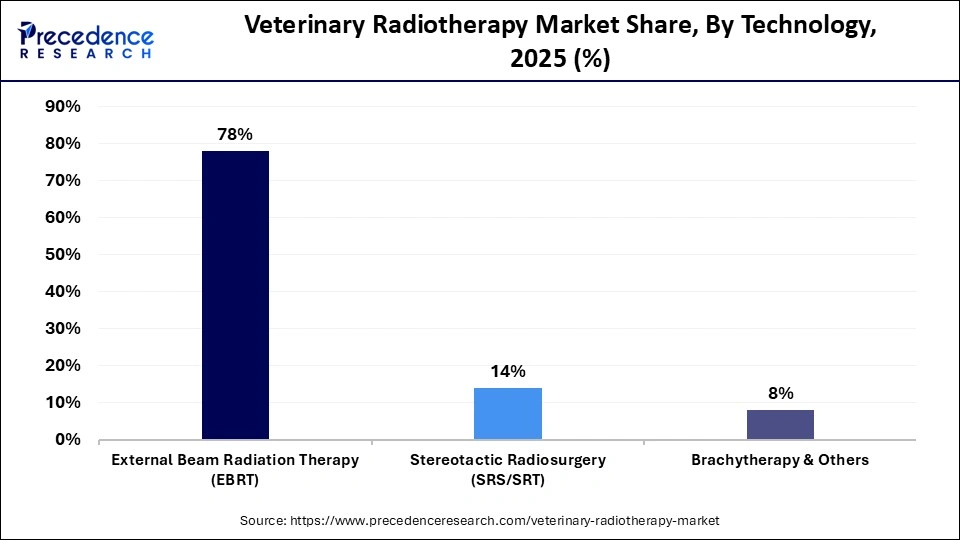
- By technology, the external beam radiation therapy (EBRT) segment held the largest market share of 78% in 2025.
- By technology, the stereotactic radiosurgery (SRS/SRT) segment is expected to expand at the fastest CAGR during the forecast period.
- By animal type, the canine (dogs) segment held the largest market share of 71% in 2025.
- By animal type, the feline (cats) segment is expected to grow at a significant CAGR between 2026 and 2035
- By application, the tumor treatment (oncology) segment held the highest market share of 89% in 2025.
- By application, the pain management & others segment is expected to grow at the fastest CAGR during the forecast period.
- By end-user, the veterinary specialty hospitals segment dominated the market with a share of 64% in 2025.
- By end-user, the academic & research institutes segment is expected to expand with the highest CAGR during the forecast period.
Market Overview
The veterinary radiotherapy market is a prominent segment of the healthcare sector. This market deals with the production and distribution of advanced radiotherapy solutions for the veterinary sector globally. The market comprises advanced technologies and clinical services used to deliver ionizing radiation to treat malignancies and specific non-neoplastic conditions in animals. Primarily utilized for companion animals like dogs and cats, this market is expanding due to the increasing incidence of cancer in aging pets and the rising availability of specialized veterinary oncology centers.
What is the significance of AI in the Veterinary Radiotherapy Industry?
Artificial intelligence is transforming veterinary radiotherapy by enabling more precise and personalized treatment planning through advanced imaging analysis and tumor delineation. AI enhances diagnostic accuracy and streamlines administrative tasks. It helps predict treatment outcomes and potential side effects, allowing veterinarians to optimize therapy for each animal. Nowadays, veterinary healthcare service providers are integrating AI to enhance remote monitoring, enable predictive analytics, and improve overall diagnostic capabilities. Additionally, AI automates routine tasks, improves workflow efficiency, and supports innovation in veterinary cancer care.
- In April 2024, Antech launched an AI-enabled radiology tool. This AI-based solution is designed to enhance the diagnostic capabilities in the veterinary sector.
Veterinary Radiotherapy Market Trends
- Rising Prevalence of Cancer in Companion Animals: Cancer diagnoses in pets, especially dogs and cats, are increasing due to longer lifespans and better diagnostic awareness, driving demand for advanced radiotherapy treatments in veterinary oncology.
- Growth of Specialized Veterinary Oncology Centers: The expansion of referral-based and specialty veterinary hospitals equipped with dedicated radiotherapy units is improving access to advanced cancer care for animals.
- Partnerships: Various healthcare providers are partnering with radiotherapy companies to deliver radiotherapy services for veterinary clinics in different parts of the world. For instance, in April 2024, Sensus Healthcare partnered with Pompano Veterinary Oncology. This partnership aims at delivering mobile superficial radiotherapy (SRT) treatment for companion animals in South Florida, U.S.
- Product Launches: Numerous hospitals are engaged in launching radiotherapy machines to enhance the capabilities of the veterinary sector. For instance, in February 2024, the Glasgow Vet School Hospital launched a new radiotherapy machine. This machine is designed for the veterinary sector of Scotland.
- Government Investments: Governments of numerous countries, such as China, the U.S., the UAE, and France, are investing rapidly in strengthening the veterinary sector. For instance, in October 2024, the government of India announced an investment of US$35 million. This investment is aimed at strengthening animal health security in this country.
- Increasing Pet Healthcare Expenditure and Insurance Coverage: Growing emotional attachment to pets, higher disposable incomes, and the rising penetration of pet insurance are encouraging owners to opt for costly yet effective treatments like radiotherapy.
Market Scope
| Report Coverage | Details |
| Market Size in 2025 | USD 3.59 Billion |
| Market Size in 2026 | USD 3.86 Billion |
| Market Size by 2035 | USD 7.43 Billion |
| Market Growth Rate from 2026 to 2035 | CAGR of 7.56% |
| Dominating Region | North America |
| Fastest Growing Region | Asia Pacific |
| Base Year | 2025 |
| Forecast Period | 2026 to 2035 |
| Segments Covered | Technology, Animal Type, Application, End-User, and Region |
| Regions Covered | North America, Europe, Asia-Pacific, Latin America, and Middle East & Africa |
Segment Insights
Technology Insights
Why Did the External Beam Radiation Therapy (EBRT) Segment Dominate the Market?
The external beam radiation therapy (EBRT) segment dominated the veterinary radiotherapy market with a share of 78% in 2025. This is due to the rapid adoption of external beam radiation therapy (EBRT) by healthcare professionals to kill or shrink cancers in companion animals. Several advantages of external beam radiation therapy (EBRT), including high precision, treatment flexibility, superior convenience, and painless treatment, are boosting the adoption of this technology. Additionally, its widespread availability in veterinary oncology centers and established clinical efficacy further reinforced its leading position in the market.
The stereotactic radiosurgery (SRS/SRT) segment is expected to grow at the fastest CAGR during the forecast period. This is due to the surging adoption of stereotactic radiosurgery (SRS/SRT) by veterinary care providers to destroy small tumors and functional abnormalities in animals. It is particularly effective for treating complex or hard-to-reach tumors, including brain and spinal cancers, where conventional therapies may be less effective. Moreover, numerous advantages of stereotactic radiosurgery (SRS/SRT), such as high precision, rapid recovery, superior convenience, reduced side effects, and enhanced efficacy, are boosting its adoption.
Animal Type Insights
What Made Canine (Dogs) the Leading Segment in the Veterinary Radiotherapy Market?
The canine (dogs) segment led the veterinary radiotherapy market with a share of 71% in 2025. This is due to the increased adoption of canines by the elite-class consumers in several nations, including the U.S., Germany, the UK, France, Italy, and Japan. Dogs often develop tumors such as mast cell tumors, osteosarcoma, and lymphoma, which respond well to radiotherapy, driving the adoption of specialized equipment and treatment protocols. Additionally, the surging prevalence of cancers in dogs, along with the rise in the number of veterinary clinics dealing in canine treatment, reinforced segmental growth.
The feline (cats) segment is expected to expand at the fastest CAGR between 2026 and 2035. This is due to the surging adoption of Persian cats by the royal families in the UAE, Saudi Arabia, Qatar, and South Korea. Also, the increasing prevalence of upper respiratory infections and chronic diseases in feline animals, along with the rise in the number of veterinary clinics providing advanced treatment to cats in developing nations such as India and Vietnam, is positively contributing to the segmental growth. Additionally, advancements in compact and targeted radiotherapy systems make it easier to treat smaller animals like cats, supporting the segment's growth.
Application Insights
Why Did the Tumor Treatment (Oncology) Segment Dominate the Veterinary Radiotherapy Market?
The tumor treatment (oncology) segment dominated the market with the largest share of 89% in 2025. This is due to the increased prevalence of animal cancer in several nations, such as the U.S., India, Qatar, and South Korea, which has increased the application of external beam radiation therapy. Moreover, the rapid investment by the government in opening new cancer hospitals to cater to the veterinary sector is expected to sustain the segment's dominance in the coming years.
The pain management & others segment is expected to expand at a significant CAGR during the forecast period. This is due to the increasing cases of chronic pain in various animals, such as dogs, cats, cows, and buffalo, which are increasing the demand for high-quality diagnostic solutions. Additionally, the rapid investment by private equity investors in opening new veterinary pain management clinics is expected to proliferate the segmental expansion.
End-User Insights
Why Did the Veterinary Specialty Hospitals Segment Dominate the Veterinary Radiotherapy Market?
The veterinary specialty hospitals segment dominated the veterinary radiotherapy market with a share of 64% in 2025. This is due to its access to advanced equipment, skilled oncologists, and comprehensive treatment facilities that can handle complex cancer cases in pets. These hospitals often offer specialized care, including precision radiotherapy, combination therapies, and post-treatment monitoring, making them the preferred choice for pet owners seeking high-quality treatment. Additionally, the ability to provide tailored treatment plans for different species and cancer types further strengthens their market leadership.
The academic & research institutes segment is expected to rise with the highest CAGR during the forecast period. This is due to the rising demand for technologically advanced radiotherapy solutions from the veterinary research institutes to test the efficacy of various therapies on animals. These institutes conduct clinical trials and experimental studies that help improve precision, efficacy, and safety of radiotherapy in veterinary applications. Additionally, their role in training veterinary oncologists and promoting awareness about advanced cancer care in pets further fuels the demand for radiotherapy equipment and services in this segment.
Regional Insights
How Big is the North America Veterinary Radiotherapy Market Size?
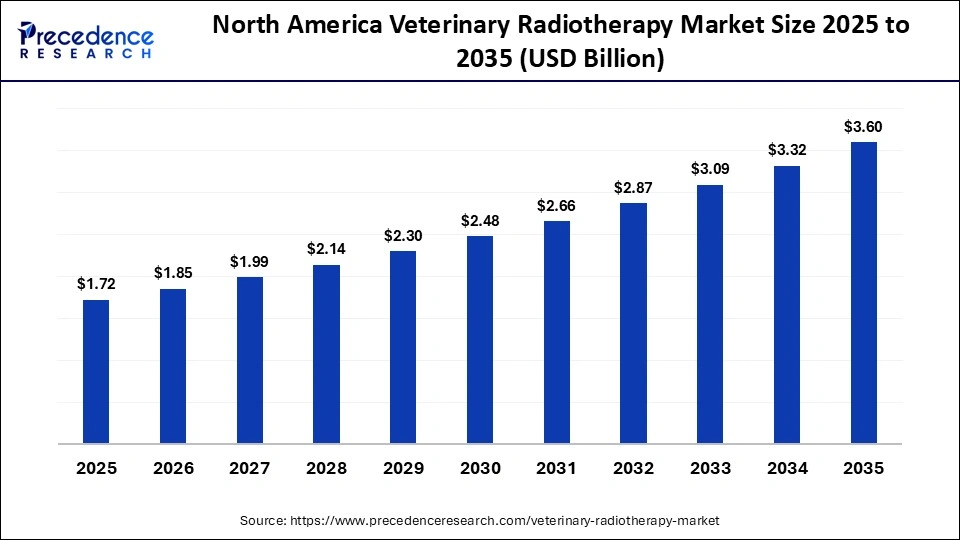
The North America veterinary radiotherapy market size is estimated at USD 1.72 billion in 2025 and is projected to reach approximately USD 3.60 billion by 2035, with a 7.67% CAGR from 2026 to 2035.
What Made North America the Dominant Region in the Veterinary Radiotherapy Market?
North America dominated the veterinary radiotherapy market, accounting for 48% share in 2025. The dominance of the region in the market is attributed to the surging prevalence of cancers in dogs across the U.S., Canada, and Mexico. Also, the rapid investment by the government for developing the veterinary sector, along with technological advancements in the medical devices industry, is playing a crucial role in shaping the market landscape. Moreover, the presence of numerous market players, including Varian Medical Systems, GE Healthcare, Epica Animal Health, and PetCure Oncology, reinforced this region's dominance in the market.
- In September 2025, GE HealthCare launched iRT workflow software. iRT workflow is an AI-enabled intelligent radiation therapy software that finds application in the veterinary sector.
What is the Size of the U.S. Veterinary Radiotherapy Market?
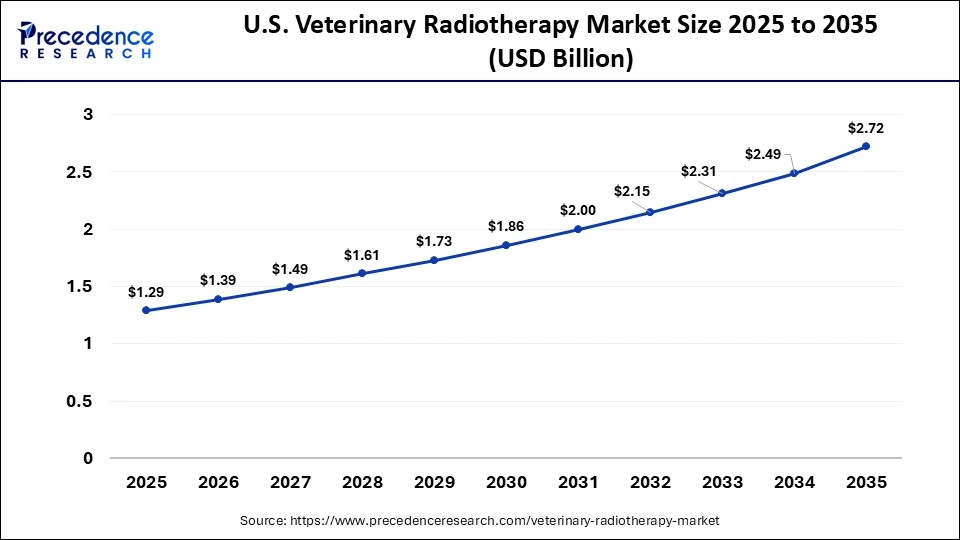
The U.S. veterinary radiotherapy market size is calculated at USD 1.29 billion in 2025 and is expected to reach nearly USD 2.72 billion in 2035, accelerating at a strong CAGR of 7.75% between 2026 and 2035.
U.S. Veterinary Radiotherapy Market Trends
The market in the U.S. is expanding due to the growing cases of rabies and salmonellosis, along with technological advancements in the veterinary sector. Additionally, the rise in the number of veterinary providers, as well as the growing adoption of pets by the elite-class consumers, is playing a prominent role in shaping the market's landscape.
Why is Asia Pacific Expanding with the Fastest CAGR in the Market?
Asia Pacific is expected to expand at the highest CAGR during the forecast period. The increasing prevalence of bird flu in several countries, including China, India, Japan, and South Korea, is driving the market in the region. Also, numerous government initiatives aimed at developing veterinary hospitals, as well as the rise in the number of healthcare startups, are positively contributing to the market. Moreover, the presence of various market players such as Elekta, Intas Animal Health, SJMC, Inmed Animal Health, and Vetnation Pharma is expected to foster the growth of the veterinary radiotherapy market in this region.
- In September 2025, SJMC launched the ExacTrac Dynamic system in Malaysia. ExacTrac Dynamic system is a millimetric precision radiotherapy system that finds application in the veterinary sector.
India Veterinary Radiotherapy Industry Analysis
The surging focus of the veterinary providers to adopt high-quality diagnostics solutions for detecting a wide range of animal diseases has driven the market expansion. Additionally, the rapid investment by the market players in opening new research and development centers, along with the growing investment by the government for modernizing veterinary clinics, is positively contributing to the industry.
Who are the Major Players in the Global Veterinary Radiotherapy Market?
The major players in the veterinary radiotherapy market include Varian Medical Systems, Inc, Elekta AB, Hitachi, Ltd., Sumitomo Heavy Industries, Ltd., IBA, TeamBest, Accuray Incorporated, PetCure Oncology, Sensus Healthcare, Inc., Xstrahl, Brainlab AG, Best Theratronics Ltd., Nordion, Eckert & Ziegler, and Mevion Medical Systems.
Recent Developments
- In November 2025, Empyrean Medical Systems partnered with Thrive Pet Healthcare. This partnership aims to develop an advanced radiation platform to enhance veterinary care. (Source: https://finance.yahoo.com)
- In October 2025, Port City Veterinary Referral Hospital launched Radiation Oncology Services. These oncology services are designed for the consumers of New Hampshire and Maine.(Source: https://www.nva.com)
- In September 2025, MedVet announced the opening of MedVet Phoenix in Scottsdale, AZ. This is a 24/7 emergency and specialty hospital designed to deliver high-quality veterinary services in this region.(Source: https://www.globenewswire.com)
Segments Covered in the Report
By Technology
- External Beam Radiation Therapy (EBRT)
- Stereotactic Radiosurgery (SRS/SRT)
- Brachytherapy & Others
By Animal Type
- Canine (Dogs)
- Feline (Cats)
- Equine & Others
By Application
- Tumor Treatment (Oncology)
- Pain Management & Others
By End-User
- Veterinary Specialty Hospitals
- Academic & Research Institutes
- Others
By Region
- North America
- Europe
- Asia-Pacific
- Latin America
- Middle East & Africa
For inquiries regarding discounts, bulk purchases, or customization requests, please contact us at sales@precedenceresearch.com
Frequently Asked Questions





Ask For Sample
No cookie-cutter, only authentic analysis – take the 1st step to become a Precedence Research client
 Get a Sample




 sales@precedenceresearch.com
 Schedule a Meeting
