



Women Wear Market Trends, Leading Companies, Company Revenue / Sales Performance, Retail Sales, Production Volume, Consumer Spending, Market Penetration, Competitive Landscape, and Industry Outlook
Women Wear Market (By Type: Casual Wear, Formal Wear, Sportswear, Night Wear, Inner Wear, Ethnic Wear, Footwear, Accessories, Others; By Category: Mass, Premium, Luxury; By Distribution Channel: Online, Offline, Hypermarkets & Supermarkets, Clothing Stores, Others) - Global Industry Analysis, Size, Trends, Leading Companies, Regional Outlook, and Forecast 2026 to 2035
Source: https://www.precedenceresearch.com/women-wear-market
 Get a Sample
 Table Of Content


What is the Women Wear Market Size?
The global women wear market size is valued at USD 1.10 tillion in 2025 and is predicted to increase from USD 1.14 tillion in 2026 to approximately USD 1.54 tillion by 2035, expanding at a CAGR of 3.42% from 2026 to 2035. The women wear market is driven by the rise of e-commerce platforms.
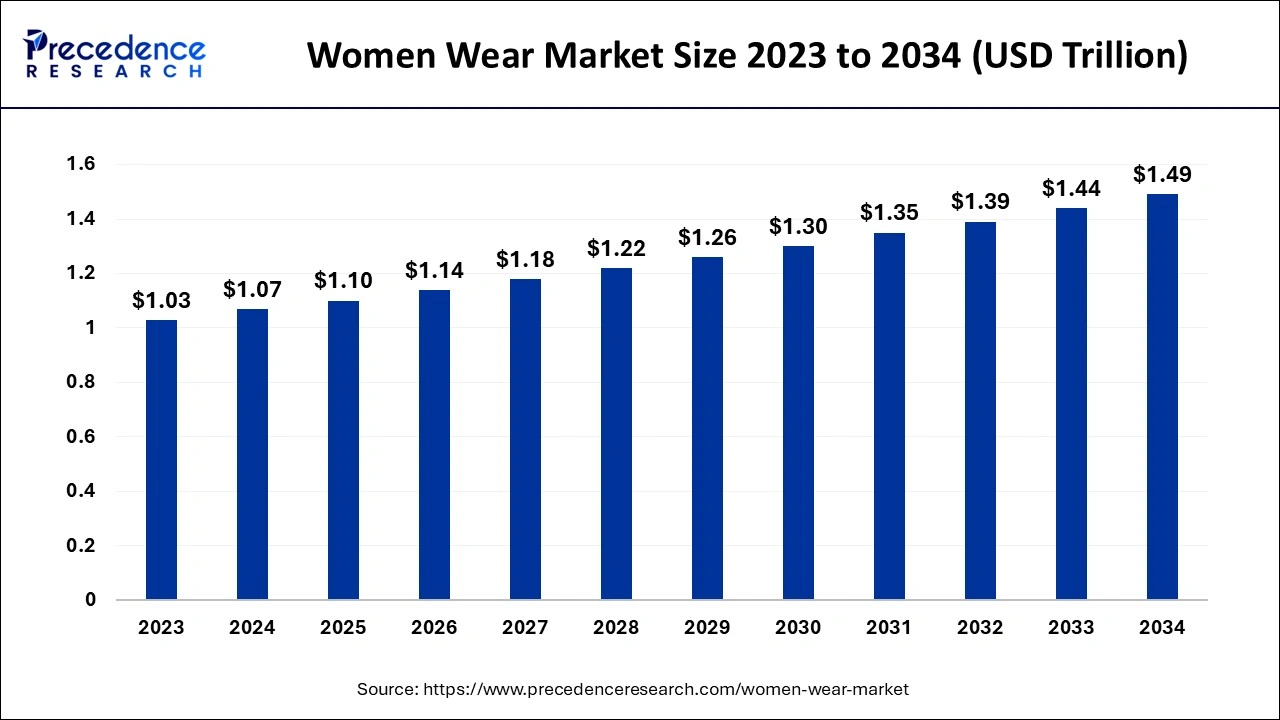
Women Wear Market Key Takeaways
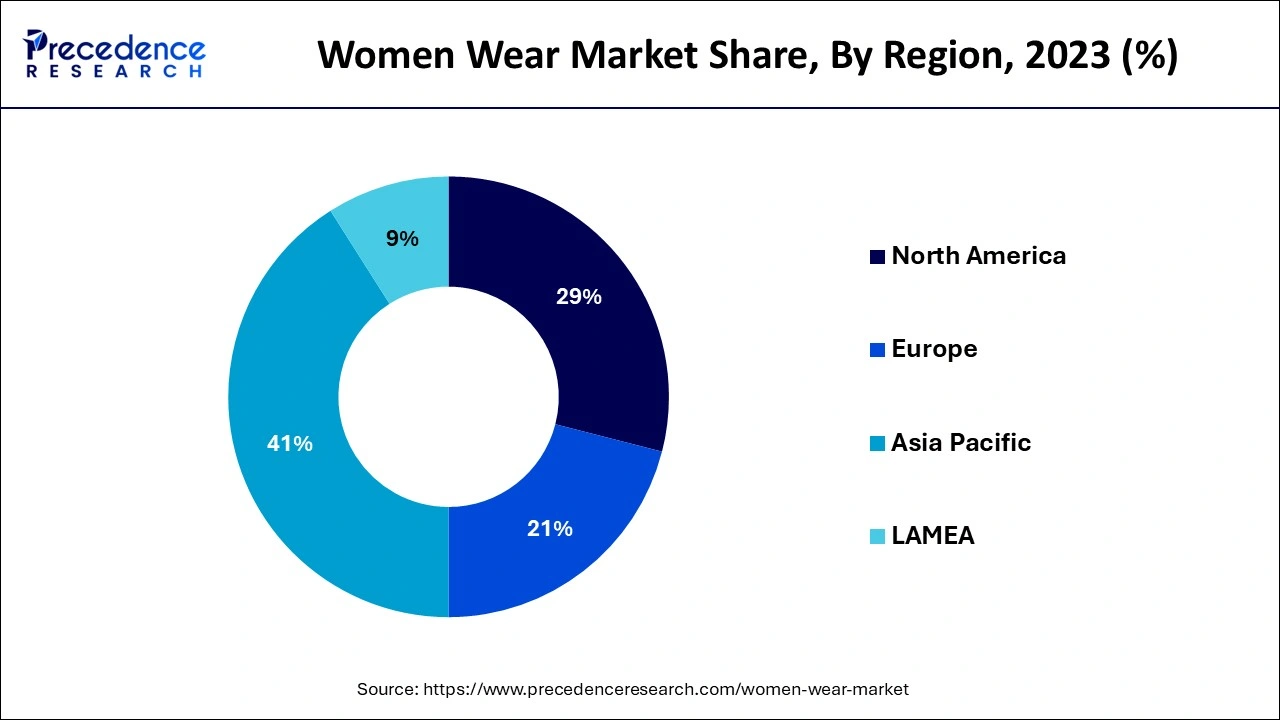
- Asia Pacific dominated women wear market with the largest market share of 41% in 2025.
- North America shows a significant growth in the market during the forecast period.
- By type, the casual wear segment recorded the biggest market share of 37% in 2025.
- By type, the sportswear segment is expected to grow at a notable CAGR of 3.71% during the forecast period.
- By category, the mass segment dominated the women wear market in 2025.
- By category, the luxury segment is observed to be the fastest growing in the market during the forecast period.
- By distribution channel, the offline segment accounted for the biggest market share of 77% in 2025.
- By distribution channel, the online segment is observed to be the fastest growing in the women wear market during the forecast period.
Market Overview
In the fashion industry, women are the crucial buyers, and trends and retail tactics are influenced by female purchases. Due to the dynamic nature of women's fashion choices, which are impacted by culture, lifestyle, and shifting social standards, the market is always open to new ideas. Demand for ethical, eco-friendly, and sustainable fashion is rising due to consumers, especially women.
As a result, businesses have been compelled to reconsider their supply chains, opening new markets for circular fashion, fair labor standards, and sustainable textiles. Media trends, influencers, and celebrities significantly impact women's fashion. The emergence of fashion superstars and social media influencers is crucial in influencing customer behavior and increasing the need for brands or looks.
How is AI helping clothing industry?
Artificial Intelligence (AI) systems can pair women with peers, coaches, and mentors according to their issues, abilities, and career goals. These platforms use data analysis to provide personalized guidance and link women with skill-development opportunities. Women entrepreneurs and small business owners can concentrate on growth and strategy by using AI to automate chores like marketing, bookkeeping, and customer care (via chatbots). For women hoping to progress in industries like biotechnology or healthcare, it opens new avenues for development. AI advancements in women's health, like disease prediction, fertility monitoring, and customized wellness programs, enhance health outcomes and open new commercial prospects for women in these fields.
Women Wear Market Outlook
- Industry Growth Overview: The women wear market is projected for strong growth from 2025 to 2034, fueled by rising disposable incomes, increasing female workforce participation, and the influential rise of e-commerce. The market is also boosted by the growing focus on health and wellness, which increases demand for athleisure.
- Major Trends: Sustainability is reshaping the market. There is high demand for sustainable, ethically produced apparel. Another significant trend is the integration of fashion tech, including AI-driven personalization and virtual try-ons. The ongoing popularity of comfort-first styles like athleisure continues to influence the market.
- Global Expansion: The market is expanding worldwide, driven by widespread urbanization and increasing purchasing power. Emerging regions offer significant opportunities driven by increasing investments in local manufacturing, a burgeoning middle class, and the rapid growth of online retail.
- Major Investors: Large fashion conglomerates like LVMH, Kering, Inditex, and H&M Group are major investors. Investment is also significantly driven by venture capital firms and private equity groups funding innovative D2C brands.
- Startup Ecosystem: A vibrant startup ecosystem focuses on sustainable fashion, inclusive sizing, and fashion technology solutions. Startups are attracting funding for online rental services, personalized styling, animal-free materials, and AI-powered platforms that automate supply chain processes.
Women Wear Market Growth Factors
- The market for women's wear is growing because women are becoming more economically empowered and have more money to spend on clothes.
- Due to online purchasing platforms, women now have easier access to a wider variety of apparel brands and selections. This convenience is expanding the market for women's clothing significantly.
- Women seek fashionable and varied apparel options due to changing fashion trends and a desire for individuality, increasing need and propelling the industry.
- The market for women's apparel is growing as more women relocate to cities and embrace Western lifestyles, resulting in clothing choices that follow international fashion trends.
Trade Analysis of the Women Wear Market: Import and Export Statistics
- The global trade of women's, girls' dresses, of material nes, knits was approximately $315 million in 2024.
- China, Italy, and India were the top three global exporters of women's wear in the world, exporting $70.3 million, $49.8 million, and $24.8 million of shipments, respectively.
- The top three importers of women's and girls' dresses of material nes, knits were the U.S. ($46.2 million), UK ($27.4 million), and France ($21.7 million).
Market Scope
| Report Coverage | Details |
| Market Size by 2035 | USD 1.54 Trillion |
| Market Size in 2026 | USD 1.14 Trillion |
| Market Size in 2025 | USD 1.10 Trillion |
| Market Growth Rate from 2026 to 2035 | CAGR of 3.42% |
| Largest Market | North America |
| Base Year | 2025 |
| Forecast Period | 2026 to 2035 |
| Segments Covered | Type, Category, Distribution Channel, and Regions |
| Regions Covered | North America, Europe, Asia-Pacific, Latin America and Middle East, & Africa |
Market Dynamics
Drivers
Influence of social media & e-commerce
Social media platforms significantly raise engagement by facilitating real-time communication between brands and customers. Through surveys, comments, direct messages, and interactive stories, brands can communicate directly with their audience and gain insight into their target audience's preferences, needs, and trends. Instant feedback can reveal information about how collections are received. Based on past interactions, likes, or searches, social media sites use data to present users with products that match their preferences. These monitored suggestions raise the possibility of a purchase.
Restraint
Supply chain disruptions
Many producers of women's clothing mainly depend on importing raw materials worldwide, including cotton, silk, wool, and synthetic fibers. Severe shortages may result from interruptions in these supply systems brought on by pandemics, natural disasters, or geopolitical wars. For instance, raw material costs increased when cotton prices rose due to export restrictions or unfavorable weather. Freight prices have also increased significantly as a result of the inconvenience. Increased delivery costs, especially in price-sensitive markets such as fast fashion, can reduce the profit margins of businesses that find it difficult to pass such expenses on to customers.
Opportunity
Innovation in fabrics
New developments in plant-based textiles, including Tencel (made from wood pulp), offer eco-friendly substitutes for conventional textiles like polyester and leather. These fabrics also provide distinctive finishes and textures, giving a unique value proposition for stylish women's clothing. Fabrics resistant to bacteria and odor give a clear advantage in light of growing health consciousness and hygiene. This innovation can be included in women's undergarments, loungewear, or workwear for long-lasting freshness. The most comfortable materials may adjust to the body's fluctuating temperatures, warming when cold and cooling when warm. These versatile textiles appeal to the busy modern lady by making clothing appropriate for various formal and professional settings.
Segmental Insight
Type Insights
The casual wear segment dominated the women wear market in 2025. Due to changing lifestyles, many ladies now value comfort over formality. Casual clothing has emerged as a popular option for daily activities, such as social gatherings and errand running, because of its comfortable fit, breathable materials, and adaptable styles. Companies emphasize inclusivity and provide casual clothing in a wider variety of sizes and designs to appeal to a broader range of consumers. This emphasis broadens the market and improves brand loyalty.
The sportswear segment shows a significant growth in the women wear market during the forecast period. A greater emphasis on health and wellness among women leads to increased engagement in exercise activities such as yoga, running, and group sports. Demand for cozy, practical sportswear that can be worn both during and outside of exercises is being driven by this change. Customers are increasingly drawn to companies prioritizing sustainability as environmental concerns gain more attention. In response, sportswear businesses favor ethical manufacturing processes, employ recycled materials, and provide eco-friendly solutions.
Category Insights
The mass segment dominated the women wear market in 2025. The mass market offers a range of patterns, sizes, and styles to suit various preferences and events. This inclusivity enables firms to connect with a wide range of consumers, from casual to formal clothes. Mass brands frequently use social media marketing and tailored advertising to reach a large audience. Working with celebrities and influencers can raise brand awareness and draw in younger customers.
The luxury segment is observed to be the fastest growing in the women wear market during the forecast period. Luxury companies that offer exceptional craftsmanship, distinctive designs, and premium materials are becoming increasingly popular as modern customers place a higher value on quality than quantity. Luxury brands use influencers and celebrities to increase brand awareness and create aspirational value. This tactic is especially appealing to younger customers who respect relatability and genuineness. To improve consumer experiences, luxury firms are implementing cutting-edge technology such as artificial intelligence (AI) and augmented reality (AR). Personalized shopping recommendations and virtual try-ons are becoming commonplace.
Distribution Channel Insights
The offline segment dominated the women wear market in 2025. Many customers can easily visit offline retail stores because they are frequently positioned in shopping districts, malls, and metropolitan areas. Women typically visit stores with friends or family because they love shopping as a social activity. This social dynamic promotes purchases and improves the shopping experience. Customers can enjoy individualized attention, eye-catching displays, and carefully chosen collections in an immersive shopping environment offered by retailers. This sensory experience raises customer happiness and brand loyalty.
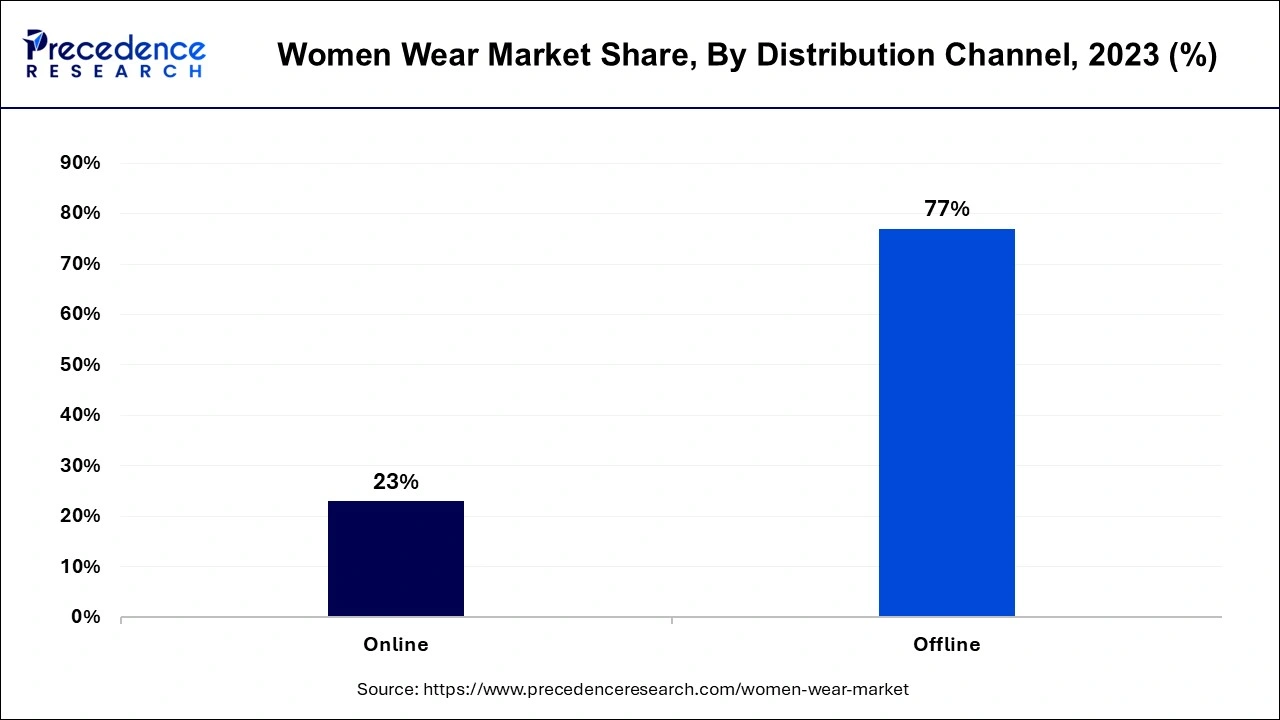
The online segment is observed to be the fastest growing in the women wear market during the forecast period. Customers can browse and buy products from the comfort of their homes with the unmatched convenience of online shopping. The popularity of user-friendly websites and mobile shopping apps has sped up this change. Many consumers had to adjust to online purchasing due to the pandemic's lockdowns and social distancing efforts. Shopping patterns have changed permanently due to this trend; even after physical stores reopen, many customers still choose to shop online.
Technological Advancement
Technological advancement in the women's wear market features CAD, 3D printing, digital textile printing, and virtual prototyping. CAD (Computer-aided design) and 3D modeling are popular tools to prototype and design garments. The 3D printing minimizes material waste and helps in creating complex designs. The digital textile printing helps in the customization of patterns and prints. The virtual prototyping helps designers practice and experiment with new text designs virtually before production launch.
Regional Insights
What is the Asia Pacific Women Wear Market Size?
The Asia Pacific women wear market size accounted for USD 348.10 billion in 2026 and is predicted to be worth around USD 666.09 billion by 2035, rising at a CAGR of 3.64% from 2026 to 2035.
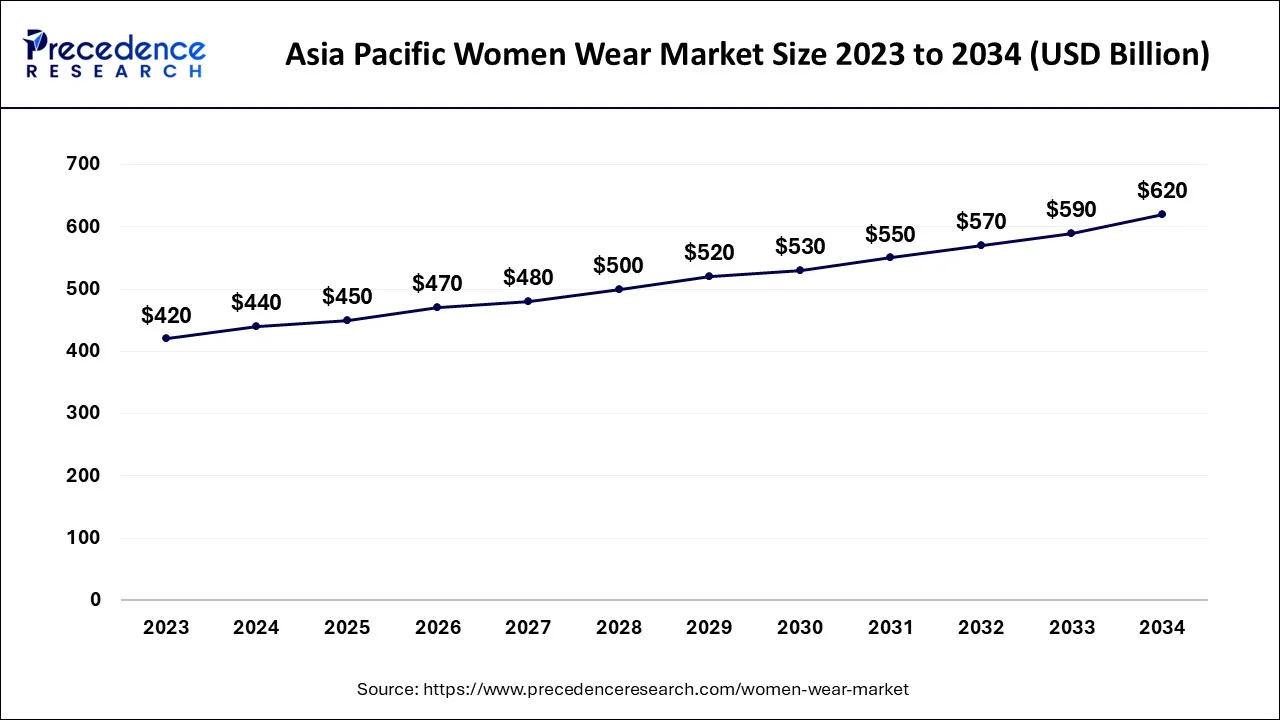
Asia- Pacific dominated women wear market in 2025. Social media's widespread use has allowed celebrities and fashion influencers in the Asia-Pacific to mold consumer tastes. Their support frequently raised demand for brands and styles. Local brands can better connect with their target audience than multinational ones because they have a deeper understanding of cultural quirks and customer preferences. The shift to online shopping is accelerating, with many brands enhancing their online presence and offering personalized shopping experiences.
There's a blending of traditional and modern styles, reflecting local cultures while appealing to contemporary tastes. Despite the rise of sustainable practices, fast fashion remains popular, especially among younger consumers looking for trendy, affordable options. The women's wear market in Asia Pacific is poised for continued growth, driven by changing consumer preferences, technological advancements, and an increasing emphasis on sustainability. As brands adapt to these trends, they will likely capture a larger share of the market in this diverse and rapidly evolving region.
China Market Trends
China's market is highly fragmented, trend-based, and shifting toward premiumization and wellness-focused activewear. Consumers, mainly younger generations, increasingly favor local Chinese brands that blend modern styles with traditional cultural elements, decreasing reliance on Western trends. Highly responsive digital-native brands, on Tmall and JD.com, thus, dominate the market, using AI-driven personalization and even quick turnover of trend-driven items.
Why is North America Considered a Significant Region?
North America shows a significant growth in the women wear market during the forecast period. Particularly since the epidemic, there has been a growing trend toward more comfortable and adaptable apparel. Customers are looking for more casual and athleisure clothing that can be worn in social or professional contexts. Disposable earnings are increasing as the economy bounces back from the pandemic. Due to this rise, customers can now spend more on luxuries like women's clothing. Retailers are using technology to improve the shopping experience. Online shopping is now more customized and interactive due to AI-driven suggestions, augmented reality, and virtual fitting rooms.
U.S. Market Trends
The U.S. market is heavily impacted by casualization, athleisure, and a shift toward sustainable, inclusive, and budget-conscious purchasing. The shift toward casual wear continues, with a high need for items such as t-shirts, denim, and activewear. Users are increasingly prioritizing eco-friendly fabrics, ethical production, and transparent sourcing. Brands are thus expanding size ranges for diverse body types and leveraging AI and 3D scanning for better fit.
Why is the Market in Europe Growing?
Europe is dominating the women's wear market. The emerging new trends, styles, and patterns have been well covered by the region. The demand accelerates new brands and designers to enter and expand creative ideas and businesses globally. The textile industry is also experiencing growth because of the rising demand for fabric preferences.
Germany Women Wear Market Trends
Germany is a key contributor to the European market, renowned for its emphasis on quality, functionality, and classic styles. The market is characterized by a strong online retail presence and the dominance of multi-brand retailers and department stores. German consumers are environmentally conscious, driving demand for sustainable, eco-friendly apparel. There is a rising demand for both casual wear and functional apparel, reflecting a culture that values comfort, durability, and practical design.
How is Latin America Contributing to the Women Wear Market?
Latin America is experiencing immense growth in the market, driven by urbanization, rising disposable incomes, and the strong influence of social media on fashion trends. The region's diverse climate zones and cultural influences foster demand for a variety of styles, from vibrant beachwear in Brazil to sophisticated urban fashion in Argentina. E-commerce is the primary growth channel, offering convenience and a wide array of options to a young, fashion-conscious population that favor brands adopting ethical and eco-friendly practices.
Brazil is leading the market, characterized by diverse consumer preferences that favor bold, expressive designs. The market is mainly driven by strong domestic purchasing power and a culture that values comfort, color, and fit. While specialty stores remain popular for personalized shopping experiences, online retail is rapidly expanding, fueled by increasing internet access and mobile shopping to meet the needs of conscious consumers.
What Potentiates the Growth of the Middle East and Africa Women Wear Market?
The market in the Middle East and Africa is characterized by a blend of traditional cultural demand and global fashion trends. The region, particularly the Gulf Cooperation Council (GCC) countries, is witnessing rapid growth driven by urbanization, a young population, and rising disposable incomes. Modest fashion, including traditional garments like the abaya and hijab, represents a significant segment, with modern, stylish interpretations gaining traction among consumers.
Saudi Arabia is dominating the regional market, influenced heavily by ongoing cultural shifts and a large youth demographic. There is strong demand for modest yet fashionable clothing that blends traditional apparel like abayas with contemporary global styles. E-commerce platforms, both international and local, dominate sales by offering convenience and a broad product range. The market is driven by increasing female workforce participation and rising interest in luxury and international brands.
Value Chain Analysis
- Raw Material Sourcing and Textile Production
Sourcing fibers and manufacturing fabrics, with increasing importance placed on ethical and sustainable practices.
Key Players: Arvind Limited and Vardhman Textiles Ltd. - Manufacturing and Assembly
Cutting and sewing raw materials into finished garments, often outsourced to global contractors and suppliers.
Key Players: Shahi Exports Pvt. Ltd. And Orient Craft Limited. - Marketing, Branding, and Sales
Creating consumer demand and awareness through marketing, branding, social media, and e-commerce platforms.
Key Players: Zara, H&M, and Nike. - Retail and End-Use Consumption
The final point of sale to the consumer via online and offline channels, with the retail experience enhanced by technology.
Key Players: BIBA Apparels and Amazon.
Women Wear Market Companies
- Giorgio Armani S.p.A.: Giorgio Armani offers sophisticated, timeless women's wear collections, known for their refined tailoring, luxurious fabrics, and understated elegance.
- DIOR: DIOR presents high-fashion, haute couture women's wear with a focus on classic femininity, intricate craftsmanship, and modern trends.
- Guccio Gucci S.p.A.: Gucci delivers bold and eclectic women's wear collections that combine luxury with contemporary flair, featuring signature prints and innovative designs.
- Chanel: Chanel offers elegant, timeless women's wear, including iconic pieces like the little black dress, alongside luxurious seasonal collections that reflect its rich heritage.
- Gianni Versace S.r.l.: Versace offers daring, glamorous women's wear collections characterized by vibrant prints, luxurious fabrics, and a bold, fashion-forward aesthetic.
- LOUIS VUITTON: Louis Vuitton's women's wear collections blend high-end fashion with functional luxury, including chic ready-to-wear pieces, accessories, and statement-making outfits.
- Burberry: Burberry presents classic British-inspired women's wear, known for its iconic trench coats, checks, and tailored pieces that combine tradition with modern style.
- DOLCE & GABBANA S.R.L: Dolce & Gabbana creates luxurious, bold, and feminine women's wear with intricate detailing, vibrant patterns, and a distinct Italian flair.
- PRADA: Prada offers minimalist yet innovative women's wear, combining clean lines, experimental designs, and unique materials for a forward-thinking luxury aesthetic.
- MANOLO BAHNIK: Manolo Blahnik is renowned for luxury women's footwear, offering elegant, high-quality shoes with a focus on craftsmanship, style, and iconic designs.
Recent Developments
- In March 2026, Celio asserted itself as a unisex brand with the launch of its Celio Women, occupying half the space in the new store. Celio has a total of 517 stores across 40 countries, including 289 stores in France. (Source: https://ww.fashionnetwork.com )
- In September 2025, Aditya Birla Fashion and Retail Ltd. (ABFRL) launched Wishful, a new brand of its women's portfolio. Wishful is a premium occasion wear label designed for the modern Indian consumer. The brand is aimed at women who want sophisticated, versatile ensembles for weddings, festivities, and social gatherings. (Source: https://indianretailer.com )
- In May 2025, Lux Cozi launched women's wear brand Pynk and signed Shraddha Kapoor as brand ambassador. The brand initiative is to 360-degree campaign titled Work, which has left customers excited and thrilled for the new designs and patterns. (Source - https://www.afaqs.com)
- In September 2024, Royal Enfield launched women's riding wear. The products attract rider enthusiasts and have successfully discovered a way to expand the business. The achievement is benefiting the company to evolve in the women's wear market along with the automotive sector. The already popular automotive brand's entry into the new era of women's shopping is a strategic move by the company. (Source - https://www.ndtv.com)
- In April 2025, Women's Wear Daily featured the news of Frank Martinez's move to Fisher-Philips. His lengthy career in the high fashion industry includes his time at Prada USA and LVMH, and his role as a partner in the New York office is itself an achievement journey and a creative contribution to the market globally. (Source - https://www.fisherphillips.com)
- In August 2022, Saaki, an ethnic clothing brand for women, partnered with Relove, a platform for clothes recycling technologies, to establish a new sustainable fashion initiative. Customers can purchase and sell already worn Saaki items thanks to the initiative.
Segments Covered in the Report
By Type
- Casual Wear
- Formal Wear
- Sportswear
- Night Wear
- Inner Wear
- Ethnic Wear
- Footwear
- Accessories
- Others
By Category
- Mass
- Premium
- Luxury
By Distribution Channel
- Online
- Offline
- Hypermarkets & Supermarkets
- Clothing Stores
- Others
By Region
- North America
- Asia Pacific
- Europe
- Latin America
- Middle East and Africa
For inquiries regarding discounts, bulk purchases, or customization requests, please contact us at sales@precedenceresearch.com
Frequently Asked Questions
Tags





Ask For Sample
No cookie-cutter, only authentic analysis – take the 1st step to become a Precedence Research client
 Get a Sample




 sales@precedenceresearch.com
 Schedule a Meeting
