



Xenotransplantation Market Size, Share and Trends 2026 to 2035
Xenotransplantation Market (By Type: Organ Preservation Solutions, Transplant Diagnostics, Tissue Products; By Application: Heart, Kidney, Other Organs) - Global Industry Analysis, Size, Trends, Leading Companies, Regional Outlook, and Forecast 2026 to 2035
Source: https://www.precedenceresearch.com/xenotransplantation-market
 Get a Sample
 Table Of Content


What is the Xenotransplantation Market Size?
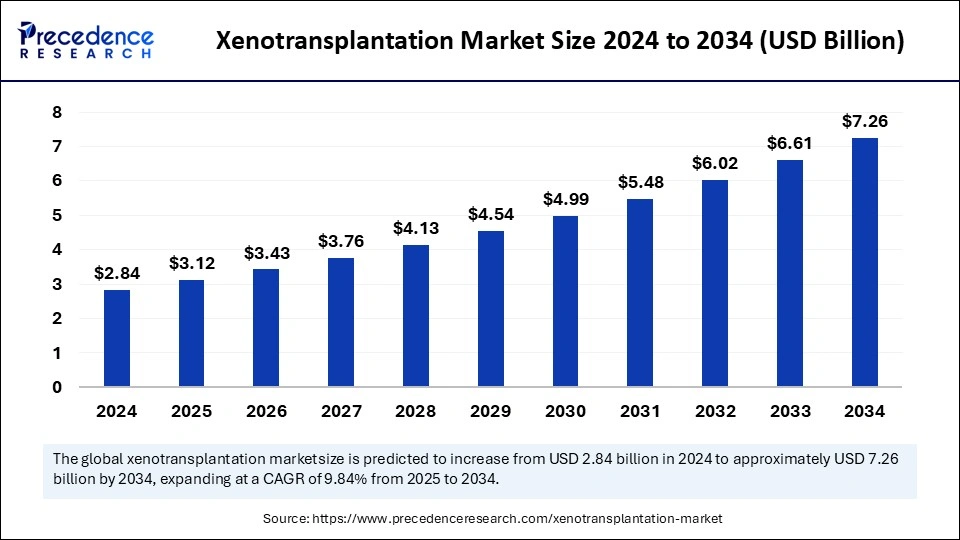
The global xenotransplantation market size was estimated at USD 3.12 billion in 2025 and is predicted to increase from USD 3.43 billion in 2026 to approximately USD 7.87 billion by 2035, expanding at a CAGR of 9.69% from 2026 to 2035. An increase in cases of kidney and heart diseases around the world is expected to fuel the growth of the market during the forecast period.
Xenotransplantation Market Key Takeaways
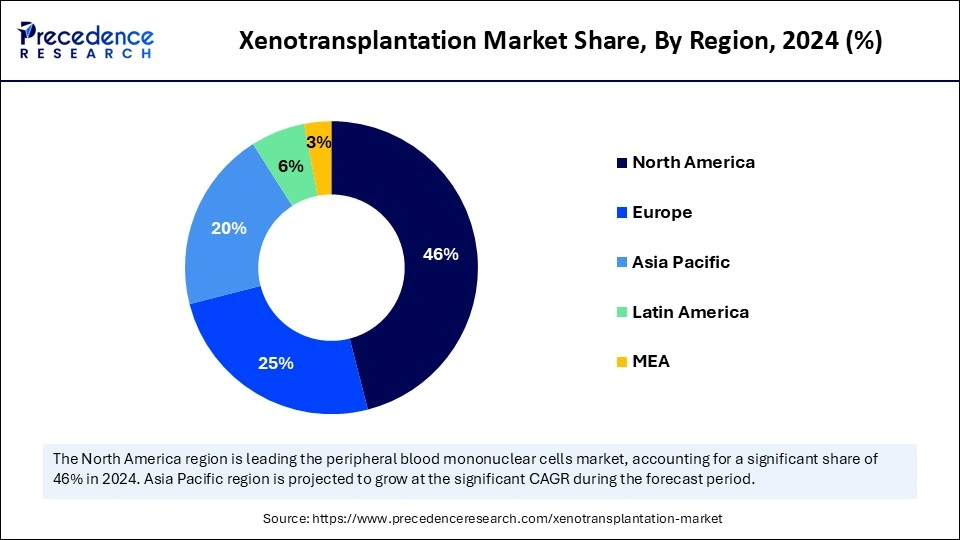
- North America dominated the global market with the largest market share of 46% in 2025.
- Asia Pacific is projected to grow at the fastest CAGR in the coming years.
- By type, the organ preservation segment led the market with the biggest share in 2025.
- By type, the tissue products segment is anticipated to grow at the fastest CAGR during the forecast period.
- By application, the kidney segment captured the major market share in 2025.
- By application, the heart segment is projected to grow at a rapid pace in the upcoming period.
Market Overview
The xenotransplantation method encompasses implantation, transplantation, or even infusion of tissues, liver, cells, or organs from one species to another. These tissues or organs are mostly derived from animals for a human recipient. The xenotransplantation market is growing steadily due to the increasing research and development activities and growing funding for this field. An increase in number of people requiring organ transplants has consistently risen across the world, aiding the growth of this market. Furthermore, a shortage of human organ donors is a key factor boosting this market growth. The rising number of cases of chronic diseases requiring tissue products is impacting market growth. Technological advancements in healthcare services like surgical procedures are helping improve patient outcomes and more people opting for surgeries. The ongoing investment from the private and public sectors alike for the research and development activities of xenotransplantation is driving innovations in the field.
Role of AI in Xenotransplantation
Artificial intelligence (AI) is revolutionizing the healthcare sector. AI offers a more precise and accurate approach to medical procedures like xenotransplantation. With AI driven tools, the surgical procedure can be enhanced along with improvements in imaging and diagnostics. AI can analyze various patient data, including diagnostic results and biomarkers, which can help boost the outcomes for patients. AI and machine learning (ML) algorithms can process and analyze vast amounts of data related to a person's medical history and offer insights that can help medical professionals make informed decisions.
AI technology helps in personalized medicine that suits individual patients and can provide a more tailored treatment for the patient. Predictive analysis is a major benefit of AI because it can help determine the success rate and identify the possible complications through data analysis. AI can be an asset to accelerate research and development activities in this field by helping researchers focus on higher success probabilities, saving resources and time. Such benefits of AI technology will support the growth of the xenotransplantation market in the coming years.
Xenotransplantation Market Growth Factors
- The increasing prevalence of kidney and heart diseases across the world is boosting the growth of the xenotransplantation market.
- The growing demand for organ transplantation and tissue products is propelling the market growth.
- A rise in the number of surgical procedures performed is supporting the growth of this market.
- Increasing investments in research and development activities further contributes to market growth.
Market Scope
| Report Coverage | Details |
| Market Size by 2035 | USD 7.87 Billion |
| Market Size by 2025 | USD 3.12 Billion |
| Market Size by 2026 | USD 3.43 Billion |
| Market Growth Rate from 2026 to 2035 | CAGR of 9.69% |
| Dominated Region | North America |
| Fastest Growing Market | Asia Pacific |
| Base Year | 2025 |
| Forecast Period | 2026 to 2035 |
| Segments Covered | Type, Application, and Regions |
| Regions Covered | North America, Europe, Asia-Pacific, Latin America and Middle East & Africa |
Market Dynamics
Drivers
Increasing Demand for Organ Transplants
The changes in lifestyle patterns are increasing the cases of chronic diseases worldwide. Many chronic diseases, such as diabetes, chronic kidney diseases, and cardiovascular diseases (CVDs), can progress to end-stage organ failure, requiring organ transplantation. Technological advancements have enhanced the accuracy and efficiency of surgical procedures, supporting market growth. Moreover, the lack of availability of organs leads to long waitlists. According to the U.S. Health Resources and Services Administration (HSRA), 17 people die every day awaiting an organ transplant, with approximately 103,223 people on the waiting list in the country. Such a high demand for organ transplants is creating the need for new techniques like xenotransplantation. This method helps reduce the burden on the healthcare system and more patients can get the transplants in minimum waiting time.
Restraint
Ethical Concerns and High Costs
The major factor limiting the growth of the xenotransplantation market is the ethical concerns regarding this technique. This method raises concerns about animal welfare and the potential for disease transmission. Many believe that the long-term effects of these procedures on humans and animals alike have not been seriously considered or studied. In addition, the high cost associated with xenotransplantation procedures hampers the growth of this market. Since this procedure is complex, it requires high expertise and advanced equipment to improve success rates. This cost factor creates barriers for some patients and encourages them to seek alternative options.
Opportunity
Demand for Xeno Skin and Heart Valves
The rising demand for Xeno skin, which is derived from animal sources, and heart valves for various applications offer lucrative growth opportunities for the xenotransplantation market. Xeno skin finds applications in the treatment of severe wounds or burns that require skin grafts. There is an increasing demand for skin grafts that are effective, but lack of sufficient availability is limiting this process. Meanwhile, the heart valves that are mainly sourced from pigs and cows could be another area of focus. The rise in the number of cases of chronic heart conditions boosts the demand for heart valves. They provide an alternative to human donors.
Segment Insights
Type Insights
How does the Organ Preservation Segment Dominate the Xenotransplantation Market in 2025?
The organ preservation segment dominated the market in 2025, owing to the rapid transition of genetically engineered animal organs into early human clinical trials. This creates a high demand for advanced preservation systems to maintain cross-species organ viability. Advanced preservation is important to study species-specific physiology, cross-species organ compatibility, and early rejection dynamics.
The tissue products segment is expected to grow at the fastest CAGR in the market during the forecast period due to a transition into human clinical trials and critical innovations in gene-editing technologies. The favorable regulatory bodies have given approvals to address the severe shortage of human donor organs. The growth of tissue products is supported by the development of next-generation immunosuppressant drugs and immunosuppressive therapies.
Application Insights
What made the Kidney the Dominant Segment in the Xenotransplantation Market in 2025?
The kidney segment dominated the market in 2025, owing to regulatory innovations allowing human clinical trials and advancements in precision gene editing like CRISPR. The new medical regimens, like anti-complement therapies and specialized co-stimulation blockades, have reduced immune injury and prolonged organ durability. Advanced drug regimens allow for long-term xeno-kidney survival.
The heart segment is estimated to grow at the fastest rate in the market during the predicted timeframe due to precise genetic modifications, critical thoracic organ shortages, and improved immunosuppression regimens. A transition to clinical translation and enhanced biosafety frameworks is fueling the demand for heart transplantation. The development of targeted, advanced immune modulation therapies also boosts the applications of xenotransplantation.
Regional Insights
How does North America Dominate the Xenotransplantation Market in 2025?
North America dominated the market in 2025, owing to the rising number of patients suffering from end-stage diabetes, kidney failure, and heart diseases that create a massive need for transplants. Government regulatory oversight has expanded, and it aims to cover designated pathogen-free (DPF) manufacturing conditions. The federal regulatory agencies have taken initiatives to build guidelines for living donor collectives and optimize organ procurement networks. The North American market is further driven by proactive regulatory steering committees and favorable clinical reimbursement frameworks.
U.S. Xenotransplantation Market Size and Growth 2026 to 2035
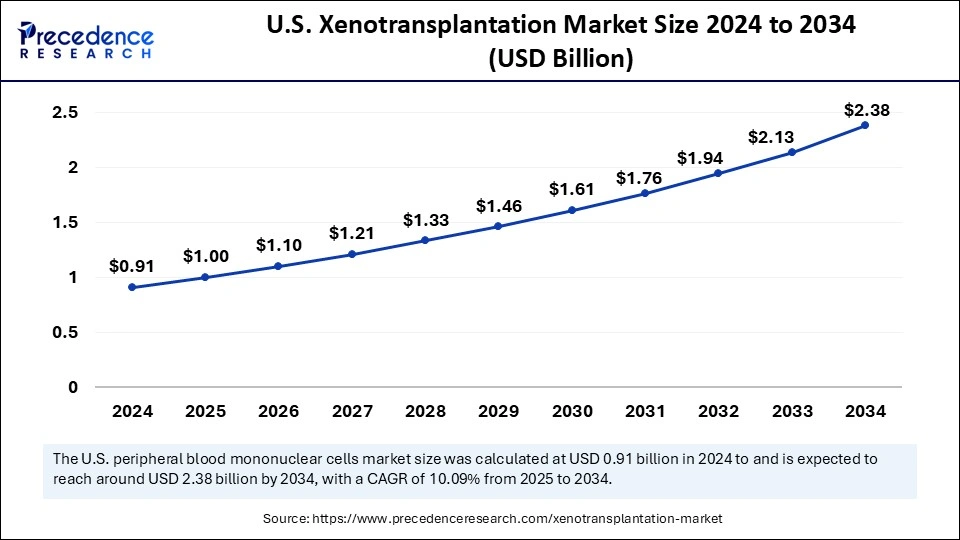
The U.S. xenotransplantation market size was evaluated at USD 1.00 billion in 2025 and is projected to be worth around USD 2.59 billion by 2035, growing at a CAGR of 9.98% from 2026 to 2035.
How can the Xenotransplantation Market Contribute to the Growth of the U.S.?
The strategic institutional partnerships, hospital and biotechnology collaborations, and infrastructure scaling are accelerating the U.S. industry for xenotransplantation. The U.S. FDA approved Investigational New Drug (IND) Applications to launch the multi-patient human clinical trials. Federal standards guided the operational workflow of the world's first clinical-scale production facilities to ensure the biosecurity of source animals.
What is the Potential of the Xenotransplantation Market in the Asia Pacific?
Asia Pacific is expected to grow at the fastest CAGR in the market during the forecast period due to substantial investments in biotechnology and genetic engineering, rising organ shortages, and progressive regulatory frameworks. The major driving forces for the expansion of this industry across Asia Pacific are collaborative cross-border regional regulatory networks, health policy reforms, and progressive funding. The market is further driven by an aging population and high rates of end-stage organ failure.
How is the Expansive Reach of the Xenotransplantation Market in India?
India is advancing in the market through a strategic push to upgrade the national transplant infrastructure, global validation of porcine transplants, and advancements in biotechnology and CRISPR-Cas9. The Indian government is dedicated to the scientific infrastructure required for animal-to-human transplants and to building the foundational regulatory framework.
Why is Europe Considered a Significantly Growing Region in the Xenotransplantation Market?
Europe is expected to grow at a significant rate in the market during the studied period due to strategic government funding for regenerative medicine, favorable government support, the launch of next-generation CRISPR tools, and organ preservation innovations. European government bodies have launched legislative changes to fast-track innovation while controlling cross-species health risks. The European Commission has launched the health-focused European Biotech Act I, which aims to streamline clinical trial approval.
What is the Key Role of the Xenotransplantation Market in Germany?
Germany is growing and expanding in the market due to targeted breeding timelines, CRISPR precision, bioengineering success, and molecular diagnostic integration. The federal institutions and German researchers are supporting advancements in genetically engineered donor pigs. The pharma and MedTech dialogue aims to bridge the gap between hospital implementation and advanced biotechnology research.
Which Major Growth Factors Drive the Notable Growth of the Xenotransplantation Market in Latin America?
Latin America is expected to grow at a notable rate in the market during the predicted timeframe, driven by the urgent need for scalable alternatives that encourage specialized medical centers and local healthcare systems to look toward bioengineered tissues and genetically modified swine organs. Latin American industry is transitioning to localized production of gene-edited animals and early clinical translation. The targeted government funding and critical organ shortages are building the region as a specialized hub for cross-border regulatory frameworks and clinical-grade animal breeding.
How can the Xenotransplantation Market Expand in Brazil?
Brazil is transitioning toward innovations in scientific research, advanced agricultural capabilities, and immune profiling. The federal investments by leading public research institutions have built the infrastructure needed to transition from laboratory research to early clinical translation. The federal government integrated alternative transplant technologies and aimed to increase local health product manufacturing.
How does the Xenotransplantation Market Majorly Impact the Significant Growth of Middle East and Africa?
Middle East and Africa is expected to grow significantly in the market in the coming years, propelled by the rapid expansion of localized transplant diagnostic infrastructure, surging rates of chronic illnesses, and significant government funding. This regional industry is driven by a high incidence of end-stage renal and cardiovascular diseases and critical organ shortages. These regional governments are introducing legislative frameworks to govern, enable, and fund this technology. The UAE is the regional leader in adapting laws to include non-human organ technologies.
What is the Major Footprint of Saudi Arabia in the Xenotransplantation Market?
Saudi Arabia is transforming due to healthcare infrastructure investments under Vision 2030, the national biotechnology strategy, and surging clinical demand. The Saudi Vision 2030 and the National Biotechnology Strategy, the Kingdom's initiatives, focus on building specialized clinical infrastructure, building robust regulatory frameworks, and hosting international frameworks.
Competitive Landscape
The xenotransplantation market is dominated by core xenotransplantation organ developers such as United Therapeutics, eGenesis, Inc., and Makana Therapeutics. Moreover, gene-editing and biotechnology enablers are CRISPR Therapeutics, Qihan Biotech, and Recombinetics. The critical immunosuppression and logistics support is provided by Eledon Pharmaceuticals, Roche Holding AG, Novartis AG, Astellas Pharma, TransMedics Group, and XVIVO Perfusion AB. The core product offerings of the United Therapeutics Corporation are UKidney, UHeart, and LungFX Device, and its product offerings are focused on 10 gene-edited porcine donor lines. Key technological trends are AI-optimized gene editing, multi-organ focus, and combination therapies.
Xenotransplantation Market Companies
- Terumo Medical Corporation
- eGenesis, Inc.
- Astellas Pharma, Inc.
- Preservation Solutions, Inc.
- Hoffmann-La Roche Ltd.
- OrganOX Limited
- TransMedic, Pte. Ltd.
- Novartis AG
- Bio Med Pvt. Ltd.
- Transplant Biomedical
- Organ Recovery Systems
- Veloxis Pharmaceuticals, Inc.
- United Therapeutics Corporation
- Pfizer, Inc.
Recent Developments
- In February 2025, a Massachusetts General Hospital team led by Harvard Medical School physician-scientists performed a second surgery by inserting a genetically edited pig kidney into a living person.
- In February 2025, United Therapeutics Corporation announced that they received FDA clearance for their Investigational New Drug Application created for the UKidney Xenotransplantation Clinical Trial.
- In April 2024, a team of surgeons at NYU Langone Health performed a surgery. This was the first transplant procedure that combined a mechanical heart pump and a gene-edited pig kidney in surgery.
Segments Covered in the Report
By Type
- Organ Preservation Solutions
- Transplant Diagnostics
- Tissue Products
By Application
- Heart
- Kidney
- Other Organs
By Region
- North America
- Europe
- Asia Pacific
- Middle East and Africa
- Latin America
For inquiries regarding discounts, bulk purchases, or customization requests, please contact us at sales@precedenceresearch.com
Frequently Asked Questions
Tags





Ask For Sample
No cookie-cutter, only authentic analysis – take the 1st step to become a Precedence Research client
 Get a Sample
.webp)



 sales@precedenceresearch.com
 Schedule a Meeting
