



Waste Management Market Size, Production Output, Material Consumption, Sales Performance, Pricing Trends, Distribution Analysis, and Forecast
The global waste management market was valued at USD 1.28 trillion in 2025 and is projected to reach USD 2.44 trillion by 2035, driven by rising focus on recycling, circular economy initiatives, and sustainable waste disposal practices. North America dominates the market, while Asia Pacific is the fastest-growing region due to rapid urbanization and increasing environmental regulations.
Source: https://www.precedenceresearch.com/waste-management-market
 Get a Sample
 Table Of Content


What is the Waste Management Market Size?
The global waste management market size is accounted at USD 1.28 trillion in 2025 and predicted to increase from USD 1.37 trillion in 2026 to approximately USD 2.44 trillion by 2035, growing at a CAGR of 6.66% from 2026 to 2035. Waste Management Market growth is driven by rising urbanization, increasing waste generation, expanding recycling infrastructure, and growing investments in sustainable waste treatment technologies.
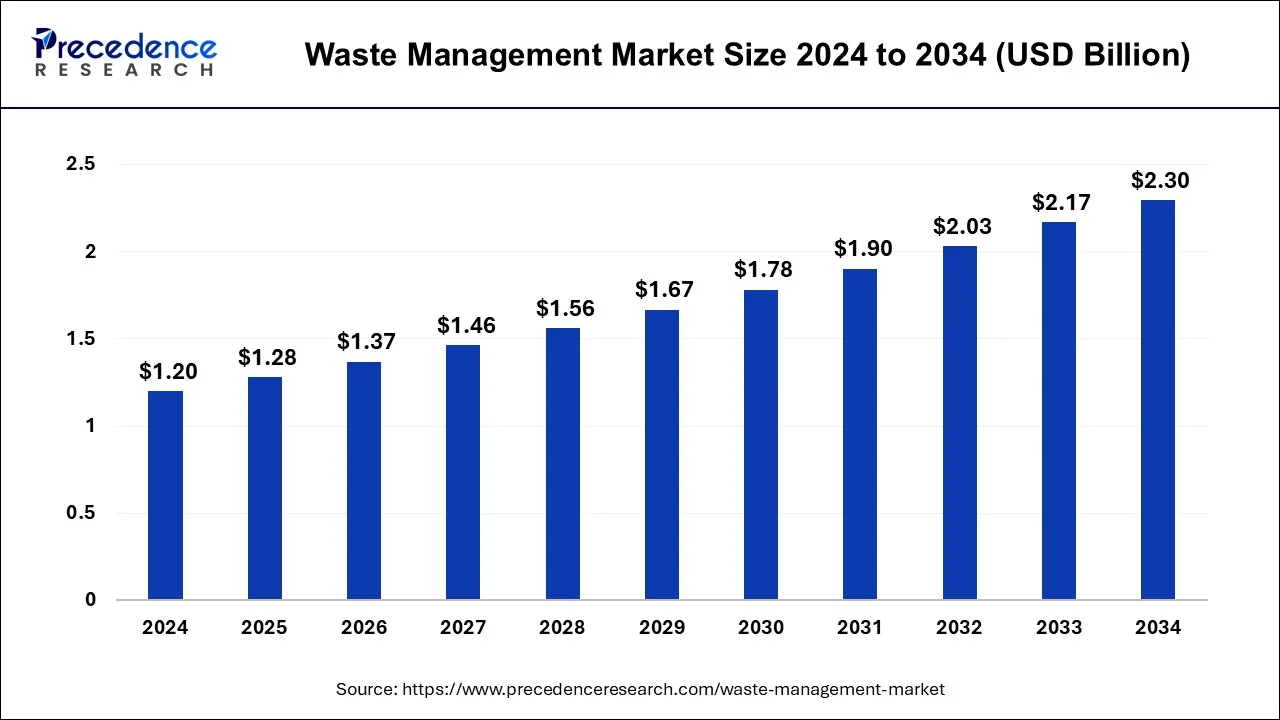
Waste Management Market Key Takeaways
- It is projected to reach US$2.44 trillion by 2035.
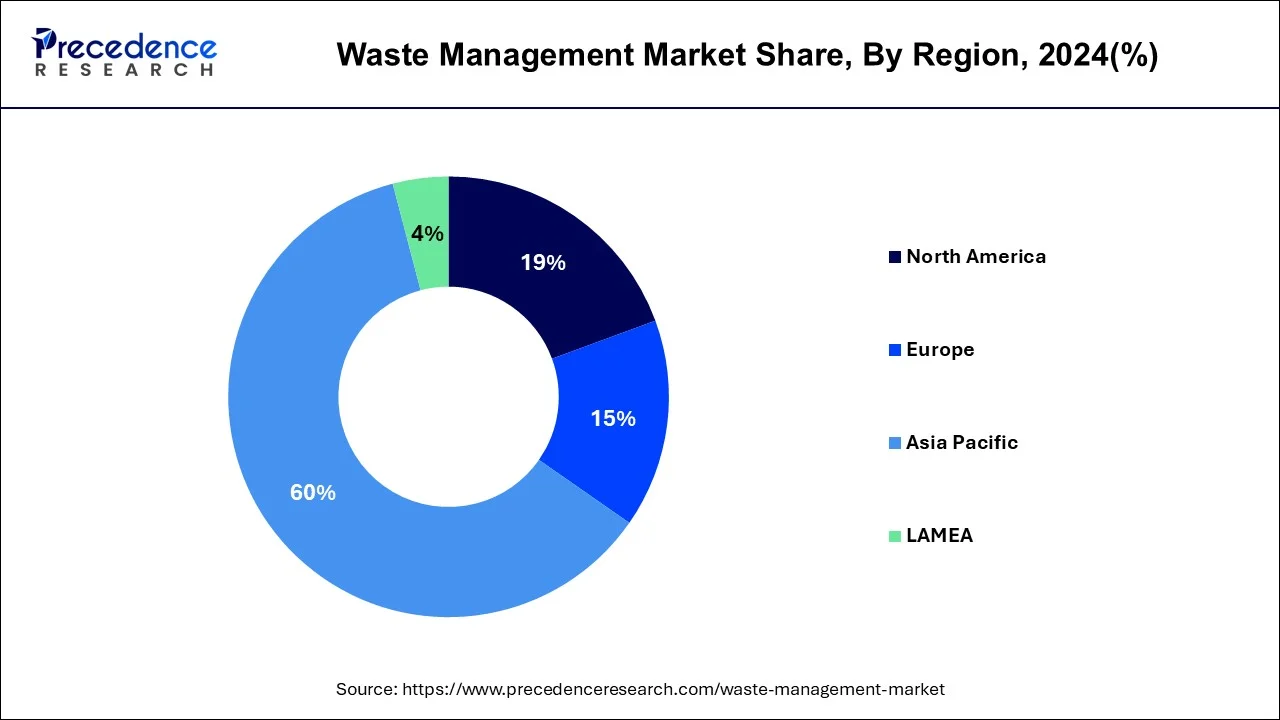
- Asia Pacific region accounted for 59.14% market share in 2025.
- The Middle East and Africa are expected to grow at a CAGR of 6.4% from 2026 to 2035.
- By waste type, municipal waste accounted for 32.3% market share of the global market in 2025.
- By waste type, the e-waste segment is growing at a registered CAGR of 7.3% from 2026 to 2035.
- By service type, the collection segment has garnered a market share of around 63% in 2025.
- By service type, the disposal service segment is poised to reach a CAGR of 7.1% between 2026 to 2035.
What is Waste Management?
Global growth drivers for utilizing waste as a resource are changing rapidly due primarily to increasing urbanization, population growth, and increased levels of industrial activity throughout the world, resulting in increases in waste volumes being produced worldwide. Governments and businesses are directing their focus on implementing more efficient methods to collect, recycle, and dispose of waste to lessen its negative impact on the environment.
Waste management is an important aspect of most sectors, including municipal solid waste, industrial waste, and hazardous waste, all of which are prevalent in society today and in the future. Waste management has a big impact on public health, sustainability, and resource recovery.
Additionally, garbage is subject to significant collection and disposal efforts. Waste collection services include sorting, storage, and transportation of waste.
Market Overview
Waste management involves the environmentally responsible collection, transportation, recycling, treatment, and disposal of solid, liquid, and hazardous waste materials. The waste management market encompasses a wide range of services, technologies, and solutions designed to reduce, recover, recycle, and safely dispose of waste generated by municipal, industrial, commercial, and residential sources. Market growth is being driven by rapid urbanization, population expansion, increasing industrial activities, and the rising volume of waste generated worldwide. Additionally, governments across the globe are implementing stringent environmental regulations and promoting circular economy initiatives to enhance recycling rates, reduce landfill dependency, and support sustainable resource management practices.
The global waste management market is being driven by several key factors, including growing awareness of circular economy practices, the implementation of stricter environmental regulations, and continuous advancements in waste treatment and recycling technologies. Effective waste management plays a critical role across municipal, industrial, and hazardous waste sectors, helping organizations address increasing waste generation while complying with environmental standards.
As concerns regarding sustainability, resource conservation, and environmental protection continue to rise, waste management solutions are becoming increasingly important for recovering valuable materials, reducing landfill dependence, and minimizing environmental impacts. Furthermore, efficient waste management systems contribute significantly to public health, sustainable development, and long-term resource recovery, making them an essential component of modern infrastructure and economic growth.
How is AI Integration Influencing the Waste Management Market?
The advancements in waste management are being propelled by AI, including improvements in waste sorting, efficiency in collection, and increased accuracy of recycling. Robots and computer vision systems use AI to recognize and sort out the recyclable materials, decreasing contamination and costs. AI also plays a major role in handling hazardous materials and assisting the use of the circular economy by optimizing all resources in terms of sustainability and regulatory compliance.
Waste Management Market Growth Factors
- Rapid urbanization and population growth leading to increased municipal solid waste generation.
- Rising industrialization across developing and developed economies, resulting in higher volumes of industrial and hazardous waste.
- Stringent environmental regulations encouraging proper waste collection, treatment, recycling, and disposal practices.
- Growing adoption of circular economy principles promoting resource recovery, recycling, and waste reduction.
- Increasing awareness of environmental sustainability among governments, businesses, and consumers.
- Rising investments in recycling infrastructure and advanced waste processing facilities.
- Growing generation of electronic waste (e-waste) creating demand for specialized recycling and recovery solutions.
- Expansion of waste-to-energy (WTE) projects for converting waste into renewable energy and reducing landfill dependency.
- Technological advancements in waste management, including AI, IoT, robotics, and automated sorting systems.
- Increasing government initiatives and funding programs supporting sustainable waste management and recycling activities.
- Growing demand for resource recovery to extract valuable materials such as metals, plastics, paper, and organic matter from waste streams.
- Rising focus on reducing greenhouse gas emissions and achieving climate sustainability goals.
Waste Management Market Trends
- Rising Electronic Waste Generation: Electronic The increasing adoption of electronic devices, coupled with shorter product life cycles and rapid technological advancements, is leading to a significant rise in electronic waste (e-waste) worldwide. This trend is driving demand for advanced recycling technologies and sustainable e-waste management solutions to recover valuable materials and reduce environmental impacts.
- Increasing Adoption of Recycling Technologies: Waste management companies are investing heavily in advanced recycling processes and waste-to-energy technologies to improve resource recovery and reduce dependence on landfills. These innovations help maximize the reuse of materials, enhance operational efficiency, and support sustainability objectives.
- Growing Focus on Circular Economy Practices: The adoption of circular economy principles is encouraging businesses and governments to prioritize waste reduction, resource recovery, reuse, and recycling. This shift is creating opportunities for innovative waste management solutions that promote sustainable consumption patterns and extend the lifecycle of materials.
- Expansion of Smart Waste Management Solutions: The integration of digital technologies, including smart bins, IoT-enabled waste monitoring systems, data analytics, and automated collection solutions, is transforming waste management operations. These smart technologies improve collection efficiency, reduce operational costs, optimize waste handling processes, and enhance overall waste tracking and management capabilities.
Market Outlook
- Industry Growth Overview: Market growth is expected to be consistent throughout the year, driven by increasing amounts of waste and increased levels of environmental regulations. Growth will also occur in a way that supports long-term growth within the waste management market by investing in infrastructure (e.g., recycling facilities and waste-to-energy plants) throughout the world (developed and developing economies).
- Sustainability trends: Zero waste initiatives, models based on the circular economy, carbon reduction strategies, and sustainability approaches are transforming how businesses operate. Eco-friendly technology, biodegradability, and advanced recycling methods are employed by many companies to minimize their reliance on landfills and reduce their negative impact on the environment.
- Global Expansion: Infrastructure development will promote growth in developing countries, while technological transfers from advanced countries will help promote the growth of the waste industry. Many international companies are expanding into new markets through acquisition, joint venture, and public-private partnerships in an effort to create a broader worldwide presence.
- Startup Ecosystem: The startup ecosystem is alive and well. Innovators are focused on AI-based waste sorting, smart bins, and decentralized recycling. Startups that deliver solutions that can be scaled and supported by technology, thus increasing both their efficiency as well as their ability to be sustainable, are generating interest from investors.
Market Scope
| Report Coverage | Details |
| Market Size in 2025 | USD 1.28 Trillion |
| Market Size in 2026 | USD 1.37 Trillion |
| Market Size by 2035 | USD 2.44 Trillion |
| Growth Rate from 2026 to 2035 | CAGR of 6.66% |
| Largest Market | Asia Pacific |
| Fastest Growing Region | North America |
| Base Year | 2025 |
| Forecast Period | 2026 to 2035 |
| Segments Covered | Waste Type, Service Type, and End User |
| Regions Covered | North America, Europe, Asia-Pacific, Latin America, and Middle East & Africa |
Market Dynamics
Driver
Rising Waste Generation and Sustainability Initiatives
Rapid urbanization, population growth, and expanding industrialization are key factors driving the waste management market. To cut landfill waste and boost recycling rates, governments around the globe are putting environmental laws and sustainability measures into place. The growing public consciousness of good practice for a circular economy and resource recovery is also stimulating investments in innovative solutions for waste treatment.
Restraint
High Operational and Infrastructure Costs
Some of the challenges that are hampering the waste management market are the high costs of operation and the massive capital investments that need to be made in the waste collection systems, waste recycling plants, and more advanced treatments. A huge investment is required to develop the modern waste processing infrastructure of waste-to-energy plants and automated sorting systems. Also, the prices for recycling materials vary, and the waste separation system in developing areas is not efficient, which presents problems for operations.
Opportunity
E-Waste and Advanced Recycling
E-waste recycling, particularly with advanced techniques is crucial for both environmental protection and resource recovery.?E-waste contains valuable materials such as gold, silver, and copper, which can be extracted through specialized processes.?Advanced recycling uses technologies such as AI-powered sorting, eco-friendly dismantling, and innovative material recovery methods to maximize resource recovery and minimize environmental impact.?E-waste contains valuable metals and other materials that can be recovered and reused and reduce the need for mining new resources and conserving natural resources.?
Segments Insights
By Waste Type
The Municipal Waste Segment Held a Dominant Position in the Market in 2025
The municipal waste segment dominated the waste management market with a 32.3% share in 2025, driven by rapid urbanization, population growth, and the increasing generation of household and community waste. Municipal waste includes residential waste, food waste, packaging materials, and waste collected from public institutions and commercial establishments. The growing urban population and rising consumption levels have significantly increased the demand for waste collection, transportation, recycling, and disposal services, supporting the segment's market dominance.
The industrial waste segment held a considerable share in 2025 due to growing industrialization and the generation of waste from industries such as construction, mining, chemical, and energy. Industrial waste involves hazardous and non-hazardous items that need to be treated, disposed of, and recycled in special ways. The rising awareness of environmental pollution and a few stringent laws of the government regarding industrial waste disposal drive segmental growth.
The e-waste segment is expected to grow at the fastest rate during the forecast period, driven by growing adoption of electronics products and their ever-shorter lifecycles. A large amount of waste materials has been produced due to the surge in the use of smartphones, laptops, TVs, and other electronic devices all over the world. The improper disposal of e-wastes due to their improper handling and disposal impacts the environment. Moreover, the increasing need for recycling and safe disposal services for e-wastes supports segmental growth.
The hazardous waste segment is expected to grow steadily during the forecast period due to the increasing waste generation from the chemical, pharmaceutical, healthcare, and manufacturing sectors. Hazardous waste includes toxic solids, liquids, sludges, and gases that require careful handling, transportation, treatment, and disposal to prevent environmental contamination and public health risks. Growing regulatory scrutiny and the need for safe disposal practices are expected to sustain demand for hazardous waste management solutions in the coming years.
Service Type Insights
Why did the Collection Segment Held the Largest Market Share in 2025?
The collection segment held the largest share of 63% in the waste management market in 2025 due to the increasing volume of waste generation and the growing need for efficient waste transportation and collection systems. Waste collection involves the gathering, segregation, temporary storage, and transportation of waste from residential and commercial sources to treatment or disposal facilities. Rapid urbanization, rising population density, and increasing public awareness regarding proper waste disposal practices are driving demand for effective waste collection services.
The landfill segment held a significant share of the market in 2025, supported by the widespread use of landfills for municipal and industrial solid waste disposal. Modern landfill facilities are developed, operated, and managed according to strict environmental standards to minimize ecological impact. These facilities provide a structured waste disposal approach while ensuring compliance with government regulations and environmental guidelines.
The open dumping segment is expected to grow at a notable rate during the forecast period due to its continued prevalence in developing regions with limited waste management infrastructure. Open dumping involves the uncontrolled disposal of waste in vacant areas, low-lying regions, or locations without scientific treatment systems. This practice contributes to environmental pollution, poor sanitation conditions, and the spread of disease-carrying insects such as flies and mosquitoes, highlighting the need for improved waste management solutions.
The recycling segment is expected to expand steadily during the forecast period, driven by increasing awareness of sustainability, resource recovery, and circular economy practices. Recycling enables the recovery of valuable materials from waste while reducing dependence on landfill disposal. Growing corporate initiatives to manage plastic, metal, paper, and electronic waste efficiently are further accelerating the adoption of recycling solutions worldwide.
End User Insights
The Industrial Segment Led the Market in 2025
The industrial segment held a dominant position in the waste management market in 2025, primarily due to significant waste generation from industries such as construction, oil and gas, chemicals, manufacturing, and mining. Industrial waste can include both hazardous and non-hazardous materials that require specialized treatment and disposal methods. Increasing industrial activities and the need for sustainable resource management are contributing to the demand for advanced industrial waste management solutions.
The residential segment is expected to witness significant growth during the forecast period, driven by rising household waste generation and changing consumer waste disposal behaviors. Residential waste includes packaging materials, plastics, food waste, electronic waste, and other household-generated materials. Growth in disposable income and the expansion of online shopping are contributing to increased packaging waste, creating greater demand for efficient residential waste management services.
The commercial segment is expected to grow steadily during the forecast period, supported by rising waste generation from offices, retail establishments, restaurants, and other business operations. Commercial waste includes food waste, packaging materials, paper, plastics, and other materials generated through business activities. Increasing urbanization and expansion of commercial infrastructure are creating demand for reliable and efficient waste collection, recycling, and disposal systems.
Regional Insights
What is the Asia Pacific Waste Management Market Size?
The Asia Pacific waste management market size is exhibited at USD 770 billion in 2025 and is projected to be worth around USD 1,473.33 billion by 2035, growing at a CAGR of 6.70% from 2026 to 2035.
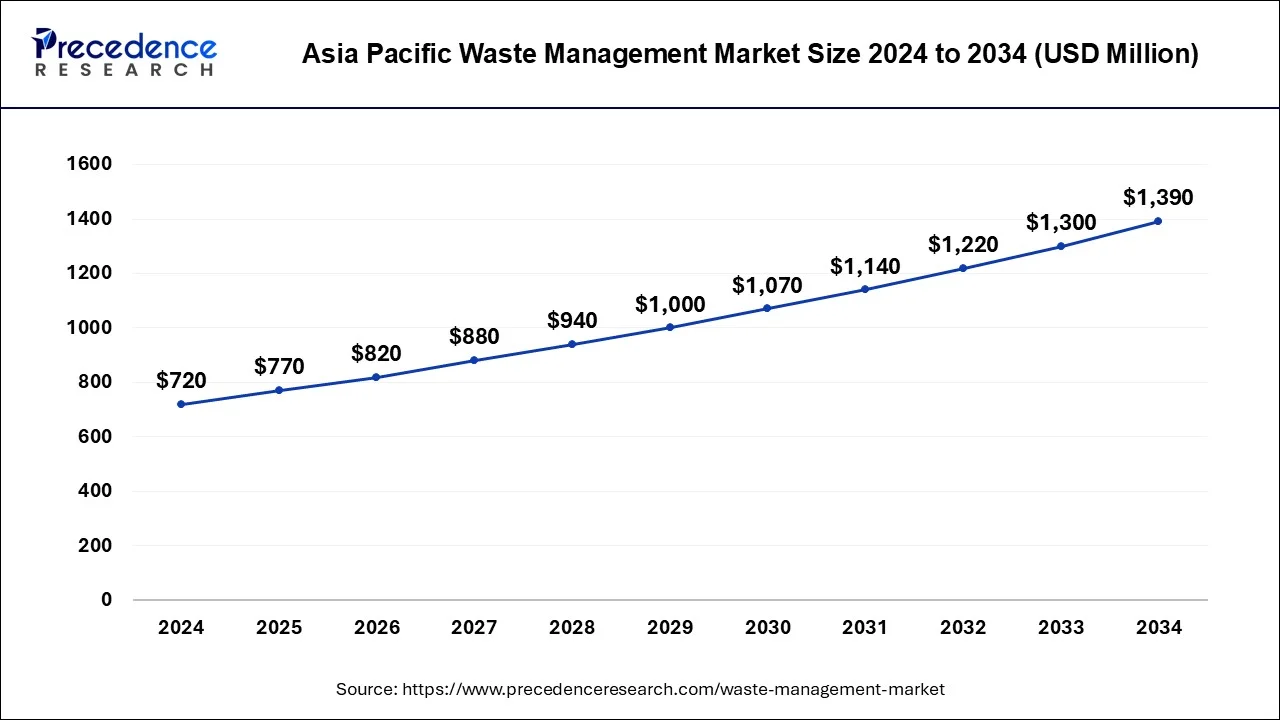
Asia Pacific: The Dominant Region in the Market
Asia Pacific dominated the waste management market with the largest share in 2025, supported by rapid urbanization, population growth, and increasing industrialization across major economies. The rising generation of municipal and industrial waste is encouraging governments to invest in advanced waste collection, recycling, and disposal infrastructure. Additionally, growing awareness of environmental sustainability and the implementation of government initiatives focused on circular economy practices are contributing to regional market expansion.
China Market Trends
China's waste management market is projected to witness significant growth, driven by increasing industrial waste generation, rapid urban development, and strong government efforts toward environmental sustainability. The market is benefiting from rising investments in recycling technologies, waste-to-energy projects, and smart waste collection systems. Furthermore, stricter environmental regulations aimed at reducing landfill dependency and controlling pollution are accelerating the adoption of sustainable waste management solutions.
North America: The Second-Largest Market
North America held the second-largest share of the waste management market in 2025, supported by rising investments in recycling technologies, sustainability initiatives, and regulatory measures related to waste disposal. The adoption of smart waste management systems, automated collection solutions, and waste-to-energy (WtE) technologies is strengthening market growth. Increasing awareness regarding environmental protection and circular economy strategies is also contributing to the region's expansion.
U.S. Market Trends
The U.S. represents the largest waste management market in North America, driven by high waste generation levels and increasing investments in advanced waste management technologies. The adoption of smart waste collection systems, modern landfill management solutions, and waste-to-energy technologies is supporting market growth. Additionally, stricter environmental regulations and growing corporate responsibility initiatives are encouraging organizations to adopt more sustainable waste management practices.
How is the Opportunistic Rise of Europe in the Waste Management Market?
Europe is expected to experience significant growth in the waste management market throughout the forecast period. This is mainly due to strict environmental regulations, well-established circular economy practices, and increasing recycling targets. Governments across the region are investing in innovative waste management technologies, waste-to-energy facilities, and sustainable disposal solutions to reduce dependence on landfills. Rising environmental awareness and the adoption of digital technologies for waste tracking and monitoring are further driving market development.
Germany Market Trends
Germany's waste management market is expected to grow steadily due to its advanced recycling infrastructure, high recycling rates, and strong commitment to environmental protection. The country is focused on reducing landfill waste through innovative recycling systems and circular economy initiatives. Government support for sustainability programs and the increasing need for industrial waste management solutions are expected to further support market growth.
What are the Key Trends in the Waste Management Market in Latin America?
Latin America is expected to have significant growth in the market, driven by increasing industrial activity, rising urban populations, and government investments in waste management infrastructure. Growing awareness regarding proper waste disposal and recycling practices is increasing demand for organized waste management services. Additionally, investments in landfill modernization, waste collection improvements, and recycling facilities are supporting regional market growth.
Brazil Market Trends
Brazil's waste management market is anticipated to expand significantly due to increasing municipal solid waste (MSW) generation, urbanization, and improvements in waste disposal infrastructure. Government initiatives promoting recycling and sustainable waste treatment practices are supporting market development. Increasing environmental awareness and investments in waste collection systems are helping improve waste management efficiency across the country.
How is the Market Within the Middle East & Africa Gaining Momentum?
The waste management market in the Middle East & Africa is expected to grow at the fastest rate in the upcoming years, driven by the need for improved urban infrastructure, rapid urbanization, and rising environmental sustainability concerns. Governments are investing in modern waste collection systems, advanced landfill facilities, and recycling centers to manage increasing waste volumes. Expanding industrial activities and growing demand for sustainable waste disposal solutions are also contributing to regional market growth.
Saudi Arabia Market Trends
Saudi Arabia's waste management market is projected to grow steadily, supported by rapid urbanization and government initiatives focused on sustainability and environmental protection. Investments in smart waste management systems, waste-to-energy technologies, and recycling infrastructure are driving market expansion. Furthermore, national development programs and environmental policies are encouraging the adoption of improved waste collection, treatment, and disposal systems.
Future Overview and Strategic Suggestions
- Industry Future Overview: Due to stricter environmental regulations, urbanization, an increase in waste volume, and greater investments in circular economy initiatives, the waste management industry is predicted to continue growing in the future. Innovative recycling technologies, waste-to-energy systems, and digital waste management systems will still be disrupting the industry as both private companies and governments will focus on resource recovery and reduction of emissions.
- New Business Models: Companies are starting to use more circular economy models, resource recovery solutions, waste-as-a-service (WaaS), smart collection solutions using IoT, and AI-based waste tracking systems. The cooperation between public and private sector together with the introduction of producer responsibility initiatives and recycling-focused platforms will help organizations increase their income potential.
- Strategic Suggestions for Stakeholders: Stakeholders must invest in the introduction of automation, development of advanced recycling systems, and use of AI technologies to achieve operational efficiency.
Competitive Landscape
The market is highly competitive, with key players operating in the market focusing on recycling technologies, waste-to-energy (WtE) solutions, and sustainable waste disposal methods to strengthen their market position. Major companies include Waste Management Inc., Veolia Environment S.A., Republic Services, SUEZ Group, and Clean Harbors. These companies are investing in advanced waste management infrastructure, circular economy initiatives, and innovative waste processing facilities to improve resource recovery and reduce environmental impact.
Strategic partnerships, collaborations, and expansion initiatives are playing an increasingly important role in shaping the competitive landscape of the market. Companies are focusing on enhancing waste recovery systems, expanding recycling capabilities, and improving collection efficiency through technology-driven solutions and collaborative programs
Waste Management Market Companies
- Waste Management
- Veolia
- Republic Services
- SUEZ
- Biffa Waste Connections
- Clean Harbors
- Covanta Holding
- Daiseki
- Hitachi Zosen
Recent Developments
- In May 2025, Ahmedabad Municipal Corporation (AMC) relaunched its E-Waste Collection Service 2.0, appointing three authorized agencies for doorstep e-waste pickup. Residents can schedule collections through linked online portals and receive compensation for discarded electronic items, strengthening the city's formal recycling ecosystem. (Source: Latest News, Breaking News, Today Headlines, India News, Top Stories at Free Press Journal)
- In May 2025, Pune launched India's first e-pushcart pilot to support waste pickers by electrifying traditional collection carts. The initiative reduces physical strain, improves collection efficiency, and promotes sustainable, technology-driven urban waste management while enhancing workers' livelihoods. (Source: Click, call, discard: AMC launches e-waste collection service 2.0 | Ahmedabad News - Times of India)
- In February 2025, India inaugurated its first indigenous automated biomedical waste treatment plant, enhancing scientific disposal of infectious healthcare waste. The initiative strengthens waste treatment infrastructure, improves environmental safety, and supports sustainable management of biomedical waste across healthcare facilities. (Source: https://punemirror.com)
Segments Covered in the Report
By Waste Type
- Hazardous Waste
- E-waste
- Municipal Waste
- Plastic Waste
- Industrial Waste
- Others
By Service Type
- Collection
- Open Dumping
- Incineration/Combustion
- Landfill
- Recycling
By End User
- Residential
- Commercial
- Industrial
By Geography
- North America
- Latin America
- Europe
- Asia-pacific
- Middle and East Africa
For inquiries regarding discounts, bulk purchases, or customization requests, please contact us at sales@precedenceresearch.com
Frequently Asked Questions





Ask For Sample
No cookie-cutter, only authentic analysis – take the 1st step to become a Precedence Research client
 Get a Sample




 sales@precedenceresearch.com
 Schedule a Meeting
