



Aesthetic Medicine Market Forecast 2026-2035: Trends, Growth Drivers, and AI Innovations
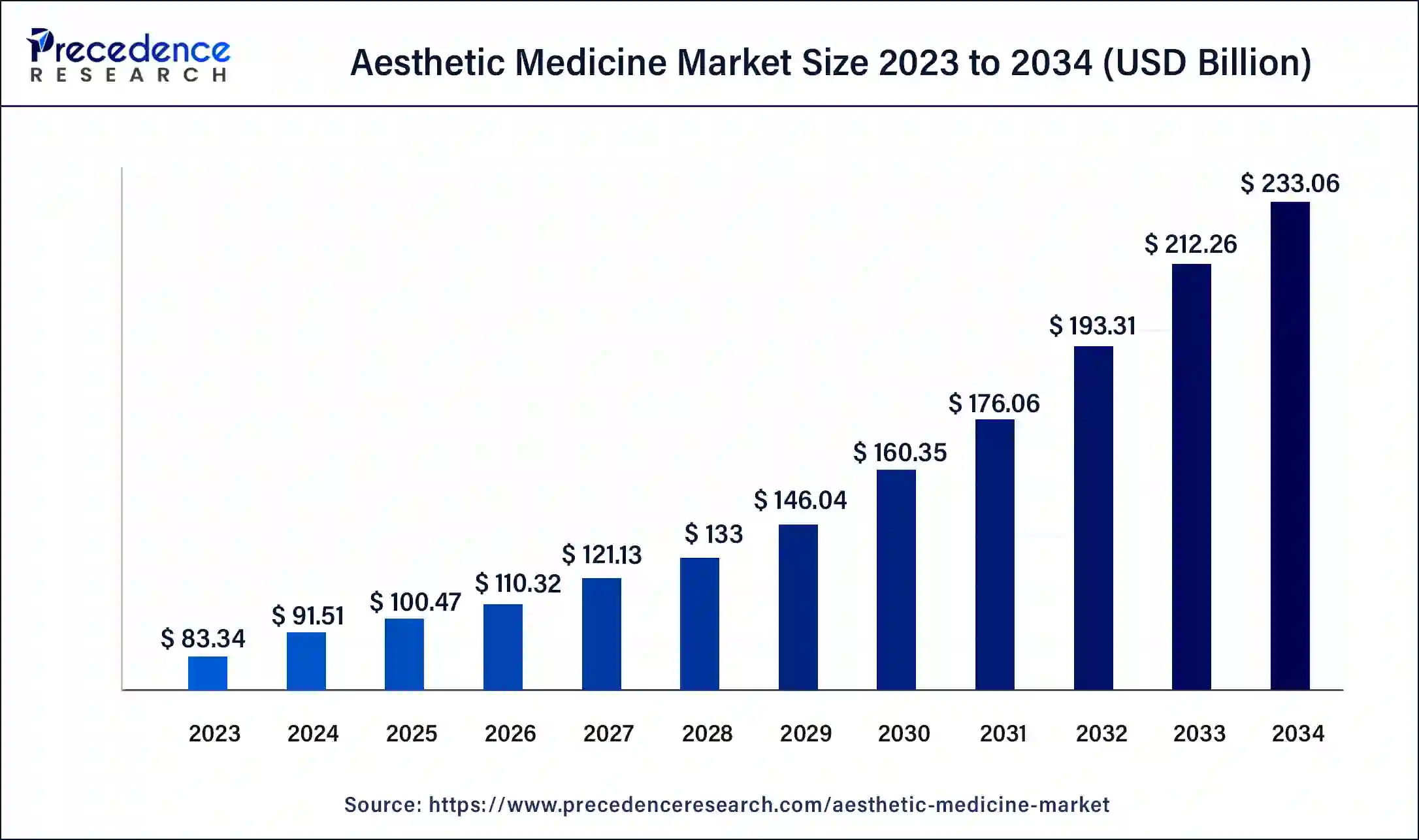
The global aesthetic medicine market size is projected to grow from USD 110.32 billion in 2026 to USD 252.63 billion by 2035, expanding at a CAGR of 9.66%. Market growth is driven by increasing demand for minimally invasive cosmetic procedures, AI-powered treatment personalization, regenerative aesthetic therapies, growing medical tourism, and rising consumer focus on preventive beauty and wellness solutions.
Source: https://www.precedenceresearch.com/aesthetic-medicine-market
 Get a Sample
 Table Of Content


What is Driving the Growth of the Aesthetic Medicine Market?
The global aesthetic medicine market size was estimated at USD 100.47 billion in 2025 and is predicted to increase from USD 110.32 billion in 2026 to approximately USD 252.63 billion by 2035, expanding at a CAGR of 9.66% from 2026 to 2035. The market is witnessing substantial growth, driven by surging consumer preference for minimally invasive, quick-recovery aesthetic treatments, continuous innovations in medical devices and regenerative injectables, and a widespread cultural shift toward preventative self-care and wellness.
Key Takeaways
- North America dominated the market with a major market share in 2025.
- Asia Pacific is expected to grow at the fastest CAGR between 2026 and 2035.
- By procedure type, the non-invasive procedure segment held the biggest market share in 2025.
- By procedure type, the invasive segment is expected to expand at the fastest CAGR between 2026 and 2035.
- By product type, the implants segment accounted for the largest market share in 2025.
- By product type, the energy-based devices segment is projected to grow at a solid CAGR between 2026 and 2035.
- By application, the surgical segment captured the highest market share in 2025.
- By application, the non-surgical segment is poised to grow at a healthy CAGR between 2026 and 2035.
- By end-user, the hospitals and clinics segment contributed the highest market share in 2025.
- By end-user, the home-use segment is growing at a strong CAGR between 2026 and 2035.
- By gender, the female segment held a major market share in 2025.
- By gender, the male segment is expected to expand at a notable CAGR from 2026 to 2035.
- By route of administration, the topical segment held a major market share in 2025.
- By route of administration, the oral segment is expected to expand at a notable CAGR from 2026 to 2035.
Aesthetic Medicine Market Overview
The aesthetic medicine market encompasses both surgical and non-surgical cosmetic procedures, including injectables, body contouring, skin rejuvenation, and laser therapies. These procedures are offered through medical spas, clinics, and hospitals to enhance physical appearance. The market is shifting from traditional surgical methods to digitally advanced and non-invasive approaches, driven by the adoption of laser technology, radiofrequency platforms, and minimally invasive treatments. Also, an aging population and increased consumer awareness of aesthetic enhancements, combined with the influence of social media, are fueling demand for preventive and regenerative cosmetic treatments.
Government initiatives and supportive healthcare policies are also contributing to the growth of the aesthetic sector. These efforts include promoting strict device safety standards, expanding specialized training for practitioners, and encouraging the adoption of digital practice management. Programs like ISO and FDA modernization are enhancing patient safety and supporting the modernization of aesthetic services. Furthermore, the expansion of organized clinic chains, aesthetic-focused financing options, and medical tourism is improving market accessibility and growth.
How is AI Transforming the Aesthetic Medicine Market?
Artificial Intelligence (AI) is transforming the global market by moving from subjective evaluations to hyper-personalized, data-driven treatments. Clinics are now using AI systems that analyze thousands of points on a patient's face to measure symmetry, volume loss, and aging patterns objectively. Energy-based devices equipped with AI can automatically adjust laser wavelengths and pulse durations in real time, optimizing results and preventing complications such as hyperpigmentation. Platforms like the FDA-approved ARTAS system use image-guided automation to harvest and implant hair follicles, ensuring consistent spacing and angles with minimal scarring.
Major Trends in the Aesthetic Medicine Market
- The Rise of Regenerative Skin Treatments: Patients are increasingly favoring pre-juvenation and natural enhancement. There is a growing demand for biostimulators, PRP (Platelet-Rich Plasma), PRF (Platelet-Rich Fibrin), and exosome therapies, which stimulate the body's natural repair processes and improve overall skin quality.
- The Shift to Non-Invasive Skincare: Consumers are opting for minimally invasive treatments such as botulinum toxin, dermal fillers, and laser skin resurfacing due to their quick recovery times and minimal discomfort.
- The New Era of AI and Digital Personalization: Consultations are becoming increasingly technology-driven, utilizing AI-based skin analysis and 3D facial modeling to create customized skincare plans and provide patients with accurate virtual previews.
- The Diverse Surge in Cosmetic Enhancements: Aesthetic procedures are no longer exclusively for women; there is a noticeable increase in men seeking cosmetic enhancements and a younger demographic using preventive treatments. Medical tourism is also on the rise, with patients traveling internationally for affordable, high-quality care.
Aesthetic Medicine Market Growth Factors
The growing demand for the aesthetic treatments among the global population coupled with the rising technological advancements and innovations in the aesthetic treatment devices is expected to significantly drive the growth of the global aesthetic medicine market during the forecast period. For instance, the introduction of non-invasive body contouring system, which uses the fat freezing technology is expected to offer growth opportunities to the market players. The rapidly aging population across the globe is expected to have a significant and positive impact on the growth of the global aesthetic medicine market. The rising urge to look fit and young is fueling the demand for aesthetic treatments.
According to the United Nations, the global geriatric population is estimated to reach at around 1.5 billion 2050. This will provide a rapid impetus to the aesthetic medicine market. Various aesthetic procedures such as nose reshaping, Botox injections, and liposuction are gaining a rapid traction in the developing market like India and South Korea. As per the International Society of Aesthetic Plastic Surgery, India was among the top five nations performing non-surgical procedures at a global level. These factors are encouraging the increased production of the aesthetic medicines across the globe.
Moreover, the rising awareness among the population regarding the availability of various advanced and non-invasive aesthetic treatment procedures and improving access to the advanced healthcare and medical facilities is playing a crucial role in the growth of the market. The rising investments in the research and development and various collaborative strategies adopted by the companies are bolstering the growth of the aesthetic medicine market across the globe. Moreover, the aesthetic medicines are used for treating the scars, wrinkles, moles, skin discoloration, excess fat, and skin laxity. The rising incidences of road accidents, sports injuries, and burns are expected to boost the demand for the aesthetic medicines.
Aesthetic Medicine Market Outlook
- Global Expansion: The aesthetic medicine market has mainly expanded in North America and Europe, with the Asia-Pacific region experiencing the major growth. This surge is primarily driven by increased demand from countries such as China, India, and South Korea. Latin America is also experiencing rapid growth. This expansion can be largely attributed to a revolution in beauty and wellness, a rise in disposable income, and a wider range of patients seeking these services.
- Sustainability Trends: Aesthetic clinics and brands are setting new standards for care by promoting cruelty-free testing, ethically sourcing ingredients, and implementing sustainable operational practices. Innovations include biodegradable fillers that naturally decompose within human tissue, resulting in less long-term environmental impact. Additionally, energy-efficient technologies, such as LED-based equipment, are becoming more prevalent, offering improved performance while reducing energy costs.
- Startup Ecosystem: startups in the aesthetic medicine industry are at the forefront of innovation, offering solutions ranging from laser treatments for acne to AI platforms that optimize aesthetic procedures. In the last ten years, an average of six new companies have launched annually, resulting in a total of 328 aesthetic medicine startups. Notable companies in this sector include Revance Therapeutics, Lineage Cell Therapeutics, Gero, Galderma, and Biofrontera.
Market Report Coverage and Key Metrics
| Report Coverage | Details |
| Market Size by 2035 | USD 252.63 Billion |
| Market Size in 2025 | USD 100.47 Billion |
| Market Size in 2026 | USD 110.32 Billion |
| Growth Rate from 2026 to 2035 | CAGR of 9.66% |
| Base Year | 2025 |
| Forecast Period | 2026 to 2035 |
| Segments Covered | Procedure, Product, Application, End-User, Gender, Route of Administration, and Region |
| Regions Covered | North America,Asia Pacific, Europe, Latin America, Middle East and Africa |
Market Dynamics
Driver
Social Media Accelerates Aesthetic Procedure Adoption
Instagram and TikTok are making people more aware of beauty procedures around the globe. Social media and celebrity endorsements, before and after photos, have made cosmetic surgery commonplace for various age groups. A better visibility of treatment outcomes helps to increase consumer interest and boost the number of consultations, and contributes to the growth of the overall market.
Restraint
Safety Concerns and Social Perception Limit Adoption
Safety concerns are still the main constraint to market growth, although this is starting to shift over time. Some patients avoid treatment because of risks such as infections, giving them bad reactions, and not getting the results they are looking for. Some cultural and socio-economic groups still have a social stigma attached to them. These can affect the uptake of treatment and make consumers hesitant to use the treatment.
Opportunity
AI-Powered Consultations Enhance Patient Experience
There are great opportunities in aesthetic medicine through the use of AI and digital technologies. Practitioners customize treatment plans through AI-driven skin analysis, facial mapping, and 3D imaging. These tools increase the accuracy of consultation and offer realistic outcome simulations. Better patient confidence and engagement lead to increased conversion rates and patient satisfaction.
Market Segmentation Insights
Procedure Type Insights
How did the Non-Invasive Procedure Segment Dominate the Aesthetic Medicine Market in 2025?
The non-invasive procedure segment dominated the market with the largest share in 2025 due to its minimal procedural risks, reduced downtime, and affordability. There is a growing trend among younger demographics to utilize minimally invasive treatments as preventative skincare rather than waiting for severe signs of aging. Technologies such as radiofrequency, ultrasound, and cryolipolysis are widely used for non-surgical body contouring and skin tightening, allowing patients to avoid the risks associated with surgical procedures. This trend is amplified by social media influence and increased awareness of beauty standards
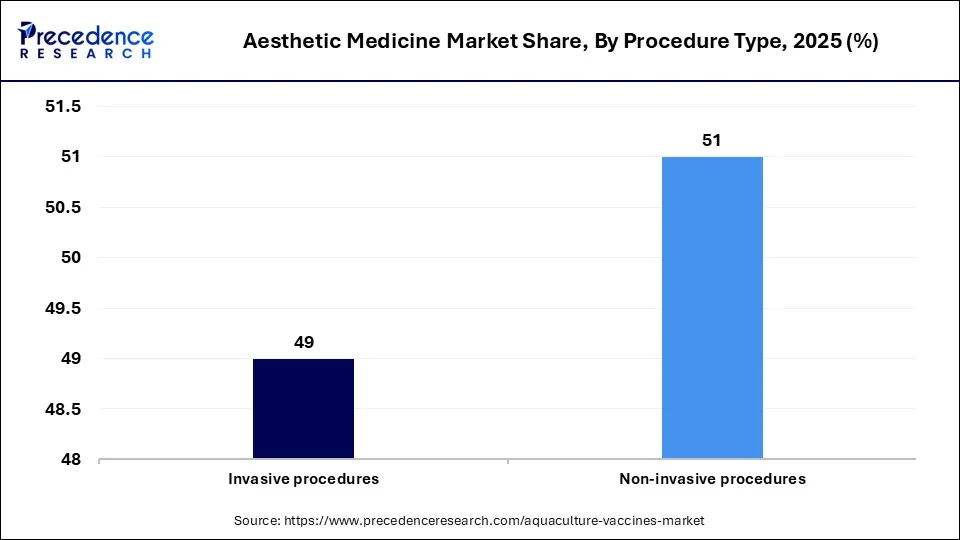
The invasive procedure segment is expected to experience the fastest growth during the forecast period. This is mainly due to technological advancements, improved anesthesia, and safety protocols. Innovations in surgical methods and endoscopic tools minimize trauma to surrounding tissues, resulting in less scarring and faster healing times. Advances in anesthesia and modern monitoring protocols have significantly reduced procedural risks and improved patient safety. Also, increased awareness through social media, rising disposable incomes, and the expansion of medical tourism are making these surgeries more accessible.
Product Type Insights
What Made Implants the Leading Segment in the Aesthetic Medicine Market?
The implants segment led the market in 2025 due to the rapid demand for breast and facial procedures. Breast implants continue to see the highest demand because of the popularity of "mommy makeovers" and advancements such as cohesive gel implants. Facial implants are also in high demand, heavily influenced by social media trends and an increased focus on facial symmetry. Manufacturers are shifting toward regenerative biomaterials and safer, highly customizable implants that look and feel more natural.
The energy-based devices segment is anticipated to grow at the fastest CAGR during the forecast period. This growth is primarily driven by the rapid shift toward minimally invasive procedures and technological advancements. The radiofrequency technology is being utilized for advanced microneedling, skin tightening, and collagen remodeling, which require minimal downtime. In response to rising global obesity rates and a preference for non-surgical fat reduction, manufacturers are developing multimodal systems that combine various technologies to offer versatile, personalized aesthetic treatments in a single device.
Application Insights
The Surgical Segment Dominated the Aesthetic Medicine Market in 2025
The surgical segment maintained market dominance in 2025 due to its ability to provide long-lasting, transformative results in procedures like breast augmentation, liposuction, and rhinoplasty. Increasing disposable incomes and medical tourism contribute to this dominance. Innovations in 3D surgical imaging, minimally invasive incision techniques, and faster-recovery implants have reduced downtime and minimized scarring. Procedures such as abdominoplasty, breast augmentations, and buttock augmentations generate higher per-procedure costs to encourage market adoption.
The non-surgical segment is expected to grow at the fastest rate during the forecast period, driven by consumer preferences for procedures that offer minimal downtime, lower risks, and natural-looking results. These treatments are gaining rapid popularity due to technological advancements, social media influence, and a shift toward preventive care. Technologies such as radiofrequency microneedling, broadband light, and laser skin resurfacing are becoming increasingly popular, as they stimulate natural collagen production with little to no recovery time.
End-User Insights
Hospitals and Clinics Held a Major Market Share in 2025
The hospitals and clinics segment held a major share of the aesthetic medicine market in 2025 due to their extensive infrastructure, advanced technology, and a diverse range of surgical and non-surgical procedures offered as a one-stop solution. Hospitals and specialized dermatology clinics employ board-certified dermatologists, plastic surgeons, and skilled medical professionals, thereby building high patient trust for complex procedures. These facilities provide sterile environments and the capability for immediate medical intervention in case of complications, which helps establish market acceptance among patients and regulatory authorities.
The home use segment is expected to experience the fastest growth during the forecast period. This growth is mainly driven by an increasing consumer desire for convenient, private, and cost-effective alternatives to clinical visits. At-home devices such as standalone LED, radiofrequency, and IPL machines offer a one-time purchase option that can replace expensive, recurring in-office treatments. Innovations in low-energy lasers, ultrasound, and LED therapy are making it possible to safely and effectively package medical-grade aesthetic technologies for non-professional use at home.
Gender Insights
What Made Females the Dominant Segment in the Aesthetic Medicine Market?
The females segment dominated the market in 2025 by capturing the largest share. This dominance is attributed to biological differences in facial aging, a strong focus on reversing aging, and a high demand for specialized procedures such as breast augmentation and non-surgical injectables. The natural aging process in females leads to tissue descent, resulting in a loss of cheek volume and the formation of jowls. There is ongoing high demand for neuromodulators, dermal fillers, and laser therapies to maintain youthful contours. Younger female demographics are heavily influenced by social media, fueling the rise of preventive aesthetics.
The male segment is projected to experience the fastest growth during the forecast period. This growth is facilitated by advances in technology, clinical interventions, and consumer psychology. Men increasingly demand non-surgical treatments that require little to no social downtime. Popular procedures include neuromodulators, structural jawline contouring, skin brightening, and acne scar reduction. The rise of GLP-1 weight loss medications has also led many men to seek non-invasive options for body contouring, skin tightening, and facial volumization to address loose skin after rapid weight loss.
Route of Administration Insights
Why did the Topical Segment Dominate the Aesthetic Medicine Market in 2025?
The topical segment dominated the market in 2025, primarily due to its role as a non-invasive foundation for both over-the-counter (OTC) skincare regimens and clinical treatments. Products like creams, serums, ointments, and transdermal patches deliver active ingredients directly to specific areas of concern without producing systemic side effects. This approach allows for safe, long-term skin rejuvenation, pigmentation management, and anti-acne treatment. The topical segment thrives by complementing in-office treatments to enhance results and shorten recovery times.
The oral segment is expected to expand at the fastest CAGR in the coming years. This is mainly due to the increasing consumer demand for pain-free, convenient, at-home solutions that blend daily dietary supplements with medical-grade anti-aging treatments. Oral formulations such as tablets, capsules, and dissolvable strips provide a painless, needle-free alternative to invasive procedures, appealing to a broader demographic. Oral supplements and nutraceuticals that contain collagen, hyaluronic acid, vitamins, and biotin are replacing topical skincare and clinical injectables.
Market Regional Insights: North America, Europe, Asia-Pacific
U.S. Aesthetic Medicine Market Size and Growth 2026 to 2035
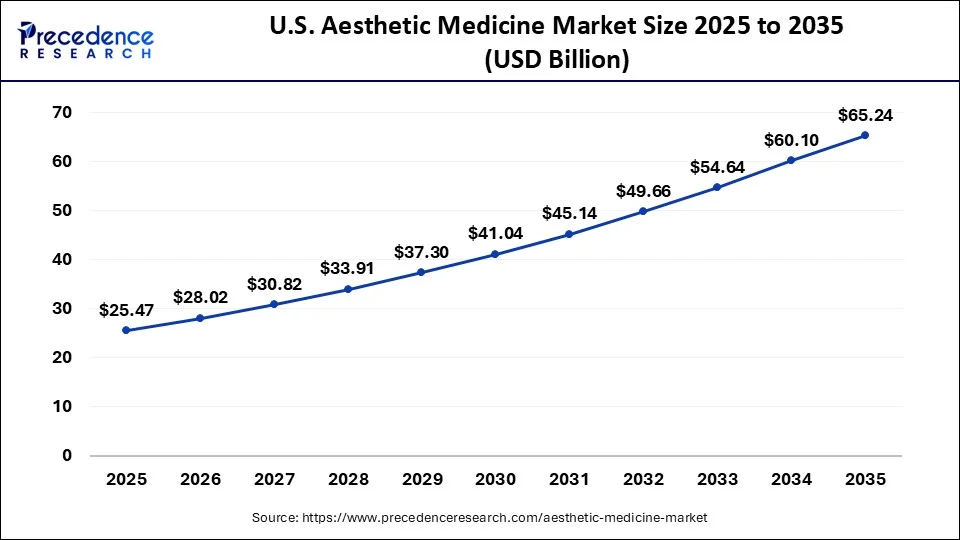
The U.S. aesthetic medicine market size was estimated at USD 25.47 billion in 2025 and is predicted to be worth around USD 65.24 billion by 2035, at a CAGR of 9.86% from 2026 to 2035.
U.S. Market Trends
The U.S. plays a dominant role in the market, primarily due to the heavy influence of social media, with consumers focusing on minimally invasive cosmetic treatments. It serves as a key hub for research and development of advanced aesthetic technologies. Major players like AbbVie and Galderma are consistently expanding their portfolios with advanced biostimulators, upgraded toxins, and specialized lasers designed for diverse skin tones and specific anti-aging needs.
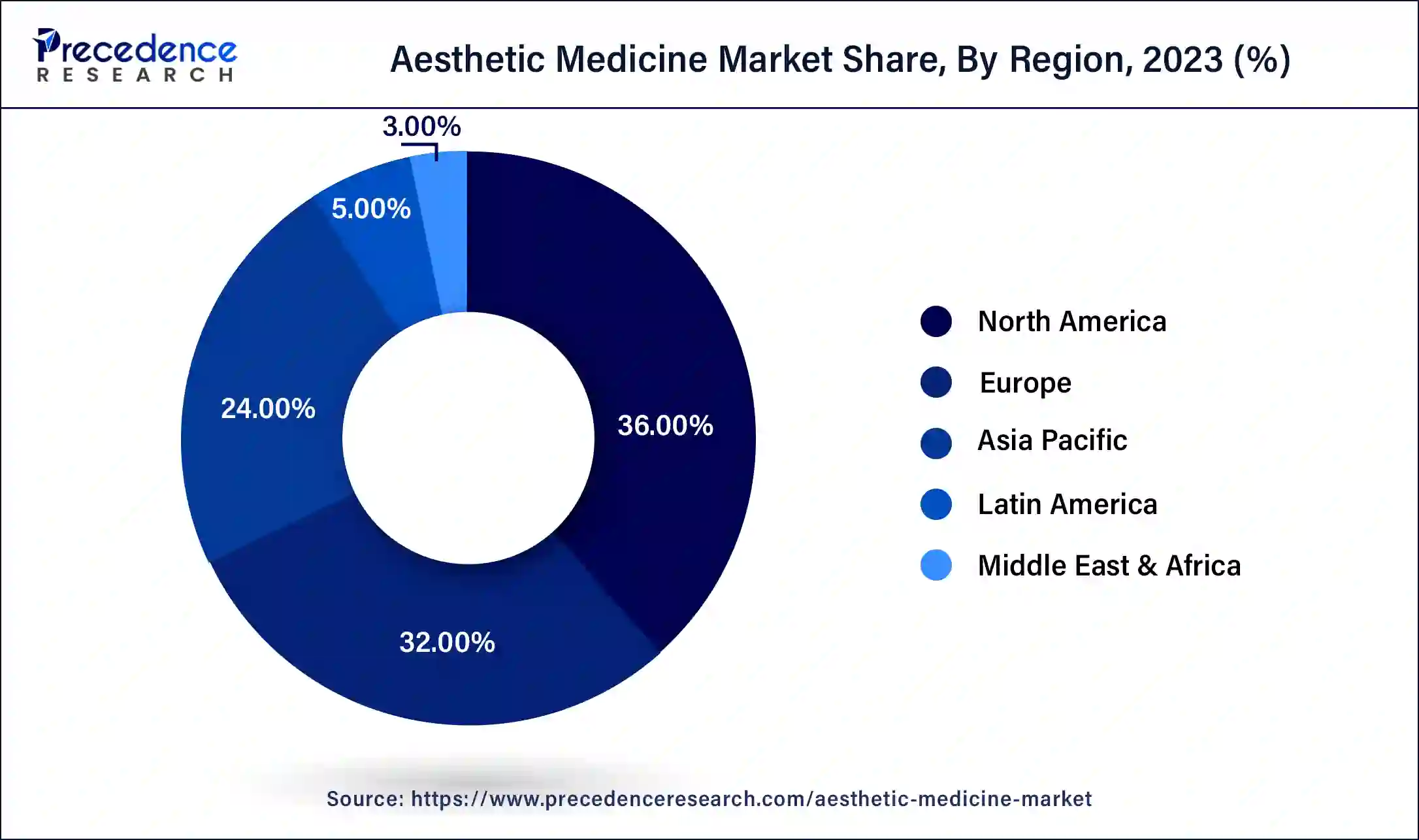
North America was the dominating aesthetic medicine market with around 36% of the global aesthetic medicine market share in 2025. The presence of strong and well-established healthcare and medical infrastructure, rising adoption of robots and digital technologies in the surgical procedures, increased awareness regarding the availability of advanced aesthetic treatments and medicines, higher healthcare expenditure, rapidly aging population, and presence of favorable government policies are some of the most prominent factors that has boosted the growth of the aesthetic medicine market in North America.
In North America, the U.S. led the market owing to the surge in disposable income, increasing consumer awareness, and innovations in non-invasive procedures such as dermal fillers and Botox. Also, the market in the US is impacted by a rising focus on appearance and the elderly population seeking a new way to keep a youthful appearance.
The rising prevalence of skin disorders among the population, presence of skilled cosmetic surgeons along with the rising adoption of cosmetic procedures in North America is significantly fostering the growth of the market. According to the American Society of Plastic Surgeons, the breast augmentation procedures increased by 48% from 2000 to 2018 while the Botox injections increased by around 845% in the same period. Therefore the rising demand for breast augmentation and Botox injections have significant contributions in the growth of the North America aesthetic medicine market. Moreover, the presence of top market players and various strategies adopted by them and the active participation of the government authorities on the aesthetic medicine product approvals is positively impacting the market growth in this region.
Asia Pacific Aesthetic Medicine Market Trends
Asia Pacific aesthetic medicine market is expected to grow at the highest CAGR of 10.8% during the forecast period. The rising adoption of technologically advanced products, rising focus towards aesthetic appearance, and rising demand in developing countries like India, China, and South Korea is boosting the growth of the market in this region. South Korea is recognized as the hub of cosmetic surgeries. Furthermore, the significantly rising geriatric population in the region is expected to propel the growth of the market.
According to the United Nations, around 80% of the global geriatric people are expected to live in the low and middle income countries by 2050. Moreover around 93% of the road accident cases are observed in low and middle-income countries which are another major reason behind the rising demand for aesthetic medicine. The rising awareness regarding the aesthetic treatments and aesthetic medicines among the population in Asia Pacific is expected to drive the growth of the market in the forthcoming future.
India Aesthetic Medicine Market Trends:
In Asia Pacific, India dominated the market due to advancements in technology like radiofrequency devices and lasers which can lead to more efficient and less invasive operations. The country's expanding middle class has more desire for self-care because of a surge in disposable income and beauty requirements. India is also becoming the hub for medical tourism.
Europe Aesthetic Medicine Market Trends
Europe is expected to witness significant growth in the forecast period. The region's growth is driven by a rapidly aging population, rising aesthetic consciousness, and increasing technological advancements in aesthetic procedures. Countries such as Germany, France, the UK, Italy, and Spain are leading players in the region as they benefit from the increasing number of aesthetic clinics and well-established medical tourism industries.
The region is also witnessing demand for non-surgical treatments, including laser skin resurfacing, anti-ageing therapies, and body sculpting procedures. Furthermore, regulatory approvals for advanced aesthetic devices and the growing preference for personalized treatments are boosting up market expansion and fostering innovation.
Germany Market Trends
Germany plays a crucial role, characterized by its stringent regulatory environment and strong emphasis on clinical efficacy. As a center for European technological manufacturing, research, and practitioner training in dermatology and plastic surgery, Germany is adapting to strict EU Medical Device Regulation (MDR) standards. Aesthetic leaders like Merz Aesthetics are driving market growth with CE-cleared injectables.
Latin America Aesthetic Medicine Market Trends
The Latin American market is witnessing a rising demand in aesthetic medicine due to a rise in non-invasive procedures. Technological advancements are also helping in driving innovation in aesthetic treatments, thus enhancing patient experiences and outcomes. There is also an increasing focus on sustainability within the aesthetics market.
The region is also witnessing an increasing prevalence of skin rejuvenation therapies, highlighting a shift in consumer preferences towards less invasive options. As the market continues to expand, it appears poised for more potential opportunities for both local and international players.
Brazil Market Trends
The Brazilian market is driven by its strong cosmetic surgery culture and the availability of skilled professionals. The country also benefited from affordable treatments and increasing international patient inflow. The growing influence of social media and beauty standards further encouraged aesthetic procedures. Expansion of private clinics and availability of advanced technologies also strengthened the market outlook.
Middle East and Africa Aesthetic Medicine Market Trends
The Middle East and African region is witnessing significant growth in the market and is expected to maintain its trajectory in the upcoming years. This is due to the increasing shift toward non-surgical cosmetic procedures, driven by technological advancements, minimal recovery times, and changing consumer preferences. Procedures such as Botox injections, dermal fillers, laser treatments, and non-surgical body contouring are becoming quite popular in today's day and age as individuals want to enhance their appearance without the risks that are associated with traditional surgeries.
UAE Market Trends
The UAE's market is driven by its advanced healthcare facilities and a strong medical tourism sector. High demand for luxury aesthetic treatments, supported by an affluent population and modern clinics, drove adoption. An increasing number of international practitioners and aesthetic centres further supported market growth. Government initiatives promoting healthcare investments and innovation have enhanced service quality. Rising preference for non-invasive procedures and premium skincare solutions further contributed to market expansion.
Value Chain Analysis
- Material Sourcing
Aesthetic medicine uses various materials and active ingredients hyaluronic acid, collagen, calcium-based fillers, and energy-based device components. Ingredients must meet high purity and safety standards as they are injected or applied to the skin.
- Key Players: AbbVie, Lonza, BASF
- Manufacturing and Processing
Manufacturers produce dermal fillers, neurotoxins, skin boosters, lasers, and energy-based devices. Production includes formulation, sterile filling, device assembly, and performance testing. Products undergo stringent clinical evaluation and regulatory review before launches.
- Key Players: AbbVie, Merz Aesthetics, Cutera
- Distribution
In this stage, aesthetic products are sold directly to dermatology clinics, plastic surgeons, medical spas, and aesthetics centers. Distributors manage logistics, cold chain storage, and ongoing education. Consumer demand is driven by social media trends and lifestyle changes.
- Key Players: McKesson, Cardinal Health, Amerisource Bergen
Market Competitive Landscape: Leading Companies and Strategies
The aesthetic medicine market is highly consolidated and well-established, with key players like Allergan Aesthetics and Galderma solidifying their market positions through strategic research investments. These companies are known for their botulinum toxin, dermal fillers, and energy-based therapies. For instance, Allergan has expanded the indications for hyaluronic acid dermal fillers to enhance patient satisfaction, a trend influenced by cultural shifts and the pervasive impact of social media that emphasizes youthful appearances.
Looking ahead, emerging players and startups such as BEMY Cosmetics, Klotho Skin, and ProTransit have significant opportunities to expand into male aesthetics and untapped emerging markets. However, these newcomers face substantial market barriers and challenges, primarily stemming from stringent regulatory oversight, complex product approval processes, and the high capital costs associated with manufacturing advanced devices.
Aesthetic Medicine Market Companies
- AbbVie Inc.
- Galderma
- Alma Lasers
- Cynosure
- Johnson & Johnson Private Limited
- Lumenis Be Ltd.
- Solta Medical
- Candela Medical
- Hologic, Inc.
- Dentsply Sirona
Recent Investments
- In December 2025, Innerskin, a French medical aesthetics group focused on innovating beauty and wellness, announced a $15 million funding round. This investment aims to facilitate its next phase of growth by transforming how Europe approaches modern aesthetics and skin health.
- In July 2026, Hugel Aesthetics announced a significant expansion of its U.S. operations as part of its long-term growth strategy. This expansion includes launching a dedicated direct sales and field-based medical affairs organization for Letybo, the number-one best-selling neurotoxin in South Korea for the past decade. The company is also investing in a new consumer K-TOX campaign, supporting medical congresses, and generating clinical evidence.
Recent Developments
- In May 2026, Vos Collection launched, uniting over 35 top medical aesthetic clinics in North America with a focus on clinical excellence, shared expertise, and enhancing patient experience, featuring names like Day Dermatology & Aesthetics and Marmur Medical. (Source: https://www.businesswire.com)
- In April 2026, Croma Pharma's joint venture aims to enhance Clinicore, a premium SaaS solution for aesthetic practices. It will scale platform development while ensuring continuity for users, streamlining operations through automation of patient management and workflows. (Source: https://sg.finance.yahoo.com)
- In April 2026, Croma Pharma launched a joint venture to accelerate Clinicore's development and global expansion. The AI-powered SaaS platform enhanced clinic operations through automation and intelligent tools. The strategy focused on innovation, efficiency, and continuity, supported by a strategic partnership with Medfile. (Source: https://www.businesswire.com)
- In August 2025, Hugel Inc. launched its botulinum toxin product Letybo in Malaysia through its partner Venusys Medical during AMSC. The event featured expert presentations, a brand launch, and hands-on training workshops, strengthening clinical expertise and expanding presence in Southeast Asia's growing aesthetic market (Source: https://www.biospectrumasia.com)
- In January 2025, Shonan Beauty Clinic announced the launch of its proprietary translation app tailored for medical aesthetics staff and the full-scale implementation of its "Inbound-Focused Clinics" initiative. This groundbreaking move is designed to address the increasing demand for medical tourism and ensure that international patients can seamlessly experience Japan's innovative medical aesthetic treatments. (Source: https://www.businesswire.com)
- In February 2025, GC Holdings announced its acquisition of IniBio, an unlisted company known for its botulinum toxin product, "Iniboju." The acquisition, valued at approximately 40 billion won, was approved during a board meeting held by GC Holdings and GC Wellbeing. (Source: https://www.businesskorea.co.kr)
- In April 2025, Galderma announced the launch of Sculptra, the first proven regenerative biostimulator with a unique poly-L-lactic acid (PLLA-SCA™) formulation, in China. This follows Sculptra's approval by China's National Medical Products Administration for correcting mid-facial volume loss and/or contour deficiencies last year. (Source: https://www.businesswire.com)
- In September 2020, Allergan Aesthetics introduced a new educational partnership initiative called DREAM (Driving Racial Equity in Aesthetic Medicine)
- In December 2021, Allergen Aesthetics completed the acquisition of Soliton, Inc., a medical technology company, to strengthen its portfolio of body contouring treatments in the non-invasive category
- In March 2020, Gladerma announced its investment in the aesthetic products portfolio and investments towards the expansion of salesforce in US. This strategy aimed at strengthening the market position of the company.
- In September 2020, Merz Aesthetics entered into a partnership with Gwyneth Paltrow (Oscar and Emmy-award-winning actor) to launch a global campaign for Xeomin. It is a FDA approved injection for wrinkle treatment.
Segments Covered in the Report
By Procedure Type
- Non-Invasive Procedure
- Botox Injections
- Microdermabrasion
- Soft Tissue Fillers
- Laser Hair Removal
- Chemical Peel
- Others
- Invasive Procedure
- Liposuction
- Nose Reshaping
- Breast Augmentation
- Tummy Tuck
- Eyelid Surgery
- Others
By Product Type
- Energy-Based Devices
- Laser-based Aesthetic Device
- Radiofrequency (RF)-based Aesthetic Device
- Light-based Aesthetic Device
- Ultrasound Aesthetic Device
- Others
- Implants
- Facial Implants
- Breast Implants
- Others
- Anti-Wrinkle Products
- Botulinum Toxin
- Dermal Fillers
- Others
By Application
- Surgical
- Non-Surgical
By End-User
- Medical Spas and Beauty Centres
- Hospitals and Clinics
- Ambulatory Surgical Centers
- Home Use
By Gender
- Males
- 18 years and below
- 19-34 years
- 35-50 years
- 51-64 years
- 65 years and above
- Females
- 18 years and below
- 19-34 years
- 35-50 years
- 51-64 years
- 65 years and above
By Route of Administration
- Oral
- Topical
By Region
- North America
- Latin America
- Europe
- Asia-pacific
- Middle and East Africa
For inquiries regarding discounts, bulk purchases, or customization requests, please contact us at sales@precedenceresearch.com
Frequently Asked Questions
Tags





Ask For Sample
No cookie-cutter, only authentic analysis – take the 1st step to become a Precedence Research client
 Get a Sample
.webp)



 sales@precedenceresearch.com
 Schedule a Meeting
