



Agriculture Equipment Market Size, Key Companies, Company Market Share, Equipment Production Volume, Sales Performance, Manufacturing Cost, Export & Import Trends, Competitive Positioning, and Market Analysis
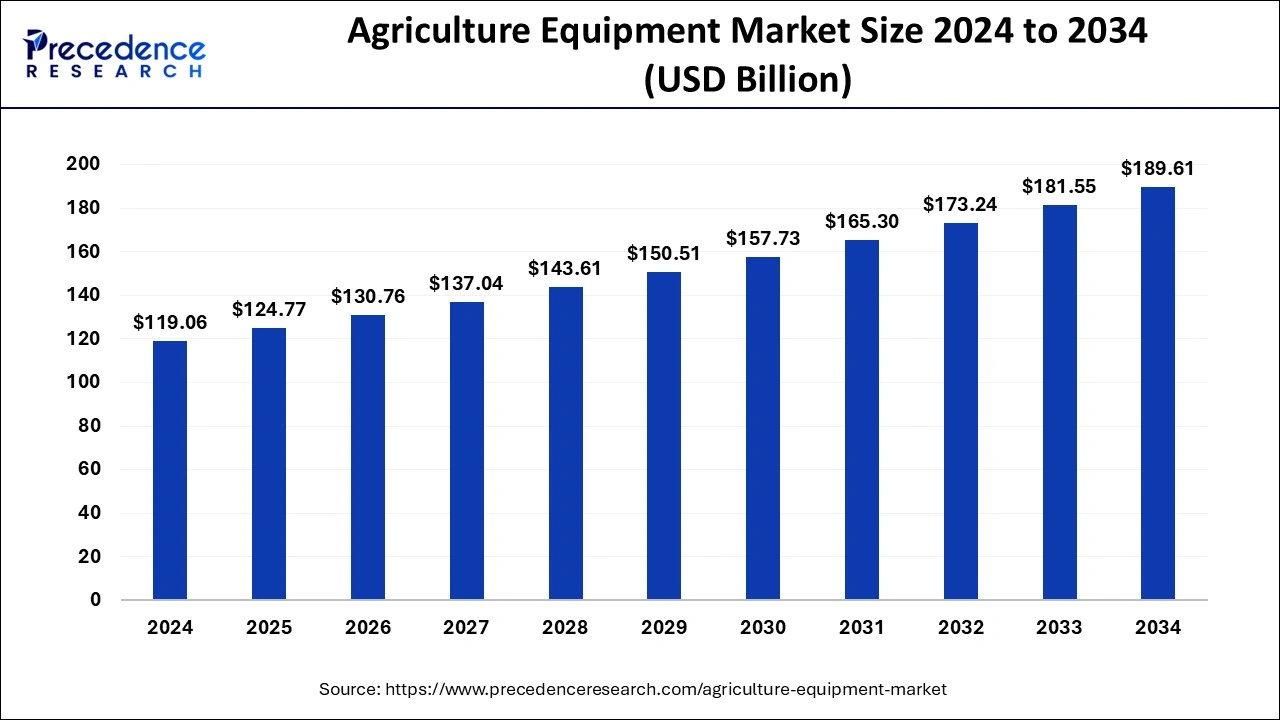
The global agriculture equipment market was valued at USD 130.76 billion in 2026 and is projected to reach USD 197.84 billion by 2035, growing at a CAGR of 4.72% from 2026 to 2035. Market growth is driven by increasing farm mechanization, rising demand for precision agriculture, labor shortages, and government support for modern farming practices. The adoption of AI, GPS, IoT, telematics, and autonomous machinery is improving productivity, operational efficiency, and sustainable farming, creating significant opportunities for equipment manufacturers worldwide.
Source: https://www.precedenceresearch.com/agriculture-equipment-market
 Get a Sample
 Table Of Content


What is the Agriculture Equipment Market Size?
The global agriculture equipment market size is valued at USD 124.77 billion in 2025 and is projected to grow from USD 130.76 billion in 2026 to approximately USD 197.84 billion by 2035, at a CAGR of 4.72% from 2026 to 2035. The market growth is driven by increased farm mechanization, growing demand for advanced precision agriculture technology, a shortage of farm labor, and increasing government support for modern agricultural machinery. Moreover, there is a growing adoption of automated, GPS, telematic, and artificial intelligence in agricultural machinery, contributing to innovations in the market.
Key Takeaways
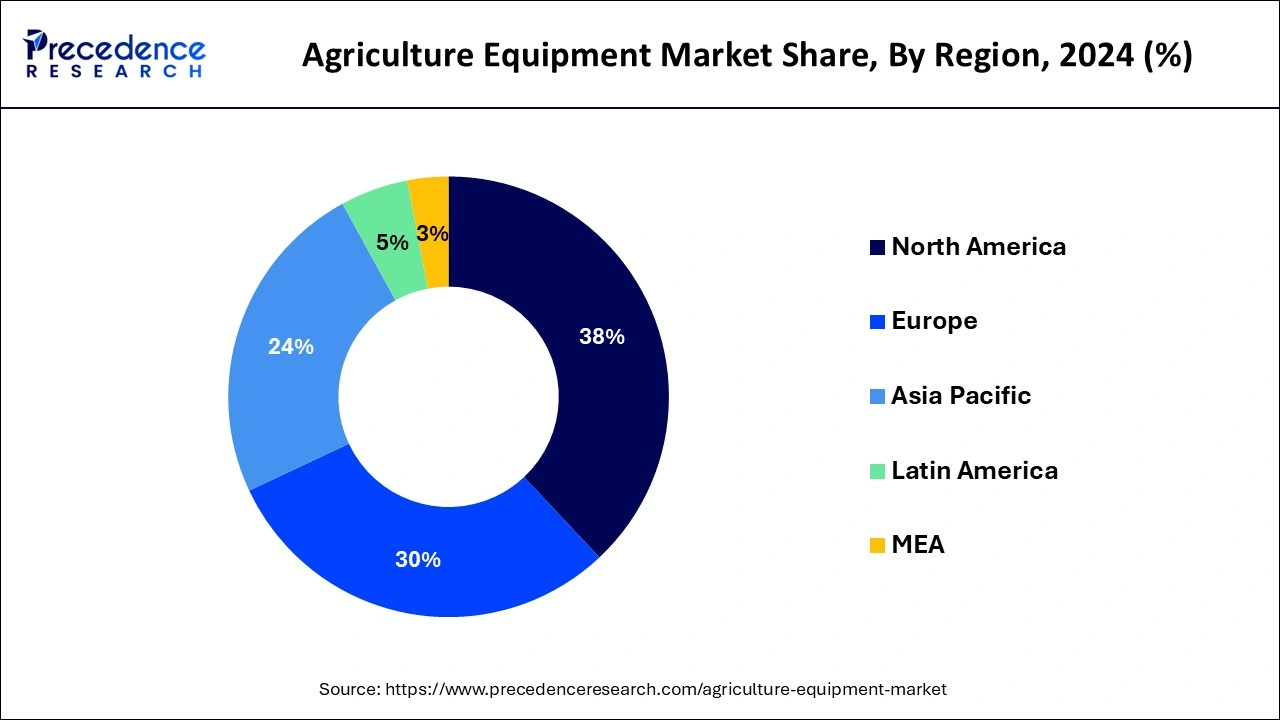
- By region, North America held the dominant position in the market by capturing the maximum share of 38% in 2025.
- By region, Asia-Pacific is expected to grow at the highest CAGR from 2026 to 2035.
- By product type, the tractors segment held a major market share of 25% in 2025.
- By product type, the harvesters segment is anticipated to grow at the fastest CAGR during the forecast period.
- By application, the land & development segment held a 20% share of the market in 2025.
- By application, the plant protection segment is projected to experience the fastest growth during the forecast period.
- By automation, the manual segment held the highest market share in 2025.
- By automation, the automatic segment is expected to expand rapidly in the coming years.
Market Overview
Various types of machinery fall under agricultural equipment to increase efficiency in agricultural production, decrease the human effort involved in agricultural practices, and improve the overall effectiveness of farming. They can be categorized into tractors, harvesters, planters, seed drills, irrigators, sprayers, and precision farming machines. The increasing demand for food production owing to population growth and higher labor costs is driving more farmers toward the adoption of efficient agricultural machinery. Subsidies provided by governments, financing schemes, initiatives in smart farming, and advances in technology are adding to market growth.
How AI is Bringing Smart Farming and Agricultural Equipment Innovation?
AI is revolutionizing the agriculture equipment market by introducing intelligent systems for efficient agricultural activities. Farm equipment that is integrated with AI technology can provide real-time analysis of the field and its conditions, manage the health of crops, regulate the use of inputs, and help perform repetitive activities automatically. Contemporary farm tractors and harvesters have been developed using AI systems.
Computer-vision-based applications that leverage AI technologies are being used to identify plants, weeds, pests, and soil types with increased accuracy in self-driving tractors, weeding robots, and harvesters. Predictive maintenance technologies using machine learning can save farmers money by preventing breakdowns of equipment through the early identification of possible hardware malfunctions.
Additionally, AI-driven agricultural management software utilizes weather predictions, satellite imagery, drone data, and other information gathered from machines to make better decisions. The producers of agricultural machinery are now developing more intelligent farm technologies that could perform operations of sowing, spraying, fertilizing, and harvesting without requiring constant human involvement.
Agriculture Equipment Market Growth Factors
The agriculture equipment is a significant tool used in the cultivation of crops to obtain higher yield by applying minimum efforts in farms. The growing population in developing and developed economies is a major factor building a pressure on the food supply chain due to the increasing demand for the agricultural food. The agriculture equipment such as tractors, harvesters, and crop processing equipment are increasing used in the agricultural activities across the globe to gain higher volume of yields faster and with minimal efforts. This is a primary driver of the global agricultural equipment market. Further, this agriculture equipment helps to reduce labor cost. Especially, the semi-automatic and automatic agriculture equipment helps to provide work efficiency and eliminate the use of excess labor, thereby propelling the demand for the agriculture equipment across the globe.
The technological advancements in the field of agriculture equipment and rising mechanization of different agricultural activities have fostered the development of various modern and automatic agriculture equipments. Further, the rising awareness regarding the benefits of using modern mechanized agriculture equipment has fostered the demand for the agriculture equipment among the farmers, all over the globe. The increasing demand for agricultural food from the food and beverage industry coupled with the rising population and increased demand for food has significantly propelled the demand for the agriculture equipment in order to produce higher yields in a short time period.
Strategic Growth Opportunities
High-Growth Commercial Opportunities
Precision Ag tech demand is emerging for GPS-guided tractors, variable-rate fertilizer spreaders, and smart sprayers that reduce input costs. Farmers are increasingly adopting robotic weeders, driverless tractors, and autonomous drones to offset labor shortages and rising labor costs. Electric equipment, such as compact electric utility tractors and battery-powered farm vehicles, is gaining traction because of lower operating costs and emissions regulations.
Emerging Technology Opportunities
AI and machine learning offer predictive analytics platforms that optimize harvest times and forecast equipment maintenance demands. Meanwhile, IoT integration further leads to real-time sensor networks that monitor soil health and machinery performance. Hydrogen-powered and dual-fuel heavy agricultural machinery also provides scalable ways to net-zero farming operations as an effective alternative fuel.
Geographic Expansion Opportunities
As there is increasing farm mechanization in India and Southeast Asia develops massive demand for affordable, mid-sized tractors across Asia Pacific. Governments and private investors are pushing to modernize smallholder farming, opening entry points for durable, low-maintenance tools in the Middle East and Africa. Latin America is also expanding corporate farming operations in Brazil, driving heavy investments in high-capacity planting and harvesting units.
White Space Analysis
Micro-farming tools and specialized ultra-compact machinery remain scarce for urban, rooftop, and indoor vertical farms. There is a lack of specialized, non-invasive tillage and inter-row cropping equipment tailored for cover cropping systems as significant regenerative Ag implements. Meanwhile, cost- effective aftermarket electrification and autonomy kits for legacy tractor fleets represent an untapped budget demographic.
Agriculture Equipment Market Trends
- Rising Adoption of Precision Farming Technologies: Precision agriculture is being embraced significantly in the market through the incorporation of tools like GPS, Internet of Things (IoT), machine learning, and variable rate applications to maximize resource usage, increase yields, and minimize waste by making agricultural decisions based on collected data and location awareness.
- Growth in Autonomous and Smart Machinery Adoption: The use of automated tractors and harvesters has become very common among farmers. These sophisticated machines eliminate manual labor and increase efficiency because of their high precision and minimal human intervention.
- Shift Toward Electric and Hybrid Farm Equipment: Electric and hybrid agricultural equipment is being increasingly used in order to decrease fuel utilization and greenhouse emissions. Such sustainable equipment helps save on operations costs and energy utilization and contributes to worldwide environmental aims of making agriculture more environmentally friendly.
- Expansion of Smart Farming Through Government Support: Governments across regions are promoting smart farming practices through various digital agriculture schemes and subsidies. These initiatives encourage farmers to adopt modern technologies, improve productivity, and transition from traditional farming methods to technology-driven agricultural systems.
- Increasing Use of Telematics and Remote Monitoring: Telematics and Remote Sensing technology are on the rise in the market for agricultural equipment. This helps with the monitoring of the machine's performance and enables predictive maintenance in order to minimize downtime.
Market Outlook
- Industry Growth Overview: The agriculture equipment market is growing, driven by the move towards accurate agriculture, electrification, and growing spending from manufacturers. Robust technologies such as GPS-driven tractors, AI-driven machinery, and IoT-integrated technology are optimizing resource use and increasing productivity.
- Global Expansion: The agriculture equipment market is experiencing global expansion, as government support for mechanization and the consolidation of farmland necessitate larger, more efficient machinery. The Asia-Pacific (APAC) region dominates the market, as countries such as India and China are experiencing a growing transition from traditional farming to advanced mechanized practices.
- Major investors: Major investors in the agricultural equipment market include huge institutional spending firms and specialized venture capital and private equity funds. Institutional investors like Vanguard and BlackRock are significant shareholders in major equipment manufacturers.
Future Outlook
Long-Term Industry Outlook: The market is mainly driven by an increasing global population and the expanding intense demands for higher crop yields with fewer farm workers. Smart farming, which includes precision agriculture, IoT sensors, and data-driven analytics, drives the demand for machinery modifications. The shift toward sustainability is accelerating stricter carbon emission regulations that push the market toward electric and alternative fuel tractors.
Emerging Business Models: New business models like Equipment-as-a-Service (EaaS) and pay-per-use options are heivily replacing the higher upfront ownership costs for smallholders with machinery rental models. Data monetization is also becoming significant, as manufacturers sell software subscriptions that offer real-time agronomic insights along with automated fleet management drives Subscription-based robotic weeding and harvesting services reduce labor dependence.
Strategic Recommendations: Manufacturers should invest heavily in electrification, modular autonomy, and open-platform software ecosystems whereas dealers must shift towards tech-support services, remote diagnostics, and technician training for smart machinery and finally policymakers should subsidize adoption of green technology and invest in rural digital infrastructure to accelerate data connectivity.
Market Report Coverage and Key Metrics
| Report Coverage | Details |
| Market Size by 2035 | USD 197.84 Billion |
| Market Size in 2026 | USD 130.76 Billion |
| Market Size in 2025 | USD 124.77 Billion |
| Market Growth Rate from 2026 to 2035 | CAGR of 4.72% |
| Largest Market | North America |
| Base Year | 2025 |
| Forecast Period | 2026 to 2035 |
| Segments Covered | Product, Application, Automation, and Region |
| Regions Covered | North America, Europe, Asia-Pacific, Latin America, and Middle East & Africa |
Agriculture Equipment Market Dynamics
Drivers
Rising Demand for Food and Labor Shortage
Growing food demand worldwide, shortage of labor on farms, and increasing farm mechanization are among the factors driving the industry. The use of tractors, harvesters, and precision farming machinery increases efficiency. Government support through subsidies, rural financing programs, and mechanization-friendly policies contributes to increased usage. Rising adoption of smart farming technologies is improving productivity and reducing operational costs. Continuous innovation in agricultural machinery is further supporting market expansion.
Integration of Robotics and Automation
Automation and robotics have become essential parts of the agriculture equipment market. Since farming has been entirely dependent on labor in the past year, it was necessary to outgrow this dependency to combat labor shortages and offer a cost-effective solution for farming. Autonomous tractors are a game-changer for the expansion of farming practices. Similarly, the integration of IoT to derive real-time data about farming land is becoming a key driver for the market.
Restraint
High Cost of Equipment
The high price of farm machinery, costly maintenance, and limited purchasing power for small farmers are among the obstacles faced by the market. Low technical knowledge in rural areas and reliance on conventional methods are other factors hampering the acceptance of farm machinery. Additionally, fluctuating raw material prices and supply chain disruptions impact manufacturing stability.
Opportunitie
Expansion into Emerging Countries and Demand for Sustainable Equipment
There is considerable growth opportunity in the development of smart farming tools like AI-enabled machines, autonomous tractors, drones, and farm IoT solutions. Market expansion in developing countries, growing sustainable and electric equipment demand, and agriculture digitization offer additional income sources for companies. Increasing investments in precision agriculture and data-driven farming systems are opening new revenue streams. Partnerships between technology providers and equipment manufacturers are accelerating innovation.
Market Segmentation Analysis
By Product Type
Why Did the Tractors Segment Dominate the Agriculture Equipment Market?
The tractors segment dominated the market with the highest revenue share in 2025 due to their widespread use across nearly all farming operations. Tractors serve as the primary power source for multiple agricultural activities, including plowing, tilling, planting, fertilizing, hauling, and harvesting. Their versatility, increasing horsepower capabilities, and compatibility with advanced implements make them indispensable for modern agriculture. Government subsidy programs and favorable financing options have further strengthened tractor adoption globally.
Additionally, the growing integration of GPS guidance, telematics, and precision farming technologies is enhancing tractor efficiency and field productivity. Rising mechanization in emerging economies is also driving strong demand for compact and utility tractors. Furthermore, manufacturers are introducing fuel-efficient and electric tractor models to meet sustainability goals and reduce operating costs for farmers.
The harvesters segment is expected to grow at the fastest CAGR in the coming years due to increasing labor shortages and the need for efficient crop collection. Advanced combine harvesters, forage harvesters, and specialized harvesting equipment significantly reduce harvesting time while minimizing crop losses. Growing demand for large-scale commercial farming and precision harvesting technologies is further accelerating segment growth.
The adoption of smart harvesting systems equipped with sensors and automation capabilities is improving operational accuracy and yield management. Rising cultivation of cereals, grains, fruits, and oilseeds is creating additional demand for advanced harvesting solutions. Moreover, increasing investments in autonomous harvesting equipment and AI-enabled machinery are expected to support long-term segment expansion.
By Application
The Land & Development Segment Lead the Market
The land & development segment led the market with a major revenue share in 2025 due to the essential nature of soil preparation activities before cultivation. Equipment such as tractors, plows, harrows, and cultivators is widely utilized to improve soil conditions, enhance nutrient distribution, and create favorable environments for crop growth. These activities are performed across virtually all crop types, supporting segment dominance.
Increasing awareness regarding soil health and crop productivity is encouraging farmers to invest in advanced land preparation equipment. The adoption of mechanized tillage solutions helps reduce labor requirements and improve operational efficiency. Additionally, government initiatives promoting farm mechanization and sustainable agricultural practices continue to support segment growth.
The plant protection segment is expected to expand rapidly in the market in the coming years due to the rising need to improve crop productivity, reduce pest-related losses, and enhance food security amid increasing global agricultural demand. The adoption of advanced equipment such as precision sprayers, autonomous spraying systems, drones, and smart application technologies is growing as farmers seek efficient and targeted use of pesticides, fertilizers, and crop protection solutions. Additionally, increasing adoption of precision farming practices, labor shortages, and government initiatives supporting modern agricultural technologies are expected to accelerate the growth of plant protection equipment.
By Automation
Why Did the Manual Segment Dominate the Market?
The manual segment dominated the agriculture equipment market while holding the largest share in 2025 due to its affordability and widespread adoption among small and medium-sized farms. Conventional machinery remains the preferred choice in many developing regions where advanced autonomous technologies are still in the early stages of adoption. Lower upfront investment requirements and established service networks continue to support market leadership.
The availability of a wide range of conventional tractors, plows, seeders, and harvesters further contributes to their extensive usage. Farmers often prefer these machines because of their reliability, ease of operation, and lower maintenance costs. Additionally, growing mechanization in emerging agricultural economies continues to sustain demand for conventional farming equipment.
The automatic segment is expected to witness the fastest growth during the forecast period due to increased use of smart farming equipment. Autonomous tractors, robotic harvesting equipment, guided technology through the GPS system, and artificial intelligence-based equipment assist in optimal resource usage and cost savings, thus maximizing farm yields.
Labor shortage issues and technological developments are boosting the growth of automation products. Investments in digital farming practices are contributing to the growth of this segment. Precision farming helps monitor and make decisions by utilizing data analysis techniques and thus maximizing farm output. Government campaigns on smart agriculture have also played their part in boosting adoption.
Market Regional Analysis: North America, Europe, Asia-Pacific
Why Did North America Dominated the Agriculture Equipment Market?
North America dominated the agriculture equipment market while holding a major revenue share in 2025. This is mainly due to the increased penetration of automatic equipment in agriculture and the higher and faster adoption rate of the latest technologies in the region. The region benefits from highly mechanized farming practices, strong purchasing power among farmers, widespread adoption of precision agriculture technologies, and the presence of leading equipment manufacturers. Large-scale commercial farming operations and significant investments in automation, AI-powered machinery, and autonomous farming solutions continue to strengthen regional market leadership. Government initiatives supporting sustainable agriculture and smart farming adoption also contribute to growth.
What is the U.S. Agriculture Equipment Market Size?
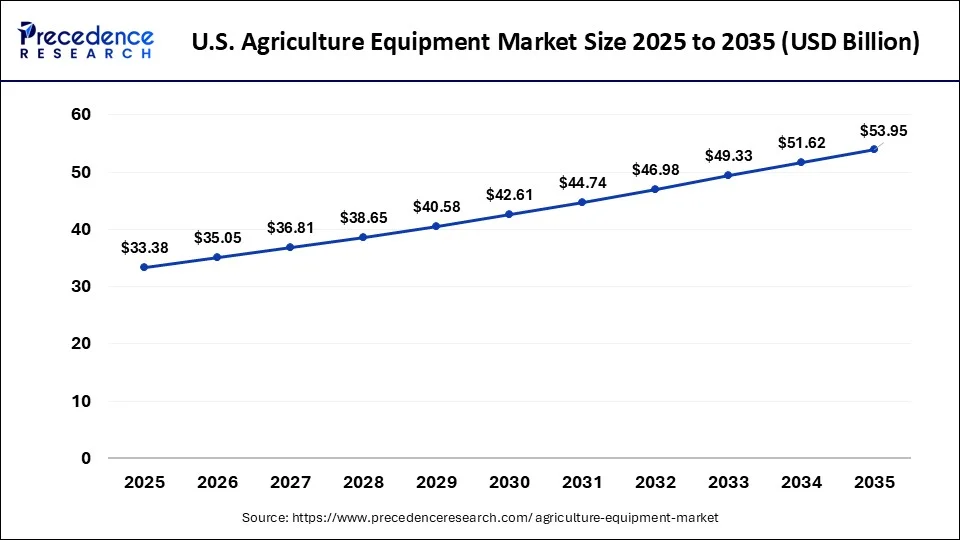
The U.S. agriculture equipment market size is exhibited at USD 33.38 billion in 2025 and is predicted to be worth around USD 53.95 billion by 2035, at a CAGR of 4.92% from 2026 to 2035.
U.S. Market Analysis
The U.S. agriculture equipment market is emerging due to the widespread application of precision farming and extensive farming operations. Prominent companies such as Deere & Company and CNH Industrial facilitate growth by being innovative. The increasing application of driverless machines and AI technology, along with governmental support, has contributed to market growth.
- American farmers are rapidly adopting artificial intelligence technology in agriculture. Around 87% of businesses in the US agriculture industry are using AI for farming.
How is Asia Pacific Growing in the Agriculture Equipment Market?
Asia Pacific is expected to experience the fastest growth during the predicted timeframe. Rapid population growth, increasing food demand, rising mechanization rates, and government support for agricultural modernization are major growth drivers. Expanding rural infrastructure, increasing availability of farm financing, and technological advancements in agricultural machinery are accelerating equipment adoption across emerging economies. The growing transition from traditional farming methods to mechanized agriculture further supports regional expansion.
China Market Analysis
The agricultural equipment market in China is growing rapidly thanks to government policies aimed at mechanizing farming activities and ensuring food security in China. The use of smart farming practices, intelligent machines, and even GPS-equipped tractors has increased production efficiency. Both domestic companies and international brands are developing modern equipment.
How is the Opportunistic Rise of Europe in the Agriculture Equipment Market?
Europe is expected to grow at a notable CAGR during the forecast period. The emphasis on sustainable farming, compliance with environmental regulations, and technology in farming is expected to boost the demand for farm equipment. The trend toward precision farming, automation, and even the use of electric farm equipment is increasing. Policies and investments in farming infrastructure are encouraging farmers to use more sophisticated farm equipment.
Germany Market Analysis
Germany's agricultural machinery market is very innovative and technologically savvy, with excellent engineering capabilities, along with the adoption of precision farming methods. Increasing demand is being seen for technology-integrated tractors and eco-friendly farming machines. German players specialize in the production and export of eco-friendly machinery and digital agriculture systems.
What Drives the Agriculture Equipment Market in Latin America?
The market in Latin America is mainly driven by the expansion of commercial farming, rising agricultural exports, increasing mechanization, and the need to improve farm productivity. The region's strong production of commodities such as soybeans, corn, sugarcane, coffee, and livestock products is encouraging farmers to adopt advanced machinery, including tractors, harvesters, planters, and irrigation equipment, to enhance efficiency and reduce dependence on manual labor.
Brazil Market Trends
Brazil is the major contributor to the Latin American agriculture equipment market due to its large-scale agricultural production, extensive farmland, and strong agribusiness sector. The country's leading position in the production and export of commodities such as soybeans, corn, coffee, and sugarcane drives continuous demand for tractors, harvesters, planting equipment, and precision agriculture technologies. Increasing farm mechanization, government-supported agricultural financing programs, and investments in advanced farming solutions are further accelerating the adoption of modern agriculture equipment in Brazil.
Why is the Market in the Middle East & Africa Gaining Momentum?
The Middle East & Africa (MEA) agriculture equipment market is gaining momentum due to increasing investments in agricultural modernization, growing concerns about food security, and rising adoption of mechanized farming practices. Governments across the region are promoting advanced agricultural technologies, irrigation systems, and precision farming solutions to improve crop yields and reduce dependence on food imports. The expansion of commercial farming, greenhouse cultivation, and smart agriculture initiatives is further driving demand for tractors, harvesters, planting equipment, and irrigation machinery.
Saudi Arabia Market Trends
Saudi Arabia leads the Middle East & Africa agriculture equipment market. The country's focus on food security, agricultural modernization, and sustainable farming practices has increased the adoption of advanced machinery, precision agriculture technologies, and smart irrigation systems. Government investments in greenhouse farming, desert agriculture, and water-efficient cultivation methods are further driving demand for modern agricultural equipment across Saudi Arabia.
What are the Government Initiatives Influencing Agriculture Equipment Market?
- Subsidy Programs: Subsidies on tractors, harvesters, and irrigation machines help cut down costs and ensure that farmers make use of the latest technology in their agricultural processes.
- Custom Hiring Centres (CHCs): Farmers can easily lease the equipment for agricultural use at lower rates via CHCs, which benefits marginal and small farmers as well.
- Farm Machinery Plans: Plans such as SMAM aim to promote the use of modern farm equipment, precision tools, and machines in agriculture.
- Loans and Finance Assistance: Through low-cost loans and Kisan loans, as well as other financial support options, farmers are able to buy farm machinery at ease.
- Intelligent Farming: GPS technology, drones, Internet of Things technology, and AI-powered technology are used by governments to enhance efficiency and increase yield.
Value Chain Analysis – Agriculture Equipment Market
- Raw Material Acquisition (Metals, Electronics & Components): Raw materials such as iron ore, steel, aluminum, engines, semiconductors, sensors, and electronic components are sourced from suppliers to support agricultural machinery manufacturing.
Key Players: ArcelorMittal, Bosch, and Cummins Inc. - Fabrication and Machining of Components: Core machinery components including transmission systems, hydraulic systems, engines, gear assemblies, and precision-engineered parts are manufactured and assembled for agricultural equipment production.
Key Players: ZF Friedrichshafen AG, Dana Incorporated, and Parker Hannifin. - Equipment Inspection and Certification: Agricultural machinery undergoes performance testing, safety evaluation, quality inspection, and certification processes to ensure compliance with industry standards and regulatory requirements.
Key Players: TUV Rheinland, SGS, and Bureau Veritas. - Equipment Manufacturing, Installation and Commissioning: Agricultural equipment manufacturers assemble machinery, integrate advanced technologies, and provide installation and commissioning support at agricultural sites.
Key Players: Deere & Company, CNH Industrial N.V., and AGCO Corporation. - Distribution and Sales to Farmers: Dealers, distributors, and retail networks support equipment sales by connecting manufacturers with farmers and agricultural businesses across regional markets.
Key Players: Kubota Corporation, Mahindra & Mahindra Ltd., and CLAAS KGaA mbH. - Maintenance, Warranty and After-Sales Services: Service providers and manufacturers deliver maintenance, repair services, spare parts supply, warranty support, and digital solutions such as telematics for improving equipment performance and lifecycle value.
Key Players: John Deere, AGCO Corporation, and CNH Industrial N.V.
Market Competitive Landscape: Leading Companies and Strategies
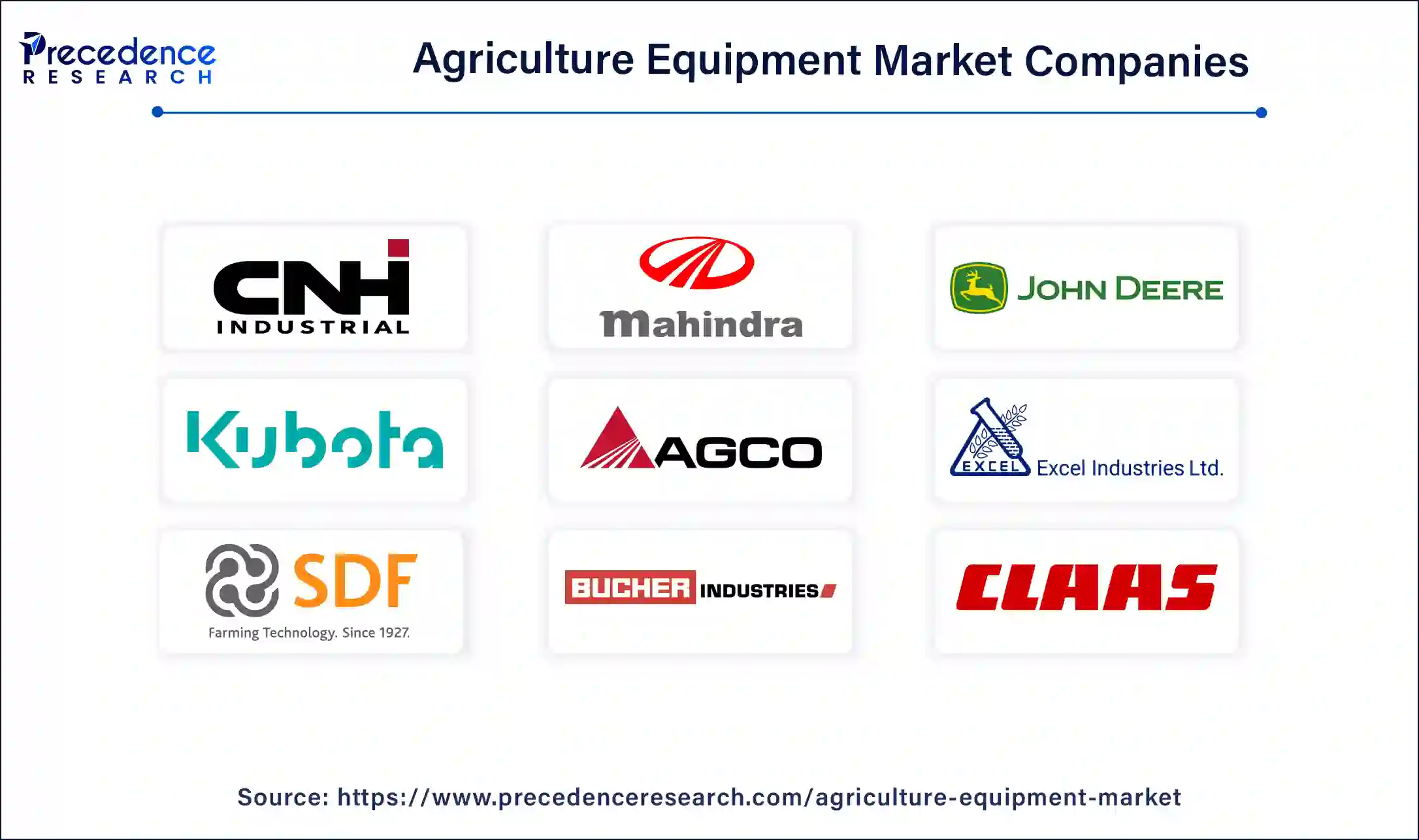
The agriculture equipment market is semi-consolidated, with the presence of leading manufacturers and emerging startups. Companies focus on manufacturing and establishing strong networks across diverse geographical locations to strengthen their market position. Some global leaders include John Deere, AGCO, and CNH Industrial. The increasing collaboration between academia and industry partners bridges the gap between real-time problems and effective solutions.
High cost of machinery, expensive electronic maintenance, and extreme operating environments are major challenges in the market. Despite these challenges, leading and emerging players are actively involved in driving innovation in agricultural equipment. Advanced mechanization and precision farming technology are some innovations incorporated to enhance agricultural productivity and facilitate cost-effective farming practices.
Top Companies in the Agriculture Equipment Market
- Deere & Company
- CNH Industrial
- AGCO Corporation
- Kubota Corporation
- Mahindra & Mahindra Ltd.
- CLAAS KGaA mbH
- Yanmar Holdings Co., Ltd.
- SDF Group
- Escorts Kubota Limited
- JCB
- Trimble Inc.
- Topcon Positioning Systems
- Raven Industries
- Lindsay Corporation
- Buhler Industries Inc.
Key Companies & Market Share Insights
The market is moderately fragmented with the presence of several local companies. These market players are striving to gain higher market share by adopting strategies, such as investments, partnerships, and acquisitions & mergers. Companies are also spending on the development of improvedproducts. Moreover, they are also focusing on maintaining competitive pricing.
- In September 2019, CNH Industrial opened its service center in China. This development was focused on the expansion of the business in China and to deliver the products and services at less time to the customers.
This type of strategical developments adopted by the key players operating in the global agriculture equipment market will open new avenues and opportunities of growth during the forecast period.
Latest Announcements by Industry Leaders
- In December 2024, Musick, factory engineering manager of Deere & Company commented on investing in the factory, “For our employees, each new project allows us to improve safety, ergonomics, and efficiency within the factory. For our customers, these investments deliver cutting-edge process technology and increased levels of quality control, which our customers expect from John Deere.”
Recent Development
- In June 2026, Intelligent Hybrid Farm Equipment was developed by Zoomlion to ensure growth on the global platform. This new equipment ensures improved efficiency and productivity in agricultural operations.
(Source: https://worldbusinessoutlook.com) - In June 2026, There was an agricultural equipment leasing project initiated by ELRA and NADF in order to help farmers. This project introduced leasing schemes for tractors and machinery, which were beneficial in providing affordable equipment to the farmers, increasing farm mechanization and productivity.
(Source: https://msmeafricaonline.com) - In September 2024, BiofuelCircle, pioneering the establishment of dedicated biomass supply chains for Compressed Biogas (CBG), launched the first-ever large-scale deployment of farmer equipment in Uttar Pradesh. It deployed over 40+ digitally networked machines, including balers, rakers, and slashers procured from Maschio Gaspardo.
- In January 2025, Türk Telekom, a Turkish telecommunication provider has launched a new 5G initiative for advanced smart agriculture in Turkey in partnership with Chinese vendor ZTE. This project claims that advance technologies such as drones and smart algriculture equipment are integrated into a 5G pilto network set up in particular areas.
- In January 2025, IIT Madras and Minitsry of Agriculture and Farmer Welfare have collaborated to create VISTAAR, a digital platform aimed to enhance agriculture extension sysyte,, provides farmers with Agri start-up technologies and help farmers production, marketing, supply chain management and access to government schemes.
Segments Covered in the Report
By Equipment Type
- Tractors
- Harvesting Machinery
- Planting Equipment
- Irrigation and Crop Processing Equipment
- Spraying Equipment
- Hay and Forage Machinery
- Others
By Application
- Land Development and Seedbed Preparation
- Sowing and Planting
- Plant Protection
- Irrigation and Fertilization
- Harvesting and Threshing
- Post-Harvest Processing
By Automation Level
- Conventional Equipment
- Precision Farming Equipment
- Semi-Autonomous Equipment
- Autonomous Equipment
- By Farm Size
- Small Farms
- Medium Farms
- Large Farms
By Region
- North America
- Europe
- Asia-Pacific
- Latin America
- Middle East & Africa
For inquiries regarding discounts, bulk purchases, or customization requests, please contact us at sales@precedenceresearch.com
Frequently Asked Questions





Ask For Sample
No cookie-cutter, only authentic analysis – take the 1st step to become a Precedence Research client
 Get a Sample




 sales@precedenceresearch.com
 Schedule a Meeting
