



Allergy Rhinitis Drugs Market Size, Companies, Share, Patient Volume, Treatment Adoption Rates, Pricing Analysis, Regulatory Landscape, Competitive Positioning, and Demand Forecast
Allergy Rhinitis Drugs Market (By Disease Type: Perennial Allergic Rhinitis , Seasonal Allergic Rhinitis; By Treatment Type: Antihistamines , Corticosteroids, Immunotherapy, Decongestants, Combination Therapy, Other; By Drug Type: Prescription , OTC, By Route Of Administration, Oral , Nasal , Intravenous, Intraocular) - Global Industry Analysis, Size, Trends, Leading Companies, Regional Outlook, and Forecast 2026 to 2035
Source: https://www.precedenceresearch.com/allergy-rhinitis-drugs-market
 Get a Sample
 Table Of Content


What is the Allergy Rhinitis Drugs Market Size in 2026?
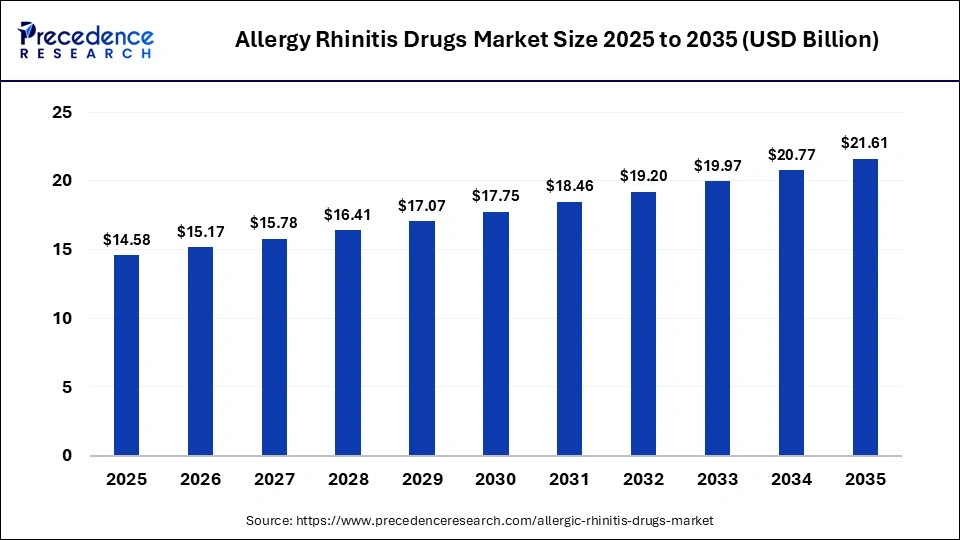
The global allergy rhinitis drugs market size was calculated at USD 14.58 billion in 2025 and is predicted to increase from USD 15.17 billion in 2026 to approximately USD 21.61 billion by 2035, expanding at a CAGR of 4.01% from 2026 to 2035. The list of drugs that treat allergic rhinitis is steadily rising, fueled as much by heightened exposure to pollen, urban air pollution, and new-to-the-public awareness of respiratory allergies. This trend is driving demand for antihistamines, corticosteroid nasal sprays, and immunotherapy as branded or generic alternatives.
Key Takeaways
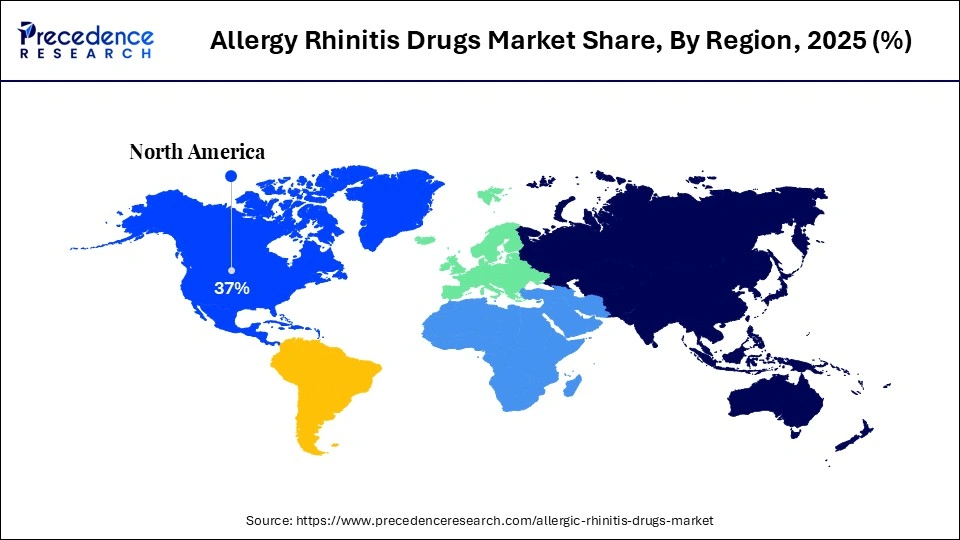
- North America held a major market share of 37% in 2025.
- Asia-Pacific is expected to host the fastest-growing market in the coming years.
- By disease type, the perennial allergic rhinitis segment contributed the biggest revenue share of the market in 2025.
- By disease type, the seasonal allergic rhinitis segment is expected to expand rapidly in the market in the coming years.
- By treatment type, the antihistamines segment registered its dominance over the global market in 2025.
- By treatment type, the immunotherapy segment is expected to witness the fastest growth in the market over the forecast period.
- By drug type, the prescription segment led the market in 2025.
- By drug type, the OTC segment is expected to grow with the highest CAGR in the market during the studied years.
- By route of administration, the oral segment contributed the biggest revenue share of the market in 2025.
- By route of administration, the intravenous segment is expected to be the fastest-growing segment in the market.
What is the Allergy Rhinitis Drugs Market?
Allergic rhinitis medications are intended to reduce the effects associated with this condition, which is inflammation of the nasal passages caused by allergens such as pollen, dust mites, mold spores, or pet dander. These include medicines to prevent sneezing, itching sensations in the nose or throat, nasal congestion, and rhinorrhea (runny nose). There are various types of allergic rhinitis, with seasonal allergic rhinitis (commonly referred to as hay fever) that occurs during a season as a result of allergens such as tree or grass pollen, perennial allergic rhinitis (which is experienced throughout the year), and occupational allergic rhinitis associated with exposure in the workplace.
Treatments cover a variety of medications such as antihistamines for symptomatic relief, immunotherapy to desensitize patients, corticosteroids mainly for anti-inflammatory effects, decongestants that temporarily relieve blocked sinuses, and other therapeutic methods. The various routes of administration can include, among others, oral tablets or liquids from a commercial seller, intranasal sprays specifically targeting the nasal mucosa, intraocular medications intended for eye-related symptoms caused by allergies, and intravenous injections as required.
Impact of AI on the Allergy Rhinitis Drugs Market
Artificial intelligence (AI) is steadily transforming the market for medications for allergic rhinitis, particularly in the early stages of drug development and personalized therapy. In fact, drug companies are leveraging machine learning algorithms to look for immune pathways involved in IgE-mediated allergies, and so researchers are finding targets for antihistamine and biologic drugs at a speed not possible in traditional screening. AI tools are also now being incorporated in correlation with environmental data and pollen-tracking information, enabling healthcare platforms to forecast seasonal escalation of allergies and proactively intervene.
Trends Influencing the Allergy Rhinitis Drugs Market
- Increasing Use of Allergen Immunotherapy: Allergen-specific immunotherapy has been moving slowly but surely from an elite treatment to an integrated treatment in chronic allergic rhinitis. Increased demand for both sublingual tablets and injectable forms enables them to engage directly with the immune system, resulting in enduring symptomatic relief instead of merely temporary relief.
- Progress in Drug Delivery Systems: The delivery of medications through technologies such as nasal sprays, disintegrating tablets, and inhalation devices is gaining support because of the particular functions they offer, such as a faster onset when we want to achieve relief in this type of allergy. These non-invasive methods contribute to patients' compliance and to the accurate drug delivery to inflamed nasal tissues.
- Introduction of Biologics and Personalized Allergy Therapies: A strategy for gradually moving to biologics and personalized medicines is starting to shift the face of drug agents for allergic rhinitis. Biologic treatments, which are geared towards different immune responses, are further studied in patients with inadequate response to a wide range of antihistamine or corticosteroid medications.
Market Scope
| Report Coverage | Details |
| Market Size in 2025 | USD 14.58 Billion |
| Market Size in 2026 | USD 15.17 Billion |
| Market Size by 2035 | USD 21.61 Billion |
| Market Growth Rate from 2026 to 2035 | CAGR of 4.01% |
| Dominating Region | North America |
| Fastest Growing Region | Asia Pacific |
| Base Year | 2025 |
| Forecast Period | 2026 to 2035 |
| Segments Covered | Disease Type, Treatment Type, Drug Type, Route Of Administration,, and region |
| Regions Covered | North America, Europe, Asia-Pacific, Latin America, and Middle East & Africa |
Segmental Insights
Disease Type Insights
Which Disease Type Segment Dominated the Allergy Rhinitis Drugs Market?
The perennial allergic rhinitis segment held a dominant position in the market in 2025, as perennial allergy is caused by ongoing exposure to allergens, including dust mites, pet dander, and indoor mold. It differs from seasonal allergy, which occurs intermittently throughout certain months. This condition commonly requires long-term therapy, including antihistamines, corticosteroid nasal sprays, and leukotriene inhibitors. As a result, there is a consistent demand for pharmaceuticals in this area. The predictable patient population, along with constant renewals of prescriptions and doctor-recommended maintenance policies, boosts the segment's growth.
The seasonal allergic rhinitis segment is expected to grow at the fastest CAGR in the market between 2026 and 2035, due to frequent pollen seasons related to climate change and environmental changes. In cities, the rise of pollen has brought more severe cases of allergy. There is anticipated growth in demand for quick relief products like intranasal antihistamines, combination sprays, and oral allergy tablets. In such cases, pharma companies focus on seasonally based promotional campaigns in addition to deploying over-the-counter products and initiatives that will increase the use of allergy medicines during peak points of consumption in different areas.
Treatment Type Insights
Why Antihistamines Segment Dominated the Allergy Rhinitis Drugs Market?
The antihistamines segment held the largest market share in 2025, as antihistamines are one of the main recommendations to eliminate symptoms such as sneezing, itching, and nasal discharge, which is a testament to the prominence of the antihistamine industry. Antihistamines offered via prescription (along with over-the-counter solutions) relieve symptoms quickly and are available in pharmacies, supermarkets, and online health resources.
Additionally, due to the lower sedative effects of second-generation antihistamines, patient compliance with the treatment approach potentiates the demand for antihistamines, so that there are consistent commercial activities in developed countries and emerging healthcare markets.
The immunotherapy segment is expected to grow with the highest CAGR in the market during the studied years, due to an apparent transition from symptom-relief to disease-modifying therapy. Allergen immunotherapy is a new breed of traditional medication that works by progressively inducing an immune response against specific allergens. Increasing physician confidence in sublingual immunotherapy tablets and injectable options has contributed to their broad acceptance among those struggling with chronic or severe allergies.
Drug Type Insights
How the Prescription Segment Dominated the Allergy Rhinitis Drugs Market?
The prescription segment contributed the biggest market share in 2025, owing to the substantial involvement of healthcare professionals in the recognition and treatment of moderate-to-severe allergic diseases. Treatments often include advanced nasal corticosteroids, combination therapies, and immunotherapy protocols requiring medical monitoring. These options are typically advised for patients who have chronic symptoms or other complications, like sinus inflammation. As healthcare providers continue their preoccupation with a thorough diagnosis and personalized remedy, dispensing of allergy medications is mainly given through prescriptions.
The OTC segment is expected to expand rapidly in the market in the coming years, as self-care is gaining popularity and allergy relief products are becoming more widely available. This is something consumers are increasingly inclined to turn to solutions that don't require a doctor's appointment. Retail pharmacies, supermarkets, and online drugstores have expanded OTC allergy treatments to include these antihistamine tablets, nasal sprays, and combined cold allergy medicines. In addition, strong marketing and consumer awareness play important roles.
Route of Administration Insights
Which Route of Administration Segment Led the Allergy Rhinitis Drugs Market?
The oral segment led the market in 2025, as oral administration continues to represent the bulk of the market's annual revenues, with oral antihistamines being both widely used and easy-to-administer medications. Tablets and capsules are convenient for easy storage, transportation, and consumption, thus being preferred among patients who suffer from persistent allergies. These drugs are often recommended by physicians as a first-line agent for the treatment of mild-to-moderate allergic rhinitis.
The intravenous segment is expected to witness the fastest growth in the market over the forecast period, driven by new developments of biologic therapies in hospital settings. While not typically used in the context of standard allergy management, intravenous agents have been increasingly used, especially for severe allergic processes or complex immune responses. With biologic therapies going through clinical trials-driven progression, the value of intravenous treatments is predicted to increase substantially within specialist medical facilities and allergy treatment facilities.
Regional Insights
North America Allergy Rhinitis Drugs Market Size and Growth 2026 to 2035
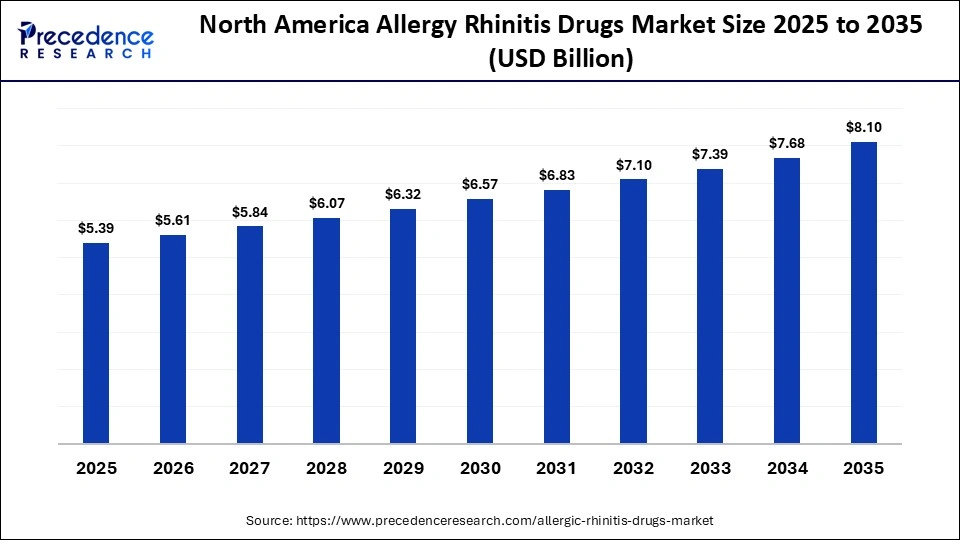
The North America allergy rhinitis drugs market size is estimated at USD 5.39 billion in 2025 and is projected to reach approximately USD 8.10 billion by 2035, with a 4.16% CAGR from 2026 to 2035.
Why North America Dominated the Allergy Rhinitis Drugs Market?
North America held a major revenue share of the market in 2025. The regional conditions involved extensive use of over-the-counter antihistamines and also a great prevalence of respiratory allergies. Also observed is a great reliance on corticosteroid nasal sprays and immunotherapy from healthcare providers.
In addition, there are favorable reimbursement policies in place, and established pharmaceutical distribution systems facilitate patient access to allergy medications. Steady demand was supported by pharmaceutical manufacturers and diagnostic capabilities; therefore, the most commercially developed market for allergic rhinitis treatments has remained in North America.
U.S. Allergy Rhinitis Drugs Market Size and Growth 2026 to 2035
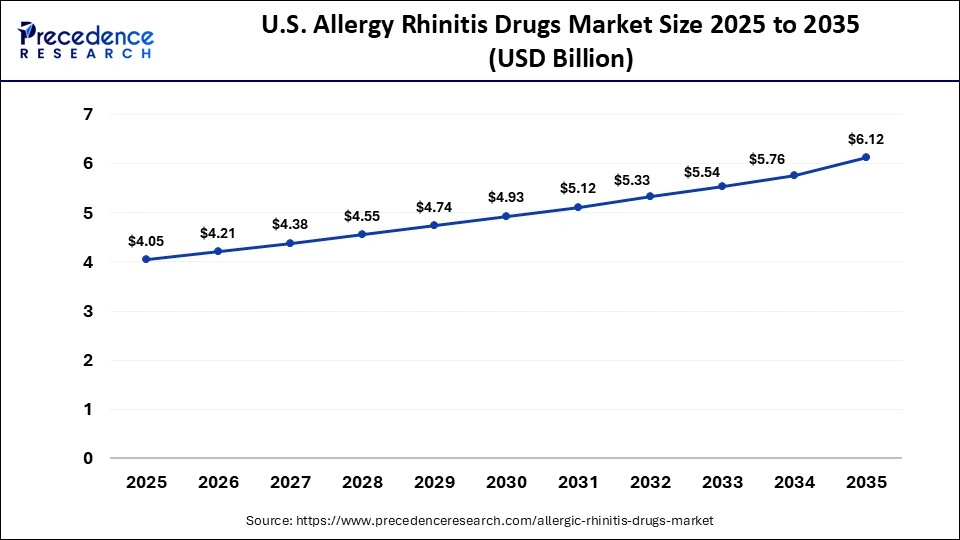
The U.S. allergy rhinitis drugs market size is calculated at USD 4.05 billion in 2025 and is expected to reach nearly USD 6.12 billion in 2035, accelerating at a strong CAGR of 4.21% between 2026 and 2035.
U.S. Market Trends
The U.S. leads the market in North America due to a large population suffering from both seasonal and perennial allergies, generating a sustained need for antihistamines, nasal corticosteroids, and combination therapies. Growing healthcare expenditure in conjunction with the readily accessible prescription and over-the-counter allergy medications contributed to the growth in this industry.
Why is Asia-Pacific Experiencing the Fastest Growth in the Allergy Rhinitis Drugs Market?
Asia-Pacific is expected to experience the fastest growth during the predicted timeframe. Factors such as increasing urban pollution, industrial growth, and elevated pollen exposure in larger cities have caused a spike in allergy situations. Health awareness-based initiatives, combined with an increased number of pharmacy retail spaces, are increasing access to allergy treatment. Governments across countries are strengthening their healthcare systems to drive earlier diagnosis and care for respiratory diseases. On account of increased consumer awareness of various treatment options and a rise in regional manufacturing of drugs by pharma companies, the Asia-Pacific region is ready to place great importance on the development of allergy therapeutic drugs.
China Market Trends
China is expected to become the fastest-growing country in the Asia-Pacific. Urbanization rates soar with the worsening air quality in large cities, leading to a higher rate of allergy cases. Greater investments in healthcare and improved access to hospitals and pharmacies are leading to improved diagnosis and treatment outcomes. China's pharmaceutical industry has also gradually strengthened its domestic production and distribution of allergy medicines.
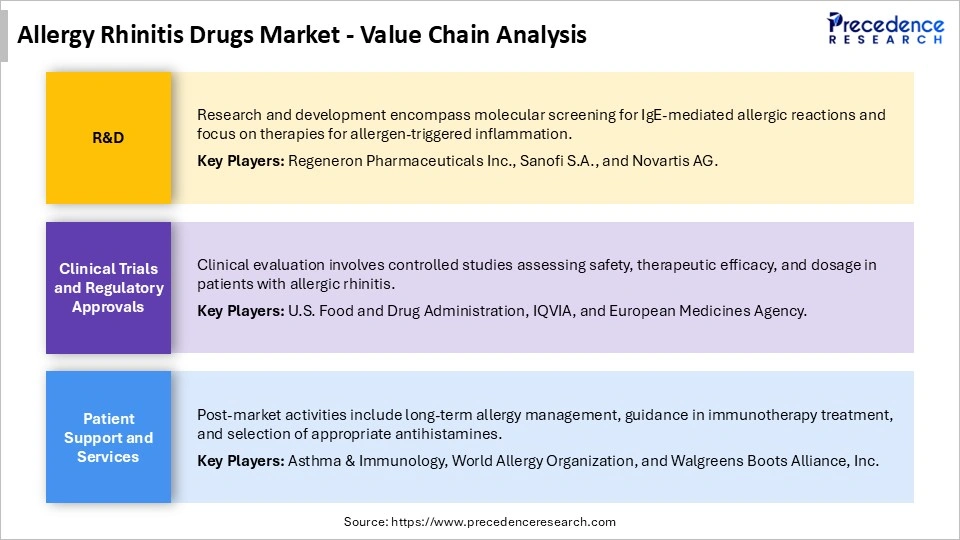
Allergy Rhinitis Drugs Market Value Chain Analysis
Allergy Rhinitis Drugs Market Companies
- ALK-Abello
- AstraZeneca plc
- Apotex Inc
- Allergy Therapeutics PLC
- Adamis Pharmaceuticals
- Bayer
- Bausch Health
- Boehringer Ingelheim
- Dr. Reddy's Laboratories
- GlaxoSmithKline
- Glenmark Pharmaceuticals
- Johnson & Johnson
- Merck
- Mylan (Viatris)
- Novartis AG
- Perrigo Company
- Pfizer Inc
- Regeneron Pharmaceuticals Inc
- Sanofi
- Stallergenes Greer
- Sun Pharmaceuticals
- Teva Pharmaceutical Industries
- Unichem Laboratories
- Viatris Inc
Recent Developments
- In February 2026, Regeneron Pharmaceuticals, Inc., and Sanofi S.A. announced that the FDA approved their Dupixent (dupilumab) in the U.S. to relieve allergic fungal rhinosinusitis in patients 6 years or older. This is the first treatment in this category to have approved such a drug, which will facilitate a new breed of biologics for allergic respiratory disorders. (Source: https://www.pearceip.law)
- In November 2025, Glenmark Pharmaceuticals Ltd. received approval from China's National Medical Products Administration for its Ryaltris compound nasal spray for moderate-to-severe allergic rhinitis. This product will be sold under a licensing agreement with Grand Pharmaceutical Group Limited in China and will add to Glenmark's portfolio of products in respiratory therapy across Asia.(Source: https://economictimes.indiatimes.com)
Segments Covered in the Report
By Disease Type
- Perennial Allergic Rhinitis
- Seasonal Allergic Rhinitis
By Treatment Type
- Antihistamines
- Corticosteroids
- Immunotherapy
- Decongestants
- Combination Therapy
- Other
By Drug Type
- Prescription
- OTC
By Route Of Administration
- Oral
- Nasal
- Intravenous
- Intraocular
By Region
- North America
- Latin America
- Europe
- Asia-pacific
- Middle and East Africa
For inquiries regarding discounts, bulk purchases, or customization requests, please contact us at sales@precedenceresearch.com
Frequently Asked Questions





Ask For Sample
No cookie-cutter, only authentic analysis – take the 1st step to become a Precedence Research client
 Get a Sample
.webp)



 sales@precedenceresearch.com
 Schedule a Meeting
