



Animal Testing and Ecotoxicology Testing Market, Global Market Size, Segmentation, Regional Analysis, Toxicity Assessment, Environmental Safety Testing, Regulatory Compliance
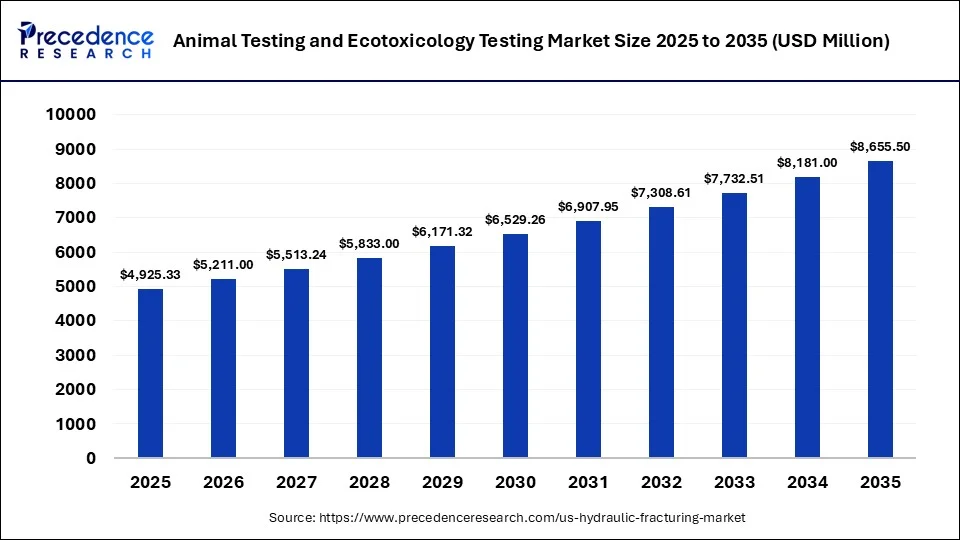
The animal testing and ecotoxicology testing market is valued at USD 4,925 million in 2025. The continually growing demand to assess the mechanisms of safety of products such as drugs, chemicals, pesticides, and industrial compounds is influencing the global market for animal testing and ecotoxicology testing. The report is curated by Deepa Pandey, senior research analyst. Her research data can be relevant to pharmaceutical, chemical production, agriculture, contract research organisations, and investors to effectively benchmark competitive positioning and investment decision-making.
Source: https://www.precedenceresearch.com/animal-testing-and-ecotoxicology-testing-market
 Get a Sample
 Table Of Content


Animal Testing and Ecotoxicology Testing Market Size, Share, Trends and Forecast Analysis
Increasing regulatory scrutiny and chemical development pipelines, environmental concerns surrounding industrial substances, and stronger requirements for safety evaluation are reshaping testing practices in the sector. Deepa Pandey has more than 5 years' healthcare & life sciences market analysis experience and observes a massive transformation in the field of animal testing & ecotoxicology testing.
The animal testing and ecotoxicology testing market is forecasted to expand from USD 5,211.00 million in 2026 to USD 8,655.50 million by 2035, growing at a CAGR of 5.8% from 2026 to 2035. This has become increasingly relevant in determining the impact of a chemical or other chemical-like substance upon aquatic or terrestrial life. On the other hand, regulatory bodies, research centers, and industry organizations are turning their attention more to alternative and non-animal testing techniques such as in-vitro techniques, computational tests, and other advanced tests.
Key Takeaways
- By testing service type, the animal testing services segment led the market with a share of 69.35% in 2025.
- By animal testing service, the general toxicology testing segment led the market with a 22.8% share in 2025.
- By ecotoxicology service, the aquatic ecotoxicity testing segment captured a major revenue share of 31.65% in 2025.
- By application, the pharmaceuticals and biopharmaceuticals segment captured the largest market share of 37.85% in 2025.
- By service delivery model, the outsourced contract testing segment led the market with a share of 27.85% in 2025.
- Safety assessment services contributed nearly 60% of total revenue, generating $2.40B out of $4.015B, underscoring the critical role of preclinical and toxicology testing in overall business performance.
- Revenue grew 15.8% year-over-year to RMB 45.46B, with new modalities accounting for over 30% of total revenue and emerging as a key growth driver.
- A diversified presence across pharmaceutical, environmental, food, cosmetic, and agroscience testing positions the business to benefit from multiple testing end markets.
- Expertise is centered on high-value toxicology and ecotoxicology consulting, including risk assessment, NAMs, PBPK/IVIVE, and computational toxicology services.
- A $1.9B safety assessment backlog, supported by 120+ sites across 20+ countries, highlights strong demand visibility and significant operational scale.
Market Overview
Animal testing and ecotoxicology testing is a global market for non-clinical safety services, toxicology and pharmacology services in the pharmaceutical/biopharmaceutical, agrochemical/industrial chemical, consumer product, food and feed, and environmental applications. The market includes in vivo animal testing integrated with terrestrial and aquatic environmental testing of aquatic, terrestrial, avian, pollinator, sediment, bioaccumulation, and other measures.
The market is now changing in a way. Traditional GLP animal studies are still relevant within the regulatory safety programs. There are additional animal testing and evaluation services such as outsourcing, dedicated CROs, integrated toxicology platforms, environmental risk assessment, and alternative methods for measurement and animal testing. The OECD principles for GLP encompass non-clinical health and environmental studies, including toxicity, mutagenicity, aquatic and terrestrial toxicity, bioaccumulation, pesticide residues, mesocosms, and natural ecosystems.
An increasing focus is being given to specific animal studies that are reduced, refined, or replaced with scientifically sound methods. The FDA released draft guidance for the validation of New Approach Methodologies (NAMs), including in vitro human-based models, organoids, organ-on-chip models, computational approaches, and others, in March 2026.
Expert Analysis View - Market Overview
The market will grow with additions of around USD 3.73 billion from 2025 to 2035. An expanding pharmaceutical/biopharmaceutical pipeline, the registration of pharmaceuticals and pesticide and, diverse environmental risk assessment, as well as outsourcing of special studies and more complicated safety packages, support growth.
There are more important structural transformations than testing volume. Testing is getting more specific, combined, data-driven, and risk-based. The use of animal testing will still be of importance for endpoints where validated alternatives are not available, and NAMs will have an impact on the composition of animal testing programs but will never supplant non-clinical safety assessment.
Segmentation Analysis
Testing Service Type
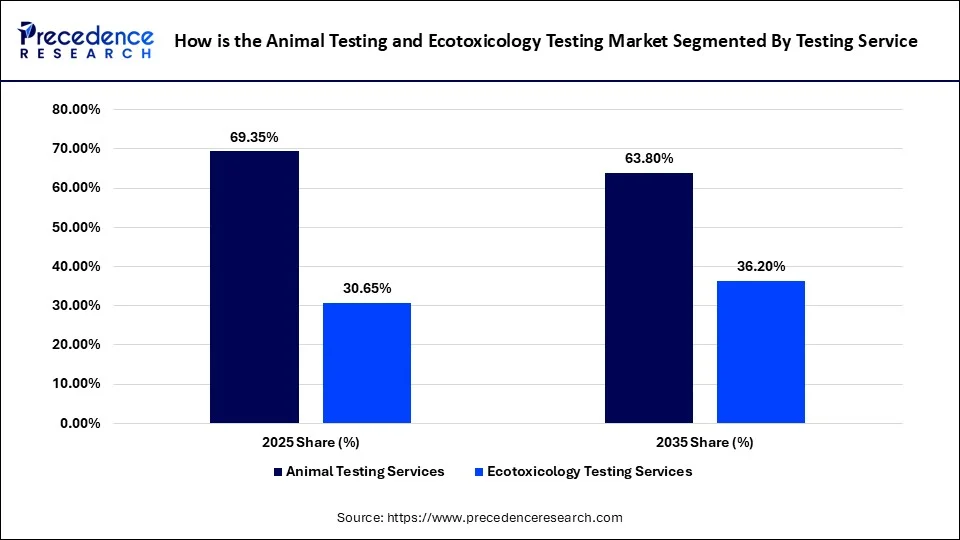
How is the Animal Testing and Ecotoxicology Testing Market Segmented By Testing Service?
Source: Precedence Research Database
Animal testing services represent the larger of the two service pools, holding a 69.35% share in 2025 and easing to 63.80% by 2035 at a 4.90% CAGR. Pharmaceutical and biopharmaceutical product development continues to rely on traditional non-clinical safety, pharmacology, exposure/and/or efficacy related testing activities, which are not fully replaceable. Furthermore, 30.65% of the market is accounted for by ecotoxicology testing services, which is expected to reach 36.20% by 2035 at a significant pace of 7.55% CAGR, due to increased regulatory review requirements for pesticides, industrial chemicals, pharmaceuticals, and other pollutants that reach the marketplace and pose an environmental risk.
Expert Analysis View - Testing Service Type
The provided forecast shows that there is growth of 5.55 percentage points, seizing market share for ecotoxicology by 2035. This change comes in recognition of the increasing emphasis on human health hazard assessment as well as environmental fate and ecological effects. Specific examples of environmental toxicity studies done with aquatic and terrestrial organisms, bioaccumulation, pesticide residues, mesoconsum, and natural ecosystems are included in OECD GLP.
Animal Testing Services
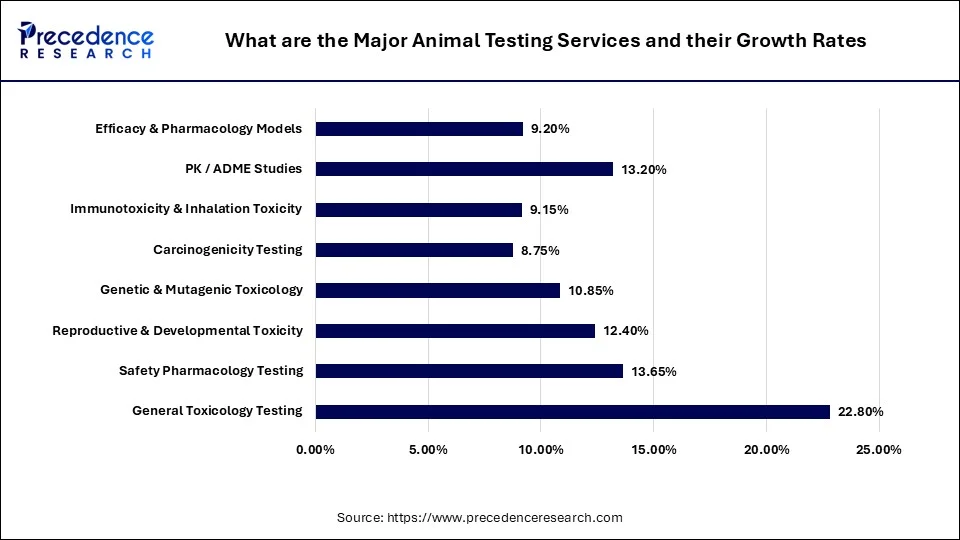
What are the Major Animal Testing Services and their Growth Rates?
Source: Precedence Research Database
General toxicology, the dominant area under animal testing, accounts for 22.80% of animal testing services and has a 4.70% CAGR, as it serves as the wide-ranging screening base that all non-clinical programs depend upon nowadays. Focusing on categories, genetic and mutagenic toxicology will see a 5.20% CAGR, while efficacy and pharmacology models will maintain the highest rate of 5.90% at 10.85% share.
Expert Analysis View - Animal Testing Services
The service mix exhibits a move away from the practice of using a wide, general toxicity screening to specialized, modality-specific, exposure-specific, and mechanism-specific testing programs. The study designs required for cell and gene therapies, biologics, complex delivery platforms, inhaled products, and other advanced modalities are becoming a necessity. The FDA's existing NAM framework does not show that these endpoints are no longer present. On the contrary, it introduces guidelines for evaluation of the appropriateness and completeness of alternative methodologies for regulation.
Ecotoxicology Testing Services
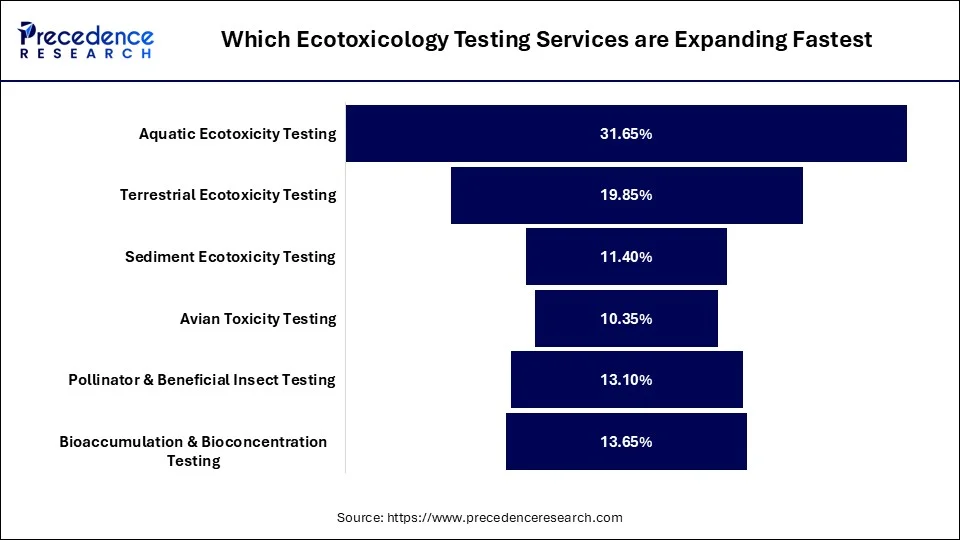
Which Ecotoxicology Testing Services are Expanding Fastest?
Source: Precedence Research Database
The longest-established regulatory expectation that any new chemical and pesticide be safe under aquatic conditions drives the growth of aquatic ecotoxicity tests. This comprises the largest internal service category at 31.65% share and is projected to grow at a 7.70% CAGR. The share of bioaccumulation and bioconcentration testing is 13.65% at an 8.05% CAGR. The share of pollinator and beneficial-insect testing is 13.10% with the fastest growth in the category at 8.30%, reflecting the increased regulatory focus on pollinator health in agrochemical approvals.
Expert Analysis View - Animal Testing Services
The ecotoxicology opportunity exceeds the traditional aquatic toxicity arena. There is an increasing need to get data for several organisms, exposure pathways, environmental chambers, persistence, bioaccumulation, and ecological effects for chemical registration and environmental risk assessment. The trend is enabling support for demand for laboratories that integrate exposure modeling, environmental fate analysis, and toxicological interpretation with experimental testing and regulatory documentation.
Application Analysis
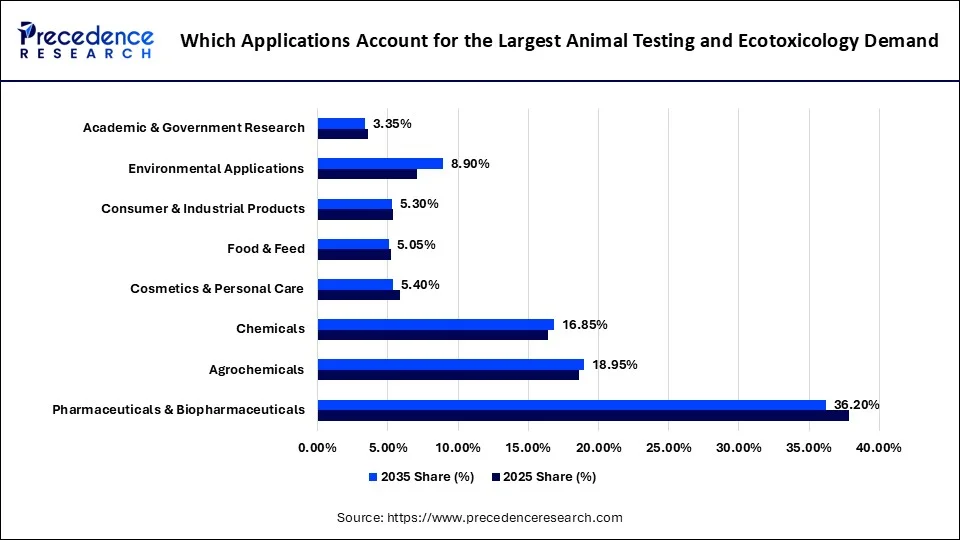
Which Applications Account for the Largest Animal Testing and Ecotoxicology Demand?
Source: Precedence Research Database
The biggest application shares 37.85% in 2025 and is projected to reach 36.20% by 2035 at a 5.30% CAGR, spurred by growing drug-development pipelines that demand preclinical safety assessments throughout the process. Environmental applications grow the fastest of any application with a CAGR of 8.25%. This will have a share of 8.90% compared with the other market segments that are growing at lower CAGRs. Environmental applications have become an independent source of demand apart from other applications, as environmental monitoring for contaminants becomes a more significant application in itself.
Expert Analysis View - Application
Pharmaceuticals and biopharmaceuticals are the top market demand application segments since these clinical and preclinical programmes include pharmacology/ toxicity/exposure/safety. The CAGR of the environmental applications is the highest at 8.25%, and the market share is growing from 7.10% to 8.90%. This shows just how critical environmental monitoring and contaminant assessment are becoming in the overall demand for testing.
Pharmaceutical & Biopharmaceutical Testing
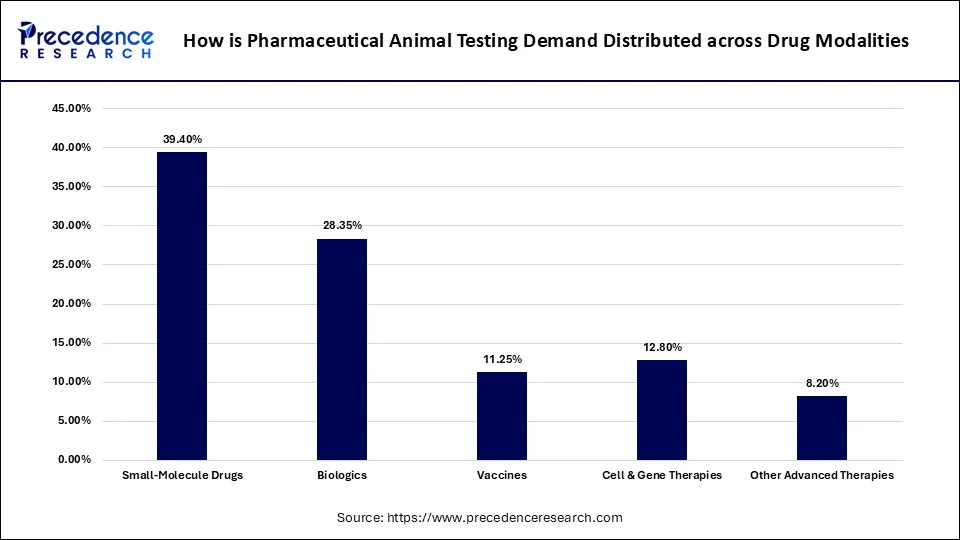
How is Pharmaceutical Animal Testing Demand Distributed across Drug Modalities?
Source: Precedence Research Database
Small molecule drugs are the highest volume category in the internal market with the highest CAGR at 4.85%, and accounted for 39.40% of the market, driven by the still high volume of traditional drug development. The highly specialized, often bespoke study designs these treatments typically need account for the category's highest CAGR at 8.45% and smallest share of 12.80% within the current forecast period.
Expert Analysis View - Pharmaceutical & Biopharmaceutical Testing
The rise of alternative therapies has given rise to the growing need for therapies tailored to special non-clinical approaches, where conventional toxicology models fall short. The FDA recently focused on the area of Non-Clinical Assessment and NAMs, using the state to streamline the process and minimize unnecessary animal usage to provide relevant human evidence. Additionally, greater need is being placed on testing providers to design the study, conduct translational pharmacology studies, perform bioanalysis, and evaluate quantitative solutions. Thus providing regulatory interpretation, not just seeing animal studies.
Agrochemical Testing
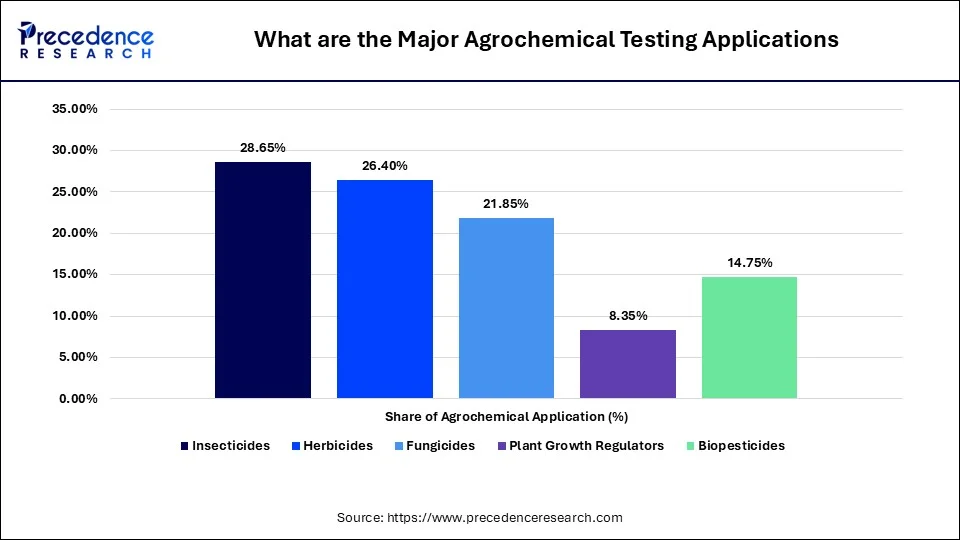
What are the Major Agrochemical Testing Applications?
Source: Precedence Research Database
Insecticides account for the largest testing category at 28.65% market share and 5.70% CAGR, whereas herbicides trail behind with a share of 26.40% and a CAGR of 5.55%. Biopesticides now represent 14.75% of the total market, but experienced growth at a huge difference at 7.80%. Reflecting developing interest in products that offer biological alternatives to conventional synthetic pesticides.
Expert Analysis View - Agrochemical Testing
All agrochemicals need to be tested for both human health and environmental effects. The evaluation of non-target organisms, environmental fate, persistence, bioaccumulation, and ecological exposure is performed in ecotoxicological programs. OECD GLP includes tests on pesticide products and environmental toxicity tests. OECD testing methodologies offer internationally agreed test methods that are employed by industry, laboratories, and government laboratories.
Chemical Testing
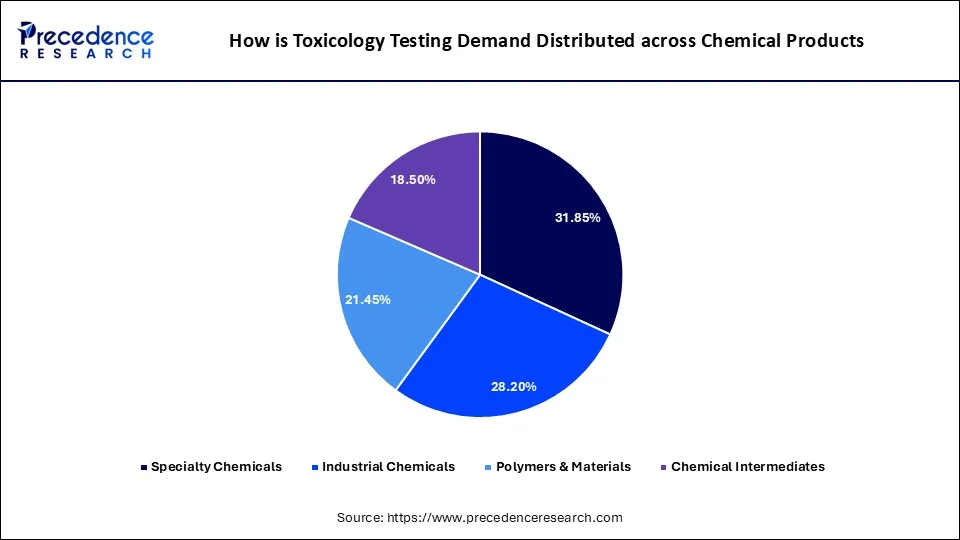
How is Toxicology Testing Demand Distributed across Chemical Products?
Source: Precedence Research Database
The fastest growth in terms of demand for chemical testing is in specialty chemicals, with a share of 31.85% and a CAGR growth rate of 6.35%. Industrial chemicals occupy the second position at 28.20% share with growth of 5.85%, while polymers and materials hold the third position with 21.45% share with growth of 6.25%, and are last at 18.50% share with growth of 5.90%, respectively.
Expert Analysis View - Chemical Testing
Middle-class chemical companies need toxicological and environmental information to characterize hazards; to register, notify, or classify; to measure, quantify, and manage exposure risks. Accredited laboratories will continue to be required to offer GLP-compliant data that can be submitted to internationally harmonized test methods, meeting demand. Specialty chemicals represented the largest supplied share, and specialty chemicals and polymers/materials had relatively high growth rates as well.
Environmental Applications
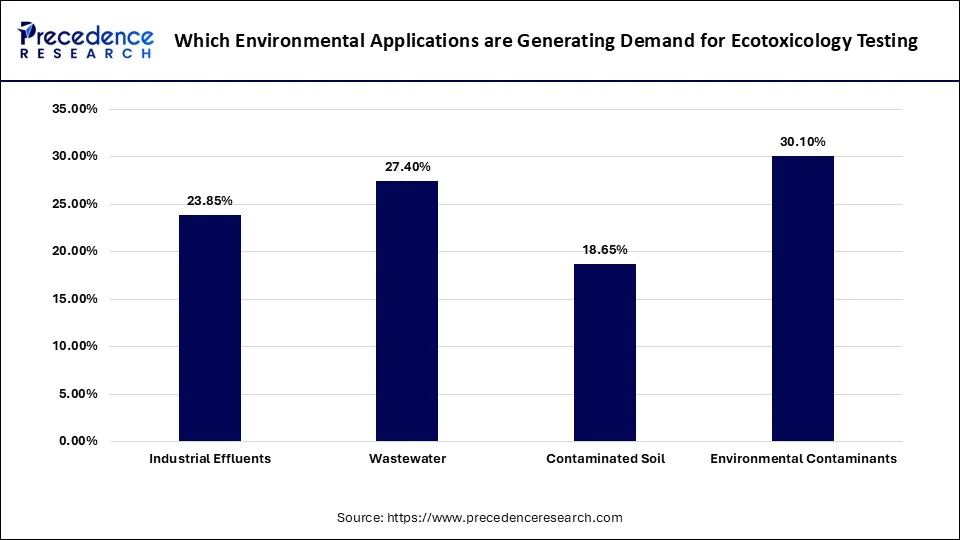
Which Environmental Applications are Generating Demand for Ecotoxicology Testing?
Source: Precedence Research Database
The largest top-ups in the group are environmental contaminants (30.10%), and the fastest top-up is in the environmental contaminants stake (8.65%), suggesting a real acceleration instead of a mature group holding its ground. The next major contributor, after wastewater, is industrial effluents with a 23.85% share and a 7.90% growth rate, followed by contaminated soil with an 18.65% share and a 7.75% growth rate at the end.
Expert Analysis View - Environmental Applications
Environmental testing is moving beyond single compounds to an integrated contaminant characterization and ecological-risk assessment. This opens up the possibility for laboratories that can deliver a coordinated service package. That includes chemical analysis, toxicity testing, and ecological modelling and regulatory interpretation.
Specialized environmental toxicologists, like those at ToxStrategies, make this shift apparent. Many of the most advanced providers of environmental toxicology offer ecological risk assessment and ecotoxicology alongside computational toxicology, exposure assessment, pesticide evaluation, work with PFAS, and use NAMs in one practice.
Testing Purpose
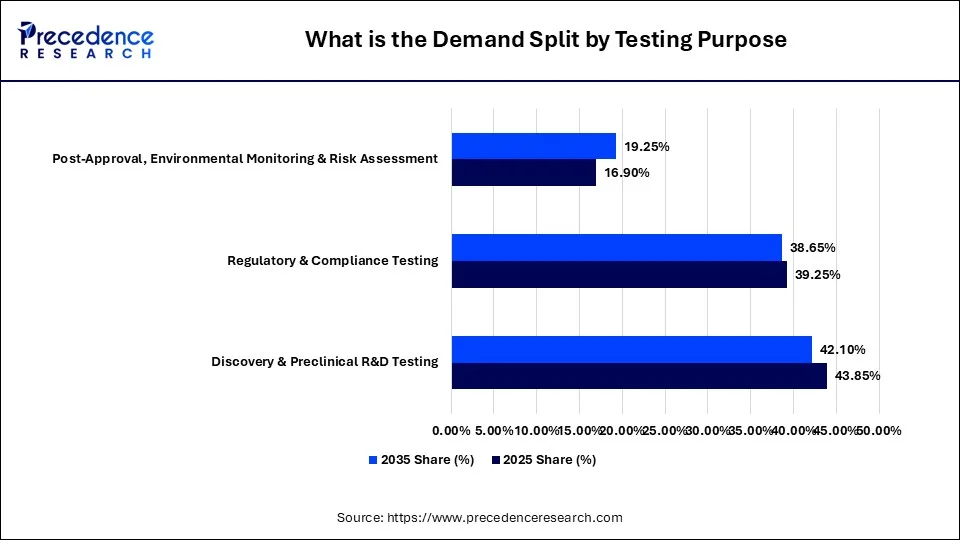
What is the Demand Split by Testing Purpose?
Source: Precedence Research Database
The significant 5.35% CAGR in the purpose category of discovery and preclinical R&D testing is expected to drive its share up to 43.85% in 2025 and down to 42.10% by 2035. The combined share of post-approval environmental monitoring and risk assessment is lowest at 16.90% in 2025. But it will show the category's highest growth rate, increasing at a brisk 7.20% CAGR, indicating just how much someone will need to continue monitoring the environment and risk after a product has launched.
Expert Analysis View - Testing Purpose
The largest purpose is discovery and preclinical R&D, followed by environmental monitoring and post-approval, with the highest growth rate being provided by post-approval and environmental monitoring. Testing needs continue after initial product registration, during the product lifecycle, including environmental monitoring, formulation changes, chemical reassessment, and new contaminant surveillance, making this very important strategically.
Service Delivery Model
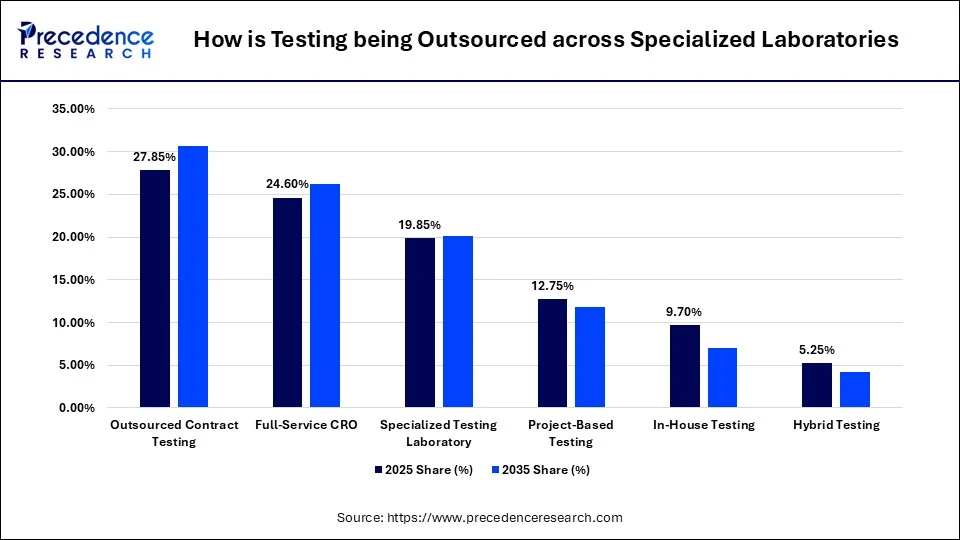
How is Testing being Outsourced across Specialized Laboratories?
Source: Precedence Research Database
Outsourced contract testing is the biggest market in this segment, accounting for 27.85% in 2025. This will witness the highest growth rate of 6.90% at 9.40% CAGR by 2035. Full-service CRO has a 24.60% share, which is for 6.45% growth, increasing by 2.60%, and specialized testing laboratory has a 19.85% share for 5.95% growth, increasing by 0.95%.
Expert Analysis View - Service Delivery Model
Outsourcing is a key market structural opportunity and is expected to remain significant in the coming years. The design of specialized programs in toxicology and ecotoxicology will inevitably involve specialized facilities, staff, GLP, animal-care facilities, analytical platforms, environmental chambers, specialized species and models, quality systems and regulatory expertise.
End-User Analysis
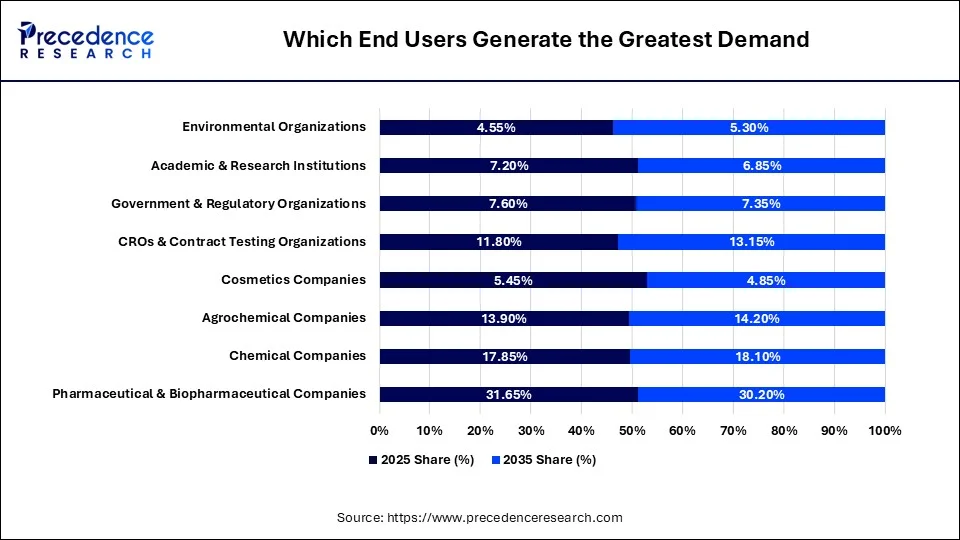
Which End Users Generate the Greatest Demand?
Source: Precedence Research Database
The pharmaceutical and biopharmaceutical companies continue to be the biggest end-user segment, accounting for 31.65% of revenue in 2025 and 30.20% by 2035, growing at 5.30% CAGR. The share of government and regulatory organizations decreases from 7.60% to 7.35%, while the group of academic and research institutions decreases from 7.20% to 6.85% at a modest 5.20% growth rate. The group of cosmetics companies has the smallest percentage share, reducing from 5.45% to 4.85%, with the slowest growth in the table (4.55%).
Expert Analysis View - End-User Analysis
According to our senior researcher, Aman Singh, pharmaceutical and biopharmaceutical companies continue to represent the biggest group of end-users. However, the growth of CROs and environmental organizations is being modelled to grow at higher rates than general market growth. The outsourcing trend leads to a chain reaction. On the other hand, sponsors are delegating specialist studies to CROs, and CROs need to increasingly acquire testing capacity and analytical technologies, along with regulatory expertise and international GLP infrastructure, to fulfil their customer requirements.
Regional Market Analysis
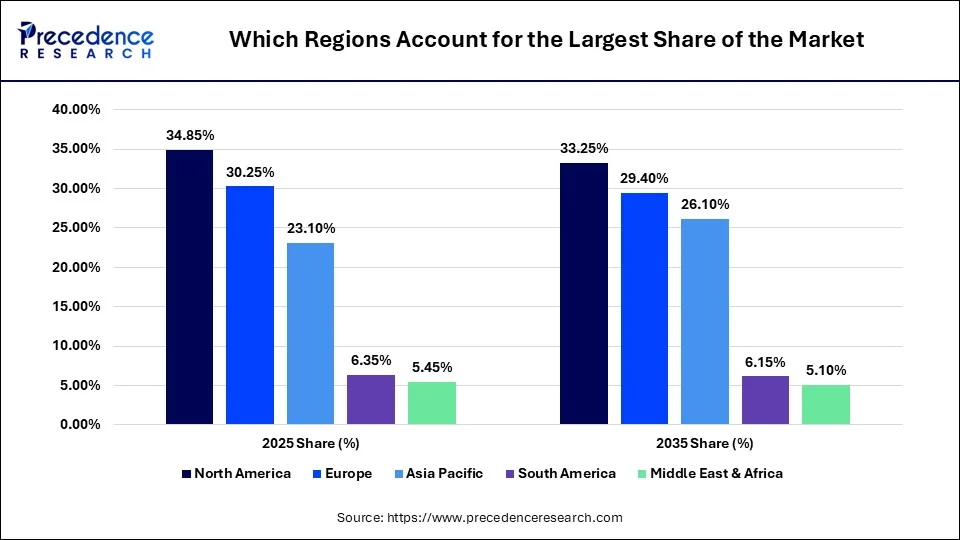
Which Regions Account for the Largest Share of the Market?
Source: Precedence Research Database
Advances in long-term established R&D activity alongside existing infrastructure and testing capabilities in the region will propel North America to the largest market at 34.85% in 2025 and falling to 33.25% at 5.30% CAGR through 2035. Europe is looking to ease further, to 29.40% at 5.35% growth, underpinned by strong chemical and environmental regulation, which supports steady testing demand. Furthermore, Asia Pacific would remain the growth outlier as its pharmaceutical and chemical manufacturing industry grew with a compound annual growth rate of 7.05%. This captured 26.10% market share in 2016, compared to the 23.10% share captured in 2012.
Expert Analysis View - Regional Market Analysis
I believe North America is the largest regional market, followed by Europe and Asia Pacific, which has the highest growth rate. Several major Asian economies are in the throes of a chemical revolution at the same time, creating the regional opportunity that exists there. The regional opportunity exists there, not because just one country is undergoing the chemical revolution.
Regulatory and Scientific Framework
What Regulatory Frameworks Influence Animal Testing and Ecotoxicology Testing?
| Framework/Development | Relevance |
| OECD GLP Principles | Quality system for regulated non-clinical health and environmental studies |
| OECD Chemical Testing Guidelines | Harmonized methods for toxicity, environmental fate and ecological effects |
| OECD TG 305 | Fish bioaccumulation testing |
| FDA NAMs Framework | Validation and regulatory use of new approach methodologies |
| FDA Streamlined Nonclinical Studies | Reduction/refinement of selected animal studies |
| 3Rs Principles | Replacement, reduction and refinement of animal use |
| GLP Compliance Programs | Quality, traceability, documentation and regulatory acceptance |
Source: Precedence Research Database
The principles of OECD GLP are a general underlying quality system for non-clinical health and environmental studies. They cover toxicity, mutagenicity, aquatic and terrestrial environmental toxicity, bioaccumulation, pesticide residues, mesocosms and ecosystem effects. The OECD Chemical Testing Guidelines are harmonized methods for toxicity, environmental fate, and ecological effects. These are generally accepted in various jurisdictions. Much of the push toward FDA's streamlined nonclinical studies guidance and NAM validation fits under the umbrella of the 3Rs Principles, which are foundational to using animals for replacement, reduction, and refinement.
Expert Analysis View - Regulatory and Scientific Framework
The days of established testing will be in demand through regulation, and the testing days are getting modernized. It is this dual effect that constitutes the key principle of the market's development. Now more than ever, labs need to provide a range of assurances: GLP testing capabilities and the capabilities to combine animal data with computational, in-vitro, mechanistic, and exposure data.
Company and Competitive Intelligence
Which Companies Demonstrate Meaningful Exposure to the Testing Ecosystem?
| Company | Relevant Capability/Business | Latest Relevant Data |
| Charles River Laboratories | Research models, discovery, safety assessment, GLP/non-GLP toxicology | 2025 revenue: $4.02B |
| WuXi AppTec | Preclinical testing, drug safety evaluation, laboratory testing | 2025 WuXi Testing revenue: RMB 4.04B |
| Eurofins Scientific | Pharmaceutical, environmental, agroscience and bioanalysis testing | Global network across pharmaceutical, environmental, and agroscience testing |
| ToxStrategies | Toxicology, ecotoxicology, environmental risk, pesticides, NAMs | Specialized scientific/regulatory consulting |
Source: Precedence Research Database
Charles River
Total 2025 revenues were $4.015 billion for Charles River. The DSA portion of its business was responsible for $2.40 billion in revenue, and RMS contributed $846.1 million. Discovery, non-clinical development, and safety testing required by the FDA contribute to DSA revenues, which accounted for 59.8% of total company revenues.
Revenue attributed to the company and segments is not necessarily attributed to revenue from the animal testing market or even the ecotoxicology testing market. In 2025, Charles River had over 120 locations in over 20 countries and about 11,760 DSA employees, of which about 1,680 were science professionals holding advanced degrees.
WuXi AppTec
The total revenue of WuXi AppTec was RMB 45.46 billion, which grew by 15.8% compared to the year before. The WuXi Testing business posted an income of RMB 4.04 billion, growing by 4.7%, while drug safety evaluation services grew by 4.6%. Additionally, disclosure in 2025 shows that new-modality business accounted for over 30% of the company's revenues. Multiple inspections were conducted on the facilities in Suzhou and Shanghai by FDA, OECD, NMPA, and PMDA.
Eurofins
Eurofins is an active player in the pharmaceutical, environmental, food, cosmetic, and agroscience testing industry. According to its 2025 annual report, the group's key activities are environmental testing, pharmaceutical testing, discovery pharmacology, and agroscience contract research.
ToxStrategies
ToxStrategies is an expertise consultancy service that provides toxicological and ecological risk assessment, ecotoxicology, pesticides, computational toxicology, NAMs, PBPK/IVIVE, environmental contaminants, and risk assessment services.
Expert Analysis View - Company and Competitive Intelligence
The two companies reveal the significant, verifiable revenues they generate in testing and safety-assessment business, which provides a relatively clear indication of the size of the top end of the market. While Euclid has a similar reach, as with Eurofins, this isn't the case on a revenue basis solely, due to the company's lack of detailed testing-specific revenues. Unlike the two larger players, ToxStrategies' sole competition is based on its expertise, scientific knowledge, and regulatory skills.
Operational Industry Indicators
What Operational Developments Indicate the Direction of the Testing-Services Industry?
| Indicator | Latest Available Data / Observation |
| Charles River total revenue, 2025 | $4.015B |
| Charles River DSA revenue, 2025 | $2.40B |
| Charles River RMS revenue, 2025 | $846.1M |
| Charles River DSA share of company revenue | 59.80% |
| Charles River global operating footprint | 120+ sites |
| Charles River geographic footprint | 20+ countries |
| Charles River DSA employees | ~11,760 |
| WuXi AppTec total revenue, 2025 | RMB 45.46B |
| WuXi Testing revenue, 2025 | RMB 4.04B |
| WuXi Testing revenue growth | 4.7% YoY |
| WuXi drug safety evaluation growth | 4.6% YoY |
| WuXi continuing-operations backlog | RMB 58.0B |
Source: Precedence Research Database
Charles River's 2025 filing does not include reporting on its backlog of DSA work, which at the end of 2025 stood at a total of USD 1.9 billion. Additionally, the company continued to support safety assessment work in the pharmaceutical, vaccine, industrial and agricultural chemical, consumer product, veterinary medicine, and medical devices sectors. At the end of 2025, the backlog of its continuing operations totalled RMB 58.0 billion, increasing 28.8% compared to a similar level at the end of 2024. The backlog growth rate was significantly higher than that of its revenue growth in the WuXi Testing business, in the mid-single digits.
Expert Analysis View - Company and Competitive Intelligence
Such operational criteria indicate a growing trend towards large integrated platforms of services but also towards specialized laboratories dedicated to specific endpoints. Perhaps most strikingly, however, is the fact that the backlog is estimated to be expanding at a much quicker pace than WuXi's testing revenue. This could be an indicator of the backlog for future work that has yet to be recognized as revenue.
The best-suited competitive positions moving forward will likely be candidates who hold several of these skills, but not any individual one. Loot Laveleau said that he expects to see a lot more candidates combining the GLP expertise with the specialization in animal models, environmental species testing, analytical chemistry, bioanalysis, toxicologic interpretation, regulatory consulting, the ability to participate in a study globally, and the advanced-therapy expertise in some form.
Emerging Shift Toward NAMs
How are Alternative Methodologies Changing the Animal Testing Market?
One of the most significant structural changes toward how testing programs will be assembled in the future is the move towards New Approach Methodologies (NAMs). Criteria appear in FDA's 2026 NAM guidance that involves complex in-vitro systems, organoids, organs-on-chips, chemical reactivity, and computer simulations, among other scientifically valid systems. The agency has also issued a much more comprehensive plan to minimize animal use. This has stated that NAMs can be used to potentially enhance human relevance while also decreasing or replacing some animal studies under certain conditions. Regarding monoclonal antibodies, the FDA's Draft Guidance from December 2025 provides exceptions to consider for using lower numbers of long-term NHP tox studies. This is to be treated as part of a more comprehensive risk-assessment strategy that can include computational toxicology and organoids and human safety data.
Expert Analysis View - Emerging Shift Toward NAMs
The replacement of one market for another is not the same as NAMs. They create a hybrid testing architecture instead, moving from traditional animal testing through in-vitro testing, computational toxicology, mechanistic evidence, and exposure modeling toward integrated risk assessment as a combined process.
The change will most likely affect investments in the design of studies, computational toxicology, bioinformatics, translation science, and regulatory strategy as part of traditional tests and not instead of them. Providers with full conventional toxicology and NAM capabilities are well suited to be able to participate on both ends of this migration and not be disrupted on one end.
Buyer Intelligence
What do Buyers Prioritize when Selecting Animal Testing and Ecotoxicology Providers?
| Buyer Requirement | Importance to Procurement |
| GLP compliance | Regulatory acceptability and data integrity |
| Regulatory experience | Submission and registration support |
| Study design expertise | Appropriate endpoint/species/model selection |
| Specialized animal models | Advanced therapeutic and mechanistic programs |
| Ecotoxicology capabilities | Environmental registration and risk assessment |
| Analytical capabilities | Exposure, bioanalysis and chemical characterization |
| Turnaround time | Faster development and regulatory timelines |
| Global regulatory knowledge | Multi-region submissions |
| Data quality and traceability | Audit and inspection readiness |
| Integrated services | Reduced vendor coordination |
| NAM capability | Reduction/refinement of conventional animal studies |
| Toxicological interpretation | Converting study data into regulatory conclusions |
Source: Precedence Research Database
GLP compliance is amongst the highest priorities of any procurement checklist. It directly impacts the acceptability of the regulation and the integrity of the data for any submission that is based on the studies. So does regulatory experience, as providers must be able to assist with the submission and registration of a product/program to the targeted jurisdictions. The knowledge of designing a study will help to determine whether a study will ultimately provide actionable regulatory information or not. This will depend on selecting an appropriate study endpoint, species, and model.
Expert Analysis View - Buyer Intelligence
There is an increasing shift away from the prices paid per study, in that there are more buyers who are considering adding other factors into their purchasing process. Pharmaceutical, chemical, and agro-chemical enterprises are demanding integrated scientific and government agencies. That can set up studies, be able to carry them out under adequate quality systems, understand the results, and submit documents for regulatory evaluation. This atmosphere is conducive to providers who have a strong scientific background and integrated delivery system, instead of solely routine testing volume-driven laboratories.
Key Growth Drivers
What are the Main Growth Drivers for the Animal Testing and Ecotoxicology Testing Market?
Pharmaceutical and biopharmaceutical pipeline expansion
The need for specialized non-clinical assessments is on the rise as the development of complex molecules and advanced therapies grows.
Increasing outsourcing
Specialised providers that provide test solutions for animal, analytical, and environmental regulations are becoming more and more the preferred choice for sponsors.
Chemical registration and risk assessment
Toxicological and environmental data are needed for a regulatory program for industrial and specialty chemicals.
Agrochemical environmental assessment
Environmental fate assessment and potential effects on non-target organisms are needed when assessing pesticide development.
Growth of environmental monitoring
As it becomes further into practice, demand for ecological assessment is growing with industrial contaminants, wastewater, contaminated soils, and emerging contaminants.
Advanced analytical technologies
Deeper characterization of exposure, metabolites, and toxicological mechanisms is realized using higher-resolution analytical platforms.
Advanced therapy development
In addition to the special clinical testing strategies, specialized non-clinical testing strategies are needed in cell and gene therapies.
Regulatory demand for GLP-quality data
The OECD GLP features a harmonized quality system for submission of studies to regulatory agencies.
Growth of NAMs and integrated testing
Demand is emerging for computational toxicology, organoid system testing, mechanistic testing, and integrated risk assessment as alternative methodologies gain traction.
Key Market Challenges
What are the Major Challenges Facing the Market?
| Challenge | Market Impact |
| Shift toward non-animal methodologies. | Can reduce demand for selected conventional studies |
| High infrastructure costs | Limits entry into complex GLP testing |
| Regulatory variation | Different requirements across jurisdictions |
| Long study timelines | Can delay drug and chemical development |
| Shortage of specialized scientists | Limits capacity for complex programs |
| Animal welfare requirements | Adds ethical, operational, and compliance considerations |
| Complex advanced therapies | Requires specialized models and study design |
| Environmental endpoint complexity | Requires multi-species and multi-compartment capabilities |
| Pricing pressure | Particularly for standardized testing |
| Data integration | Increasing volumes of heterogeneous toxicology data |
Source: Precedence Research Database
According to our senior researcher Aditi Shivarkar, high infrastructure costs stymie complex GLP testing, as the systems, staff, and equipment used are significant, and an investment often too large for new players to make at first glance. There is also real complexity, as regulatory requirements differ in various jurisdictions. They are not fully harmonized. Capacity for complex programs is more severely constrained by a lack of specialized scientists, and as advanced therapies and NAM-related work both have increasingly specialized needs, this constraint becomes more and more of a problem.
Expert Analysis View
A key issue the market faces over the very long-term and a major driver of change is the move away from traditional testing to integrated safety science. These types of providers, in which standardized animal studies are heavily used, are subject to greater pressure from substitutes in certain applications.
Companies implementing the holistic combination of animal, computational, mechanistic, environmental, and human-relevant approaches are also growing in size in the developing non-clinical safety workflow. Furthermore, companies using animal studies and then moving into the field of computational, mechanistic, environmental, and human relevance are gaining in size throughout the ever-shifting non-clinical safety arena.
Strategic Market View
The global animal testing and ecotoxicology testing market is shifting from a traditional animal testing model to an integrated animal and environmental-risk assessment ecosystem.
In the provided forecast, animal testing maintains its share of the market in terms of market revenues, especially in the pharmaceutical and biopharmaceutical development segment. However, its share is projected to decline from 69.35% in 2025 to 63.80% in 2035. The environmental assessment is becoming more comprehensive with regard to various chemicals, pesticides, pharmaceutical products, and contaminants, and ecotoxicology is expected to gain a greater share.
The most significant opportunities are concentrated around:
- Specialized toxicology
- Advanced pharmacology models
- PK/ADME
- Cell and gene therapy testing
- Pollinator testing
- Bioaccumulation testing
- Environmental contaminant assessment
- Outsourced GLP testing
- Full-service CRO programs
- Computational toxicology
- NAMs and integrated testing strategies
- Environmental risk assessment
- Regulatory toxicology consulting
It is not a matter of either animal testing or animal-free testing in the future, as suggested by the FDA's current regulatory guidance. Non-clinical development is also embracing animal studies, human-relevant models, computational tools, mechanistic information, and a risk-based interpretation framework depending on circumstances, product, and regulatory context.
Expert Insights
The global animal testing and ecotoxicology testing market is in a shifting phase, reorienting from traditional safety assessment towards a more science-based and integrated testing approach, addressing human health, environmental safety, and regulatory concerns. I perceive great potential within the field of toxicology testing, environmental risk assessment, and new laboratory technologies to increase the reliability and efficiency of safety assessment. The expanding production and development of pharmaceuticals, agrochemicals, industrial chemicals, and consumer products. They are creating an increasing demand for complete environmental impact and toxicity evaluations.
Our Experts
Deepa Pandey, a Senior Research Analyst, conducted the initial market research, constructed the approach and methodology, and created the regional trends, competitive developments, forecasts, and market segmentation analysis, which laid the foundation for the report's analysis.
Amit Singh, a Senior Researcher, handled the collection and validation of regulatory data, company data, industry statistics, and other quantitative data independently of others to improve the evidence base and support the market estimates.
Aditi, a Senior Researcher, read through the entire document for research, checked the quality, cross-checked results, and added to, edited, and amended the document to make it accurate and easy to understand.
Complete Animal Testing and Ecotoxicology Testing Market Segmentation
By Testing Service Type
- Animal Testing Services
- General Toxicology Testing
- Safety Pharmacology Testing
- Reproductive & Developmental Toxicity
- Genetic & Mutagenic Toxicology
- Carcinogenicity Testing
- Immunotoxicity & Inhalation Toxicity
- PK / ADME Studies
- Efficacy & Pharmacology Models
- Ecotoxicology Testing Services
- Aquatic Ecotoxicity Testing
- Terrestrial Ecotoxicity Testing
- Sediment Ecotoxicity Testing
- Avian Toxicity Testing
- Pollinator & Beneficial Insect Testing
- Bioaccumulation & Bioconcentration Testing
By Application
- Pharmaceuticals & Biopharmaceuticals
- Agrochemicals
- Chemicals
- Cosmetics & Personal Care
- Food & Feed
- Consumer & Industrial Products
- Environmental Applications
- Academic & Government Research
By Testing Purpose
- Discovery & Preclinical R&D Testing
- Regulatory & Compliance Testing
- Post-Approval, Environmental Monitoring & Risk Assessment
By Service Delivery Model
- Outsourced Contract Testing
- Full-Service CRO
- Specialized Testing Laboratory
- Project-Based Testing
- In-House Testing
- Hybrid Testing
By End User
- Pharmaceutical & Biopharmaceutical Companies
- Chemical Companies
- Agrochemical Companies
- Cosmetics Companies
- CROs & Contract Testing Organizations
- Government & Regulatory Organizations
- Academic & Research Institutions
- Environmental Organizations
By Region
- North America
- Europe
- Asia Pacific
- South America
- Middle East & Africa
For inquiries regarding discounts, bulk purchases, or customization requests, please contact us at sales@precedenceresearch.com
Frequently Asked Questions





Ask For Sample
No cookie-cutter, only authentic analysis – take the 1st step to become a Precedence Research client
 Get a Sample
.webp)



 sales@precedenceresearch.com
 Schedule a Meeting
