



Autologous Fat Grafting Market Size, Companies, Share, Patient Volume, Treatment Adoption Rates, Pricing Analysis, Regulatory Landscape, Competitive Positioning, and Demand Forecast
Autologous Fat Grafting Market (By Product Type: Fat Harvesting & Aspiration Systems, Fat Processing/Purification Systems, Integrated Fat Transfer Systems, Accessories & Consumables (Cannulas, Tubing); By Application: Breast Augmentation & Reconstruction, Facial Fat Grafting/Rejuvenation, Buttock Augmentation (BBL), Hand Rejuvenation & Others; By End-User: Hospitals, Clinics & Plastic Surgery Centers, Medical Spas) - Global Industry Analysis, Size, Trends, Leading Companies, Regional Outlook, and Forecast 2026 to 2035
Source: https://www.precedenceresearch.com/autologous-fat-grafting-market
 Get a Sample
 Table Of Content


What is Autologous Fat Grafting Market Size in 2026?
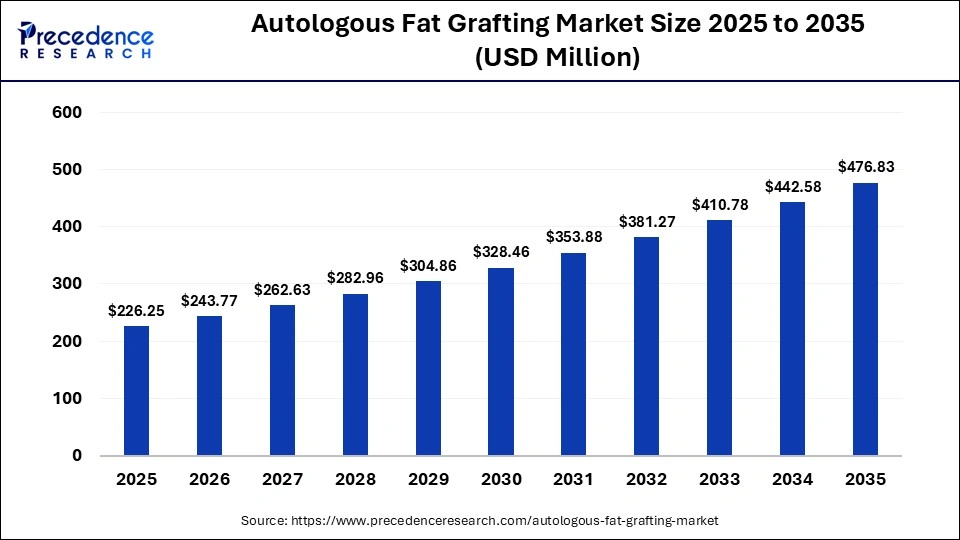
The global autologous fat grafting market size was calculated at USD 226.25 million in 2025 and is predicted to increase from USD 243.77 million in 2026 to approximately USD 476.83 million by 2035, expanding at a CAGR of 7.74% from 2026 to 2035. The autologous fat grafting market is fueled by a global shift toward "natural" aesthetics and regenerative medicine, where patients prefer their own biological tissue over synthetic fillers.
Key Takeaways
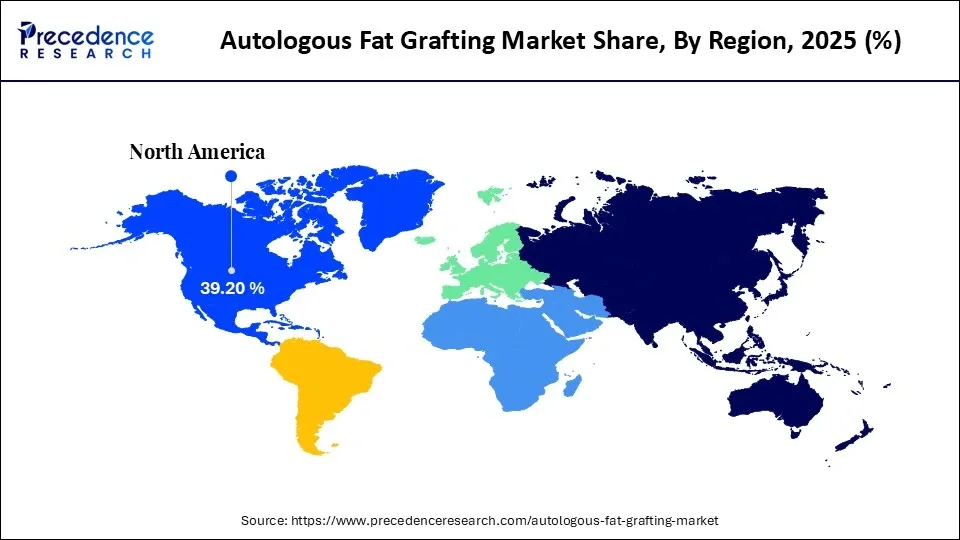
- North America dominated the global market with a share of approximately 39.2% in 2025.
- Asia-Pacific is expected to grow at the fastest CAGR in the market during the forecast period.
- By product type, the fat harvesting and aspiration systems segment led the global autologous fat grafting market with a share of approximately 35.2% in 2025.
- By product type, the integrated fat transfer systems segment is expected to expand rapidly in the market with a CAGR of approximately 11.8% in the coming years.
- By application, the breast augmentation and reconstruction segment contributed the biggest revenue share of approximately 38.1% in the market in 2025.
- By application, buttock argumentation (BBL) segment is expected to witness the fastest growth in the market with a CAGR of approximately 12.5% over the forecast period.
- By the user, the hospitals segment contributed the biggest revenue share of approximately 52.1% in the market in 2025.
- By end user, the clinics and plastic surgery centers segment is expected to gain the highest market share with a CAGR of approximately 10.9% between 2026 and 2035.
What is the Autologous Fat Grafting Market?
Autologous fat grafting enhances volume and shape in body areas while revitalizing the skin with the patient's own fat, making it a safe, natural alternative to artificial fillers. This technique is highly used for its low rejection risk, ability to improve tissue imperfections and scars, and provides lasting, soft-tissue results. Adipose tissue is an ideal filler due to its easy availability, minimal donor-site complications, repeatability, cost-effectiveness, adaptability, and compatibility with biological systems. It is also rich in stem cells, which help in improving skin tone, quality, and texture while providing volume.
It is a highly used method for sculpting, filling, and improving skin tone and texture in facial rejuvenation. Additionally, it is used to collect counter deformities such as breast reconstruction and treating congenital syndromes like Poland syndrome. The procedure is highly versatile and minimally invasive as it allows for removing unwanted fat from one area of the body while adding volume to another simultaneously. Its simple approach compared to traditional surgery, combined with shorter recovery periods and the application of local anesthesia, is contributing to its growing popularity, leading to an expected significant market expansion.
What is the Role of AI in the Autologous Fat Grafting market?
With cutting-edge technology, automation, and Artificial Intelligence, the fat transfer system reaches a new level. It simplifies the process, eliminates tedious tasks, and save significant amount of time and effort. When injecting fat, robotic-assisted systems help in reducing human errors. It also improved patient safety by reducing medical risks such as tissue injury and providing more accurate fat graft placement. Advanced tools such as 3D imaging help surgeons in mapping the precise location of fat to achieve optimal symmetry and balance.
Novel technology precisely provides detailed information about anatomical structures. It also helps in determining the optimal amount of microfat and nanofat based on the patient's age and body region. AI is currently most advanced in facial and breast reconstruction applications, while rapidly expanding in fat transfer and patient-centric procedures, broadening the market reach.
What Are the Trends in the Autologous Fat Grafting Market?
- Technological Innovations and Trends: Technological advancements play a vital role in the market as they effectively tackle the underlying challenges of conventional grafting methods, including low cell viability, donor site complications, and variability in procedures. The incorporation of sophisticated tools and methodologies enhances patient results, shortens recovery durations, and broadens the therapeutic applications of a patient's own tissue. Automated tissue processing systems, such as closed filtration and mechanized fat processing, standardize the procedures, reduce operator errors, and ensure consistent, high-quality results.
- Demand For Natural Aesthetic and Minimally Invasive Solutions: Autologous fat is considered one of the best options for cosmetic fillers because it provides a softer, more natural appearance and a longer-lasting result compared to synthetic alternatives, which makes it favored by consumers for procedures like facial rejuvenation, breast enhancement, and buttock augmentation. Additionally, minimally invasive tools and techniques enable smaller, precise incisions, reducing discomfort and improving aesthetic outcomes for patients.
- Broader Therapeutic and Reconstructive Use: Recent advancements have enabled autologous grafting to evolve from aesthetic enhancements to treating complex conditions, such as chronic wounds, burn scars, radiation-induced skin fibrosis, and alopecia. It also corrects contour irregularities and deficiencies in soft tissue after lumpectomy, mastectomy, or reduction mammoplasty. Additionally, these grafts' regenerative properties are increasingly used to treat complex, non-healing wounds, such as chronic ulcers and burns, to restore tissue integrity.
Market Scope
| Report Coverage | Details |
| Market Size in 2025 | USD 226.25 Million |
| Market Size in 2026 | USD 243.77 Million |
| Market Size by 2035 | USD 476.83 Million |
| Market Growth Rate from 2026 to 2035 | CAGR of 7.74% |
| Dominating Region | North America |
| Fastest Growing Region | Asia Pacific |
| Base Year | 2025 |
| Forecast Period | 2026 to 2035 |
| Segments Covered | Product Type, Application,End-User, and region |
| Regions Covered | North America, Europe, Asia-Pacific, Latin America, and Middle East & Africa |
Segmental Insights
Product Type Insights
Which Product Type Segment Dominated the Autologous Fat Grafting Market?
The fat harvesting and aspiration systems segment held a dominant position in the market with a share of approximately 35.2% in 2025, as they are crucial for improving the viability of fat cells, streamlining the procedure for faster and more consistent outcomes, and enabling large volume transfers. Additionally, they enable efficient, safe, and high-visibility transplantation of patients' own fat in constructing or rejuvenating body areas.
Aspiration systems involving centrifugation or filtration remove unwanted compounds like blood and free oil, which can cause inflammation, infection, and also reduce complications such as the risk of vascular penetration and fat embolism, which can be fatal. Thus, it is a highly preferred system in modern plastic and reconstructive surgery.
The integrated fat transfer systems segment is expected to witness the fastest growth in the market with a CAGR of approximately 11.8% over the forecast period. These systems facilitate aspiration, filtration, and processing within a closed environment. It helps in minimizing exposure to contaminants and reduces cell damage during processing. Additionally, due to a closed-loop all-in-one system, the total time of the procedure is greatly reduced. It plays a critical role in converting an unpredictable manual procedure into a reliable, high-yield, and scientifically advanced technique.
Application Insights
Which Application Segment Led the Autologous Fat Grafting Market?
The breast augmentation & reconstruction segment held the largest revenue share of approximately 38.1% in the market in 2025, due to the convergence of high breast cancer incidence, with more women undergoing mastectomy, the demand for reconstruction is rapidly growing. Other key factors include societal focus on restoring quality of life, body image, and self-confidence. Also, focus on appearance and femininity drives the demand for breast augmentation. The increasing awareness of genetic mutations has led to the preference for prophylactic mastectomies, expanding the market presence in women.
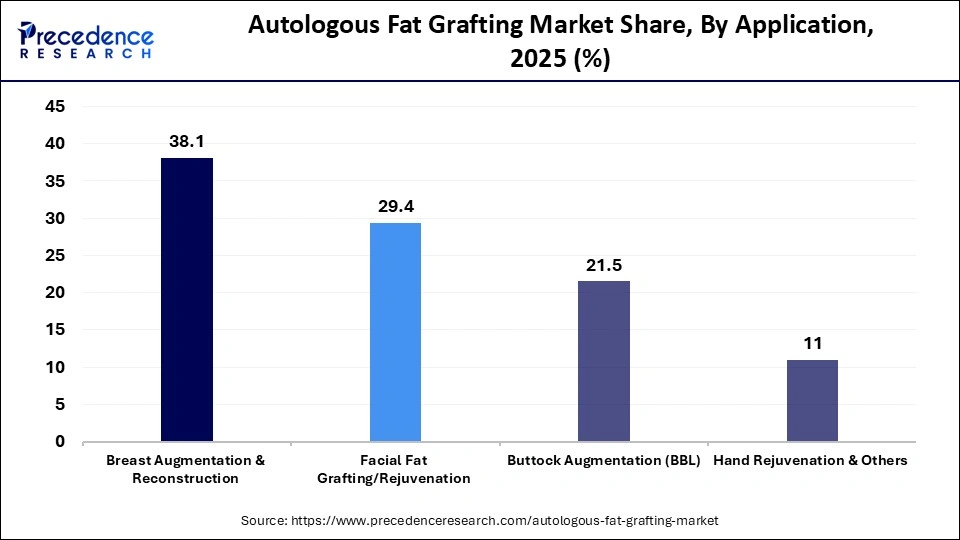
The buttock augmentation (BBL) segment is expected to show the fastest growth with a CAGR of approximately 12.5% over the forecast period. It is rapidly increasing due to its ability to remove unwanted fat via liposuction while enhancing buttock volume and shape simultaneously. It also allows surgeons to sculpt, lift, and contour the buttock shape to match the patient's desired preferences. Furthermore, the adoption of new, safer, and advanced techniques, such as injecting fat into the subcutaneous space, has dramatically reduced complications, making it a safer option for patients.
End-User Insights
What Made Hospitals the Dominant Segment in the Autologous Fat Grafting Market?
The hospitals segment accounted for the highest revenue share of approximately 52.1% in the market in 2025, as hospitals play a critical role in providing the necessary environment for safe, sterile, and highly specialized surgical procedures. While sometimes done as an outpatient procedure, hospitals ensure strict infection control, careful tissue handling, and the ability to manage rare but serious complications like fat embolism or pulmonary embolism. They also have specialized processing equipment, such as centrifugation and specialized cannulas, which are critical for successful and long-term results.
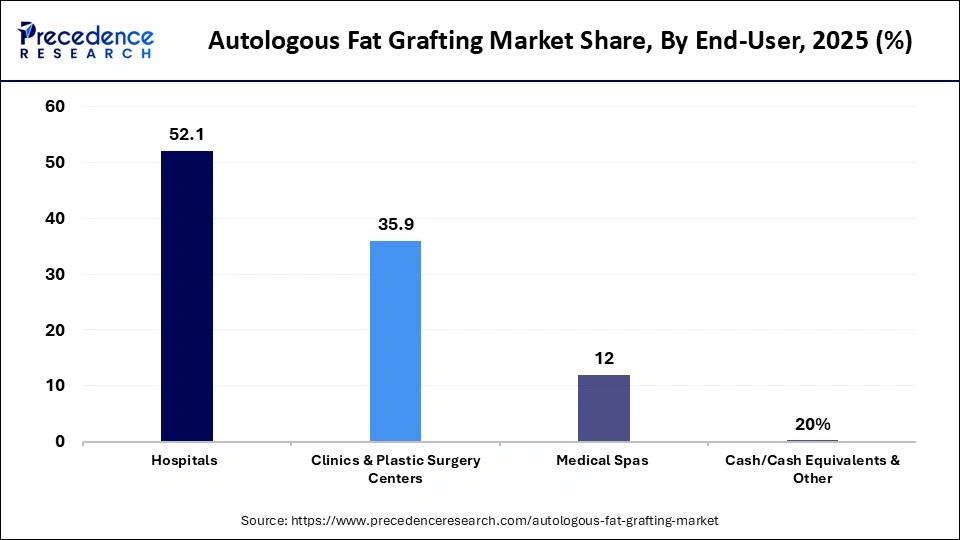
The clinics & plastic surgery centers segment is expected to expand rapidly in the market with a CAGR of approximately 10.9% in the coming years, as they offer a highly specialized, patient-centric environment, which focuses on cosmetics and reconstructive refinements. Specialized centers provide superior and personalized care while providing a more comfortable and private atmosphere for the patients. The clinic also lowers the risk of contracting hospital-acquired infections.
Regional Insights
North America Autologous Fat Grafting Market Size and Growth 2026 to 2035
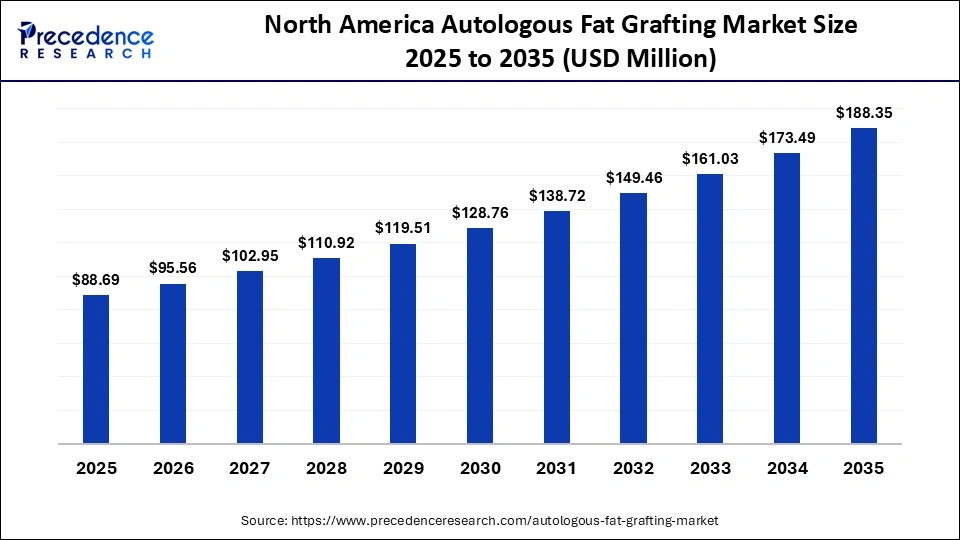
The North America autologous fat grafting market size is estimated at USD 88.69 million in 2025 and is projected to reach approximately USD 188.35 million by 2035, with a 7.82% CAGR from 2026 to 2035.
Which Factors Drive the Autologous Fat Grafting Market in North America?
North America held a major revenue share of approximately 39.2% in the market in 2025. Growth factors include technological advancements, high aesthetic demand, advanced healthcare infrastructure, safety, efficacy, and high clinical training and research. With increasing preference for minimally invasive cosmetic procedures, the demand for Brazilian butt lift or facial rejuvenation is becoming a popular procedure in the population. Preference for using one's own tissue while avoiding complications play fillers and implants.
U.S. Autologous Fat Grafting Market Size and Growth 2026 to 2035
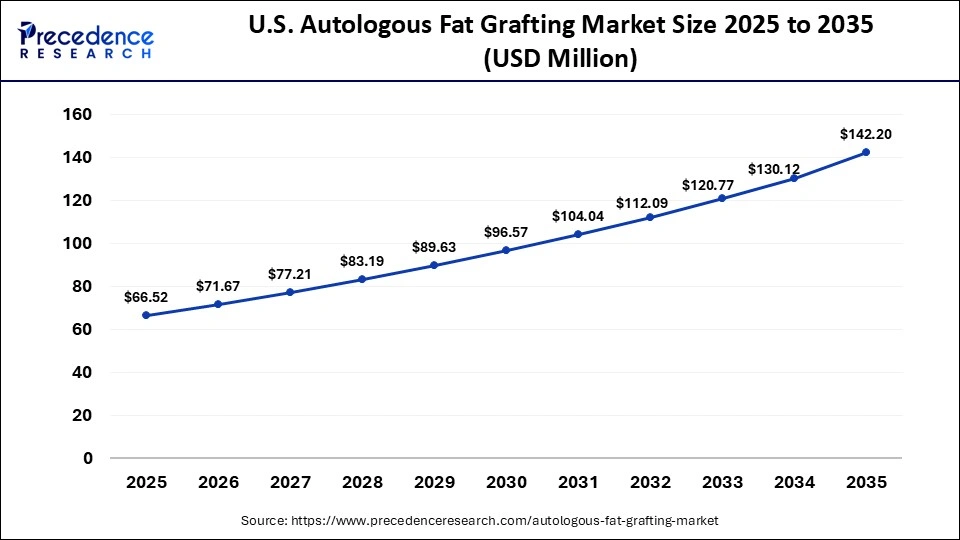
The U.S. autologous fat grafting market size is calculated at USD 66.52 million in 2025 and is expected to reach nearly USD 142.20 million in 2035, accelerating at a strong CAGR of 7.89% between 2026 to 2035.
U.S. Market Trends
With advanced healthcare infrastructure and increasing demand for aesthetic procedures in the U.S. market is growing rapidly. Due to cultural preference, the demand for aesthetic improvements such as breast augmentation and buttock lift is highly adopted. Also, as the U.S. offers advanced and innovative fat processing and transfer technologies, which is enhancing the grafting survival rates. Additionally, with high awareness of breast cancer and cancer surgeries in the population, breast reconstruction is heavily used.
How Will the Asia-Pacific Region Grow in the Autologous Fat Grafting Market?
Asia-Pacific is expected to be the fastest-growing market in 2025. Key reasons include aesthetic preference and anti-aging trend, rapid growth in cosmetic procedures, technologically advanced healthcare, and lastly, affordability and accessibility. The region offers a competitive, lower-cost, and highly accessible fat grafting procedure compared to Western markets. Also, emerging economies are observing a surge in cosmetic and reconstructive procedures.
South Korea Market Trends
With intense market competition, high volume specialization cosmetic hubs, and innovative techniques, ensuring high fat survival rate, providing natural and youthful results, is driving the demand in South Korea. Other key factors include cultural emphasis on natural beauty, cost effectiveness, high safety standards, and hyper-specialization and volume.
While offering premium services, a clinic provides more affordable and transparent pricing compared to Western countries. Also, as the population favors subtle, and natural-looking results, surgeries for anti-aging fat grafting are highly popular. They are also pioneers in stem cell-enriched fat transfer technologies, while improving long-term results, elevating the market standards, and potential.
Autologous Fat Grafting Market Value Chain Analysis
- Research and Development
This stage involves the identification and development of novel, personalized materials that enable autologous fat grafting.
Key Players: Genesis Biosystems, Inc., AbbVie, Inc., and Tie Medical, Inc.
- Clinical Trials and Regulatory Approvals
Clinical trials assess the safety and efficacy of autologous fat grafting procedures for a wide range of disorders in humans. Regulatory authorities subsequently authorize these procedures based on trial data.
Key Players: Integra LifeSciences, Cytori Therapeutics, and Arthrex.
- Patient Support and Services
Plastic surgeons and nursing staff provide customized services to patients. Concerned authorities also offer financial assistance, enhancing treatment accessibility and affordability.
Top Companies in the Autologous Fat Grafting Market
- AbbVie Inc. (Allergan Aesthetics)
- Sisram Medical Ltd (Alma Lasers)
- Integra LifeSciences
- Bausch Health Companies (Solta Medical)
- Suneva Medical, Inc.
- Cytori Therapeutics (Plus Therapeutics)
- Lipogems International S.p.A.
- Human Med AG
- MicroAire Surgical Instruments
- Tulip Medical Products
- Ranfac Corp.
- Medikan International Inc.
- Black Tie Medical
- MTF Biologics
- Genesis Biosystems
Recent Developments
- In November 2025, Tiger Aesthetics Medical LLC announced a strategic investment in GenesisTissue, Inc. to create new and disruptive innovations for breast reconstruction and augmentation through tissue engineering and regenerative technologies, first demonstrated with the launch of alloClae. alloClae is a ready-to-use structural adipose tissue product uniquely designed for body contouring. (Source - https://tiger-aesthetics.com)
- In April 2025, the TIDE clinical study conducted in five French hospitals proposed a new autologous resorbable bioprosthesis, the MATTISSE bioprosthesis, for breast reconstruction in patients with breast cancer. Researchers found that the technique could reduce the need for repeated fat grafting, commonly used in reconstruction. (Source: https://www.medscape.com)
- In October 2024, BellaSano released positive results of its clinical trial for resorbable breast scaffolding, which evaluates 3D printed scaffolds. The study aims for a fully natural breast reconstruction without foreign materials left behind. The scaffold gradually reabsorbs over three years, reshaping the market for breast augmentation and reconstruction. (Source: https://3dprint.com)
Segments Covered in the Report
By Product Type
- Fat Harvesting & Aspiration Systems
- Fat Processing/Purification Systems
- Integrated Fat Transfer Systems
- Accessories & Consumables (Cannulas, Tubing)
By Application
- Breast Augmentation & Reconstruction
- Facial Fat Grafting/Rejuvenation
- Buttock Augmentation (BBL)
- Hand Rejuvenation & Others
By End-User
- Hospitals
- Clinics & Plastic Surgery Centers
- Medical Spas
By Region
- North America
- Europe
- Asia-Pacific
- Latin America
- Middle East & Africa
For inquiries regarding discounts, bulk purchases, or customization requests, please contact us at sales@precedenceresearch.com
Frequently Asked Questions





Ask For Sample
No cookie-cutter, only authentic analysis – take the 1st step to become a Precedence Research client
 Get a Sample
.webp)



 sales@precedenceresearch.com
 Schedule a Meeting
