



Baby Drinks Market Size, Share and Trends 2026 to 2035
Baby Drinks Market (By Product: Baby Formula, Juice, Electrolyte; By Distribution Channel: Supermarket & Hypermarket, Pharmacies, Online) - Global Industry Analysis, Size, Trends, Leading Companies, Regional Outlook, and Forecast 2026 to 2035
Source: https://www.precedenceresearch.com/baby-drinks-market
 Get a Sample
 Table Of Content


What is Baby Drinks Market Size?
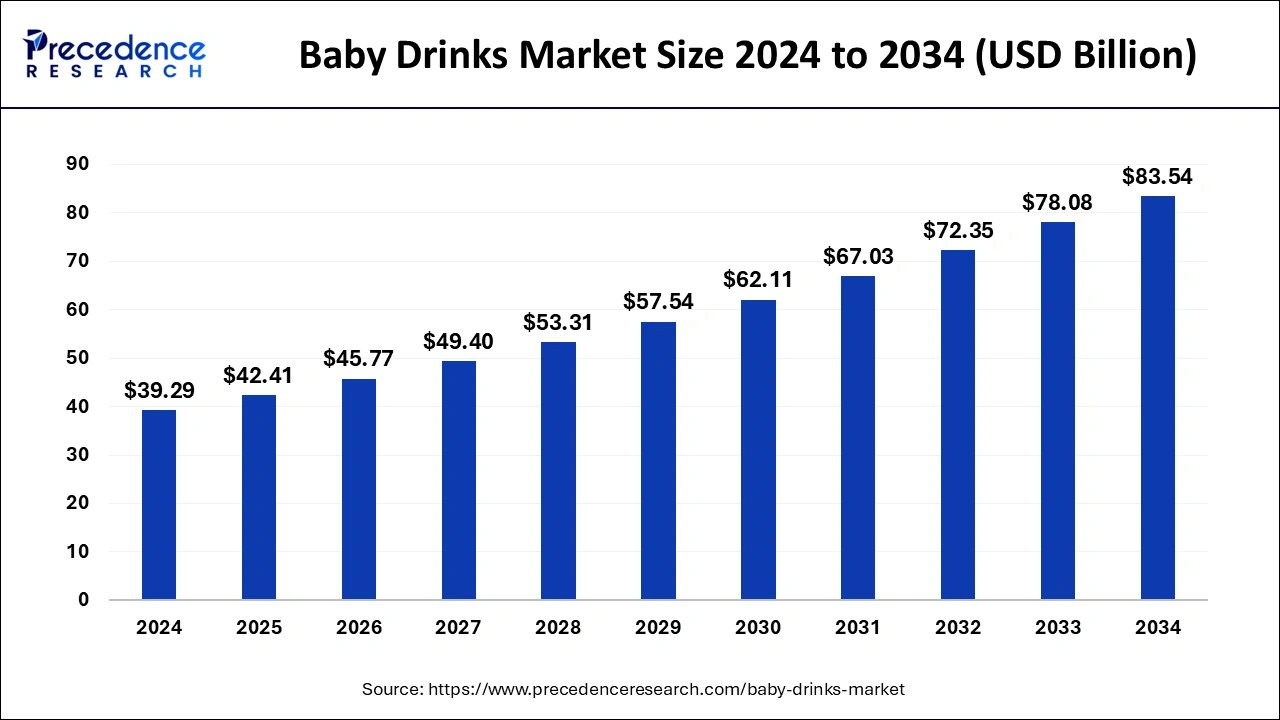
The global baby drinks market size accounted for USD 42.41 billion in 2025 and is predicted to increase from USD 45.77 billion in 2026 to approximately USD 89.18 billion by 2035, expanding at a CAGR of 7.72% from 2026 to 2035. The growing demand for chemical-free formula for babies can boost the baby drinks market.
Market Highlights
- Asia Pacific led the market with the largest market share of 36% in 2025.
- North America is expected to grow rapidly in the market by region during the forecast period.
- The baby formula segment dominated the market by product in 2025.
- The juice segment is expected to grow at a substantial CAGR in the market by product during the forecast period.
- The pharmacy segment dominated the market by product in 2025.
- The supermarket & hypermarket segment is expected to grow at the highest CAGR in the market by product during the forecast period.
Market Overview
The baby drinks market refers to the industry that offers drinks specially prepared liquids for babies and early children, including breast milk, infant formula, or baby juice diluted fruit juice. These are intended to supply vital nutrients required for development and growth in a healthful manner.
The selling of beverages created especially for newborns and early children is included in the market. This comprises goods like baby juice, toddler milk, infant formula, and other specialty drinks made to satisfy the dietary requirements of young children. The industry, which is impacted by things like parenting trends, health issues, and laws governing infant nourishment, frequently consists of both liquid and powered items.
The baby drinks market is fragmented with multiple small-scale and large-scale players, such as Nestlé, Campbell Soup Company., Abbott, The Kraft Heinz Company, Holle baby food AG, Hain Celestial, Dana Dairy, Nature's One, Nannycare Ltd, Mead Johnson & Company, LLC., Beingmate Group Co., Ltd., Arla Foods amba, D. Sign Softech Private Limited, FrieslandCampina, Organix Brands Limited, HIPP, ORHEI-VIT, Danone S.A., Freed Foods, Inc.
Baby Drinks Market Growth Factors
- The growing demand for organic infant formula can boost the baby drinks market.
- The growing popularity of lactose-free and hypoallergenic infant formula can be an opportunity to grow the baby drinks market.
- The rising demand for premium infant formula can boost the baby drinks market.
Market Outlook
What Factors Impact the Growth of Consumer Demand?
- Industry Growth Overview: The baby drink sector is growing rapidly with the increase in dual-income families looking for convenience and nutrition, as well as early childhood development support through breastfeeding and complementary food/drink options in urban environments.
- Sustainability Trends: More eco-friendly packaging, organic and sustainably sourced ingredients, and clear ingredient sourcing are becoming major differentiators among parents seeking to align their values with their purchases.
- Global Expansion: Manufacturers are leveraging localized products and distribution relationships to grow their presence in emerging markets such as Asia/Pacific and Latin America to tap into new customer bases.
- Startup Ecosystem: Emerging startups are developing niche products (e.g., plant-based infant beverage, age-specific formulations) that are directly competing with established players and helping to develop the category more quickly.
Market Scope
| Report Coverage | Details |
| Market Size in 2025 | USD 42.41 Billion |
| Market Size in 2026 | USD 45.77 Billion |
| Market Size by 2035 | USD 89.18 Billion |
| Growth Rate from 2026 to 2035 | CAGR of 7.72% |
| Largest Market | Asia Pacific |
| Base Year | 2025 |
| Forecast Period | 2026 to 2035 |
| Segments Covered | Product and Distribution Channel, and region |
| Regions Covered | North America, Europe, Asia-Pacific, Latin America, and Middle East & Africa |
Market Dynamics
Drivers
Growing demand for natural infant formula
The growing demand for plant-based and organic infant formula can boost the growth of the baby drinks market. The increasing need for natural and organic baby formula can be due to parents' rising realization of how crucial it is to give their babies a clean and healthy diet with no artificial additives. The goods provide a reassuring option that supports the desire for a more natural and holistic start in a child's life. The focus on the purifying component is Indicative of a frontier consumer accustomed to eating more healthily and transparently, even when it comes to baby feeding, which results in driving the market.
Rising demand for premium infant formula
The rising demand for premium infant formula can boost the baby drinks market. A growing number of parents are ready to spend money on products that provide more than just basic nourishment, which is fueling the market for premium infant formula. This formula is designed to meet the special needs of their babies and frequently includes extra characteristics like improved nutrition, simpler digestion, and assistance for consecutive development of the child. The premium formula highlights the change in baby care towards a more knowledgeable and health-conscious approach, reflecting a desire to give their children the greatest start in life possible.
Restraint
Risk of infection
The risk of infection may slow down the baby drinks market. The water must be added to formulated juice or milk. So, there is a chance of infection if the water is contaminated with bacteria or other germs, which might cause the babies to have major problems in the first 12 months of their life, which can lead to slowing down the market's growth.
Opportunity
Growing popularity of lactose-free and hypoallergenic infant formula
The growing popularity of lactose-free and hypoallergenic infant formula can be an opportunity to grow the baby drinks market. The rising awareness of newborns' dietary sensitivities and allergies is responsible for the growing popularity of wave formulas that are lactose-free and hypoallergenic. For infants who are allergic to common constituents in ordinary formulas or have a lactose intolerance, these specialty formulas offer a good substitute.
SEgment Insights
Product Insights
The baby formula segment dominated the baby drinks market by product in 2025. The nutritional makeup of baby formula is intended to resemble that of breast milk, including the necessary nutrients for healthy growth and development of infants. For parents who are unable or do not desire to breastfeed, this makes it the preferred option. Parents who may find it difficult to breastfeed or who need to supplement breast milk with formula might benefit from the convenience that baby formula offers.
It's simple to make and store, so feeding schedules may be adjusted accordingly. Parents from a wide range of geographic and socioeconomic backgrounds can easily obtain baby formulas because it is readily available in multiple forms, such as powder, liquid concentrate, and ready-to-feed. Safety Standard: to guarantee the safety and quality of baby formula products and provide parents peace of mind about their suitability for infants, manufacturers follow stringent regulations and quality control systems.
The juice segment is expected to grow to the highest CAGR in the baby drinks market by product during the forecast period. The concern regarding the potential health implications of artificial food coloring has led to an increase in parents looking for natural and healthier substitutes.
As juices are made from fruits and vegetables, they provide a more natural and safer alternative. Parents who favor clean-label products for their children may find juice pigments intriguing as they also deliver brilliant colors without the use of synthetic ingredients. The juice segments are in line with customer aspirations for simpler, more healthful ingredients, which are in line with the growing emphasis on transparency and product purity.
Distribution Channel Insights
The pharmacy segment dominated the baby drinks market by product in 2023. Parents looking for trusted and safe products for their babies can rely on pharmacies as a trusted provider. The pharmacies are handy, one-stop stores for parents, trustworthy, and the products are easily available in pharmacy stores.
The supermarket & hypermarket segment is expected to grow at the highest CAGR in the baby drinks market by product during the forecast period. The supermarket & hypermarket segment is expected to grow because of their convenience and accessibility of baby drink products. These supermarkets & hypermarkets are great places to buy baby drinks because parents often visit them for their usual shopping requirements. Additionally, a large range of brands and goods are often available in supermarkets and hypermarkets, enabling parents to evaluate and select the best solution for babies. Additionally, a large range of brands and goods are often available in supermarkets & hypermarkets, enabling parents to evaluate and select the best solutions for their babies.
Regional Insights
Asia Pacific Baby Drinks Market Size and Growth 2026 to 2035
The Asia Pacific baby drinks market size is exhibited at USD 15.27 billion in 2025 and is projected to be worth around USD 32.65 billion by 2035, growing at a CAGR of 7.9% from 2026 to 2035
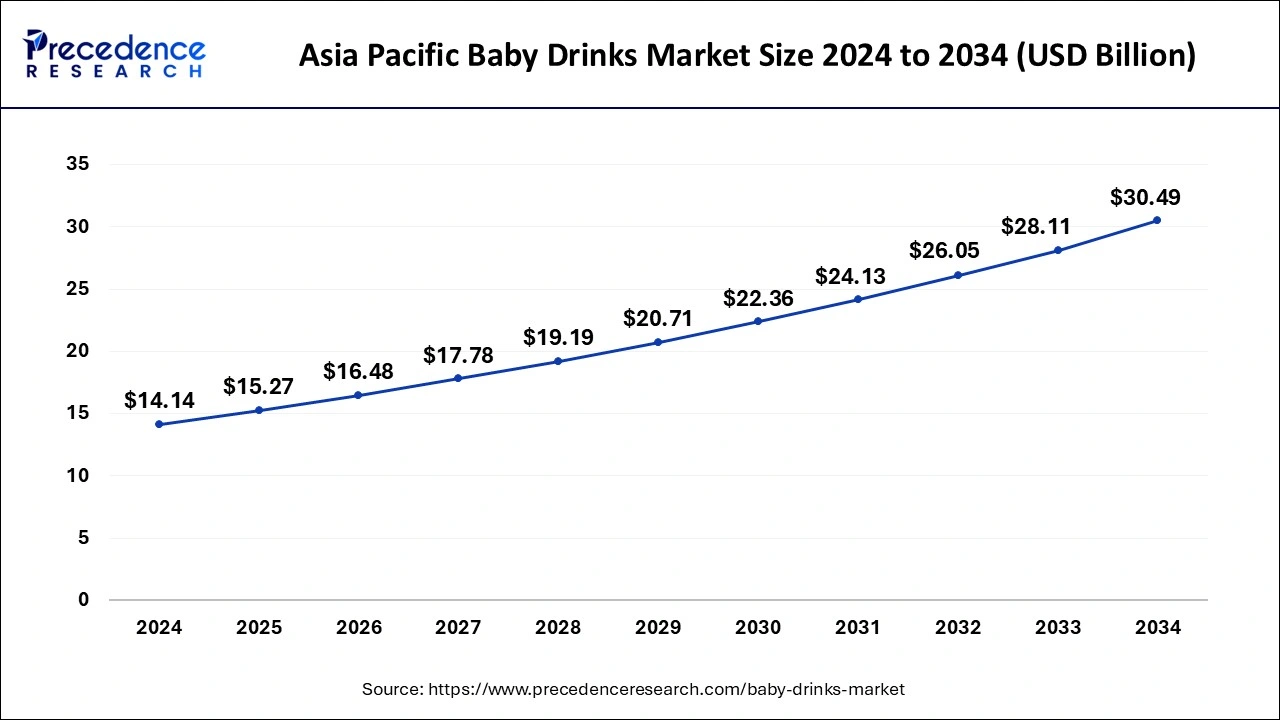
Asia Pacific had a significant presence in the baby drinks market by region in 2025. There are many people living in the area, and many of them are small children, which means there is a big market for products and services. In addition, the popularity of particular infant drink varieties in Asia Pacific is influenced by customs, dietary practices, and cultural preferences. In addition, families can now purchase these items because of rising purchasing power in several of the region's developing nations. Lastly, the existence of both regional and international producers that serve a range of tastes and preferences fuels market expansion in this area.
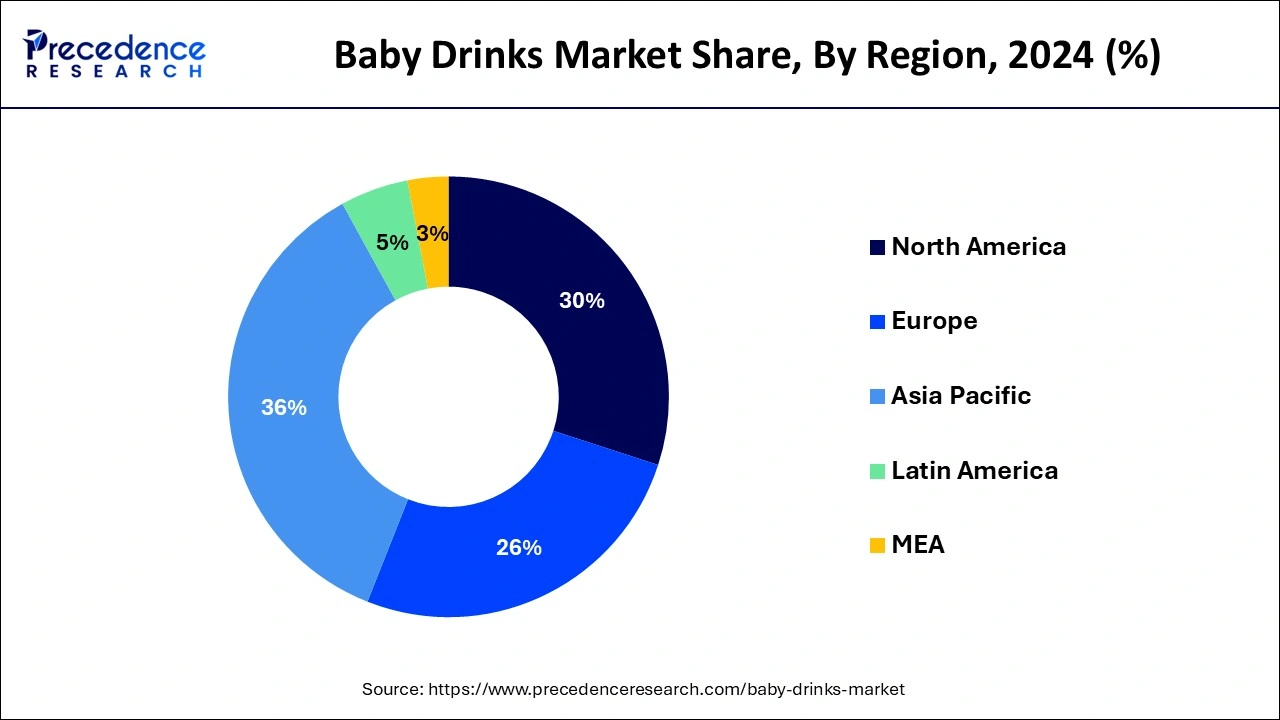
North America is expected to grow rapidly in the baby drinks market by region during the forecast period. Consumers in North America are placing more and more focus on health and well-being, and parents are looking for wholesome alternatives for their kids. Parents with hectic schedules sometimes look for portable and easy-to-transport solutions for their kids' nourishment, which makes infant drinks a desirable option. Parents seeking healthier substitutes for conventional beverages may find infant drink formulations that incorporate organic ingredients, additional nutrients, and appealing tastes. There may naturally be a greater market for baby-related goods, such as infant beverages if birth rates are rising in North America.
Europe: Established Market with Premiumization Capacity
Europe is a highly developed, quality-oriented market that is particularly focused on baby food safety standards and organic baby drinks as well. All of this has contributed to a high level of trust among consumers with respect to the products offered.
The UK has a growing demand for the introduction of new "specialty infant" and organic infant beverages as parents continue to place more importance on health and nutrition credentials for their babies.
Latin America: Fostering Quick Adoption and Expanding Retail
Latin America has seen a surge in the consumption of fortified infant beverages, largely due to the growth of its population and the expansion of modern retailing in both urban and rural areas. Brazil is quickly emerging as a growth center due to a rising awareness of the importance of nutrition and an increase in access to modern retail.
Middle East and Africa (MEA): New Nutrition Category Markets
The MEA Region shows a rapid increase in the importation of infant beverages due to a rising income level and an increased level of healthcare awareness across the GCC Region, which is experiencing some of the highest levels of premium product growth. The United Arab Emirates is rapidly becoming the center of the Middle East in terms of the development of innovative baby nutrition products to service the needs of the large expatriate community living in the country.
Value Chain Analysis of the Baby Drinks Market
- Raw Material Sourcing & Ingredient Procurement: It is necessary to identify the main segments of the baby food value chain to understand value creation and capture. These segments include the sourcing of raw materials and ingredient procurement. Baby food manufacturers often establish long-term partnerships with various types of suppliers so as to ensure the quality of baby food formulations.
Key players: Nestlé, Danone, and Abbott. - Manufacturing and Technical Processing: The manufacturing process used by these manufacturers maintains nutritional integrity, ensures product safety, and remains compliant with many of the regulatory guidelines that govern infant food production. To achieve this, manufacturers employ advanced manufacturing techniques to produce products that are intended to meet high levels of product quality.
Key players: Nestle, Mead Johnson, and HiPP. - Distribution and Retail Logistics: Logistics partners play an important role in ensuring that all cold chain processes remain intact as necessary and to ensure that all global distribution partners are geographically dispersed.
Key Players: Danone, Abbott, and FrieslandCampina.
Recent Developments
- In April 2024, Else Nutrition, which specializes in plant-based but soy-free infant and toddler formulas, launched in Asia-Pacific with Australia as its first stop.
- In February 2024, the UK's Competition and Markets Authority (CMA) announced a market study into the supply of infant formula in the UK, saying it would use its formal legal powers to gather more evidence on the factors affecting the market, such as consumer behavior, the regulatory framework, and barriers to entry and expansion for new entrants. The market study follows a November 2023 CMA report, which found that the average price of infant formula had risen by 25% over the previous two years and that families could save more than GBP 500 over the first year of a baby's life by switching to cheaper alternatives.
- In January 2024, a partnership between UK-based pre-cut lidding manufacturer, Chadwicks, and New Zealand-based plastic injection molding provider, Tekplas, has resulted in an innovative spoon-in-lid design for infant formula packaging. Two companies have developed and launched this new packaging for the infant formula market in New Zealand, Australia, and East Asia.
Baby Drinks Market Companies
- Nestlé
- The Kraft Heinz Company
- Mead Johnson & Company, LLC.
- Danone S.A.
- Beingmate Group Co., Ltd.
- CAMPBELL SOUP COMPANY.
- Abbott
- Arla Foods amba
- Sign Softech Private Limited
- Hain Celestial
- Dana Dairy
- FrieslandCampina
- HIPP
- ORHEI-VIT
- Freed Foods, Inc.
- Holle Baby Food AG
- Nature's One
- Organix Brands Limited
- NANNYcare Ltd.
Segment Covered in the Report
By Product
- Baby Formula
- Juice
- RTD
- Concentrate
- Electrolyte
By Distribution Channel
- Supermarket & Hypermarket
- Pharmacies
- Online
By Region
- North America
- Asia Pacific
- Europe
- Latin America
- Middle East & Africa
For inquiries regarding discounts, bulk purchases, or customization requests, please contact us at sales@precedenceresearch.com
Frequently Asked Questions
Tags





Ask For Sample
No cookie-cutter, only authentic analysis – take the 1st step to become a Precedence Research client
 Get a Sample




 sales@precedenceresearch.com
 Schedule a Meeting
