



Organic Baby Food Market Size, Key Companies, Company Market Share, Production Volume, Consumption Trends, Pricing Analysis, Export & Import Dynamics, Competitive Positioning, and Demand Forecast
Organic Baby Food Market (By Product: Infant Milk Formula, Prepared Baby Food, Dried Baby Food; By Distribution Channel: Supermarkets/ Hypermarkets, Convenience Stores, Online Retails, Others) - Global Industry Analysis, Size, Trends, Leading Companies, Regional Outlook, and Forecast 2026 to 2035
Source: https://www.precedenceresearch.com/organic-baby-food-market
 Get a Sample
 Table Of Content


What is the Organic Baby Food Market Size?
The global organic baby food market size is accounted at USD 4.82 billion in 2025 and predicted to increase from USD 5.15 billion in 2026 to approximately USD 9.19 billion by 2035, expanding at a CAGR of 6.67% from 2026 to 2035. Increasing consumer awareness regarding the health benefits of organic infant nutrition is the key factor driving market growth. Also, increasing disposable incomes coupled with government initiatives promoting organic farming can fuel market growth further.
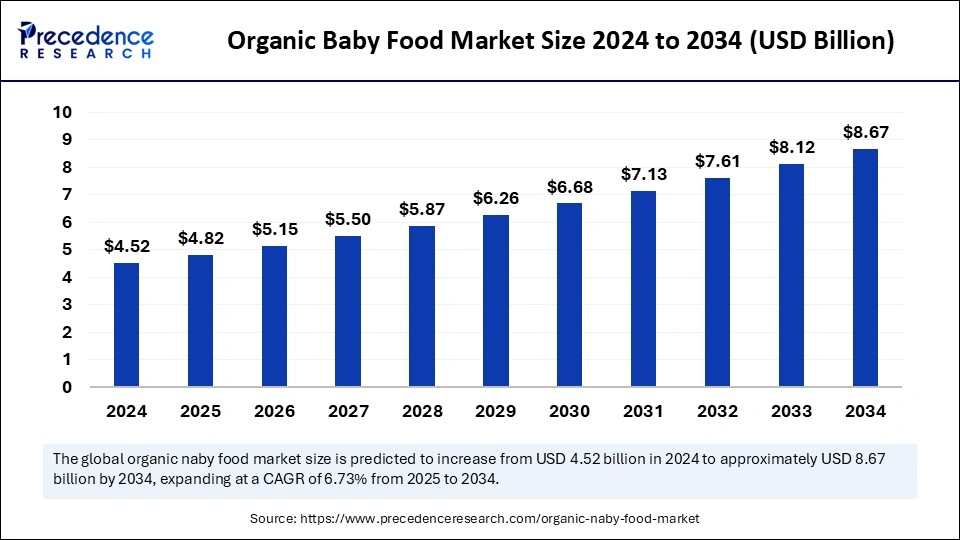
Organic Baby Food Market Key Takeaways
- Asia Pacific dominated the global market with the largest market share of 47% in 2025.
- Europe is expected to grow at the fastest CAGR over the studied period.
- By product, the infant milk formula segment held the largest market share of 62%in 2025.
- By product, the prepared baby food segment is anticipated to grow at the fastest CAGR over the forecast period.
- By distribution channel, the supermarkets and hypermarkets segment contributed the highest market share in 2025.
- By distribution channel, the online retailers' segment is projected to grow at the fastest CAGR during the forecast period.
What is the Organic Baby Food?
Organic baby foods are products made from ingredients that are cultivated and processed without using fertilizers, synthetic pesticides, artificial additives or preservatives, and genetically modified organisms (GMOs). These foods are basically derived from vegetables, grains, proteins, and organically farmed fruits. The organic baby food market offers infants wholesome and nutritious options while decreasing their exposure to hazardous chemicals and supporting sustainable agricultural practices.
Artificial Intelligence (AI) in the Food Industry
Artificial Intelligence provides market players the opportunity to forecast their customers' preferences. By processing large amounts of data on flavor preferences and sales patterns for each demographic, producers are now able to develop new products and model future trends. Furthermore, AI is also being utilized to allow customers to customize the goods they buy to a greater degree. This advancement identifies flavor combinations and helps in product development.
- In July 2024, Chef Robotics launched an AI-enabled food robot to help overcome the global labor shortage in the food industry. Chef's goal is to help food companies overcome this labor shortage and increase production volume by deploying AI-enabled robots in every commercial kitchen in the U.S. and then the world.
Organic Baby Food Market Growth Factors
- A rise in birth rates and women's employment is expected to boost organic baby food market growth shortly.
- Ongoing economic development in countries such as India and China can propel market growth soon.
- The increasing demand for packaged organic food will likely contribute to the market expansion over the forecast period.
Market Outlook
- Industry Growth Overview: Parents favor clean-label nutrition. There is an increase in demand for chemical-free products. The market of organic baby food is gaining momentum in the infant nutrition world.
- Major investors: Nestle, Danone, Hain Celestial, Abbott Laboratories, Hero Group targets the innovation and international expansion of organic baby food.
Market Scope
| Report Coverage | Details |
| Market Size by 2035 | USD 9.19 Billion |
| Market Size in 2025 | USD 4.82 Billion |
| Market Size in 2026 | USD 5.15 Billion |
| Market Growth Rate from 2026 to 2035 | CAGR of 6.67% |
| Dominating Region | Asia Pacific |
| Fastest Growing Region | Europe |
| Base Year | 2025 |
| Forecast Period | 2026 to 2035 |
| Segments Covered | Product, Distribution Channel, and Regions. |
| Regions Covered | North America, Europe, Asia-Pacific, Latin America, and Middle East & Africa. |
Market Dynamics
Drivers
Changing lifestyles and eating habits
The growing urbanization in developing countries has facilitated changes in people's lifestyle patterns, particularly among women. The shifting lifestyle preferences such as working and eating habits such as consumption of caffeine, red meat, alcohol, fast food products, and unpasteurized milk have resulted in certain medical conditions in females. In addition, the consumption of medicines by breastfeeding mothers creates greater risks to the babies. Which in turn results in the growing demand for the organic baby food market.
- In October 2024, Babylife Organics, a new entrant in the baby food sector, launched a line of Regenerative Organic Certified products designed to mitigate toxic heavy metal contamination. The company, founded by veterans of the organic food industry, is positioning itself as a leader in transparency by implementing rigorous testing protocols at multiple stages of the supply chain.
Restraint
High costs associated with organic products
Limiting knowledge and awareness among the majority of the population creates hindrances for the organic baby food market in the low-income group. In emerging economies, the concern related to food safety is far from many consumers. Moreover, most developing nations are price-sensitive, with extensive variation in earning power. Organic Food is more expensive than traditional food products.
Opportunity
Rising adoption of premium-quality organic products
The immune systems of infants and toddlers are not developed enough to tackle all infections, and hence, they are generally more susceptible to foodborne illness, which can be a substantial hurdle for parents seeking baby food. Furthermore, this, in turn, resulted in increasing awareness among parents about the ill effects of preservatives and chemicals. Hence, major organic baby food market companies like Ormeal, Happa, and Tiny Spoons are preparing baby food with natural ingredients and utmost care.
- In December 2024, Mother Dairy, India's leading diversified food company, entered into an exclusive partnership with Bharat Organics to distribute its range of organic staples in the Delhi NCR region. Through this collaboration, Mother Dairy will leverage its extensive network of booths to ensure the availability of packed and certified Bharat Organics products.
Segment Insights
Product Insights
The infant milk formula segment held the largest organic baby food market share in 2025. The dominance of the segment can be attributed to the surge in demand for nutritionally balanced and convenient feeding solutions for infants, particularly for parents who require supplemental feeding options. Additionally, this trend highlights the importance of offering reliable, safe, and nutritious options for the nourishment of baby. Suboptimal breastfeeding rate due to hormonal disorders or premature birth is the major factor driving market growth further.
- In June 2024, Granarolo officially introduced Granarolo Baby, the international version of its distinctive product line, including milk and cheese, which was dedicated to the world of infancy, to the Chinese market. This new product line is designed to accompany children from zero to three years and beyond. The official launch took place at the 2023 Children, Baby, and Maternity Expo in Shanghai, the world's most important event dedicated to maternity.
The prepared baby food segment is anticipated to grow at the fastest rate over the forecast period. The growth of the segment can be credited to the rising demand for nutritious and convenient food options for toddlers and infants, along with the increasing consumer awareness regarding the necessity of balanced food in child development. Moreover, ongoing advancements in packaging and processing ensure good nutrition and high shelf life.
Distribution Channel Insights
The supermarkets and hypermarkets segment held the largest share of the organic baby food market in 2025. The dominance of the segment can be linked to the growing preference for hypermarkets and supermarkets by consumers for groceries, consumer goods, and infant care items. Also, enhanced inventory management and distribution channel networks globally have made this segment a leader in the market.
The online retailers' segment is projected to grow at the fastest rate during the forecast period. The growth of the segment can be driven by rising internet penetration worldwide. The convenience provided by this segment increases the adoption of product selection, which makes online shopping options for parents more attractive. Furthermore, young parents are increasingly utilizing online purchasing platforms and mobile apps that will impact segment growth positively soon.
Regional Insights
Asia Pacific Organic Baby Food Market Size and Growth 2026 to 2035
The Asia Pacific organic baby food market size is exhibited at USD 2.42 billion in 2026 and is projected to be worth around USD 4.38 billion by 2035, growing at a CAGR of 6.79% from 2026 to 2035.
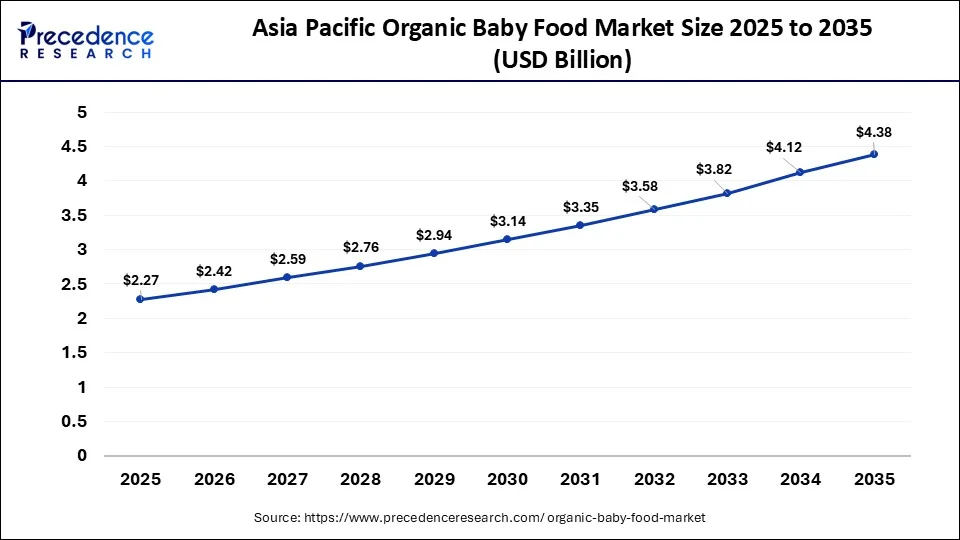
Asia Pacific dominated the global organic baby food market in 2025. The dominance of the region can be attributed to the growing consumer awareness regarding the adverse effects of chemical ingredients and the advantages of organic products. Moreover, the surge in the middle-class population and the increasing purchasing power of the majority of the population have boosted the requirement for premium organic baby food. New product launches and mergers have further propelled this growth.
- In August 2024, Happa Foods, a leading Indian baby food start-up, expanded globally by introducing vegetable-based baby meals and organic fruit to Oman, Kuwait, Seychelles, Maldives, Kenya, and the UAE. This marks Happa Foods as the first Indian brand to export baby pure.
China Organic Baby Food Market Trends
The rapid growth of China is due to great safety concerns among parents. Credibility leads to a need for certified organic products. Brands brought in are preferred. Nutrition centered around immunity is necessary. The speed of product reach is increased by E-commerce platforms. Parents want to know what is going on and be assured. Online shopping empowers accessibility. The use of organic baby food is increasing gradually in urban families.
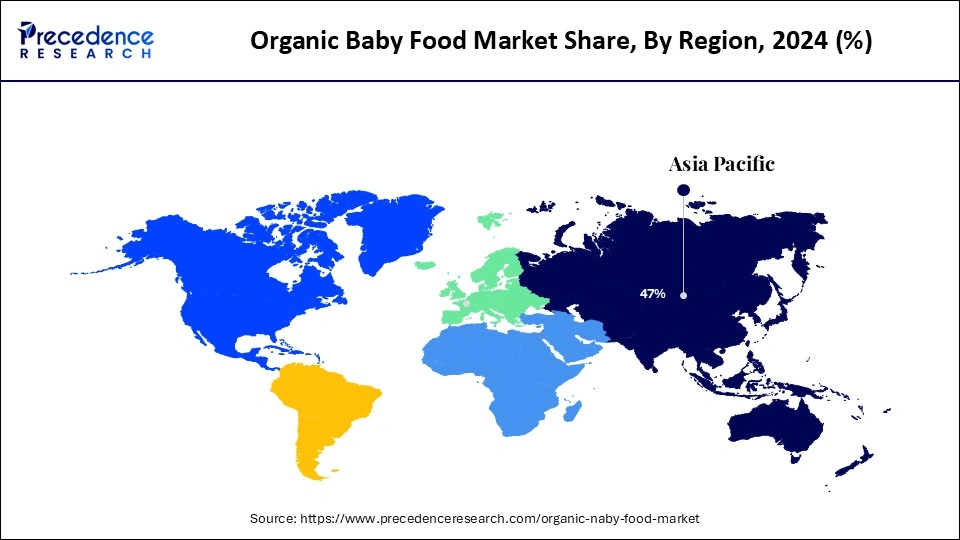
Europe is expected to grow at the fastest rate in the organic baby food market over the studied period. The growth of the region can be credited to the strict government regulations that maintain high grades for organic baby food. Furthermore, the creation of novel mixes by market players that go well with this food can propel regional growth further in the market. Many consumers in the region are ready to pay a high price for quality organic baby food products.
Germany Organic Baby Food Market Trends
Germany is becoming stronger because of stringent regulatory provisions. Certified organic standards are trusted by consumers. Retail chains guarantee a high product supply. Distribution is managed by supermarkets and specialty stores. There is a high demand for high-quality organic nutrition. Some policies promote the growth of organic farming. Market maturity indicates stable consumer demand for safe and quality baby food.
Rising Demand for Clean-Label Nutrition Driving the North America Organic Baby Food Market
North America shows a significant growth during the forecast period. This is due to heightened concerns over safety, allergies, along with chemical exposure in infants. This trend, spurred by premiumization and even high disposable income, is further accelerated by the need for functional ingredients such as DHA and probiotics. The trend toward healthier, nutrient-dense nutrition for babies, regardless of expense, has turned organic food into a premium segment.
Latin America's Shift Toward Healthier Infant Nutrition Supporting the Organic Baby Food Market
Latin America shows a notable growth during the forecast period. In countries such as Brazil and Argentina, thus, expanding middle classes have higher disposable income, enabling them to spend more on premium organic, high-quality, along with safe nutritional products for their infants. Parents are increasingly knowledge of the dangers of pesticides, preservatives, and artificial ingredients. They are thus, becoming more "ingredient-savvy," searching for clean-label products such as non-GMO, natural ingredients to ensure better nutritional quality.
Growing Parental Preference for Natural Nutrition Boosting the Organic Baby Food Market in MEA
MEA shows a rapid growth during the forecast period. This is due to increased health consciousness, increasing disposable incomes, along with a desire to avoid synthetic chemicals, GMOs, and pesticides. Parents are thus, prioritizing clean-label products to ensure safe, nutrient-dense, along with sustainable nutrition for their infants. Middle Eastern parents, mainly in Saudi Arabia, are willing to pay premium expenses for high-quality, nutritious organic products.
Organic Baby Food Companies
- Nestle SA: There are Gerber Organic and Cerelac Organic that Nestle sells. The products consist of snacks, cereals, and purees. The emphasis is still on good farming and ingredients.
- Abbott: Abbott supplies Pure Bliss, offered by Similac. It retails organic infant milk. Emphasis is laid on a few ingredients based on the natural breast milk nutrition.
- Danone: Danone has the Happy Family Organics range. It contains formulas, cereals, and pouches. Product lines are based on high-nutrition and prebiotic-based formulations.
- Hain Celestial Group: The Hain Celestial Group provides a comprehensive range of organic baby and toddler products mainly via its flagship brands, Earth's Best and Ella's Kitchen. Their portfolio includes non-GMO formula, pureed foods, USDA-certified organic, cereals, snacks, and personal care products such as diapers and wipes.
- Hero Group: Hero Group provides a numerous range of organic baby food products under several brands, aiming on natural, high-quality, and even minimally processed ingredients.
- Sprout Organics: Sprout Organics provides a premium range of plant-driven, organic baby and toddler foods engineered for allergen-sensitive along with health-conscious families.
- Baby Gourmet: Baby Gourmet is a leading Canadian brand providing organic, nutritious, and delicious baby food, thus, specializing in cereals, pouches, and snacks. Their products are engineered to make mealtime easy and healthy, featuring clean ingredients without added sugar. They also own and manufacture the organic children's snack brand Slammers Snacks.
Other Major Key Players
- The Kraft Heinz Company
- Mead Johnson & Company, LLC.
- Lactalis
Latest Announcement by Market Leaders
- In October 2024, Nestle India announced that it will soon launch variants "with no refined sugar" of its infant food, Cerelac. The announcement is important as Nestle India, part of Swiss multinational Nestle SA, recently faced criticism for adding sugar to Cerelac.In the company's earnings statement, CMD Suresh Narayanan said, "We have achieved our ambition of introducing Celerac variants with no refined sugar.
- In August 2024, The American Diabetes Association (ADA) and Abbott recently announced a collaboration to better understand the nutritional needs of people living with diabetes, obesity, and metabolic dysfunction and how nutrition formulas can support those needs and overall health. More than 2 in 5 adults in the U.S. are living with obesity, and approximately 1 in 10 Americans are living with diabetes, most of which is type 2 diabetes.
Recent Developments
- In March 2026, Little Spoon launched an organic infant formula, aiming to become a trusted partner for parents from day one. Its formula is distinguished by using whole milk from organic grass-fed New Zealand cows. Cofounder Ben Lewis highlights that after nine years of development, they are applying their transparent standards from baby food to the formula category. (Source: https://www.forbes.com)
- In February 2024, "HealthyBaby," the maternal health and babycare platform, announced the "Hilary Swank" brand's Partner and Chief Innovation Officer. The partnership is the first step in their mission to prioritize health next-level quality for babies.
- In May 2022, Hembal launched a plant-based hypoallergenic infant formula in the U.S. It is the first U.S.-based completely vegan, soy-free, dairy-free, gluten-free, GMO-free, and organic hemp seed-based hypoallergenic infant formula.
Segments Covered in the Report
By Product
- Infant Milk Formula
- Prepared Baby Food
- Dried Baby Food
By Distribution Channel
- Supermarkets/ Hypermarkets
- Convenience Stores
- Online Retails
- Others
By Geography
- North America
- Asia Pacific
- Europe
- Latin America
- Middle East and Africa
For inquiries regarding discounts, bulk purchases, or customization requests, please contact us at sales@precedenceresearch.com
Frequently Asked Questions
Tags





Ask For Sample
No cookie-cutter, only authentic analysis – take the 1st step to become a Precedence Research client
 Get a Sample




 sales@precedenceresearch.com
 Schedule a Meeting
